Loading the model
This device cannot show the 3D model. You can read the guide steps below as text.
1 / 8 Two minutes in a vacuum A person in sea-level air is suddenly in a near vacuum. The timeline runs 120 s with a mark every 15 s. Drag it, or press play and watch the readout change second by second.
Drag to turn. Scroll or pinch to zoom.
Guide Parts Controls
01 Two minutes in a vacuum A person in sea-level air is suddenly in a near vacuum. The timeline runs 120 s with a mark every 15 s. Drag it, or press play and watch the readout change second by second.
02 Breathe out, do not hold it Held in full lungs, the air pushes outward with over 100 kPa against nothing. More than about 10.7 kPa across the lung wall can tear it. With the airway open the air rushes out in a second and the lungs are spared.
03 Saliva boils at body temperature Water boils when its vapour pressure matches the pressure on it. At 37 °C that is 6.3 kPa, the Armstrong limit near 19 km. Below it, saliva and tears boil away while blood in the arteries is still held under pressure.
04 About ten seconds of useful consciousness The empty lungs now pull oxygen out of the blood instead of adding it. That blood reaches the brain within seconds. NASA's data book expects 9 to 11 s of consciousness; the 1965 chamber subject managed about 14.
05 Swelling, not bursting Water vapour forms in the tissue under the skin and in the veins. The body may swell to twice its volume, and the skin holds it. With the skin cut open you can see the gap filling with bubbles.
06 The circulation stops Vapour in the large veins blocks the blood returning to the heart. Venous pressure meets arterial pressure within about a minute, and the heart slows sharply. Dogs held at 2 mmHg dropped to about 10 beats a minute.
07 Space is not instantly cold A vacuum carries no heat away. The body loses heat only by radiation, about 725 W here, so the core falls less than half a degree in two minutes. Only the mouth and nose, cooled by evaporating water, get near freezing.
08 What a pressure suit changes A suit at 29.6 kPa of pure oxygen keeps every line on the timeline quiet. Without one, animals brought back to pressure within about 90 s usually survived, which is why NASA plans around a 90 s limit.
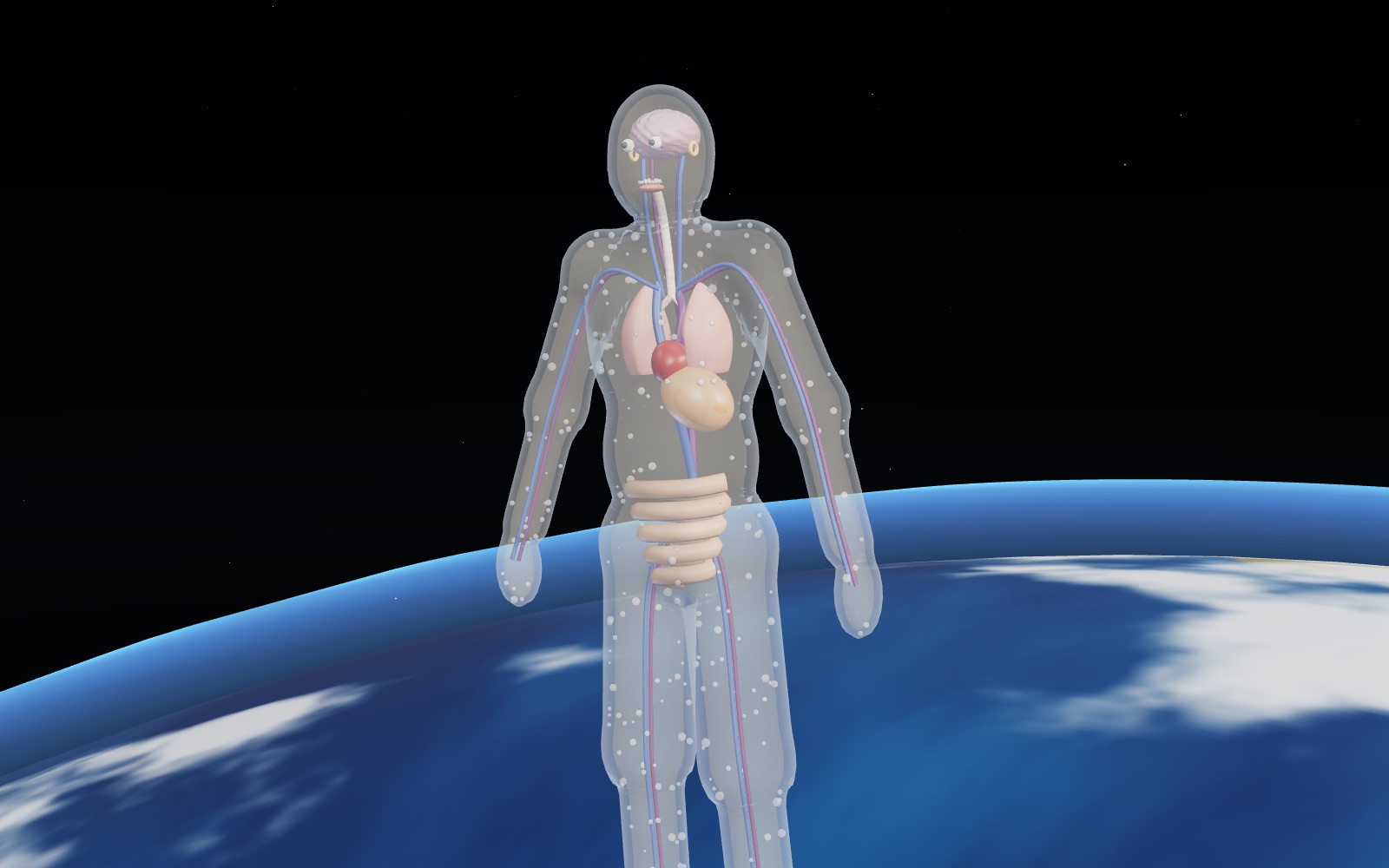
Lungs Hold a full breath and the air inside pushes against the outside vacuum. More than about 80 mmHg (10.7 kPa) of difference can tear lung tissue. Breathe out and the air simply leaves. Airway The windpipe and main bronchi. Kept open, they let the lung air rush out in the first second, then water vapour keeps flowing out of them. Tongue and saliva Saliva sits on the surface at body temperature with nothing pressing on it. Below 6.3 kPa it boils, which is what the 1965 test subject remembered last. Brain It holds only a few seconds of oxygen. Blood that has given its oxygen to the empty lungs reaches it after a few seconds, and consciousness fades at about 9 to 11 s. Eyes Tears on the surface evaporate and the eyes may swell a little. Animal reports describe short-lived problems with vision afterwards, not bursting eyes. Middle ear An air pocket behind the eardrum. Its air expands as the pressure falls and leaves through the Eustachian tube, which can hurt if the tube is blocked. Heart It may speed up at first, then slows sharply. Dogs held at 2 mmHg fell to about 10 beats a minute. The model draws a slowing beat. Arteries Their blood is under pressure from the heart, so it does not boil at once. The colour shows the oxygen in it: red falling to purple as the oxygen runs out. Veins Blood here is at low pressure. Vapour bubbles form where the large veins enter the heart and spread back through the veins, which blocks the return of blood. Stomach and gut Gas in the gut grows with the pressure ratio, 3 times on Everest and far more in a vacuum, held back only by the tissue around it. Skin Strong and elastic. It holds the vapour that forms beneath it, so the body swells instead of bursting. Here it is drawn see-through, with no face. Tissue under the skin Fat and connective tissue. Water vapour collects here and the body swells, perhaps to twice its volume. A tight elastic garment prevents it. Hands Hands and feet swell most. Joe Kittinger's unpressurized right hand swelled at 102,800 ft in 1960 and returned to normal after the descent. Gas bubbles Drawn as small spheres: boiling saliva on the tongue, vapour under the skin and bubbles in the veins. Turn them off in Controls. Vapour from mouth and nose A burst of air in the first second, then a thin stream of water vapour that cools the mouth and nose toward freezing. Pressure suit Keeps about 29.6 kPa of pure oxygen around the body (NASA station suit). Switch it on and the timeline stays quiet. Sunlight 1,361 W/m² of unfiltered sunlight. On the sunny side it warms the skin and cuts the net heat loss to space by more than half in this model. Earth and its air The sky turns from blue to black as you rise. At 19 km only about 6 % of the sea-level pressure is left.