FIG. 104Old Machines
How a sewing machine makes a stitch
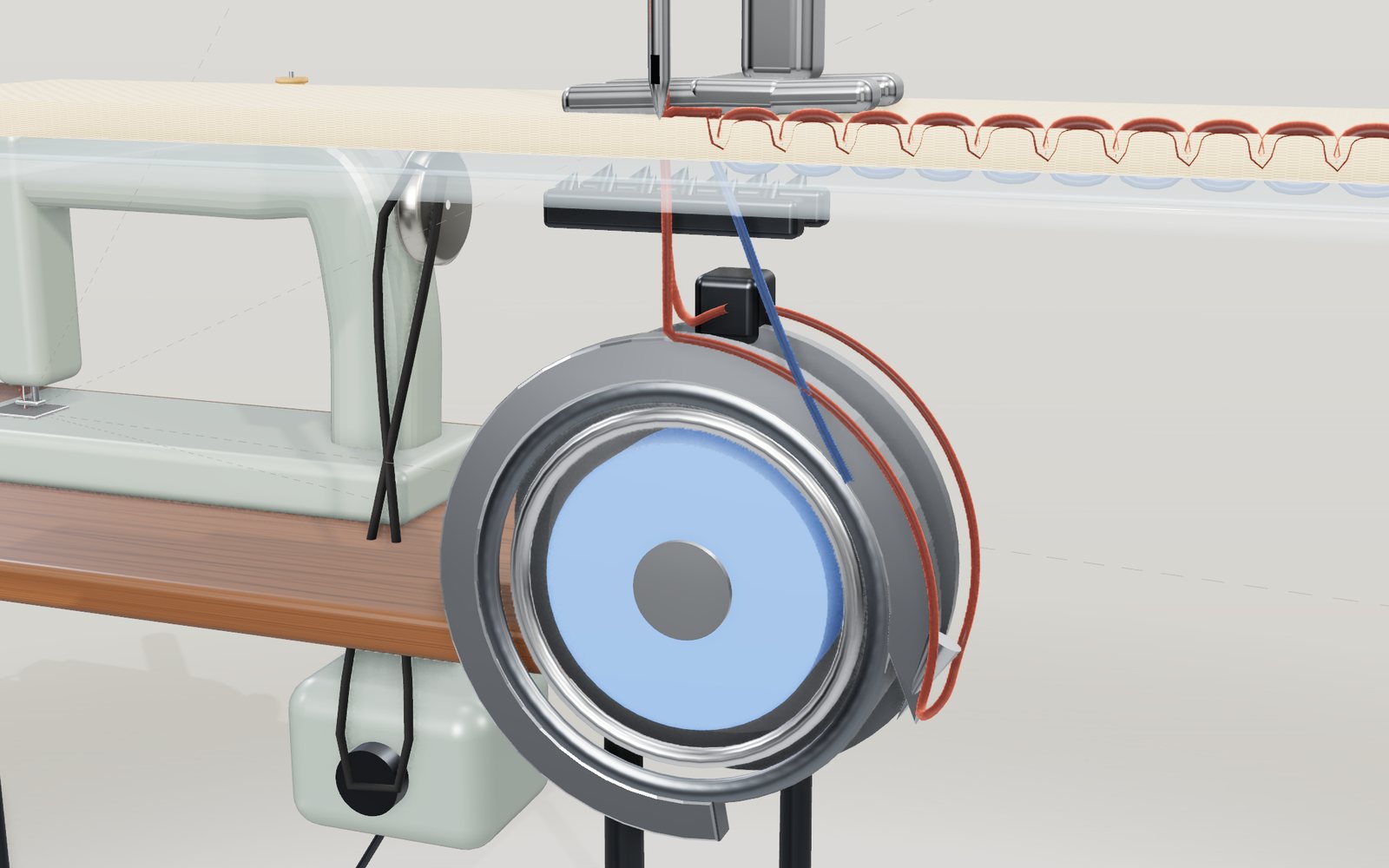
A sewing machine needle never goes through the cloth: at every stitch the hook drags its thread right round the bobbin instead.
This device cannot show the 3D model. You can read the guide steps below as text.
1 / 18 A needle, a hook and two threadsThis clear model is ten times life size, in front of a real-size industrial machine. Each turn of the shaft makes one stitch, slowed down 300 times here. The red thread comes from the spool on top, the blue one from the bobbin underneath.
Drag to turn. Scroll or pinch to zoom.
What happens in one stitch
Sew a button on by hand and the needle goes right through the cloth, is pulled out on the far side, turned round and pushed back. A sewing machine never does that. Its needle goes down through the cloth, stops and comes back up out of the same hole, and the thread it carried down is left behind underneath as a small loop. Everything else in the machine exists to do something with that loop in the fraction of a second before the needle pulls it back up.
On a lockstitch machine, the kind most people have at home, a hook under the plate catches the loop, stretches it, and drags it right round the bobbin that holds the second thread. The loop slips off the hook with the bobbin thread inside it, a lever above pulls it tight, and the two threads lock together inside the cloth. Then a toothed bar under the plate pushes the cloth along by one stitch length and the needle comes down again. One turn of the main shaft, one stitch. An industrial machine does this up to 6,000 times a minute, 100 times a second.
The stage starts with a clear model ten times life size, slowed down 300 times, in front of a real-size industrial machine. The red thread comes from the spool on top; the blue thread comes from the bobbin underneath. Watch the needle rise a little from the bottom of its stroke, the loop open behind it, and the point of the hook slide into the loop. Then switch to five other machines: a treadle machine of the 1850s type with a long shuttle, a hand machine of the 1890s type with a swinging shuttle, an electric household machine of the 1960s type with a drop-in bobbin and zigzag, a one-thread chainstitch machine of the 1857 type, and a three-thread overlock that trims and wraps an edge.
The cloth in the model is cut open along the seam so that the knot shows, and the thread is drawn twice its real thickness. The timing of the needle, the hook, the take-up lever and the feed dog follows the published rules of thumb for setting a machine, but it is the model's own, not one maker's drawing. Where this page gives a number from the model, it says so.
Why a machine cannot copy a hand
The first inventors tried to make a machine that sewed the way a person does, and they kept failing for the same reason. A hand needle has its eye at the blunt end and its point at the other; to make a stitch it must pass completely through the cloth and be taken hold of on the far side. A machine that has to let go of the needle, reach round the cloth and grab it again is clumsy and slow.
Some of the early attempts are on record. In 1755 a British patent, number 701, went to Charles F. Weisenthal for an embroidery needle with a point at each end, so that it could be passed back and forth through the cloth without being turned round. One point was at the end with the eye. In 1790 the London cabinetmaker Thomas Saint received British patent 1,764 for a set of varnishes and three machines, one of them "for stitching, quilting, or sewing". It had a horizontal plate for the cloth, an overhanging arm carrying a forked needle, an awl to make the hole first, a looper underneath, and a hand crank turning a shaft with cams. Nobody seems to have noticed that part of the patent for more than 80 years. It was found by chance in 1873, and when Newton Wilson of London built a model from the description in 1874 he had to change it before it would stitch at all.
In Vienna the tailor Josef Madersperger received an imperial privilege in 1814 for a machine that stitched straight and curved lines, probably a couched embroidery stitch made with a two-pointed needle; it was never put to practical use. These were steps toward the answer without reaching it. The answer was to stop copying the hand.
The eye at the point
Put the eye near the point and the needle no longer has to go through the cloth. It carries its thread down, and when it comes back up the thread is left on the far side. That single change made the sewing machine possible. Walter Hunt in New York built a machine of this kind between 1832 and 1834, with a second thread carried by a shuttle through the loop the needle left behind. He sold his interest and did not patent it.
Elias Howe of Cambridge, Massachusetts, did patent his. United States patent 4,750, granted on 10 September 1846, describes a curved, grooved needle with its eye near the point, carried on an arm that swung back and forth, a shuttle carrying the second thread, and the cloth hung on the pins of a metal baster plate that moved it along in steps. The Smithsonian's National Museum of American History holds Howe's patent model, still with its original Patent Office tag. It could sew only straight seams as long as the baster plate; at the end the cloth had to be taken off and pinned on again. Howe's claim to the combination of an eye-pointed needle and a shuttle making a lockstitch was upheld in court, and that claim earned him royalties on machines that other people built.
Look at the needle in the model and you will see a groove down its front. The thread lies in that groove as the needle goes through the cloth, so it is not rubbed and frayed. On the back, the side facing the hook, there is only a short groove. That difference is what makes the loop.
How the loop opens
On its way down, the needle drags the thread through the hole with it. On the way back up, the thread on the long-groove side is protected and slides up with the needle, but the thread on the short side is gripped by the cloth. For a moment the needle rises and that side of the thread does not, so it bows away from the needle in a small loop. A 1982 patent for a loop-catching device describes it in exactly those terms: the loop is formed by friction between the thread and the cloth as the needle goes up from its lower dead point.
The loop does not last. If the needle keeps rising, the loop shrinks again and lies flat against it. So there is a short window in which a loop is there to be caught. In the model the loop opens when the needle has risen 1.2 mm from the bottom, is widest at 2.6 mm and has gone by 4.6 mm. The hook is timed to arrive when the needle has risen 2.4 mm, which happens at about 213° of the 360° turn. Service instructions for real machines give figures of the same size, and they vary with the machine, the needle and the cloth.
Turn the Handwheel control slowly from 180° to 230° and watch the loop open. The name label "Loop" follows it when Part names is on, and clicking the loop itself as it opens counts as one of the finds.
The hook takes the loop
The hook is a steel ring with a sharp point, turning just behind the needle. Its point passes the needle about 1 mm above the eye, in the model 1.1 mm. If it arrives when the loop is open, the point slides between the needle and the thread and takes the loop with it. The Stop now button on the stage tests exactly that: stop the machine within the first 24° after the catch, while the point is inside the loop.
If the hook arrives too early, there is no loop yet and the point passes by the bare thread. If it arrives too late, the loop has closed again. Either way the needle thread comes back up untouched, no knot is made at that hole, and the seam has a long stitch where two short ones should be. This is the skipped stitch that sewing machine repairers spend much of their time on. Move Hook timing on the stage: in the model, stitches still form from 8° early to 12° late; at 15° early or 20° late every stitch is skipped. The timing graph marks the catch in blue when it works and in red when it does not.
Round the bobbin: why the bobbin never moves
Now the surprising part. To lock with the bobbin thread, the needle thread has to go round it. The bobbin cannot be passed up through the loop, because it sits in a case under the plate. So the hook does the opposite: it stretches the loop and carries it right round the outside of the bobbin case, one side of the loop over the front face of the case and the other over the back. When the loop has gone all the way round, the case and its bobbin have passed through the loop without moving at all. The loop slips off the back of the hook, and the bobbin thread is now inside it.
This was the invention of Allen B. Wilson, a cabinetmaker who later went into partnership with Nathaniel Wheeler. His second patent, number 8,296, granted on 12 August 1851, the same day as Isaac Singer's first, covered the rotary hook, which opened the needle-thread loop while a bobbin carried the second thread through it. To avoid a dispute over the moving bobbin he then devised a bobbin that did not move at all, patented as number 9,041 on 15 June 1852. In a shuttle machine, Cooper notes, power is lost and noise is made by driving the shuttle forward, stopping it and bringing it back at every stitch; Wilson's rotary hook and stationary bobbin removed both. Cooper calls the rotary hook "one of the sewing machine's most beautiful contrivances."
A full rotary hook turns twice for every stitch. A 2001 patent says it in passing: the rotary hook makes two complete rotations for each stitch cycle. The first turn takes the loop round the bobbin. The second turn passes the needle when the needle is near the top of its stroke and well out of the cloth, so there is no loop to catch and the hook passes harmlessly. At 6,000 stitches a minute the hook therefore turns 12,000 times a minute, 200 times a second.
The take-up lever
Carrying a loop round a bobbin case about 20 mm across takes a lot of thread, several centimetres for every stitch. That thread has to come from somewhere, and once the loop is off the hook it has to be pulled back up again, or the seam would be full of slack loops. Both jobs belong to the take-up lever, the arm that bobs up and down on the front of the machine's head with the thread running through its eye.
In the model, the take-up lever falls slowly for most of the turn, giving out thread while the needle goes down and while the hook carries the loop round, and reaches its lowest point at 300°. Then it rises fast, in 55° of the turn, and reaches the top at 355°. As it rises it pulls the loop up off the bobbin case, closes it round the bobbin thread and draws the knot up through the hole into the middle of the cloth. On the graph this is the steep purple line.
The feed dog and stitch length
The cloth has to move between stitches, but never while the needle is in it. Under the plate, a short bar with teeth on its upper edge does the moving. Allen Wilson patented it as the four-motion feed, number 12,116 of 19 December 1854. The toothed bar rises through slots in the plate and presses against the underside of the cloth, moves forward carrying the cloth with it, drops below the plate, and moves back. Cooper, writing in 1968, said this method was still used, with only minor changes, in almost every sewing machine. The presser foot above holds the cloth down against the teeth.
How far the bar moves is the stitch length. Set Stitch length to 2.5 mm and there are four stitches to every centimetre of seam. In the model the feed dog is up between 8° and 84°, and moves the cloth between 18° and 78°. The needle point is above the cloth for about 91° either side of the top in two layers of cotton, and for about 86° in denim, so the cloth always moves while the needle is clear.
Move Feed timing to 20° or more and that is no longer true: the feed starts pushing the cloth while the needle is still in it. The needle is dragged sideways and bends; on a real machine it would strike the edge of the hole in the plate and break. The stage shows the bend and counts it as one of the tasks.
Four parts on one graph
The timing graph on the stage, and the larger one in the lab under the controls, draws all four motions over one turn of the shaft:
- Needle: highest at 0°, lowest at 180°, a stroke of 30 mm in the model. The dashed line is the top of the cloth.
- Take-up lever: slow fall to 300°, fast rise to 355°.
- Hook point: its angle from the needle, which comes round to zero twice a turn. The blue band at about 213° is the catch.
- Feed dog: the raised part is when the teeth are above the plate; the green band is when the cloth moves.
The black line is where the shaft is now. Press Go to the catch in the lab, or drag the Handwheel control, and you can read off what each part is doing at any moment of the stitch.
Thread tension and where the knot sits
A good lockstitch looks the same on both sides of the cloth, because the knot where the two threads cross is hidden in the middle. Whether it stays there depends on a tug of war. The needle thread is squeezed between two discs on the front of the machine; the bobbin thread is squeezed by a small spring on the bobbin case. When the take-up lever pulls the stitch tight, each thread pulls the knot towards its own side.
When the two pulls are equal, the knot sits in the middle. When the needle thread pulls harder, the knot is dragged up and the bobbin thread appears on top as a row of small dots. When the bobbin thread pulls harder, the needle thread is dragged through and lies on the underside, in loops if it is very loose. Turn the upper tension right down and those loops pile up under the cloth into a tangle that sewers call a bird's nest. Turn both tensions up a long way and the cloth puckers along the seam. Turn the upper tension right up and the thread breaks.
The model puts all of this on one simple scale: the knot sits at a fraction of the cloth's thickness that moves with the difference between Upper tension and Bobbin tension, with a small allowance for the cloth (thick denim needs a little more upper tension, thin lawn a little less). Its numbers are the model's own; the behaviour is the one described by extension services. A University of Kentucky extension guide suggests a test: sew a seam on the bias and pull it until a thread breaks. If only the upper thread breaks, the upper tension is the tighter; if only the lower thread breaks, the upper tension is the looser; if both break together, the tensions are balanced. A New Mexico State University checklist adds that loops on the underside are usually corrected with the upper tension, and that lint round the bobbin case can cause uneven tension.
Bobbin tension is set at the factory on many household machines, so the task on the stage gives you a bobbin tension and a cloth at random and asks you to balance the stitch with the upper dial alone.
Shuttles before hooks
The first practical lockstitch machines did not have rotary hooks. They used a shuttle: a pointed metal boat with the bobbin inside it, driven through the needle loop and back at every stitch, like the shuttle of a loom. Hunt's machine used one and so did Howe's. Isaac Singer's machine of 1851, patent 8,294, combined a shuttle with three things that are still on every machine: the cloth lying on a horizontal table, a yielding presser foot holding it down as the needle rises, and a straight needle moving up and down from an overhanging arm, driven from a shaft above. Singer later said that the first model was built in eleven days on 40 dollars.
A shuttle carries its bobbin right through the loop, so the lock forms in the same way as with a hook: the needle thread ends up round the bobbin thread. What differs is the motion. A long shuttle travels in a straight race; on the stage the treadle machine's boat-shaped shuttle runs in under the needle, through the loop and out the other side. Later household machines used a shorter shuttle swinging on an arc, the hand machine on the stage. Either way the shuttle must be started, stopped and reversed at every stitch, which limits the speed.
The one-thread chainstitch
The other early family of machines used only one thread. In a chainstitch, each loop the needle leaves underneath is held open until the needle comes down through it with the next loop, so that every loop holds the one after it, like crochet. The French tailor Barthélemy Thimonnier patented such a machine in 1830. His needle had a barb like a crochet hook, was pushed down by a foot treadle and pulled back up by a spring. By 1841, 80 of his machines were sewing army clothing in a Paris workshop, until a mob of tailors broke in and destroyed them; by 1845 he had a machine making 200 stitches a minute, but the revolution of 1848 ended his company.
The most successful one-thread machine came from James E. A. Gibbs of Virginia. In 1855 he saw a woodcut of the top half of a Grover and Baker machine; nothing in it showed a second thread or the mechanism below. Assuming it used one thread, he worked out how one thread could be locked on the underside, and arrived at a revolving hook on the end of the shaft under the cloth plate. His patents of 20 January and 2 June 1857 (16,434 and 17,427) led to the Willcox & Gibbs machine. The patent model is in the Smithsonian.
The chainstitch machine on the stage has no bobbin. Its hook takes each loop and holds it spread open under the needle, the cloth moves on, and the needle comes down through the held loop; then the hook lets the old loop go and takes the new one. The underside shows a chain; the top shows a plain line. The chain has a weakness you can try: since each loop only holds the next, pulling the free end at the last stitch undoes the whole row, loop by loop. Press Pull the end. A lockstitch knots its two threads at every hole and does not run.
Two threads in a chain: the Grover and Baker stitch
William O. Grover and William E. Baker, tailors in Boston, patented a third approach on 11 February 1851, number 7,931: a double chainstitch made with two threads, both taken from ordinary spools, with a vertical eye-pointed needle above the cloth and a horizontal needle below. The under thread forms a chain of loops on the underside through which the needle thread passes. The seam was elastic but bulky, and it used much more thread than a lockstitch. Stitches of this two-thread kind are still used where a seam has to stretch.
Zigzag
A straight seam does not stretch and does not cover a cut edge. If the needle moves sideways on alternate stitches, the seam zigzags: it can stretch with knitted cloth and it can be sewn over a raw edge so that it will not fray. Helen A. Blanchard of Boston received patent 141,987 on 19 August 1873 for an improvement that introduced the buttonhole stitch; the Smithsonian notes that she received some twenty-eight patents and is best remembered for the zigzag overstitch machine. Cooper writes that the household zigzag machine, an outgrowth of the buttonhole machine, was in commercial use by the 1870s. A partly sectioned household machine of the 1960s in the Science Museum Group collection had a swing needle for zigzag of variable width and, with eight seam formers fitted, formed 32 seam patterns.
On the electric machine on the stage, set Zigzag width and look from above. The needle bar swings across on alternate stitches and the hook, turning about an upright axis under the clear bobbin cover, catches the loop on either side.
Overlock: a knife and two loopers
An overlock, also called a serger, sews the edges of most ready-made clothes. A knife trims the edge just ahead of the needle, and two curved arms called loopers wrap thread round the trimmed edge while the needle sews a straight line a few millimetres in. On the stage the needle thread is red, the lower looper's thread green and the upper looper's thread gold. The lower looper swings under the cloth past the needle's loop and out beyond the edge; the upper looper rises from below beyond the edge, catches the lower looper's thread and carries its own over the top to the needle line, where the needle comes down in front of it.
Several firms worked on such machines in the 1880s and 1890s. Joseph M. Merrow, whose family ran a knitting mill in Connecticut, received patent 428,508 on 20 May 1890 for a crocheting or overseaming machine that made an ornamental crocheted border on knitted goods. Charles H. Willcox and Stockton Borton, for Willcox & Gibbs, received patent 472,095 on 5 April 1892 for a two-thread overseam whose loops interlock round the edge. In 1897 the two companies met in court. The court accepted that overseam machines before Willcox & Gibbs's had not worked faster than about 1,000 stitches a minute and theirs more than 2,000, but it doubted that the 1892 patent contained much invention, since machines forming the same stitch were already known. Who invented the overlock is therefore a matter of claims rather than a single date.
Stitch types by number
The international standard ISO 4915, first published in 1981 and in its second edition in 1991, gives every stitch type a three-figure number. The hundreds are the class: 100 for chainstitches made with one thread, 300 for lockstitches, 400 for multi-thread chainstitches, 500 for overedge stitches. The lockstitch of a household machine is 301; its zigzag form is 304; Gibbs's one-thread chainstitch is 101; a two-thread chainstitch of the kind Grover and Baker used belongs to class 400; a three-thread overlock edge is 504. The lab under the controls draws five of them in section along the seam and from above and below, and switches the stage to a machine that makes each one.
How fast
The first figures were set against hand sewing. At a clothing works in Boston, Elias Howe challenged five of the fastest seamstresses to a race. Ten seams of equal length were prepared; each woman was given one and Howe took the other five. He finished his five a little before each of them finished one, and his seams were judged the strongest and neatest. He still received no orders. The Library of Congress gives his demonstration machine 250 stitches a minute.
In 1861 the Wheeler and Wilson company published a timing test of four hand sewers against four machine operators. By hand, fine linen was stitched at 23 stitches a minute and fine silk at 30; by machine, at 640 and 550. A man's shirt took 14 hours 26 minutes by hand and 1 hour 16 minutes by machine; a calico dress 6 hours 37 minutes against 57 minutes. Cooper also records a shirt maker in New Haven who said in 1860 that his factory made 800 dozen shirts a week with 400 machines and their operators doing the work of 2,000 hand sewers.
Today's industrial machines are much faster. A doctoral thesis at the Technical University of Liberec gives sewing speeds of 1,000 to 6,000 turns a minute in general industrial sewing, and 1,000 to 3,000 in heavy work such as car seats. Since a lockstitch machine makes one stitch per turn, that is up to 6,000 stitches a minute. At those speeds the needle gets hot: the thesis gives maximum needle temperatures of 100 to 300 °C, enough to weaken the thread, and found that cooling the needle with a jet of air lowered its temperature by nearly 100 °C. For household machines no figure from a museum or an academic source was found, so the 800 and 1,100 stitches a minute on the stage are marked as estimates.
The speeds on the stage are what each machine is set to make; the Slow motion control decides how much slower the stage plays it. At ×300 an industrial machine making 4,500 stitches a minute shows one stitch every 4 seconds.
The treadle, the crank and the motor
Howe's and Singer's first machines were turned by hand, which left the sewer one hand for the cloth. Singer demonstrated his machine on a wooden packing case that doubled as a stand, and fitted a treadle so that it could be driven by foot. Because of the size of the case he put the treadle's pivot near its middle, about where the instep rests, and so produced the heel-and-toe treadle that stayed on sewing machines until electric motors replaced it. He added a flywheel to smooth the motion and later an iron stand with a treadle wide enough for both feet. The treadle had been in public use for two years when a rival pointed out that it might have been patented; by then the law no longer allowed it.
On the stage the treadle rocks, a rod called a pitman turns the large flywheel, and a leather belt turns the handwheel of the machine. In the model the flywheel is about 2.4 times the diameter of the handwheel, so it turns that much more slowly. Hand machines kept a crank on the handwheel; one in a carrying case is in the National Folk Museum of Korea.
Motors came early but spread late. Solomon Jones patented an "electro motor" added to a Bartlett machine in 1871, but Cooper notes that electric sewing machines did not become common until the 20th century. The Science Museum Group holds a household electric lockstitch machine of 1936, cut open to show its gear drive, its rotary mechanism and its reverse feed; the museum notes that few machines were electric then because not every home had an electric supply.
Patents, lawsuits and the first patent pool
By the early 1850s no single maker controlled all the inventions a practical machine needed. Howe held the eye-pointed needle with a shuttle; Wilson held the rotary hook and the four-motion feed; Singer, Grover and Baker and others held their own improvements. Howe sued manufacturers and even purchasers of machines. In 1854 the Singer company paid him 15,000 dollars and took a licence.
In 1856 Howe and three companies, Wheeler and Wilson, Grover and Baker, and I. M. Singer, agreed to pool their patents and stop suing one another. The Smithsonian calls this Sewing Machine Combination the first patent pool in American industry. Other makers could build machines by paying a fee for each one. With the lawsuits settled, the companies turned to making and selling machines, and the numbers rose quickly.
Factories and homes
The early machines were sold to clothing factories; Wheeler and Wilson aimed from the start at a light machine for the home. Selling to families was helped by paying in instalments, a dollar or two a month, a plan the Singer company had started. From the serial numbers on patent models Cooper dates Singer's production: 2 million machines by 1877, 5 million by 1884 and 10 million by 1891.
The machine changed what people wore and where clothes were made. Ready-made cloaks, Cooper writes, became much cheaper once machines were used for them in 1853, because the cost of constructing the garment fell by about 80 percent. Piecework could be done at home on a machine bought on credit, and the same machine made a family's own clothes.
Sewing machines in Korea
When the first machines reached Korea depends on which record you read. The Encyclopedia of Korean Culture of the Academy of Korean Studies says that foreign machines were first brought in in 1938, that development of a Korean machine began in the late 1950s and that the first Korean-made machine was produced in 1966. The Kyungwoon Museum's 2025 exhibition on the history of the sewing machine in Korea dates the arrival of foreign machines to tailoring shops in the late 1890s, when Western-style official dress and suits were coming in, and shows about 40 machines made between 1859 and 2011. Both agree that machines made in Korea date from the 1960s.
The encyclopedia says that hand and treadle machines spread into homes in the 1960s and 1970s, before ready-made clothes took over. The museum describes the sewing machine as the first item on a bride's list of household goods, and tells of machines carried along when families fled in wartime. The National Folk Museum of Korea holds a portable hand machine from after 1945 in a case with a handled lid, number 48302 in its folk collection. Before machines, the sewing tools of the women's quarters were called the "seven friends of the inner room": a ruler, scissors, a needle, thread, a thimble and two kinds of iron. The Korean word for sewing, 재봉, joins two words: 재단, cutting out, and 봉제, sewing by machine or by hand.
The six machines on the stage
- Industrial lockstitch with a rotary hook: a full rotary hook on a horizontal shaft under the bed, turning twice per stitch, a motor under the table driving the head by a belt, and a knee lifter for the presser foot. Up to 6,000 stitches a minute.
- Treadle machine with a long shuttle: black enamel with plain gold lining, an iron treadle stand with a large flywheel and a pitman rod, a leather belt, and a boat-shaped shuttle running in a straight race. Up to 640 stitches a minute, the machine rate for fine linen in the 1861 tests.
- Hand machine with a swinging shuttle: a crank on a spoked handwheel and a short shuttle swinging on an arc. The 400 stitches a minute it can reach on the stage is an estimate.
- Electric household machine with a drop-in bobbin: a hook turning about an upright axis under a clear bobbin cover, a motor and lamp in the body, a foot control on the floor, and a needle that swings for zigzag up to 5 mm. The speeds on the stage are estimates.
- One-thread chainstitch machine: no bobbin, a revolving hook holding each loop for the next. Pull the end and the seam comes undone.
- Three-thread overlock: a knife, two loopers and a needle; three cones of thread on a stand. Up to 6,000 stitches a minute.
None of them is a copy of one maker's model, and none carries a name or a mark. The machines are general forms, built to show how each kind works.
How the model differs from real machines
The clear model is ten times life size and slowed down; on a real industrial machine the whole stitch shown here takes 1/100 of a second. The thread is drawn twice its real thickness so that it shows at the distance you view it from, and the cloth is cut open along the seam so that the knot can be seen inside. The timing numbers (the catch at a rise of 2.4 mm, the take-up lever's low at 300° and top at 355°, the feed between 18° and 78°) are the model's own, chosen to follow the published rules; real machines differ with the model, the needle size and the cloth.
The loop is drawn as a bight that follows the outline of the hook or shuttle. Real thread twists, slides and stretches in ways the model does not try to imitate, and the knot is drawn as two crossing bights at a depth set by a simple tension rule. The real-size machines are not working mechanisms inside: their shafts, cranks and gears are not modelled, only their visible moving parts. On the overlock, the loopers' paths are simplified so that their order can be followed; on a real machine they move faster and closer together. Where no published figure was found, for the speeds of the household and hand machines and for the seam lengths in the clothing calculator, the stage says that the number is an estimate.
Questions
Why doesn't a sewing machine needle go through the cloth?
Because its eye is at the point. It only has to carry the thread down and bring itself back up; the thread it leaves below as a loop is caught and locked by the hook or shuttle. A hand needle has to pass right through because its eye is at the back.
What is the bobbin for?
It holds the second thread, the one that runs along the underside of a lockstitch seam. At every stitch the needle thread is carried right round the bobbin and its case, so the bobbin thread ends up inside the needle thread's loop.
Does the bobbin go round with the hook?
No. The hook turns round the bobbin case, but the case is held still by a small finger at the top, and the bobbin only turns slowly as thread is drawn off it. This is the stationary bobbin of Wilson's 1852 patent.
Why does the hook turn twice for each stitch?
The first turn catches the loop and carries it round the bobbin case. The second turn simply passes the needle while the needle is up out of the cloth, so it finds nothing to catch. Turning twice lets the hook move steadily in one direction without stopping.
What causes skipped stitches?
The hook point fails to enter the loop. Common reasons are timing that has slipped, a bent or blunt needle, a needle put in the wrong way round, the wrong needle for the cloth, or lint round the hook. On the stage you can make one by moving Hook timing.
Why does thread bunch up under the cloth?
That is usually the needle thread, not the bobbin thread. If the upper tension is far too low, or the needle thread has missed the tension discs or the take-up lever, the take-up lever cannot pull the loop back up and it piles up underneath.
How do I know the tension is balanced?
The stitch looks the same on both sides and the knot is hidden inside the cloth. The extension test is to sew a bias seam and pull it until a thread breaks: if only the upper one breaks it is tighter, if only the lower one, looser; if both break, they are balanced.
What does the take-up lever do?
It gives out thread while the hook carries the loop round the bobbin, then pulls it back up quickly to close the loop round the bobbin thread and draw the knot into the cloth. Without it the seam would be full of slack loops.
What does the feed dog do?
It moves the cloth one stitch length between stitches: up through the plate, forward with the cloth, down, and back. It must only move while the needle is out of the cloth, or the needle is dragged and breaks.
Why can a chainstitch be pulled out?
In a one-thread chainstitch each loop is held only by the next one. Pull the free end at the last stitch and the loops come out one after another. A lockstitch locks two threads together at every hole, so it does not run.
What is the difference between a lockstitch and an overlock stitch?
A lockstitch joins two layers with two threads that lock in the middle of the cloth. An overlock stitch uses a needle thread and one or two looper threads to wrap round a trimmed edge so that it cannot fray; it is used on edges and on knitted cloth.
Who invented the sewing machine?
No one person. Saint described a stitching machine in 1790, Thimonnier sewed with chainstitch machines in Paris in the 1830s, Hunt built a lockstitch machine in the early 1830s, Howe patented his in 1846, and Wilson, Singer, Grover and Baker and Gibbs added the parts that made machines practical in the 1850s.
Did Singer invent the sewing machine?
No. His 1851 patent combined a horizontal table, a yielding presser foot and a straight needle moving up and down from an overhanging arm, and his company became the largest maker. He paid Howe for a licence in 1854 and joined the patent pool of 1856.
How fast can a sewing machine sew?
Industrial machines run at up to about 6,000 stitches a minute. In the 1861 timing tests a machine sewed fine linen at 640 stitches a minute against 23 by hand. Howe's demonstration machine is given as 250 a minute.
Why does a needle get hot?
Friction with the cloth and the thread at every stitch. At industrial speeds measurements give needle temperatures of 100 to 300 °C, which can weaken the thread and damage synthetic cloth; some machines blow cool air at the needle.
When did sewing machines come to Korea?
The records differ. The Encyclopedia of Korean Culture gives 1938 for the first foreign machines, the Kyungwoon Museum dates them to tailoring shops of the late 1890s. Korean-made machines date from the 1960s, the first in 1966 according to the encyclopedia.
Terms
- Lockstitch: a stitch in which a needle thread and a bobbin thread lock together inside the cloth at every hole (ISO 4915 class 300).
- Chainstitch: a stitch in which each loop passes through the one before it (class 100 with one thread, class 400 with more).
- Overedge stitch: threads wrapped round the edge of the cloth (class 500); an overlock machine makes it and trims the edge.
- Eye-pointed needle: a needle with its eye near the point, the basis of every sewing machine.
- Loop: the bow of needle thread that opens behind the eye as the needle starts back up.
- Rotary hook: a hook that turns continuously round a stationary bobbin case and carries the loop round it.
- Shuttle: a pointed carrier with the bobbin inside, driven through the loop and back at every stitch.
- Bobbin: the small spool of lower thread.
- Bobbin case: the holder in which the bobbin sits; it has its own tension spring.
- Take-up lever: the arm on the front of the head that gives out thread and then pulls the stitch tight.
- Tension discs: two discs squeezing the needle thread; the dial sets how hard.
- Feed dog: the toothed bar under the plate that moves the cloth.
- Four-motion feed: up, forward, down and back, Wilson's 1854 feed.
- Presser foot: the foot that holds the cloth down on the feed dog.
- Needle plate: the plate under the presser foot with a hole for the needle and slots for the feed dog.
- Looper: a curved arm that carries a thread to the needle's loop in chainstitch and overlock machines.
- Skipped stitch: a stitch where the hook missed the loop, leaving a long stitch with no knot.
- Stitch length: the distance the feed moves the cloth in one turn.
Sources
- Google Patents, US3672A, Improvement in machines for sewing with a running stitch, J. Rodgers, granted 22 July 1844. https://patents.google.com/patent/US3672A/en (checked 19 October 2026)
- Google Patents, US4750A, Improvement in sewing-machines, E. Howe Jr., granted 10 September 1846. https://patents.google.com/patent/US4750A/en (checked 19 October 2026)
- Google Patents, US6439A, Improvement in sewing-machines, J. Bachelder, granted 8 May 1849. https://patents.google.com/patent/US6439A/en (checked 19 October 2026)
- Google Patents, US7776A, Improvement in sewing-machines, A. B. Wilson, granted 12 November 1850. https://patents.google.com/patent/US7776A/en (checked 19 October 2026)
- Google Patents, US7931A, Improvement in sewing-machines, W. O. Grover and W. E. Baker, granted 11 February 1851. https://patents.google.com/patent/US7931A/en (checked 19 October 2026)
- Google Patents, US8294A, Improvement in sewing-machines, I. M. Singer, granted 12 August 1851. https://patents.google.com/patent/US8294A/en (checked 19 October 2026)
- Google Patents, US8296A, Improvement in sewing-machines (rotary hook), A. B. Wilson, granted 12 August 1851. https://patents.google.com/patent/US8296A/en (checked 19 October 2026)
- Google Patents, US9041A, Improvement in sewing-machines (stationary bobbin), A. B. Wilson, granted 15 June 1852. https://patents.google.com/patent/US9041A/en (checked 19 October 2026)
- Google Patents, US12116A, Improvement in sewing-machines (four-motion feed), A. B. Wilson, granted 19 December 1854. https://patents.google.com/patent/US12116A/en (checked 19 October 2026)
- Google Patents, US16434A, Improvement in sewing-machines, J. E. A. Gibbs, granted 20 January 1857. https://patents.google.com/patent/US16434A/en (checked 19 October 2026)
- Google Patents, US141987A, Improvement in sewing-machines, H. A. Blanchard, granted 19 August 1873. https://patents.google.com/patent/US141987A/en (checked 19 October 2026)
- Google Patents, US428508A, Crocheting or overseaming machine, J. M. Merrow, granted 20 May 1890. https://patents.google.com/patent/US428508A/en (checked 19 October 2026)
- Google Patents, US472095A, Sewing-machine (two-thread overseam), C. H. Willcox and S. Borton, assignors to the Willcox & Gibbs Sewing Machine Co., granted 5 April 1892. https://patents.google.com/patent/US472095A/en (checked 19 October 2026)
- Google Patents, US17427A, Improvement in sewing-machines (rotating hook chainstitch), J. E. A. Gibbs, granted 2 June 1857. https://patents.google.com/patent/US17427A/en (checked 19 October 2026)
- Google Patents, US4357887A, Loop catching device for lock stitching sewing machines, granted 9 November 1982 (loop formed by friction as the needle rises from its lower dead point; loop taker catching once in two rotations). https://patents.google.com/patent/US4357887A/en (checked 19 October 2026)
- Google Patents, US6269760B1, Wide needle swing oscillating hook system for sewing machines, granted 7 August 2001 (a rotary hook makes two complete rotations for each stitch cycle). https://patents.google.com/patent/US6269760B1/en (checked 19 October 2026)
- Smithsonian National Museum of American History, 1846 Elias Howe Jr.'s Sewing Machine Patent Model, TE*T06050. https://www.si.edu/object/nmah_630930 (checked 19 October 2026)
- Smithsonian National Museum of American History, 1851 Allen B. Wilson's Patent Model of a Sewing Machine, patent 8,296. https://www.si.edu/object/1851-allen-b-wilsons-patent-model-sewing-machine%3Anmah_1071027 (checked 19 October 2026)
- Smithsonian National Museum of American History, 1851 Grover and Baker's Patent Model of a Sewing Machine, TE.T06053. https://americanhistory.si.edu/collections/search/object/nmah_1071135 (checked 19 October 2026)
- Smithsonian National Museum of American History, 1857 James E. A. Gibbs Sewing Machine Patent Model, patent 16,434. https://americanhistory.si.edu/collections/object/nmah_1070405 (checked 19 October 2026)
- Smithsonian National Museum of American History, 1873 Helen A. Blanchard's Sewing Machine Patent Model (buttonhole), patent 141,987. https://americanhistory.si.edu/collections/search/object/nmah_1069711 (checked 19 October 2026)
- Smithsonian National Museum of American History, Patent Models: Textile and Sewing Machines (object group). https://www.americanhistory.si.edu/collections/object-groups/patent-models-textile-and-sewing-machines (checked 19 October 2026)
- G. R. Cooper, The Invention of the Sewing Machine, United States National Museum Bulletin 254, Smithsonian Institution 1968 (Project Gutenberg edition). https://www.gutenberg.org/ebooks/32677 (checked 19 October 2026)
- G. R. Cooper, The Sewing Machine: Its Invention and Development, 2nd edition, Smithsonian Institution Press 1976 (Smithsonian Libraries). https://library.si.edu/digital-library/book/sewingmachineit00coop (checked 19 October 2026)
- Library of Congress, Today in History, July 9 (Elias Howe). https://www.loc.gov/item/today-in-history/july-09 (checked 19 October 2026)
- Science Museum Group, Lockstitch sewing machine, made by the Howe Machine Co., 1876-1886, object 1950-119. https://collection.sciencemuseumgroup.org.uk/objects/co44769/lockstitch-sewing-machine (checked 19 October 2026)
- Science Museum Group, Singer lock-stitch electric sewing machine, 1936 (sectioned, model 201K), object 1936-460. https://collection.sciencemuseumgroup.org.uk/objects/co44755/singer-lock-stitch-electric-sewing-machine-1936 (checked 19 October 2026)
- Science Museum Group, J. Weir's chain stitch sewing machine, model 55S of 1872, object 1951-402/1. https://collection.sciencemuseumgroup.org.uk/objects/co8637938/weir-sewing-machine-1872 (checked 19 October 2026)
- Science Museum Group, Industrial sewing machine, 1903 (model 3K6), object 1983-1285. https://collection.sciencemuseumgroup.org.uk/objects/co44815/industrial-sewing-machine (checked 19 October 2026)
- Science Museum Group, Viking Husqvarna 8010 sewing machine, 1960s, partially sectioned, object 1968-655. https://collection.sciencemuseumgroup.org.uk/objects/co44789/viking-husqvarna-8010-sewing-machine-1960s (checked 19 October 2026)
- Science Museum Group, sewing machine box made by Moldacot Pocket Sewing Machine Co., 1886-1887, object 1993-926. https://collection.sciencemuseumgroup.org.uk/objects/co45139/sewing-machine-box-made-by-moldacot-pocket-sewing-machine-co (checked 19 October 2026)
- ISO 4915:1991, Textiles: Stitch types, Classification and terminology (reviewed and confirmed 2021). https://www.iso.org/standard/10932.html (checked 19 October 2026)
- A. A. Mazari, A Study on the Needle Heating of Industrial Lockstitch Sewing Machine, summary of the doctoral thesis, Technical University of Liberec, Faculty of Textile Engineering. https://www.ft.tul.cz/document/843 (checked 19 October 2026)
- Wilcox & Gibbs Sewing-Mach. Co. v. Merrow Mach. Co., Circuit Court, 30 October 1897 (CourtListener). https://www.courtlistener.com/opinion/8874327/wilcox-gibbs-sewing-mach-co-v-merrow-mach-co (checked 19 October 2026)
- Merrow v. Shoemaker, Circuit Court, E. D. Pennsylvania, 5 December 1893 (CourtListener). https://www.courtlistener.com/opinion/9311547/merrow-v-shoemaker (checked 19 October 2026)
- 한국민족문화대백과사전(한국학중앙연구원), 재봉틀 (Encyclopedia of Korean Culture, sewing machine). https://encykorea.aks.ac.kr/Article/E0049006 (checked 19 October 2026)
- 경기여고 경운박물관, 재봉틀 연대기, 자봉침(自縫針) 특별기획전, 2025 (Kyungwoon Museum special exhibition). https://kwmuseum.org/140 (checked 19 October 2026)
- 국립민속박물관, 재봉틀(휴대용 손미싱), 민속 48302 (e뮤지엄). https://www.emuseum.go.kr/m/detail?relicId=PS0100200100104830200000 (checked 19 October 2026)
- 한국민속대백과사전(국립민속박물관), 재봉(裁縫). https://folkency.nfm.go.kr/topic/detail/7160 (checked 19 October 2026)
- M. M. Baker, Adjusting Sewing Machine Tension, CT-MMB.213, University of Kentucky Cooperative Extension, 2006. https://fcs.mgcafe.uky.edu/sites/fcs.mgcafe.uky.edu/files/ct-mmb-213.pdf (checked 19 October 2026)
- S. Wright, Checklist of Common Sewing Machine Problems, Guide C-202, New Mexico State University Cooperative Extension, reprinted 2016. https://pubs.nmsu.edu/_c/C202.pdf (checked 19 October 2026)
More exhibits
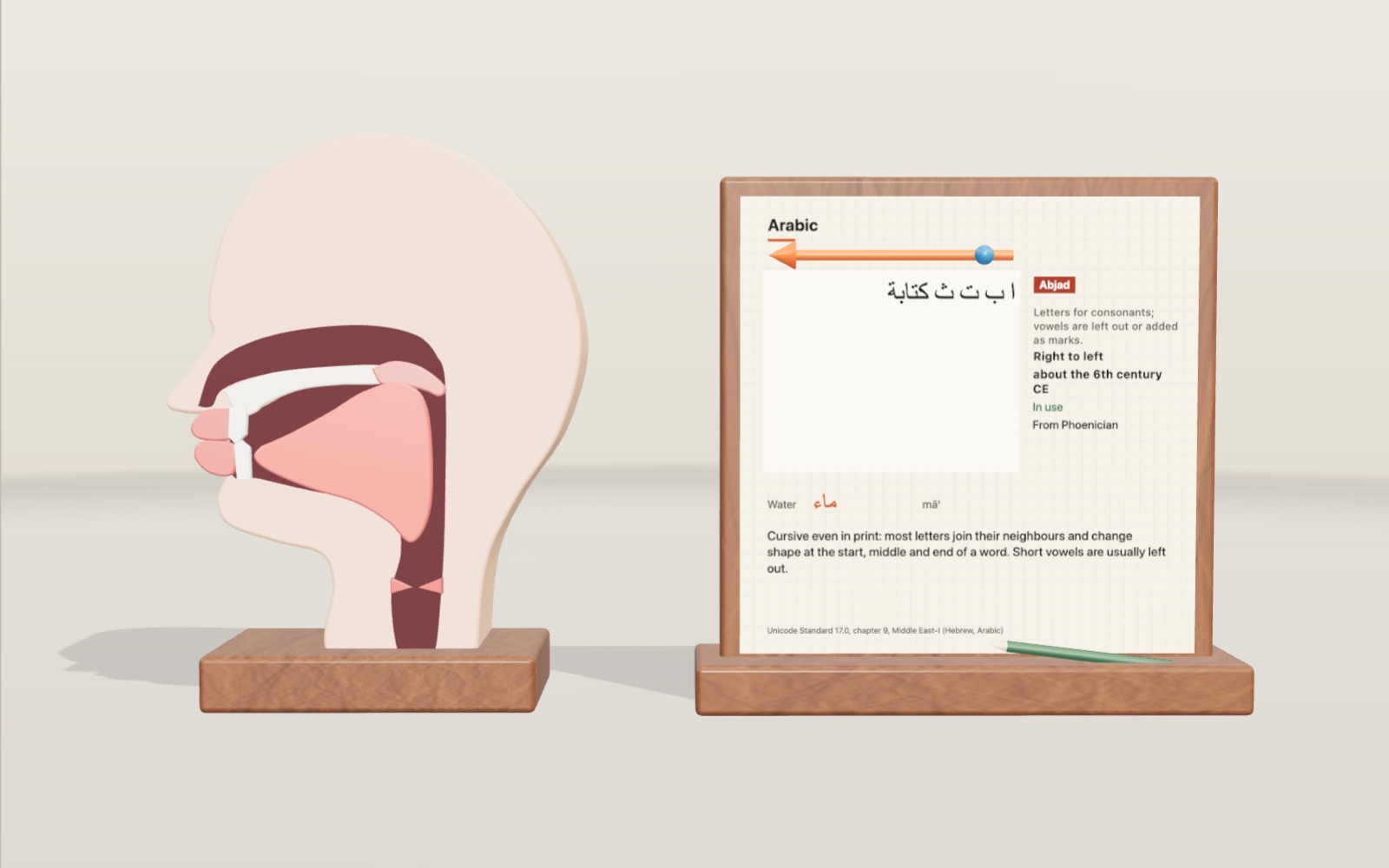
Writing systems of the world: Hangul and 22 more scripts
The 1446 book that announced Hangul says ㄱ draws the tongue root closing the throat. Here it stands beside 22 other scripts, from clay wedges to Braille.

Braille, semaphore and fingerspelling: how the codes work
A braille dot is 1.5 mm across, and six of them in a 2 by 3 grid give 64 patterns that Korean, English, Japanese and music braille all share.
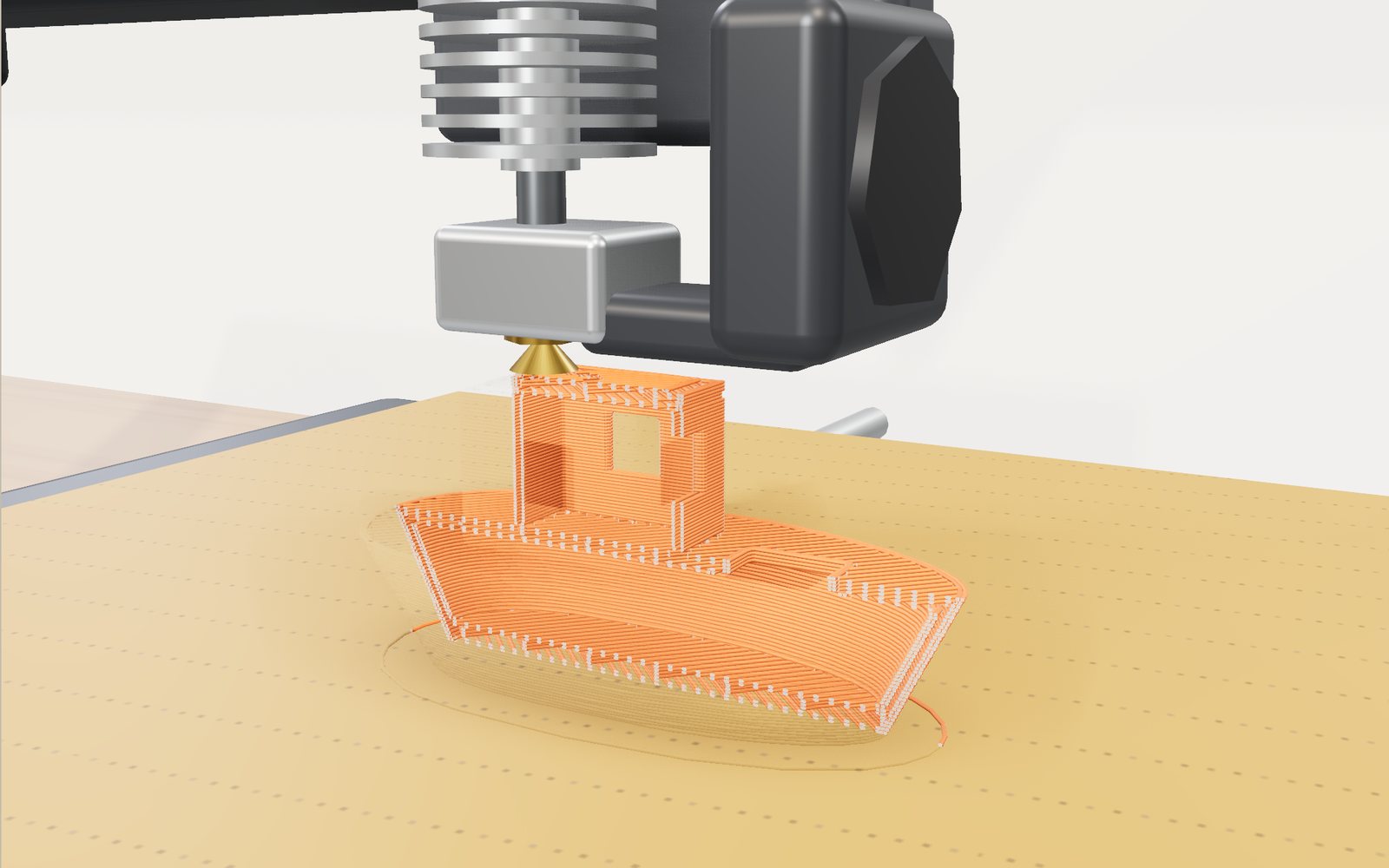
How a 3D printer works, layer by layer
A 20 mm cube printed in 0.2 mm layers is exactly 100 layers, each drawn by a nozzle 0.4 mm wide.
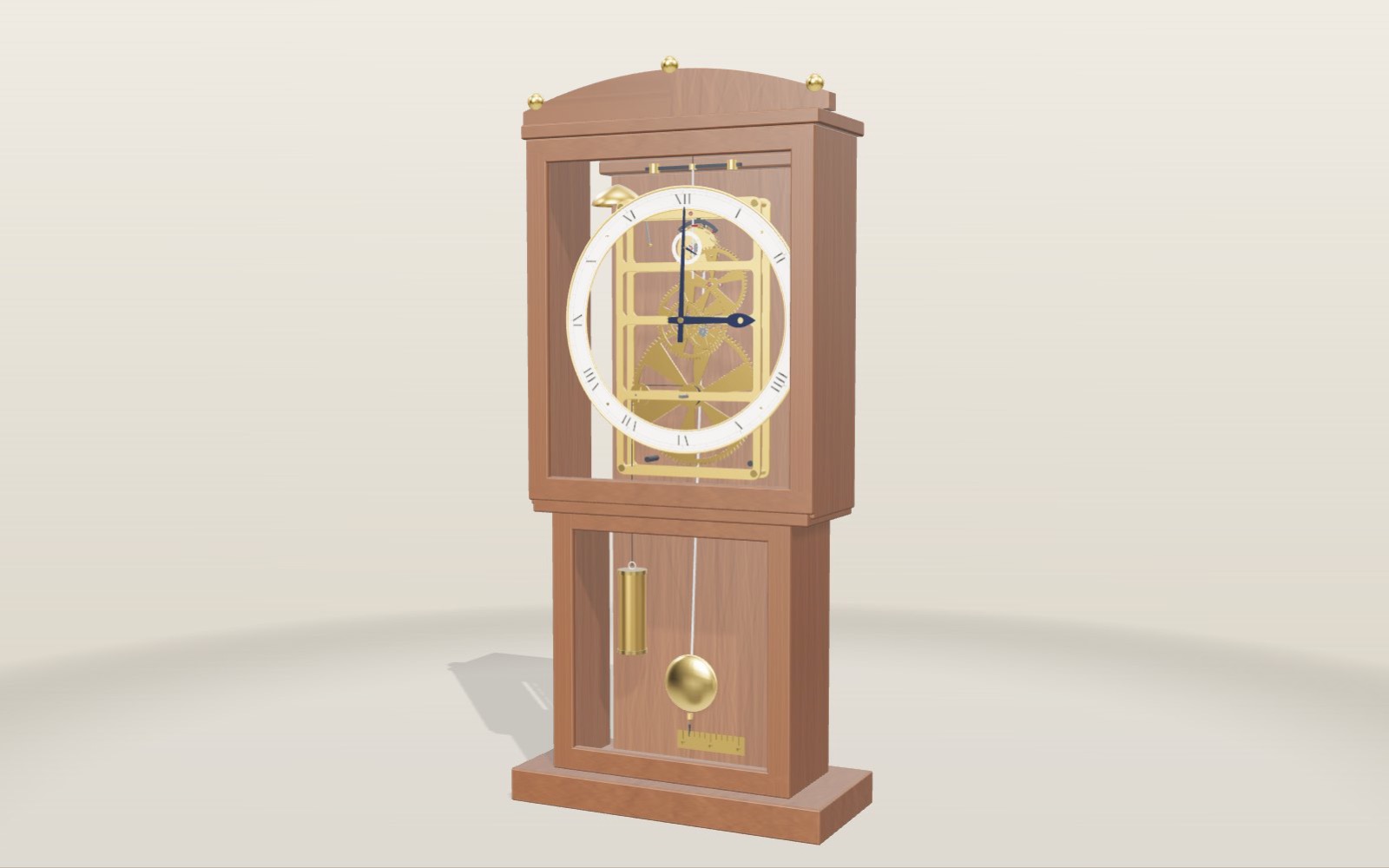
How a pendulum clock works, and why its length sets the time
A pendulum clock counts seconds with one rod 99.4 cm long. Change its length, its temperature and its place on Earth, swap four escapements and see how many seconds a day each costs.
How film cameras and instant cameras work
At 1/1000 of a second a camera shutter never uncovers the whole frame at once: a narrow slit sweeps across the film instead.

Walk through the Sagrada Família
Inside the Sagrada Família the columns branch like trees 45 m up, and the sun moves blue and orange light across the floor.