FIG. 01How It Works
How a pendulum clock works, and why its length sets the time
A pendulum clock counts seconds with one rod 99.4 cm long. Change its length, its temperature and its place on Earth, swap four escapements and see how many seconds a day each costs.
This device cannot show the 3D model. You can read the guide steps below as text.
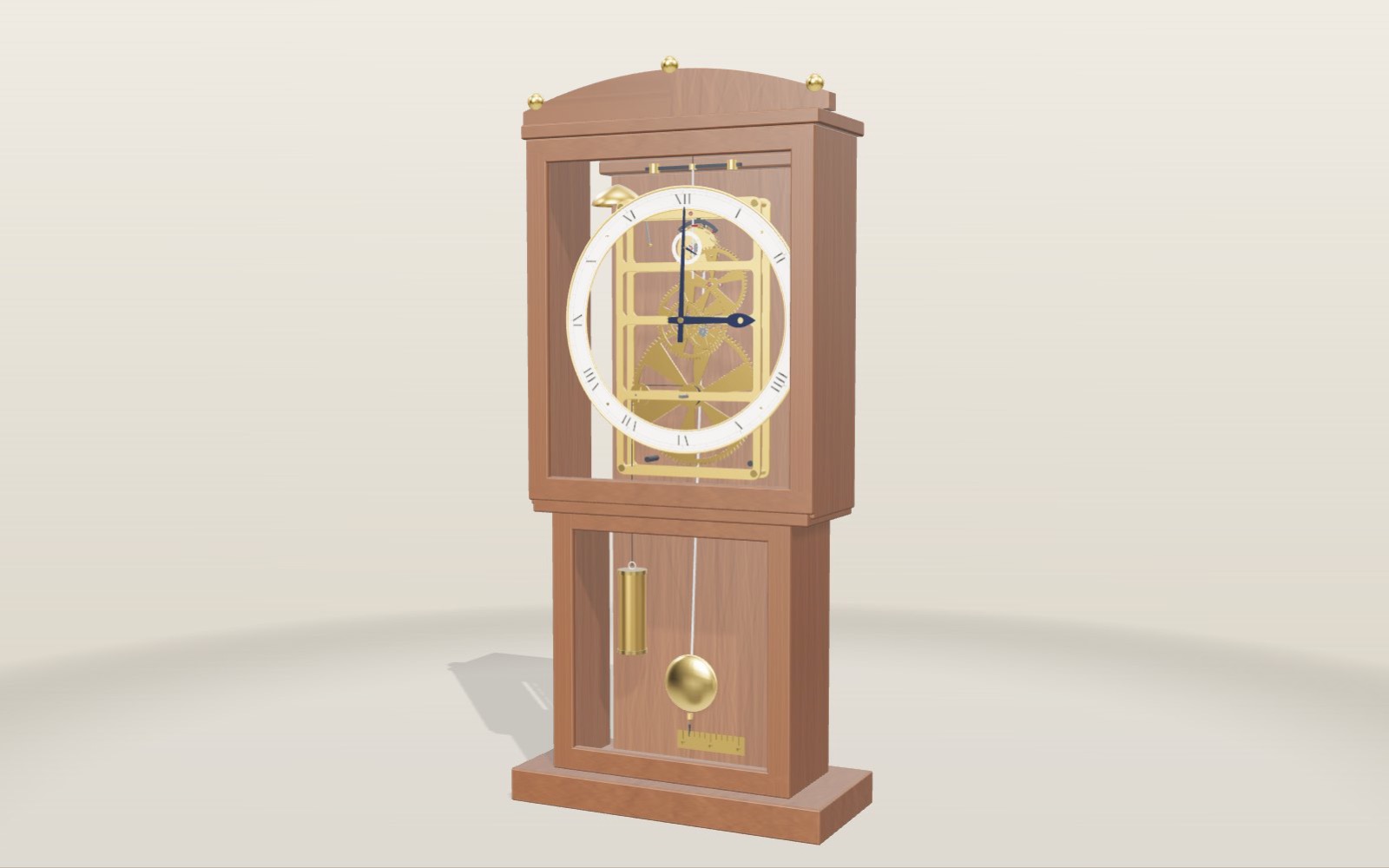
1 / 14 The whole clockA longcase clock about 1.6 m tall: a weight, four wheels, an escapement, a pendulum about a metre long and a bell. Drag to turn it, and scroll or pinch to zoom. The panel on the stage shows the beat and the error per day.
Drag to turn. Scroll or pinch to zoom.
What kind of clock this is
A longer pendulum takes more time to swing, so a pendulum clock with a longer effective pendulum runs more slowly. Raising the bob shortens that length and makes the clock run faster. The escapement releases the gear train in step with the swings while supplying small pushes.
Why does a clock tick at exactly the same pace all day? This exhibit answers that with one complete pendulum clock, and then lets you break it in every way clockmakers spent three centuries learning to prevent.
The model above is a longcase clock about 1.6 m tall, the kind often called a grandfather clock. Its walnut case has two glass doors, one in the hood in front of the dial and one in the trunk in front of the pendulum. Inside is a weight-driven movement with a skeleton frame, so you can see every wheel, and a small bell that the clock strikes on the hour. Use the View control to open it up: Whole clock, Inside (the case comes away), Escapement (a close view of the part that ticks) and Tower clock, a 1:8 model of the Great Clock of Westminster.
Read the clock from the bottom up. A weight pulls on a cord wound around a drum. The drum is fixed to the great wheel, which drives a chain of smaller and faster wheels called the going train. At the top of the train sits the escape wheel, and resting on its teeth is the anchor, which rocks back and forth with the pendulum. The pendulum decides how fast everything is allowed to move; the weight only supplies the push.
The numbers in the model are the real ones for this design. The pendulum is a seconds pendulum, the escape wheel has 30 teeth, the wheels have 96, 64 and 60 teeth driving pinions of 8 leaves, and the hands are set to your own local time when the page opened. The small table on the stage shows what the clock is doing right now: the length of one beat, how many seconds a day it gains or loses, the strength of gravity where it stands, the effective length of the pendulum, how wide it swings and how long the weight will keep it going. Every one of those numbers is calculated in the page from the settings in Controls.
Why the weight doesn't just fall
A weight is the simplest battery a clock can have. Lifting it stores energy; letting it down releases that energy at whatever rate the mechanism permits. Unlike a coiled spring, a weight pulls with the same force whether the cord is nearly full or nearly empty, which is one reason precision regulators stayed weight-driven long after springs were common in household clocks.
On its own the weight would fall to the floor in moments. In the clock, it is allowed to descend only as fast as the great wheel turns: once every 12 hours. With the drum in this model (radius 20.5 mm), that pays out 12.9 cm of cord per turn, or about 25.8 cm a day. Real eight-day clocks hang the weight on a pulley, which halves the drop, and give the drum enough turns of cord for the full week. In the model the Cord on the drum control sets how many turns are left, from 0 to 16; each turn is 12 hours of running, so 16 turns is eight days. The weight's travel on screen is shortened to fit the case. Run the cord down to zero and the clock stops: the pendulum keeps swinging for a while on its own, smaller and smaller, until it no longer unlocks the escapement.
The Weight control changes how hard the weight pulls, from 1 to 8 kg. With a pendulum, a heavier weight does not make the clock run faster. It makes the pendulum swing a little wider, because each push from the escapement carries more energy. That wider swing does change the rate slightly, for a reason explained below under circular error. With the oldest escapement, the verge and foliot, the weight changes the rate directly, and by a lot.
Four wheels that speed things up 720 times
Each arbor in the train carries two things: a large wheel and a small toothed pinion. The wheel on one arbor drives the pinion on the next, and because the pinion is much smaller, the next arbor turns faster. Clockmakers count pinion teeth as "leaves".
| Mesh | Teeth | Speed-up |
|---|---|---|
| Great wheel → centre pinion | 96 → 8 | × 12 |
| Centre wheel → third pinion | 64 → 8 | × 8 |
| Third wheel → escape pinion | 60 → 8 | × 7.5 |
| Great wheel → escape wheel | × 720 |
The great wheel turns once in 12 hours, so the centre arbor turns 12 times in 12 hours, once an hour. That arbor carries the minute hand. The third arbor turns 8 times an hour, and the escape arbor 7.5 times faster again: 60 times an hour, once a minute. That is why the seconds hand can sit directly on the escape wheel arbor.
Notice that the train only multiplies speed. Nothing in it knows what a second is. Without the escapement, the weight would spin the whole train in a blur and the hands would race around the dial.
The Third wheel control lets you change the 60-tooth wheel for one with 54 to 66 teeth. The seconds hand does not care, because it sits on the escape arbor, which still turns once a minute. The minute and hour hands do care: with 61 teeth the escape wheel turns 61 times for each turn of the minute hand, so the minute hand runs slow by 1 part in 61, about 1,417 seconds a day. Clockmakers choose tooth counts so that the ratios come out exact, and a single tooth too many is a gross error. The pendulum can be perfect and the clock still wrong.
The escapement lets the train move half a tooth at a time
The escapement is the gatekeeper between the train and the pendulum. It does two jobs at once: it lets the train move forward in small, equal steps, and it hands a tiny amount of energy back to the pendulum on every swing so that the swing never dies out.
This model uses the deadbeat form of the anchor escapement, the version used in nearly all precision pendulum clocks. Set the speed to 0.25× and use the tour's fourth step to watch one cycle closely:
- Lock. A tooth of the escape wheel rests on the curved locking face of one pallet. That face is an arc centred on the anchor's pivot, so while the tooth presses on it, the pallet can slide past without pushing the wheel back. The wheel is stopped dead, and the pendulum swings freely.
- Unlock and impulse. As the pendulum swings back toward the middle, the locking face slides off the tooth and the tooth meets the pallet's sloping impulse face. The wheel turns and the tooth pushes along that slope, giving the anchor, and through the crutch the pendulum, a small push. This happens near the bottom of the swing, which is the best place for it.
- Drop. The tooth slips off the end of the pallet. The wheel jumps forward a short distance until a tooth on the other side lands on the other pallet's locking face. That landing is the tick you hear.
The two pallets in this design sit 90° apart around the escape wheel, which puts the anchor's pivot about 1.41 (the square root of 2) times the wheel's radius above the wheel's centre and lets each arm meet the wheel at a tangent. The pallets span seven and a half teeth, so when one pallet is locking a tooth tip, the other sits exactly halfway between two teeth. Each swing lets the wheel advance half a tooth, and two swings move it one full tooth.
In the older recoil anchor, the locking faces are not arcs, so the pendulum pushes the wheel slightly backwards after each tick. You can see the difference on old clocks: if the seconds hand jerks back a little after every tick, the clock has a recoil escapement.
Four escapements, six centuries
The Escapement control swaps the part that ticks. Each one was the best available answer for its time.
Verge and foliot (from the 14th century). The first mechanical clocks had no pendulum at all. A vertical staff, the verge, carries two small flags that catch the teeth of a crown wheel, a wheel whose teeth point along its axis. On top of the verge sits the foliot, a bar with two weights. The crown wheel pushes one flag, the foliot swings round, the other flag catches a tooth on the opposite side and the push reverses. The foliot has no natural period of its own: it swings as fast as the crown wheel can push it. Make the weight heavier and the clock runs faster; move the foliot weights outwards and it runs slower. In the model the Pendulum length control moves the foliot weights when the verge is fitted. The swing is wide, around 40° each way, and the rate follows the drive. Going from 4 kg to 6 kg in the model makes the verge clock gain more than five hours a day.
Recoil anchor (London, about 1671). With a pendulum the clock finally had a regulator with its own period. The anchor let the pendulum swing only a few degrees, which made long, slow pendulums practical. Its pallet faces are straight slopes, so after each tick the swing carries on and pushes the escape wheel slightly backwards. Watch the escape wheel in the model with the recoil anchor fitted: it shivers back a little each time a tooth locks.
Deadbeat (George Graham, about 1715). Graham shaped the locking faces as arcs about the anchor's pivot. The tooth rests on the arc and does not move, so the wheel and the seconds hand stop dead between ticks. The impulse comes near the bottom of the swing, where it disturbs the period least. This is the escapement in the model when it opens, and the standard for precision pendulum clocks until electric clocks replaced them.
Grasshopper (John Harrison, 1720s). Harrison, a carpenter who made his first clocks largely of wood, wanted a clock that needed no oil, because oil thickens and changes the rate. His grasshopper escapement catches each tooth with a hinged arm that kicks away cleanly without sliding friction. Royal Museums Greenwich records that his precision longcase clocks of the mid-1720s kept time to about one second in a month.
A fifth kind, the gravity escapement, appears on the tower clock: there the train only lifts two arms, and the pendulum is pushed by the arms falling under their own weight. More on that below.
Why the pendulum keeps time
A pendulum's period, the time for one complete back-and-forth swing, depends almost only on its length and on gravity. For small swings:
T = 2π √(L / g)
A seconds pendulum takes one second for each swing, so its full period is 2 seconds. With standard gravity, g = 9.80665 m/s², that requires L = gT²/4π² = 0.9936 m, measured from the bending point of the suspension spring to the bob's centre of oscillation. That is the long rod you see in the model, and the reason tall longcase clocks are the shape they are.
The 30-tooth escape wheel and the seconds pendulum fit together exactly: 2 beats per tooth × 30 teeth = 60 beats per turn = one turn per minute.
Try the Pendulum length control. Because the period goes with the square root of the length, a quarter of the length beats twice as fast: at 0.25 m one beat takes about 0.50 s and the clock runs at double speed. Halving the beat needs a pendulum four times shorter, which is why mantel clocks with short pendulums beat quickly and tower clocks with long ones beat slowly. The rating nut is a much finer version of the same control: it moves the bob up or down by fractions of a millimetre.
Gravity is not the same everywhere
The formula has a second variable, and it is not a constant. Gravity is about 0.5% stronger at the poles than at the equator, partly because the Earth bulges at the equator, which puts you further from its centre, and partly because the Earth's spin throws you outward a little there. It also weakens with height, by about 0.003 m/s² per kilometre.
The model uses the standard formula for the shape of the Earth (the WGS 84 normal gravity formula) plus that height correction. The clock was regulated at 45° latitude at sea level. Move it with the Latitude and Altitude controls, or with the place buttons in the lab under the controls, and see what happens:
| Place | Gravity (m/s²) | Seconds pendulum | Clock regulated at 45° |
|---|---|---|---|
| Quito (0.2° S, 2,850 m) | 9.7715 | 990.1 mm | loses 153 s a day |
| Singapore (1.3° N) | 9.7803 | 991.0 mm | loses 114 s a day |
| Seoul (37.6° N) | 9.7995 | 992.9 mm | loses 30 s a day |
| Paris (48.9° N) | 9.8096 | 993.9 mm | gains 15 s a day |
| London (51.5° N) | 9.8120 | 994.2 mm | gains 25 s a day |
| Oslo (59.9° N) | 9.8190 | 994.9 mm | gains 56 s a day |
| North Pole | 9.8322 | 996.2 mm | gains 114 s a day |
Five millimetres separate the seconds pendulum at the equator from the one at the pole.
Heat, cold and compensated pendulums
Metals grow when they warm. A steel rod expands by about 12 millionths of its length for each degree Celsius. For a 0.994 m pendulum that is 0.012 mm per degree, which sounds like nothing until you remember that a millimetre is worth about 43 seconds a day. Warm the room by 10 °C and a plain steel pendulum loses about 5 seconds a day. That is why an uncompensated clock runs slow in summer and fast in winter.
The Pendulum rod control offers five answers.
- Steel rod. The plain rod in the model. Expansion about 12 × 10⁻⁶ per °C: between 5 °C and 30 °C the rate changes by about 13 s a day.
- Wooden rod. Straight-grained wood expands much less along the grain, around 4 × 10⁻⁶ per °C in the model, so many good domestic clocks used it. It does swell with humidity, which a metal rod ignores.
- Gridiron. John Harrison's design of 1726: steel rods expand downwards and brass rods, which expand about 19 × 10⁻⁶ per °C, are arranged to expand upwards. If the rods are cut so that steel length × 12 equals brass length × 19, the two cancel. For a net length of 0.994 m that means about 2.70 m of steel and 1.70 m of brass in series, which is why gridirons have five or nine rods side by side.
- Mercury jar. George Graham's answer of 1721: the bob is a glass jar of mercury. When the rod lengthens and lowers the jar, the mercury expands and its level rises, lifting the centre of the bob. Mercury expands by about 181 millionths of its volume per degree; the model's calculation gives a column about 14.6 cm tall to cancel a 0.994 m steel rod.
- Invar rod. Invar, an alloy of iron with about 36% nickel, barely expands at all: about 1.2 × 10⁻⁶ per °C in the model. Many precision regulators of the 20th century used it.
A real compensated pendulum never cancels perfectly, so the model gives the gridiron and the mercury jar a small leftover expansion. Try the third task in the lab: warm the room to 30 °C, watch the steel pendulum lose time, then pick a rod that keeps the gap between 5 °C and 30 °C within 2 seconds a day. The chart in the lab shows a whole year with the room going from 5 °C in January to 30 °C in July: the steel pendulum swings back and forth by several minutes over the year, while the compensated ones stay within seconds.
Circular error and the drive
T = 2π √(L / g) is only exact for vanishingly small swings. Wider swings take slightly longer, a problem Christiaan Huygens analysed in his 1673 book Horologium Oscillatorium. For a swing of θ each side, the period grows by roughly θ²/16, with θ in radians. That correction is tiny, but it never goes away: the deadbeat pendulum in the model swings ±3°, which already costs about 15 seconds a day compared with an infinitely small swing. The rating nut takes care of that once.
The trouble comes when the swing changes. If the drive force changes, through thickening oil, a dirty pivot or a different weight, the swing changes, and so does the rate. Going from ±3° to ±4° loses about 11.5 seconds a day. That is why escapements with small, steady swings were such an advance, and why the Weight control has such different effects:
| Escapement | Swing at 4 kg | Swing at 6 kg | Rate change |
|---|---|---|---|
| Verge and foliot | ±40° | ±49° | gains about 5 h 24 min a day |
| Recoil anchor | ±4.5° | ±5.5° | loses about 17 s a day |
| Deadbeat | ±3.0° | ±3.7° | loses about 7 s a day |
| Grasshopper | ±5.0° | ±6.1° | loses about 21 s a day |
The model treats the swing as growing with the square root of the drive, a simple rule that is good enough to show the difference. In 1826 the astronomer George Airy showed that an impulse delivered symmetrically about the bottom of the swing does not change the period, which is the reason the deadbeat gives its push there.
The numbers, worked out
| Change | Effect on the rate |
|---|---|
| Pendulum 1 mm longer | loses about 43 s a day |
| Swing grows from ±3° to ±4° | loses about 11.5 s a day (circular error) |
| Steel rod 10 °C warmer (expansion about 12 × 10⁻⁶ per °C) | loses about 5 s a day |
| Clock regulated at 45° taken to the equator | loses about 114 s a day |
| Clock taken 1,000 m higher | loses about 14 s a day |
| Third wheel with 61 teeth instead of 60 | minute hand loses about 1,417 s a day |
| Verge clock, weight from 4 kg to 6 kg | gains more than 5 hours a day |
These were calculated from the pendulum formula. For length, temperature and gravity, the period scales with the square root of L/g, so a fractional change in either gives half that fractional change in rate. For amplitude, the exact large-swing period was used (the arithmetic-geometric mean form, which the page checks against the series 1 + θ²/16 + 11θ⁴/3072 + …).
The rating nut under the bob is the owner's adjustment. Turning it moves the bob up or down a fraction of a millimetre, and by the first row of the table, a single millimetre is worth more than 40 seconds a day. The first task in the lab starts you with a clock that loses about 10 seconds a day: about a quarter of a millimetre on the nut fixes it.
Striking the hours
A clock that strikes has a second train beside the going train, in many longcase clocks with its own weight. When the minute hand reaches the hour, a lever releases it. The striking train lifts a hammer and lets it fall on the bell once for each hour: once at one o'clock, twelve times at noon and midnight, 78 blows in 12 hours. A small fan, the fly, spins while the train runs; air resistance on its vanes keeps the blows evenly spaced. When the right number has been struck, the train is locked again until the next hour.
In the model the Strike the hours control turns striking on or off, and the lab has a button to strike the current hour at once. Song I-yeong's armillary clock of 1669 did the same job a different way: iron balls rolling down a channel tripped its hammer.
A tower clock: the Great Clock of Westminster
Set View to Tower clock and the camera moves to a 1:8 model of the clock in the Elizabeth Tower, the clock most people call Big Ben (strictly, Big Ben is its hour bell). UK Parliament publishes the figures: four dials 7 m across, each with 324 pieces of pot opal glass and the four o'clock written IV, minute hands 4.2 m long, a movement 4.7 m long and 1.4 m wide on a cast iron frame weighing 5 tonnes, and a pendulum 4.4 m long weighing 310 kg that beats once every 2 seconds. Its bob, 203 kg, is made of concentric tubes of steel and zinc.
A 2 second beat needs an effective length of about 3.98 m in London's gravity, which is why the pendulum, measured overall, is 4.4 m. In the model it hangs through a slot in the floor of the clock room.
When the Astronomer Royal George Airy refereed the 1846 competition for the clock, he asked that it be accurate to within one second when striking the hour. No design was good enough until Edmund Beckett Denison's of February 1852. The clock was installed in April 1859 and began keeping time on 31 May 1859, checked by telegraph against the chronometers at Greenwich.
Denison's answer to Airy's demand was the double three-legged gravity escapement. On a tower clock, wind and snow push on enormous hands, and that force runs back through the train. In an anchor escapement it would reach the pendulum and change its swing. In the gravity escapement, the train never touches the pendulum: it only lifts two arms, one after the other, and each arm then falls back and pushes the pendulum with nothing but its own weight. The push is the same whatever happens to the hands. A fly on the escape arbor slows the wheel so that it does not hammer the arms.
The Great Clock is regulated with pre-decimal pennies laid on a tray on the pendulum. Adding one makes the clock gain two fifths of a second (0.4 s) in 24 hours, because the coin raises the pendulum's centre of oscillation a tiny amount. The last task in the lab starts the model losing 1.2 seconds a day; three pennies put it right.
Big Ben's Great Clock, dial by dial
UK Parliament's Great Clock facts page lists the parts most visitors see from the street. Each of the four dials is 7 m across in a cast iron frame, glazed with 324 pieces of pot opal glass, and the hour figures are 60 cm long. Each dial is lit by 28 energy efficient bulbs of 85 watts, each rated for 60,000 hours. The minute hands are copper sheet, 4.2 m long and 100 kg with their counterweights, and travel the equivalent of 190 km a year. The hour hands are gun metal, 2.7 m long and 300 kg with counterweights.
Behind the dials, the same page gives the movement as 4.7 m long, 1.4 m wide and 5 tonnes on a cast iron girder frame, with a 4.4 m, 310 kg pendulum beating every 2 seconds. It credits Edmund Beckett Denison's double three-legged gravity escapement with compensating for outside pressure such as wind on the hands, which it calls crucial for accuracy. Those long, heavy hands are the reason: wind pushing on 4.2 m of copper would otherwise reach the pendulum through the train.
The Go to Big Ben button on the stage moves the camera to the 1:8 tower model and lists the Big Ben entries in the lab, including the penny regulation task.
How accurate they became
The comparison chart in the lab plots the error per day that the sources give, on a logarithmic scale, and adds your own clock with its current settings:
| Clock | Error per day | Source |
|---|---|---|
| Portable watches after the balance spring, about 1675 | about 10 minutes | NIST |
| Huygens's first pendulum clock, 1656 | under 1 minute | NIST |
| Huygens's later clocks | under 10 seconds | NIST |
| Graham's compensated clock, 1721 | about 1 second | NIST |
| Harrison's H4 at sea, 1761 | about 0.2 second | NIST |
| Harrison's precision longcase clocks, mid-1720s | about one second a month | Royal Museums Greenwich |
| Riefler's nearly free pendulum, 1889 | about 0.01 second | NIST |
In about 230 years the best pendulum clocks improved by a factor of several thousand. Most of that came from attacking the errors described above, one at a time: the escapement (circular error and drive), the rod (temperature) and finally the connection between pendulum and train, which Riefler made nearly free and Shortt cut altogether by giving the hands to a second, slave pendulum.
How the pendulum clock came about
Mechanical clocks appeared in European towers in the 14th century, regulated by a verge and a swinging bar called a foliot. Their rate depended heavily on the driving force, and errors of many minutes a day were normal.
In 1656 Christiaan Huygens built the first pendulum clock. Galileo had studied pendulums decades earlier and sketched a pendulum clock, but never completed one before his death in 1642. Huygens's early pendulum clocks erred by less than a minute a day, and his later refinements by less than ten seconds. In 1673 he published Horologium Oscillatorium, a mathematical analysis of pendulum motion that showed why wide swings were a problem.
The anchor escapement followed around 1670: NIST dates William Clement's first clocks with the new anchor, or recoil, escapement in London to 1671. The deadbeat form was made famous by George Graham in his precision regulators from about 1715. By the 19th century it had spread to most quality pendulum clocks.
In Korea, the astronomy professor Song I-yeong built an armillary clock in 1669 for the Office of Special Counselors. Two weights drive it: one turns the time train and the other works a striking mechanism in which iron balls roll down a channel and trip the hammer. It is the only surviving astronomical clock of the Joseon period, is kept at Korea University Museum and is a National Treasure of Korea.
Pendulum clocks reached their peak in the early 20th century. Siegmund Riefler's clock of 1889, with a nearly free pendulum, kept time to a hundredth of a second (0.01 s) a day, and the Shortt free-pendulum clock of 1921 replaced it in many observatories. NIST, then the National Bureau of Standards, used a Riefler as its time interval standard from 1904 and a Shortt from 1929. Quartz oscillators, developed from the 1920s, and later atomic clocks left all mechanical timekeepers far behind. Today the second itself is defined by the frequency of the caesium 133 atom, and pendulums are measured against atoms rather than the other way round.
Watching the error add up
A rate of a few seconds a day is hard to picture, so the stage can show where the hands will be later. Ghost puts a second set of red hands on the dial, set to the time the clock will show after one day, one week, 30 days or a year at the current error. Fast forward runs those days past in about three seconds while the red hands drift away from the real ones.
A clock regulated at 45° latitude and carried to the equator loses about 114 seconds a day. After a week its ghost minute hand is 13.3 minutes behind. A plain steel pendulum in a 30 °C room loses 5.4 seconds a day, which becomes 38 seconds in a week and 162 seconds in 30 days. Choose a compensated rod and the ghost hands stay close to the real ones.
The button Aim for 0.0 s on the first screen starts the finest regulation task. The clock is moved to Seoul and the room is at 24 °C, so it begins 32.0 seconds a day slow. The nut buttons on the stage turn the rating nut by 0.1 mm at a time, worth about 4.3 seconds a day. The Fine buttons turn it by 1/250 of a turn. With a thread of 0.5 mm per turn that is 0.002 mm, about 0.09 seconds a day, small enough to bring the error to 0.0 seconds. The nut ends near 1.49 mm.
The rod under a magnifier
Thermal growth is far too small to see at full size. The Rod magnifier draws the pendulum at 20 °C beside the pendulum now and enlarges only the change, several hundred to a few thousand times. Warm the room from 20 °C to 40 °C and the effective length of the steel rod grows by 0.238 mm. A wooden rod grows by 0.080 mm. The Wood Handbook of the US Forest Products Laboratory gives 3.1 to 4.5 millionths per kelvin along the grain for dry wood, and the model uses 4. An invar rod grows by 0.024 mm. Charles Edouard Guillaume received the 1920 Nobel Prize in Physics for discovering the anomalies in nickel steel alloys behind invar.
In a gridiron the magnifier shows two arrows. The steel rods, 2.70 m of them in series, push the bob down by 0.647 mm, and the brass rods lift it back by 0.631 mm, so the bob moves only 0.016 mm. The mercury jar does the same with a column of mercury. The rod lowers the jar by 0.238 mm, the rising mercury lifts the centre of the bob by 0.227 mm, and 0.012 mm is left over. That leftover is the model's small residual expansion for compensated rods (0.8 and 0.6 millionths per °C), not a measurement of any one clock.
Gravity on a map
The lab has a world map with 18 cities. Tapping a city moves the clock there with its altitude, and tapping anywhere else sets that latitude at sea level. Gravity comes from the WGS 84 normal gravity formula. It depends only on latitude, so north and south give the same value, and it falls by 3.086 × 10⁻⁶ m/s² for every metre of height. The scale beside the map runs from 9.780 m/s² at the equator to 9.832 m/s² at the poles. The standard acceleration of gravity, 9.80665 m/s², is a fixed reference value listed by NIST and lies close to the value at 45°.
The clock was regulated at 45° latitude at sea level, so the map gives these daily errors before any correction. Quito, 2,850 m up and almost on the equator, is 153 seconds slow. Lhasa, 3,650 m up, is 108 seconds slow, and Seoul is 30 seconds slow. London is 25 seconds fast, Reykjavík 70 seconds fast and the North Pole 114 seconds fast. The seconds pendulum changes with gravity too, from 990.1 mm in Quito to 996.2 mm at the pole.
Water clocks, astronomical clocks and Harrison's middle clocks
Korea's striking water clock is older than any pendulum clock. Jagyeongnu was built in 1434 under King Sejong by Jang Yeong-sil and struck a bell, a gong and a drum by itself at set times. Water flowed from a large vessel through a smaller one into a tall receiving vessel, and iron balls, each setting off the next, struck the instruments or made wooden figures hold up a tablet with the hour. What survives comes from a remake of 1536 and is a National Treasure at the National Palace Museum of Korea. The larger bronze vessel is 93.5 cm across and 70.0 cm tall.
Prague's astronomical clock was built in 1410 by Mikuláš of Kadaň and improved at the end of the 15th century. It stopped in 1865 and was in danger of being removed until the clockmaker Ludvík Hainz repaired it. Its dial shows four kinds of time, including the unequal Babylonian hours counted from sunrise to sunset. The astronomical clock in Strasbourg Cathedral is the third on its site. The second stopped for good in 1788, and Jean-Baptiste Schwilgué built an entirely new mechanism for its Renaissance case from 1838 to 1842.
Harrison's H2 and H3 sit between H1 and H4. H2, made between 1737 and 1739, added a remontoire to keep the drive to its two balances even, but Harrison found a fault in its balances and never let it go to sea. H3, started in 1740, took nearly 19 years to build and adjust and never won the prize. It did introduce the bimetallic strip and the caged roller bearing, both still in use. These clocks and Guillaume's invar are now in the lab list, which has 49 entries.
What the model simplifies
- The weight's travel is shortened to fit the case: on screen 16 turns of cord take 0.47 m, where the real drum would pay out about 2 m.
- The verge and foliot is fitted to the same movement as the other escapements so that you can swap them. Real foliot clocks were tower and chamber clocks with different trains, and their crown wheels had their own tooth counts. Its beat is set to 1 second at 4 kg so the hands stay comparable.
- The swing grows with the square root of the drive in every escapement. Real escapements also have their own small errors (the recoil anchor, for example, partly offsets circular error), which the model leaves out.
- Expansion coefficients are typical handbook values, and the compensated rods are given a small leftover expansion rather than a perfect zero.
- The tower clock is a 1:8 sketch: the three trains are drawn as simple wheels and barrels, and the escape wheel turns 60° per beat in the model.
- Air pressure, humidity, the stiffness of the suspension spring and the pendulum's own mass distribution are not modelled. A real seconds pendulum is a little longer overall than 0.994 m because its centre of oscillation sits slightly below the centre of the bob.
Try it yourself
The lab under the controls has ten tasks. Each one sets the clock up for you, and a tick appears when the clock meets the goal. Your progress is kept in this browser.
- Fix a clock that loses 10 seconds a day, using only the rating nut.
- Find the seconds pendulum: set the length so that one beat takes 1.000 s with the nut at zero.
- Why does it run slow in summer? Warm the room and choose a rod that cancels the heat.
- Take the clock to the equator and correct it.
- Compare the verge and the deadbeat when the weight goes from 4 kg to 6 kg.
- Regulate Big Ben with pennies.
- Aim for 0.0 s a day: regulate the clock in Seoul with the nut and Fine buttons on the stage.
- A month of summer: pick a rod so that the ghost hands stay within 25 seconds after 30 days at 30 °C.
- Move the clock to Lhasa on the world map and regulate it.
- Find a rod that grows less than 0.05 mm between 20 °C and 40 °C in the Rod magnifier.
Under the tasks are a drift calculator (how far the hands wander after a day, a week, a month and a year), the year of room temperature, places with different gravity, the accuracy chart, a world map of gravity, and 49 clocks and turning points in history, each with its source and a button that sets the model to match.
Questions
Why does a pendulum clock tick?
The tick is the sound of an escape wheel tooth dropping onto a pallet after it slips off the other one. It happens once per swing, so a clock with a seconds pendulum ticks once a second.
What is the difference between an anchor and a deadbeat escapement?
Both use an anchor with two pallets. In the plain anchor, the pallet faces push the escape wheel slightly backwards after each tick (recoil). In the deadbeat, the locking faces are arcs centred on the anchor's pivot, so the wheel stays still while it is locked and the seconds hand stops dead between ticks.
Why is a seconds pendulum almost exactly one metre long?
Because a pendulum that takes one second per swing needs a length of g/π² metres, and the numerical value of standard gravity, 9.81, is close to π², 9.87. With standard gravity the length is 0.9936 m. Gravity varies from place to place, from 990.1 mm in Quito to 996.2 mm at the North Pole.
Does the weight run out?
Yes. When the cord is fully unwound the clock stops and the weight must be wound up again. Eight-day clocks hold enough cord for a little more than a week of running. In the model, set Cord on the drum to zero to watch it stop.
How is a pendulum clock adjusted?
By raising or lowering the bob with the rating nut. Raising it shortens the effective length and the clock gains; lowering it makes the clock lose. A millimetre changes the rate by about 43 seconds a day.
Why does my old clock run slow in summer?
Its pendulum rod expands in the heat. A steel rod 10 °C warmer is about 0.12 mm longer and loses about 5 seconds a day. Wooden rods expand less, and compensated pendulums (gridiron, mercury, invar) are built to cancel the effect.
Will a pendulum clock keep time if I move it to another country?
Not exactly. Gravity changes with latitude and altitude, so a clock regulated in one place gains or loses elsewhere: about 114 seconds a day between 45° and the equator. It needs regulating again with the rating nut. Moving a clock also means setting it level again, so that the ticks are evenly spaced (in beat).
Does a heavier weight make the clock run faster?
With a pendulum, only slightly, and in fact usually slower: the swing widens and circular error makes each swing take a little longer. With a verge and foliot, yes, and by a lot, because the foliot has no natural period of its own.
How does Big Ben keep time?
With a 4.4 m pendulum beating every 2 seconds, a gravity escapement that keeps wind on the hands away from the pendulum, and old pennies on the pendulum for fine adjustment: each penny makes it gain 0.4 seconds a day.
Why do tower clocks need a different escapement?
Their hands are huge and outdoors. Wind, snow and ice push on them, and in an ordinary anchor escapement that force would travel down the train and change the pendulum's swing. A gravity escapement gives the pendulum the same push every time, whatever the hands are doing.
How accurate can a pendulum clock be?
The best ones were very good. Riefler's clock of 1889 kept time to about a hundredth of a second (0.01 s) a day, and Shortt's free-pendulum clocks of the 1920s were better still.
Can a pendulum clock work on a ship or in space?
Not reliably. A rolling ship disturbs the pendulum, and without gravity a pendulum does not swing at all. Marine timekeepers such as Harrison's H1 to H4 use balances and springs instead. On the Moon, where gravity is 1.62 m/s², a seconds pendulum would need to be about 16.4 cm long.
How far off will a pendulum clock be after a month?
The daily error simply adds up. A clock that gains 1 second a day is 30 seconds fast after 30 days. A plain steel pendulum in a room 10 °C warmer than when it was set loses about 5.4 seconds a day, close to 3 minutes a month. Set Ghost to 30 days on the stage to see it on the dial.
Is a wooden pendulum rod better than a steel one?
Against heat, yes. Dry wood expands along the grain by 3.1 to 4.5 millionths per kelvin according to the US Forest Products Laboratory, about a third of steel. In the magnifier, warming from 20 °C to 40 °C lengthens the wooden rod by 0.080 mm against 0.238 mm for steel. Humidity is its weakness, so the rod has to be sealed.
Is Korea's Jagyeongnu a mechanical clock?
It is a water clock with a mechanism for striking. Its timekeeping came from water flowing steadily between vessels, not from an escapement and a pendulum. The mechanism turned that flow into signals: iron balls set off strikers for a bell, a gong and a drum, and wooden figures held up the hour. It was built in 1434, more than 200 years before Huygens' first pendulum clock of 1656.
Is Big Ben the clock or the bell?
Strictly, Big Ben is the Great Bell, the hour bell in the Elizabeth Tower at the Palace of Westminster. The clock is the Great Clock of Westminster, though most people use Big Ben for the clock and the tower as well. UK Parliament gives the clock four 7 m dials, a 4.4 m pendulum of 310 kg beating every 2 seconds, and Denison's double three-legged gravity escapement.
Terms
- Arbor: a rotating shaft carrying a wheel and a pinion.
- Pinion: a small toothed wheel; its teeth are called leaves.
- Going train: the wheels between the power source and the escapement.
- Striking train: a second train that lifts the hammer to strike the hours.
- Escapement: the mechanism that releases the train in equal steps and keeps the pendulum swinging.
- Pallet: the part of the anchor that a tooth locks and pushes against.
- Recoil: the backward push the escape wheel gets from a plain anchor after each tick.
- Verge and foliot: the earliest escapement, a staff with two flags and a weighted bar, used before the pendulum.
- Crown wheel: an escape wheel with teeth pointing along its axis, used with the verge.
- Crutch: the arm that connects the anchor to the pendulum rod.
- Rating nut: the nut under the bob that raises or lowers it to regulate the clock.
- Beat: one tick; for a seconds pendulum, one second.
- Circular error: the slight increase in a pendulum's period as its swing grows.
- Compensated pendulum: a pendulum built so that heat does not change its effective length (gridiron, mercury, invar).
- Gravity escapement: an escapement in which falling arms, not the train, push the pendulum.
- Fly: a spinning vane that uses air resistance to slow a striking train or an escape wheel.
Sources
National Institute of Standards and Technology, A Walk Through Time: A Revolution in Timekeeping (Huygens 1656, error under 1 minute then under 10 seconds a day; Clement 1671; balance spring about 1675; Graham 1721, 1 second a day; Harrison's chronometer at sea, about one fifth of a second a day; Riefler 1889, a hundredth of a second a day; Rudd about 1898; Shortt 1921; quartz). https://www.nist.gov/pml/time-and-frequency-division/popular-links/walk-through-time/walk-through-time-revolution
National Institute of Standards and Technology, A Walk Through Time: Early Clocks (water clocks, Tower of the Winds, Su Song's clock tower of 1088). https://www.nist.gov/pml/time-and-frequency-division/popular-links/walk-through-time/walk-through-time-early-clocks
National Institute of Standards and Technology, Time and Frequency Division History (Riefler clock 1904 to 1929, then a Shortt clock; first atomic clock 1949). https://www.nist.gov/pml/time-and-frequency-division/time-services/nist-time-and-frequency-division-history
Royal Museums Greenwich, Longitude found: the story of Harrison's timekeepers (precision longcase clocks of the mid-1720s, about one second a month; H1 trial to Lisbon in 1736). https://www.rmg.co.uk/stories/time/harrisons-clocks-longitude-problem
Royal Museums Greenwich, H1 (object ZAA0034). https://www.rmg.co.uk/collections/objects/rmgc-object-79139
Royal Museums Greenwich, H4 (object ZAA0037). https://www.rmg.co.uk/collections/objects/rmgc-object-79142
Royal Museums Greenwich, John Harrison's marine timekeepers. https://www.rmg.co.uk/royal-observatory/attractions/john-harrisons-marine-timekeepers
The Royal Observatory Greenwich, The Shepherd Gate Clock (1852; master clocks from Dent No. 2012 to Shortt and Synchronome clocks and MSF). https://www.royalobservatorygreenwich.org/articles.php?article=1085
UK Parliament, Great Clock facts (dials, hands, mechanism, pendulum 4.4 m and 310 kg, 2 second beat, pennies, double three-legged gravity escapement). https://www.parliament.uk/about/living-heritage/building/palace/big-ben/facts-figures/great-clock-facts/
UK Parliament, Constructing the most accurate clock in the world (Airy's one-second requirement, Denison's design of 1852, the clock running from 31 May 1859, the Great Bell). https://www.parliament.uk/about/living-heritage/building/palace/big-ben/building-clock-tower/constructing-the-most-accurate-clock-in-the-world/
국가유산청 국가유산포털 (Korea Heritage Service), Celestial Globe and Armillary Clock (Song I-yeong, 1669). https://www.heritage.go.kr/heri/cul/culSelectDetail.do?ccbaCpno=1111102300000&pageNo=1_1_2_0
Science Museum Group, Wells Cathedral clock, 1392 (object 1884-77 Pt1). https://collection.sciencemuseumgroup.org.uk/objects/co1347/wells-cathedral-clock-1392
Science Museum blog, Step back in time: two historical clocks are re-displayed, 25 August 2017. https://blog.sciencemuseum.org.uk/step-back-time-two-historical-clocks-re-displayed/
Science Museum Group, Shortt free pendulum clock, with cast metal base plate (object 1935-126). https://collection.sciencemuseumgroup.org.uk/objects/co551/short-free-pendulum-clock-with-cast-metal-base-plate
Science Museum Group, Model of the dead-beat escapement as invented by George Graham, object 1952-341. https://collection.sciencemuseumgroup.org.uk/objects/co742/model-of-the-dead-beat-escapement-as-invented-by-george-graham
Science Museum, The Clockmakers' Museum. https://www.sciencemuseum.org.uk/see-and-do/clockmakers-museum
Princeton University, Time Team, Graham Escapement (George Graham's deadbeat escapement of about 1715, the escapement of choice in finer pendulum clocks since; Graham's mercury compensation pendulum; princeton.edu answers scripted requests with 403). https://www.princeton.edu/~timeteam/graham.html
Horological Society of New York, John Harrison and a Clock for All Seasons: The Creation of the Gridiron Pendulum, 2025 (Harrison invented the gridiron pendulum of brass and steel rods in 1726). https://hs-ny.org/schedule/the-creation-of-the-gridiron-pendulum
BIPM, SI base unit: second. https://www.bipm.org/en/si-base-units/second
Royal Museums Greenwich, H2 (object ZAA0035; made 1737 to 1739, remontoire, never tried at sea). https://www.rmg.co.uk/collections/objects/rmgc-object-79140
Royal Museums Greenwich, H3 (object ZAA0036; started 1740, nearly 19 years of work, bimetallic strip and caged roller bearing). https://www.rmg.co.uk/collections/objects/rmgc-object-79141
Prague City Tourism, Old Town Hall with Astronomical Clock (1410, Mikuláš of Kadaň, stopped 1865, repaired by Ludvík Hainz, four kinds of time). https://prague.eu/en/objevujte/old-town-hall-with-astronomical-clock-staromestska-radnice-s-orlojem
Cathédrale Notre-Dame de Strasbourg, Horloge astronomique (the second clock stopped in 1788; Schwilgué's mechanism built 1838 to 1842). https://www.cathedrale-strasbourg.fr/horloge-astronomique
국가유산청 국가유산포털 (Korea Heritage Service), Clepsydra of Changgyeonggung Palace (Jagyeongnu, 1434 and the remake of 1536; vessels 93.5 cm and 46.0 cm across). https://www.heritage.go.kr/heri/cul/culSelectDetail.do?ccbaCpno=1111102290000&pageNo=1_1_1_1
US Forest Service, Forest Products Laboratory, Wood Handbook, chapter 4, Moisture relations and physical properties of wood, 2010 (thermal expansion of dry wood along the grain 3.1 to 4.5 × 10⁻⁶ per kelvin). https://research.fs.usda.gov/treesearch/37428
NobelPrize.org, Charles Edouard Guillaume, Facts (Nobel Prize in Physics 1920, for the discovery of anomalies in nickel steel alloys). https://www.nobelprize.org/prizes/physics/1920/guillaume/facts
NIST, CODATA value: standard acceleration of gravity (9.806 65 m s⁻², exact). https://physics.nist.gov/cgi-bin/cuu/Value?gn
Calculations on this page: pendulum length and rate changes computed from T = 2π√(L/g) and the exact large-amplitude period; gravity from the WGS 84 normal gravity formula with a free-air gradient of 3.086 × 10⁻⁶ s⁻²; expansion coefficients are model values (steel 12, brass 19, wood 4, invar 1.2 millionths per °C). Ghost hands show the daily error multiplied by the number of days; city latitudes and altitudes on the map are rounded.
UK Parliament, Great Clock facts (dials, glass, bulbs, hands, movement, pendulum, bob, pennies, gravity escapement). https://www.parliament.uk/about/living-heritage/building/palace/big-ben/facts-figures/great-clock-facts/ (2026-10-27)
Course 3 of 8
Old machines, oldest firstMore exhibits
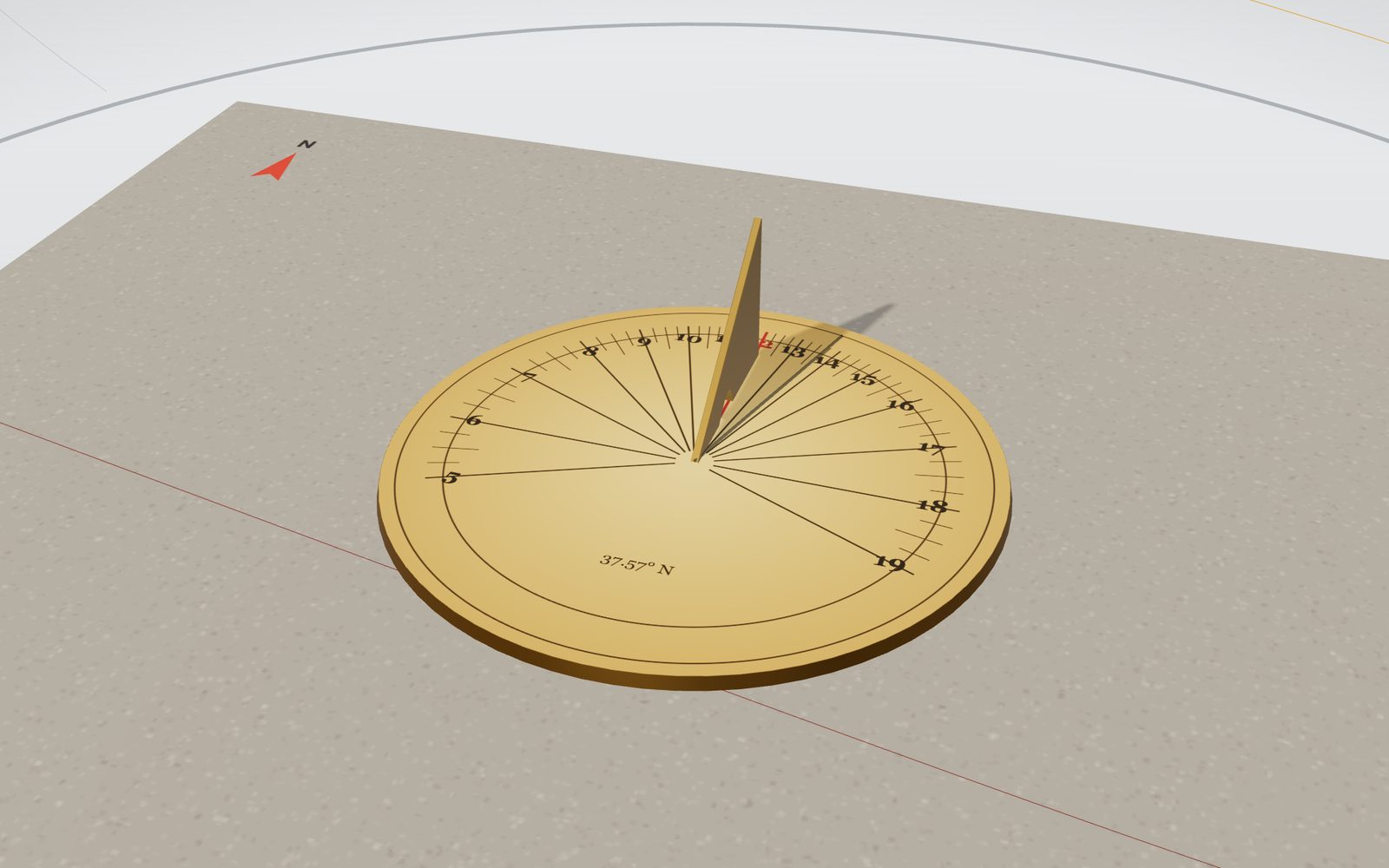
Sundial: interactive model, how to read the time
In Seoul a sundial reads about half an hour behind the clock, because the city lies 8° west of the meridian that sets Korean time.
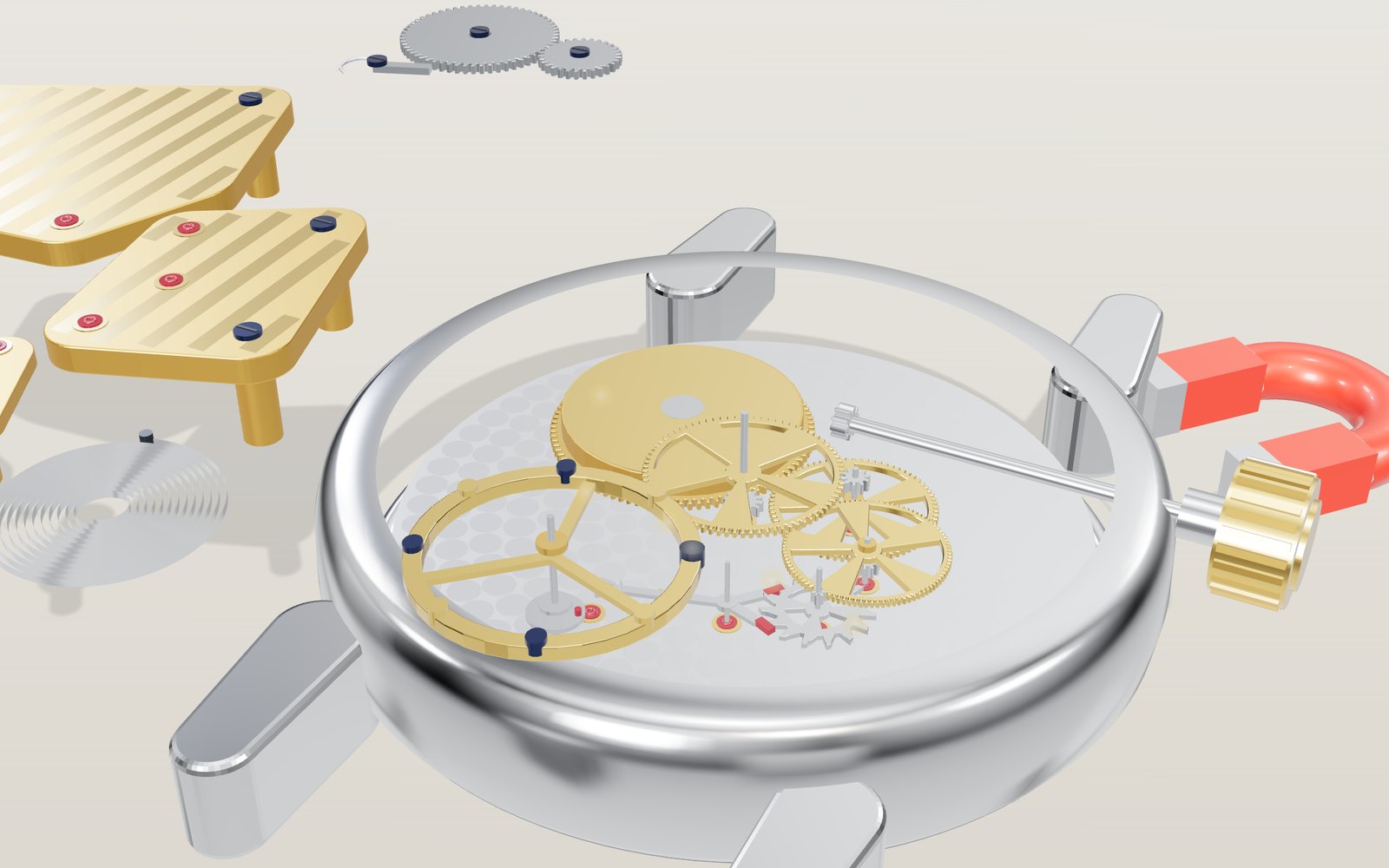
How does a mechanical watch work without a battery?
A balance wheel the size of a fingernail swings eight times a second, and each swing lets the gears move on by half a tooth.
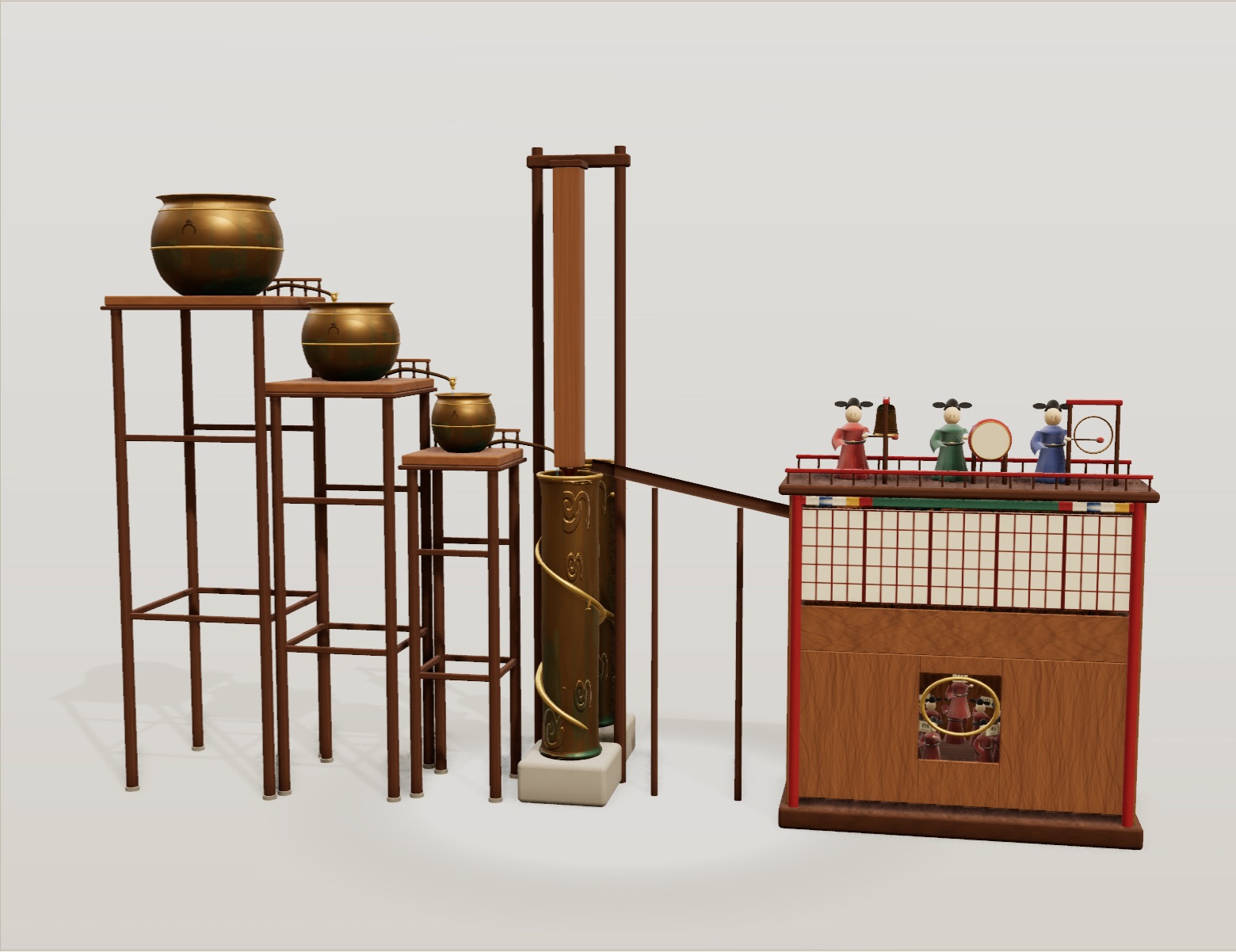
How the Jagyeokru water clock works
In 1434 a float rising in a bronze vessel in Seoul began to drop small balls that set wooden figures striking a bell, a drum and a gong.
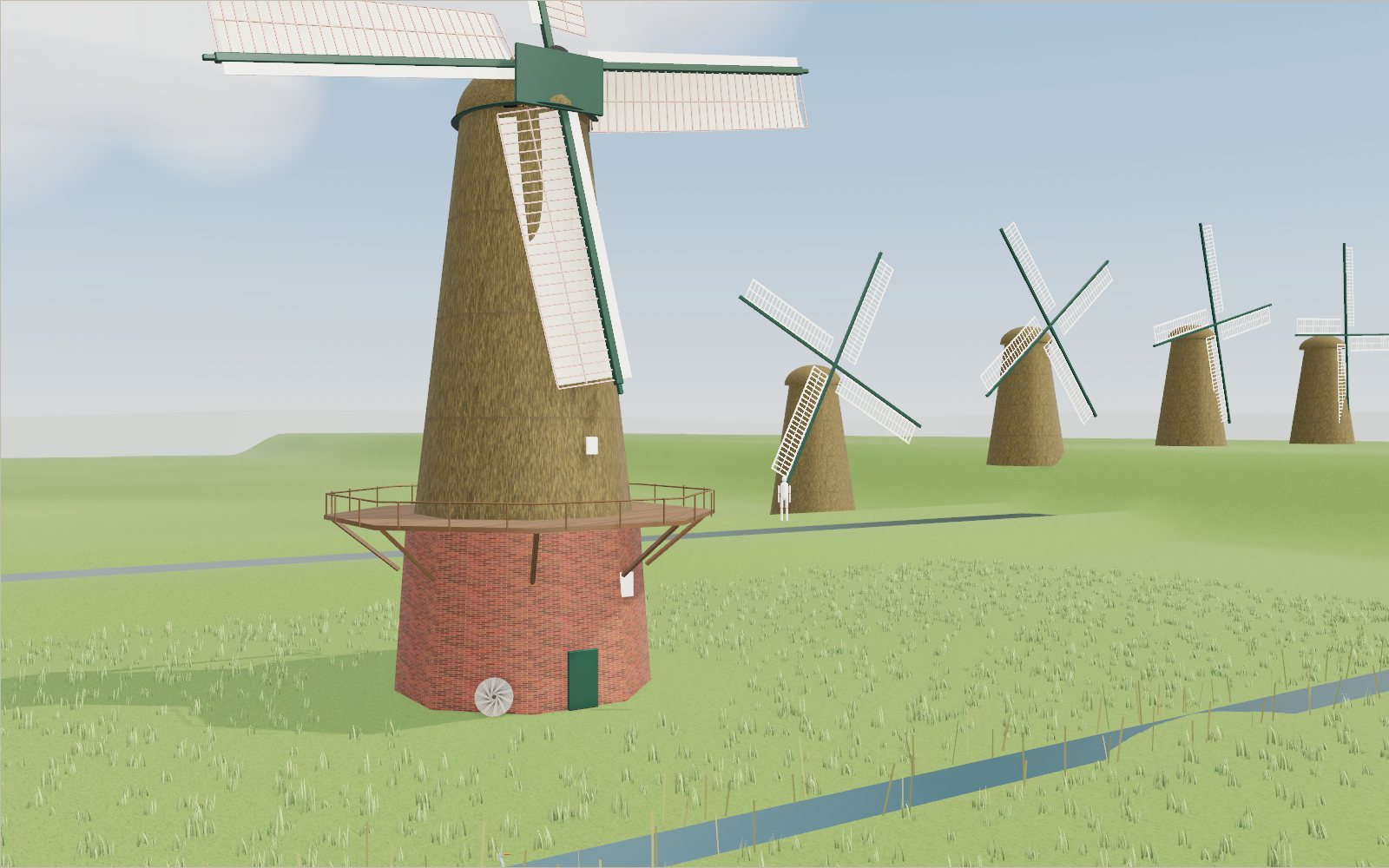
How windmills and watermills work
The sails of a Dutch mill are as wide as an eight-storey building is tall, and at 7 m/s they still take only about a fifth of the wind.
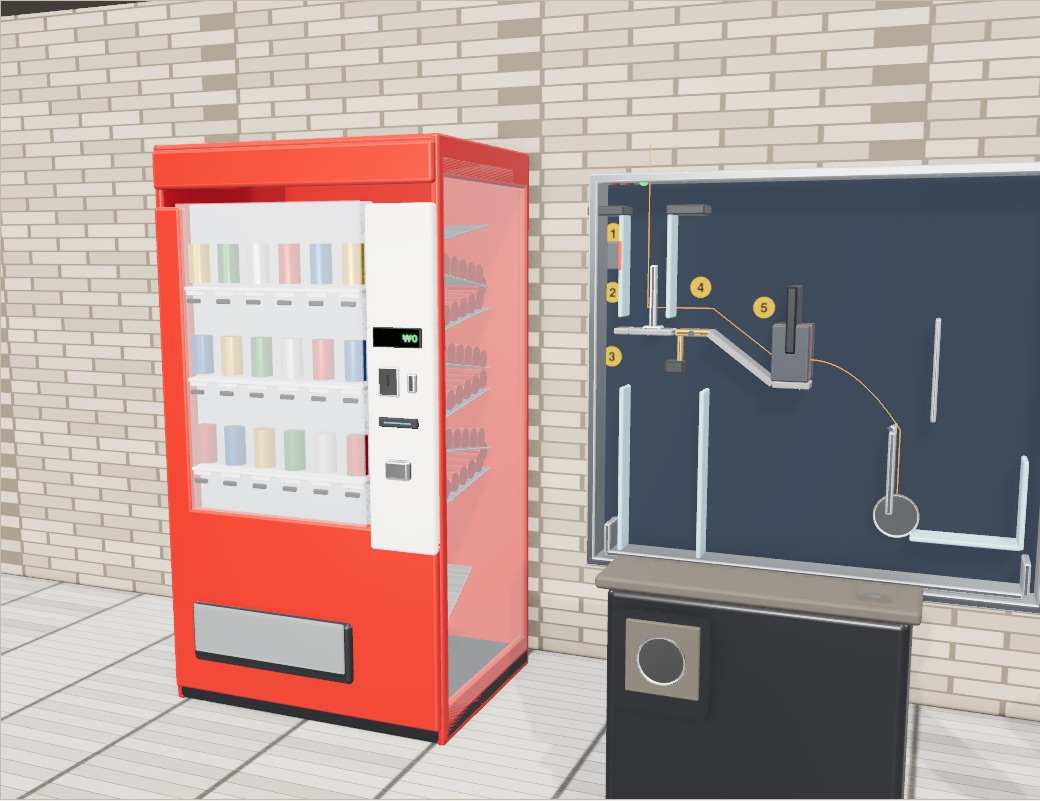
How does a vending machine recognise coins?
A 100 won coin is not attracted to a magnet, yet the magnet inside a vending machine is what tells it from a copper fake.
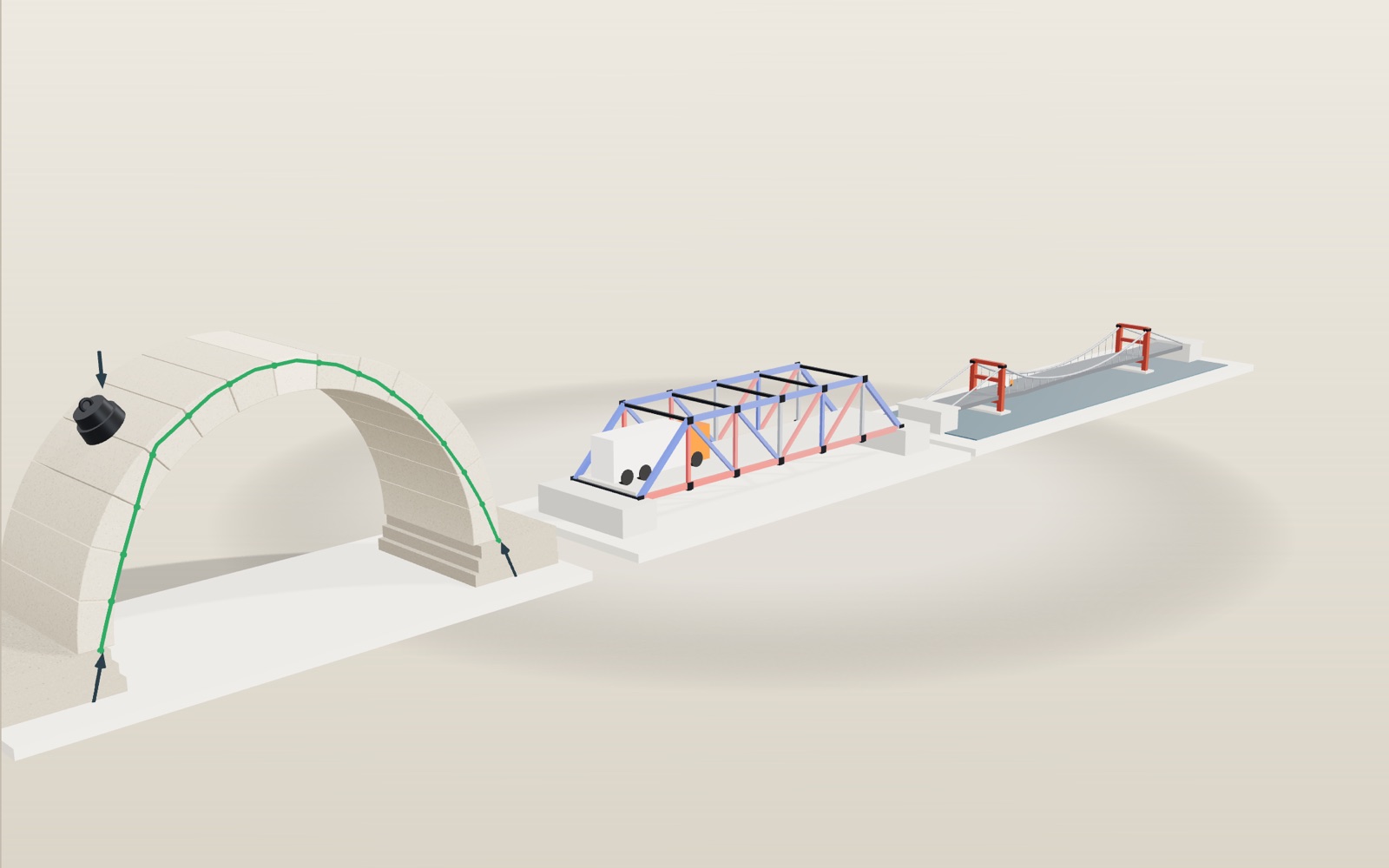
Stone arch bridge: load it and watch how it carries weight
A stone arch has no glue between its blocks, yet it stands on its own once the last stone is set at the top.
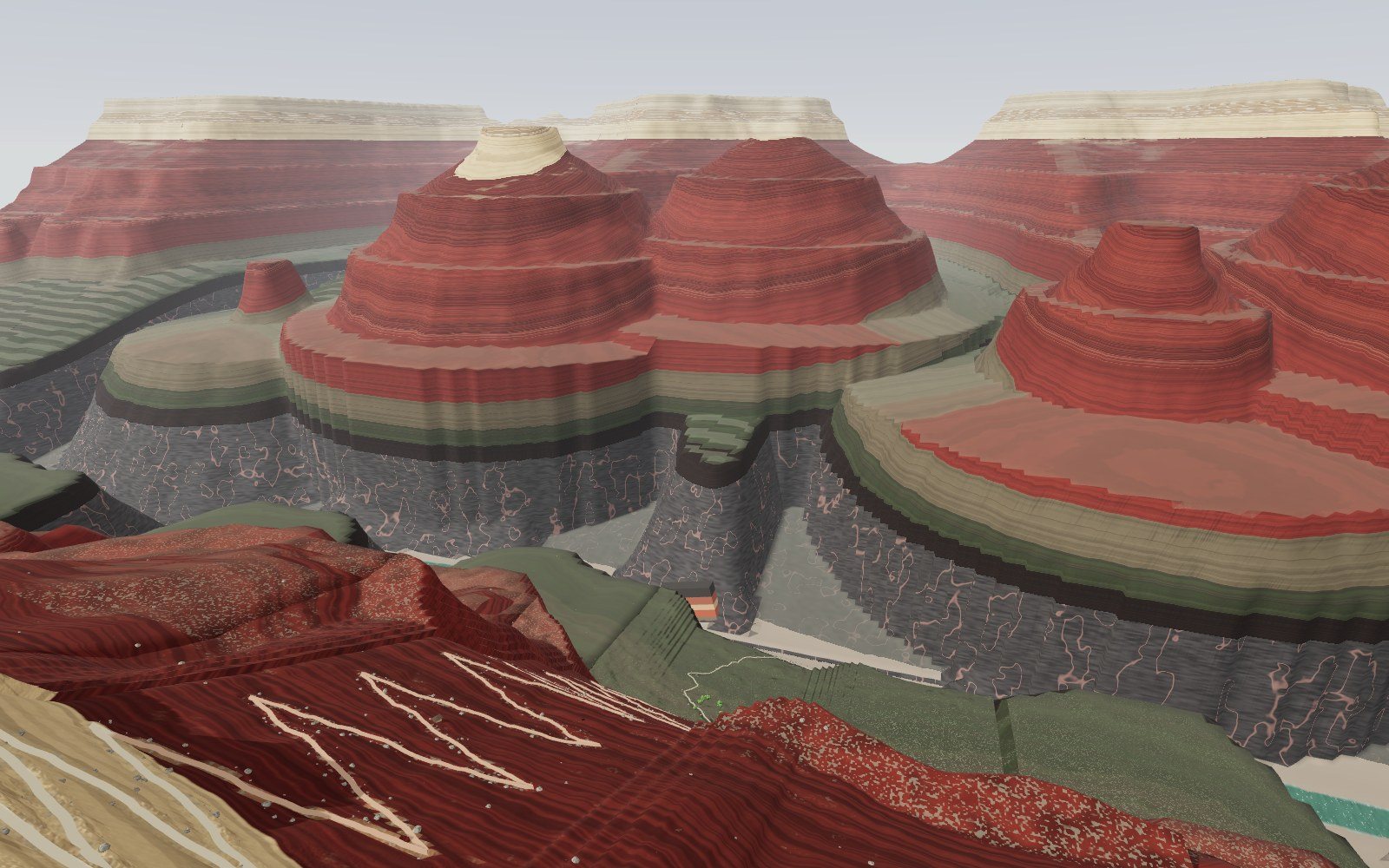
Walk down the Grand Canyon rock layers
Walk 1,360 m down the Bright Angel Trail through 13 rock layers, from a 270-million-year-old sea floor on the rim to 1.75-billion-year-old schist by the river.
How a steam locomotive works
Mallard's driving wheels are 2.03 m across, taller than most people, and at its record 126 mph they turned almost nine times a second.
Walk through Machu Picchu
Most of the work that holds Machu Picchu on its ridge, 60 per cent by one estimate, lies under the ground in foundations and drains nobody sees.

Walk through the Terracotta Army
Pit 1 of the Terracotta Army is 230 m long and holds an estimated 6,000 figures and horses, and every one of them was painted once.
How a phonograph works: from tinfoil to cassette and CD
Edison's first phonograph cut a voice into tinfoil in 1877, and the same needle played it back from a groove 2.54 mm apart.
How to tie knots: 40 knots step by step
In one set of break tests a bowline kept about 63% of the rope's strength and a sheet bend about half.