FIG. 119Old Machines
How does a vending machine recognise coins?
A 100 won coin is not attracted to a magnet, yet the magnet inside a vending machine is what tells it from a copper fake.
This device cannot show the 3D model. You can read the guide steps below as text.
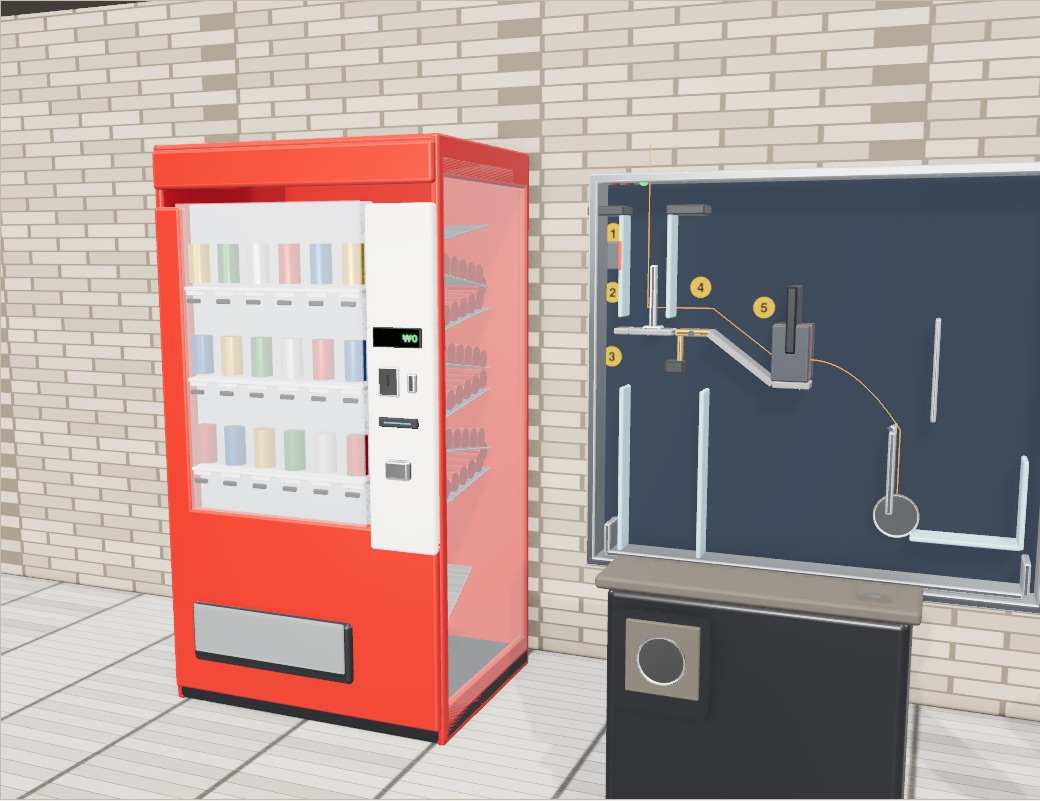
1 / 14 A coin rolls through five gatesTwo 500 won coins drop into a coin selector shown 3.5 times life size, and the can machine on the left gives a can. Then a steel washer comes. The mannequin is your height.
Drag to turn. Scroll or pinch to zoom.
A coin rolls through five gates
Drop a coin into a drinks machine and for about a second nothing seems to happen. Then there is a soft clatter, the display changes and the coin is counted, or the coin rattles straight down into the return cup. In that second the machine has measured the coin several ways and compared each answer with what a genuine coin should give. It never looks at the design on the face. It looks at size, weight and metal.
The exhibit opens on a street corner with six machines. In the middle stands a coin selector of the kind patented by Benjamin Fry of National Slug Rejectors in 1942, built 3.5 times life size in a clear case on a pedestal. Beside it is a can vending machine at real size, 183 cm tall, with a clear right-hand side so you can see its columns of cans. Further along are an electronic coin validator, a bill validator, Hero of Alexandria's coin-operated vessel for water, and a cast-iron postcard pillar of the 1880s type. The mannequin is drawn at your height.
When the page opens, two Korean 500 won coins drop into the selector. Each falls through the slot, is measured by a gauge, is weighed on a little cradle, rolls down a ramp, passes between the poles of a magnet and flies off a ledge into the coin box. After the second coin the credit reaches 1,000 won and a can rolls out of the machine. Then a steel washer comes, and it never gets past the first magnet. The yellow numbers 1 to 5 on the back of the selector mark the five gates. This page explains each gate, where the numbers come from, and which parts are a model rather than a measurement.
You can feed in 23 different coins and fakes: Korean, Japanese and American coins, a steel washer, discs of aluminium and copper, a brass token, a nickel silver token, a drilled 500 won coin and a brass medal. You can change which coins the machine is built for, the strength of the magnet, the height of the ramp and the weight window, and watch where each one stops. The table under the controls runs every coin through the selector at once, so a single change shows its effect on all 23.
What a machine can measure in a coin
A coin has only a few properties that a machine can read quickly and cheaply. Its diameter and thickness decide whether it fits a channel. Its mass decides whether it can tip a balance. Its metal decides how it behaves near a magnet or a coil. The Bank of Korea states that coin designs are protected under copyright law, and machines of the kind shown here never read the design, so the exhibit draws plain faces and keeps only the rim.
The Bank of Korea lists the four coins in use: the 10 won is 18.00 mm and 1.22 g of copper-clad aluminium; the 50 won is 21.60 mm and 4.16 g of nickel silver (Cu 70, Zn 18, Ni 12); the 100 won is 24.00 mm and 5.42 g of copper-nickel (Cu 75, Ni 25); the 500 won is 26.50 mm and 7.70 g of the same copper-nickel. The 500 won carries 120 reeds on its edge, the 100 won 110 and the 50 won 109; the 10 won edge is plain.
The Japan Mint gives 20 mm and 1 g for the aluminium 1 yen, 22 mm and 3.75 g for the brass 5 yen with a 5 mm hole, 23.5 mm and 4.5 g for the bronze 10 yen, 21 mm and 4 g for the cupronickel 50 yen with a 4 mm hole, 22.6 mm and 4.8 g for the cupronickel 100 yen, and 26.5 mm and 7.1 g for the 500 yen of 2021. The US Mint gives 19.05 mm and 2.50 g for the cent, 21.21 mm and 5.00 g for the nickel, 17.91 mm and 2.268 g for the dime and 24.26 mm and 5.67 g for the quarter.
Two of these are close relatives. The US quarter is 0.26 mm wider and 0.25 g heavier than the Korean 100 won. Both are copper and nickel, but the quarter is a sandwich: outer layers of copper-nickel bonded to a core of pure copper, which is why the US Mint gives its composition as 8.33 % nickel overall rather than 25 %. The 100 won is copper-nickel all the way through. A machine that only measured size and weight would struggle to tell them apart; a machine that reads the metal can.
The mints give diameter and mass but not the mean thickness, so the exhibit works it out: thickness = mass ÷ (density × face area). For the 100 won this gives 5.42 g ÷ (8.94 g/cm³ × 4.52 cm²) = 1.34 mm. That number is a model value. A real coin is thicker at the rim and thinner across the design.
Gate one: the slot
The slot is the cheapest test of all. In the model it is only half a millimetre wider than the largest coin the set takes, so with the Korean coins it is 27.0 mm. A 30 mm brass medal lands on top of the slot plate, rests there and is handed back. It never reaches the mechanism. Choose the United States set and the slot narrows to 24.76 mm, because the quarter is the largest coin that set takes, and now the Korean 500 won is refused at the slot too.
A real selector can also test thickness, so that a bent coin or two thin discs stuck together do not go in. The model only checks diameter.
Gate two: iron and the first magnet
Most coins are made of metals that a magnet does not attract: copper, nickel silver, cupronickel, brass, bronze, aluminium. Washers and many tokens are steel. So the first magnet does the obvious thing. A small permanent magnet sits beside the chute, and anything iron is pulled against it and stays there while the good coins fall past.
The idea is old. In US Patent 1,764,579, filed by Nels Petersen in 1926 and granted in 1930, a permanent magnet is mounted over the coin path and a separate chute below it collects "slugs having magnetic properties". The trouble with a magnet that holds iron is that the iron then blocks the chute. Machines therefore have a return lever. In Fry's 1942 coin selector, one motion opens the gate and clears every coin passage, which also wipes the iron off the magnet. In the exhibit, the Return lever button does the same.
Gate three: the size gauge and the tracks
A machine that takes several coins first sorts them by diameter. Fry describes this directly: coins are received and sorted by their usual denominational characteristics before they are tested otherwise, so that each denomination meets tests made for that denomination alone. In the model each coin of the set has its own track, and a coin goes to the track whose diameter it matches within 0.35 mm. A coin that matches no track falls through a trapdoor into the reject chute.
With the Korean set the tracks are 21.60 mm, 24.00 mm and 26.50 mm. A Japanese 100 yen at 22.6 mm matches none of them and drops. So does the Korean 10 won at 18.00 mm, because the model machine does not take it. A coin of the right diameter but the wrong value, such as the US quarter at 24.26 mm, goes onto the 100 won track and has to be caught later.
Gate four: the weighing cradle
On its track the coin rolls onto a cradle: a short piece of rail on a pivot, with a counterweight on the other side. A coin heavy enough tips the cradle and rolls on. A coin too light does not, and is pushed back. Fry's selector uses cradles of this kind, with counterweights, and his claims speak of blocking "spuriously light coins". In the model the cradle checks a window, ±4 % of the genuine coin's mass by default, so a coin that is too heavy is refused as well.
The window matters. A 24 mm aluminium disc weighs 2.2 g, far below 5.42 g, and is pushed back. The Japanese 500 yen of 1982 weighs 7.20 g, which is 6.5 % below the 7.70 g of the 500 won, so a Korean machine refuses it. The other way round, a Japanese machine set for the 1982 coin refuses the 500 won as 6.9 % too heavy. A 500 won coin with metal drilled out until it weighs 7.2 g passes that machine's cradle. The Weight window control lets you widen the window to 12 % and see which fakes slip through.
Rolling down the ramp
Once weighed, the coin is let go at the top of a ramp and rolls down to the magnet. One detail of this ramp is easy to miss. A disc that rolls without slipping reaches the same speed from the same height, whatever its mass or size. Energy gives m g h = ½ m v² + ½ I ω², and for a solid disc I = ½ m R² and ω = v ÷ R, so v = √(2 g h ÷ 1.5). Mass and radius cancel. From 30 mm the speed is √(2 × 9.81 × 0.03 ÷ 1.5) = 0.63 m/s for the 100 won, the 500 won and the copper disc alike.
A coin with a hole rolls a little slower, because more of its mass is far from the centre: for a ring I = ½ m (R² + r²). The 5 yen leaves the ramp slightly slower than the 10 yen. The Ramp height control changes the drop between 10 and 50 mm; the speed goes with the square root of the height.
Because every coin arrives at the magnet at the same speed, any difference in speed after the magnet comes from the metal alone. That is what the next gate uses.
Gate five: the magnet that slows coins
The 100 won coin is not attracted to a magnet. Hold one near a fridge magnet and nothing happens. Yet in a mechanical selector it is a magnet that separates the 100 won from a copper disc of the same size and weight.
The reason is induction. When a metal disc moves between the poles of a magnet, each part of the disc entering the field sees the field change, and an electric field drives currents round in loops inside the metal. These are eddy currents. Their density is J = σ (v × B), where σ is the electrical conductivity, v the speed and B the field. The currents themselves sit in the magnetic field, so they feel a force, and by Lenz's law that force opposes the motion. The result is a brake that needs no contact and is proportional to speed.
Vidaurre and colleagues at the Polytechnic University of Valencia wrote this drag as F = −m α v, with α proportional to σ times the field squared times the volume under the magnet. For a coin of thickness t passing a pole of area A, the force is about F = k σ B² v t A, and the coin's mass is m = ρ t A_coin, where ρ is the density. The thickness cancels, and the deceleration is
a = −v ÷ τ, with 1/τ = (σ ÷ ρ) × B² × k × (A_pole ÷ A_coin) ÷ (1 + k_roll).
The last factor, 1 + k_roll = 1.5, is there because the magnet has to slow the coin's spin as well as its travel. Two things follow. First, the braking depends on σ ÷ ρ, conductivity per unit density, so a light, very conductive metal brakes hardest. Second, because a = −v ÷ τ, the speed falls by the same amount over every millimetre: dv/dx = a ÷ v = −1/τ. After a length L under the magnet, the speed is v₁ = v₀ − L ÷ τ.
The Copper Development Association gives the conductivities. Pure copper (alloy C11000) is 101 % IACS with a specific gravity of 8.91. Copper-nickel with 30 % nickel (C71500), the closest alloy in their tables to the coins' 25 %, is only 4.6 % IACS at 8.94. Nickel silver (C75700) is 8 %, yellow brass (C27000) 27 %, commercial bronze (C22000) 44 %. One hundred per cent IACS is 5.8 × 10⁷ siemens per metre. So copper conducts about 22 times better than cupronickel at the same density.
In the model the magnet field is 0.30 T, the poles are 10 × 10 mm and the coin passes 20 mm of runway under them; k is 0.5. For the 100 won, 1/τ = (2.67 × 10⁶ ÷ 8,940) × 0.09 × 0.5 × (100 ÷ 452) ÷ 1.5 = 1.98 per second. Over 0.02 m the speed falls by 0.02 × 1.98 = 0.040 m/s, from 0.63 to 0.59 m/s. For the copper disc 1/τ is 43.6 per second, and the speed it would lose, 0.87 m/s, is more than it has: it creeps to the end of the runway. A brass token falls to 0.38 m/s. These values come from the model's assumed geometry; the comparisons between metals come from the alloy data.
Off the ledge and over the anvil
At the end of the magnet runway the coin leaves a ledge and flies. Falling 40 mm takes √(2 × 0.04 ÷ 9.81) = 0.090 s, and in that time a coin at 0.59 m/s moves 53.0 mm forward. Below the ledge stands the anvil, a knife edge, and beyond it a deflector. A coin that lands between them falls into the coin box. A coin that lands short drops in front of the anvil into the reject trough. A coin that flies too far hits the deflector and is rejected too.
Fry's patent describes exactly the short case: spurious quarters of improper composition with too high an electrical conductivity, such as copper, have eddy currents induced in them that slow the coin "to such an extent that it drops practically straight down off the ledge". In the model the windows are set from the genuine coin of each track. For the Korean 100 won the coin lands at 53.0 mm and the window runs from 49.0 to 57.0 mm. The copper disc lands at 0 mm and the brass token at 34.4 mm, both short.
The graph on the stage shows the windows of the set as green bands and the last coins as dots. The chart under the controls draws, for each coin, where it lands as the magnet changes.
Tuning the magnet
A selector is tuned at the factory, and its windows are fixed. Move the magnet away from that setting and the genuine coins drift out of their windows too. The Magnet control shows the field as a share of the set's calibration value.
Turn it down to zero and the eddy-current test disappears. Every non-iron coin then leaves the ledge at 0.63 m/s and lands at 56.6 mm, inside the 100 won window, so the copper disc of the same size and weight is accepted. With the magnet that weak, iron no longer sticks either, and the steel washer goes through as well.
Turn it up and the cupronickel coins slow a little more, while coins of better-conducting metal slow a lot more. A nickel silver token the size and weight of a 100 won lands at 50.2 mm at the factory setting, inside the window. Nickel silver conducts only 8 % IACS, so it brakes little more than cupronickel. In the model, any magnet between 109 % and 145 % of the factory value still accepts the 100 won and the 500 won but drops the token short. The Tune task asks you to find that range. It is narrow because the token's metal is close to the coin's.
Why one test is never enough
Each gate catches different fakes. With the Korean set and the factory settings, the brass medal stops at the slot, the steel washer at the first magnet, the Japanese 100 yen at the size gauge, the aluminium disc at the cradle, and the copper disc and the brass token at the speed test. The nickel silver token passes all five. The table under the controls lists all 23 coins with the gate where each one stops, and updates when you change any control.
The quarter shows why the gates work together. Its diameter is within 0.35 mm of the 100 won, so the gauge sends it to the 100 won track. Its mass is 4.6 % above, so the cradle refuses it at the ±4 % window. Widen the window to 12 % and the quarter passes the cradle, but its copper core makes it brake too hard under the magnet: it lands at 4.1 mm and is rejected.
The 500 won and the 500 yen
The Japan Mint explains that the 500 yen coin replaced the 500 yen note in 1982 "in response to a need for a higher value coin for use in vending machines". The Ministry of Finance of Japan lists that first coin as cupronickel (Cu 75, Ni 25), 26.5 mm and 7.20 g, issued from 1982 to 1999. The Bank of Korea points out that the Korean 500 won came first, issued on 12 June 1982, and that the two coins share their metal and their 26.5 mm diameter by chance.
The Bank of Korea also describes what followed. Around 1999, 500 won coins were shaved or drilled so that Japanese machines took them as 500 yen. The 500 won is slightly heavier, so removing metal brought it into the weight window. The altered coins bought goods, and pressing the return lever could even hand back a genuine 500 yen coin. Japanese vending machine makers had to fit machines that judged coins more precisely.
In 2000 the 500 yen changed to nickel brass (Cu 72, Zn 20, Ni 8), keeping 26.5 mm and weighing 7.00 g. In 2021 it changed again to a bicolour clad coin of 7.1 g: a core of copper sandwiched between cupronickel, set inside a ring of nickel brass. The Japan Mint says that using several different materials allows a more precise genuine-coin check, and adds oblique reeds of irregular shape, micro letters and a latent image that appears at certain angles.
In the exhibit, the drilled 500 won passes the Japan 1999 set of the mechanical selector, because its metal and diameter match the 1982 coin and drilling has brought it to 7.2 g. On the electronic validator with the Japan 2021 set it is rejected, because cupronickel reads nothing like nickel brass or the clad coin. The 1999 trick task asks you to show both.
Electronic validators: coils and two frequencies
In an electronic validator the coin still rolls down a track, but instead of a magnet and an anvil it passes coils driven with an alternating current. The coin's eddy currents change the coil's inductance and resistance, and a circuit measures the change.
Patents show how the idea grew. UMC Industries' patent of 1982 adds a second coil beside the authenticity coil of an electronic rejector to catch copper slugs that the first coil might take for genuine coins. A Mars patent granted in 1985 places the coin between a transmitting and a receiving coil and compares the phase shift at a monitored low frequency with that of an acceptable coin. A Mars patent of 1994 deals with acceptance windows that learn from genuine coins and could otherwise drift toward a slug fed in again and again. A Scan Coin patent granted in 2009 measures the eddy currents at two frequencies, which it says helps with coins that have a metal core covered by a layer of another metal.
Two frequencies help because of the skin effect. Alternating currents crowd toward the surface of a conductor, within a skin depth δ = √(2 ÷ (ω μ σ)). At 1 kHz in cupronickel δ is about 9.7 mm, far more than the coin is thick, so the coil sees the whole coin. At 200 kHz δ is 0.69 mm in cupronickel and 0.15 mm in copper, so the coil sees mostly the surface.
The model's validator reads three things: the diameter from a light gate, and the conductivity at 1 kHz and at 200 kHz. The 100 won reads 2.7 MS/m at both frequencies, because it is the same metal all through. The quarter reads 3.7 MS/m at 200 kHz, close to the 100 won, because its surface is copper-nickel, but 34.5 MS/m at 1 kHz, because the current then runs through its copper core. Its point on the chart sits far from the 100 won's box, and the flap stays shut. A coin's acceptance box in the model is ±12 % at each frequency.
Bills: light, magnetism and a one-way gate
Banknotes are checked in a similar spirit with different sensors. The Bank of Korea gives the sizes of the notes in use: 136 × 68 mm for 1,000 won, 142 × 68 mm for 5,000 won, 148 × 68 mm for 10,000 won and 154 × 68 mm for 50,000 won. All four share the width and differ by 6 mm in length, so width guides at the mouth refuse a wider foreign note, such as a 76 mm-wide Japanese 1,000 yen in the model, and the length tells the value.
A patent granted to Japan Cash Machine in 1995 describes a bill validator with a magnetic head that detects ferrous ink printed in set positions, and photo couplers that read the pattern of infrared light passing through the note. A 1971 patent for a counterfeit detector notes that genuine US paper currency shows almost no glow under filtered ultraviolet light while most counterfeits glow blue, and that the black ink of genuine notes contains a magnetic pigment. A banknote validator patent granted to Innovative Technology in 2006 combines a magnetic sensor, an optical sensor and a non-return gate.
The model checks in that order: width, length, infrared pattern, magnetic ink and UV glow, then the one-way gate. A colour copy has the right size and a printed pattern that passes the infrared check in the model, but no magnetic ink, so it stops at the magnetic head and is pushed back out. A 10,000 won note trimmed to 136 mm reads as a 1,000 won by length but has the wrong pattern. A note on a string goes in, is accepted, and is then pulled back against the gate, which holds it. The sensor order and the pass rules are a model built from these patents, not a description of any one product.
One can at a time
Inside the can machine, through the clear right side, five columns of cans lie on their sides on ramps that slope one way and then the other, so each column folds a long line of cans into a tall narrow space. A patent filed by Elmer Johnson for the Vendo Company in 1965 and granted in 1967 is cited by later patents as the serpentine stack article dispensing machine. A 1968 Vendo patent points out a problem particular to cans: their two rims can lock with the rims of the next can on the way down, so it shapes the chute to prevent it.
At the foot of each column sits the part that sells exactly one can. Fuji Electric's patent of 1985 explains that star-wheel discharge devices, driven by a solenoid that is cheaper, more durable and more reliable than a motor, were the most widely adopted for canned and bottled goods. The wheel turns once, lets the bottom can go and stops the next one. In the exhibit the can drops down a chute into the bin and the whole column rolls down one place.
Snack machines use another idea. Seeburg's 1969 patent describes a vending machine with a helical feeder coil: the article sits between the turns of a spiral, and one turn of the spiral pushes one article off the front. There is such a machine further along the street.
Hero's coin-operated vessel
The oldest coin-operated machine known from a written description is in the Pneumatica of Hero of Alexandria. Bennet Woodcroft's 1851 English edition gives it as number 21, "Sacrificial vessel which flows only when money is introduced". A coin of five drachms is dropped through the mouth of a chest. Inside, a lever turns on a vertical rod. At one end the lever widens into a plate under the mouth; from the other end hangs a lid that closes a small box, from which a pipe leads out of the chest. The lid "must be heavier than the plate R, but lighter than the plate and coin combined". The coin falls on the plate, tips the lever, lifts the lid and lets water flow; when the coin slides off the plate, the lid drops and the flow stops.
That sentence is a rule a model can test. With equal arms and a plate of 30 g, the lid must lie between 30 g and the plate plus the coin. On the Attic standard a drachm is about 4.3 g: a silver four-drachm coin of Athens in the Getty Museum weighs 17.2 g. Five drachms would be about 21.5 g, so the lid must weigh between 30 and 51.5 g. Which standard Hero meant is not known, so the coin's mass is an estimate.
In the exhibit you set the lid with a control and drop a coin. Below 30 g the lid is lighter than the plate, the lever already rests tilted and water runs with no coin at all. Above 51.5 g the coin cannot tip the lever and nothing happens; a second coin on the plate may tip it. In between, the vessel works, and the amount of water depends on the lid. At 40 g the lever swings quickly to its stop, the coin slides off within a fraction of a second and the valve is open for about 0.79 s, which gives about 21 mL. Near 51 g the lever moves slowly, the coin takes longer to slide and the valve stays open about 1.8 s, giving about 44 mL. The flow itself comes from a 6 mm pipe under 15 cm of water, about 29 mL a second at full opening. All of these sizes are model values; only the rule is Hero's.
When Hero lived was argued over for a long time, and the question still has a name. Woodcroft's 1851 introduction calls the period "a debated point" and follows writers who placed him in the second century BCE. Francesco Grillo's 2019 critical edition of Hero's Automata, a doctoral thesis at the University of Glasgow, gives the first century CE and discusses the dating as the "Heronian question".
Postcards for a penny
The coin-operated machine became common in the 1880s. The Science Museum Group notes that railway stations were the location of the first vending machines in Britain, and that Percival Everitt devised a coin-operated postcard and stamped envelope dispenser that appeared in stations in 1884. Machines for sweets, tobacco and eau de cologne soon followed.
The postcard pillar in the exhibit is a model of that type, with sizes estimated. A penny falls onto a balance arm. If it outweighs a spring, a catch frees the drawer for one pull and a card comes out. Britain had replaced its large copper pennies with smaller bronze ones in 1860, according to the Royal Mint Museum, and a bronze proof penny of 1868 in the Royal Mint Museum's collection weighs 9.38 g. The model's catch needs 8 g. Weight is the only test, so a heavy brass medal frees the drawer too, while the light aluminium disc does not. That weakness is the reason the later machines on this street measure size and metal as well.
How many vending machines?
Japan's manufacturers' association counts the machines in use each year. At the end of 2024 the Japan Vending System Manufacturers Association counted 2,614,400 vending machines, 99.0 % of the year before. Of these, 2,199,600 sold drinks, and 1,976,200 sold canned and bottled soft drinks. There were 81,200 food machines, 63,500 ticket machines and 204,200 machines for daily goods. Tobacco machines numbered 65,900, 87.5 % of the 75,300 counted a year earlier, the steepest fall of any kind. Adding 1,295,900 service machines such as change machines, parking pay stations and coin lockers gives 3,910,300 in all, so a total close to four million counts those service machines too.
The Statistics Bureau of Japan put the population at 123,802,000 on 1 October 2024. Divided by 2,614,400 vending machines, that is one machine for every 47 people.
Korea has no official count of machines. The Ministry of Food and Drug Safety counts businesses registered to sell food from vending machines: 39,074 at the end of 2025, against 51,524 at the end of 2011. Its definition leaves out machines that hold only finished products keeping for a month or more, which takes in most canned drinks. So the Korean number counts something different from the Japanese one, and the two should not be compared directly.
How the model differs from real machines
The coin selector follows the logic of Fry's 1942 patent, not its layout. Fry runs each denomination down its own testing passage; the model uses one runway and moves the anvil and deflector to the window of the coin's track. The magnet field, the pole size, the 20 mm under the magnet, the 40 mm drop, the factor k and the ±4 % weight window are model values, chosen so that genuine coins land in the middle of their windows. The conductivity of the coins' 25 % copper-nickel is taken from the 30 % alloy in the Copper Development Association tables, and the conductivities of bronze, aluminium, nickel brass, zinc and steel are estimates.
The electronic validator reads three numbers; the patents describe validators that read more. Its ±12 % boxes are model values. The model's Japan 2021 set takes only the two 500 yen coins made since 2000 and leaves out the 1982 cupronickel coin. The bill validator has five checks with simple yes or no answers. Hero's vessel and the postcard pillar are built from descriptions, with every size estimated. The can machine shows the principle of a serpentine column and a star wheel; its cans rest on ramps of 8°. Prices are model values.
Questions
How does a vending machine tell real coins from fake ones?
It measures the coin several ways and compares each result with a genuine coin: diameter at the slot and gauge, mass on a cradle, and metal with a magnet or a coil. A fake has to match every test at once. In the exhibit the nickel silver token matches all five gates of the mechanical selector at the factory setting, and only the electronic validator, which reads the metal more precisely, catches it.
Why does a vending machine have a magnet if coins are not magnetic?
The magnet does two jobs. It holds anything made of iron or steel, which takes washers and many tokens out of the stream. And as a coin of copper alloy moves past it, the magnet induces eddy currents that slow the coin by an amount that depends on its metal. A copper fake slows much more than a cupronickel coin and drops short of the anvil.
What are eddy currents?
They are loops of electric current induced in a conductor when the magnetic field through it changes, for example when the conductor moves past a magnet. Their magnetic effect opposes the change, so a moving conductor is braked. The braking is proportional to speed and to the conductivity.
Why do coins roll down a ramp first?
So that every coin reaches the magnet at a known speed. A disc rolling without slipping reaches the same speed from the same height whatever its mass or size, 0.63 m/s from 30 mm in the model. Any difference in speed after the magnet then comes from the metal.
Why can a genuine coin be rejected?
In the model, a genuine coin is rejected when the controls move the machine away from its factory setting: a much stronger magnet slows genuine coins out of their windows, a raised or lowered ramp changes their speed, and a narrow weight window refuses coins that are slightly light. A bent or worn coin can fall outside a window in the same way.
Can a vending machine accept a foreign coin by mistake?
Only if the foreign coin matches every test. The US quarter is 0.26 mm wider and 0.25 g heavier than the Korean 100 won, but in the model it fails the weight window, and with a wider window it fails the speed test because of its copper core. Around 1999 the matching diameter and metal of the 500 won and the 1982 500 yen did cause trouble in Japan once the weight was altered.
Why is copper-nickel good for coins in machines?
For a copper alloy it conducts poorly, 4.6 % IACS for the 30 % alloy against 101 % for pure copper, so it gives a reading that cheap copper or brass fakes cannot imitate. The Japan Mint says the 2021 500 yen combines several materials because that allows a more precise genuine-coin check.
Why did Korea make the 10 won coin smaller?
From 18 December 2006 the 10 won is 18.00 mm and 1.22 g of copper-clad aluminium, against 22.86 mm and 4.06 g of brass before. The Bank of Korea's tables record the change of size and metal. The model machine does not take the 10 won, so it stops at the size gauge.
How does a bill validator work?
Rollers pull the note past sensors that measure its width and length, read the pattern of infrared light passing through it, detect magnetic ink and check how it glows under ultraviolet light. If everything matches, the note passes a one-way gate into the stacker. If anything fails, the rollers push it back out.
How does a vending machine drop only one can?
The cans lie in a serpentine column, and at the bottom a star wheel holds the lowest can and blocks the one behind it. One vend turns the wheel once: the lowest can drops, the wheel stops the next one, and the rest of the column rolls down one place.
What was the first vending machine?
The oldest known description is Hero of Alexandria's vessel in the Pneumatica, which poured water when a coin of five drachms was dropped in. A 2019 critical edition places Hero in the first century CE. Coin-operated machines became common in the 1880s, and Percival Everitt's postcard dispensers appeared in British railway stations in 1884.
How many vending machines does Japan have?
At the end of 2024, 2,614,400 vending machines, one for every 47 people, and 3,910,300 counting service machines such as coin lockers and change machines.
How many vending machines are there in Korea?
There is no official count of machines. The Ministry of Food and Drug Safety counts 39,074 businesses registered to sell food from vending machines at the end of 2025, and its definition leaves out machines that sell only products keeping a month or more.
Why did Japan change the 500 yen coin twice?
In 2000 it changed from cupronickel to nickel brass, and in 2021 to a bicolour clad coin of three layers in a ring. The Bank of Korea describes the altered 500 won coins used in Japanese machines around 1999. The Japan Mint says the 2021 coin's several materials allow a more precise check, and adds features such as irregular oblique reeds and a latent image.
Is the exhibit's coin selector a real machine?
It follows the tests in Fry's 1942 patent and the physics of eddy-current braking, but its sizes, field and windows are model values. The table under the controls and the check behind it show which numbers come from mints and alloy data and which are chosen for the model.
Terms
- Coin selector: the part of a vending machine that tests coins and sorts them into accepted and rejected.
- Slug: a fake coin or token made to fool a coin machine.
- Track: the path inside a selector for one denomination.
- Weighing cradle: a pivoted piece of rail with a counterweight that tips only for a coin of enough weight.
- Eddy current: a loop of current induced in a conductor by a changing magnetic field.
- IACS: International Annealed Copper Standard; 100 % IACS is 5.8 × 10⁷ S/m.
- Anvil: the knife edge that a coin must clear after leaving the ledge.
- Window: the range of a measurement that a genuine coin falls into.
- Skin depth: the depth within which an alternating current flows in a conductor.
- Clad coin: a coin made of layers of different metals bonded together.
- Bicolour coin: a coin with a centre and a ring of different metals.
- Serpentine column: a stack of ramps sloping in turn, holding cans on their sides.
- Star wheel: the wheel at the foot of a column that releases one can at a time.
- Non-return gate: a gate in a bill validator that stops a note being pulled back.
- Drachm: an ancient Greek silver unit; on the Attic standard about 4.3 g.
Sources
- Bank of Korea, Current coins (현용주화). https://www.bok.or.kr/portal/main/contents.do?menuNo=200367 (checked 20 October 2026)
- Bank of Korea, History of current coins (주화의 변천). https://www.bok.or.kr/portal/main/contents.do?menuNo=200369 (checked 20 October 2026)
- Bank of Korea, Introduction to Coins. https://www.bok.or.kr/eng/main/contents.do?menuNo=400113 (checked 20 October 2026)
- Bank of Korea, 주화 이야기: 500원, 우리나라가 먼저 만들었다, 2018. https://www.bok.or.kr/portal/bbs/B0000219/view.do?nttId=236069&menuNo=200148 (checked 20 October 2026)
- Bank of Korea, Current banknotes (현용은행권). https://www.bok.or.kr/portal/main/contents.do?menuNo=200017 (checked 20 October 2026)
- Japan Mint, Coins presently minted. https://www.mint.go.jp/operations/production/operations_coin_presently-minted.html (checked 20 October 2026)
- Japan Mint, Coins Presently Minted (English). https://www.mint.go.jp/eng/operations-eng/production-eng/production-aproach-eng/eng_operations_coin_index.html (checked 20 October 2026)
- Japan Mint, Anti-counterfeiting features of coins. https://www.mint.go.jp/coin/technology_index.html (checked 20 October 2026)
- Japan Mint, Circulating Coin Designs. https://www.mint.go.jp/eng/kids-eng/eng_kids_circulating_c.html (checked 20 October 2026)
- Ministry of Finance Japan, Current Coins list. https://www.mof.go.jp/english//policy/currency/coin/circulating_coins/list.htm (checked 20 October 2026)
- United States Mint, Coin Specifications. https://www.usmint.gov/learn/coins-and-medals/circulating-coins/coin-specifications (checked 20 October 2026)
- Japan Vending System Manufacturers Association, units in use at the end of 2024. https://www.jvma.or.jp/information/information_3.html (read 20 October 2026)
- Japan Vending System Manufacturers Association, the same page for the end of 2023 (Internet Archive copy). https://web.archive.org/web/20240718142950/https://www.jvma.or.jp/information/information_3.html (checked 20 October 2026)
- Statistics Bureau of Japan, Population Estimates as of 1 October 2024. https://www.stat.go.jp/data/jinsui/2024np/index.html (checked 20 October 2026)
- Ministry of Food and Drug Safety, 2026 Food and Drug Statistical Yearbook, table 1-1-1-4. https://www.mfds.go.kr/brd/m_371/view.do?seq=30725 (checked 20 October 2026)
- Hero of Alexandria, The Pneumatics, translated and edited by Bennet Woodcroft, London 1851 (Project Gutenberg e-text 77400). https://www.gutenberg.org/files/77400/77400-h/77400-h.htm (checked 20 October 2026)
- F. Grillo, Hero of Alexandria's Automata: a critical edition and translation, PhD thesis, University of Glasgow, 2019. https://theses.gla.ac.uk/76774/ (checked 20 October 2026)
- J. Paul Getty Museum, Coin (tetradrachm) of Athens. https://www.getty.edu/art/collection/object/109KKJ (checked 20 October 2026)
- Royal Mint Museum, Curator's corner: the penny. https://www.royalmintmuseum.org.uk/journal/curators-corner/penny/ (checked 20 October 2026)
- Royal Mint Museum on Google Arts & Culture, Victoria proof penny, 1868. https://artsandculture.google.com/asset/victoria-proof-penny-0095/IgG8-0O3f8DIGw (checked 20 October 2026)
- Science Museum Group Collection, Nestle Vending Machine (1990-7102). https://collection.sciencemuseumgroup.org.uk/objects/co211019/nestle-vending-machine (checked 20 October 2026)
- B. W. Fry, Coin selector, US Patent 2,292,628, 1942. https://patents.google.com/patent/US2292628A/en (checked 20 October 2026)
- N. P. Petersen, Slug ejector for coin machines, US Patent 1,764,579, 1930. https://patents.google.com/patent/US1764579A/en (checked 20 October 2026)
- E. C. Johnson, Article dispensing apparatus, US Patent 3,348,733, 1967. https://patents.google.com/patent/US3348733A/en (checked 20 October 2026)
- W. J. Van Liew, Serpentine chute for can vender having structure preventing rim interlock, US Patent 3,379,294, 1968. https://patents.google.com/patent/US3379294A/en (checked 20 October 2026)
- N. Tanaka, M. Ohashi and S. Iwamoto, Commodity rack for automatic vending machines, US Patent 4,498,569, 1985. https://patents.google.com/patent/US4498569A/en (checked 20 October 2026)
- M. W. Kenney, Spiral feed vending machine, US Patent 3,441,174, 1969. https://patents.google.com/patent/US3441174A/en (checked 20 October 2026)
- H. R. Shah and M. S. Ross, Coin-handling device, US Patent 4,353,452, 1982. https://patents.google.com/patent/US4353452A/en (checked 20 October 2026)
- F. P. Heiman, Self tuning low frequency phase shift coin examination method and apparatus, US Patent 4,493,411, 1985. https://patents.google.com/patent/US4493411A/en (checked 20 October 2026)
- B. M. Dobbins and J. E. Vaks, Method and apparatus for improved coin, bill and other currency acceptance and slug or counterfeit rejection, US Patent 5,330,041, 1994. https://patents.google.com/patent/US5330041A/en (checked 20 October 2026)
- G. Howells, Coin discriminator where frequencies of eddy currents are measured, US Patent 7,537,099, 2009. https://patents.google.com/patent/US7537099B2/en (checked 20 October 2026)
- B. W. Cooper and J. Rubler, Counterfeit currency detector, US Patent 3,618,765, 1971. https://patents.google.com/patent/US3618765A/en (checked 20 October 2026)
- H. Izawa, M. Fujita and T. Ohya, Bill validator with bar code detector, US Patent 5,420,406, 1995. https://patents.google.com/patent/US5420406A/en (checked 20 October 2026)
- P. Dunlop and K. Ashurst, Banknote validator, US Patent 7,007,788, 2006. https://patents.google.com/patent/US7007788B2/en (checked 20 October 2026)
- A. Vidaurre, J. Riera, J. A. Monsoriu and M. H. Giménez, Testing theoretical models of magnetic damping using an air track, arXiv physics/0702062. https://arxiv.org/abs/physics/0702062 (checked 20 October 2026)
- Copper Development Association, alloy C11000. https://alloys.copper.org/alloy/C11000 (checked 20 October 2026)
- Copper Development Association, alloy C71500. https://alloys.copper.org/alloy/C71500 (checked 20 October 2026)
- Copper Development Association, alloy C75700. https://alloys.copper.org/alloy/C75700 (checked 20 October 2026)
- Copper Development Association, alloy C27000. https://alloys.copper.org/alloy/C27000 (checked 20 October 2026)
- Copper Development Association, alloy C22000. https://alloys.copper.org/alloy/C22000 (checked 20 October 2026)
More exhibits
How windmills and watermills work
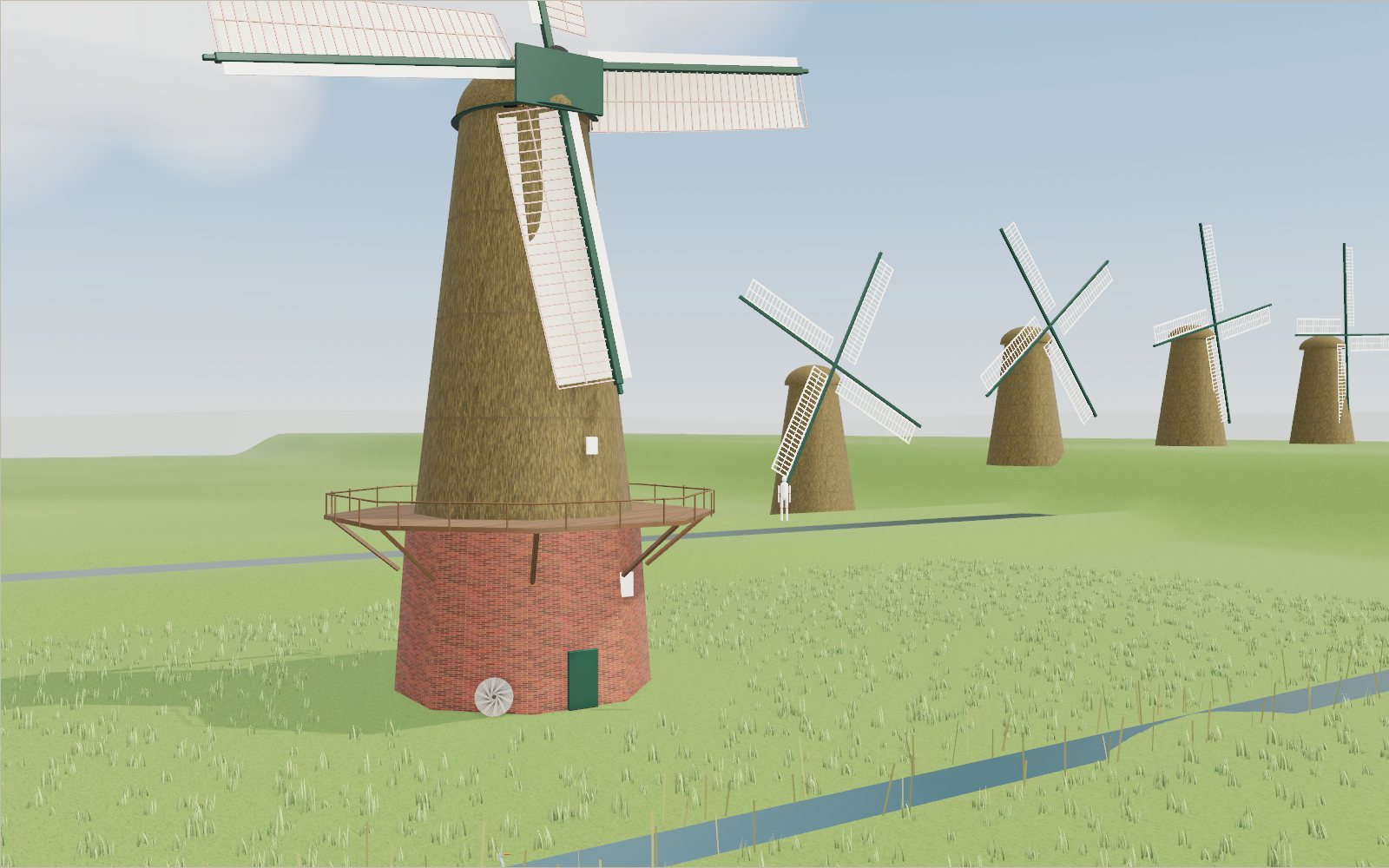
The sails of a Dutch mill are as wide as an eight-storey building is tall, and at 7 m/s they still take only about a fifth of the wind.
How a pendulum clock works, and why its length sets the time
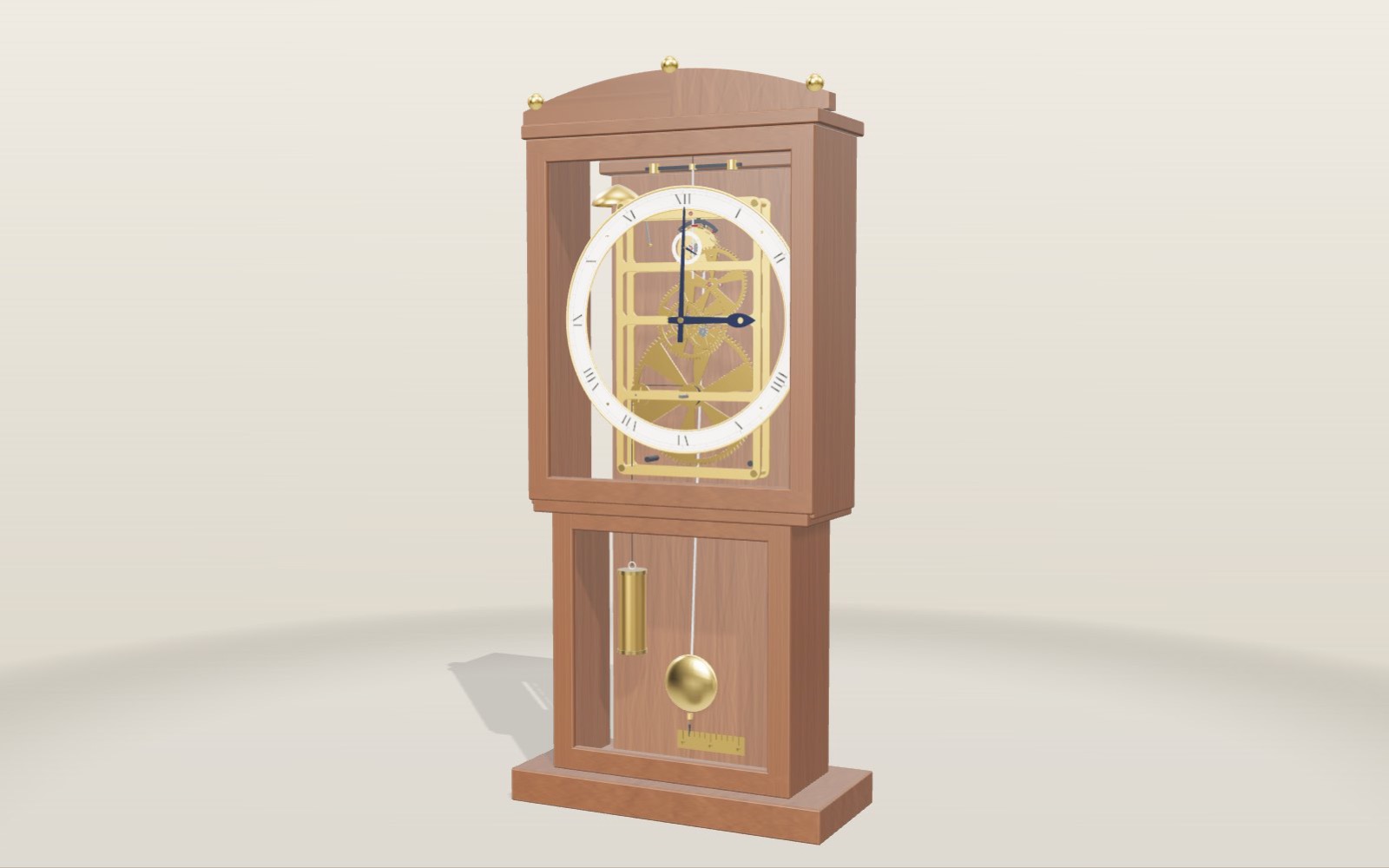
A pendulum clock counts seconds with one rod 99.4 cm long. Change its length, its temperature and its place on Earth, swap four escapements and see how many seconds a day each costs.
Stone arch bridge: load it and watch how it carries weight
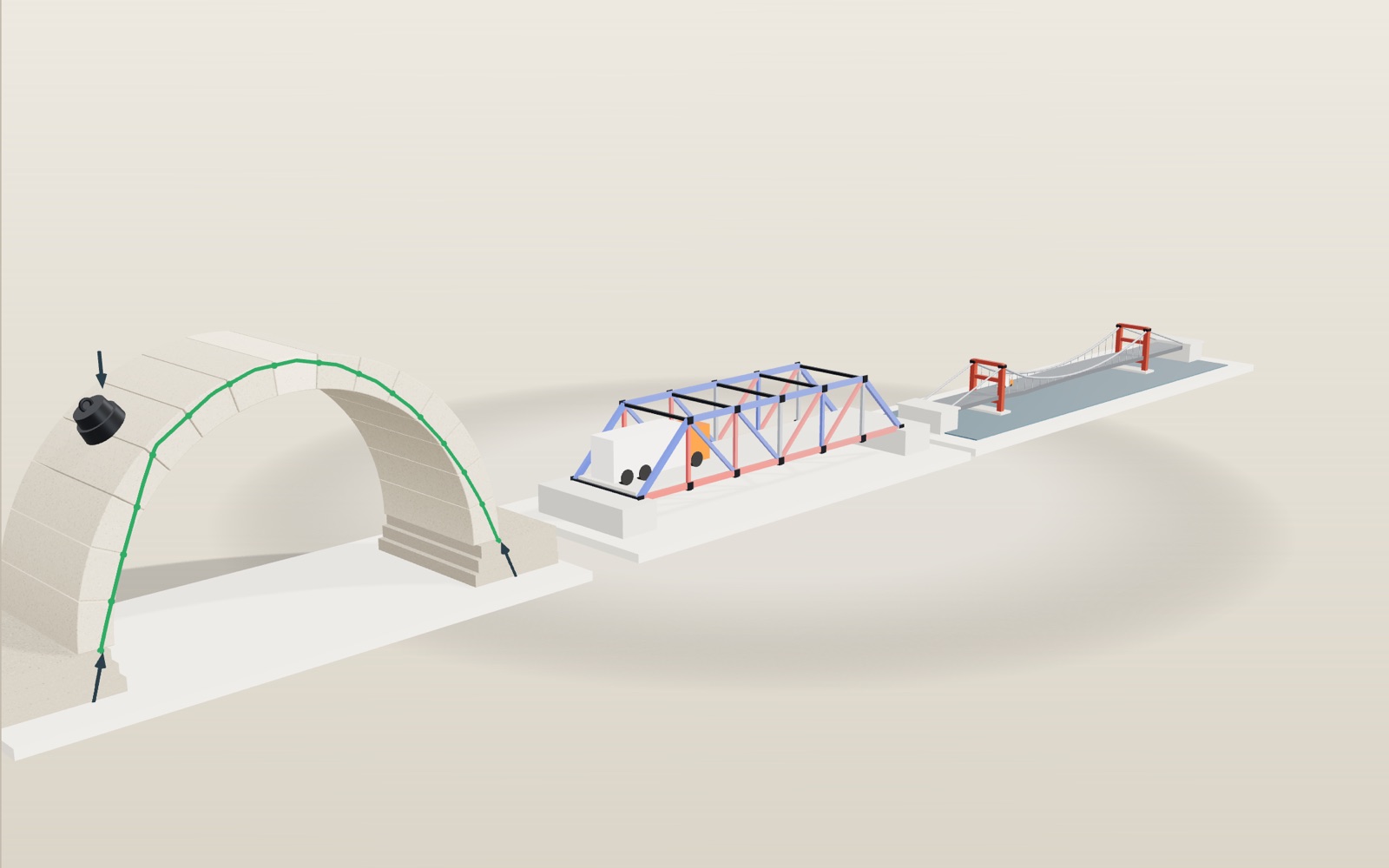
A stone arch has no glue between its blocks, yet it stands on its own once the last stone is set at the top.
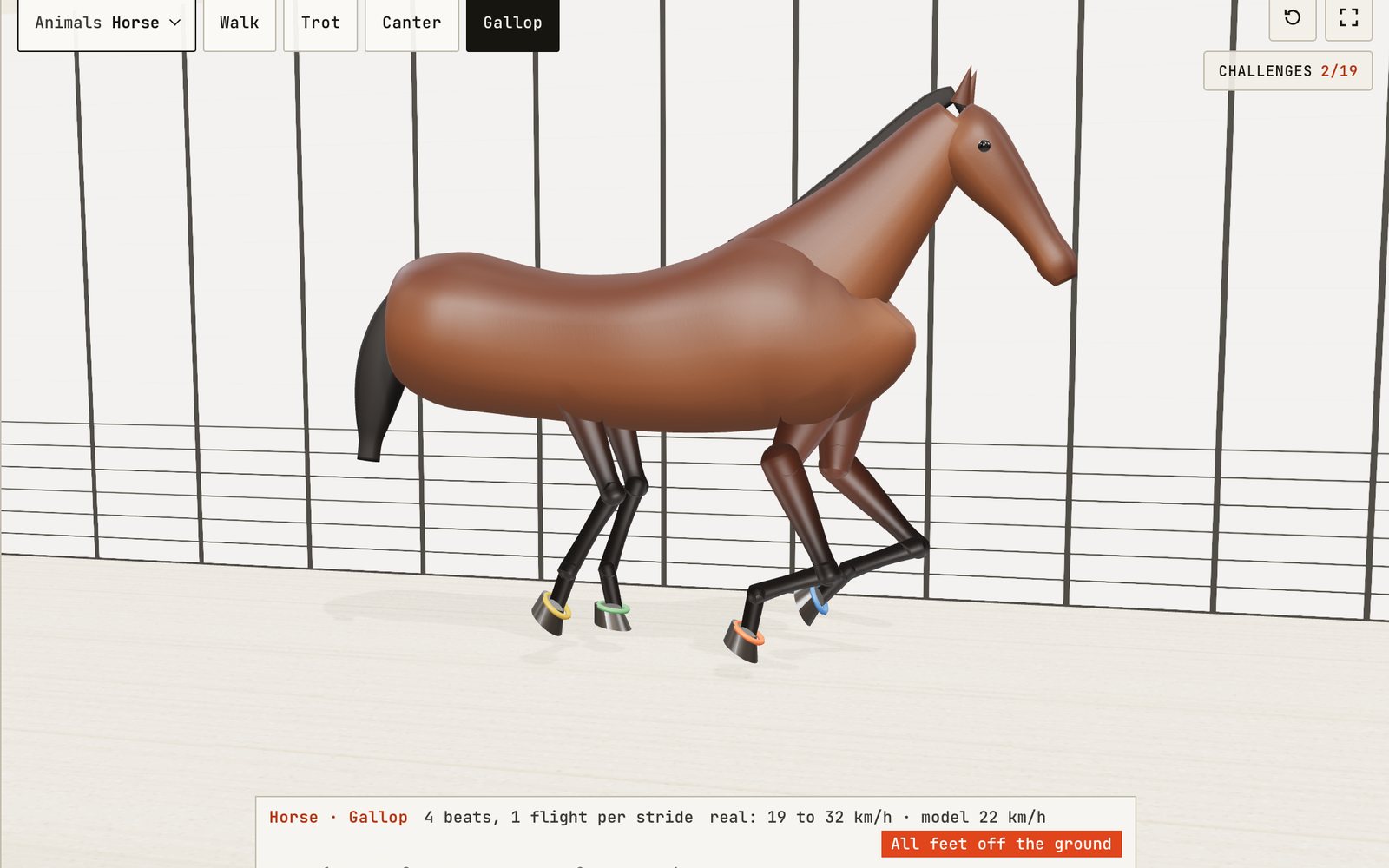
How a horse runs: walk, trot, canter and gallop
In 1878 Muybridge's cameras showed that a galloping horse does lift all four feet at once, but with its legs tucked under it. Some fast animals never leave the ground at all.
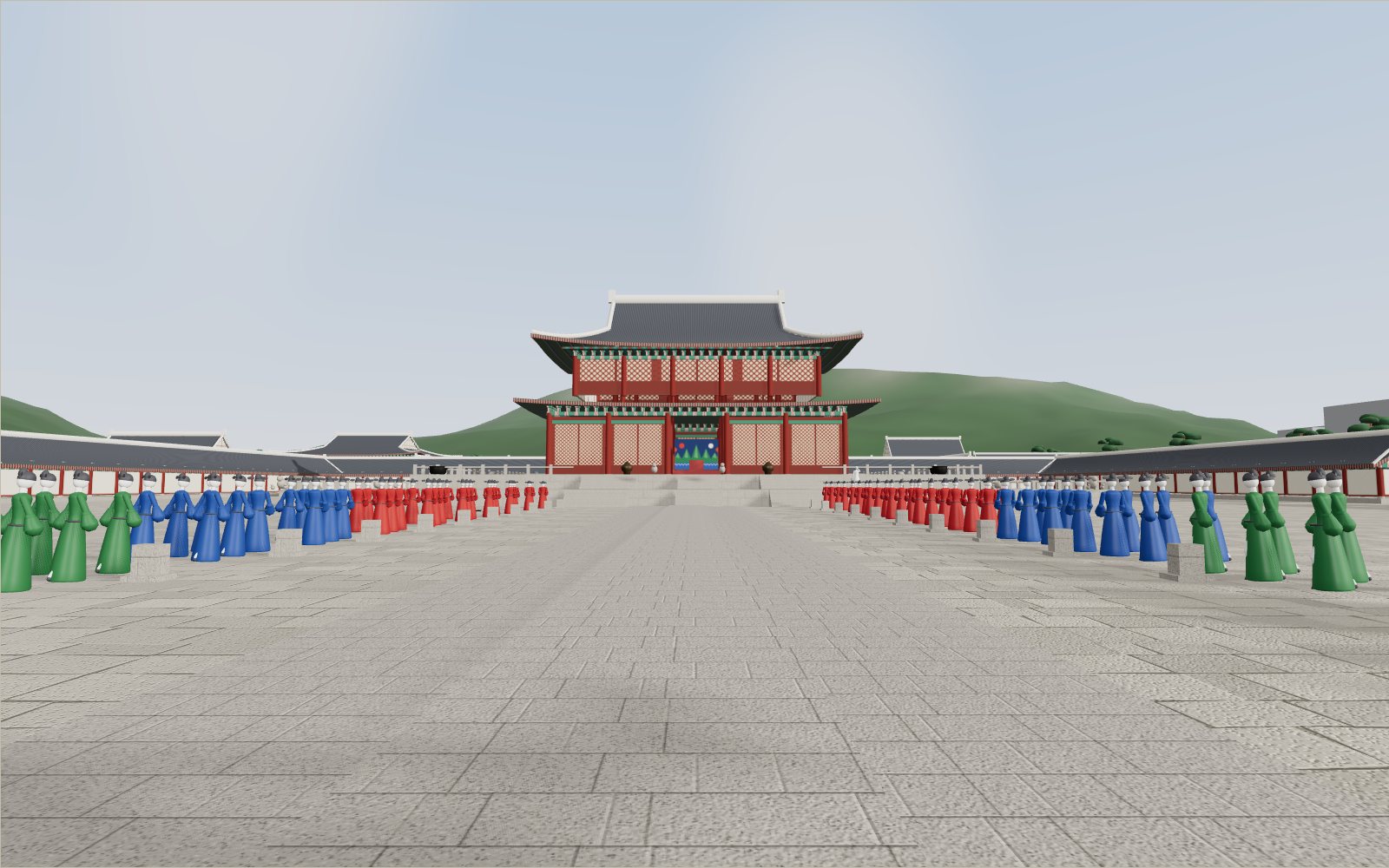
Walk through Gyeongbokgung Palace
In the courtyard of the throne hall, 24 stones told each official where to stand, from the first grade by the hall to the ninth by the gate.
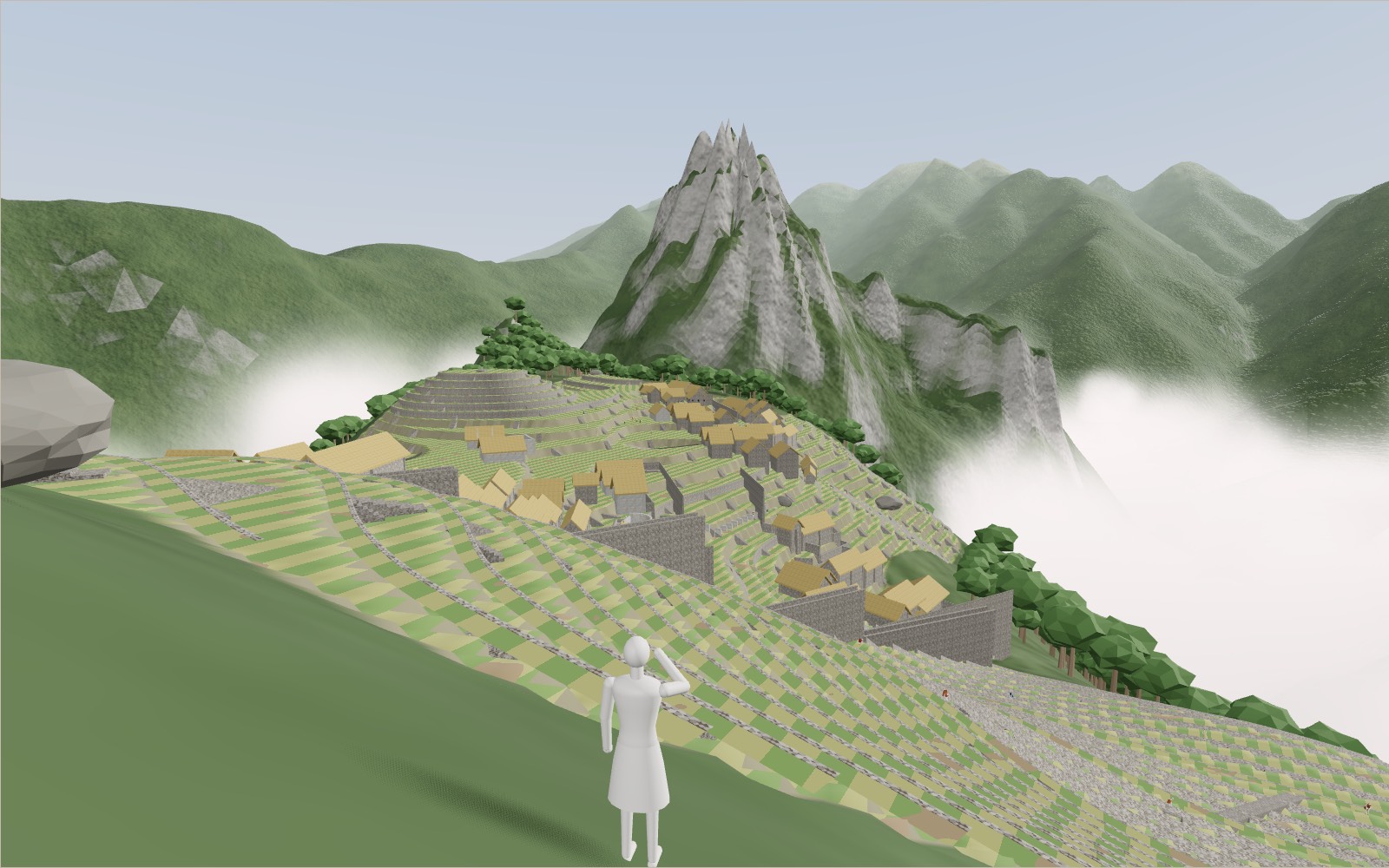
Walk through Machu Picchu
Most of the work that holds Machu Picchu on its ridge, 60 per cent by one estimate, lies under the ground in foundations and drains nobody sees.