8 exhibitsCourses
Old machines, oldest first
Machines that kept time, played music, calculated and carried messages before electronics took over.
They are in order of invention, from a fifteenth-century Korean water clock to a cipher machine of the Second World War.
These machines were all built before electronics took over, and each one does its job with gears, levers, springs, water or electric current switched by hand. They are in order of invention, from a Korean water clock of 1434 to the cipher machine of the Second World War.
Most of them measure, count or code something. Look at how each one keeps track: a float rising in a vessel, a pendulum, pins on a drum, a carriage stepping along, pulses on a line, or rotors stepping round.
- 01
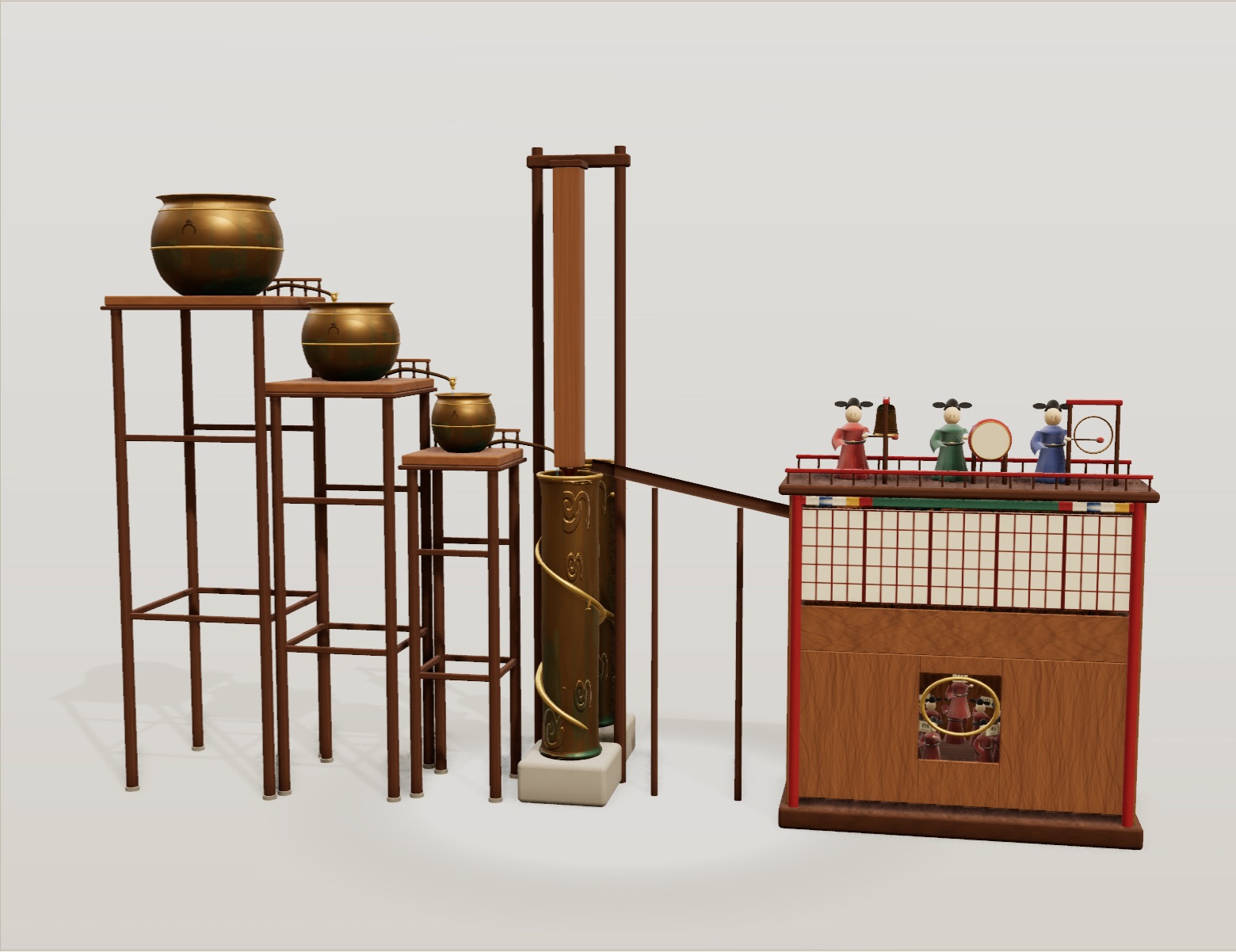 FIG. 56 · Old Machines
How the Jagyeokru water clock works
In 1434 a float rising in a bronze vessel in Seoul began to drop small balls that set wooden figures striking a bell, a drum and a gong.
Follow one ball from the rising float to the figure that strikes the bell.
- 02
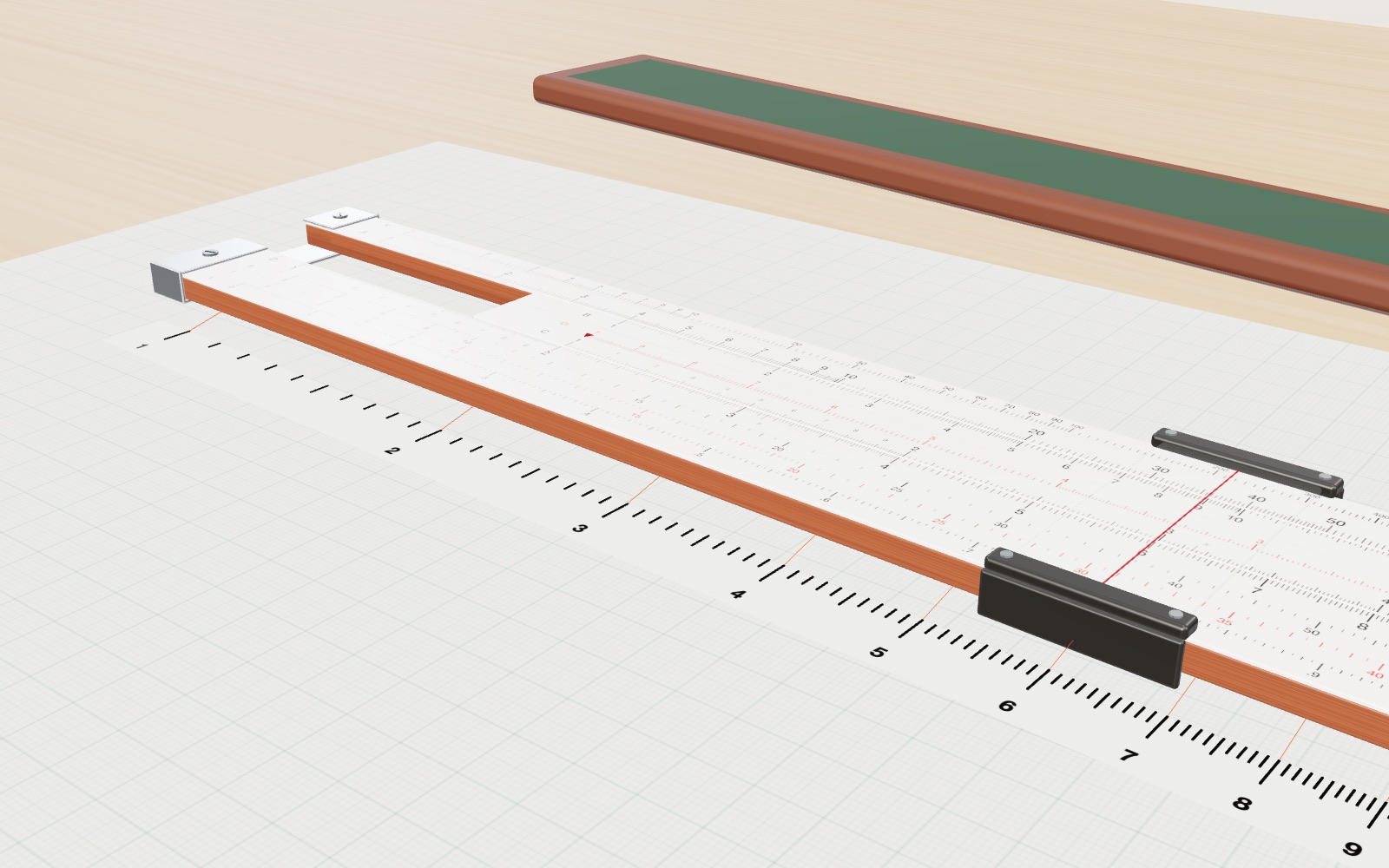 FIG. 13 · Old Machines
Slide rule: how to use one, with an interactive model
On a 25 cm slide rule the 2 sits 75.3 mm from the 1, because 250 × log 2 = 75.3, and laying two such lengths end to end multiplies the numbers.
Multiply 2 by 3 by sliding one scale along the other.
- 03
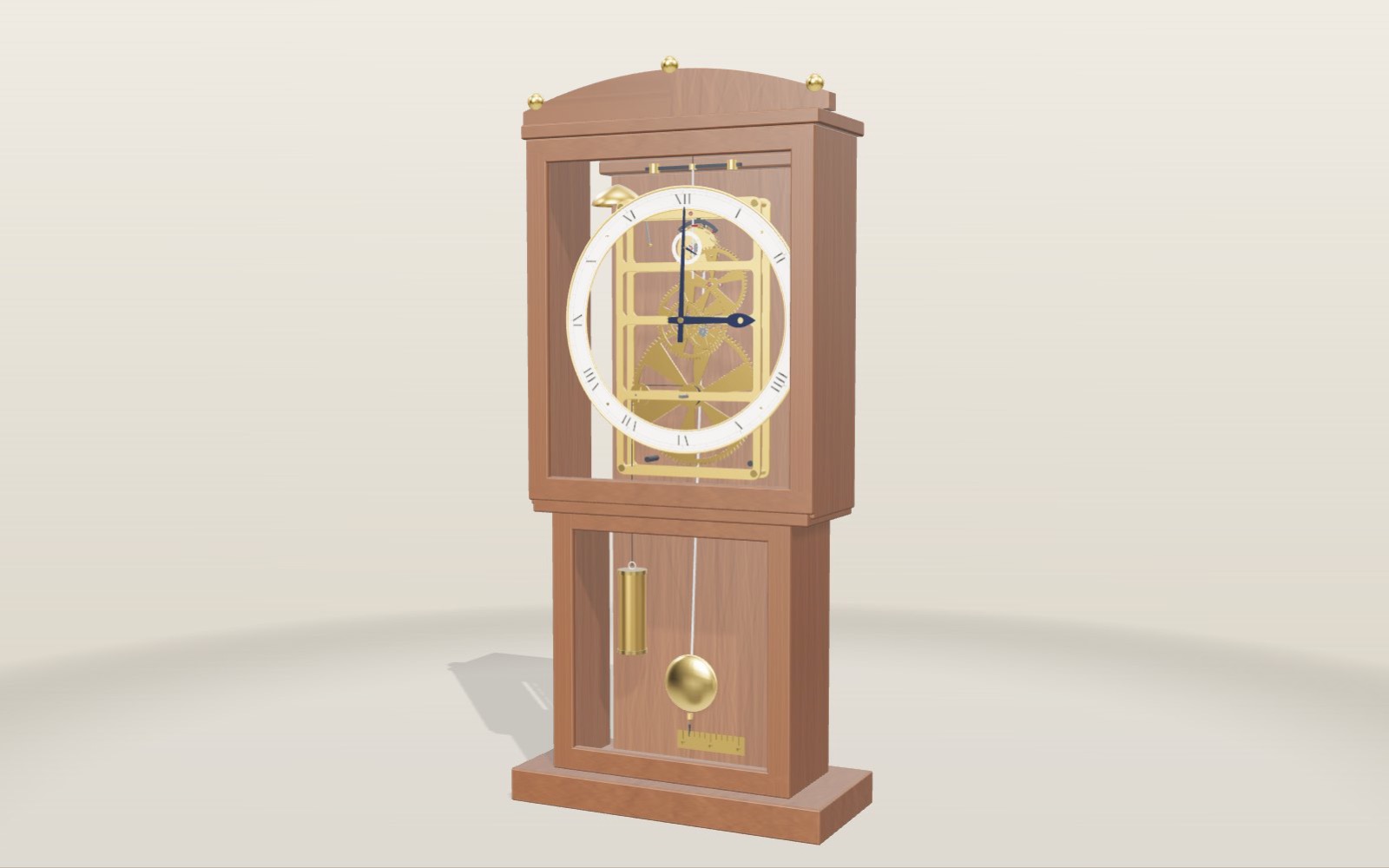 FIG. 01 · How It Works
How a pendulum clock works, and why its length sets the time
A pendulum clock counts seconds with one rod 99.4 cm long. Change its length, its temperature and its place on Earth, swap four escapements and see how many seconds a day each costs.
Lengthen the pendulum and read how many seconds a day the clock loses.
- 04
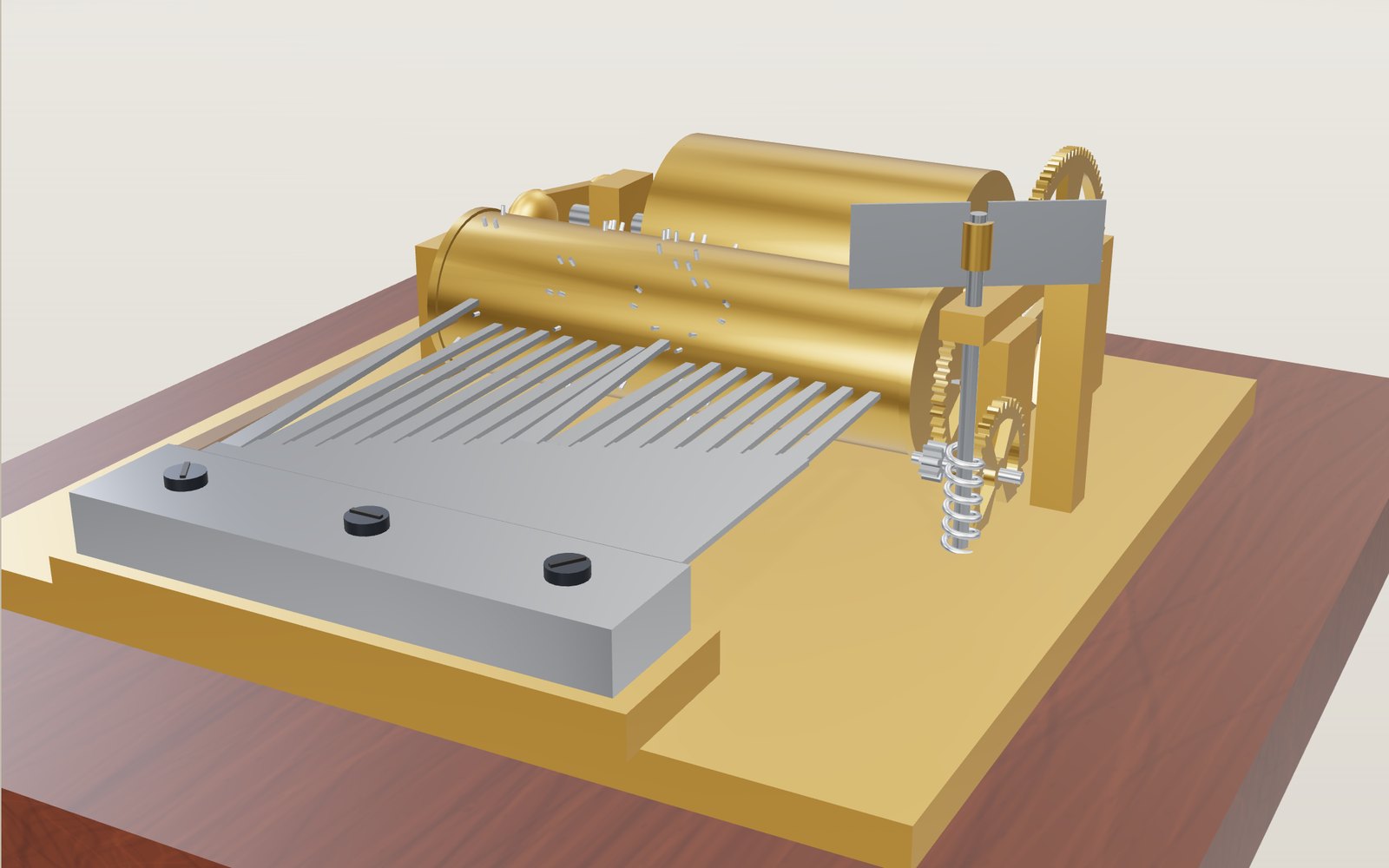 FIG. 12 · Old Machines
How a music box works
A steel tooth 30.6 mm long rings at 261.6 Hz, and cutting it to half that length would raise the note two octaves.
Shorten a steel tooth and hear the note rise.
- 05
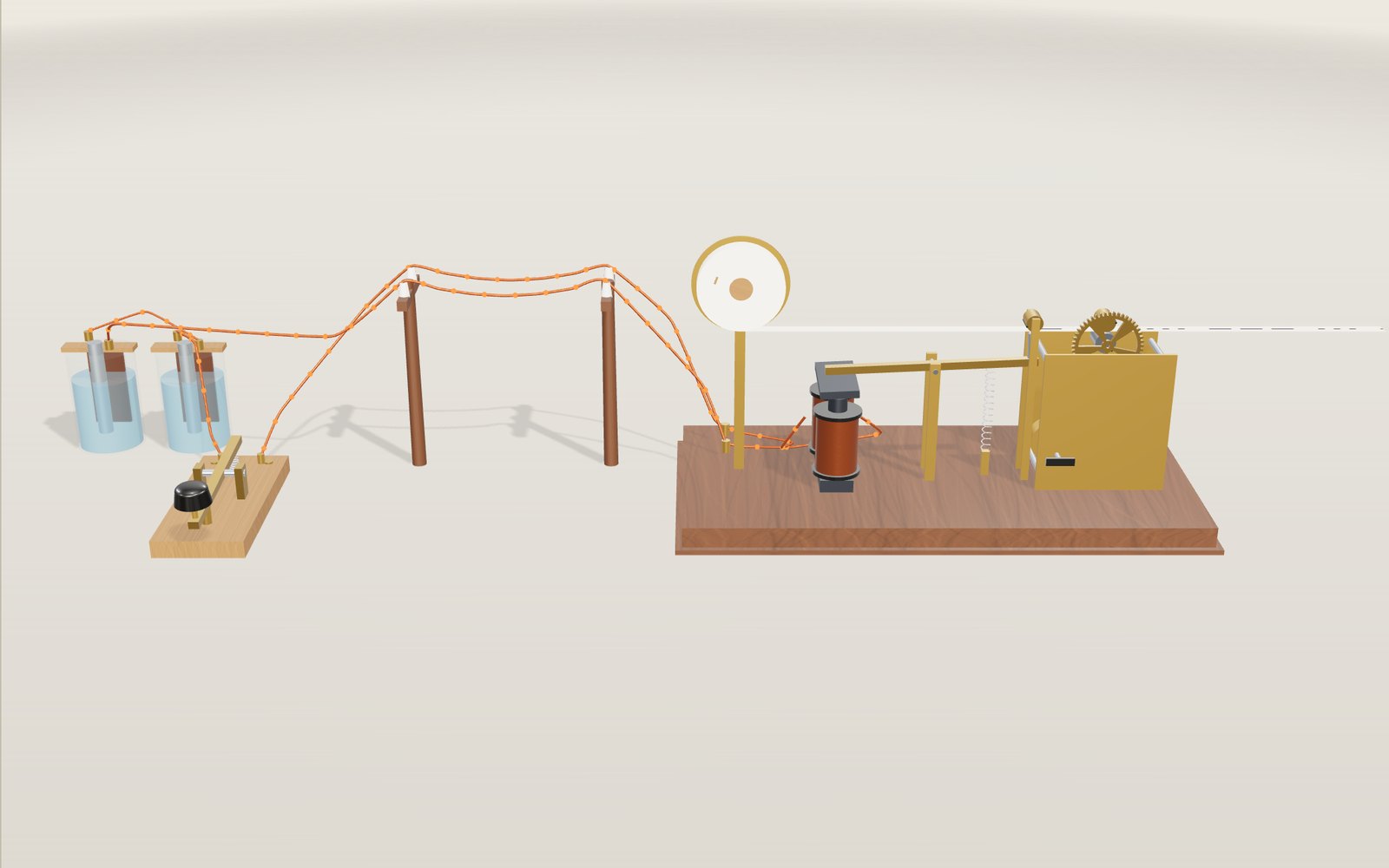 FIG. 14 · Old Machines
Morse telegraph: key it yourself, step by step
On 24 May 1844 a key in the US Capitol pressed dots and dashes into a paper tape in Baltimore, about 40 miles (64 km) away.
Make the line longer and see how a relay keeps the signal strong enough to print.
- 06
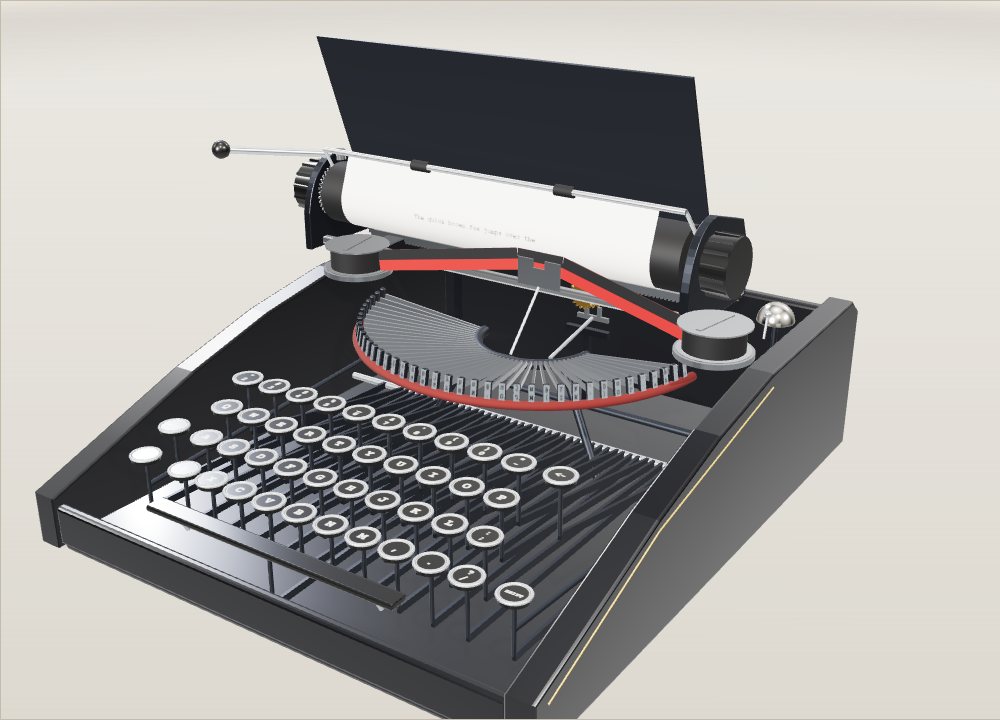 FIG. 11 · Old Machines
How a typewriter works: inside a manual typewriter
On a pica typewriter every letter, space and full stop moves the carriage the same 2.54 mm to the left.
Type a few letters and watch the carriage step left each time.
- 07
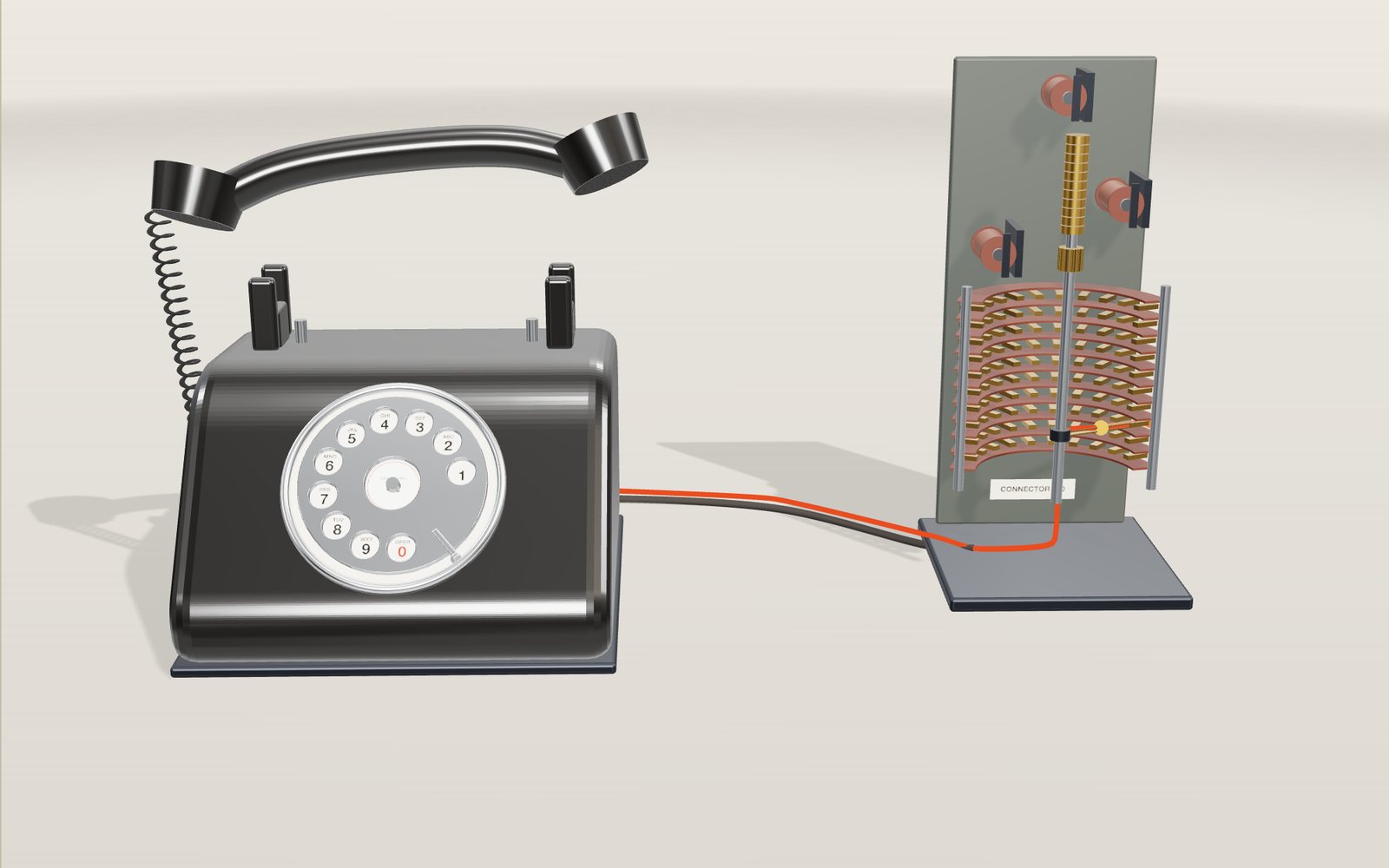 FIG. 16 · Old Machines
How a rotary phone works: the dial, its pulses and the exchange
A rotary dial sends each digit as short breaks in the line current, ten to a second, and dialling 0 takes ten of them.
Dial 0 and count the breaks in the line current.
- 08
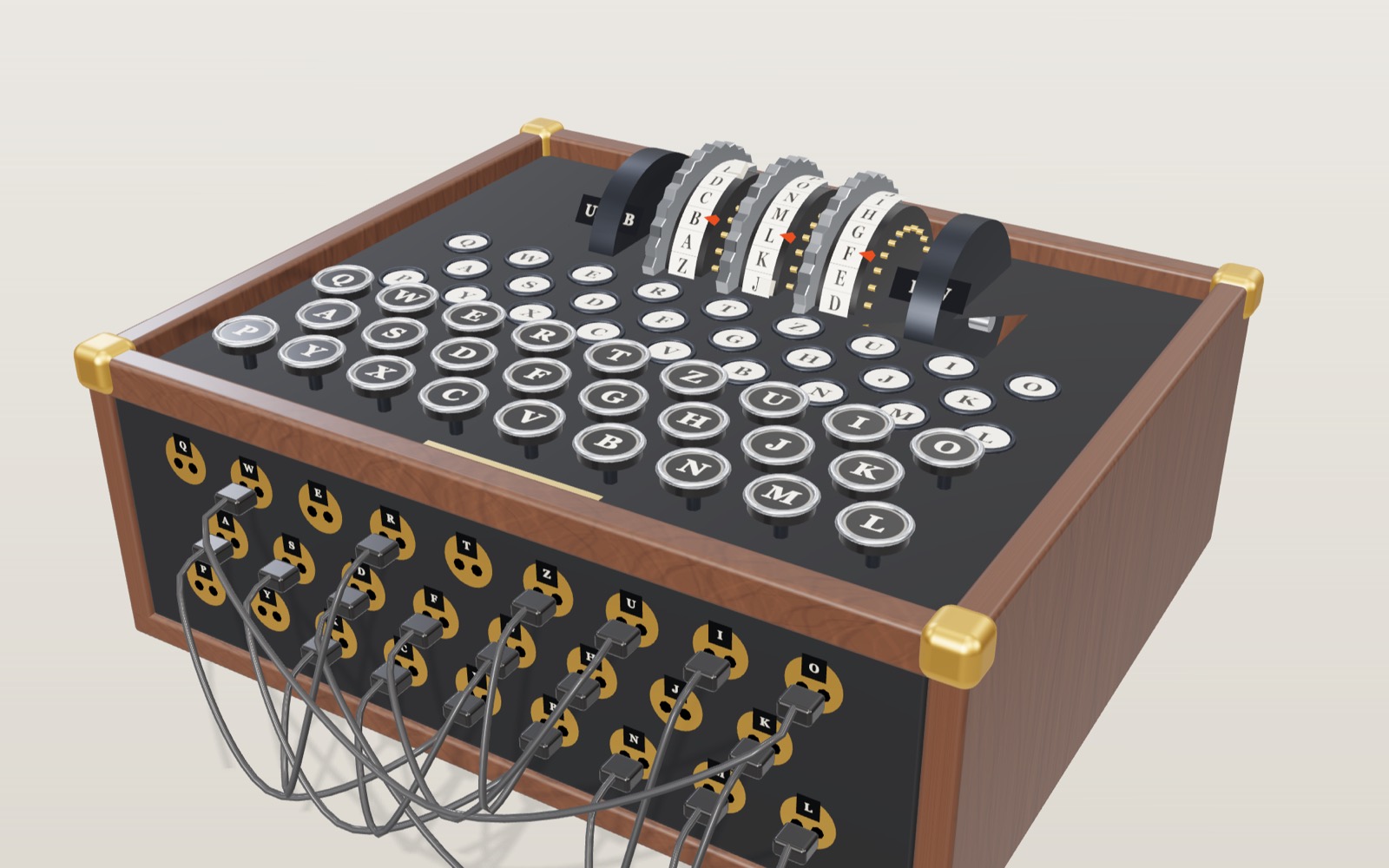 FIG. 15 · Old Machines
How the Enigma machine worked: rotors, reflector and plugboard
Press A five times on an Enigma set to I-II-III and AAA and the lamps light B, D, Z, G, O.
Press the same key five times and see five different letters light up.