8 exhibitsCourses
The body: from heartbeat to DNA
Your own body, from the organs you can feel down to the molecules inside each cell.
It starts with what you can sense, a heartbeat, a nerve signal, your eyes and your reflexes, then moves into a cell and ends with the DNA it copies and edits.
The route starts with things you can feel: your pulse, a nerve firing, your eyes focusing and your reaction to a signal on the screen. Then it shrinks into a single cell, to the motor that makes most of its energy and the machinery that copies and edits its DNA.
The exhibits explain how the body works; they are not medical advice. Where a stop talks about health, it points to the sources it used.
- 01
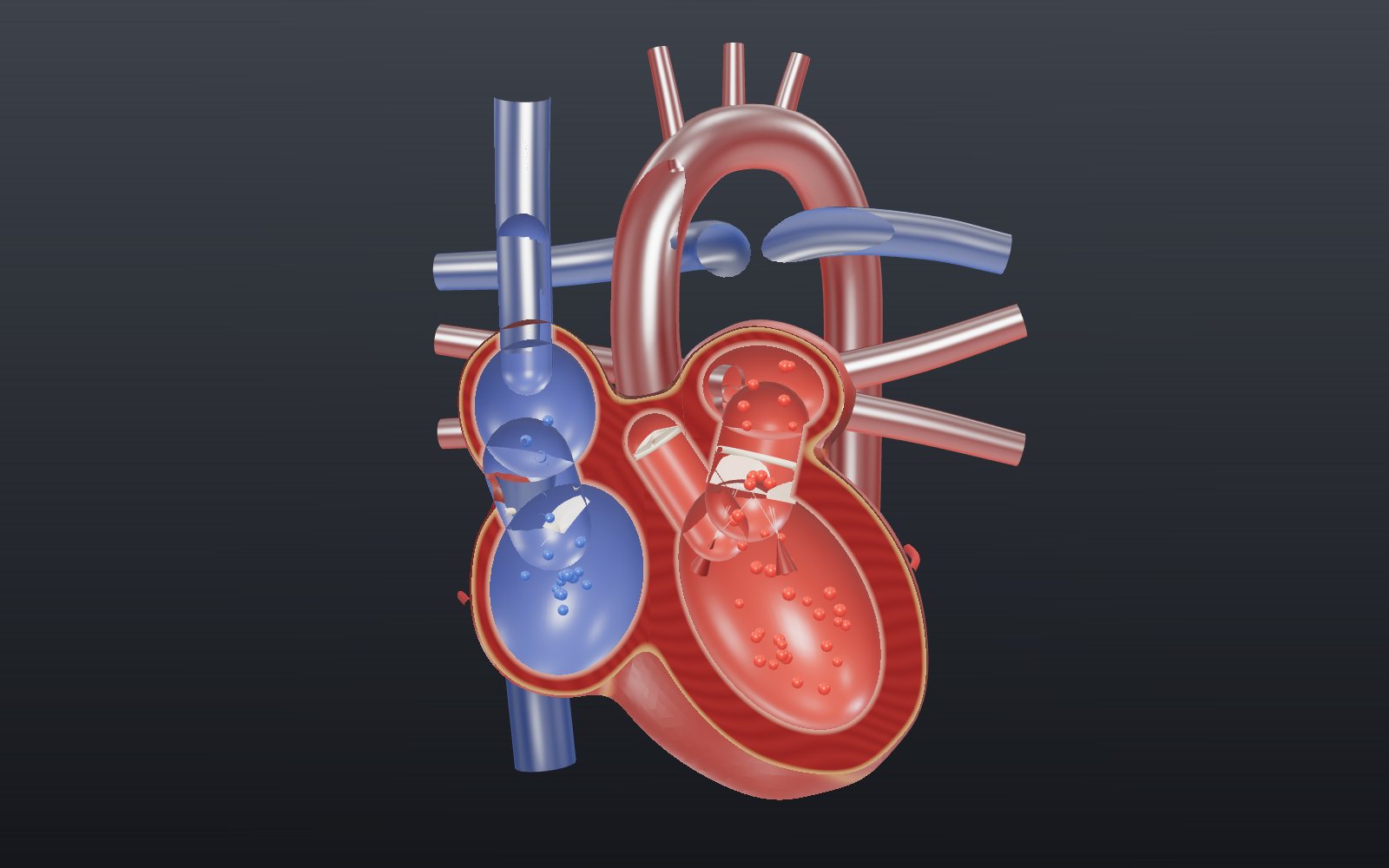 FIG. 77 · How It Works
Heart beating: interactive model of the heart, step by step
Your heart pushes out about 70 mL of blood with each beat, and at a resting pace it does that about 108,000 times a day.
Change the heart rate and read how much blood is pumped in a minute.
- 02
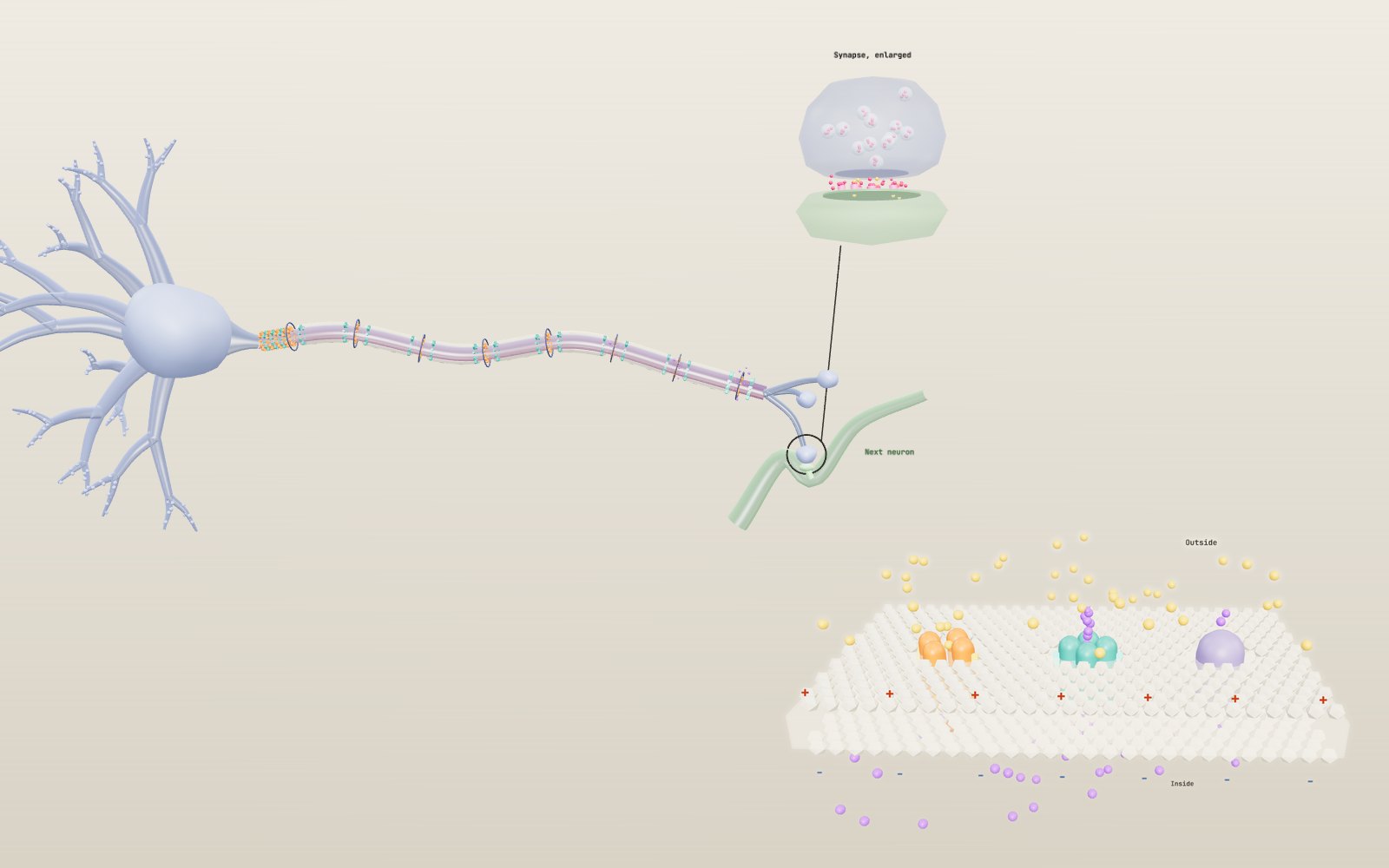 FIG. 66 · How It Works
How nerve signals travel
A nerve cell sits at about −70 mV, and when a stimulus lifts it to about −55 mV it fires a spike that is always the same size.
Give a weak and then a strong stimulus and compare the spikes.
- 03
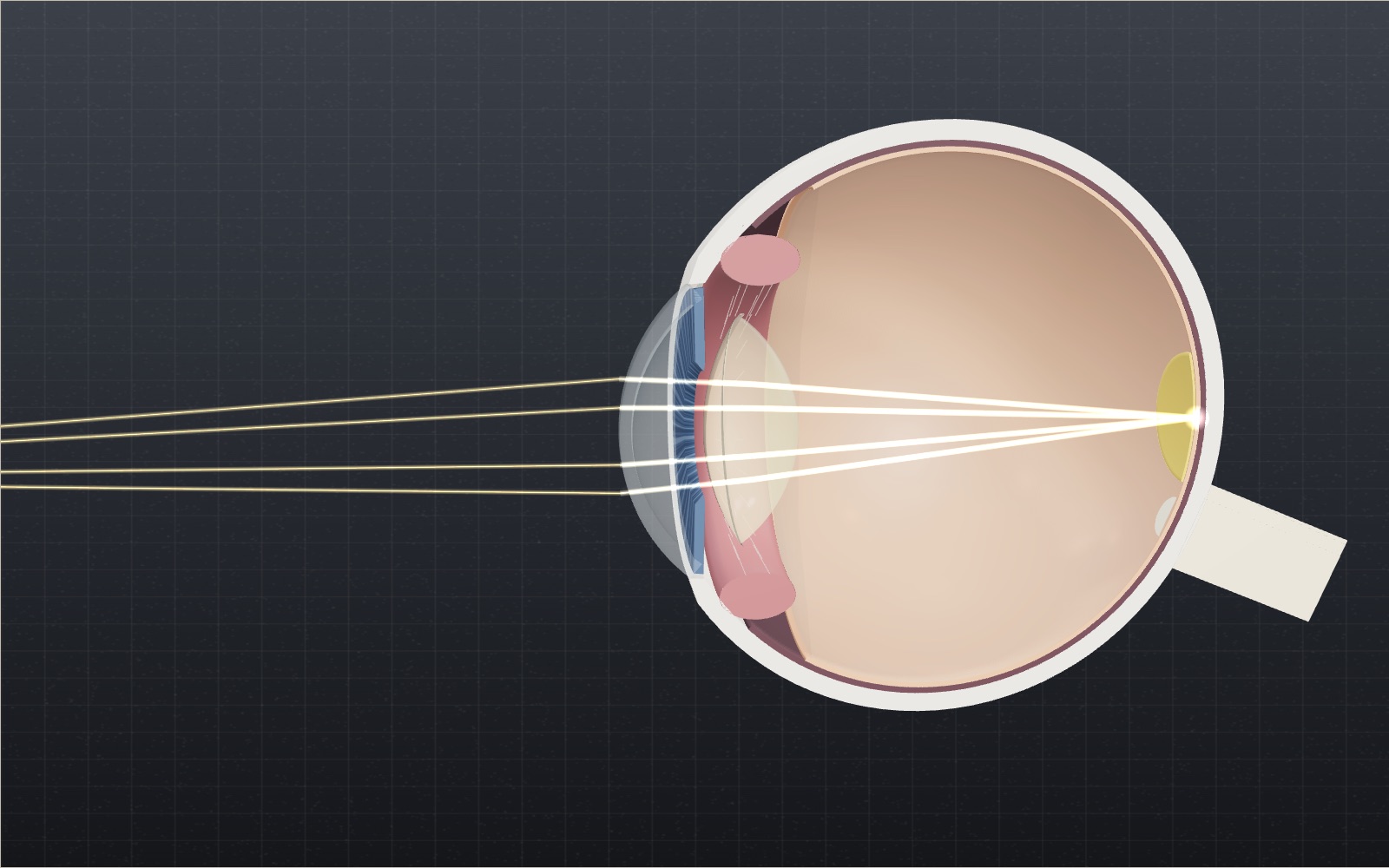 FIG. 38 · How It Works
How does the eye focus on near and far objects? Try it in 3D
The cornea supplies about 43 of the eye's 60 dioptres, so why does the small lens behind it get all the credit for focusing?
Switch between near and far focus and see how much of the work the cornea does.
- 04
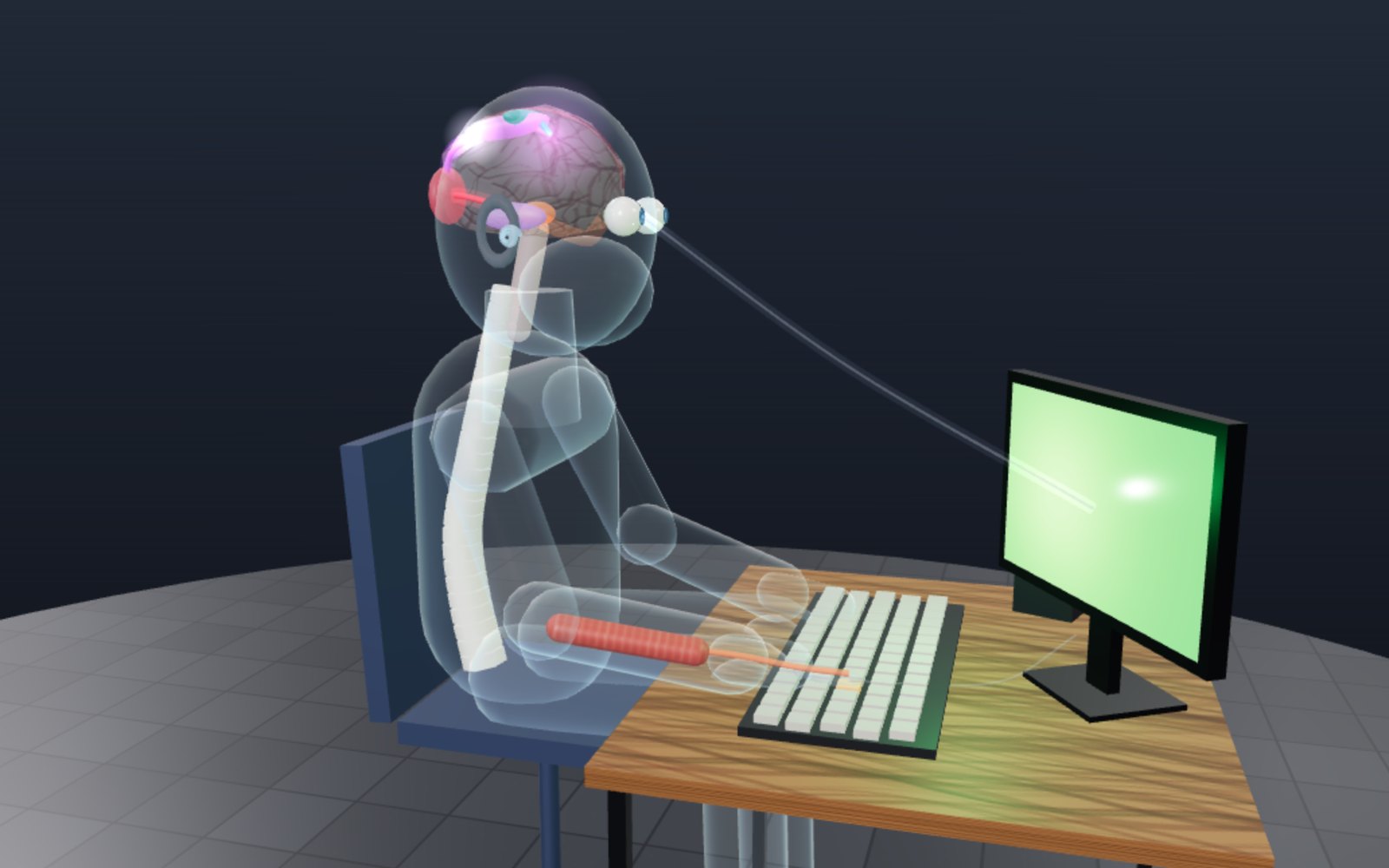 FIG. 89 · Senses
Reaction time test: how many milliseconds do you take?
Light from the screen reaches your eye almost at once, yet your finger moves about a fifth of a second later. Most of that time passes inside your head.
Take the test ten times and compare your median with your fastest try.
- 05
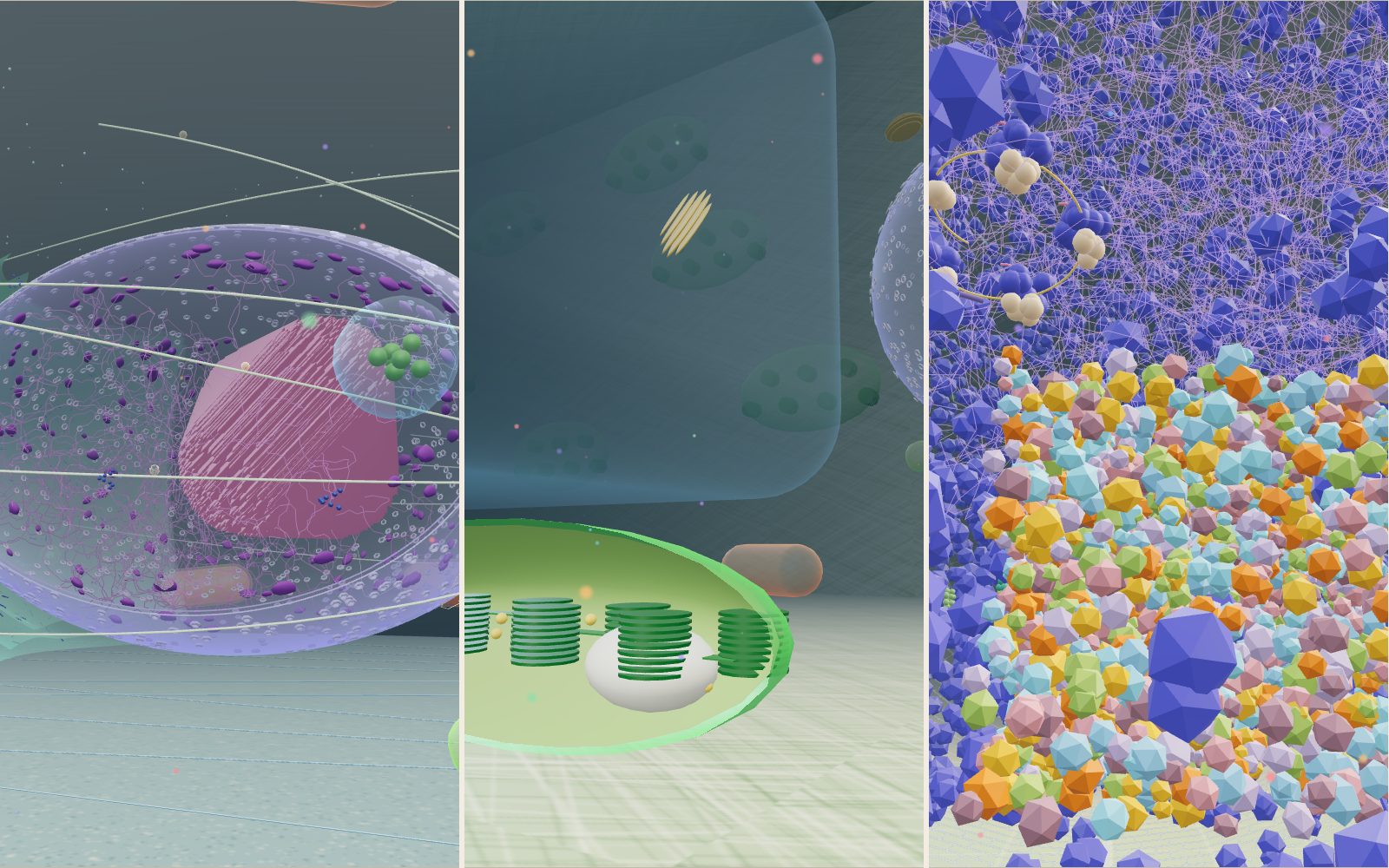 FIG. 54 · Walk-throughs
Walk inside a cell: animal, plant and bacterium
Grown a million times, a mitochondrion is about the size of a sofa, a whole E. coli is 2 m long, and the kinesin towing a vesicle past you walks at 0.8 metres per second.
Walk to the nucleus and look at how much room the cell's machinery takes up.
- 06
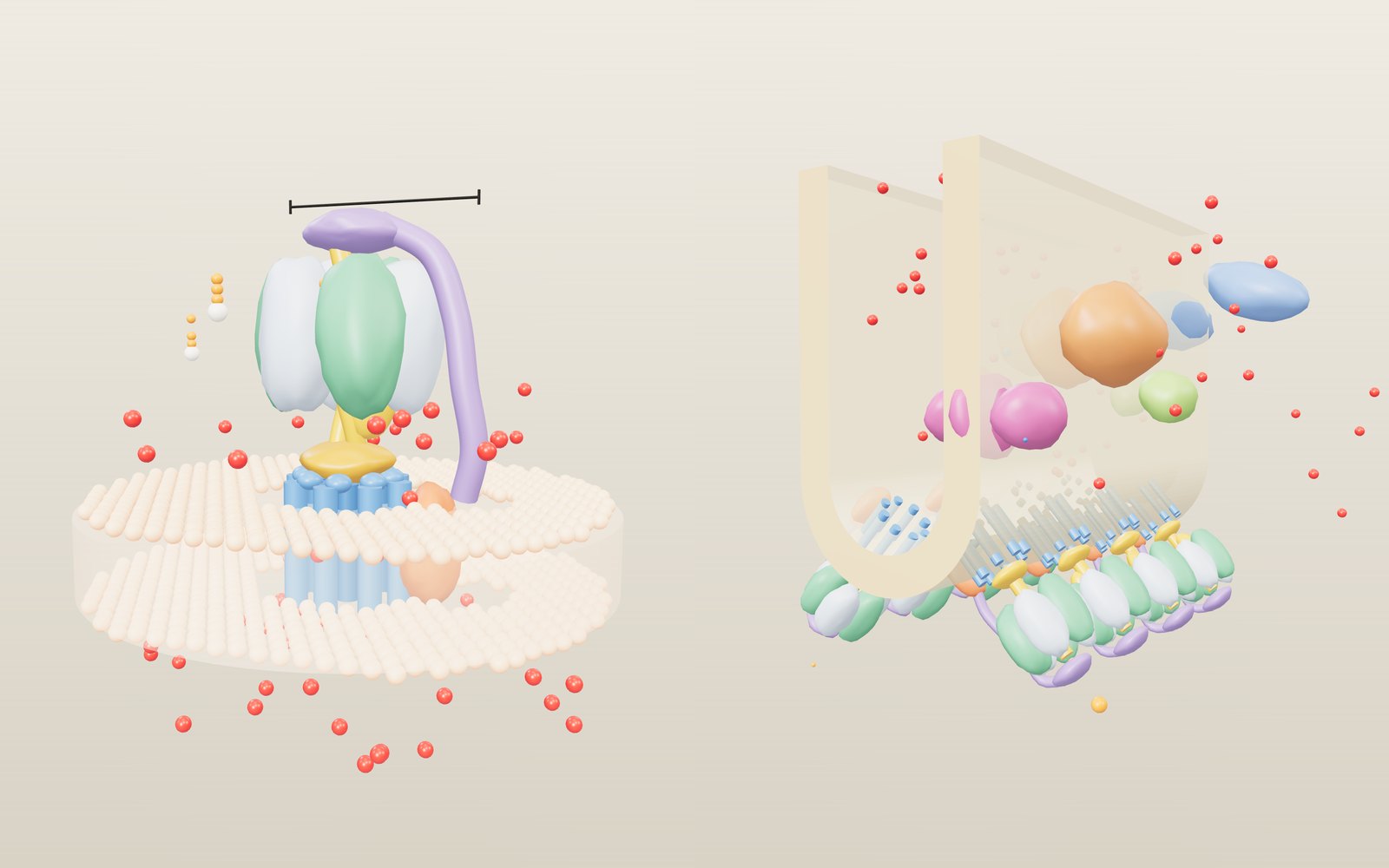 FIG. 43 · How It Works
How ATP synthase works
In mitochondria the rotor of ATP synthase turns about 100 times a second, and every full turn releases three molecules of ATP.
Count how many ATP molecules one full turn of the rotor releases.
- 07
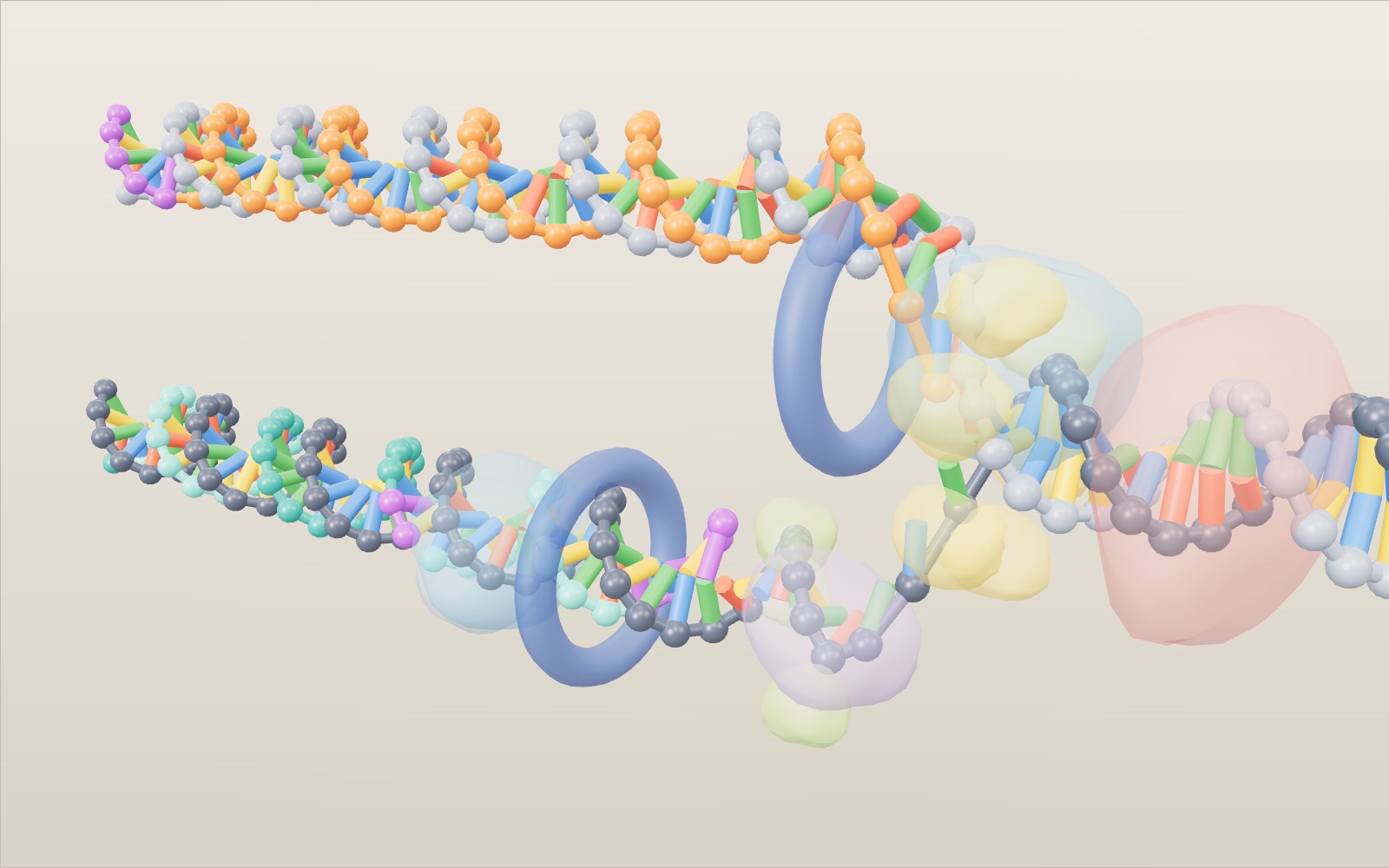 FIG. 59 · How It Works
How DNA replication works, step by step: Okazaki fragments in 3D
A DNA polymerase can only add to one end of a strand, so at every replication fork one new strand grows in a single piece and the other in short fragments.
Watch the two new strands at one fork and see why one grows in pieces.
- 08
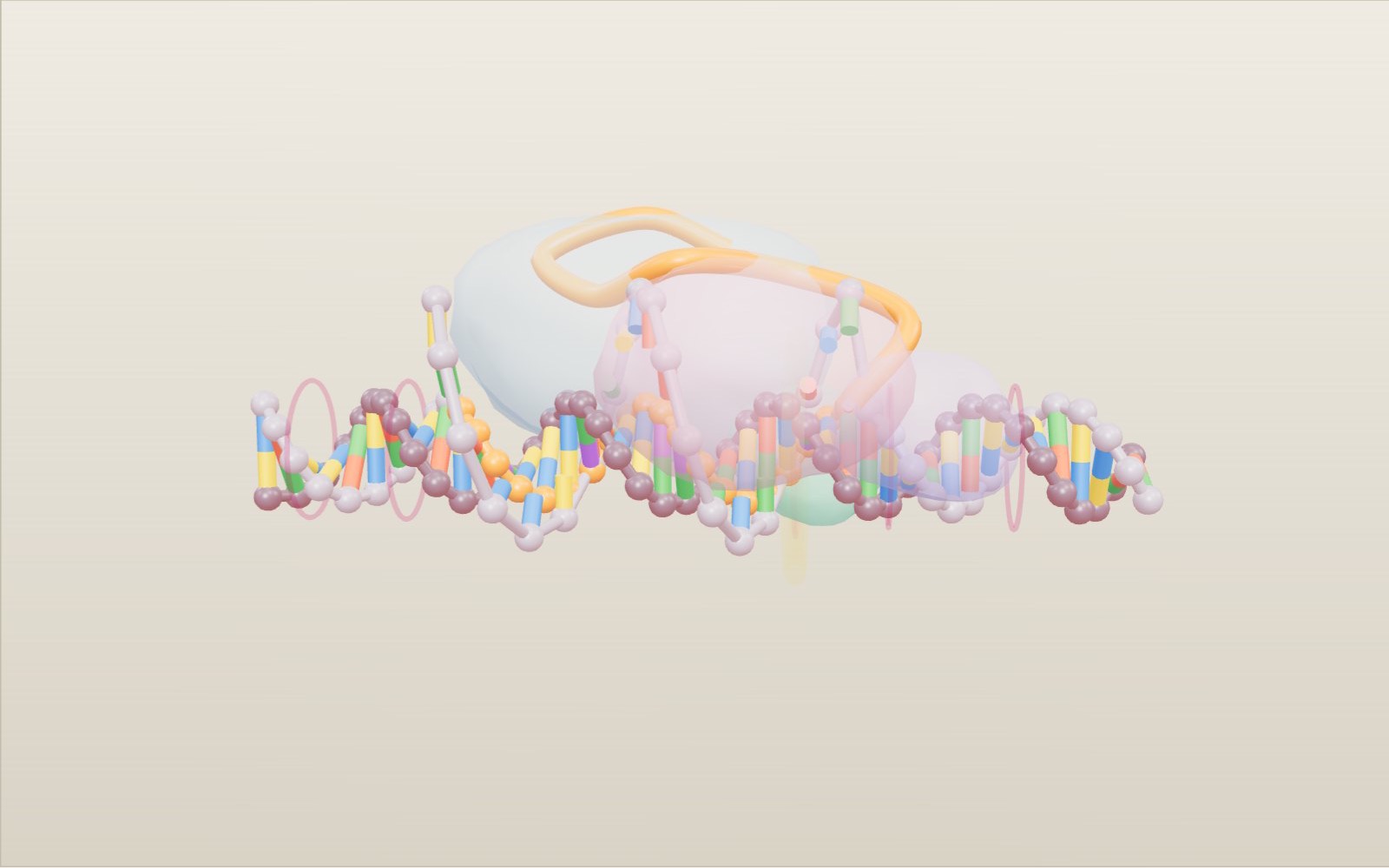 FIG. 42 · How It Works
How CRISPR-Cas9 gene editing works
A guide RNA reads just 20 letters of DNA, and that is usually enough to pick out one spot among the 3 billion base pairs of a human genome.
Turn the PAM off and see whether Cas9 still cuts.