8 exhibitsCourses
Electricity: from turbine to chip
Follow electric power from where it is made to where it turns a motor or adds two numbers.
The order follows the current: made by wind and sunlight, carried by the grid and the cables under the street, stored in a battery, then used by a motor and by the switches inside a chip.
This route follows electric current from where it is made to where it does work. Wind and sunlight make it, the grid and the cables under the street carry it, a battery stores it, and a motor and the switches inside a chip use it.
Two numbers come back at every stop: voltage and current. Their product is power, and the course shows why the grid raises the voltage for long distances, why a battery's voltage barely moves, and why a chip runs on just a few volts.
- 01
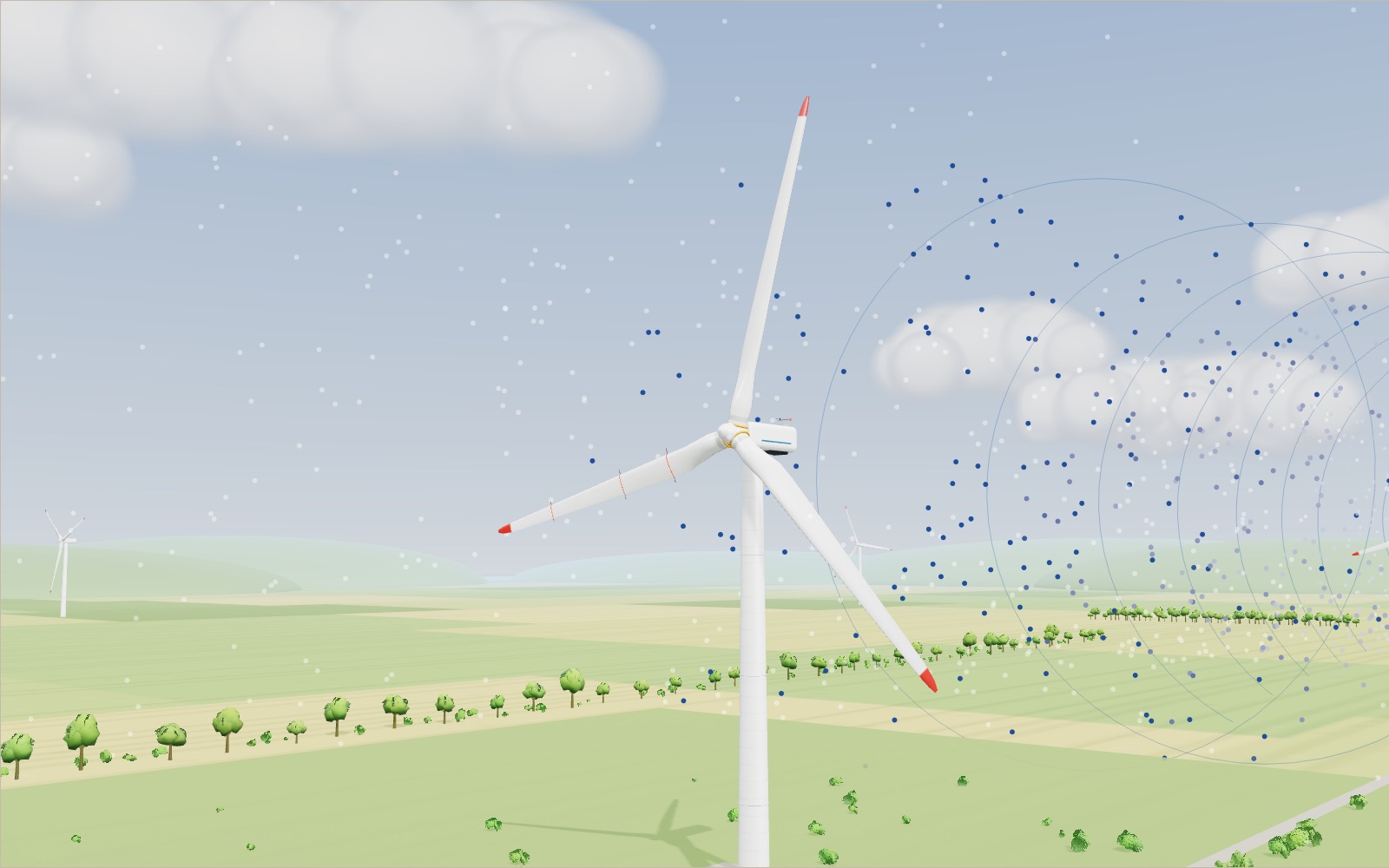 FIG. 78 · How It Works
How a wind turbine works: why the blades twist in strong wind
A turbine with 61-metre blades makes no more power in a gale than in a stiff breeze, because above 11.4 metres a second it turns its blades out of the wind.
Raise the wind speed past 11.4 m/s and watch the blades turn out of the wind.
- 02
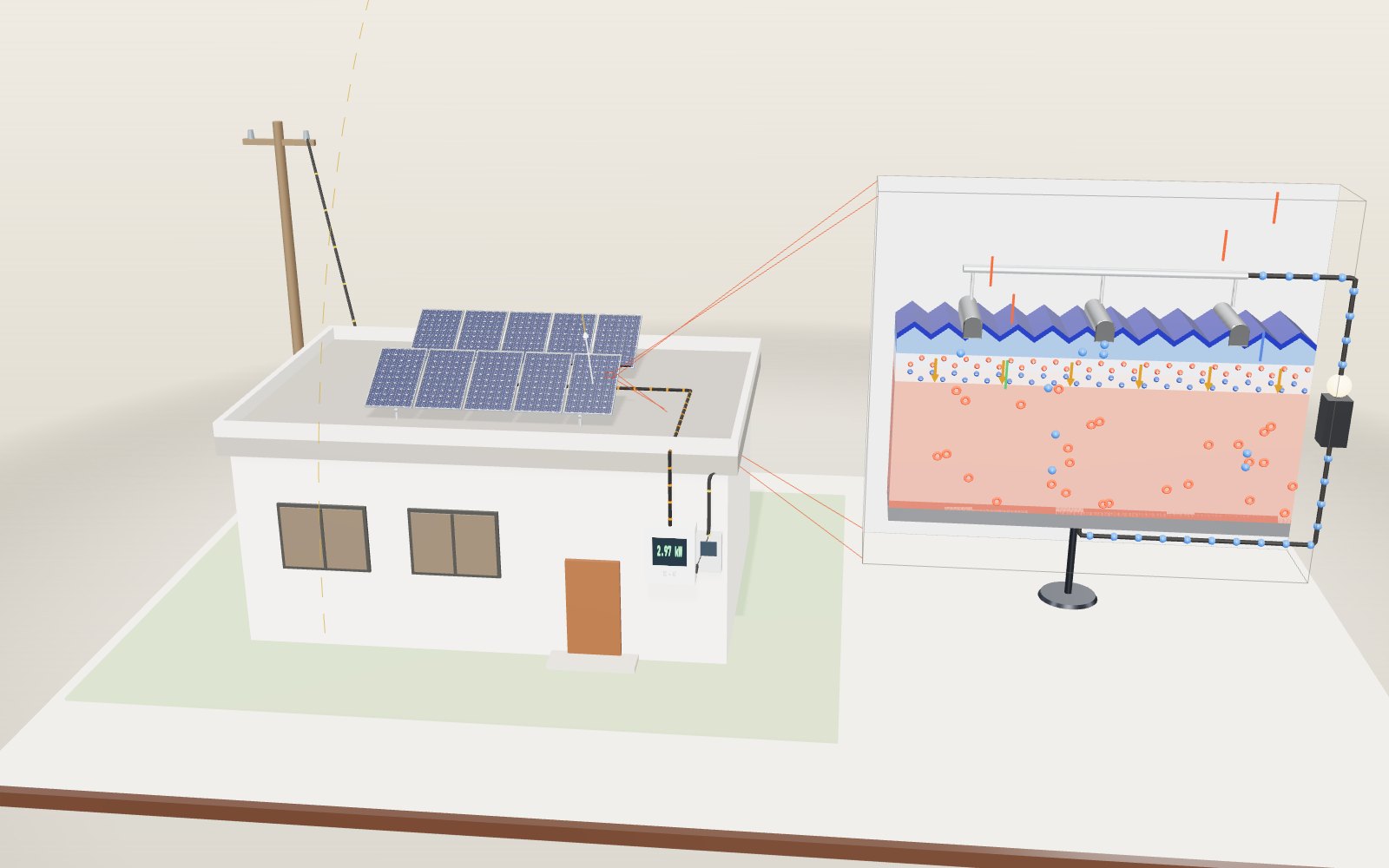 FIG. 67 · How It Works
How a solar panel works
In full sun a 60-cell rooftop panel makes about 300 watts, and all of it comes from an electric field sitting inside each slice of silicon.
Shade one cell and see how much of the panel's output is lost.
- 03
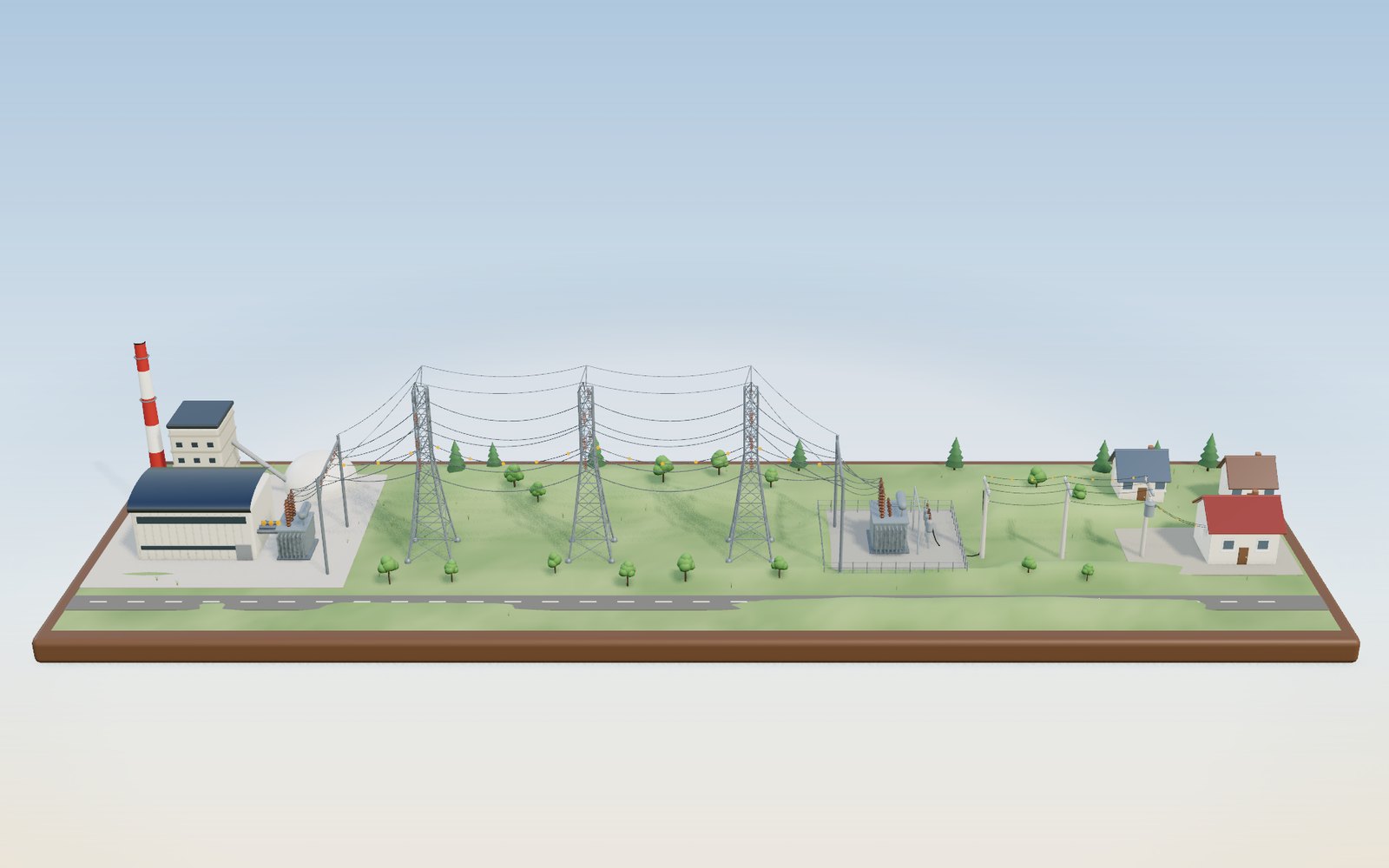 FIG. 44 · How It Works
How electricity gets to your home
Electricity leaves the power station at 345,000 volts and reaches the outlet at 220, because high voltage keeps the current, and the heat lost in the wires, small.
Follow the voltage from the power station down to the wall socket.
- 04
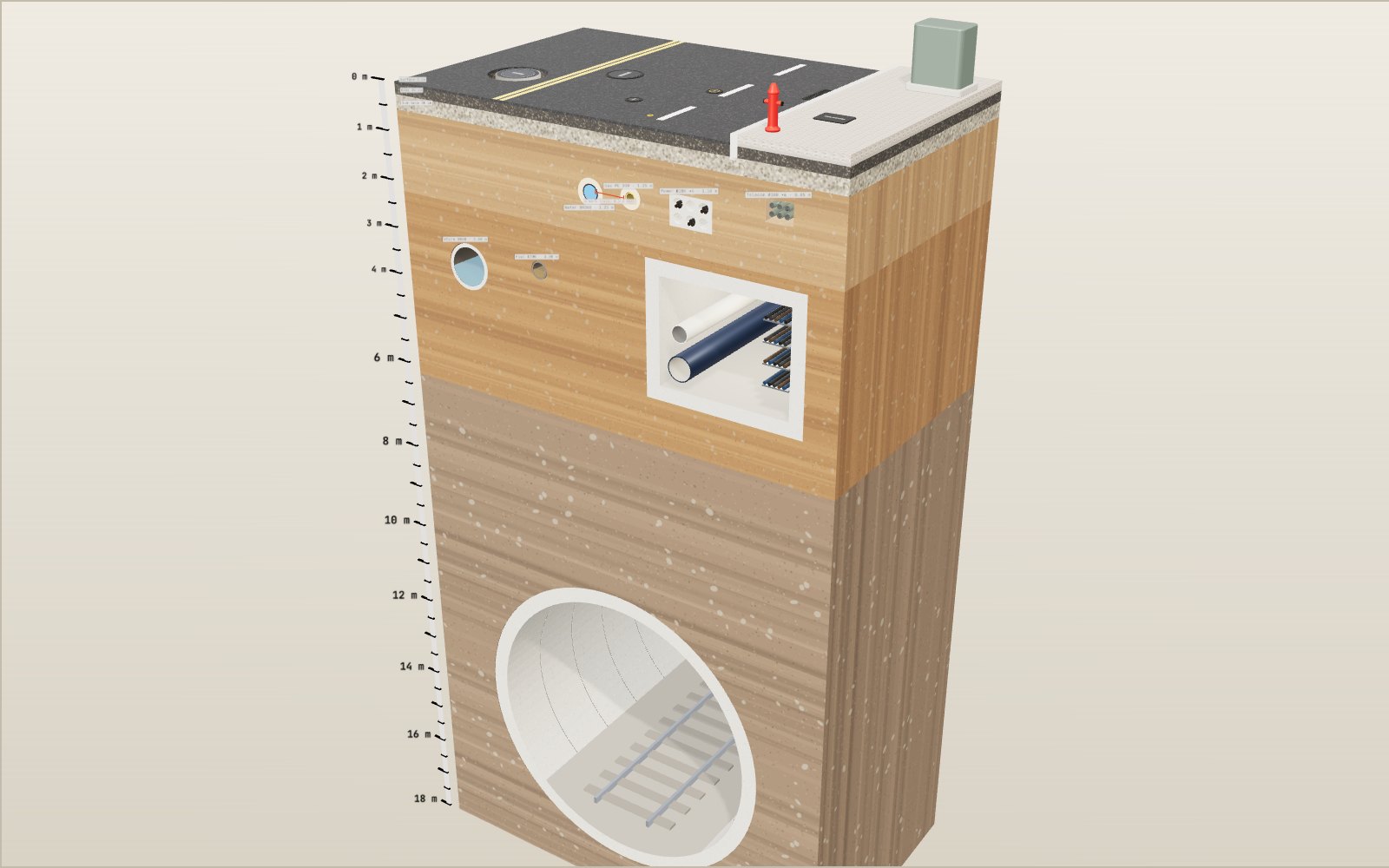 FIG. 45 · How It Works
What is under the street
Korean road rules put a water main at least 1.2 metres under the road and a main sewer at least 3 metres down, so four kinds of pipe and cable all lie within the top 2 metres.
Dig a 2 m hole and count the kinds of pipe and cable you meet.
- 05
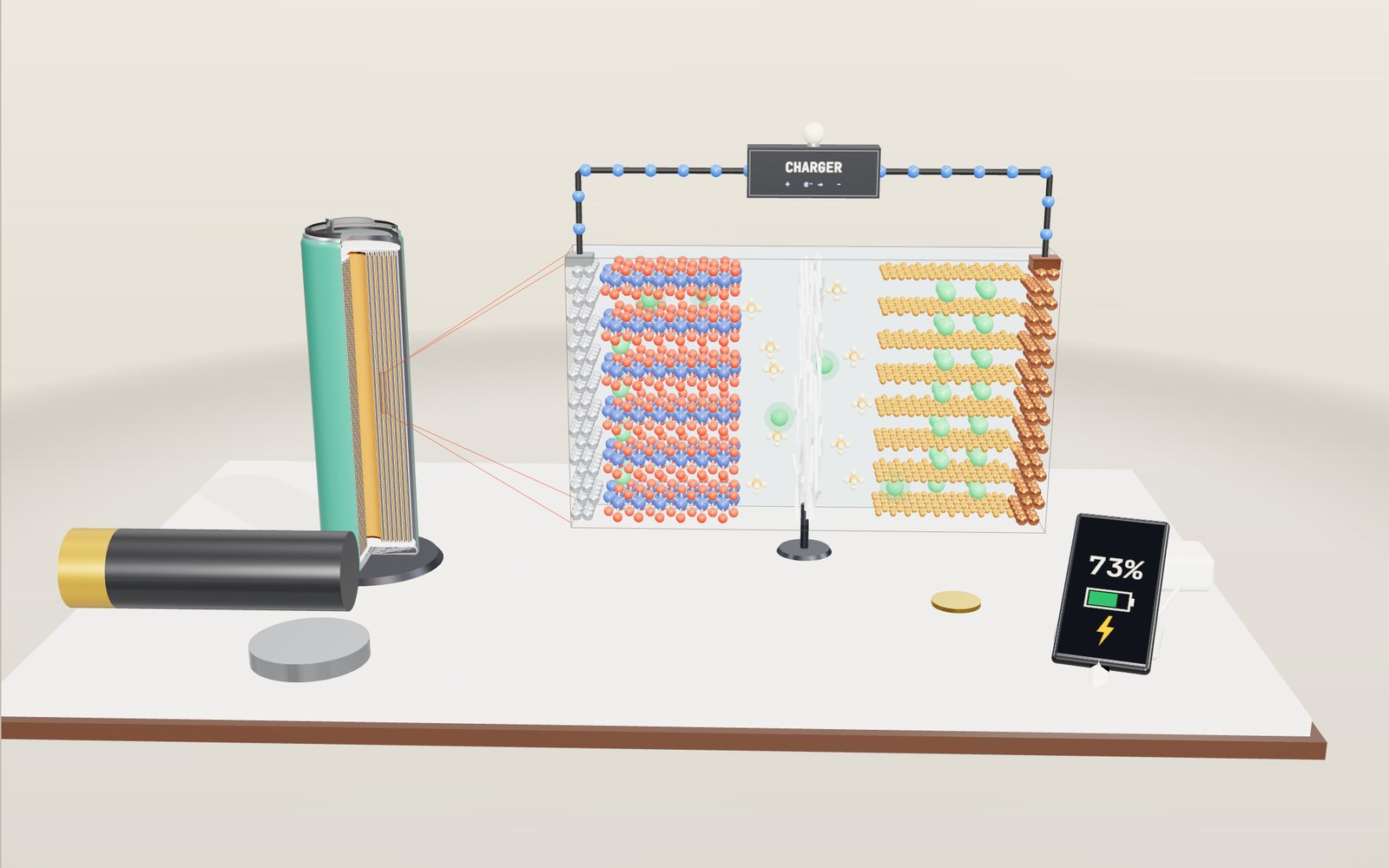 FIG. 49 · How It Works
How a lithium-ion battery works: where the ions go on charge
Each time an 18650 cell charges, about 7 × 10²² lithium ions leave a metal oxide and squeeze in between sheets of graphite.
Charge the cell and watch the lithium ions move into the graphite.
- 06
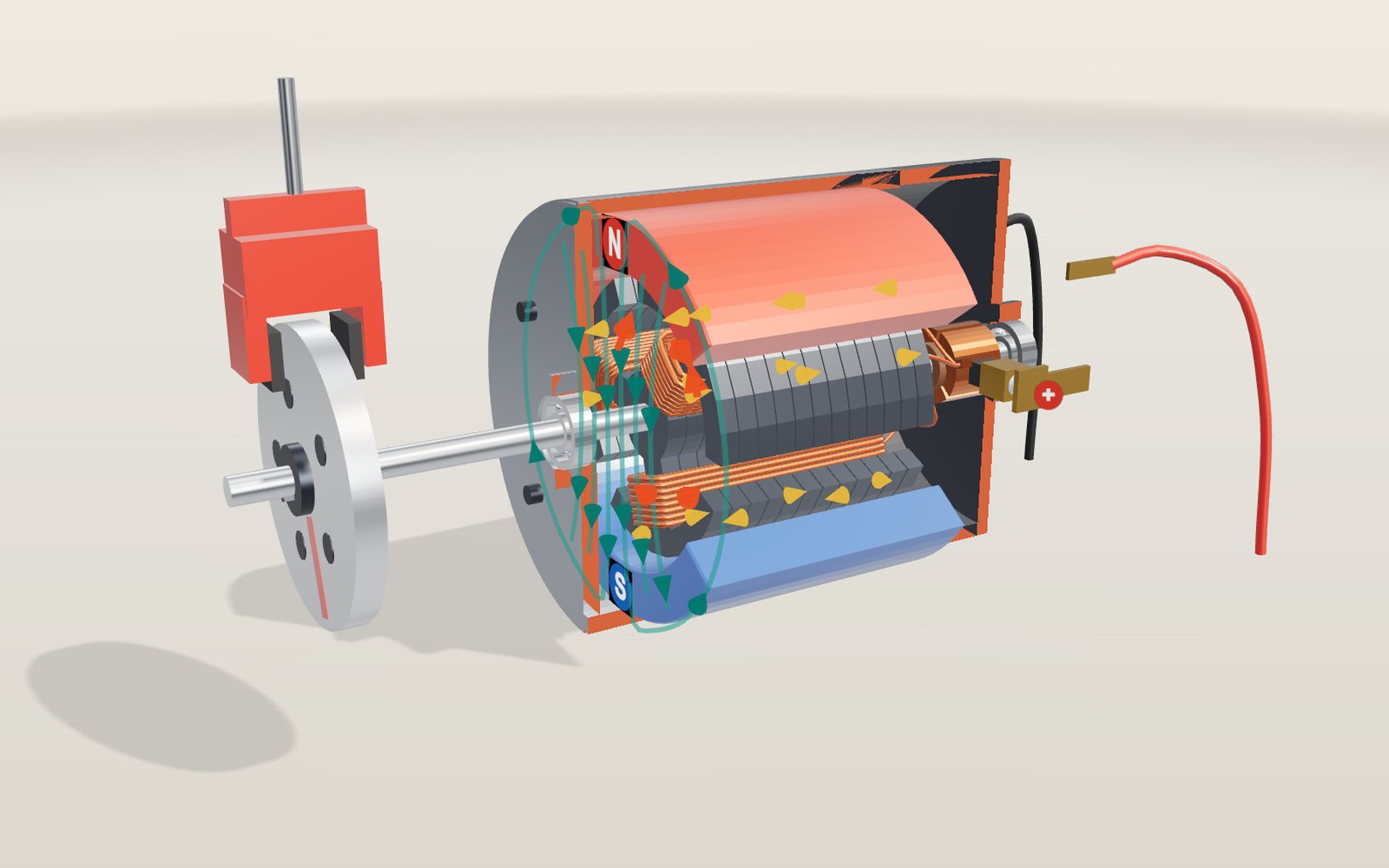 FIG. 09 · How It Works
Electric motor simulator: how it works, step by step
Eight motors, from Faraday's wire in mercury in 1821 to the magnets inside an electric car, all turning on the same push between current and field.
Raise the load and watch the motor slow down and draw more current.
- 07
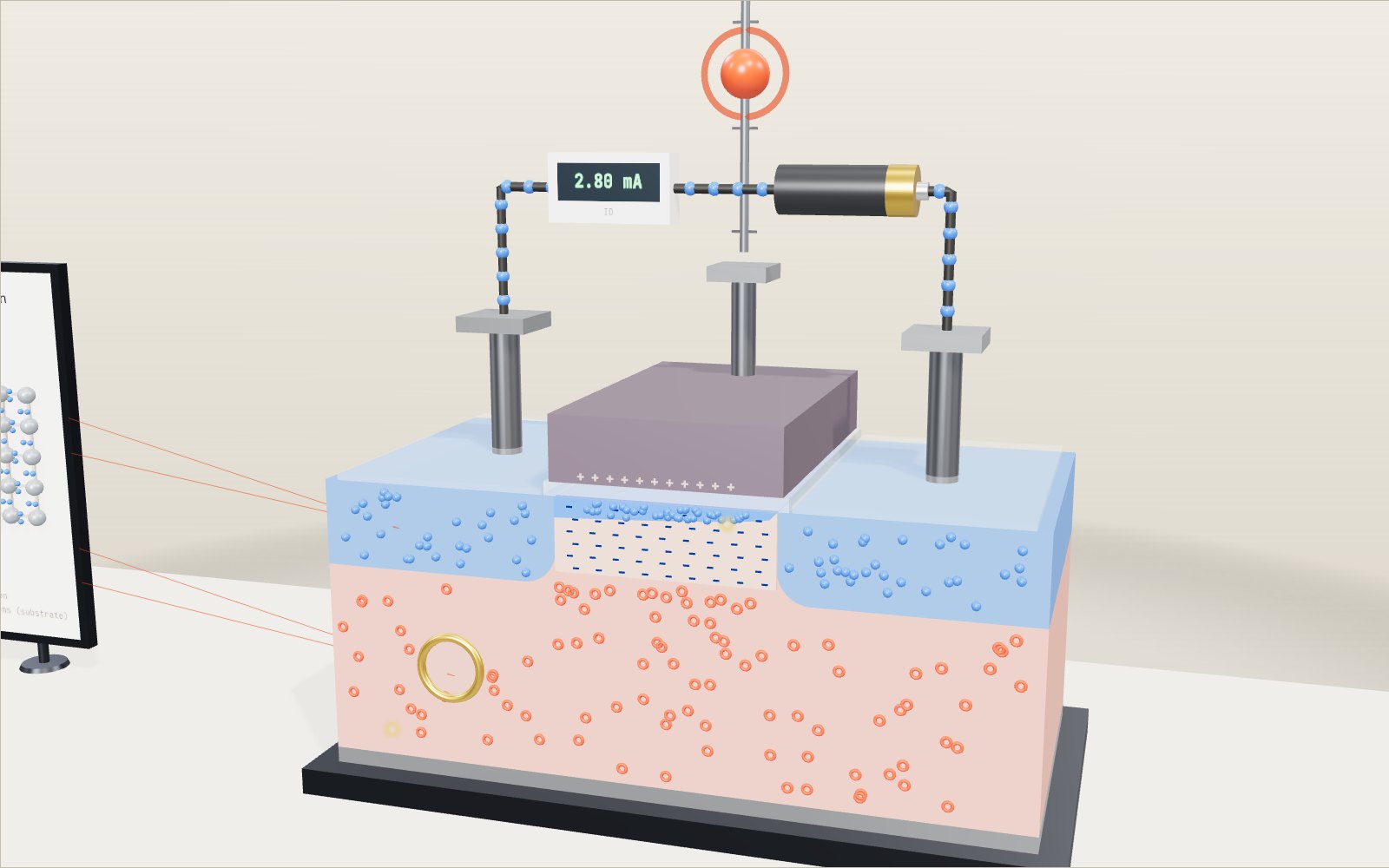 FIG. 72 · How It Works
How a transistor works as a switch: the MOSFET gate
A chip with 16 billion transistors turns each one on and off with a few volts on a gate that never touches the silicon underneath.
Raise the gate voltage until the channel opens.
- 08
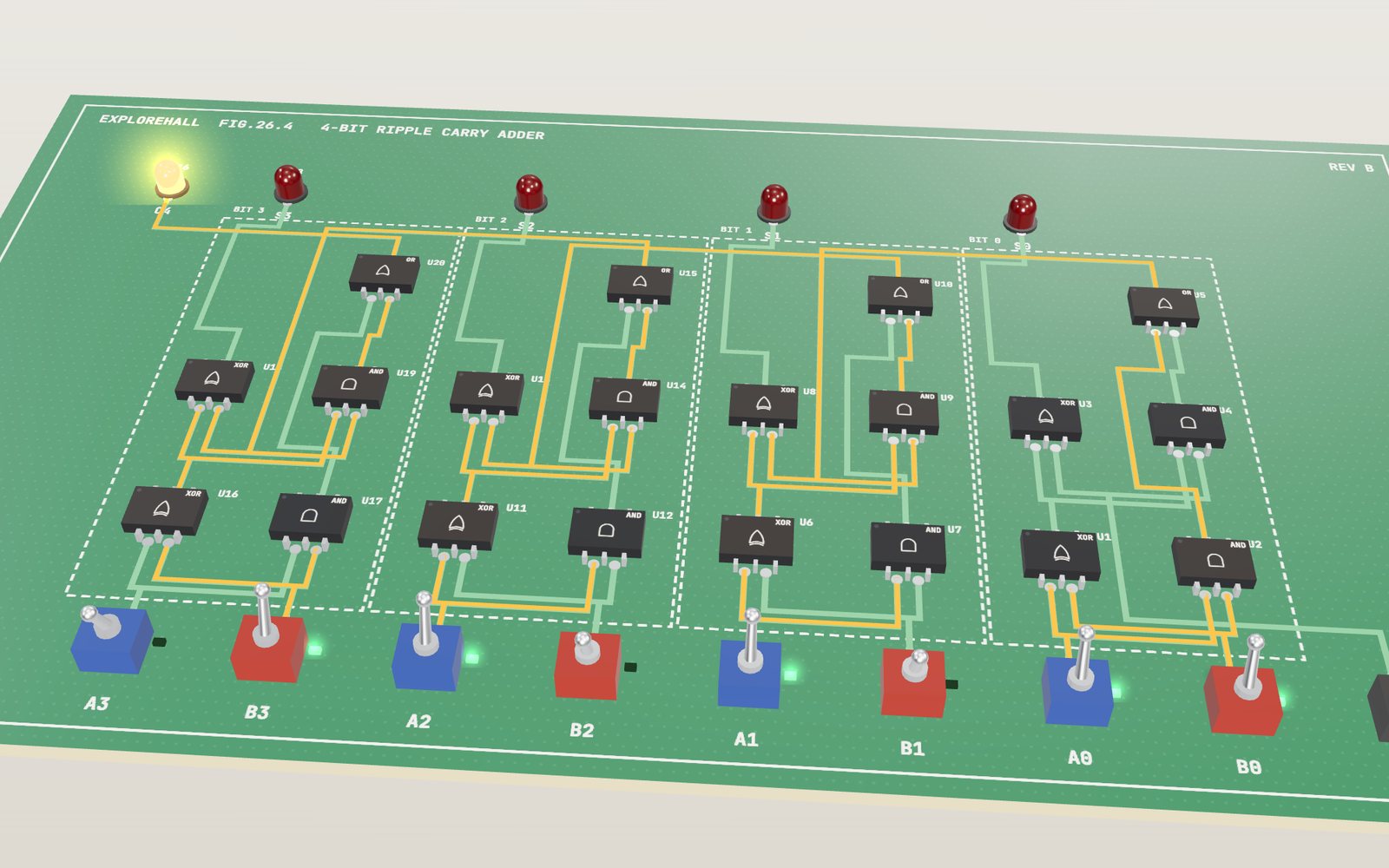 FIG. 26 · How It Works
How logic gates add numbers: sum bits and carry bits
Adding 7 and 9 on this board takes 20 gates, and the last carry lands 8 gate delays after you flip the switches.
Add 7 and 9 and follow the carry through the gates.