8 exhibitsCourses
Light and sound
What a sound wave and a light wave are, and what ears, eyes and machines do with them.
Sound comes first, from the wave itself to instruments, records and bats; light follows the same path, from the spectrum to the sky, animal eyes and the tricks your own brain plays.
Light and sound are both waves, and this course puts them side by side. The first half follows sound from a single wave to a piano string, a record groove and a bat's echo. The second half follows light from a prism to the sky, the eyes of other animals and the shortcuts your own brain takes.
Watch for the same three quantities in both halves: frequency, wavelength and how strongly the wave is scattered or absorbed. They explain why a bat chirps so high and why the sky is blue.
- 01
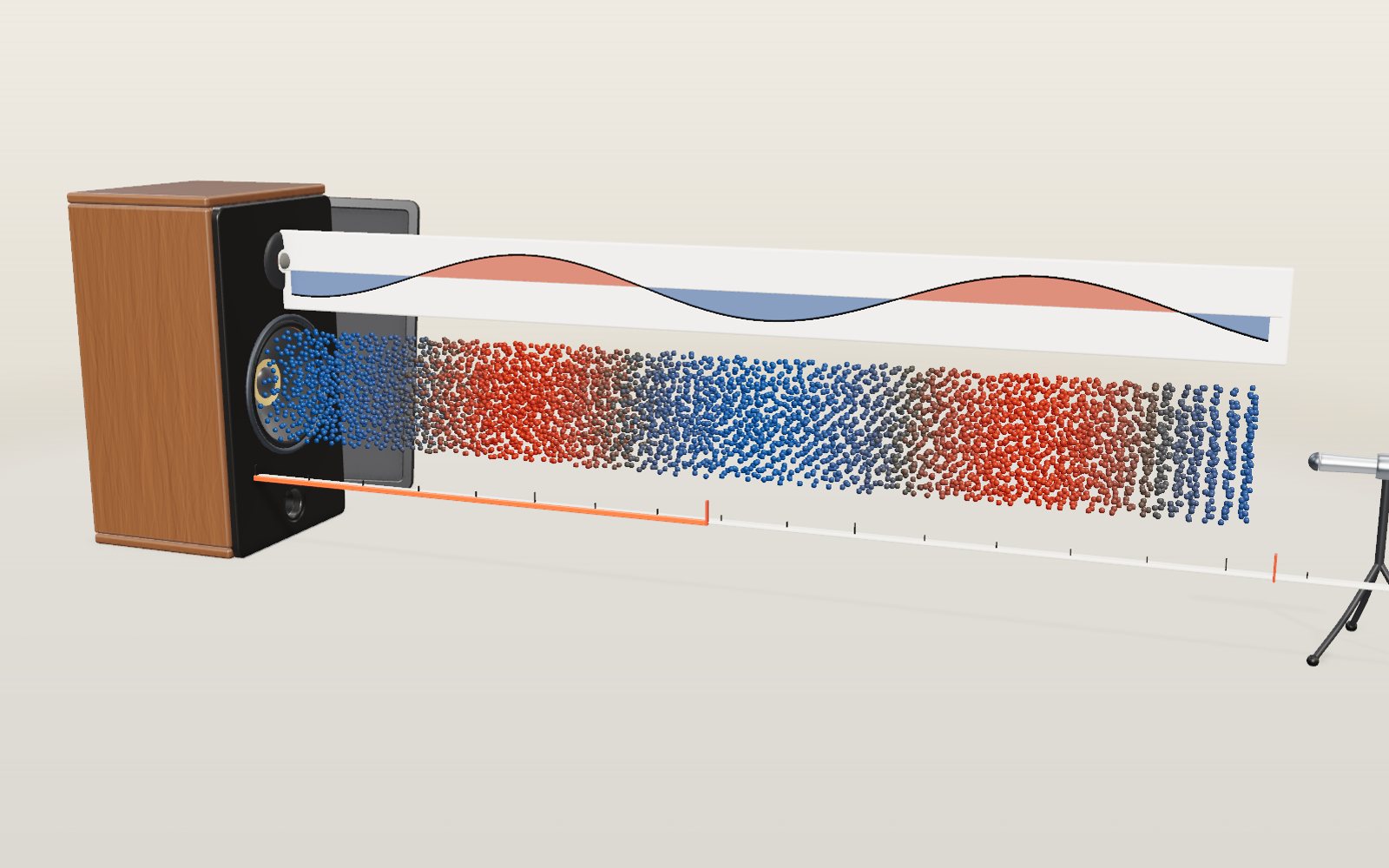 FIG. 20 · Senses
What sound looks like: sound waves, frequency and decibels
A 440 Hz tone packs the air into dense layers 78 centimetres apart, yet even at 94 dB each bit of air moves less than a thousandth of a millimetre.
Change the pitch and watch the spacing between the dense layers of air.
- 02
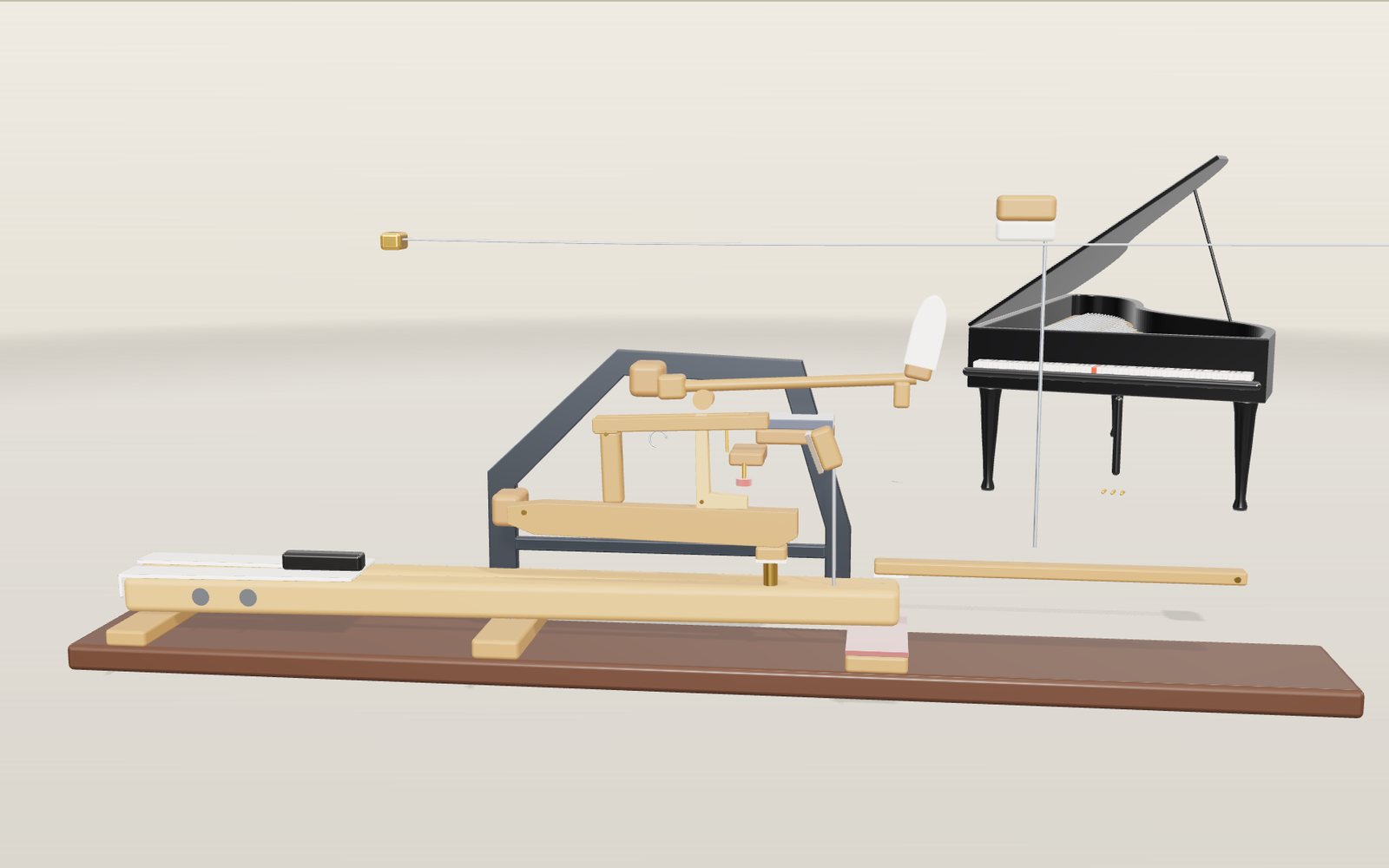 FIG. 19 · Senses
How a piano works: the grand action and equal temperament
Press a key 10 millimetres and a felt hammer flies to the string, hits it and falls away before it can stop the note.
Press a key slowly and see the hammer leave the string before the note ends.
- 03
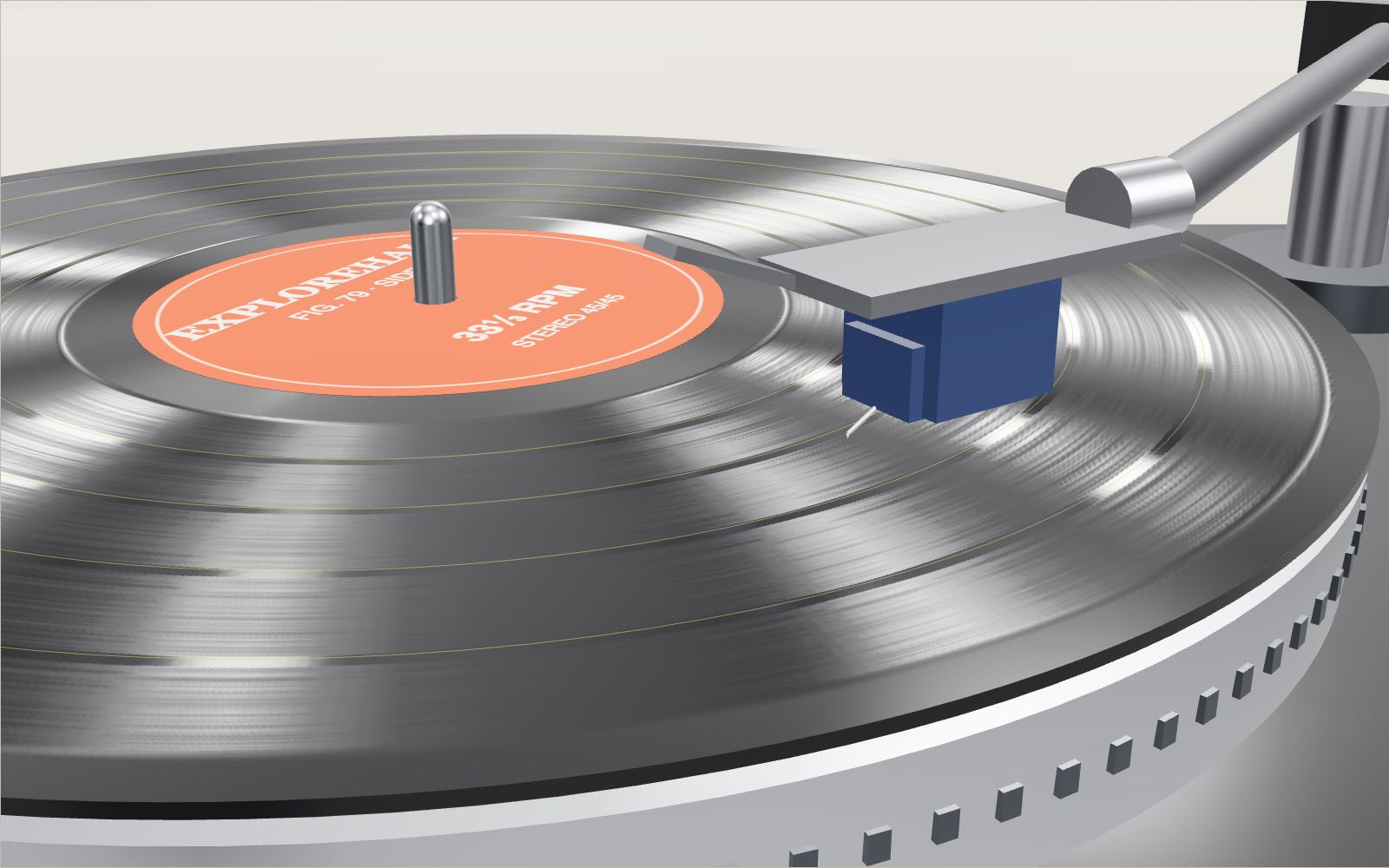 FIG. 79 · Old Machines
How does a vinyl record work? Grooves, stereo and RIAA
At the outer edge of an LP the groove slides under the stylus at half a metre per second, and by the last song it has slowed to 21 centimetres.
Zoom into the groove and switch the channels between mono and stereo.
- 04
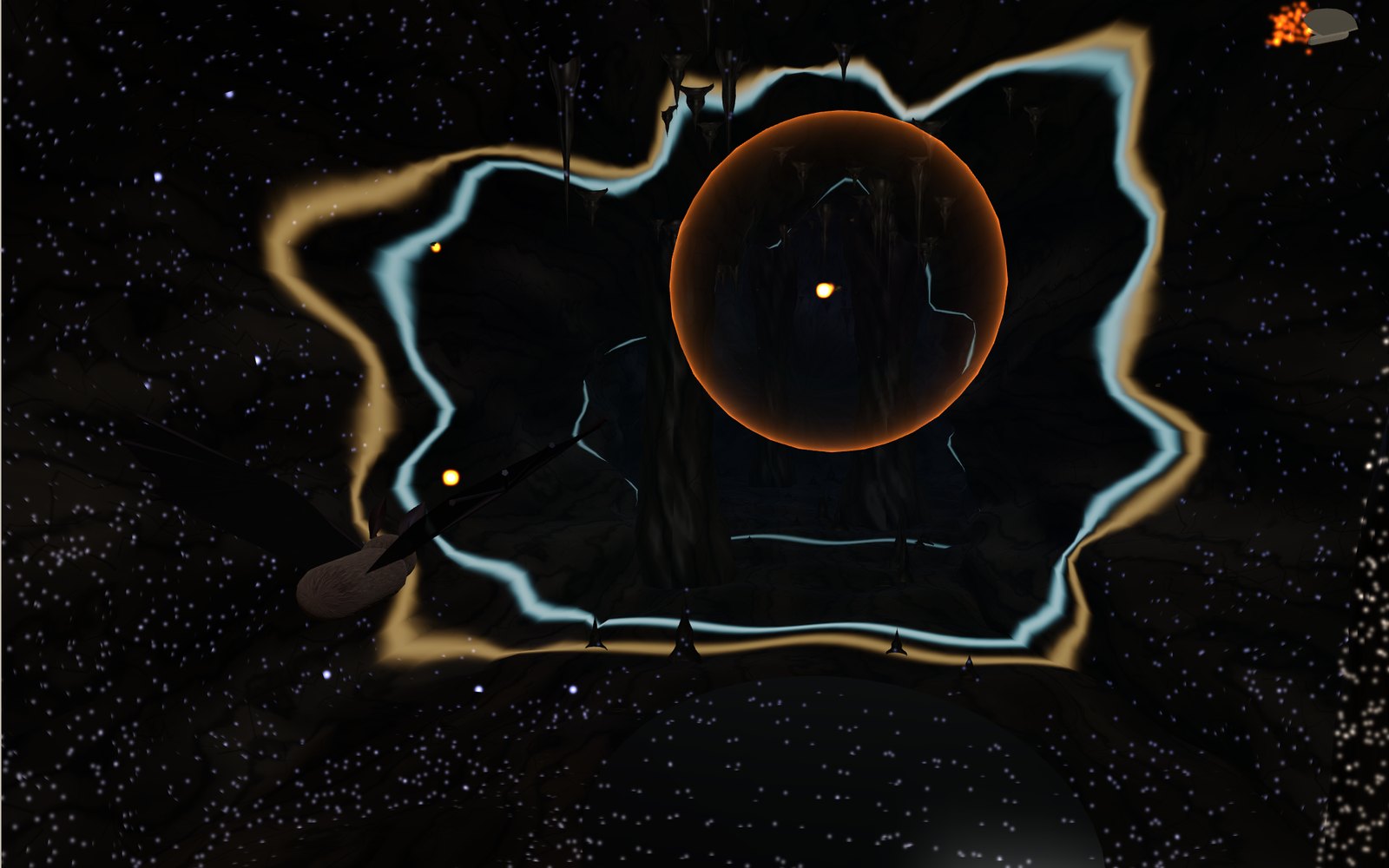 FIG. 86 · Senses
How do bats see with sound? Echolocation explained
An echo from a moth 1 m away comes back to a bat in under 6 thousandths of a second, and that delay is how the bat knows the distance.
Step through the hunting phases and read how the echo delay shrinks as the bat closes in.
- 05
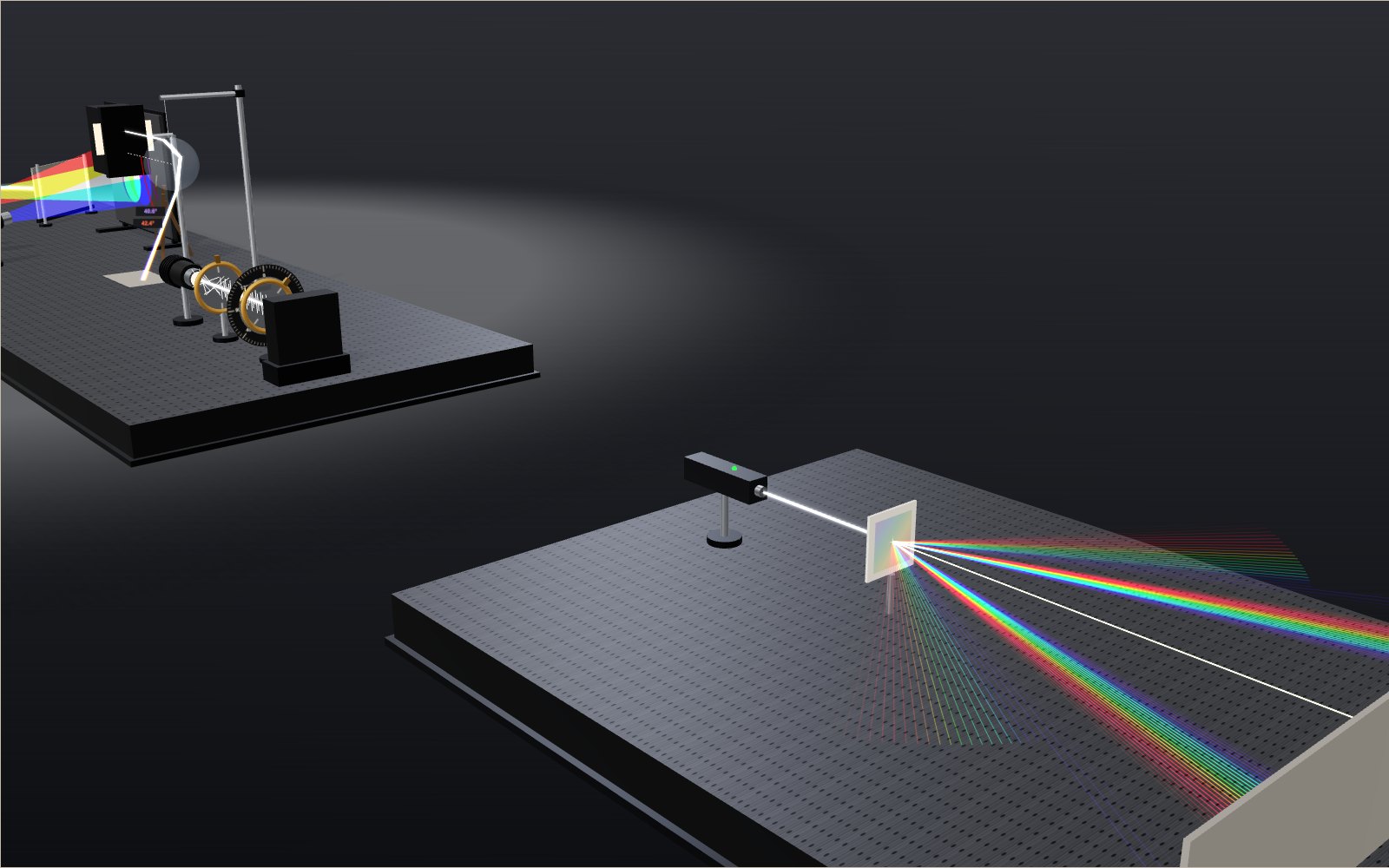 FIG. 23 · Senses
Light and colour, from prisms to polarisers
A glass prism bends violet light about 1.6 degrees more than red, and that small gap is all it takes to spread white light into a spectrum.
Turn the prism and find the angle where the spectrum is widest.
- 06
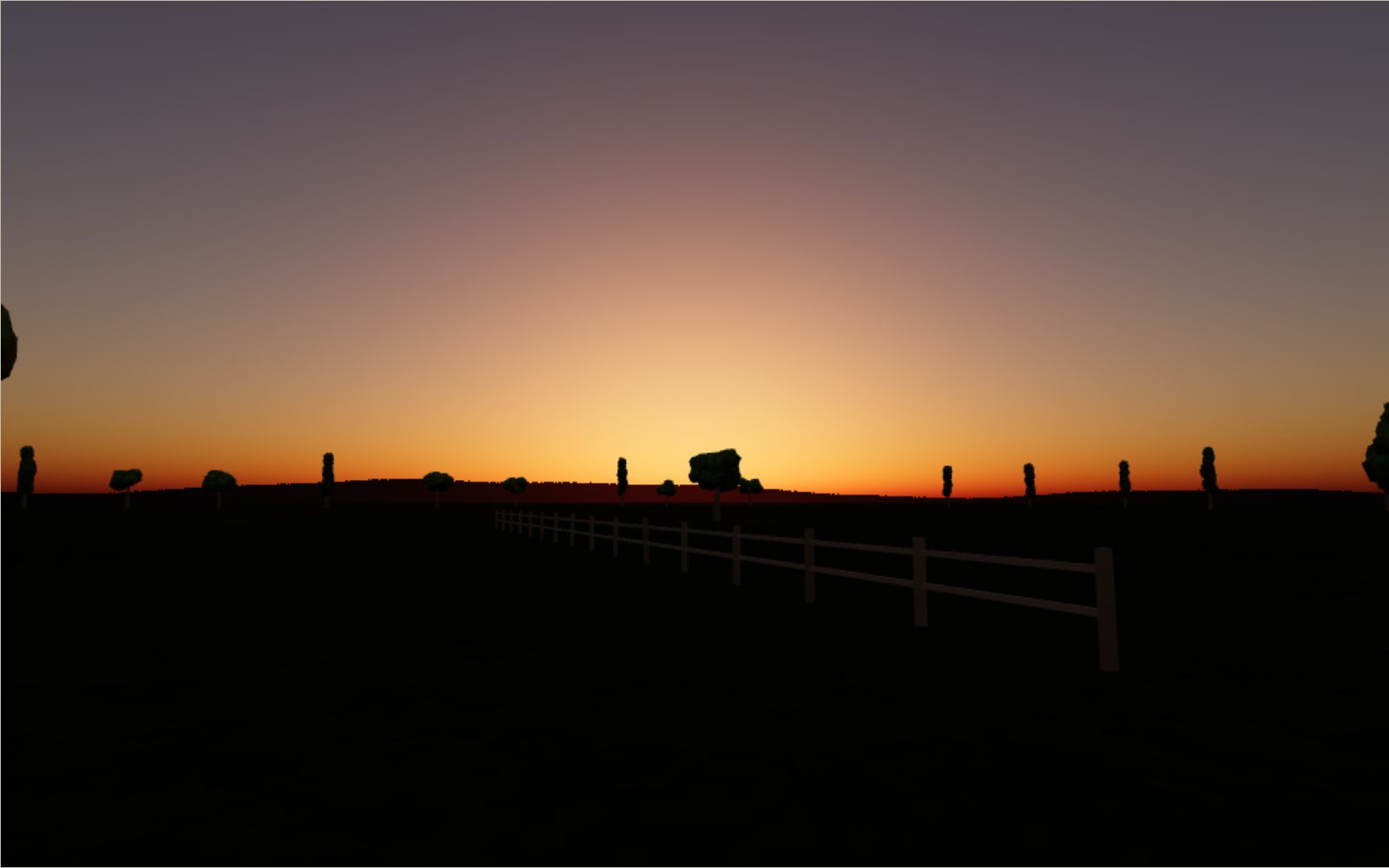 FIG. 83 · Senses
Why the sky is blue and sunsets are red
Air scatters 440 nm blue light about six times more strongly than 680 nm red, and a sun on the horizon shines through 35 times as much air as a sun overhead.
Add haze to the air and watch the blue sky turn white.
- 07
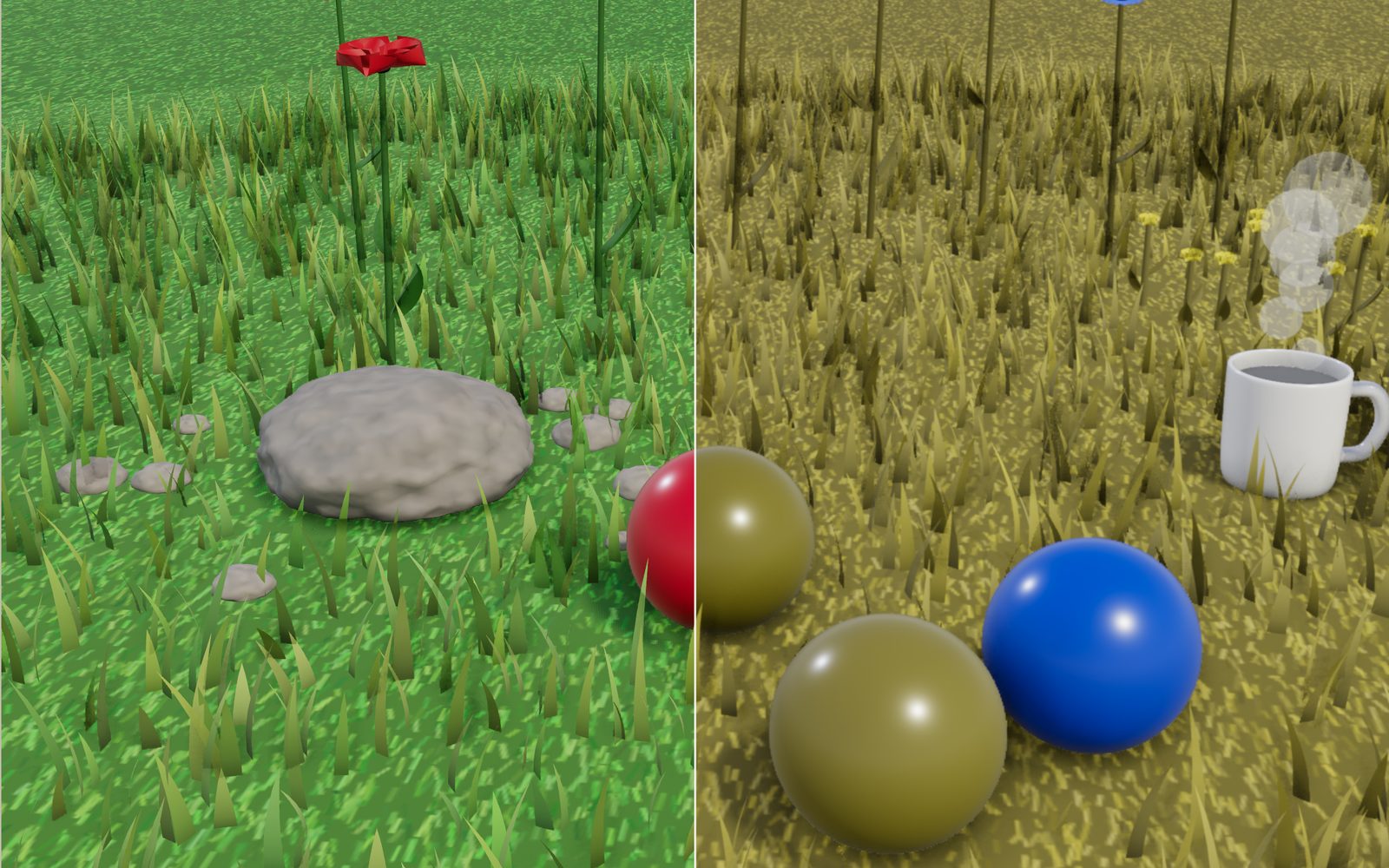 FIG. 21 · Senses
Animal vision: see the world through 69 animals’ eyes
A red ball on green grass is easy for you to find and surprisingly hard for a dog. A honeybee sees a pattern in the same flower that you cannot.
Look at the same flower as a person and as a bee.
- 08
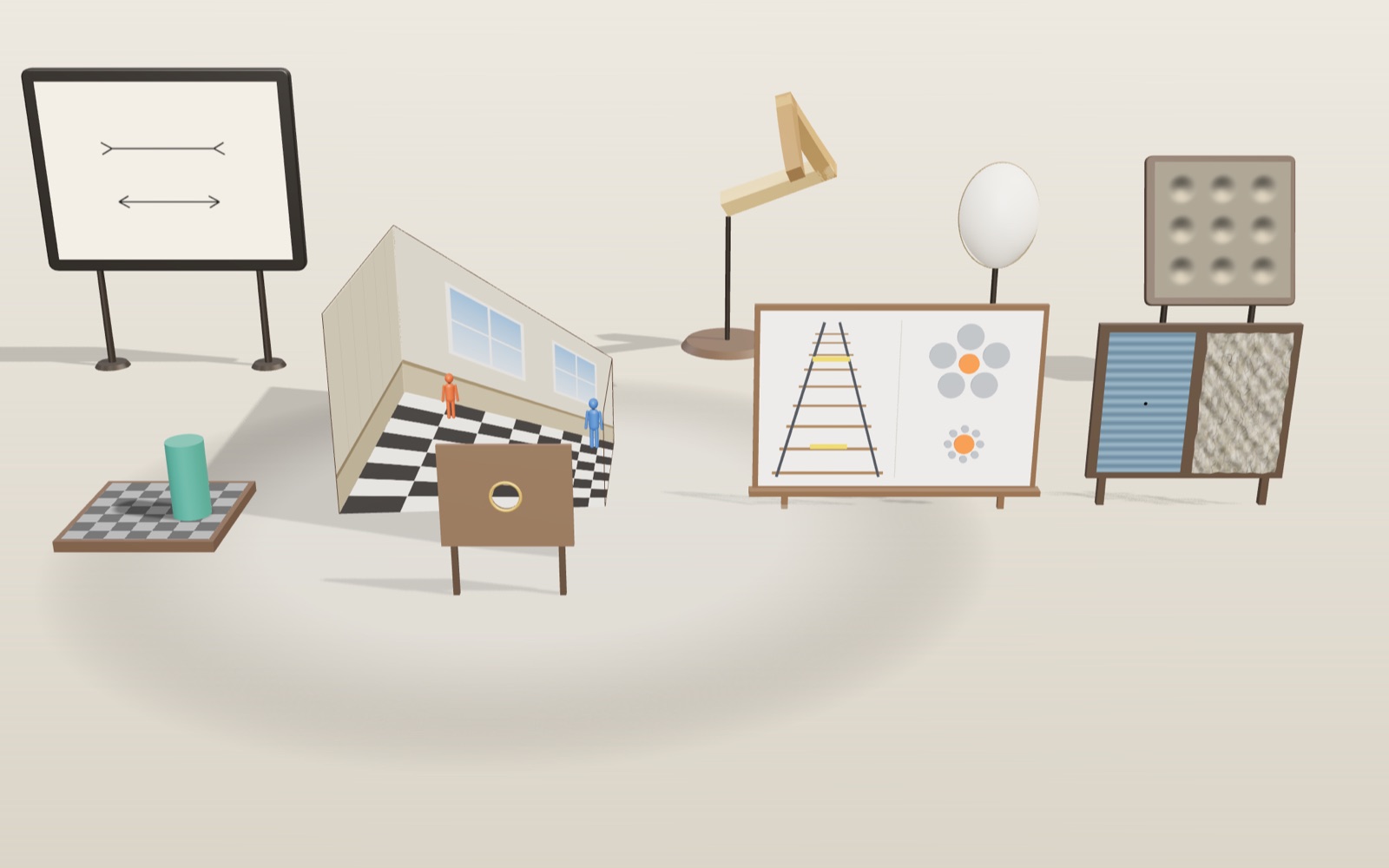 FIG. 35 · Senses
Optical illusions: why equal grey tiles look different
Tile A looks dark and tile B looks light, yet your screen sends the same grey to your eye from both.
Move a piece of the board next to the other tile and compare the two greys.