7 exhibitsCourses
Walking tour: from a cell to the solar system
Life-size places you can walk through, visited in order of size.
Each stop is bigger than the one before, starting inside a cell grown a million times and ending on a path that holds the whole solar system.
These are the walk-through exhibits, and you move through them on foot with the arrow keys or a thumb. Every stop is bigger than the last: a cell grown a million times, a reef and the deep sea, a park of dinosaurs at real size, the Moon and Mars at the scale of a person, and finally a path that holds the whole solar system.
A person-sized figure stands in most scenes so you always have something to measure against. Look for the hidden finds in each walk; they are small things that are easy to miss, each with a short note on why it is there.
- 01
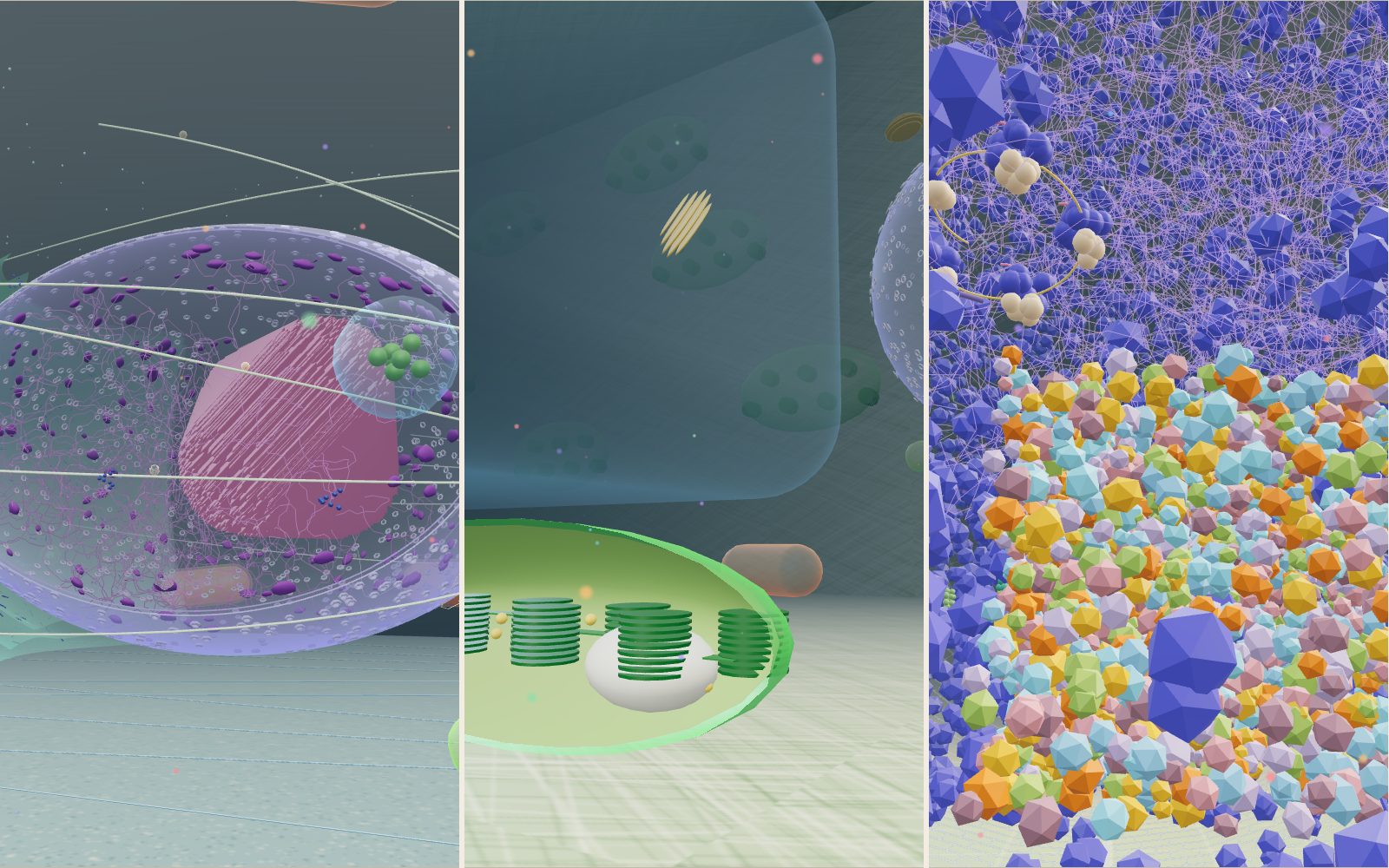 FIG. 54 · Walk-throughs
Walk inside a cell: animal, plant and bacterium
Grown a million times, a mitochondrion is about the size of a sofa, a whole E. coli is 2 m long, and the kinesin towing a vesicle past you walks at 0.8 metres per second.
Walk next to a mitochondrion the size of a sofa and time a kinesin motor carrying its load past you.
- 02
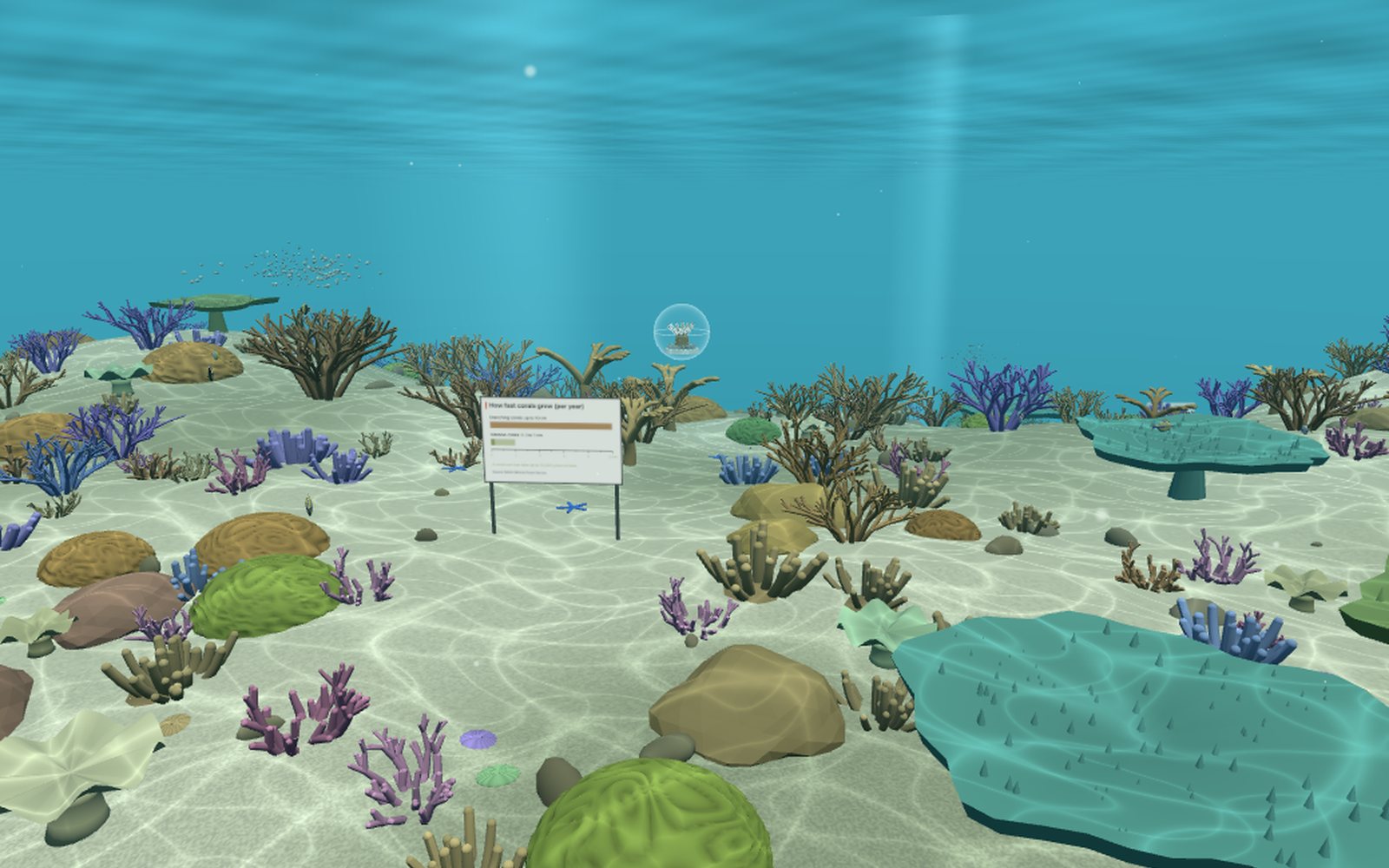 FIG. 70 · Walk-throughs
Coral bleaching causes: why warmer water turns reefs white
Corals get most of their food from algae living in their tissue, and when the sea stays more than 1 °C above its usual summer high for weeks, they lose those algae and turn white.
Raise the sea temperature and watch which corals lose their colour first.
- 03
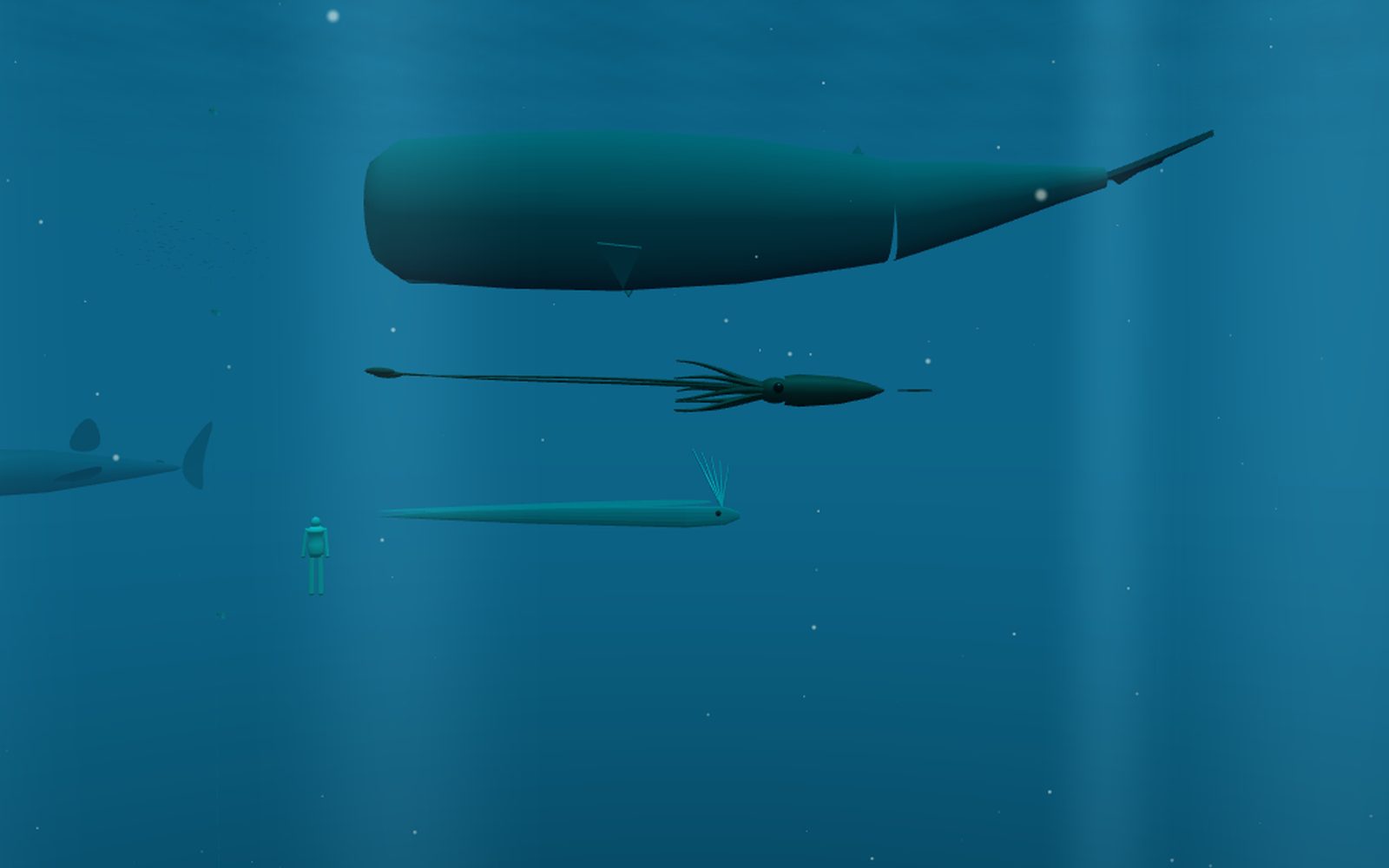 FIG. 53 · Walk-throughs
Swim to the bottom of the Mariana Trench in a 3D ocean
By 20 m down, almost all the red in sunlight has gone, and the Challenger Deep is another 10,900 m below that.
Go down past 200 m and switch the lamp on and off to see how dark the water already is.
- 04
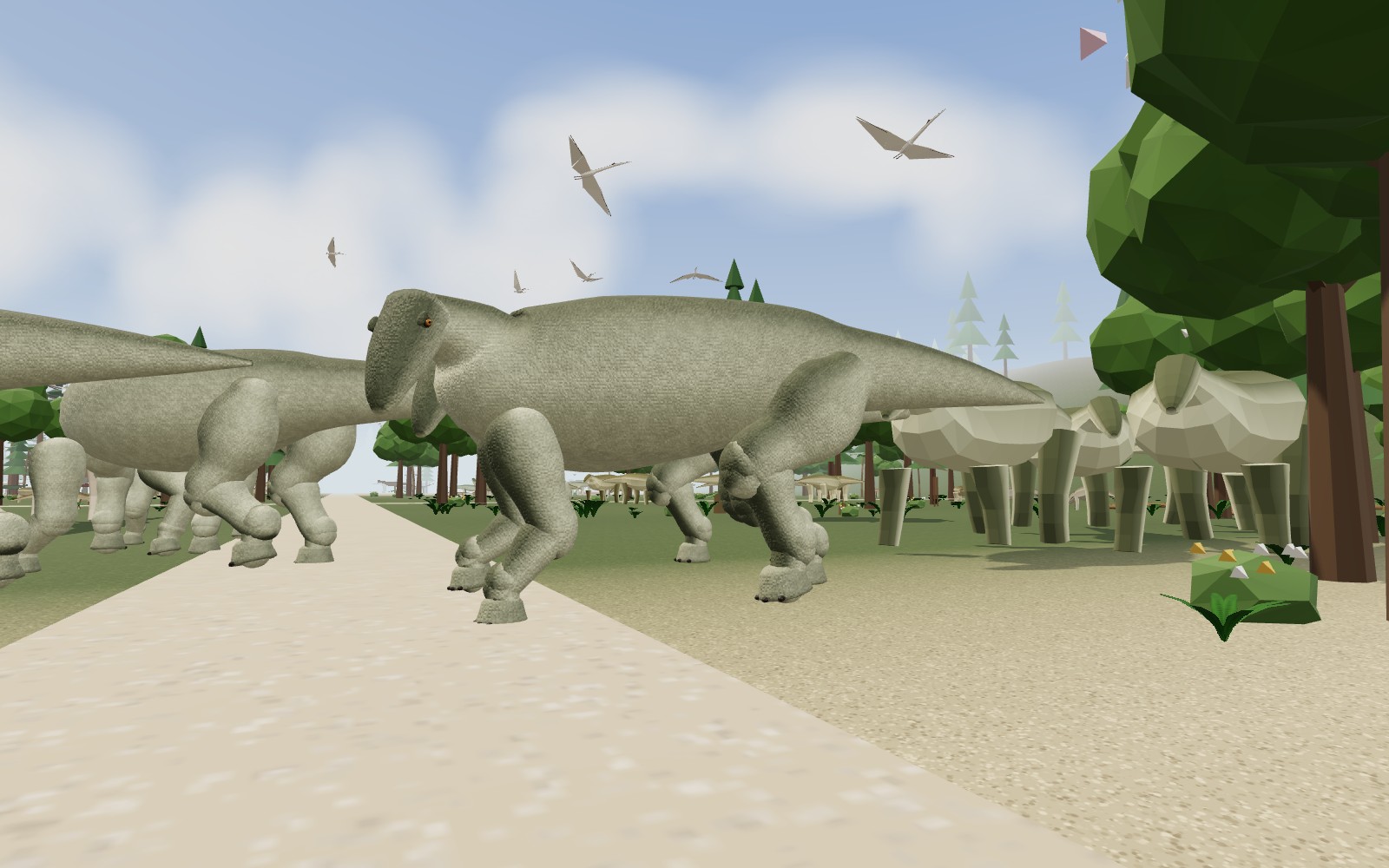 FIG. 52 · Walk-throughs
Dinosaur size comparison to humans: 172 life-size animals
A 600 m park of 172 prehistoric animals at their real size, from the first dinosaurs to T. rex, laid out by age.
Stand your own height next to a sauropod's leg, then walk forward in time to the late Cretaceous.
- 05
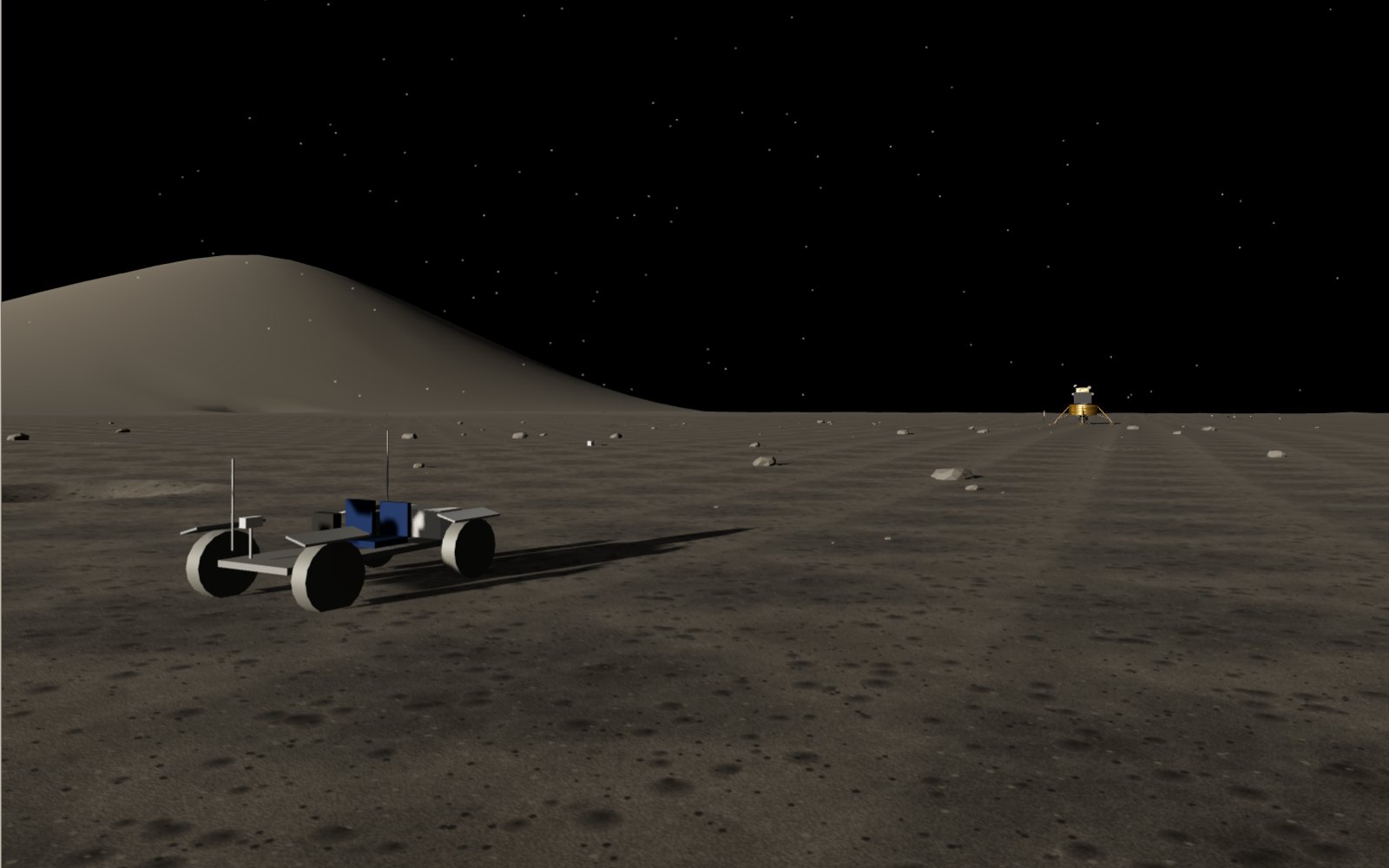 FIG. 64 · Walk-throughs
Walk the Apollo landing sites
Standing on the Moon with your eyes 1.6 m up, the horizon is only about 2.4 km away. All six Apollo landing sites are here, from Tranquility Base to Taurus-Littrow.
Look for the horizon at each landing site; on the Moon it is only about 2.4 km away.
- 06
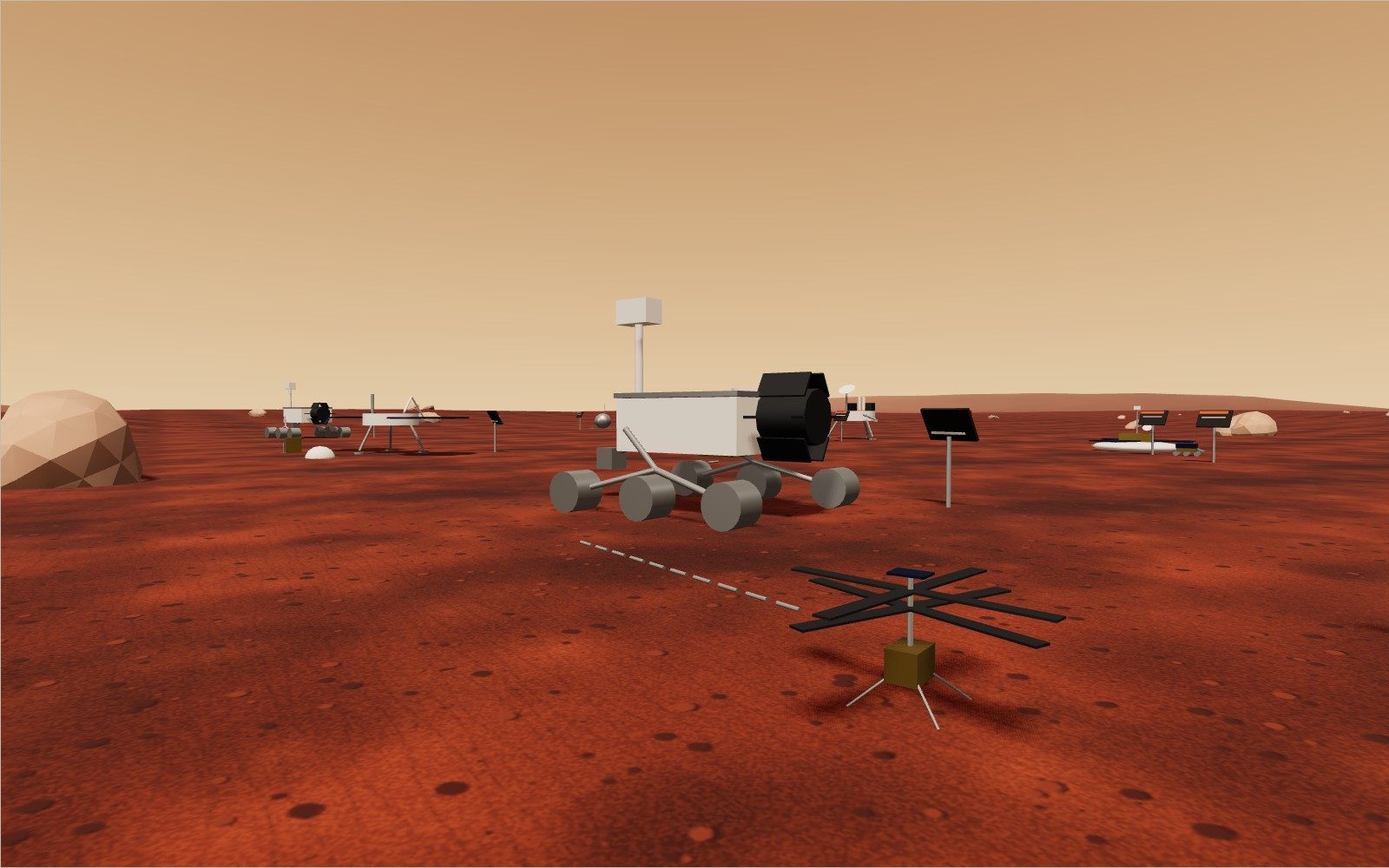 FIG. 75 · Walk-throughs
Walk around a Mars base
On Mars an eye 1.6 m up sees the horizon 3.3 km away. Walk ten areas of a concept base and stand beside every lander and rover that has worked there, at full size.
Stand beside each rover at full size and compare their wheels.
- 07
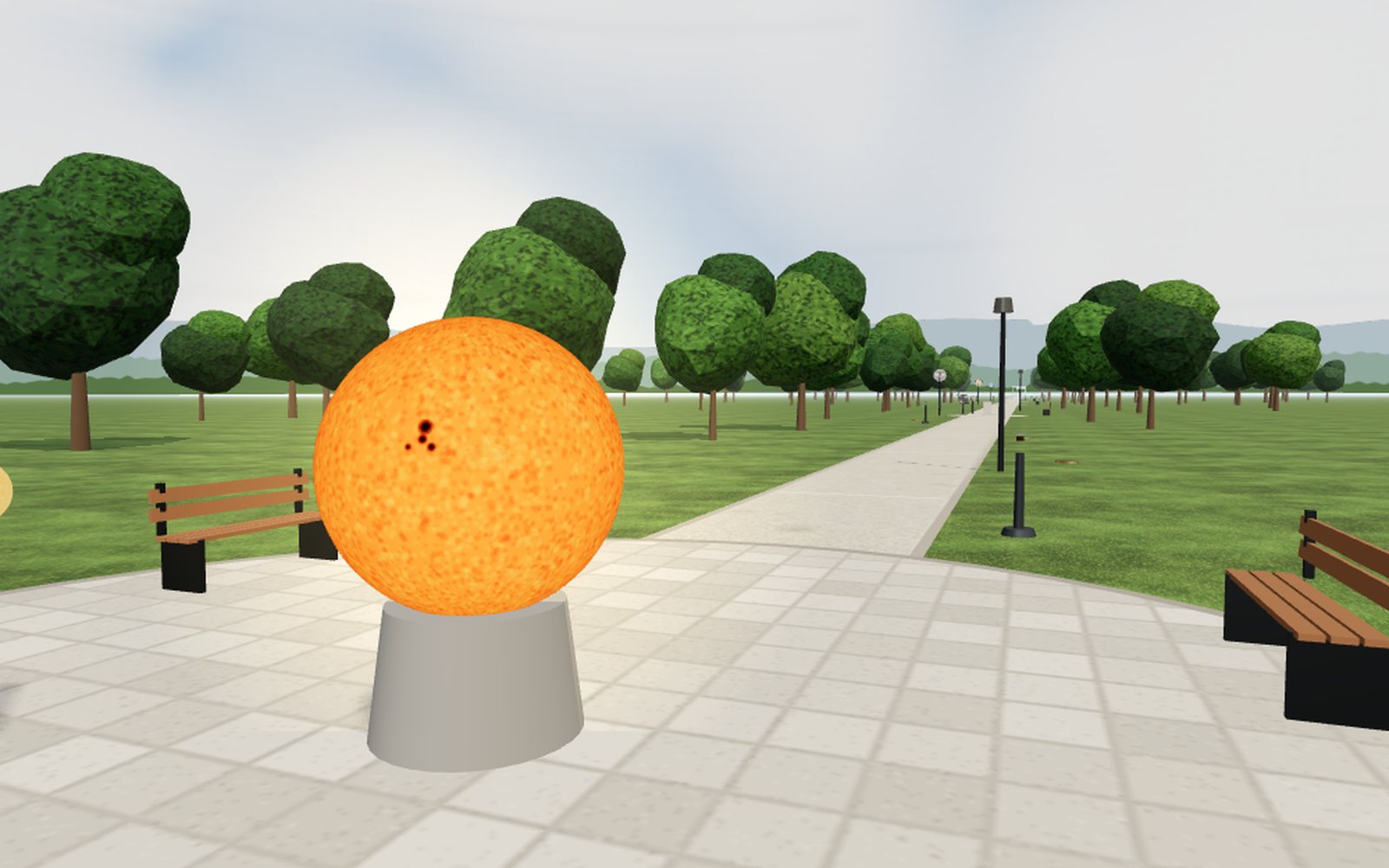 FIG. 81 · Walk-throughs
Solar system scale model measurements along a park walk
Shrink the Sun to a ball 1.39 m wide and Earth becomes a 1.27 cm marble 150 m down the path, Neptune is 4.5 km away and Voyager 1 would be 25.7 km.
Walk from the Sun to Earth, 150 m on this scale, and count your steps.