FIG. 53Walk-throughs
Swim to the bottom of the Mariana Trench in a 3D ocean
By 20 m down, almost all the red in sunlight has gone, and the Challenger Deep is another 10,900 m below that.
This device cannot show the 3D model. You can read the guide steps below as text.
1 / 9 Ten metres downYou start 10 m down in the open Pacific, with sunlight coming through the surface above you. Swim with WASD or the arrow keys, rise with R or Space and sink with F or C. On a phone, use the joystick and the arrows at the bottom right.
Drag to turn. Scroll or pinch to zoom.
What changes on the way down
Can a person swim to the bottom of the Mariana Trench? Its floor is about 10,935 m below sea level, beyond human swimming; this exhibit is a 3D model with a compressed depth scale, not a real travel-time estimate. If you have ever swum to the bottom of a deep pool, you know two things happen quickly: your ears start to hurt, and everything turns a little blue. Keep going in the open ocean and both effects grow until, somewhere below 1,000 m, there is no sunlight left and the water presses on you with the weight of a hundred atmospheres.
This exhibit is a column of ocean from the surface of the western Pacific down to the floor of the Challenger Deep in the Mariana Trench, about 10,935 m below sea level by NOAA's figure. You can sink through it like a lift, or stop at any depth and swim around. The readout in the top left corner is worked out from the depth of your eyes in every frame: depth in metres, the name of the layer, water temperature, pressure in atmospheres, and how much of the surface sunlight is left in red, green and blue. The scale on the right puts your depth next to the dives of whales and submersibles.
Along the way there are 113 animals at their real size, from a Portuguese man o' war floating at the surface to amphipods on the floor of the Challenger Deep. There are also colour cards on a line, hydrothermal vents on a ridge, a whale skeleton on the ridge flank and the two submersibles that carried people to the bottom. The field guide lists every animal with its depth range, its maximum size and where those numbers come from, and a tap on a name takes you to it.
Why red is the first colour to go
Sunlight is a mix of colours, and water does not treat them equally. It absorbs long wavelengths (red and orange) much faster than short ones (blue). NOAA Ocean Exploration's fact sheet on light and colour puts it simply: reds, oranges and yellows are filtered out quickly, and blue light gets furthest.
You can see this on the colour cards. They hang on a line at 5, 20, 50, 100 and 200 m, each with six patches: red, orange, yellow, green, blue and white. At 5 m the card looks almost normal. At 20 m the red patch has gone dark. At 100 m red and orange are black, yellow looks like a dull green, and the white patch is pale blue. The lamp in the exhibit only switches on below about 140 m, so the upper cards are lit by sunlight alone.
This is also why so many deep-sea animals are red. A red animal reflects red light, and below a few tens of metres there is no red light left to reflect, so it looks black. NOAA describes a sea toad seen at more than 3,000 m that looks bright red under a robot's lamps and black in the dark around it. The giant squid and the plumes of the tube worms in this exhibit only show their colour in the beam of your lamp.
Checking the light numbers
The model treats light as fading exponentially with depth, with a separate rate for each colour band:
I(d) = I₀ × e^(−K·d)
K is the diffuse attenuation coefficient. For clear open-ocean water the model uses K = 0.35 per metre for red (about 650 nm), 0.065 for green (about 550 nm) and 0.022 for blue (about 475 nm). These are estimates for the clearest ocean water. Coastal water full of plankton and sediment loses light much faster.
From those three numbers, a short calculation gives the depth where each band falls to 1% of its surface value, d = ln(100) / K:
| Band | K (per m) | 1% left at | 0.1% left at |
|---|---|---|---|
| Red | 0.35 | 13 m | 20 m |
| Green | 0.065 | 71 m | 106 m |
| Blue | 0.022 | 209 m | 314 m |
Blue reaching 1% at about 200 m lines up with NOAA's description of the ocean: the upper 200 m is the sunlight (euphotic) zone, very little light gets through between 200 and 1,000 m, and below about 1,000 m light from above has gone entirely. In the model, 1,000 m leaves about 3 × 10⁻¹⁰ of the surface blue light, far too little for any plant. Some deep-sea eyes are sensitive enough to notice it, which is why NOAA says light may be detected as far down as 1,000 m.
The bars in the readout use a logarithmic scale, so a drop from 100% to 10% and a drop from 0.1% to 0.01% look like the same step. The picture follows the same idea, because our eyes adapt to dim light. That is why the water still looks blue at 300 m in the model even though less than 0.2% of the blue light is left.
Pressure grows by about one atmosphere every 10 metres
At sea level the air presses on you with one atmosphere, about 14.7 pounds on every square inch. Water is roughly 800 times denser than air, so a short column of it weighs as much as the whole atmosphere above you. NOAA's rule is one extra atmosphere for every 33 feet (10.06 m) of depth.
The model uses the hydrostatic formula with a constant density:
p = 1 atm + ρ·g·d
with ρ = 1,025 kg/m³ for seawater, g = 9.81 m/s² and 1 atm = 101,325 Pa. One atmosphere then corresponds to 101,325 / (1,025 × 9.81) = 10.08 m of water, close to NOAA's 10.06 m. Here are the values at the stops in the exhibit, as the readout shows them:
| Depth | Pressure in the model |
|---|---|
| 10 m | 2.0 atm |
| 100 m | 10.9 atm |
| 600 m | 60.5 atm |
| 1,500 m | 149.9 atm |
| 2,600 m | 259.0 atm |
| 2,891 m | 287.9 atm |
| 4,500 m | 447.6 atm |
| 10,935 m | 1,086 atm |
NOAA's rule of thumb gives 1 + 10,935 / 10.06 = 1,088 atm at the bottom, so the two agree within 0.2%. Real seawater is squeezed slightly denser at depth, so the true pressure at the bottom of the trench is a little higher than either figure. Both are well over the "more than 1,000 times the surface" that is usually quoted.
Animals without air spaces barely notice. NOAA Ocean Exploration points out that most deep-sea animals are largely water, which hardly compresses, so some species migrate up and down 1,000 m every day through a range of 100 atmospheres. Whales manage because their ribs and lungs can fold under pressure. Submersibles need thick steel or titanium spheres for the crew.
Cold water that never freezes
Near the surface of the tropical Pacific the water is close to 28 °C, warmed and stirred by sun and wind. Below that mixed layer comes the thermocline, where temperature falls quickly with depth. NOAA says that below about 200 m the ocean averages only about 4 °C, that temperature changes little between about 1,000 and 4,000 m, and that deeper water ranges from near freezing to just above it.
The temperature in the readout comes from a typical profile for the western tropical Pacific, joined by straight lines between points: 28 °C at the surface, 18 °C at 200 m, about 4 °C at 1,000 m, and about 1.5 °C between 4,000 and 6,000 m. In the trench it rises slightly to about 2.4 °C at the bottom, because the water warms a little as it is compressed. The profile is an estimate for this region. Other oceans and seasons differ, especially in the top few hundred metres.
The five layers of the ocean
NOAA divides the water column by how much sunlight reaches it, and the names in the exhibit follow its boundaries:
- Sunlight zone (epipelagic), 0 to 200 m. Enough light for phytoplankton, and most of the ocean's food is made here.
- Twilight zone (mesopelagic), 200 to 1,000 m. Too dim for photosynthesis. Many animals here make their own light.
- Midnight zone (bathypelagic), 1,000 to 4,000 m. No sunlight at all. The only light comes from animals.
- Abyssal zone (abyssopelagic), 4,000 to 6,000 m. Near-freezing water over wide plains of mud.
- Hadal zone (trenches), 6,000 m and deeper. Only the deep trenches reach this far. The name comes from Hades.
The average depth of the whole ocean is about 3,682 m, so most of the sea floor lies in the midnight or abyssal zone.
The zone buttons at the bottom of the screen take you to each layer, and a banner shows its values as you cross a boundary. These are the model's numbers at the top and bottom of each zone, worked out with the formulas above:
| Zone | Depth | Water | Pressure | Blue light left |
|---|---|---|---|---|
| Sunlight | 0 to 200 m | 28 to 18 °C | 1 to 21 atm | 100% to 1.2% |
| Twilight | 200 to 1,000 m | 18 to 4.2 °C | 21 to 100 atm | 1.2% to 3 × 10⁻⁸ % |
| Midnight | 1,000 to 4,000 m | 4.2 to 1.6 °C | 100 to 398 atm | none |
| Abyssal | 4,000 to 6,000 m | 1.6 to 1.5 °C | 398 to 596 atm | none |
| Hadal | 6,000 to 10,935 m | 1.5 to 2.4 °C | 596 to 1,086 atm | none |
113 animals, from the surface to the trench floor
The field guide holds 113 species: 18 in the sunlight zone, 36 in the twilight zone, 39 in the midnight zone (with the vent, seep and whale-fall animals), 13 in the abyssal zone and 7 in the hadal zone. Each one sits at a depth inside the range its source gives, and each is built close to its maximum recorded size, so the small ones are small. You have to swim close to the anglerfish or the scaly-foot snails to see them at all, while the giant siphonophore stretches 30 m across the twilight zone.
The animals are drawn from a few body plans (fish, shark, eel, squid, octopus, jellyfish, shrimp, crab and so on), each shaped by numbers for its height, width, fins and teeth. A fangtooth and a hatchetfish share one plan with different numbers. The hand-built models from the first version of the exhibit are still there:
- Lanternfish (600 m). Spotted lanternfish reach 11 cm. They have rows of light organs along the belly, and their light is blue, the colour that travels furthest in water. NOAA notes that most bioluminescence in the sea is blue for that reason.
- Sperm whale and giant squid (about 650 m). The male whale is 16 m long, and NOAA Fisheries gives up to 52 ft for adult males. NOAA Fisheries says sperm whales routinely hunt at about 2,000 ft (610 m), and the National Ocean Service mentions dives of 7,000 ft (2,134 m) or more in search of giant squid. The squid model is 12 m from the tip of its fins to the ends of its two long feeding tentacles.
- Humpback anglerfish (1,500 m). FishBase gives 18 cm for females and about 3 cm for males. Her lure (the esca) holds bioluminescent bacteria, which glow and draw prey close to her mouth. NOAA counts 167 species of deep-sea anglerfish.
- Hydrothermal vents (2,600 m). Seawater soaks into the crust, is heated by magma and comes back out hotter than 400 °C. The pressure keeps it from boiling. Minerals settle out as it meets the cold water and build chimneys, and NOAA reports active smokers about 9 m tall in the Mariana Arc. Giant tube worms grow to 2 m and live on bacteria that turn chemicals from the vent into food. SeaLifeBase records them at 2,564 to 2,673 m, which is why the vent field in the model sits at 2,600 m.
- Swimming sea cucumber (4,500 m). Enypniastes, nicknamed the headless chicken monster, can lift off the bottom by pulsing its flaps and swim long distances.
- Mariana snailfish (8,000 m). FishBase gives 6,198 to 8,178 m and up to 22.6 cm. NOAA Ocean Exploration says the deepest fish ever filmed was a snailfish at 8,336 m, and that no fish probably lives deeper than about 8,400 m.
How animals cope with the deep
Open the field guide and filter by adaptation, and the same few answers turn up again and again:
- Making light (18 species). Lanternfish, hatchetfish, viperfish and the glowing sucker octopus all carry light organs. Hatchetfish point theirs downwards to hide their outline from hunters below (counter-illumination). The stoplight loosejaw is the odd one out: it makes red light, which most deep-sea animals cannot see.
- Red or black bodies (19 species). Below about 20 m there is no red light left, so a red animal looks as dark as a black one. The helmet jellyfish, the vampire squid and the deep-sea prawn are all red.
- See-through or mirror-like (15 species). Jellies, the giant larvacean and the snailfish are nearly clear. Hatchetfish have silver sides that reflect the blue light around them.
- Big mouths and stretchy stomachs (10 species). Food is scarce, so many hunters can take whatever they meet. The black swallower can swallow a fish longer than itself, and the pelican eel opens its jaws like a net.
- Giant size (12 species). Some deep animals are far bigger than their shallow relatives. Most amphipods are a few millimetres long, but the supergiant amphipod reaches 34 cm.
- Fed by chemicals, not sunlight (4 species). At the vents, tube worms, vent mussels, yeti crabs and scaly-foot snails live on bacteria that make food from hydrogen sulfide.
- Eating what sinks (5 species). Grenadiers, the Greenland shark, bone-eating worms and hadal amphipods wait for food to fall from above.
A whale fall at 2,891 m
West of the vents the ridge drops to 2,891 m, and a 14 m whale skeleton lies on the mud. NOAA's National Ocean Service describes what happens when a whale dies and sinks: scavengers eat the soft tissue within months, scraps enrich the mud nearby for over a year, and the skeleton can support whole communities for years to decades as bacteria break down the fats inside the bones.
The depth comes from the bone-eating worm Osedax rubiplumus. SeaLifeBase gives a single depth for it, 2,891 m, where it was found on a whale skeleton in 2002. The red plumes on the bones in the model are these worms, each about 4 cm long. A Greenland shark circles above. It lives in the Atlantic and Arctic, not the Pacific, but it is a known scavenger and its recorded range reaches 2,992 m.
Where the field guide's numbers come from
For fish the depth range and maximum length come from FishBase, and for other animals from SeaLifeBase. Both are large databases that list the paper behind each number. A few entries use NOAA or a research paper instead, and each card names its source with a link.
Sizes are maximum recorded sizes, measured in different ways. Total length runs from the snout to the end of the tail. Standard length stops where the tail fin starts, so a fish's real length is a little longer. Squid and octopuses are measured by the mantle (the body), not the arms, and jellyfish by the width of the bell. The card always says which. For seven animals (the yeti crab, vent mussel, scaly-foot snail, sea pig, swimming sea cucumber, giant larvacean and Phronima) the sources give a depth but no size, so the size is our estimate and is marked as one.
As you swim, any animal you come close to is ticked off in the guide, and the count on the field guide button shows how many you have seen.
How deep whales and submersibles go
The scale on the right of the screen marks these depths:
| Who | Depth | Source |
|---|---|---|
| Sperm whale, usual hunting dive | about 610 m | NOAA Fisheries |
| Sperm whale, deep dive | 2,134 m or more | NOAA National Ocean Service |
| Cuvier's beaked whale, deepest recorded dive | 2,992 m | NOAA Fisheries |
| Alvin, depth rating | 6,500 m | WHOI |
| Deepest fish filmed | 8,336 m | NOAA Ocean Exploration |
| Deepsea Challenger, 2012 | 10,908 m (35,787 ft) | DEEPSEA CHALLENGE expedition |
| Trieste, 1960 | 10,912 m (35,800 ft) | US Naval Historical Center |
On 23 January 1960, Lieutenant Don Walsh of the US Navy and Jacques Piccard took the bathyscaphe Trieste to the bottom of the Challenger Deep. The descent took close to five hours, and they spent about 20 minutes on the floor. In 2012 James Cameron made the trip alone in Deepsea Challenger, a 24 ft (7.3 m) vehicle that he later gave to Woods Hole Oceanographic Institution. The recorded depths differ by a few metres from each other and from NOAA's 10,935 m because each was measured differently, and surveys of the trench have been refined since.
How the model differs from the real ocean
- Depth is squeezed. Across, one unit is one metre, so each animal and machine is at its true size. Up and down, the model uses a log scale so the whole 10,935 m fits: near the surface one unit is about a metre of depth, near 1,000 m about 18 m, and at the bottom about 180 m. In the last 12 m above each sea floor the readout switches back to true metres, so the depth shown at the bottom is the real depth.
- Things are closer together. The animals are gathered around one column so you can find them. In the real ocean the vents are on mid-ocean ridges and back-arc basins, not beside the Mariana Trench, and the trench is tens of kilometres wide.
- The light model is simple. Three colour bands with fixed rates, clear water, the sun overhead. Clouds, plankton and the angle of the sun all change the real numbers.
- Animals from several oceans. The column gathers species from different seas: the scaly-foot snail lives at Indian Ocean vents, the yeti crab on the East Scotia Ridge and the Greenland shark in the Atlantic and Arctic. Each one is placed at a depth where its source records it.
- Every animal is near its largest. The models are 80 to 100% of the maximum recorded size, and most real individuals are smaller. The 45 m giant siphonophore is shown at 30 m so it fits.
- Some sizes are estimates. Ten field-guide sizes, the giant squid length, the shape of Trieste and the temperature profile are marked as estimates.
Moving around
On a computer, swim with WASD or the arrow keys, rise with R or Space and sink with F or C. Hold Shift to go faster, and drag to look around. On a phone, the joystick at the bottom left moves you across (push it all the way to speed up), and the two arrows at the bottom right take you up and down.
The ocean is 10.9 km deep, so there are faster ways down. The speed buttons (or the keys 1, 2 and 3) switch between Slow, about a diver's 1.4 m/s, Fast, and Sub, about 8 m/s, which also makes rising and sinking four times quicker. The five zone buttons take you straight to each layer, and a click on the depth scale on the right takes you to that depth. The depth slider under Controls works like a lift.
The field guide button opens a list of all 113 animals. You can search by name or narrow the list by depth, size or adaptation, and picking a name takes you in front of the animal with a card that gives its depth range, size and source. The guide steps stop at nine depths, and Parts takes you to each hand-built model. Turn off the lamp in the deep and only the animals' own light is left.
Pressure as weight on a thumbnail
Atmospheres are hard to feel, so turn the bottom reading into a weight. One standard atmosphere is 101,325 Pa, which is 101,325 newtons on every square metre, or about 10.1 N on every square centimetre. That is the weight of roughly 1.03 kg resting on an area about the size of a thumbnail (taken here as 1 cm², an assumption, since thumbnails vary).
At the bottom the readout shows 1,086 atm. Multiply: 1,086 × 10.1 N = about 11,000 N on that one square centimetre. Divided by g = 9.81 m/s², that matches a mass of about 1,120 kg, a little over a tonne. In the older units NOAA uses, it is about 1,086 × 14.7 = 16,000 pounds on every square inch. The same sum at 1,000 m, where the readout shows about 100 atm, gives roughly 100 kg on the thumbnail.
The figure feels huge, but it is a pressure and not a single load. Water pushes from every side with the same strength, so a body full of water, with nothing hollow inside, is not squeezed flat. That is the point of the next section.
Common misunderstandings
- "The pressure crushes everything down there." It crushes things with gas inside. NOAA Ocean Exploration explains that most deep-sea animals are mostly water, which hardly compresses, and that they have no large air spaces to collapse. A foam cup or an air-filled hull is a different matter, which is why the crew of a submersible sit in a thick sphere.
- "Below 200 m it is simply dark." NOAA's description is that very little light gets through between 200 and 1,000 m, and that light from above is gone below about 1,000 m. The lower layers are not empty of light, though. NOAA Ocean Exploration notes that many animals there make their own, and the readout in the exhibit counts only sunlight.
- "Pressure doubles when you dive twice as deep." Pressure is the surface atmosphere plus the water above you, so the first 10 m double it and the next 10 m only add half as much again. At 10 m the model reads 2.0 atm, at 100 m 10.9 atm, and at 10,935 m 1,086 atm.
- "The sea looks blue because the water is blue." The colour cards show the other half of the story: red, orange and yellow are absorbed within tens of metres, so what is left to see is blue.
Try it on the screen
Set the depth slider under Controls to 10 m and read the pressure, then to 100 m and again to 1,000 m. You should see about 2.0, 10.9 and 100.2 atm: roughly one more atmosphere for every 10 m. The lamp only switches on below about 140 m, so at 100 m the Lamp toggle changes nothing. At 300 m and again at 3,000 m, turn it off and on and compare: with it on, animals in the beam show their colours, and with it off, only the sunlight left in the readout and the animals' own light remain. Finally, click the Sub speed button and drop to the whale fall at 2,891 m: check that the pressure there is 287.9 atm, as in the table above.
Lights in the dark: where the light organs are
Below about 1,000 m no sunlight is left at all, yet the dark is not empty of light. NOAA Ocean Exploration says that 80 percent of the animals living between 200 and 1,000 m make their own light, mostly blue, because blue travels furthest in water. In the field guide each glowing animal now lists where its light organs (photophores) are, and the model lights those spots:
- Rows on the belly. Hatchetfish, lanternfish, bristlemouths and many dragonfish carry rows of photophores underneath. Seen from below, the dim glow matches the faint light from the surface and hides the fish's outline. This is counter-illumination.
- The tip of a lure or a barbel. Anglerfish dangle a lit lure (the esca) in front of the mouth, and dragonfish such as the boa dragonfish trail a glowing barbel from the chin. The fanfin angler is the odd one out: its lure has no light.
- Under the eye, in red. The stoplight loosejaw, the shiny loosejaw and the smalltooth dragonfish make red light from an organ under the eye. MBARI notes that most deep-sea animals cannot see red, so the fish can light up its prey without being seen.
- The tips of the arms. The Dana octopus squid has the largest light organs known in any animal, on the tips of two arms, and the firefly squid has three on each of two arms.
- Glowing fluid. A tubeshoulder squirts luminous fluid from a sac behind its gill cover, leaving a cloud of light behind as it escapes.
In the darker zones an arrow at the edge of the screen now points to the nearest animal and gives the distance in the scene. Click or tap it to swim there. The field guide also holds more of the deep: 59 of its 113 species live below 1,000 m, against 31 before, so there is always something to swim towards.
The giants side by side
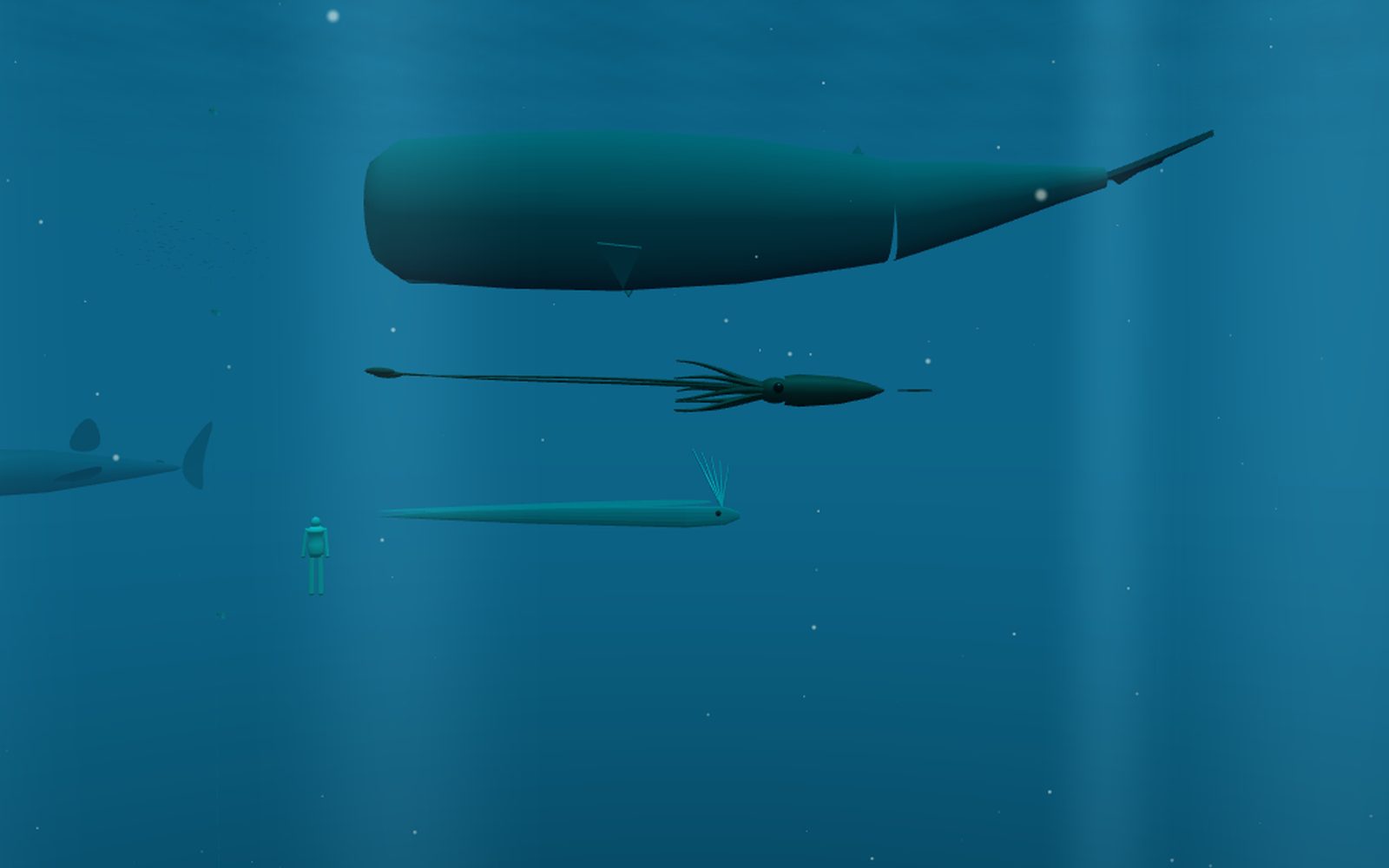
The Size button lines up the three longest animals of the twilight zone at real size in the sunlit water at 30 m, next to a person 1.7 m tall: a 16 m male sperm whale, a 12 m giant squid measured to the tips of its two feeding tentacles, and an 8 m giant oarfish. The tails are lined up at the left so the lengths can be compared directly. These are the same models you meet further down. The field guide and challenges use these same lengths: 16 m for a male sperm whale (NOAA Fisheries) and an estimated 12 m including tentacles for a giant squid. These are the exhibit’s chosen adult lengths, not claims of maximum recorded size.
Hidden finds on the way down
There are 16 hidden finds along the column, and each one is found by swimming close to it. Most of them are records:
- The deepest shipwreck (6,895 m). The US Navy confirmed in June 2022 that a wreck found by Victor Vescovo and Caladan Oceanic in the Philippine Sea was the destroyer escort USS Samuel B. Roberts, lost in 1944. It is the deepest shipwreck ever located and surveyed. The model is only a broken piece of hull on a ledge of the trench wall.
- The deepest octopus (6,957 m). A lander camera filmed a dumbo octopus in the Java Trench in 2019, the first octopus seen in the hadal zone (Jamieson and Vecchione, 2020).
- A sounding weight (8,184 m). HMS Challenger measured 26,850 ft in the Mariana Trench in 1875 with a weighted line. The Challenger Deep is named after the ship.
- Nereus (9,990 m). The robot vehicle Nereus, which had reached the Challenger Deep in 2009, was lost in the Kermadec Trench on 10 May 2014.
- Giant single cells (10,641 m). Scripps researchers filmed xenophyophores, single cells often more than 10 cm across, in the Sirena Deep in 2011.
- A plastic bag (10,898 m). JAMSTEC's deep-sea debris database holds photos and video from 1983 onwards. A 2018 study of it found that the deepest piece of litter on record was a plastic bag in the Mariana Trench.
- Kaiko (10,911 m). The Japanese robot vehicle reached 10,911.4 m in March 1995 and brought back the amphipod Hirondellea gigas.
- A cold seep (2,891 m in the model). Fluid rich in methane and hydrogen sulfide seeps out of the flank at about the temperature of the water around it. Seep mussels live on bacteria that use the methane, and seep tube worms grow so slowly that some in the Gulf of Mexico were over 200 years old.
- A probe and a ruler at the vents (2,600 m). Vent fluid can pass 400 °C, and giant tube worms there grow a little less than 1 m a year, the fastest of any known marine invertebrate.
- A broken nodule (4,500 m). NOAA gives about 2 mm per million years for crusts like these.
- Casper (4,500 m in the model). A pale octopus without fins, found at 4,290 m off Hawaii in 2016 and still without a scientific name.
- Big red jelly, bloody-belly comb jelly and a sediment trap in open water at 1,500, 800 and 3,000 m.
Nine challenges
The Challenges button opens nine short tasks. Four are solved by swimming: five glowing animals below 1,000 m, the bottom of the Challenger Deep, the sperm whale's deep dive to 2,134 m, and all five zones. Four are answered by choosing, with the answer taken from the exhibit's own numbers (the longest animal from the field guide sizes, the first colour to go from the light model, the pressure at 10,912 m from the pressure formula, and the animal that lives without sunlight). The last one asks for five hidden finds. Solved challenges and found finds are kept on your device.
Questions
Why does the sea look blue?
Water absorbs red light much faster than blue, and it scatters some of the blue light back towards your eyes. By about 20 m almost all the red has gone, so what is left looks blue.
Is there any light at the bottom of the Mariana Trench?
No sunlight. NOAA says light from the surface is gone by about 1,000 m. The only light in the trench comes from animals that make their own, and from the lamps of visiting submersibles.
How strong is the pressure at the bottom?
About 1,086 atmospheres in this model, or roughly 1,088 by NOAA's rule of one atmosphere per 10.06 m. That is about 16,000 pounds on every square inch.
Why are so many deep-sea animals red or black?
Below a few tens of metres there is no red light, so a red animal reflects nothing and looks black. Both colours hide an animal from predators in the dark.
How deep can a sperm whale dive?
NOAA Fisheries says sperm whales routinely dive to about 610 m, and NOAA's National Ocean Service mentions hunting dives of 2,134 m or more. The deepest dive recorded for any whale belongs to a Cuvier's beaked whale, at 2,992 m.
What is the deepest any fish has been seen?
A snailfish filmed at 8,336 m. NOAA Ocean Exploration expects that no fish lives much deeper than about 8,400 m because of the extreme pressure.
How cold is the deep ocean?
Below about 200 m the average is about 4 °C, and near the bottom the water is close to freezing but stays liquid. In the trench it warms very slightly because of compression.
What is a whale fall?
It is the carcass of a whale on the sea floor. NOAA describes it as a sudden, concentrated food supply for the deep: scavengers clear the flesh within months, and the bones can feed communities of worms, bacteria and other animals for years to decades.
Why do so many deep-sea animals make light?
Below about 1,000 m there is no sunlight, so light is the only way to see or be seen. Animals use it to lure prey, to find mates, to startle attackers and, like the hatchetfish, to hide their outline against the faint light from above. In this exhibit 37 of the 113 species make light.
Are deep-sea animals bigger than shallow ones?
Some are. The supergiant amphipod reaches 34 cm, many times the length of shallow-water amphipods, and the giant squid and giant siphonophore are among the longest animals. Many others stay small, like the 7.6 cm bristlemouth, so size depends on the group.
Who first reached the bottom of the Challenger Deep?
Don Walsh and Jacques Piccard in Trieste, on 23 January 1960. James Cameron was the first to go alone, in 2012.
What is the deepest shipwreck ever found?
The US Navy says USS Samuel B. Roberts, a destroyer escort sunk in the Battle off Samar in 1944, is the deepest shipwreck ever located and surveyed. It lies at 6,895 m in the Philippine Sea and was identified in June 2022.
Has plastic reached the bottom of the ocean?
Yes. A 2018 study of JAMSTEC's deep-sea debris database found plastic even below 6,000 m, most of it single-use, and the deepest item on record was a plastic bag at 10,898 m in the Mariana Trench.
What is a cold seep?
A place where fluid rich in methane, oil or hydrogen sulfide leaks out of the sea floor at about the same temperature as the water around it. NOAA describes seeps as stable and long-lived, unlike hot vents, and their animals grow slowly: seep tube worms can live for more than 200 years.
Which animal has the largest light organs?
The Dana octopus squid, Taningia danae, carries the largest known light organs of any animal on the tips of two of its arms. It flashes them while hunting.
Terms
Whale fall: the carcass of a whale on the sea floor and the community that lives on it.
Standard length: a fish measured from the snout to the start of the tail fin.
Counter-illumination: light from the belly that matches the dim light from above, so the animal casts no shadow.
Cold seep: a place where methane-rich fluid leaks from the sea floor at about the temperature of the surrounding water.
Xenophyophore: a single-celled organism of the deep sea floor that can grow larger than 10 cm.
Attenuation coefficient (K): how fast light fades with depth. Light falls to 1/e (about 37%) over a distance of 1/K.
Atmosphere (atm): the pressure of the air at sea level, 101,325 pascals.
Bathyscaphe: a deep-diving craft that hangs a crew sphere under a large float filled with petrol, which is lighter than water and hardly compresses.
Bioluminescence: light made by living things through a chemical reaction.
Chemosynthesis: making food from chemicals instead of sunlight, as vent bacteria do.
Esca: the glowing lure at the tip of an anglerfish's fishing rod.
Hadal zone: the deepest part of the ocean, from 6,000 m down, found only in trenches.
Photophore: a light-making organ in a fish or squid.
Thermocline: the layer where temperature drops quickly between warm surface water and cold deep water.
Sources
- NOAA National Ocean Service, How far does light travel in the ocean? https://oceanservice.noaa.gov/facts/light_travel.html (checked 16 October 2026)
- NOAA Ocean Exploration, How far does light travel in the ocean? https://oceanexplorer.noaa.gov/ocean-fact/light-distributed/ (checked 16 October 2026)
- NOAA Ocean Exploration, Factsheet: Light and Color in the Deep Sea. https://oceanexplorer.noaa.gov/wp-content/uploads/2025/04/light-and-color-fact-sheet.pdf (checked 16 October 2026)
- NOAA National Ocean Service, How does pressure change with ocean depth? https://oceanservice.noaa.gov/facts/pressure.html (checked 16 October 2026)
- NOAA Ocean Exploration, How does pressure impact animals in the ocean? https://oceanexplorer.noaa.gov/ocean-fact/animal-pressure/ (checked 16 October 2026)
- NOAA National Ocean Service, How deep is the ocean? https://oceanservice.noaa.gov/facts/oceandepth.html (checked 16 October 2026)
- NOAA National Ocean Service, What is a thermocline? https://oceanservice.noaa.gov/facts/thermocline.html (checked 16 October 2026)
- NOAA Ocean Exploration, What conditions exist for life in the deep ocean? https://oceanexplorer.noaa.gov/ocean-fact/deep-habitat/ (checked 16 October 2026)
- Woods Hole Oceanographic Institution, Ocean Zones. https://www.whoi.edu/know-your-ocean/ocean-topics/how-the-ocean-works/ocean-zones/ (checked 16 October 2026)
- NOAA Ocean Exploration, How do living organisms produce light? https://oceanexplorer.noaa.gov/ocean-fact/living-light/ (checked 16 October 2026)
- NOAA Ocean Exploration, Fishes of the Midnight Zone. https://oceanexplorer.noaa.gov/expedition-feature/19biolum-background-midnight-zone/ (checked 16 October 2026)
- NOAA Ocean Exploration, Bioluminescent creatures (education sheet). https://oceanexplorer.noaa.gov/wp-content/uploads/2025/04/bioluminescent-creatures.pdf (checked 16 October 2026)
- NOAA Fisheries, Sperm Whale. https://www.fisheries.noaa.gov/species/sperm-whale (checked 16 October 2026)
- NOAA Fisheries, Cuvier's Beaked Whale. https://www.fisheries.noaa.gov/species/cuviers-beaked-whale (checked 16 October 2026)
- NOAA Fisheries, 10 Wonderful Whale Facts. https://www.fisheries.noaa.gov/feature-story/10-wonderful-whale-facts (checked 16 October 2026)
- NOAA Ocean Exploration, Factsheet: Hydrothermal Vents. https://oceanexplorer.noaa.gov/wp-content/uploads/2022/10/hydrothermal-vents-fact-sheet.pdf (checked 16 October 2026)
- NOAA Ocean Today, The Depths Below: Life on a Vent. https://oceantoday.noaa.gov/lifeonavent/ (checked 16 October 2026)
- NOAA Ocean Exploration, What are abyssal plains? https://oceanexplorer.noaa.gov/ocean-fact/what-are-abyssal-plains/ (checked 16 October 2026)
- NOAA Ocean Exploration, What is a headless chicken monster? https://oceanexplorer.noaa.gov/ocean-fact/what-is-a-headless-chicken-monster/ (checked 16 October 2026)
- NOAA Ocean Exploration, What is the deepest-living fish? https://oceanexplorer.noaa.gov/ocean-fact/what-is-the-deepest-living-fish/ (checked 16 October 2026)
- Woods Hole Oceanographic Institution, HOV Alvin. https://www.whoi.edu/what-we-do/explore/underwater-vehicles/hov-alvin/ (checked 16 October 2026)
- Woods Hole Oceanographic Institution, DEEPSEA CHALLENGER. https://www.whoi.edu/ocean-learning-hub/multimedia/deepsea-challenger (checked 16 October 2026)
- DEEPSEA CHALLENGE expedition (National Geographic), Expedition Update: Phase II Begins. https://deepseachallenge.com/latest-news/expedition-update-phase-ii-begins/ (checked 16 October 2026)
- NOAA National Ocean Service, What is a whale fall? https://oceanservice.noaa.gov/facts/whale-fall.html (checked 17 October 2026)
- NOAA National Ocean Service, What is a Portuguese man o' war? https://oceanservice.noaa.gov/facts/portuguese-man-o-war.html (checked 17 October 2026)
- FishBase (Froese and Pauly, eds.), species summaries for the 35 fish in the field guide, for example Anoplogaster cornuta. https://www.fishbase.se/summary/Anoplogaster-cornuta.html (checked 17 October 2026)
- SeaLifeBase (Palomares and Pauly, eds.), species summaries for the other animals in the field guide, for example Osedax rubiplumus. https://www.sealifebase.se/summary/Osedax-rubiplumus.html (checked 17 October 2026)
- Kobayashi and others, An aluminum shield enables the amphipod Hirondellea gigas to inhabit deep-sea environments, PLOS ONE 2019. https://pmc.ncbi.nlm.nih.gov/articles/PMC6449124/ (checked 17 October 2026)
- US Naval Historical Center, Online Library of Selected Images, Bathyscaphe Trieste (1958-1963) in 1959-60. http://www.ibiblio.org/hyperwar/OnlineLibrary/photos/sh-usn/usnsh-t/trste-b.htm (checked 16 October 2026)
- Naval History and Heritage Command, H-041-6: Bathyscaphe Trieste's Deep Dive. https://www.history.navy.mil/about-us/leadership/director/directors-corner/h-grams/h-gram-041/h-041-6.html (checked 17 October 2026)
- NOAA Ocean Exploration, Bioluminescence. https://oceanexplorer.noaa.gov/facts/bioluminescence.html (checked 27 October 2026)
- MBARI, Dragonfish. https://www.mbari.org/animal/dragonfish/ (checked 27 October 2026)
- US Navy, Navy confirms wrecksite off Philippines coast that of USS Samuel B. Roberts (27 June 2022). https://www.navy.mil/Press-Office/Press-Releases/display-pressreleases/Article/3075891/navy-confirms-wrecksite-off-philippines-coast-that-of-uss-samuel-b-roberts/ (checked 27 October 2026)
- Jamieson and Vecchione, First in situ observation of Cephalopoda at hadal depths, Marine Biology 2020. https://doi.org/10.1007/s00227-020-03701-1 (checked 27 October 2026)
- WHOI Dive and Discover, The Challenger Expedition. https://divediscover.whoi.edu/history-of-oceanography/the-challenger-expedition/ (checked 27 October 2026)
- Woods Hole Oceanographic Institution, Robotic Deep-sea Vehicle Lost on Dive to 6-Mile Depth (10 May 2014). https://www.whoi.edu/press-room/news-release/nereus-lost/ (checked 27 October 2026)
- Scripps Institution of Oceanography, Researchers Identify Mysterious Life Forms in the Extreme Deep Sea (2011). https://scripps.ucsd.edu/news/researchers-identify-mysterious-life-forms-extreme-deep-sea (checked 27 October 2026)
- Chiba and others, Human footprint in the abyss: 30 year records of deep-sea plastic debris, Marine Policy 2018. https://doi.org/10.1016/j.marpol.2018.03.022 (checked 27 October 2026)
- JAMSTEC, ROV KAIKO. https://www.jamstec.go.jp/e/about/equipment/ships/kaiko.html (checked 27 October 2026)
- NOAA Ocean Exploration, What is the difference between cold seeps and hydrothermal vents? https://oceanexplorer.noaa.gov/ocean-fact/seeps-vents/ (checked 27 October 2026)
- NOAA Ocean Exploration, Cold Seeps. https://oceanexplorer.noaa.gov/education/cold-seeps/ (checked 27 October 2026)
- NOAA National Ocean Service, What is a hydrothermal vent? https://oceanservice.noaa.gov/facts/vents.html (checked 27 October 2026)
- NOAA Ocean Exploration, Dive 07: Habitat Response 01 (manganese nodules). https://oceanexplorer.noaa.gov/ex1907-dailyupdates-nov7/ (checked 27 October 2026)
- NOAA Ocean Exploration, 10 Years of the "Casper" Octopus. https://oceanexplorer.noaa.gov/news/10-years-of-the-casper-octopus/ (checked 27 October 2026)
- MBARI, Big red jelly. https://www.mbari.org/animal/big-red-jelly/ (checked 27 October 2026)
- MBARI, Bloody-belly comb jelly. https://www.mbari.org/animal/bloody-belly-comb-jelly/ (checked 27 October 2026)
- NOAA National Ocean Service, What is marine snow? https://oceanservice.noaa.gov/facts/marinesnow.html (checked 27 October 2026)
- NOAA Fisheries, Opah. https://www.fisheries.noaa.gov/species/opah (checked 27 October 2026)
- NOAA Fisheries, Leatherback Turtle. https://www.fisheries.noaa.gov/species/leatherback-turtle (checked 27 October 2026)
More exhibits
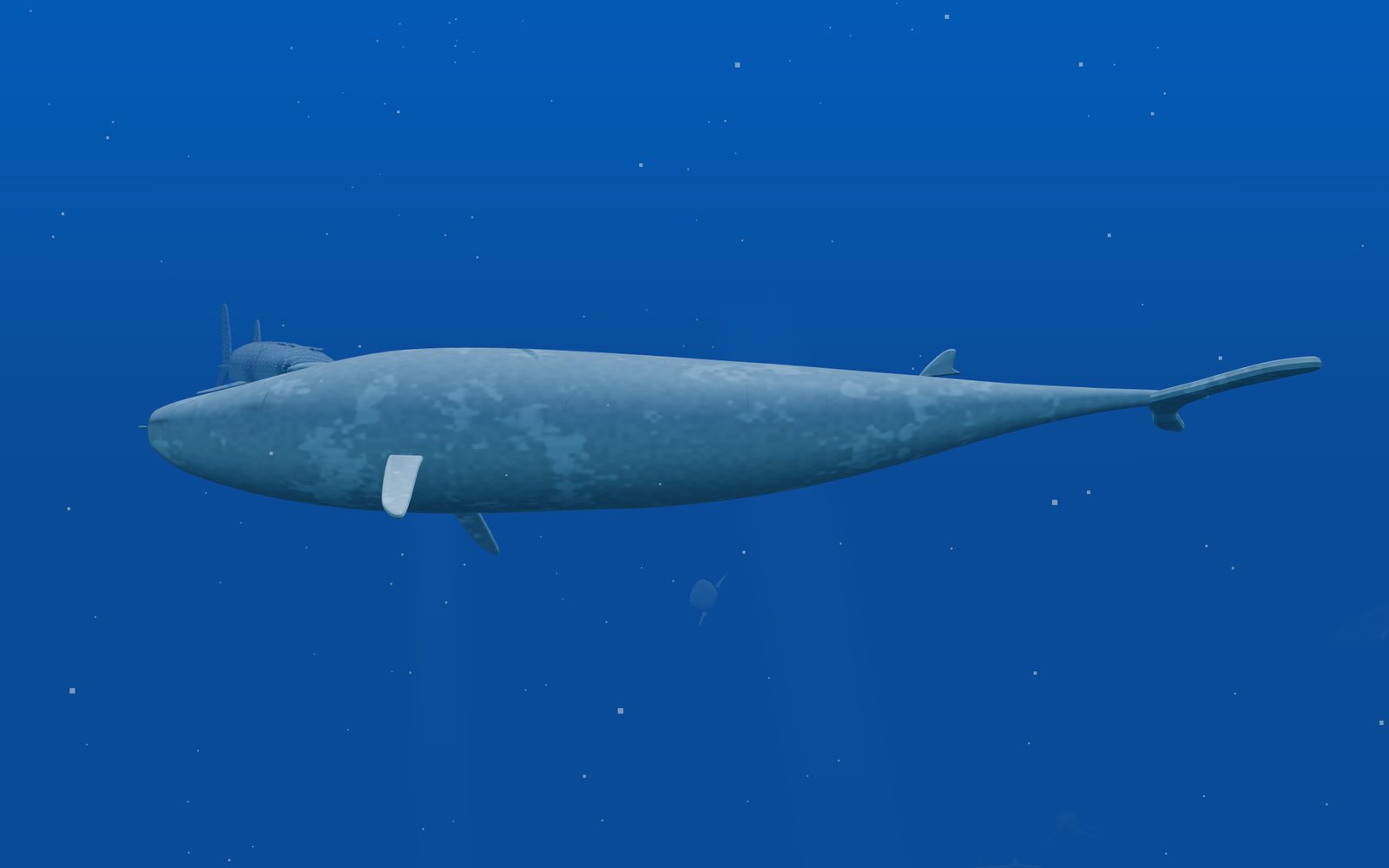
Giants of the sea: megalodon and the blue whale
Swim beside 48 sea giants at their real size, from a 28 m blue whale to megalodon, Livyatan and Mosasaurus, in eight seas from today back to the Triassic.
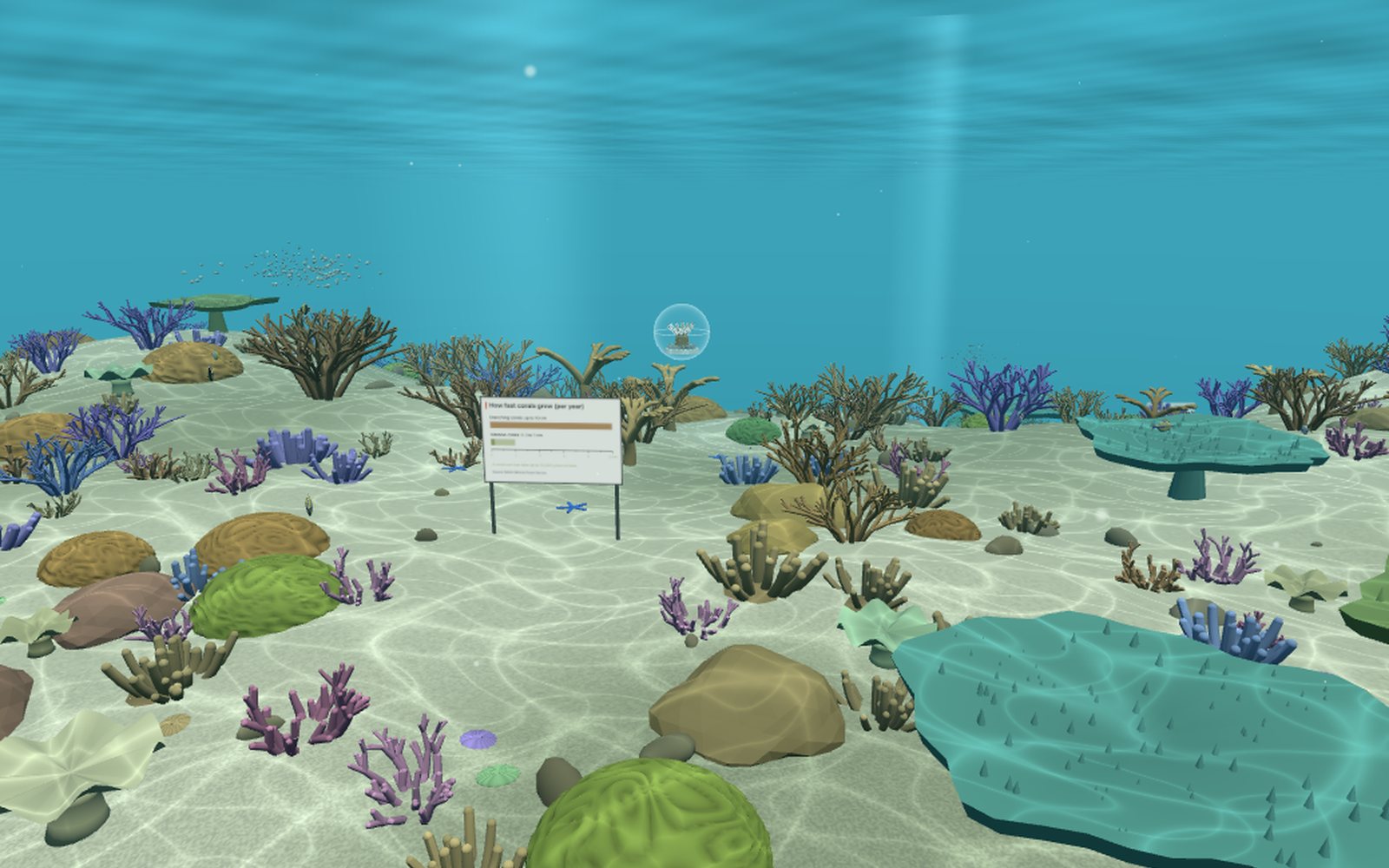
Coral bleaching causes: why warmer water turns reefs white
Corals get most of their food from algae living in their tissue, and when the sea stays more than 1 °C above its usual summer high for weeks, they lose those algae and turn white.
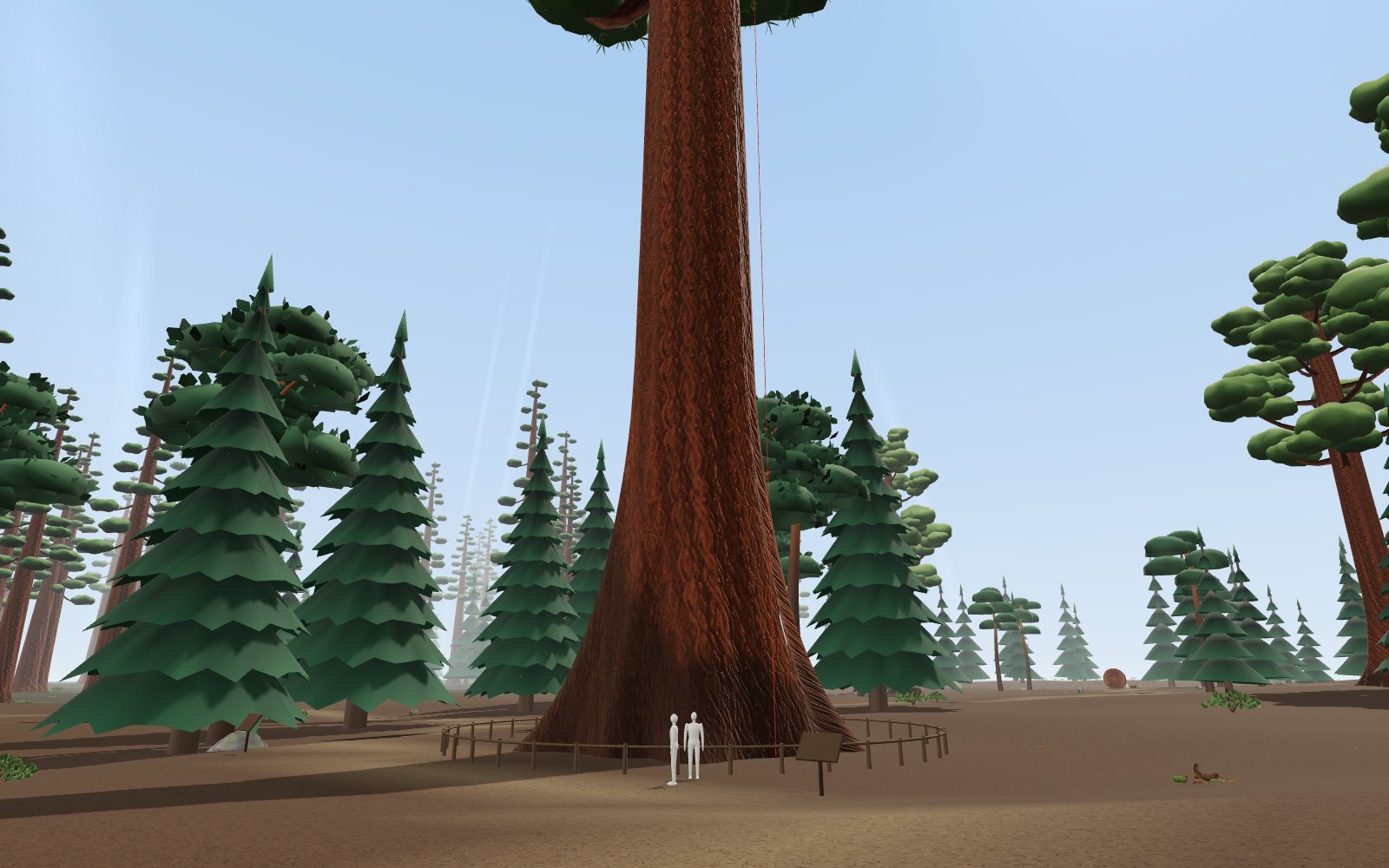
Giant sequoia forest: walk under the largest trees
Stand at the foot of the General Sherman Tree, 83.8 m tall and about 2,200 years old, then climb its trunk and see how hard the water up there is pulled.
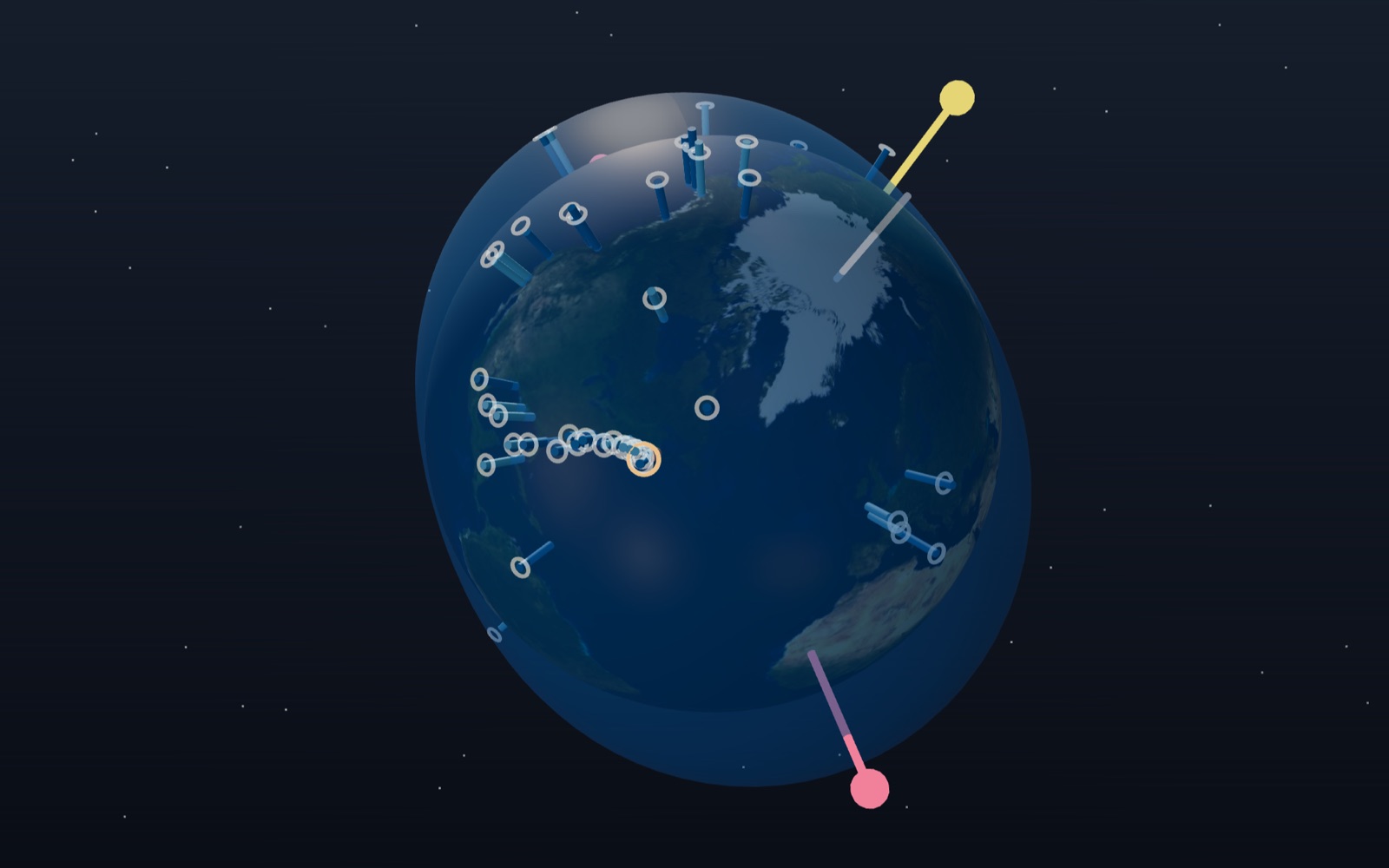
How tides work
The Moon raises the sea on the side of the Earth facing it, so why is there a second high tide on the side facing away?
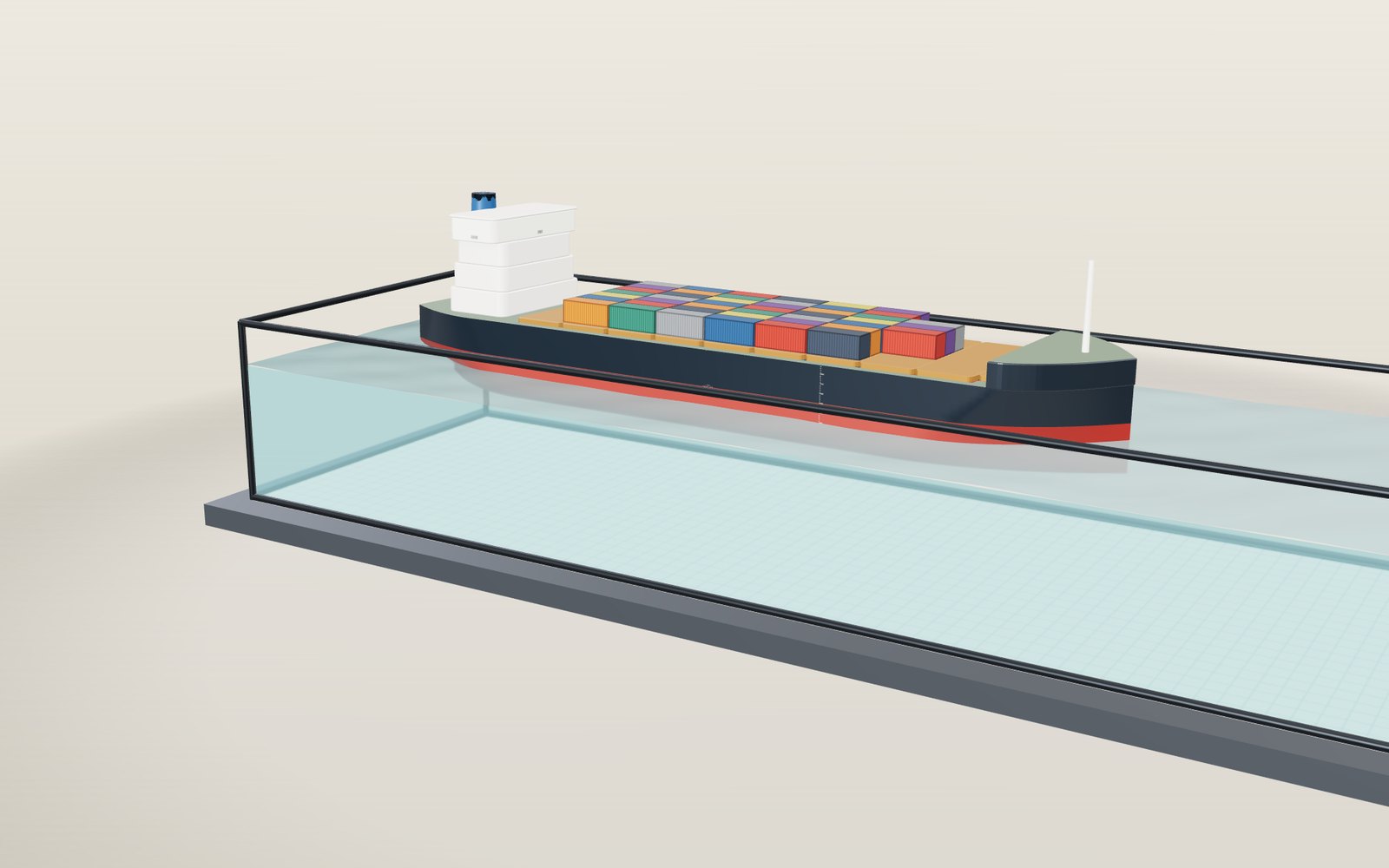
Why do ships float?
A 1,900-tonne steel ship floats, yet the same 1,900 tonnes of steel pressed into a cube goes straight to the bottom.
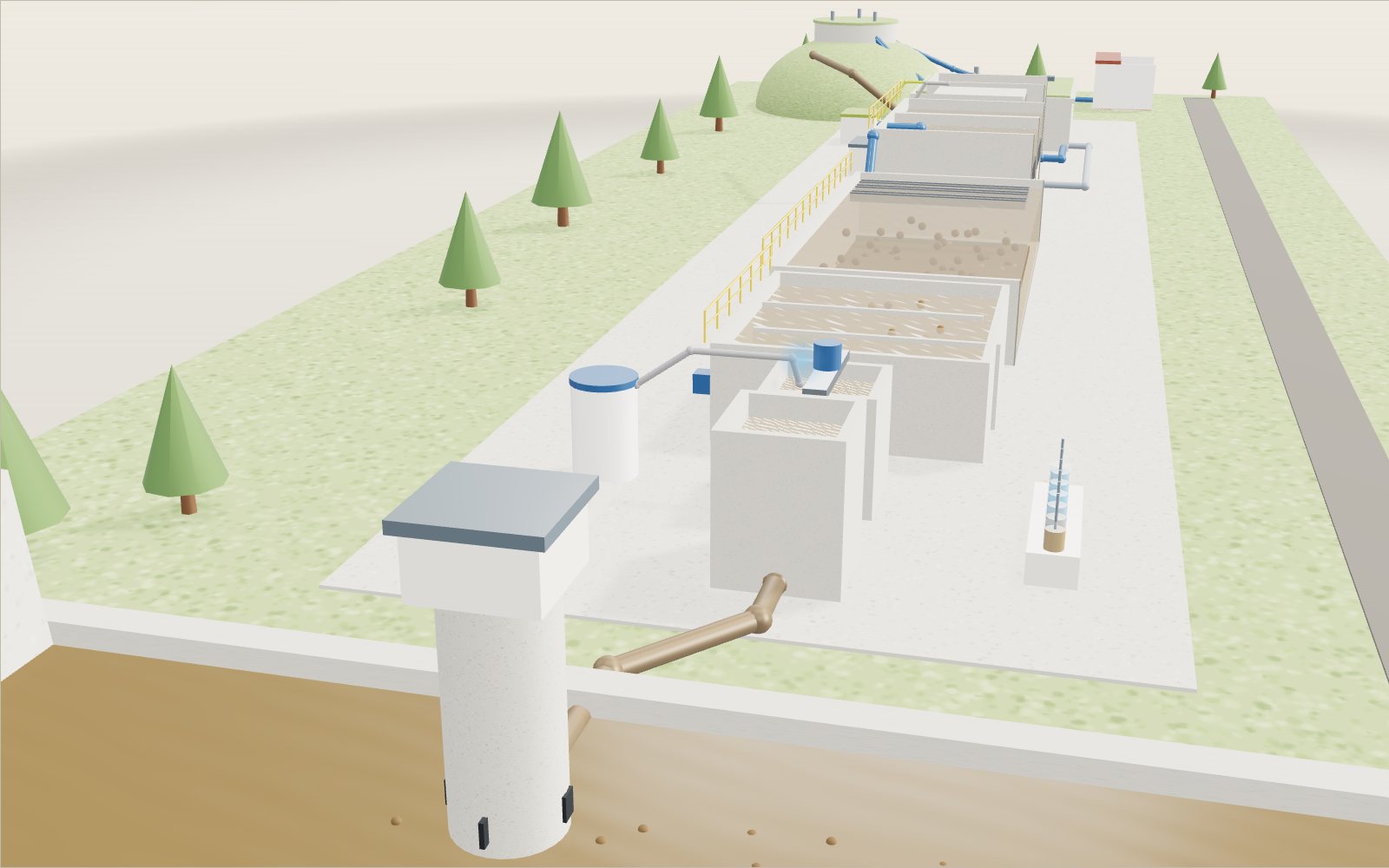
How a water treatment plant turns muddy water clear
A grain of clay two micrometres across would take eleven days to sink through a settling basin, but stuck into a floc by a coagulant it reaches the floor in about two hours.