FIG. 121Walk-throughs
Walk through the Terracotta Army
Pit 1 of the Terracotta Army is 230 m long and holds an estimated 6,000 figures and horses, and every one of them was painted once.
This device cannot show the 3D model. You can read the guide steps below as text.
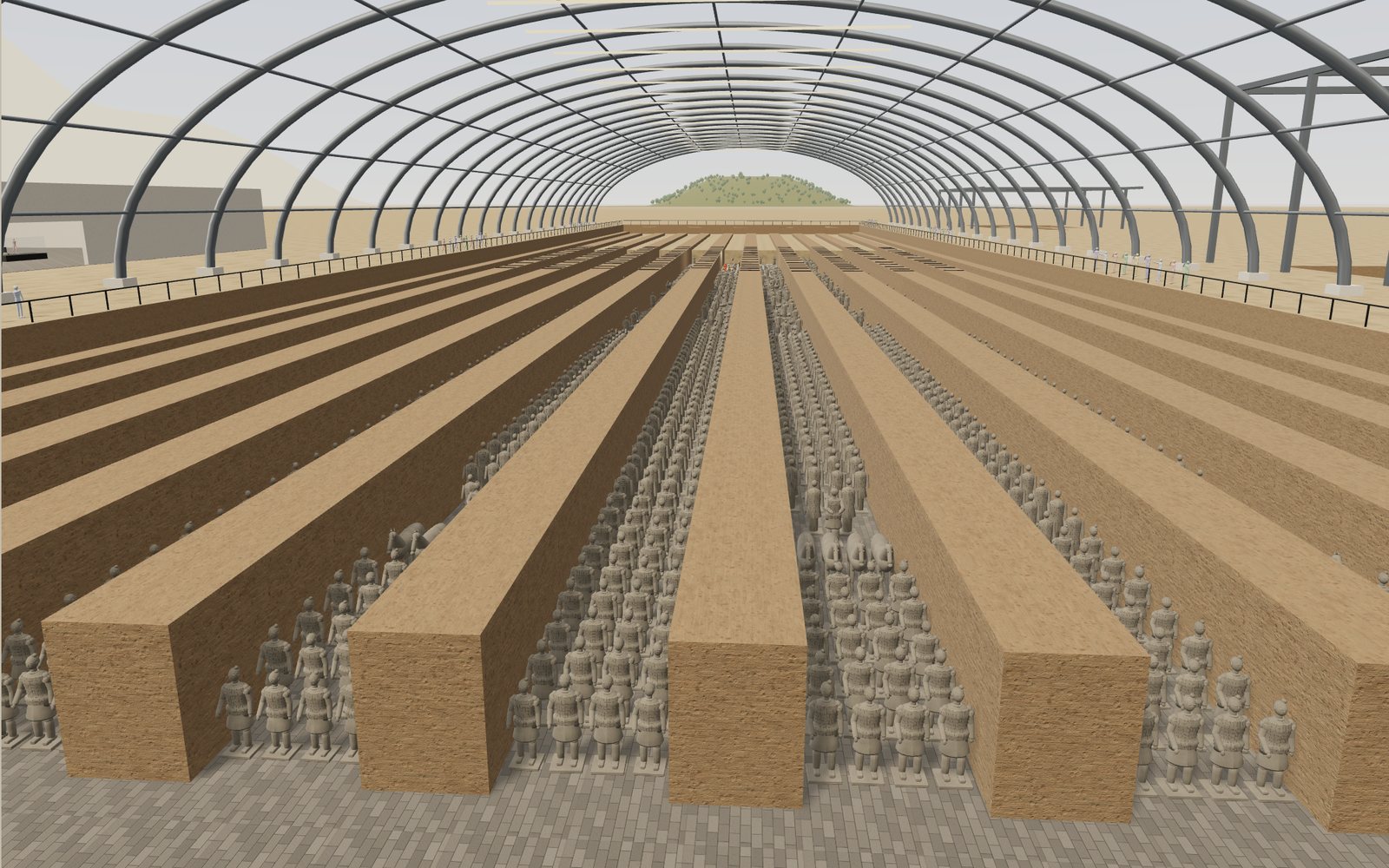
1 / 13 The front ranksYou stand at the east end of Pit 1. In front of you the vanguard faces east: three rows of 68 soldiers in robes. Behind them the corridors run 230 m west, and the figures in them are estimated at about 6,000 with the horses. The hall lights switch on bay by bay.
Drag to turn. Scroll or pinch to zoom.
What you are walking through
Most people know the Terracotta Army from one photograph: rows of grey soldiers standing in long trenches, seen from above and from the front, fading into the distance. The photograph is true, but it leaves out most of the story. The figures were painted. They carried real bronze weapons on wooden shafts. They stood in the dark under a roof of timber and earth, and most of them were found in pieces because that roof burned and fell in on them. They are also only one part of a much larger burial ground built round the tomb of the First Emperor of China, a tomb that has never been opened.
The model lets you walk the three pits of the army as they are today and step back through their history with a year slider. At one end of the slider the pits are freshly closed, around 210 BC, with every figure standing and painted. Then come the fire, two thousand years under farmland, the well dug by farmers in 1974, the opening of the museum in 1979, and the site as it is now: the restored front ranks of Pit 1, the excavation still going on behind them, the crossbowmen and cavalry of Pit 2, the small command post of Pit 3, an exhibition hall with the two bronze chariots, and the mound of the tomb itself, 1.5 km to the west.
This page explains what the model shows, where the numbers come from and which questions are still open. The figures in the model are built the way the real ones were: from separate parts, each finished by hand. Faces are kept simple. What sets one soldier apart from another is his armour, his hair, his cap and the way he stands, and those are the details the model draws.
The first ten seconds
The exhibit opens on a viewing platform at the east end of Pit 1, in the hall that covers the pit today. The lights are off. They come on bay by bay, from the front of the pit to the back, and the army appears out of the dark: first the three rows of the vanguard just below you, then the long columns in the corridors behind them, running away toward the far wall 230 m off.
Pit 1 alone is estimated to hold about 6,000 figures and horses. That number is not a count. It comes from the density of figures in the parts that have been dug, spread over the area of the whole pit. The model places that many, so that when you move the year back to 210 BC you see the pit full, as it would have been when it was closed. In today's view only the restored east end stands complete; the middle is an excavation, and the west is still under earth.
Where the pits are
The pits lie about 1.5 km east of the mound that covers the First Emperor's tomb, in Lintong, east of Xi'an in Shaanxi province. They are not joined to the tomb by any wall or road that survives. Today they are understood as some of the nearly 200 accompanying pits that surround the mausoleum, which UNESCO describes as a property of 56.25 km² holding more than 600 sites.
Three pits make up the army. Pit 1, the largest, is a long rectangle running east to west. Pit 2 lies 20 m north of the east end of Pit 1. Pit 3, the smallest, lies 25 m north of the west end of Pit 1, and its east side is 120 m from Pit 2. In the model the three are placed by those distances, which come from the site museum.
How big Pit 1 is
The museum gives Pit 1 as 230 m from east to west and 62 m from north to south, 4.5 to 6.5 m below today's ground, with an area of 14,260 m². That is longer than two football pitches end to end. At the model's walking pace it takes about a minute and a half to walk its length, from the front ranks to the far wall.
Digging the pit was a large job in itself. One study works out that over 70,000 m³ of earth had to be removed for Pit 1 alone. Before a single figure was made, thousands of workers had moved enough soil to fill a long row of houses.
How the pits were built
The pits are underground buildings. The builders dug a large hole and built long walls of rammed earth inside it, running east to west and dividing the pit into corridors. Rammed earth is made by pouring damp soil between boards and pounding it in thin layers until it is hard; the layers still show on the walls today, and the model's walls carry them.
Along the walls stood wooden posts. The posts carried beams, and more timbers were laid across the corridors from wall to wall. Over the timbers went mats and then a thick layer of earth. The floors of the corridors were paved with grey bricks; some of those bricks carry stamped words such as "Gong shui" and "Zuo sikong". Similar seals on the roof tiles of the mausoleum name the workshops that made them. At the ends of the pits were sloping entrances; Pit 2 has eleven doorways on three sides.
The model makes the inner height from the floor to the roof timbers 3.2 m, gives Pit 1 nine wide corridors and a narrower one along each side, and separates them with ten walls. These are model values: the excavation plans show this layout, but the exact widths and heights in the model were chosen to fit the published size of the pit, not taken from a measured drawing. You can walk along the tops of the walls ("Wall tops") and look down into the corridors, the way the excavators do.
In 210 BC, with the roof in place, the corridors were completely dark. Switch "Roof (210 BC)" on and the model closes the roof; inside, you carry a torch. With the roof off, which is the model's default for that year, you can see the whole army from above as nobody ever saw it at the time.
The battle formation of Pit 1
The army in Pit 1 faces east. At the front, across the east end, stand three rows of 68 soldiers: the vanguard, 204 men in robes and leg wrappings, without armour. Behind them, in the corridors, comes the main body: armoured infantry four abreast, with chariots and their horses among them. Along each side a line faces outward, guarding the flanks, and across the west end stands a rear guard; in the model its last row faces west.
The weapons found with the figures fit this arrangement. Crossbow triggers and bundles of arrows were found mostly with the vanguard and in the two side corridors, where crossbowmen would stand to shoot over a distance before the enemy came close. A few specialised crossbowmen stood in the middle corridors, behind the chariots. Long weapons such as halberds and lances belong with the infantry of the main body.
Press "Units in colour" and the model colours each unit: the vanguard orange, the flanks yellow, the rear guard purple, the main body blue. The colours are the model's; the arrangement follows the published descriptions of the units, and in the parts that are still unexcavated it continues the pattern.
Ranks you can tell apart
Once you know what to look for, you can read rank and job from the figures. The common infantryman of the main body wears armour of small plates held together with rivets, over a robe that reaches to the knee, with leg guards below. The men of the vanguard wear the robe and leg wrappings without armour. Many soldiers tie their hair in a bun on the right side of the top of the head; others wear it in a flat plait.
The charioteer wears long armour without shoulder pieces and holds both arms forward for the reins. The soldiers beside him in the chariot each hold a long weapon in one hand and steady themselves with the other. The cavalryman stands beside his saddled horse; the museum notes that cavalry was a new arm in the Qin army and that its men seem to have been chosen with care.
The officers are the tallest figures. The museum's two middle-ranking officers from Pit 1 are 189 and 191 cm tall, with a long cap of two boards; one holds a bow and a sword, the other raises his arm to hold a long weapon. The highest rank found so far, the high-ranking officer often called the "general", wears a double robe and coloured armour of small scales, a cap, and stands with his hands crossed on the hilt of a long sword. In the model, the officers stand beside the chariots of the front lines and in the command post of Pit 3.
Chariots and horses
The chariots were made of wood and have rotted away, leaving their shapes in the soil. In the excavated front part of Pit 1, eight chariots were found among the warriors, each drawn by four horses. The horses are life-size pottery figures, built like the soldiers from separate parts and fired.
A chariot carried three men. The driver stood in the middle, holding the reins, and was flanked by two soldiers, one on each side. The museum's charioteer from Pit 2 is 192 cm tall. In the model, the chariots appear in 210 BC and disappear in the later years, when only their horses and crews remain.
How many chariots stood in Pit 1 is not known exactly, because so much of it is unexcavated. The model places twenty, five in each of four corridors, as a model value.
Pit 2: every arm in one pit
Pit 2 was found in April 1976, 20 m north of the east end of Pit 1. It is L-shaped, with its north-east corner sticking out, 124 m from east to west and 98 m from north to south, about 5 m deep and about 6,000 m² in area. The museum estimates that it holds more than 1,300 figures and horses, and its visitor information gives a breakdown: 939 figures, 472 horses and 89 chariots.
Pit 2 is made of four units. In the north-east corner are the crossbowmen: more than 300 kneeling and standing archers. In the three northern corridors stands the cavalry, with 6 chariots and 108 cavalrymen, each beside a saddled horse. South of the cavalry, three more corridors mix chariots, infantry and cavalry. The eight southern corridors are a chariot unit of four-horse chariots.
The model divides the crossbow unit into 160 kneeling archers in the middle and 172 standing archers round them, and splits the mixed unit so that the pit adds up to the museum's totals of 939, 472 and 89. Those sub-totals are model values; the museum gives only the totals and "more than 300" for the crossbowmen.
The kneeling archer of Pit 2 is the figure many visitors remember best. He is 128 cm tall, kneels on his right knee with his left knee raised, and holds his hands at the right side of his body as if gripping a crossbow. His hair is tied in a bun on the right side of the top of his head. Because his right knee is on the ground, the sole of his right shoe faces backwards, and its tread is modelled in detail. The museum points out that the kneeling archers are finished with more care than most figures, and that some kept their paint well; one of them stands in the model's exhibition hall.
Most of Pit 2 has not been dug out. The burned remains of its roof still lie over most of the pit, and archaeologists have opened trenches through it. The model shows the crossbowmen and part of the cavalry uncovered and the rest under the charred roof. With "Still in the earth" switched on, the hidden figures appear as faint ghosts.
Pit 3: the command post?
Pit 3 was found a month after Pit 2, in May 1976, 25 m north of the west end of Pit 1. It is small, shaped like a U, 28.8 m by 24.57 m, 5.2 to 5.4 m deep, with an area of 520 m² and a sloping entrance on the east side. It held 72 pieces: 68 figures and 4 horses, with one four-horse chariot and four men in the chariot room. The rest of the men stand along the walls of the side rooms.
Some scholars see Pit 3 as the headquarters of the army in the other two pits. The museum puts it carefully: some scholars think it was the command post, called in ancient texts the "jun mu". The finds from Pit 3 include shu, staffs with a bronze cap, and a bronze spear head 17.5 cm long.
Pit 3 is also the one pit of the three that did not burn. Because there was no fire, more paint survived on its figures and the colours are brighter. In the model, the figures of Pit 3 keep faint traces of colour in today's view, and the pit is the place to go when you switch the roof on in 210 BC: it is the smallest space and the darkest.
How many figures are there?
The number that most often goes round is 8,000. It is an estimate, not a count, and different sources give different totals. The site museum's collection page speaks of nearly 8,000 pottery figures and horses in the three pits. A study of the clay from 2017 gives about 7,000 figures, and a study of the weapons from 2014 estimates around 7,000 warriors from their density in the excavated part.
What has actually been dug out is smaller. A 2019 study of the weapons says that over two thousand warriors have been excavated so far and that several thousand more are estimated to remain buried. The museum's own figure for Pit 1 is about 6,000 figures and horses, worked out from the density in the trial trenches. For Pit 2 it gives more than 1,300, again from test digs.
The model places 5,860 figures and horses in Pit 1, 1,411 in Pit 2 and 72 in Pit 3: 7,343 in all. Pits 2 and 3 match the museum's figures exactly; Pit 1 is set close to the estimate of 6,000. The counter at the bottom left shows, for the year you are in, how many figures stand, how many lie broken and how many are still in the earth in the model. Those last two numbers are the model's guess, based on the published extent of the excavation, not a survey.
How a warrior was made
A standing warrior is about 1.8 to 2 m tall. The figures are hollow, with walls up to about 0.1 m thick. They were built from separate modules, legs, torsos, hands and heads, many of them pressed in a small number of moulds, and the modules were assembled before the makers added the features that make each figure look individual. The legs may have been built from slabs of clay in the same way as the drainage pipes of the site.
A microscope study of thin slices of the figures shows what the clay was. It was a local clay of the loess type, fine and rich in mica, with sand added to it. The sand made the clay easier to build with and tougher once fired. The same base clay, treated in different ways, was used for the acrobat figures and even for the cores inside the bronze water birds. That suggests the clay was prepared in one place and handed out to the workshops.
At the restorers' bench in the model, a warrior lies on the table in parts. Move "Assemble a warrior" from 0 to 100 % and the parts fly together in order: plinth, legs, robe, armour, arms and head. The order is the model's simplification; the point is that the figure is a set of modules, joined and then finished.
Why the faces differ
UNESCO describes the figures as all different, and visitors often hear that each face is a portrait of a real soldier. The evidence points to something less romantic and more interesting. The heads were pressed in a small number of moulds; one count, quoted in the 2014 weapons study, is that only eight head moulds were used. After moulding, the makers added and carved the features that make a face look individual: the moustache, the eyebrows, the beard, the shape of the hair and the cap. The same study puts it plainly: these features were finished individually to hide the evidence of mass production.
Whether some of the faces are portraits is still debated. One way to test it is to look at a feature that varies strongly between real people and is hard to copy by accident. A team from University College London and the site museum built 3D models of the ears of 30 warriors and compared their shapes. They found no two ears strictly alike. That fits several explanations: the makers' habits, a wish for realism, or real individuals as models. The study does not decide between them.
The "Faces" lab lets you try the method. Pick one of eight moulds, then a moustache and a hairstyle, and the finished head appears on the bench. Three different combinations finish the challenge; the lab counts how many of the 128 combinations you have made. The head shapes of the eight moulds in the model are model values. They show the principle, not the real moulds.
Names on the figures
Many figures carry a name, stamped or scratched into the clay, often on the back. Scholars have identified the stamps or signatures of at least 87 foremen this way. Each was answerable for the quality of the figures he signed, and each probably supervised a team of workers. The same kind of marks appears on the roof tiles of the mausoleum, where they name the workshops that made them.
The marking shows how the work was organised. The state wanted to know who had made what, so that faults could be traced. In the model, one of the finds sits at the restorers' bench: a name on a warrior's back.
How hot were they fired?
Older books say the figures were fired at 900 to 1,050 °C. The 2017 study of thin sections tested that against the minerals in the clay. Most samples still show the optical activity of the clay minerals that disappears when clay is held above about 850 °C, and the mineral amphibole in many of them is still green, which points to temperatures below about 750 °C. The authors conclude that the figures really were fired rather than left to dry, and that they were fired more gently than often said.
They also suggest why the estimates differ so widely. When the pits burned, the fire could have heated some figures a second time. A figure that went through the fire would then look as if it had been fired hotter. This is still an open question, and the exhibit marks it as one: the "kiln" reversal card gives both sides.
Where the figures were fired is not known either. Kilns large enough for 1.8 to 2 m figures have been found near the mausoleum, but they contained fragments of bricks and tiles. Firing so many large, thick-walled figures without many failures would have needed good control of the temperature and the air in the kiln, and a slow rise in temperature to drive the water out of the clay.
They were painted
The figures we see today are grey, but they were painted. Under the paint was a ground of East Asian lacquer, the hardened sap of the lacquer tree, and over it went colours. The officials found in pit K0006, for example, still showed traces of red, green, black, pink and white when they were dug up, mostly on their faces.
The paint did not fade slowly. Much of it was lost in a few minutes. After more than 2,200 years in wet soil, the lacquer had changed. When an excavated figure dries out, the lacquer layer shrinks and curls away from the clay, taking the paint with it. The chemists who worked on the problem describe the paint peeling off within minutes of a figure drying. For decades, most of the colour that survived the burial was lost in the first hour after excavation.
The solution, published in 2003, is to keep new finds as damp as the soil they came from and to fix the lacquer before it dries, by soaking it with a substance that is then hardened in place. Conservators at the site have continued this work; one paper describes the conservation of a newly excavated, painted figure from Pit 1.
The "Paint" lab shows both sides of this. Move the slider and every figure on the stage takes on paint; the colours are illustrative, chosen to look like the pigments of the period, not measured on any one figure. Then press "Let it dry" at the case of the painted kneeling archer and watch the paint come away in flakes.
Real weapons
The warriors were armed with working weapons, almost all of them bronze, an alloy of copper and tin. The wooden and bamboo parts (the shafts of the spears and halberds, the crossbows themselves, the scabbards) have perished, but the metal survived, often in very good condition. The partial excavation of Pit 1 alone has given dozens of spears, lances, swords and hooks, more than 80 ferrules from the butt ends of shafts, over 260 crossbow triggers and some 40,000 arrowheads.
Several of these weapons have taught historians something new. The pi is one. It looks like a short sword, and before the Terracotta Army was found it was taken for one; no complete example and no clear description existed. The finds in the pits showed that the pi was the head of a long-hafted thrusting weapon, longer and sharper than a spear head. The ji, the halberd, combines a dagger-axe blade and a spear head on one shaft, so that it can both hook and thrust. The sword is long and narrow, cast in one piece with its tang.
In the model, the infantry of 210 BC carry long shafts with bronze heads. They disappear in the later years, as the wood did. The weapons case in the exhibition hall holds a sword, a dagger-axe, a pi, a spear head, a crossbow trigger and a bundle of 100 arrows.
Forty thousand arrows
Arrowheads are by far the commonest find. Each arrow had a solid three-sided bronze tip, about 2.7 cm long, fixed onto a bronze tang that was wrapped in cord and pushed into a shaft of bamboo or wood. With its tang, a head weighs about 15 g; a whole arrow was about 60 cm long, with feathers at the end.
The arrowheads were found in bundles. When the woven hemp quivers rotted, the arrows they held stayed together. The commonest bundle holds exactly 100: the contents of one crossbowman's quiver. In the five easternmost trenches of Pit 1 alone, 37,348 arrows came from 680 findspots, most of them in the vanguard and the side corridors.
A team from University College London and the site museum measured some 1,600 arrowheads and analysed the metal of many of them with a portable X-ray instrument. The heads are so alike that only callipers can tell them apart. But the chemistry differs from bundle to bundle and stays the same within a bundle. Each bundle was made from one batch of metal. That means the arrows were not made on one long production line, where batches would have been mixed, but by small all-round workshops, each casting, finishing and bundling a full quiver before starting the next. The researchers call this cellular production, and they argue that it was more flexible than a production line: no overstock, and teams could move to other tasks as the project changed.
Crossbow triggers
The crossbow trigger is a small machine. It has three parts held together by two bolts: a handle (the trigger proper), a tumbler that holds the string and carries a sighting pin, and a rocking lever that links the two. Together they hold a drawn string and release it without a spring. Each part was cast in a mould, filed to fit and then assembled.
Some 216 triggers from the east end of Pit 1 were studied, measured and mapped. Most lay beside crossbowmen in the front corridor and the two side corridors. Matching symbols on the parts of one trigger, added after filing, show that fitting was checked. One cased trigger found in Pit 1 is probably from the Han dynasty, after the fall of Qin; how it got into the pit has not been explained. It is one of the finds in the model.
The chromium story
For about 40 years a story went round that Qin weapon makers had invented a kind of chrome plating. Some weapons from the pits were found with chromium on their surface, and the weapons were famously well preserved. The idea that the two were linked, that the Qin had treated their bronze with chromium to stop it rusting, was repeated in excavation reports, museum texts and popular books.
In 2019 a team led by Marcos Martinón-Torres published a large study in Scientific Reports. They tested 464 weapon parts and found chromium on the surface of 37 of them, 8 %. The pattern is clear. Chromium was found on 88 % of the fittings of swords and lances, 75 % of the handles and tumblers of triggers and 67 % of the ferrules, but on only 13 to 17 % of trigger levers and bolts, 1.5 % of arrowheads, 0.5 % of arrow tangs, and on none of the blades. The parts with chromium are the parts that were next to lacquered wood: hilts, scabbards, crossbow stocks, shafts. The team analysed the lacquer from the site and found it rich in chromium. The chromium on the bronze is contamination from the lacquer after burial, not a treatment. They also ran experiments of their own, coating bronze with chromium and ageing it, and the results did not support the old idea.
The "Chromium" lab lets you press each kind of part and see its share. It is one of the clearest cases in the exhibit of a popular fact turned round by careful measurement.
Why the bronze survived
If not chromium, then what kept the bronze so well? The same study suggests that the main reason is the soil. The burial soil round the weapons is moderately alkaline and very fine-grained, which slows corrosion. The make-up of the bronze also helps: bronzes richer in tin tend to form a stable, tin-rich surface layer. Many blades still have sharp edges and shiny surfaces, with the parallel lines of polishing and sharpening clearly visible.
Dated weapons
Some long weapons carry long inscriptions, chiselled into the bronze, that give the year of the reign when they were made, the official responsible, the workshop and the worker. The halberds and dagger-axes with dates were made between 244 and 237 BC; the lances between 232 and 228 BC. These dates fall before the king of Qin became the First Emperor in 221 BC.
That raises a question the researchers discuss openly. If small workshops made weapons in parallel, the dates of different weapon types should overlap, and they do not. One explanation is that these rarer weapons, carried by higher-ranking soldiers, came from specialist workshops. Another is that they were not made for the army in the pits at all but taken from the stock of ordinary military workshops.
The fire and the fallen roof
Pits 1 and 2 burned. When the posts and beams burned through, the roof and the thick layer of earth on top of it fell into the corridors and crushed the figures beneath. That is why nearly every figure in these pits was found broken, and why restorers spend months putting single figures back together. Pit 3 did not burn, and more of its paint survived.
Who started the fire is not recorded. The usual explanation ties it to the end of the Qin dynasty, and the rebel general Xiang Yu is the name most often given. But no surviving text says that these pits were burned or by whom. The 2017 clay study, discussing the fire, calls it Xiang Yu's "supposed" destruction. The exhibit treats the fire as certain and the culprit as an inference.
Move the year slider to "Fire" and the model shows it. The roof beams glow and sag, embers rise, and after a few seconds the roof falls in and most of the figures topple. The challenge "Watch the roof fall" completes when the roof is down.
Two thousand years under fields
After the fire, the pits filled with earth. Farmers worked the land above them for two thousand years. Nothing on the surface showed what lay underneath, and no surviving text describes the army. Sima Qian, the historian who described the First Emperor's tomb about a century after his death, wrote of the tomb and the workers, not of a pottery army 1.5 km away.
In the model, the year "Fields" covers the pits with farmland. Switch on "Still in the earth" and you can see the army in ghostly outline under the ground.
The well of 1974
In March 1974, during a drought, farmers of Xiyang village in Lintong were digging a well. They struck pieces of pottery figures. Archaeologists spent more than a year exploring and test-digging the site and found that the well had been sunk into a huge pit: Pit 1. In 1976 Pit 2 and Pit 3 were found nearby.
In August 1975 the State Council decided to build a museum on the spot. A hall over Pit 1 was finished in 1979, and the museum opened to the public on 1 October that year. The hall over Pit 3 opened on 27 September 1989 and the hall over Pit 2 on 1 October 1994. On 11 December 1987 the Mausoleum of the First Qin Emperor, including the pits, was inscribed on the World Heritage List.
In the model, the year 1974 shows the well near the south-east corner of Pit 1, with a few farmers round it. The position of the well in the model is a model value; the museum says only that it was in what turned out to be Pit 1.
The excavation today
Excavation has never stopped. In today's view the model shows the east end of Pit 1 restored, a band in the middle being excavated and the west still under earth. In the excavation you can go down to the floor ("Pit floor") among fragments, see a string grid over the corridors, and stand at the restorers' bench, where a warrior lies in parts and eight heads stand on a shelf.
Most figures come out in many pieces. The chemists who worked on the paint describe typical fragments as about 15 cm across and 2 to 3 cm thick. Each is recorded, cleaned, treated if it has paint and then joined to its neighbours. The museum holds an annual test of its restorers' skills; in 2026, 36 restorers took part.
The bronze chariots
In December 1980 archaeologists dug up two bronze chariots 20 m west of the mound and 7.8 m below the surface. They had been placed one behind the other inside a wooden chamber. The chamber had rotted and the earth above had fallen in, crushing the chariots, but they had never been robbed and nearly all their parts were there.
The chariots are half life-size copies of carriages from the emperor's procession. Each has one shaft, two wheels and four horses. Chariot 1 is a standing chariot; its driver stands, 91 cm tall and weighing 70.6 kg. Chariot 2 is a closed carriage, divided into a front compartment for the driver and a rear one; its driver sits in front, 51 cm tall and weighing 51.92 kg. Chariot 2 alone has 3,462 parts, is 317 cm long and weighs 1,241 kg. The two chariots carry 14 kg of gold and silver ornaments; a gold plate from a horse's forehead is marked "twelve" on the back. They were painted all over, with clouds, dragons and geometric patterns in red, green, purple and blue, which is why the model's chariots are pale rather than bronze-coloured.
The museum describes the harness in detail. The two middle horses pull the shaft; the two outer horses help them. A bar keeps the outer horses from leaning in, and a strap on each outer horse's neck, tied back to the yoke, keeps it from swinging out, so that all four pull together. In the model the chariots stand in the exhibition hall. The place where they were found, west of the mound, is marked by a sign.
The other pits
The army is only one group of accompanying pits. Others show different parts of a court and an empire, and several have their own halls. A pit found in 1999 south-east of the mound, known as K9901, held more than twenty life-size figures of performers, bare to the waist and wearing short skirts, in poses unlike any other figures found at the site; one has characters scratched on his right arm. The same pit held a bronze ding cauldron weighing 212 kg.
A pit found in 2000 south-west of the mound, K0006, held twelve figures: eight officials standing with their hands in their sleeves and four charioteers, and bones of horses in its back room. It did not burn, so its timber structure survived well. Pit K9801 held suits of armour and helmets made of limestone plates, ground, drilled and tied with bronze wire: 612 plates in one suit, 72 in a helmet, nearly 800 in a finer suit. Pit K0007 held bronze water birds, cranes, swans and geese, standing for a palace garden; one crane, 77.5 cm tall, bends to the water with a small worm in its beak. A small stable pit held a kneeling groom, 64 cm tall.
In the model, these finds stand in cases in the exhibition hall, and the pits near the mound are marked by signs. The guide lists them all.
The mound
The tomb of the First Emperor lies under an earth mound at the northern foot of Mount Li. UNESCO gives its present height as 51.3 m. The museum's English pages give two other figures: an original height of 115 m and more than 70 m today. A scholarly reconstruction quoted in the 2014 weapons study speaks of an original pyramid of over 80 m. The difference is partly about where you measure from, and partly about two thousand years of erosion. The model uses UNESCO's 51.3 m and makes the base 350 by 345 m, a model value.
The mound sits inside a double walled enclosure. UNESCO notes that the layout echoes the plan of the capital, Xianyang, with walls inside walls, and that the army watching over the dead emperor faces outward from the tomb. The burial chamber is thought to lie 30 to 40 m below the surface. Nobody has dug down to it. The central tomb has never been excavated.
Mercury
Sima Qian, writing about a century after the emperor's death, describes the tomb as a world in miniature, with rivers and seas of mercury made to flow. The account was long taken as a legend. Measurements have made it harder to dismiss.
In the early 1980s, a survey of the soil over the mound found a strong and well-defined mercury anomaly over its centre: up to 1,440 parts per billion, with a mean of 205, well above the background of the area. A later study found values up to 2,204 and a mean of 169. In 2020 a team used a laser radar (lidar) to measure mercury in the air over the mound from three positions round it. They found up to 27 ng/m³ over the mound, against 5 to 10 in the surrounding area, and the highest readings matched the places where the soil had been richest in mercury. With very large uncertainty, they estimate that something like a tonne of mercury may have escaped to the air over the centuries. They write that their results add to the credibility of Sima Qian's account and that the tomb is believed never to have been opened or looted.
The "Mercury" lab and the "Mercury readings" switch show this in the model: two hot spots on top of the mound, the laser beams from three places round it and, below, a wireframe box for the chamber. The positions of the hot spots and the outline of the chamber are model values. Nobody knows the shape of the chamber.
Who built it
According to the historical records, work on the tomb began when the young king came to the throne and went on for close to 40 years, until his death, with 700,000 workers. Inscriptions on pottery fragments give the names and home places of workers conscripted from all over the empire; some were convicts doing forced labour. Many were buried in a cemetery near the mausoleum.
The marks on the figures, the bundles of arrows and the standard triggers all show an organised system: many small teams working to shared models, standards and moulds, with names attached so that quality could be checked. The Terracotta Army is the work of thousands of people, organised by a state that wanted to know who had made each piece.
How the model differs from reality
The model is a reconstruction for walking, not a survey. Several things are simplified or estimated.
- The corridor widths, wall heights, the inner height of 3.2 m and the number of corridors in Pit 1 are model values. So are the plan of Pit 3's rooms and the layout of Pit 2's corridors.
- The arrangement of figures follows the descriptions of the units. Where the pits are unexcavated, it continues the pattern; the counts match the museum's figures for Pits 2 and 3 and the estimate of about 6,000 for Pit 1.
- The figures are built from a small set of types, with several head moulds, hairstyles and moustaches each. Real figures vary much more.
- The paint colours are illustrative. Pigments varied, and the model does not reproduce any measured figure.
- Today's split of Pit 1 into restored, excavated and buried parts, the position of the 1974 well, the places of the mercury hot spots and the outline of the burial chamber are model values.
- The halls are simplified; the arched hall over Pit 1, its viewing platform and the exhibition hall are shapes, not plans of the real buildings.
- The mound stands 1.5 km to the west at its real distance. The fields between are flat.
Moving around
Drag to look round. Use WASD or the arrow keys to walk, and hold Shift to hurry. Click or tap the ground to walk there. On a phone, the circle at the bottom left is a joystick. "Ground", "Wall tops" and "Pit floor" move you between levels; stairs and ladders at a few places also change level as you walk into them. "Hurry" and "From above" change your speed and height. The map at the top left shows where you are; click it to go somewhere, or click the arrow marked "Mound 1.5 km" to go to the tomb.
The guided tour, challenges and finds
The guided tour in the panel takes you through 13 views, from the front ranks to the mound. "Challenges" holds 15 tasks, some answered from what you see and some done on the stage, from assembling a warrior to measuring the mercury. "Finds" lists 22 things that are easy to miss; each opens a card when you stand near it and look at it. "Reversals" holds nine cards about common beliefs and what the evidence says. The guide lists 126 things to see, with sources, and takes you to those that are in the model.
Questions
How many terracotta warriors are there?
Nobody knows exactly. The museum estimates about 6,000 figures and horses in Pit 1 and more than 1,300 in Pit 2, and Pit 3 held 72. Totals for all the pits are given as about 7,000 or nearly 8,000, depending on the source. Over 2,000 warriors have been excavated so far.
Who found the Terracotta Army?
Farmers of Xiyang village in Lintong, digging a well during a drought in March 1974. Archaeologists then explored the site for more than a year and found Pit 1. Pits 2 and 3 were found in 1976.
Were the warriors painted?
Yes. They had a ground of lacquer and paint in several colours. Much of the paint was lost within minutes of excavation, when the lacquer dried and curled away from the clay. Conservators now keep new finds moist and fix the lacquer.
Is every face different?
The figures differ, but the heads were made from a small number of moulds (eight, by one count) and finished by hand with moustaches, brows and hair. Whether any are portraits of real people is debated. A study of the ears of 30 warriors found no two exactly alike.
How tall are the warriors?
Most standing figures are about 1.8 to 2 m. The charioteer in the museum's collection is 192 cm, two middle-ranking officers 189 and 191 cm. The kneeling archer is 128 cm.
Were the weapons real?
Yes. They were working bronze weapons on wooden shafts and crossbows of wood and bamboo. The wood has perished; the bronze survived, including some 40,000 arrowheads and hundreds of crossbow triggers.
Did the Qin invent chrome plating?
No. Chromium was found on 8 % of 464 weapon parts and on none of the blades. It came from the lacquer on nearby wooden parts. The bronze survived well mainly because of the fine, slightly alkaline soil.
Why are the warriors broken?
Pits 1 and 2 burned. When the roof timbers burned through, the roof and its earth fell on the figures and broke them. Pit 3 did not burn.
Who burned the pits?
It is not recorded. The fire is usually tied to the fall of the Qin dynasty and to the rebel general Xiang Yu, but that is an inference, not a documented fact.
Which way do the warriors face?
East, away from the tomb. UNESCO describes the army watching over the dead emperor as facing outward.
Has the First Emperor's tomb been opened?
No. The central tomb under the mound has never been excavated. A 2020 study of mercury in the air over it notes that the tomb is believed never to have been opened or looted.
Is there really mercury in the tomb?
The soil and the air over the mound contain more mercury than the land round it, which fits Sima Qian's account of rivers of mercury. Nobody has seen inside, so the amount and the arrangement are unknown.
How hot were the figures fired?
Estimates differ. Older books say 900 to 1,050 °C. A study of thin sections in 2017 found that most figures were not held above about 850 °C, and some point to below 750 °C. The fire in the pits may have re-fired some figures, which could explain the spread.
What is Pit 3?
The smallest pit, U-shaped, with one chariot and 68 men. Some scholars see it as the command post of the army; it is also the one pit that did not burn.
What are the bronze chariots?
Two painted bronze carriages at half life size, found in 1980 west of the mound. Chariot 2 has 3,462 parts and weighs 1,241 kg. Together they carry 14 kg of gold and silver.
Can you see the Terracotta Army outside China?
Figures have been lent to exhibitions abroad. The British Museum showed figures from the pits in its Reading Room from September 2007 to April 2008.
Terms
- Accompanying pit: a pit dug near a tomb for burial goods; the mausoleum has nearly 200.
- Rammed earth: soil pounded in thin layers between boards until hard; the walls of the pits are made of it.
- Vanguard: the front ranks of an army; in Pit 1, three rows of 68.
- Crossbow trigger: the bronze mechanism of a crossbow, made of three parts held by two bolts.
- Ferrule: a metal cap on the butt end of a shaft.
- Pi: a long-hafted thrusting weapon with a blade like a short sword.
- Ji (halberd): a dagger-axe and a spear head on one shaft.
- Shu: a staff with a bronze cap, found in Pit 3.
- Lacquer: the hardened sap of the lacquer tree, used as the ground under the paint.
- Thin section: a slice of material ground thin enough to study under a microscope.
- Lidar: a laser radar, used here to measure mercury in the air.
- Ding: a bronze cauldron on legs.
- Model value: a number chosen for the model where no published figure was found.
Sources
- Emperor Qinshihuang's Mausoleum Site Museum, Pit 1. https://www.bmy.com.cn/pitone.html (checked 20 October 2026)
- Emperor Qinshihuang's Mausoleum Site Museum, Pit 2. https://www.bmy.com.cn/pittwo.html (checked 20 October 2026)
- Emperor Qinshihuang's Mausoleum Site Museum, Pit 3. https://www.bmy.com.cn/pitthree.html (checked 20 October 2026)
- Emperor Qinshihuang's Mausoleum Site Museum, Bronze chariot pit. https://www.bmy.com.cn/pithorse.html (checked 20 October 2026)
- Emperor Qinshihuang's Mausoleum Site Museum, Acrobats pit (K9901). https://www.bmy.com.cn/pitdrama.html (checked 20 October 2026)
- Emperor Qinshihuang's Mausoleum Site Museum, Civil officials pit (K0006). https://www.bmy.com.cn/pitofficial.html (checked 20 October 2026)
- Emperor Qinshihuang's Mausoleum Site Museum, The mausoleum. https://www.bmy.com.cn/pitmausoleum.html (checked 20 October 2026)
- Emperor Qinshihuang's Mausoleum Site Museum, Visitor information (pits 1, 2 and 3). https://www.bmy.com.cn/jingtai/bmyweb/ticketing.html (checked 20 October 2026)
- Emperor Qinshihuang's Mausoleum Site Museum, About the museum. https://www.bmy.com.cn/jingtai/bmyweb/about.html (checked 20 October 2026)
- Emperor Qinshihuang's Mausoleum Site Museum, Collection. https://www.bmy.com.cn/collection.html (checked 20 October 2026)
- Emperor Qinshihuang's Mausoleum Site Museum, Kneeling archer. https://www.bmy.com.cn/impor_collections/438.html (checked 20 October 2026)
- Emperor Qinshihuang's Mausoleum Site Museum, Painted kneeling archer. https://www.bmy.com.cn/impor_collections/432.html (checked 20 October 2026)
- Emperor Qinshihuang's Mausoleum Site Museum, High-ranking officer. https://www.bmy.com.cn/impor_collections/439.html (checked 20 October 2026)
- Emperor Qinshihuang's Mausoleum Site Museum, Middle-ranking officer. https://www.bmy.com.cn/impor_collections/441.html (checked 20 October 2026)
- Emperor Qinshihuang's Mausoleum Site Museum, Charioteer. https://www.bmy.com.cn/impor_collections/433.html (checked 20 October 2026)
- Emperor Qinshihuang's Mausoleum Site Museum, Chariot soldier. https://www.bmy.com.cn/impor_collections/434.html (checked 20 October 2026)
- Emperor Qinshihuang's Mausoleum Site Museum, Cavalryman with saddled horse. https://www.bmy.com.cn/impor_collections/435.html (checked 20 October 2026)
- Emperor Qinshihuang's Mausoleum Site Museum, Bronze pi. https://www.bmy.com.cn/impor_collections/405.html (checked 20 October 2026)
- Emperor Qinshihuang's Mausoleum Site Museum, Bronze yongzhong bell. https://www.bmy.com.cn/impor_collections/383.html (checked 20 October 2026)
- Emperor Qinshihuang's Mausoleum Site Museum, Floor bricks of the pits. https://www.bmy.com.cn/impor_collections/443.html (checked 20 October 2026)
- Emperor Qinshihuang's Mausoleum Site Museum, Stone armour and helmet. https://www.bmy.com.cn/impor_collections/425.html (checked 20 October 2026)
- Emperor Qinshihuang's Mausoleum Site Museum, Bronze crane. https://www.bmy.com.cn/impor_collections/421.html (checked 20 October 2026)
- Emperor Qinshihuang's Mausoleum Site Museum, Bronze chariot 2. https://www.bmy.com.cn/impor_collections/417.html (checked 20 October 2026)
- Emperor Qinshihuang's Mausoleum Site Museum, Standing driver of bronze chariot 1. https://www.bmy.com.cn/impor_collections/413.html (checked 20 October 2026)
- Emperor Qinshihuang's Mausoleum Site Museum, Acrobat figures. https://www.bmy.com.cn/impor_collections/408.html (checked 20 October 2026)
- Emperor Qinshihuang's Mausoleum Site Museum, Official with hands in sleeves. https://www.bmy.com.cn/impor_collections/426.html (checked 20 October 2026)
- Emperor Qinshihuang's Mausoleum Site Museum, Kneeling groom. https://www.bmy.com.cn/impor_collections/427.html (checked 20 October 2026)
- UNESCO World Heritage Centre, Mausoleum of the First Qin Emperor. https://whc.unesco.org/en/list/441/ (checked 20 October 2026)
- Martinón-Torres, M., Li, X., Xia, Y. et al. (2019). Surface chromium on Terracotta Army bronze weapons is neither an ancient anti-rust treatment nor the reason for their good preservation. Scientific Reports 9: 5289. https://doi.org/10.1038/s41598-019-40613-7 (checked 20 October 2026)
- Martinón-Torres, M., Li, X. J., Bevan, A. et al. (2014). Forty thousand arms for a single emperor. Journal of Archaeological Method and Theory 21: 534 to 562. https://doi.org/10.1007/s10816-012-9158-z (checked 20 October 2026)
- Li, X. J., Bevan, A., Martinón-Torres, M. et al. (2014). Crossbows and imperial craft organisation: the bronze triggers of China's Terracotta Army. Antiquity 88: 126 to 140. https://doi.org/10.1017/S0003598X00050262 (checked 20 October 2026)
- Bevan, A., Li, X., Martinón-Torres, M. et al. (2014). Computer vision, archaeological classification and China's terracotta warriors. Journal of Archaeological Science 49: 249 to 254. https://doi.org/10.1016/j.jas.2014.05.014 (checked 20 October 2026)
- Quinn, P. S., Zhang, S., Xia, Y. and Li, X. (2017). Building the Terracotta Army: ceramic craft technology and organisation of production at Qin Shihuang's mausoleum complex. Antiquity 91: 966 to 979. https://doi.org/10.15184/aqy.2017.126 (checked 20 October 2026)
- Li, X., Bevan, A., Martinón-Torres, M. et al. (2016). Marking practices and the making of the Qin Terracotta Army. Journal of Anthropological Archaeology 42: 169 to 183. https://doi.org/10.1016/j.jaa.2016.04.002 (checked 20 October 2026)
- Martinón-Torres, M., Li, X. J., Bevan, A. et al. (2011). Making weapons for the Terracotta Army. Archaeology International 13/14: 65 to 75. https://doi.org/10.5334/ai.1316 (checked 20 October 2026)
- Langhals, H. and Bathelt, D. (2003). The restoration of the largest archaeological discovery: a chemical problem. Conservation of the polychromy of the Chinese terracotta army in Lintong. Angewandte Chemie International Edition 42: 5676 to 5681. https://doi.org/10.1002/anie.200301633 (checked 20 October 2026)
- Lan, D. (2014). Conservation of a polychrome terracotta warrior of the Qin dynasty newly excavated from vault 1 in Xi'an. Studies in Conservation 59, supplement 1. https://doi.org/10.1179/204705814X13975704318074 (checked 20 October 2026)
- Chang, Y. and Li, T. (1985). Application of mercury survey technique over the mausoleum of emperor Qin Shi Huang. Journal of Geochemical Exploration 23: 61 to 69. https://doi.org/10.1016/0375-6742%2885%2990016-0 (checked 20 October 2026)
- Jin, Y. Q., Wang, X. J., Lu, J. L., Zhang, C. X. and Duan, Q. B. (2008). Effects of modern and ancient human activities on mercury in the environment in Xi'an area. Environmental Pollution 153: 342 to 350. https://doi.org/10.1016/j.envpol.2007.08.013 (checked 20 October 2026)
- Zhao, G., Zhang, W., Duan, Z. et al. (2020). Mercury as a geophysical tracer gas: emissions from the Emperor Qin tomb in Xi'an studied by laser radar. Scientific Reports 10: 10414. https://doi.org/10.1038/s41598-020-67305-x (checked 20 October 2026)
- Chinese Academy of Social Sciences, Bronze chariots (Chinese Social Sciences Net). https://www.cssn.cn/skgz/bwyc/202508/t20250827_5912762.shtml (checked 20 October 2026)
- Emperor Qinshihuang's Mausoleum Site Museum, Annual test of restoration skills, 2026 (news). http://bmy.com.cn/news/news/3383.html (checked 20 October 2026)
- The British Museum, The Round Reading Room at the British Museum (on the 2007 exhibition The First Emperor: China's Terracotta Army). https://www.britishmuseum.org/blog/round-reading-room-british-museum (checked 20 October 2026)
- The British Museum, Collection term: Bingmayong Keng. https://www.britishmuseum.org/collection/term/x107925 (checked 20 October 2026)
More exhibits
Walk through Gyeongbokgung Palace
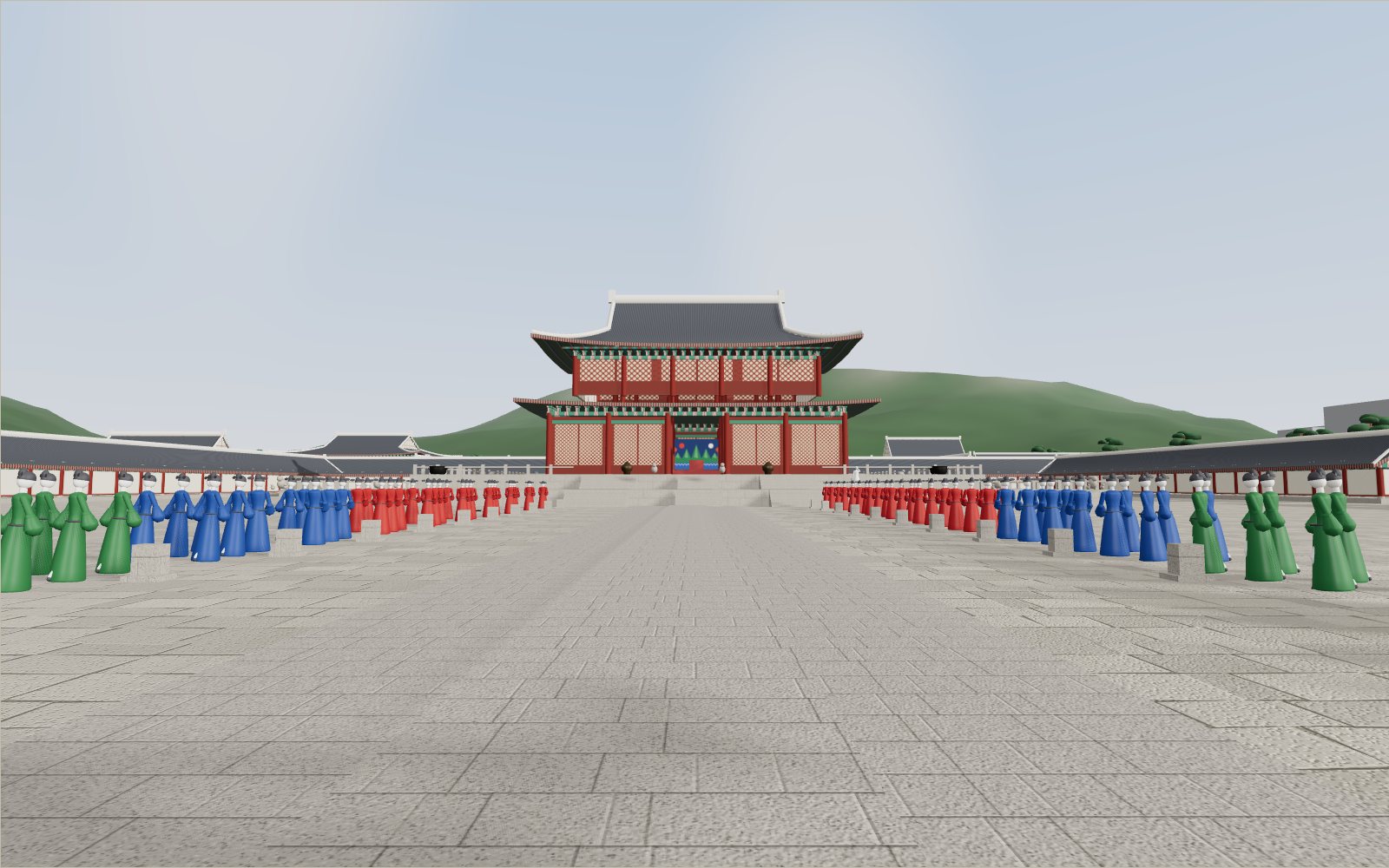
In the courtyard of the throne hall, 24 stones told each official where to stand, from the first grade by the hall to the ninth by the gate.
Walk through Machu Picchu
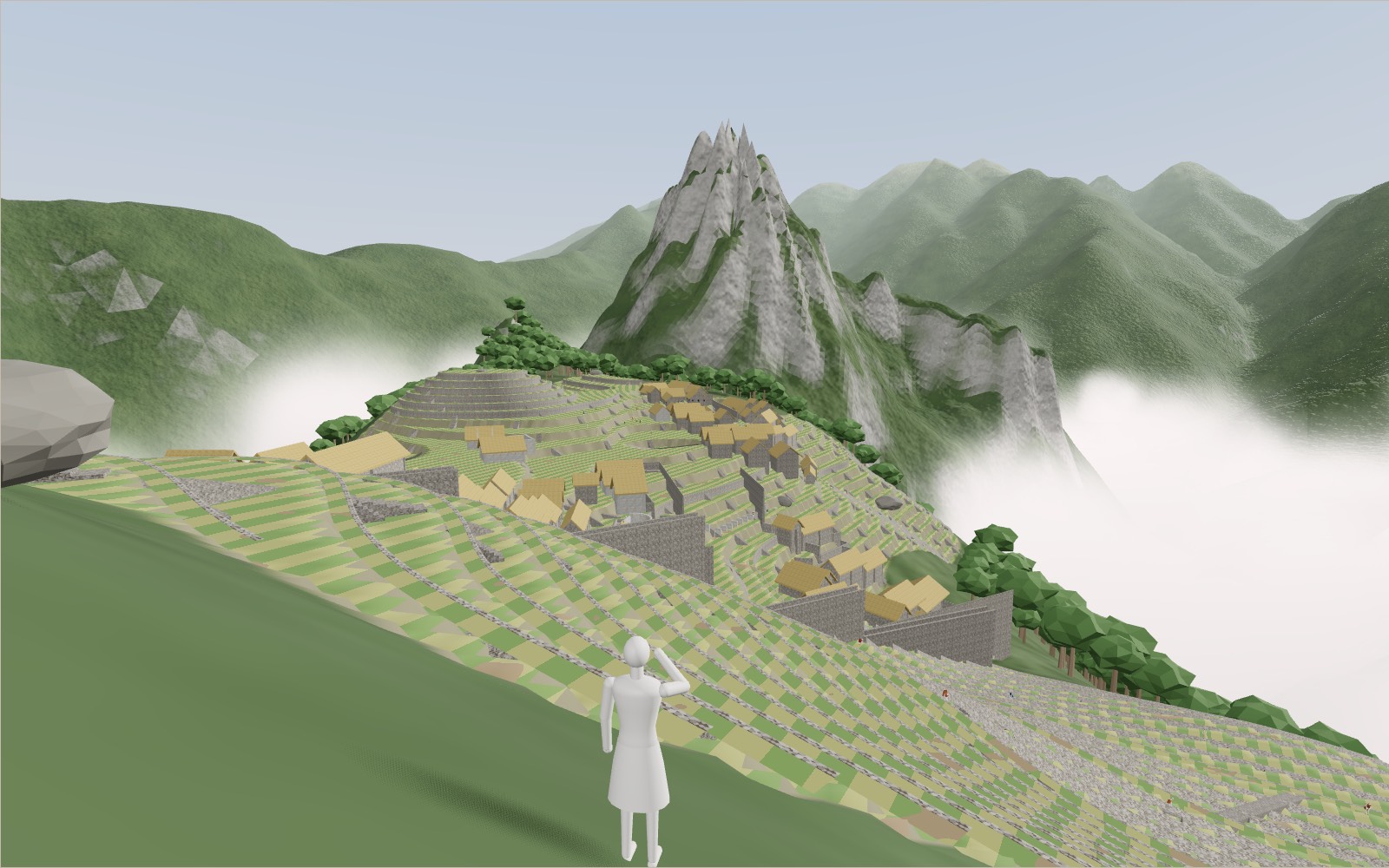
Most of the work that holds Machu Picchu on its ridge, 60 per cent by one estimate, lies under the ground in foundations and drains nobody sees.
Walk through Pompeii on its last day
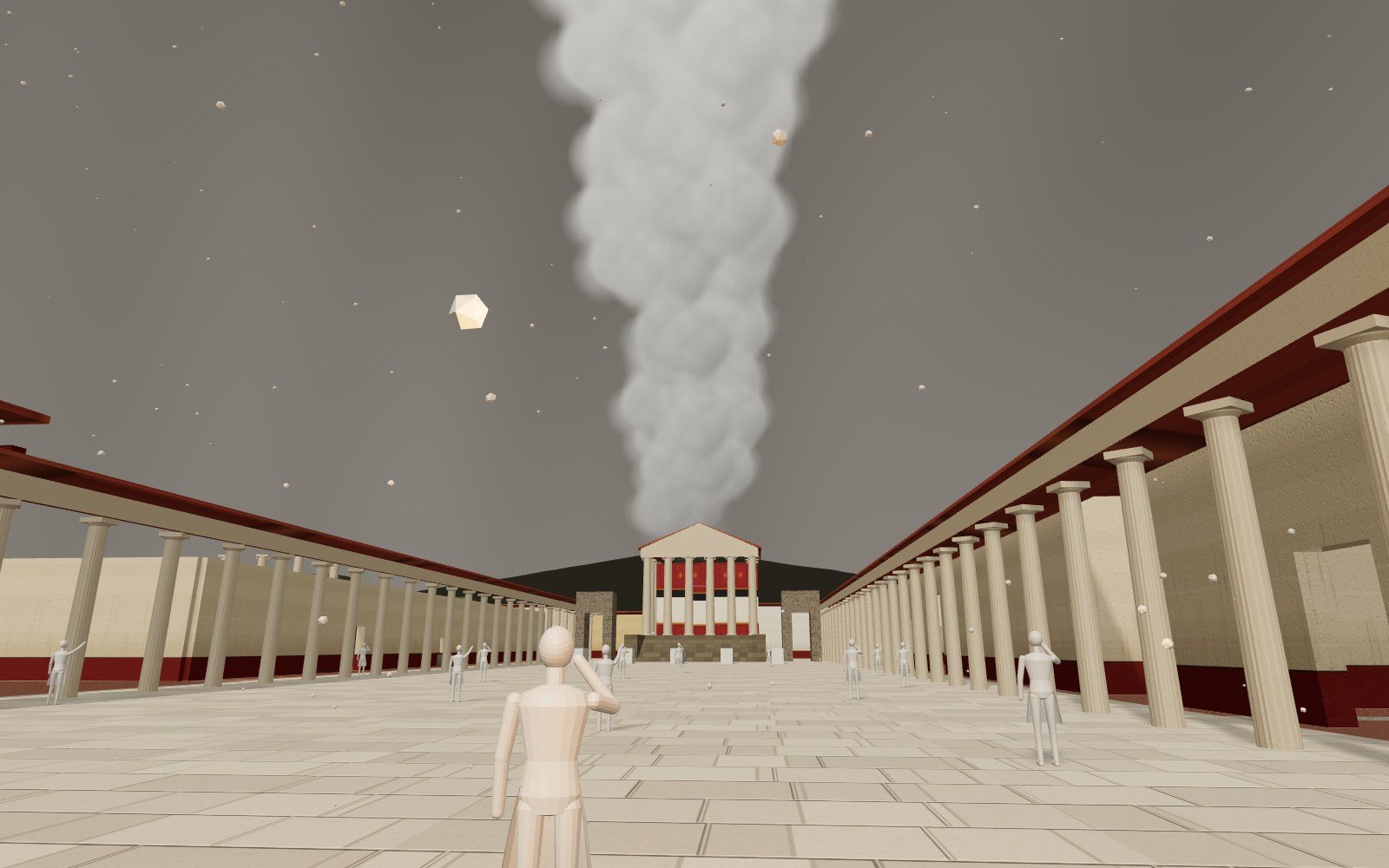
A walkable model of Pompeii with a clock from the first column of Vesuvius to the surge of the next morning, then to the ruins of today.
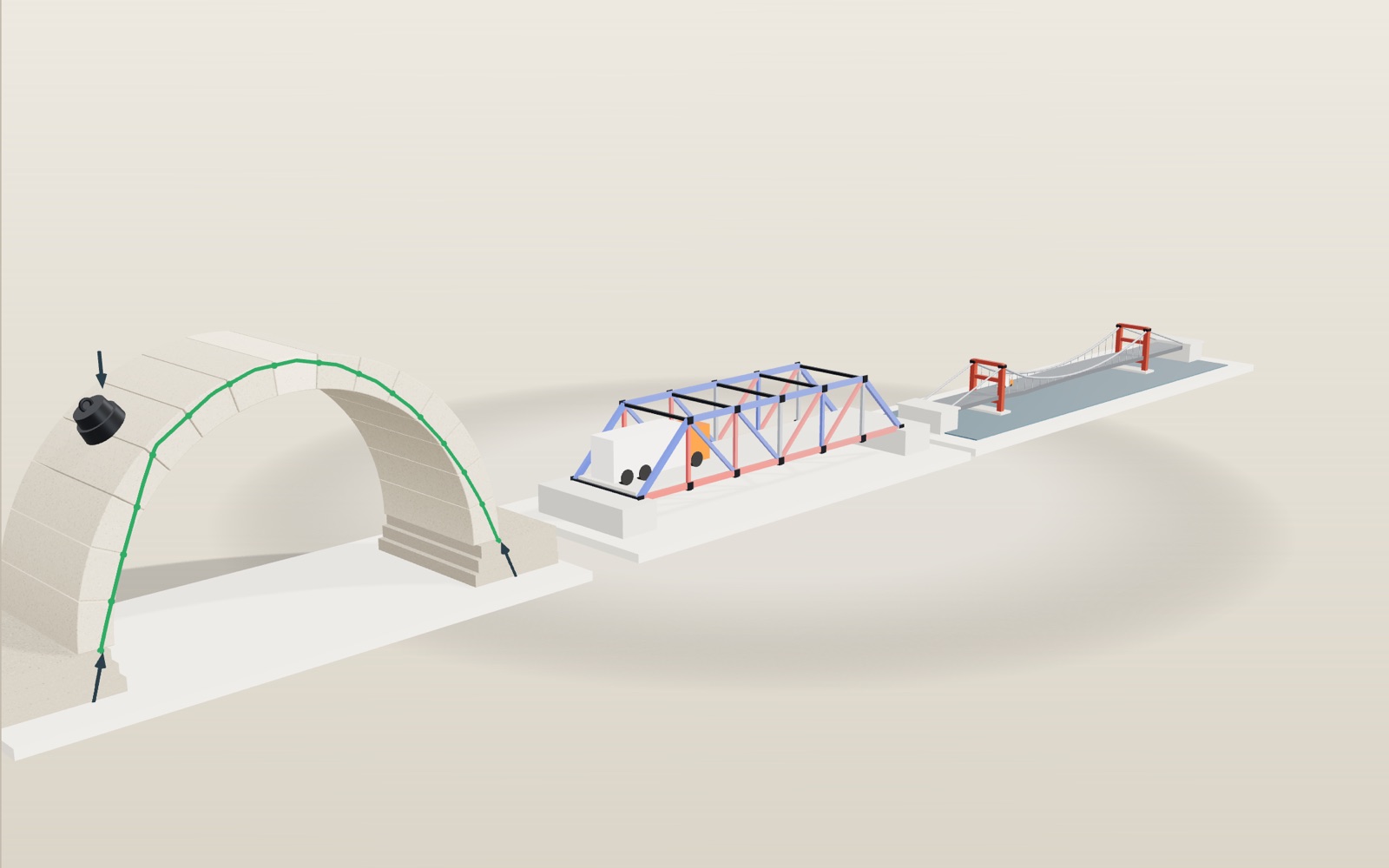
Stone arch bridge: load it and watch how it carries weight
A stone arch has no glue between its blocks, yet it stands on its own once the last stone is set at the top.
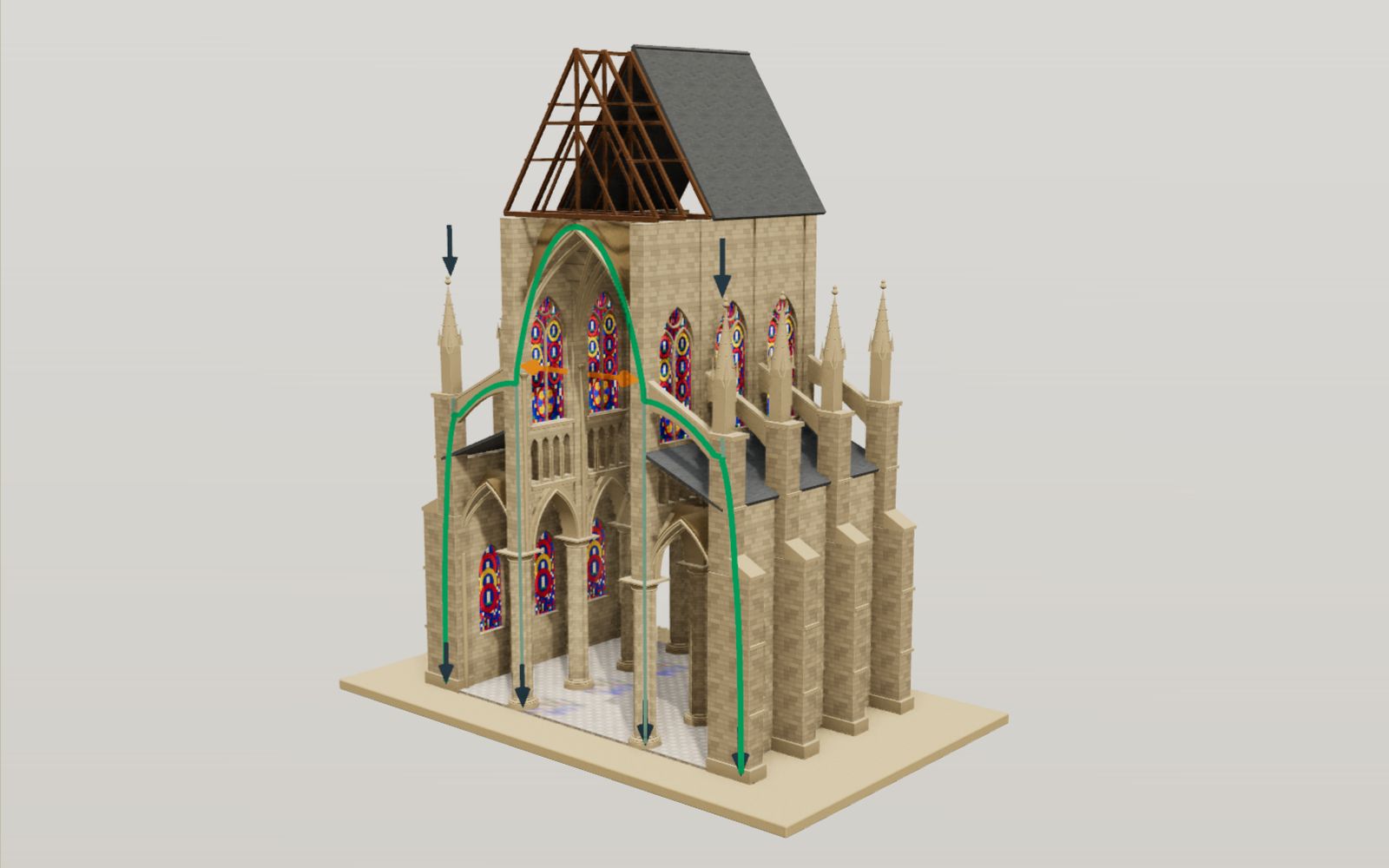
Gothic cathedral: flying buttresses, interactive model
The stone vault of Amiens Cathedral hangs 42.3 metres above the floor, and the walls under it are mostly glass.
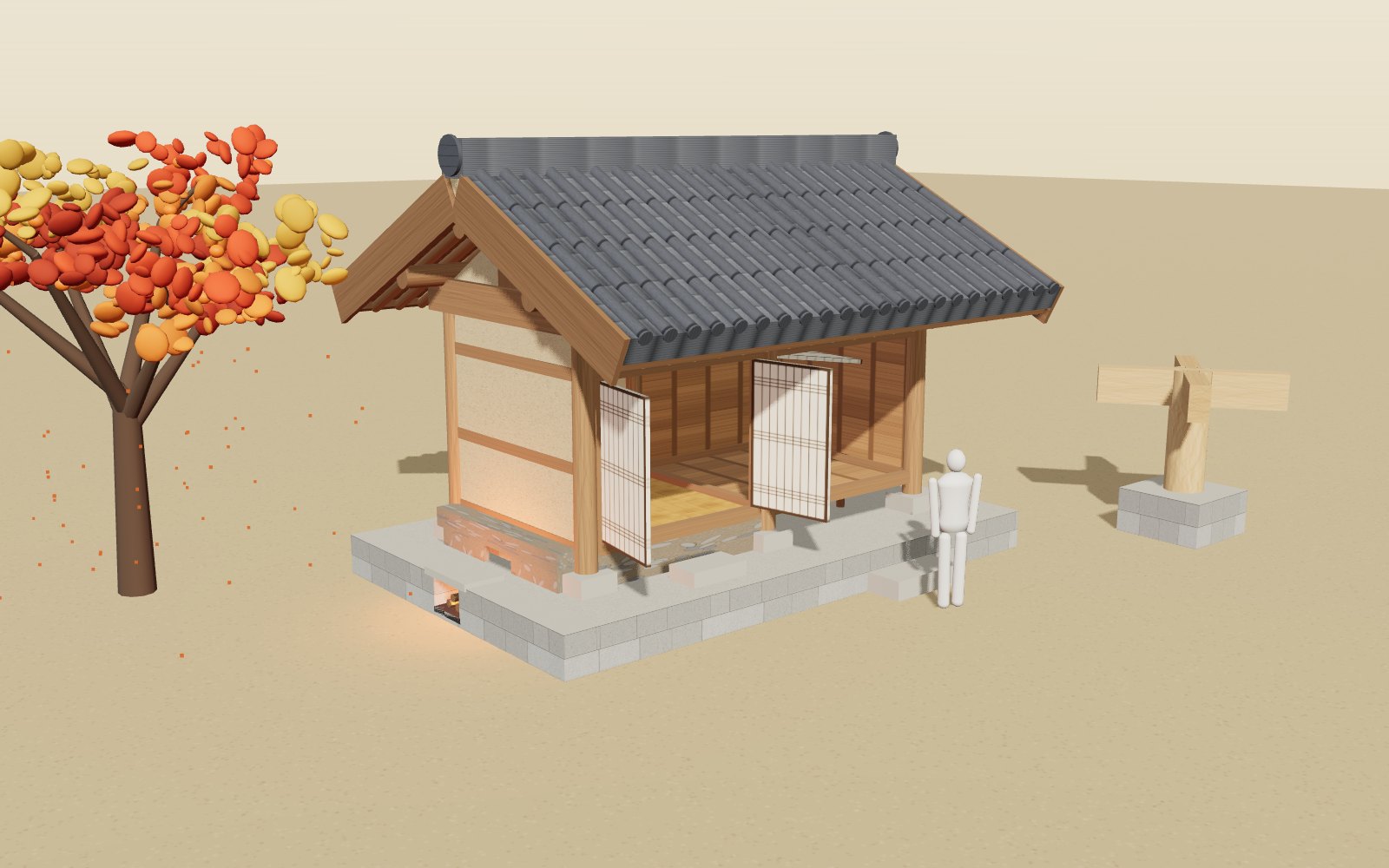
How a hanok is put together and heated by ondol
The frame of a hanok locks together with carved wooden joints, and under its warm room the smoke from one small fire runs through stone flues to the chimney.