FIG. 95Walk-throughs
Walk through Pompeii on its last day
A walkable model of Pompeii with a clock from the first column of Vesuvius to the surge of the next morning, then to the ruins of today.
This device cannot show the 3D model. You can read the guide steps below as text.
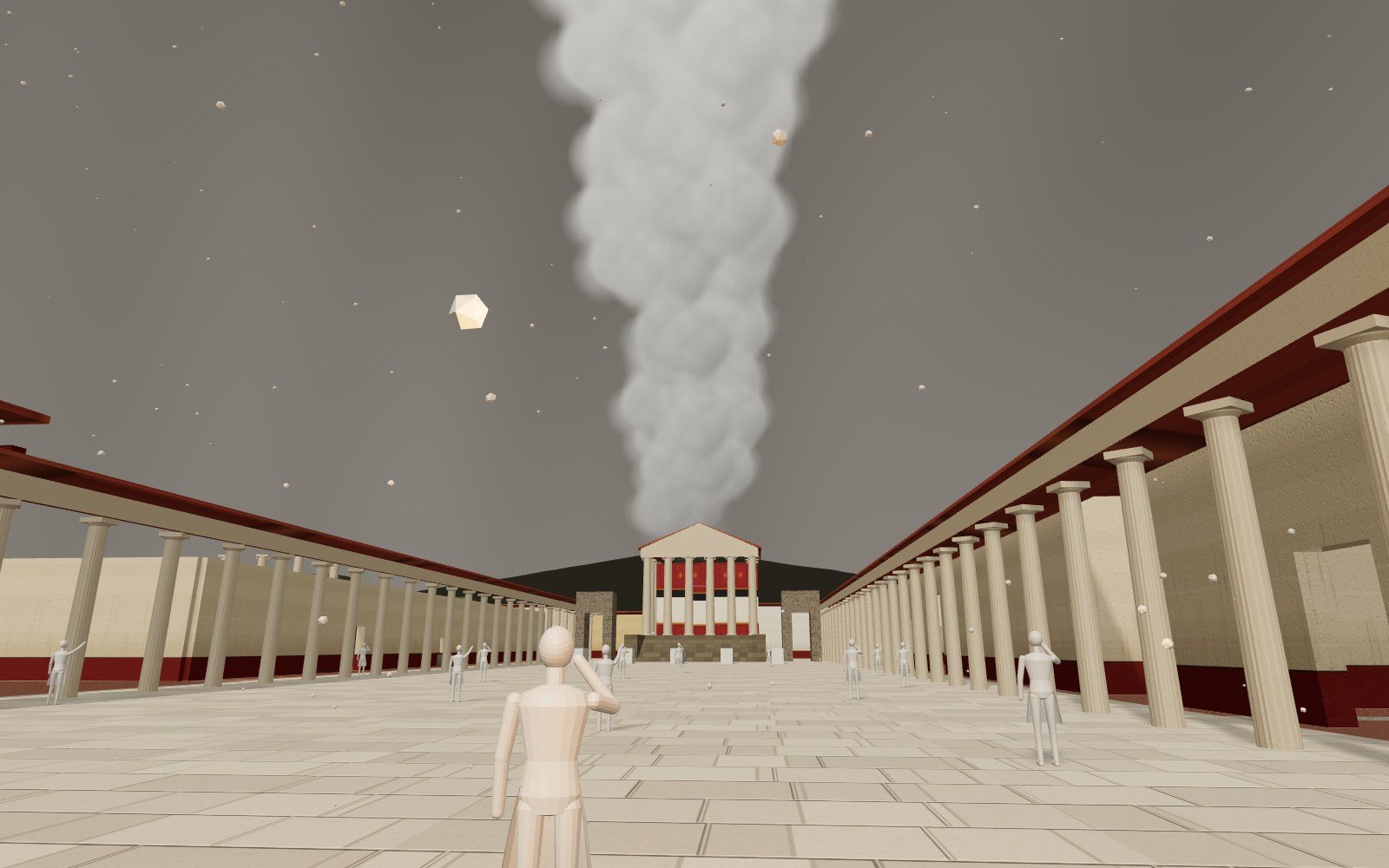
1 / 18 The column risesYou stand in the forum at about half past one in the afternoon. Behind the Temple of Jupiter a column of ash and pumice is rising out of Vesuvius, and the people in the square have stopped to look. The clock under the stage runs from the morning of the first day to the next morning, then to today.
Drag to turn. Scroll or pinch to zoom.
What you are walking through
Most people meet Pompeii as a set of photographs: a straight street of grey paving stones, broken walls on either side, and a dark mountain at the end. The photographs show what was left. They do not show the afternoon when a cloud rose over that mountain and the sky above the town went dark, or the night when people walked out of their houses on a layer of stones that came up to the door handles. This exhibit lets you stand in the town while that happens, and then move the clock forward to the ruins you can visit today.
The model is a walkable piece of the town, laid out after the plan of the excavations. The forum with the Temple of Jupiter sits in the south-west, the House of the Faun lies north of it on Via della Fortuna, a bakery and the Stabian Baths stand where the two main streets cross, Via dell'Abbondanza runs east with its bars and painted notices, and the amphitheatre fills the south-east corner. Outside the Marina Gate a road leads down to the shore. Vesuvius rises to the north-north-west, about 10 km away, as it does from the real forum.
The main control is the clock under the stage. It runs from eight in the morning of the first day to half past eight the next morning, and then makes one more step to today. As you move it, the column rises out of the mountain, the sky darkens from the north, pumice falls and piles up in the streets, roofs give way one by one, and in the early morning a cloud of hot ash rolls in from the north. The last step clears all of it away and shows the town as an excavation: no roofs, walls broken off at uneven heights, and visitors in the forum.
Around this there is a guide to 121 places of the Archaeological Park of Pompeii, 26 of them built in the model, 26 hidden cards to find, and twelve challenges whose answers come from the clock and the town.
The first ten seconds
The page opens at half past one in the afternoon, a few minutes after the column first appeared. You stand in the forum facing north. The Temple of Jupiter stands on its high podium at the far end of the square, and directly behind it a grey column is climbing out of Vesuvius and spreading at the top. The people in the square have stopped. Some look up, some point. The first pumice is beginning to fall, a few pale stones at a time, and the sky to the north is already darker than the sky behind you.
Nothing has to be clicked first. If you do nothing, the column keeps billowing and lightning flickers in the cloud now and then. If you drag the clock a little to the right, the darkness spreads overhead and the stones fall faster. Turn on the sound to hear the rumble, the stones landing and the thunder in the cloud.
Where Pompeii stood
Pompeii was a town of the Campanian plain on the Bay of Naples, on a spur of old lava near the mouth of the river Sarno. Vesuvius stood about 10 km to the north-north-west, Herculaneum lay on the coast on the other side of the mountain, and Stabiae lay further along the bay to the south. The park describes the Triangular Forum, one of the oldest sacred areas of the town, as standing on a ridge of lava rock above the valley and the mouth of the Sarno.
The town was walled. The wall is more than 3,200 m long, a double wall with a walkway, already standing in the 6th century BC, with twelve towers, more of them on the flat north side where the town was easiest to attack. Seven gates led out. The Marina Gate in the west is the most imposing: a vaulted passage with a tall arch for horses and pack animals and a lower one for people on foot. By the time of the eruption the walls had lost their military purpose, and some houses had been built over them, with terraces looking out to sea.
Archaeologists divide the town into nine regiones, numbered I to IX, and each regio into blocks (insulae) and doorways. According to the park about two thirds of the old town has been dug. The guide in this exhibit lists places by regio, so you can see how they cluster: the great houses of regio VI north of the forum, the shops and bars of regiones I and IX along Via dell'Abbondanza, the amphitheatre in regio II.
A morning in the town
Move the clock back to eight in the morning and walk. The forum is the centre of public life: the park calls it the focal point of the main buildings for government and justice, business and markets, and of the main places of worship. Its long sides have colonnades, its paving is travertine, and the Temple of Jupiter at the north end is lined up with Vesuvius, which rises behind it. On the west side lies the Sanctuary of Apollo, with the Mensa Ponderaria in a niche of its wall, the stone counter with hollows of fixed size used to check measures of grain, wine and oil. On the south-west corner stands the Basilica, used for business and the law courts. On the east side are the market hall (Macellum), the building that the priestess Eumachia paid for, and the Comitium, where votes were counted.
Out on Via dell'Abbondanza the town was a place of trade. Bars served hot food and drinks from large jars set into masonry counters; the park counts 89 of these thermopolia in the excavated part of the town. The town also had over 30 bakeries. Water came from the Serino aqueduct to a distribution tower at the highest point of the town, 42 m above sea level, and from there through pipes to about 40 street fountains.
The walls were covered in writing. Painted notices asked passers-by to vote for candidates for local office; the entrance pillars of the Comitium on Via dell'Abbondanza were covered with them, and the park calls the front of the House of Trebius Valens the most impressive example of mural advertising in the ancient world, with notices of elections and announcements of games in the amphitheatre. Scratched graffiti covered the walls of public buildings too: the park mentions many erotic or poetic lines left by visitors on the walls and columns of the Large Palaestra.
Moving the clock
The clock under the stage has three parts. The slider runs from 8 am on the first day to 8:30 am on the second day; the last notch is today. The play button runs the clock on its own at the speed set under Controls (twenty minutes of the eruption every second by default, slower around the fourth surge). The small marks along the slider are the events listed in the panel "The day on the clock", each with its own button to set the clock and its own sources.
A panel at the top left shows the day and hour, what is happening (the column rising, white pumice, grey pumice, surges), the height of the column and the depth of pumice at street level. It also says that the date is uncertain: the clock is labelled with the first and second day rather than with a calendar date, for reasons explained further down.
What the clock changes:
- the column: its height and its spreading top, and after midnight the collapsing base;
- the sky: the ash cloud spreading from the north, the light, the visibility, night;
- the pumice: falling stones around you and the depth of the layer in the streets, which you walk on;
- the roofs: each roof in the model has its own threshold and comes down when the pumice reaches it;
- the people: who stands, who looks up, who leaves for the gates;
- the fourth surge: a cloud of ash rolling across the town from the north early on the second morning;
- today: the excavated ruins, with the shape of the mountain as it is now.
How the eruption began
The only eyewitness account is two letters that Pliny the Younger wrote to the historian Tacitus. He was 17 and staying with his uncle, Pliny the Elder, at Misenum, at the north-western end of the bay, some 30 km from the mountain. In the first letter (Letters 6.16) he describes how, early in the afternoon, his mother drew his uncle's attention to a cloud of unusual size and shape. From that distance they could not tell which mountain it came from. He compared the cloud to a pine tree: it rose on a very long trunk and spread out at the top into branches, some of it white, some dark and blotched with earth and ash.
Volcanologists have matched this account to the layers the eruption left. Haraldur Sigurdsson and colleagues described the sequence in 1985. A small explosion probably dusted the volcano and the land to the east with ash early that day. The main eruption began shortly after noon, when a column of gas and fragments shot up from the vent and kept rising for many hours. This kind of eruption, a tall sustained column feeding a cloud that spreads in the stratosphere, is now called Plinian, after the letter.
In the exhibit the column appears at 1 pm and is about 14 km high 15 minutes later. The exact start is uncertain: the clock shows it with a range of half an hour either side.
How tall was the column?
Steven Carey and Haraldur Sigurdsson worked out the height of the column from the size of the largest pumice and rock fragments found at different distances in each layer of the deposit: the higher the column, the bigger the stones it can carry and the further it can carry them. Their 1987 reconstruction gives about 14 km at the start, about 26 to 27 km during the fall of white pumice, and a maximum of about 32 km soon after the pumice turned grey in the evening. In all the Plinian column ran for about 19 hours. A re-study of the deposit published in 2024 by Claudio Scarpati and colleagues divides it into twelve units and finds a column that fluctuated between 14 and 34 km over about 17 hours.
The model follows the 1987 curve and shows 32 km as the highest point. Turn on the column ruler under Controls to see marks every 5 km beside the column. Because the mountain is 10 km from the town, a 32 km column would stand at an angle of about 73 degrees above the horizon seen from the forum: you have to tilt your head right back to see the top, and the spreading cloud passes overhead.
To keep that angle and still fit everything into a scene, the model puts the mountain 1.7 km away and scales it and the column by the same factor of 0.17. Everything you see in the sky keeps its real angle; only the walking distance to the mountain is wrong. The panel under Me compares the column with your own height: at 32 km it is about 19,000 times as tall as a person of 1.7 m.
Pumice: what fell on the town
The wind in the upper air was blowing towards the south-east that day, straight over Pompeii. What fell was pumice, a volcanic rock so full of gas bubbles that it is light, mixed with a smaller share of denser fragments of older rock. For the first seven hours or so the pumice was white. In the evening the composition of the magma changed and the pumice turned grey and denser, while the column grew taller.
Sigurdsson and colleagues estimated that the layer at Pompeii grew by about 12 to 15 cm an hour. By about 1 am it was about 1.5 m deep, and by the time the fourth surge reached the town in the morning about 2.4 m. The full pumice deposit at Pompeii reaches about 2.8 m; the park's own page on the casts says about three metres, and in the Garden of the Fugitives by the Nocera Gate the pumice had reached 3.5 m when the people found there died.
The model uses these numbers. Pumice starts to fall at about a quarter to two, piles up at 13 cm an hour on average, and stops at 2.8 m. You can see the depth on the panel and on a pole at the corner of Via dell'Abbondanza and Via Stabiana, marked every 50 cm, with a figure of your own height standing beside it. Move the clock and you rise with the pumice: by the early morning you walk at the height of shop counters, and the doors are half buried.
The falling stones themselves probably killed few people in the town. What the pumice did was pile up, and pumice is heavy in bulk. That is what happened next.
Darkness, fire and lightning
Under the spreading cloud the town went dark in the middle of the afternoon. Sigurdsson and colleagues point out that Pompeii was in darkness hours before sunset, from the plume overhead. At Stabiae, Pliny writes, the next morning was still blacker and denser than any ordinary night, and people lit torches and lamps. He also describes broad sheets of fire and leaping flames on Vesuvius during the night, and in his second letter, from Misenum, flashes in the black cloud like lightning, only larger.
The exhibit draws the darkness from the north: the edge of the ash cloud moves across the sky from the mountain over the zenith towards the south as the afternoon goes on. Visibility drops, the sun disappears, and a warm lamp lights the street around you. After dark, fires glow on the slopes of the mountain, and lightning flickers in the column now and then. If the scene is too dark on your screen, the Brighter view switch under Controls lifts the light; it is a viewing aid, not part of the reconstruction.
Roofs give way
Pompeian houses had tiled roofs on timber. Sigurdsson and colleagues estimate that after two or three hours of fall the weight of the pumice began to bring roofs down, and that this must have led many people to leave their houses and the town. Giuseppe Luongo and colleagues studied in 2003 how the buildings of Pompeii failed under the load of the pumice and later under the surges.
The roofs in the model each have a random threshold. As the clock moves, they come down one by one: a few in the late afternoon, about a third by evening, most of them by morning. Seen from above the roofs (mode 3, Above the roofs), the town changes from a red patchwork of tiles to open courtyards full of grey stones. How many roofs fell at which hour is not known; the curve in the model is an estimate shaped to match "two to three hours" for the first failures.
The fall of pumice was itself deadly for some. Of the people found in Pompeii, 394 were in the pumice layer, nine in ten of them inside buildings, where roofs and floors collapsed on them. The exhibit does not show any of this. It shows the houses, and the cards say what happened in words.
Who left, and who stayed
Many people left. The exhibit shows this with its figures: at first they stop and look up; from the middle of the afternoon they walk towards the gates, holding cushions on their heads. The cushions come from Pliny's letter: at Stabiae, he writes, people tied pillows on their heads with cloths as protection against the falling stones.
Others stayed, sheltering indoors as the pumice piled up against the doors, or left late. Scarpati and colleagues suggest that after the first two weak surges a pulse of the column lasting 44 minutes may have helped the many Pompeians who tried to flee the town in the early morning. The thirteen people found in the Garden of the Fugitives had been trying to reach the Nocera Gate, walking over 3.5 m of pumice.
How many people lived in Pompeii, and how many escaped, is not known with any precision. The park says that the remains of over a thousand victims have been found in the excavations, and about a third of the town has not been dug. In the model the streets empty gradually through the night, and nobody is shown when the surge comes. That choice is ours: it keeps the dead out of a model you walk and play in, and it is not a claim that the streets were empty.
Surges and flows
After about twelve hours the eruption changed. The column could no longer hold up all the material it carried, and parts of it collapsed. The collapsing material raced down the slopes of the volcano as pyroclastic density currents: fast, hot, ground-hugging clouds of ash and gas. Sigurdsson and colleagues counted six surges and flows, numbered S1 to S6.
The first surge came after midnight. It went down the western slopes and reached Herculaneum, which so far had received only a light fall of ash. The second followed. The third reached the north-western walls of Pompeii but did not come in. The fourth, at about 7 am (the reconstruction gives 6:30 to 7:30), passed through the town. The fifth and sixth were the largest; they went further still, to Stabiae, where Pliny the Elder died, and their effects reached Misenum.
Giuseppe Mastrolorenzo and colleagues studied the fourth surge in detail in 2010. At Pompeii it was a dilute cloud that left a layer of ash only about 3 cm thick, but it caused most of the deaths in the town: 650 people were found in its deposit. They estimate that the cloud took between half a minute and two and a half minutes to pass, and that its temperature was between 250 and 600 °C. At Herculaneum, closer to the vent, the bones of the victims point to about 500 °C.
In the exhibit the fourth surge is shown as a wall of rolling ash puffs that crosses the town from the north as the clock moves through the half-hour before about 7 am. The clock shows it slowly so you can see it come; the real cloud would have crossed the model town in seconds. After it, the air is brown and thick, and the sky shows no light at all.
How did the people die? Two views
Two groups of researchers read the same evidence differently. Luongo and colleagues concluded in 2003 that the victims of the surges at Pompeii were killed by suffocation in the ash-laden air or by injuries. Mastrolorenzo and colleagues argued in 2010 that heat was the main cause: at least 250 °C, enough to kill within seconds even indoors. They base this on the postures of 93 well-preserved casts (most of them caught in mid-action, which they read as a sudden stiffening at death), on the colour and cracking of the bones, and on silverware whose lead-tin solder, which melts at about 250 °C, had melted. They also argue that the cloud passed too quickly for people to suffocate.
The park's page for the Garden of the Fugitives names both: the flight of the thirteen people found there was ended by a flow fatal "due to asphyxiation and high temperatures". The card in the exhibit gives both views and does not choose between them.
24 August or autumn?
The clock in this exhibit does not show a date, because the date is uncertain.
Pliny the Younger is the only ancient author who gives the day. The oldest manuscripts of his letter give "nonum kal. Septembres", the ninth day before the Kalends of September: 24 August AD 79. Some manuscripts have a gap where the month should be, and in others the letters n and v are hard to tell apart, so "non" could be read as "nov", November. From such readings later scholars built other dates: 1 November, 23 November, and in 1929 the date that most websites now give, 24 October. In 2022 Pedar Foss showed in a detailed study of the manuscripts that every date except 24 August is a modern invention, and that the 24 October date has "zero evidentiary basis". The park's director and colleagues summed this up in the park's own journal in 2024.
That does not mean 24 August is certain. Pliny could have been wrong, or an error could have entered the text before the two branches of the manuscripts split. And the excavations have long produced things that seem more autumnal than summery: braziers, dried fruit such as walnuts, figs, pomegranates and chestnuts, the remains of grape pressing, and heavy clothes on some of the victims. A coin found in the House of the Golden Bracelet was once read as dating from after September 79, but the reading of its worn inscription was questioned in 2013. Cassius Dio says the eruption came in autumn, but the Roman autumn began around 8 August, so that fits the August date too.
Then came the charcoal note. In 2018, excavations in the House with the Garden in regio V found an inscription in charcoal on the wall of the atrium: XVI K NOV, the 16th day before the Kalends of November, that is 17 October, without a year. It was announced as support for an October eruption, because charcoal seemed too fragile to last a year and the room seemed to be under active renovation. In October 2023 the park wrote a similar inscription with oak charcoal on the same wall and photographed it every month. On 24 August 2024, ten months later, it was still perfectly legible. The note could therefore have been written on 17 October 78, and the park now counts it among the things that cannot decide the question.
The exhibit has two cards about this. One sits by a charcoal note on a wall in the north of the model; the other is a small stone at the north end of Via Stabiana with the manuscript reading IX K SEPT. One of the challenges asks which date the oldest manuscripts give.
Pliny the Elder's last voyage
Pliny the Elder was admiral of the Roman fleet at Misenum and the author of the Natural History. When the cloud appeared he called for a boat to go and look. As he was leaving, a message came from Rectina, whose villa lay at the foot of the mountain and who could only escape by sea. He turned the expedition into a rescue and launched the large warships. Ash fell on the ships, then pumice and blackened stones, and the shore was blocked by debris. He went on to Stabiae, where he spent the night at a friend's house, and died the next day on the shore, overcome, as his nephew understood it, by the thick air. His body was found two days later.
The pier below the Marina Gate in the model is a place to stand and read his card. Whether Pompeii's own harbour lay there is another question, covered below.
The forum and the Temple of Jupiter
The forum began as an open space of beaten earth with the Sanctuary of Apollo on its west side and shops on its east. Between the 3rd and 2nd centuries BC it was regularised and surrounded by porticoes, and the Temple of Jupiter was set at its north end, lined up with Vesuvius. After the town became a Roman colony in 80 BC the temple was rebuilt as a Capitolium for Jupiter, Juno and Minerva, like the Capitol in Rome, on a high base so that the cult statues could be seen from the square. Two honorary arches stood beside it.
The park notes that when excavations began here, in 1813, it was clear that the forum had already been explored and stripped of its decorations in antiquity. The model shows the forum as it might have looked in the morning: colonnades, statue bases along the square, the temple with its columns and pediment. In the ruins of today the walls are broken off, but the columns of the porticoes stand, and Vesuvius is still there behind the temple.
The House of the Faun
The House of the Faun fills a whole block of about 3,000 m² and goes back in its first layout to the 2nd century BC. Its wealth showed from the street: the word HAVE (welcome) set in the pavement before the door, the doorway framed with decorated pillars, and the entrance floor inlaid with coloured marble. Inside are two atria and two peristyle gardens. In the pool of the main atrium stands the bronze dancing faun that gave the house its name; the park suggests that the figure plays on the family name of the owners, the Satrii. Between the two gardens, in an open room, lay the great mosaic of the battle between Alexander the Great and the Persian king Darius, from the 2nd century BC. The originals of the faun and the mosaic are in the National Archaeological Museum of Naples; copies are in the house.
In the model you enter by the HAVE in the pavement, find the faun in the atrium (one of the challenges), and walk through the first garden to the room with the mosaic. The mosaic in the model is an impression, a pattern of riders and spears in the colours of the original, not a copy of it.
Nearby, at the door of the House of the Tragic Poet, a floor mosaic shows a dog on a chain with the words CAVE CANEM, "beware of the dog". It is one of the hidden finds.
Bakeries and bread
A Pompeian bakery ground its own flour. The Bakery of Popidius Priscus has five large lava mills, each made of two parts: a fixed cone below (the meta) and an hourglass-shaped stone above (the catillus), into which grain was poured. Slaves or animals turned the upper stone, and flour fell out below. Bread was baked in a large oven in the middle of the building and sold on the spot, or, where there was no counter, sold wholesale or by street vendors. The House of the Oven became a bakery with four lava mills after the earthquake of AD 62; in the Insula of the Chaste Lovers the skeletons of mules that turned the mills were found in the stable next to the bakery.
The bread itself survives in carbonised form. The Herculaneum park shows round loaves with radial cuts that made them easy to break into portions, some of them stamped with a mark. In the model the oven ledge holds a row of such loaves, and one challenge asks how many mills the bakery has.
The Stabian Baths
The Stabian Baths, at the crossing of Via dell'Abbondanza and Via Stabiana, date back to the 2nd century BC and are among the oldest baths known from the Roman world. You enter from Via dell'Abbondanza into a large courtyard for exercise, with a pool on the left and a colonnade on the right. The men's rooms follow in order of warmth: the changing room (apodyterium), the cold bath (frigidarium), the warm room (tepidarium) and the hot room (caldarium). Hot air from the furnaces ran in pipes in the walls and under double floors. The women's rooms were smaller and plainer, with a separate entrance marked MULIER on the side street.
In the model the hot room has part of its floor left open, so you can see the small brick pillars that held the floor up and let hot air pass beneath. The round cold bath is next to it. In the ruins of today these rooms are roofless and the plaster has mostly gone.
Via dell'Abbondanza
The model's main street has several things you can find. Stepping stones cross it at pavement height; one challenge is to cross on them. Asellina's bar has a counter with four jars set into its marble top and a small oven with a bronze boiler; the names of Asellina and the women who worked with her, Aegle, Maria and Zmyrina, are painted on the front, and 22 wine amphorae were found at the back. A newer find in regio V, excavated between 2018 and 2020, has a painted counter with a sea nymph riding a sea horse, ducks, a rooster and a dog on a lead.
At the Fullery of Stephanus clothes were washed and fabric was degreased. Workers, almost all of them slaves, trod the cloth for hours in tubs of water mixed with human and animal urine, collected in pots along the streets. The roof of the atrium became a terrace for drying the laundry. At the door of the House of Siricus, on Via Stabiana, the floor greets visitors with SALVE LUCRU, "Welcome, money!".
The amphitheatre
The amphitheatre in the south-east corner of the town was built in 70 BC by the magistrates Gaius Quinctius Valgus and Marcus Porcius, who also built the small covered theatre. It could hold up to 20,000 spectators from Pompeii and the towns around, and it is the oldest of all the Roman amphitheatres known, so it is older than the Colosseum in Rome. Spectators reached the upper rows by double stairways on the outside and the lower rows by a corridor going down. A parapet painted with gladiators separated the arena from the seats.
In AD 59 a fight broke out during games between people from Pompeii and from neighbouring Nuceria. The Senate in Rome closed the arena for ten years; the park says the ban was lifted after the earthquake of 62. The gladiators' associations were also dissolved after the riot.
In the model you can enter through the tunnels at either end, which slope down to the arena floor, or climb the stair on the west side to the top of the seats. The painted panel on the parapet at the north end is one of the hidden finds.
A town under repair
Pompeii in AD 79 was full of building work. An earthquake in AD 62 (some ancient sources give 63) had damaged much of the town, and relief panels in the household shrine of the banker Caecilius Iucundus show public buildings shaking in it. The water tower was damaged and does not seem to have been in use in 79. The Central Baths, the largest bath complex in the town, were still under construction when the volcano erupted: the pools have no marble, and capitals and columns lie in the rooms where the masons left them. In the House of the Red Walls some rooms had only bare plaster. In the Insula of the Chaste Lovers the redecoration of a room stopped at the drawing stage, perhaps after an earthquake a few days earlier.
In the model the Central Baths stand unfinished south of Via dell'Abbondanza, with column drums lying on the ground and scaffolding poles against the wall.
The casts
During the excavations the remains of over a thousand people have been found. Those killed by the pumice were found as skeletons. Those killed by the surges were covered by fine ash that later hardened around their bodies; as the bodies decayed they left hollows. From 1863 Giuseppe Fiorelli poured plaster into these hollows, and since then a little over a hundred casts have been made. They are displayed in the park, some where the people were found.
The exhibit does not show the casts or any likeness of them. People in the model are faceless figures that stand for the living town; the cards about the casts are text only, on plain stone plaques at the south edge of the town.
In 2024 a study led by Elena Pilli, David Caramelli, David Reich and Alissa Mittnik read the DNA of bone fragments inside five casts. Some long-told stories turned out to be wrong: an adult wearing a gold bracelet and holding a child, described for decades as a mother and her child, was a man who was not related to the child. The study also found that the people sampled descended mostly from recent migrants from the eastern Mediterranean. The authors note that the casts have been moved and restored over the years, and warn against reading sex or family ties from jewellery or closeness alone.
The harbour and the sea
Where Pompeii's harbour lay is still debated. The park describes the Sanctuary of Venus as standing on a terrace overlooking "the bay where the harbour was to be situated", and the Doric Temple as standing on the spur above the bay. The buildings at Moregine, about 600 m from the town, lay by the river port of the Sarno. The coast has also changed since 79: the park describes the Villa of Diomedes as facing the ancient coastline. The pier, the boats and the stacked amphorae in the model are a reconstruction, not a plan of a known harbour.
Outside the Marina Gate the Suburban Baths, built against the town wall below the gate, were private baths. The houses on the western edge, such as the House of the Golden Bracelet and the Villa Imperiale, stepped down the slope in terraces towards the sea.
Vesuvius before 79
Vesuvius today is a cone inside the broken ring of Monte Somma. What it looked like before 79 is not known. A wall painting from the House of the Centenary shows Bacchus, covered in grapes, beside a single steep mountain clothed in vines, and it is often taken to be Vesuvius before the eruption. Sigurdsson and colleagues mention it together with a painting from Herculaneum that shows two summits. Some scholars doubt that the painting shows Vesuvius at all.
The model shows a single cone in 79 and the Somma ring with its inner cone today. The 79 shape is an estimate based on the painting.
No lava
A common picture of the disaster has rivers of lava running through the streets. Lava did not reach Pompeii. The town was buried by pumice that fell from the sky and by the ash of the surges that followed. At the north edge of the model an unexcavated bank shows a section through the deposit: white pumice at the bottom, grey pumice above it, a thin layer of ash from the fourth surge, thicker ash from the later surges, and later deposits and soil on top. The thickness of the pumice and the thin layer of the fourth surge follow the studies cited; the layers above are drawn at the model's own thickness.
From 1748 to today
Excavations at Pompeii began in 1748 and went on in fits and starts, with an eye for statues and paintings, until Giuseppe Fiorelli began to dig systematically and keep detailed records in the 19th century. The Temple of Isis, found almost intact in 1764, did much to make Pompeii famous. Bombs damaged parts of the site in 1943, destroying among other things the front of the House of Trebius Valens and many casts. Since 2018 new excavations in regio V have brought out houses, a bar with a painted counter, and the charcoal note discussed above.
The last step of the clock shows the town as it is now: no roofs, walls broken off at uneven heights, plaster mostly gone except near the ground, the columns of the forum still standing, and visitors in the square. The broken tops follow a pattern made in the model, not a survey of real walls.
How the model differs from reality
- Distances. The real town is about 1.2 km across; the model is pressed into about 530 m inside the walls. The order of places follows the real plan, but streets are shorter and fewer, and there are fewer blocks between the landmarks.
- Ordinary houses. Apart from the 26 places built from the park's descriptions, the houses are generated: plastered fronts with shop openings on the main streets, a court in the middle, rooms around it, roofs sloping inward. They are typical, not portraits of real houses.
- The volcano. Vesuvius and the column are placed 1.7 km away and scaled by 0.17, so that the angles you see are right while the scene stays small.
- The clock. The heights, depths and hours come from reconstructions with uncertainties of tens of minutes and tens of centimetres. Ranges are shown on the events, and the model takes one value inside each.
- Roofs. When each roof fell is an estimate.
- People. The figures are smooth mannequins without faces, in a simple tunic. Their number and when they leave are illustrations, not counts.
- Paintings and mosaics. CAVE CANEM, HAVE, SALVE LUCRU and the election notices are drawn after the originals; the Alexander mosaic and the painted mountain are impressions only.
- The harbour. The pier and boats are a reconstruction.
Moving around
Walk with WASD or the arrow keys, hold Shift to run, and drag to look around; click on the ground to walk to that spot. On a phone, the left thumb walks and the right thumb looks. Three modes sit at the bottom right: walk, run, and Above the roofs, which lifts your eyes to 30 m. The map at the top left shows the model town; click it to go to a place, and press the corner button for a larger map. Under Me you can enter your height: the orange figure at the pumice pole takes your height, and the panel tells you at what hour the pumice would reach it. Photo hides the labels so you can frame a picture and save it.
Keyboard: 1, 2 and 3 switch modes, G opens the places guide, T the challenges, F the hidden finds, M the large map, P photo mode, and the comma and full stop keys move the clock back and forward by 15 minutes.
The guided tour, challenges and finds
The guided tour has 18 steps: the column from the forum and from the temple steps, the ruler, pumice at the pole, roofs from above, the bakery, the House of the Faun and the Alexander mosaic in the morning, the baths, the street, the amphitheatre, the town at one in the morning, the shore, the fourth surge, the section, the charcoal note, the forum today, and the panels.
Places lists 121 sites from the pages of the Archaeological Park of Pompeii, with filters by regio and kind, and the year when each was first excavated. Hidden finds are 26 cards placed in the town; walk up to one and look at it to open it. Eight of them are marked "In fact" and turn a common story around: the date, the water tower, the town under repair, the oldest amphitheatre, the DNA of the casts, the shape of the mountain, the absence of lava and the charcoal note. Challenges are twelve questions; solved ones are kept in your browser.
Questions
When did Vesuvius erupt and destroy Pompeii?
In AD 79. The oldest manuscripts of Pliny the Younger's letter give 24 August. Many finds look autumnal, and some scholars argue for a date in autumn, but the 24 October date often repeated online has no basis in the manuscripts.
How long did the eruption last?
The sustained column lasted about 17 to 19 hours, from shortly after noon on the first day to the early morning of the second, according to Carey and Sigurdsson (1987) and Scarpati and colleagues (2024). The surges and flows came in the last hours.
How high did the column go?
About 32 km at its highest in the reconstruction of Carey and Sigurdsson; a 2024 study gives a column fluctuating between 14 and 34 km.
How deep was the pumice in Pompeii?
About 2.8 m in all, according to Sigurdsson and colleagues; the park says about three metres, and 3.5 m was measured by the Nocera Gate. It grew by about 12 to 15 cm an hour.
Did lava destroy Pompeii?
No. Pompeii was buried by falling pumice and by the ash of pyroclastic surges. Lava did not reach the town.
What killed the people of Pompeii?
Some were killed during the pumice fall, mostly inside buildings when roofs and floors collapsed: 394 were found in the pumice. Most were killed by the fourth surge early on the second morning: 650 were found in its deposit. Whether they died mainly from heat or from suffocation is debated.
How many people died?
The remains of over a thousand people have been found in the excavated two thirds of the town. Others died elsewhere around the bay, and many inhabitants probably got away, but no reliable total exists.
Why didn't people leave?
Many did. The darkness, the falling stones and the collapsing roofs drove people out during the afternoon and night, and others tried to leave in the early morning, walking over the pumice. Some sheltered indoors; the first surges did not reach the town, and the fourth came suddenly.
What are the plaster casts?
Hollows left in the hardened ash by the bodies of people killed by the surges, filled with plaster from 1863 onwards. A little over a hundred have been made. They contain bones, and a 2024 DNA study showed that some of the stories told about them were wrong.
What did Pompeii look like before the eruption?
A walled town with paved streets, a forum, temples, theatres, baths, an amphitheatre, many shops and bars, and large houses decorated with paintings and mosaics. The model shows a part of it in the morning.
Was Pompeii by the sea?
It stood near the coast and near the mouth of the river Sarno. Where exactly its harbour lay is debated; buildings at Moregine, about 600 m from the town, stood by the river port.
How much of Pompeii has been excavated?
About two thirds of the town. Excavations began in 1748, and new areas, such as part of regio V, have been dug since 2018.
Why does the exhibit not show the casts?
They are the remains of people who died. The exhibit lets you walk and play in the town, and putting the dead into that would be wrong. The cards describe the casts in words, and the park displays them with care.
Did Herculaneum suffer the same fate?
Herculaneum, on the western side of the volcano, received little ash during the first phase but was reached by the first surge after midnight. Studies of the victims' bones point to temperatures of about 500 °C.
What is the Alexander mosaic?
A floor mosaic of the 2nd century BC in the House of the Faun showing the battle between Alexander the Great and the Persian king Darius. The original is in the National Archaeological Museum of Naples; a copy lies in the house.
What was a thermopolium?
A bar or cook shop that served hot food and drinks from jars set into a masonry counter. The park counts 89 of them in the excavated part of Pompeii, and notes that they were used mostly by people of modest means, not by the owners of the large houses.
Terms
- Plinian eruption: an explosive eruption with a tall, sustained column, named after Pliny the Younger's letters.
- Pumice: light volcanic rock full of gas bubbles; at Pompeii it fell as lapilli, stones of a few millimetres to a few centimetres.
- Pyroclastic density current: a fast, hot cloud of ash, rock and gas flowing along the ground; dilute ones are called surges, dense ones flows.
- Regio: one of the nine districts into which archaeologists divide Pompeii.
- Atrium: the main hall of a Roman house, open to the sky in the middle above a pool (impluvium).
- Peristyle: a garden surrounded by a colonnade.
- Thermopolium: a bar or cook shop serving hot food and drink from jars set in a counter.
- Kalends: the first day of a Roman month; dates were counted backwards from it.
- Lararium: a household shrine.
Sources
- Archaeological Park of Pompeii, Forum, and the park's pages for 120 other places used in the guide. https://pompeiisites.org/en/archaeological-site/forum/ (checked 19 October 2026)
- Archaeological Park of Pompeii, Temple of Jupiter. https://pompeiisites.org/en/archaeological-site/temple-of-jupiter/ (checked 19 October 2026)
- Archaeological Park of Pompeii, House of the Faun. https://pompeiisites.org/en/archaeological-site/house-of-the-faun/ (checked 19 October 2026)
- Archaeological Park of Pompeii, Bakery of Popidio Prisco. https://pompeiisites.org/en/archaeological-site/bakery-of-popidio-prisco/ (checked 19 October 2026)
- Archaeological Park of Pompeii, Stabian Baths. https://pompeiisites.org/en/archaeological-site/stabian-baths/ (checked 19 October 2026)
- Archaeological Park of Pompeii, Amphitheater. https://pompeiisites.org/en/archaeological-site/amphitheater/ (checked 19 October 2026)
- Archaeological Park of Pompeii, Marina Gate and walls. https://pompeiisites.org/en/archaeological-site/marina-gate-and-walls/ (checked 19 October 2026)
- Archaeological Park of Pompeii, Castellum Aquae. https://pompeiisites.org/en/archaeological-site/castellum-aquae/ (checked 19 October 2026)
- Archaeological Park of Pompeii, Thermopolium (89 thermopolia, two thirds excavated). https://pompeiisites.org/en/archaeological-site/thermopolium/ (checked 19 October 2026)
- Archaeological Park of Pompeii, Central Baths. https://pompeiisites.org/en/archaeological-site/central-baths/ (checked 19 October 2026)
- Archaeological Park of Pompeii, Garden of the Fugitives. https://pompeiisites.org/en/archaeological-site/garden-of-the-fugitives/ (checked 19 October 2026)
- Archaeological Park of Pompeii, Large Palaestra (graffiti; Moregine and the river port). https://pompeiisites.org/en/archaeological-site/large-palaestra/ (checked 19 October 2026)
- Archaeological Park of Pompeii, Sanctuary of Venus. https://pompeiisites.org/en/archaeological-site/sanctuary-of-venus/ (checked 19 October 2026)
- Archaeological Park of Pompeii, House of Trebio Valente (painted notices). https://pompeiisites.org/en/archaeological-site/house-of-trebio-valente/ (checked 19 October 2026)
- Archaeological Park of Pompeii, The Casts. https://pompeiisites.org/en/pompeii-map/analysis/the-casts (checked 19 October 2026)
- Archaeological Park of Pompeii, The Regio V excavations (charcoal inscription). https://pompeiisites.org/wp-content/uploads/REGIO-V-EXCAVATIONS-ENG.pdf (checked 19 October 2026)
- Zuchtriegel, G., Comegna, C., Conte, F. and Russo, A., La data della distruzione di Pompei: premesse per un dibattito aperto, E-Journal degli Scavi di Pompei 27 (2024). https://pompeiisites.org/e-journal-degli-scavi-di-pompei/la-data-della-distruzione-di-pompei-premesse-per-un-dibattito-aperto/ (checked 19 October 2026)
- Foss, P. W., Pliny and the Eruption of Vesuvius, Routledge (2022). https://www.routledge.com/Pliny-and-the-Eruption-of-Vesuvius/Foss/p/book/9781032225418 (checked 19 October 2026)
- Pliny the Younger, Letters 6.16 and 6.20, English translation, York University. https://www.yorku.ca/pswarney/2100/pliny-6-16-20.htm (checked 19 October 2026)
- Pliny the Younger, Letters 6.16 and 6.20, English translation, University of Arkansas. https://cmuntz.hosted.uark.edu/texts/pliny-the-younger/the-eruption-of-vesuvius.html (checked 19 October 2026)
- Sigurdsson, H., Carey, S., Cornell, W. and Pescatore, T., The eruption of Vesuvius in A.D. 79, National Geographic Research (1985). https://digitalcommons.uri.edu/gsofacpubs/1114/ (checked 19 October 2026)
- Carey, S. and Sigurdsson, H., Temporal variations in column height and magma discharge rate during the 79 A.D. eruption of Vesuvius, Geological Society of America Bulletin (1987). https://doi.org/10.1130/0016-7606(1987)99%3C303:TVICHA%3E2.0.CO;2 (checked 19 October 2026)
- Scarpati, C., Chiominto, G., Santangelo, I. et al., The AD 79 Vesuvius eruption revisited: Plinian and post-Plinian falls, Journal of the Geological Society (2024). https://doi.org/10.1144/jgs2024-071 (checked 19 October 2026)
- Doronzo, D. M., Di Vito, M. A., Arienzo, I. et al., The 79 CE eruption of Vesuvius: A lesson from the past and the need of a multidisciplinary approach for developments in volcanology, Earth-Science Reviews (2022). https://doi.org/10.1016/j.earscirev.2022.104072 (checked 19 October 2026)
- Luongo, G., Perrotta, A. and Scarpati, C., Impact of the AD 79 explosive eruption on Pompeii, I, Journal of Volcanology and Geothermal Research (2003). https://doi.org/10.1016/S0377-0273(03)00146-X (checked 19 October 2026)
- Luongo, G., Perrotta, A., Scarpati, C. et al., Impact of the AD 79 explosive eruption on Pompeii, II. Causes of death of the inhabitants, Journal of Volcanology and Geothermal Research (2003). https://doi.org/10.1016/S0377-0273(03)00147-1 (checked 19 October 2026)
- Mastrolorenzo, G., Petrone, P., Pappalardo, L. and Guarino, F. M., Lethal thermal impact at periphery of pyroclastic surges: evidences at Pompeii, PLoS ONE (2010). https://doi.org/10.1371/journal.pone.0011127 (checked 19 October 2026)
- Mastrolorenzo, G., Petrone, P., Pagano, M. et al., Herculaneum victims of Vesuvius in AD 79, Nature (2001). https://doi.org/10.1038/35071167 (checked 19 October 2026)
- Pilli, E., Vai, S., Moses, V. C. et al., Ancient DNA challenges prevailing interpretations of the Pompeii plaster casts, Current Biology (2024). https://doi.org/10.1016/j.cub.2024.10.007 (checked 19 October 2026)
- Harvard Medical School, Ancient DNA challenges stories told about Pompeii victims (2024). https://hms.harvard.edu/news/ancient-dna-challenges-stories-told-about-pompeii-victims (checked 19 October 2026)
- Herculaneum Archaeological Park, Daily bread (carbonised loaves). https://ercolano.cultura.gov.it/sala-pane/?lang=en (checked 19 October 2026)
- Behncke, B., Vesuvio: The eruption of A.D. 79, Michigan Technological University volcano pages. https://www.geo.mtu.edu/volcanoes/boris/mirror/mirrored_html/VESUVIO_79.html (checked 19 October 2026)
More exhibits
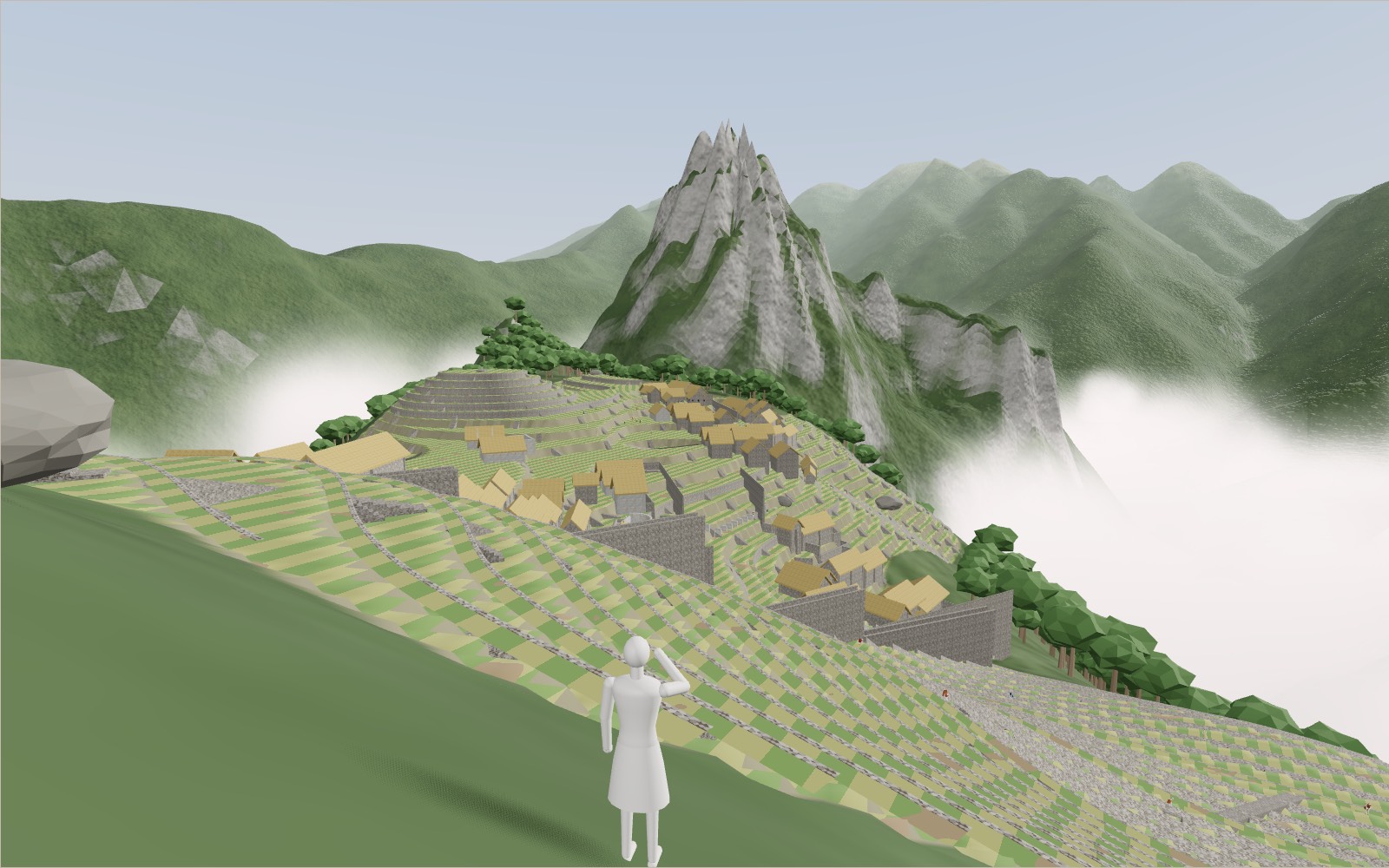
Walk through Machu Picchu
Most of the work that holds Machu Picchu on its ridge, 60 per cent by one estimate, lies under the ground in foundations and drains nobody sees.
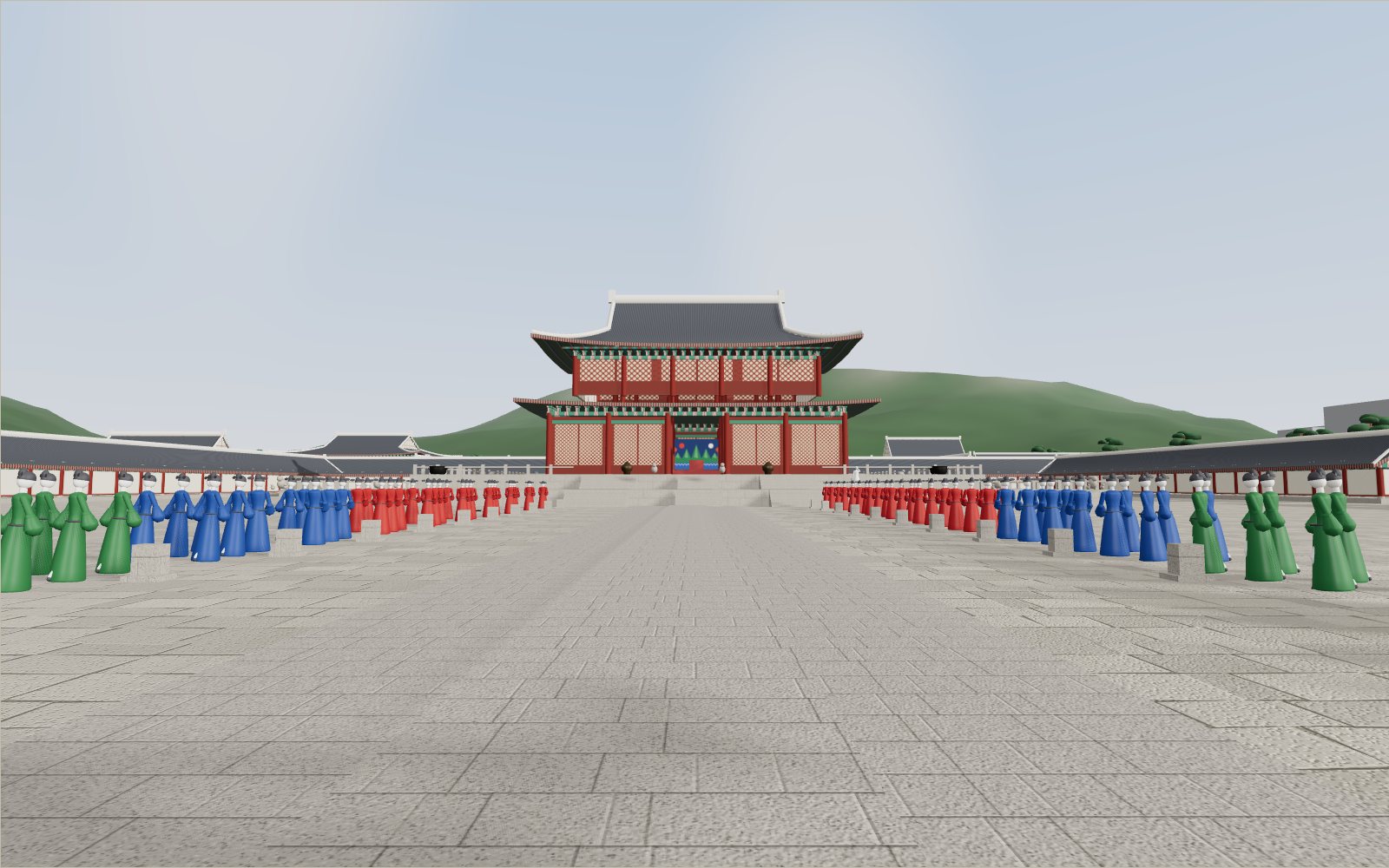
Walk through Gyeongbokgung Palace
In the courtyard of the throne hall, 24 stones told each official where to stand, from the first grade by the hall to the ninth by the gate.
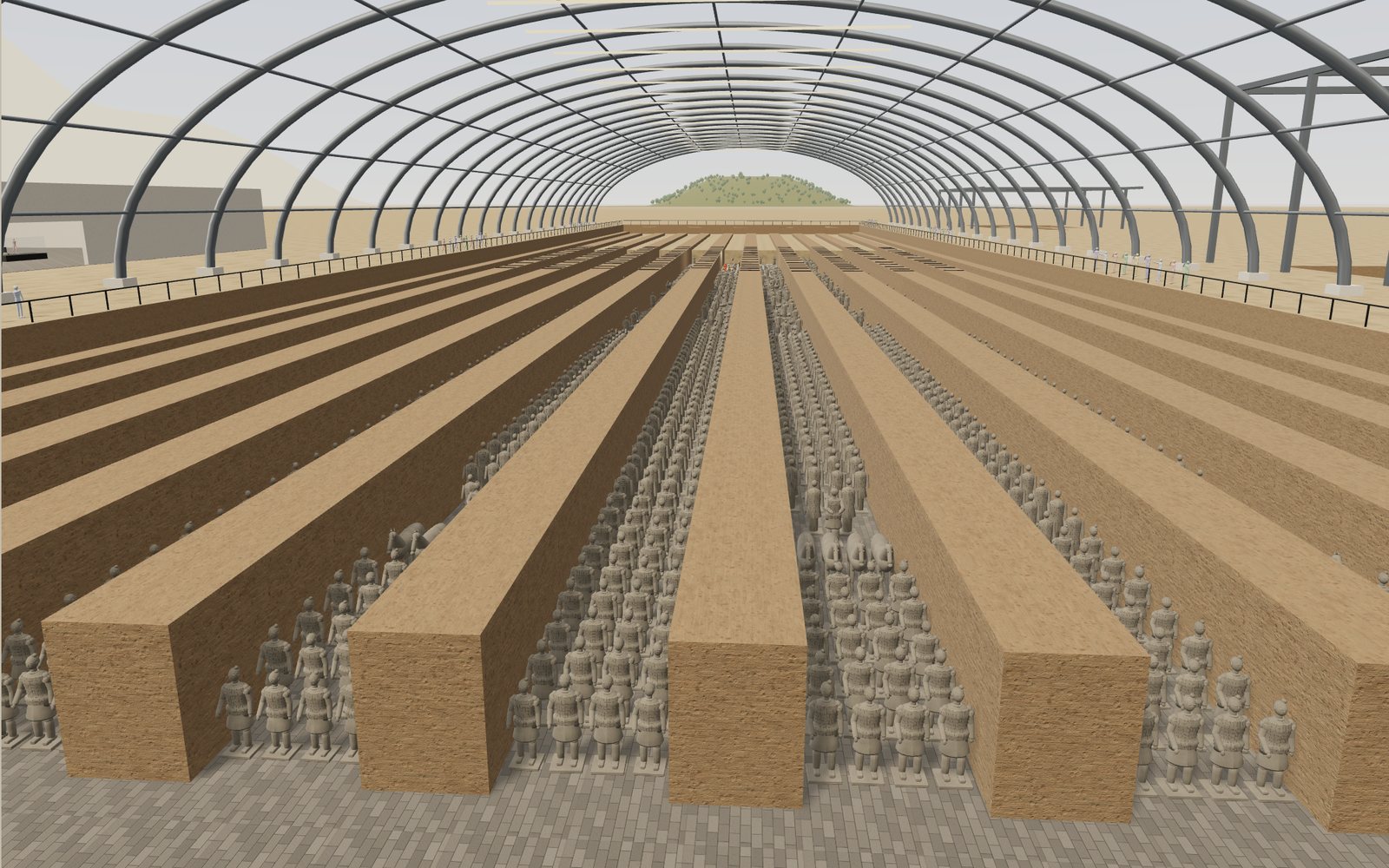
Walk through the Terracotta Army
Pit 1 of the Terracotta Army is 230 m long and holds an estimated 6,000 figures and horses, and every one of them was painted once.
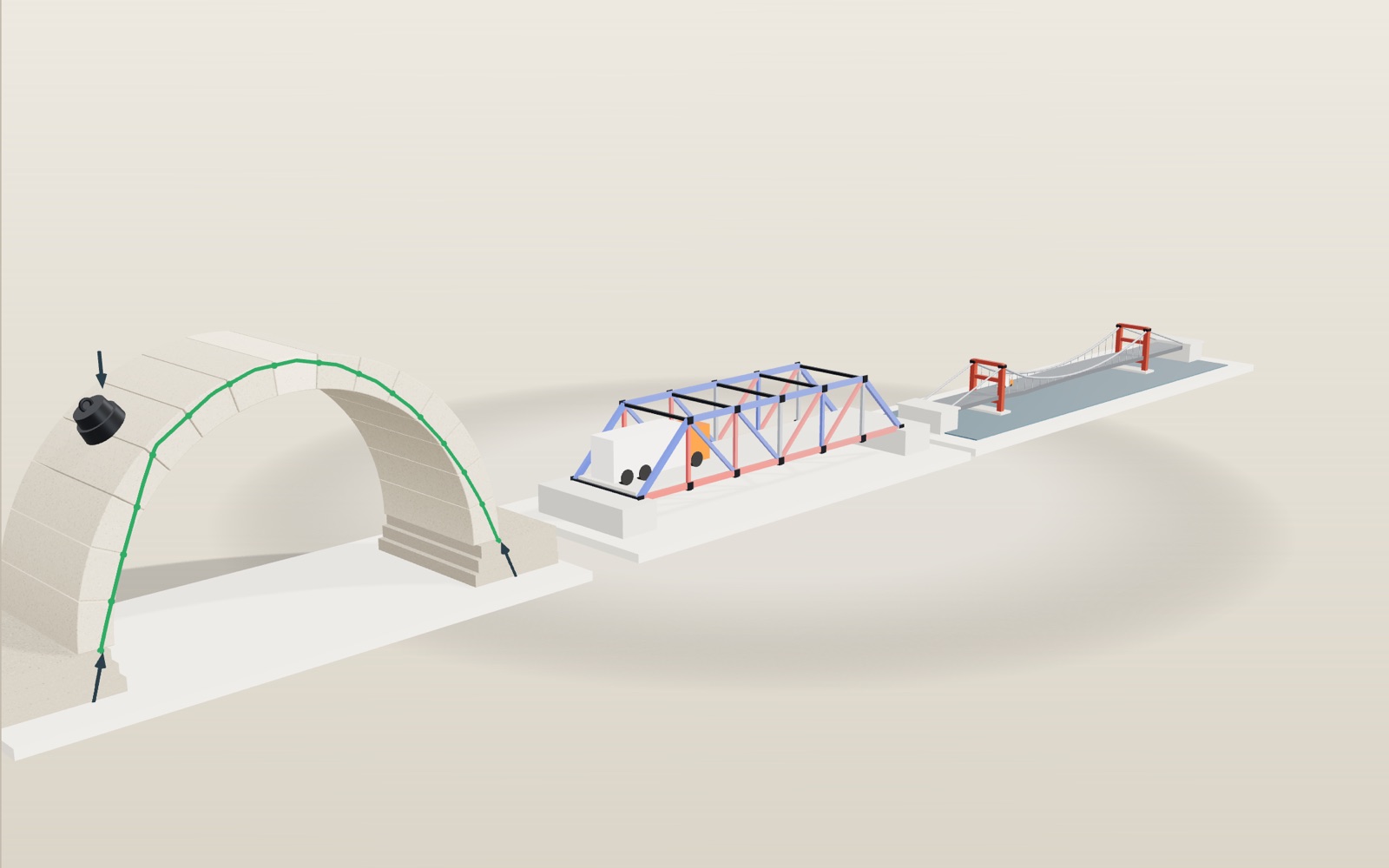
Stone arch bridge: load it and watch how it carries weight
A stone arch has no glue between its blocks, yet it stands on its own once the last stone is set at the top.
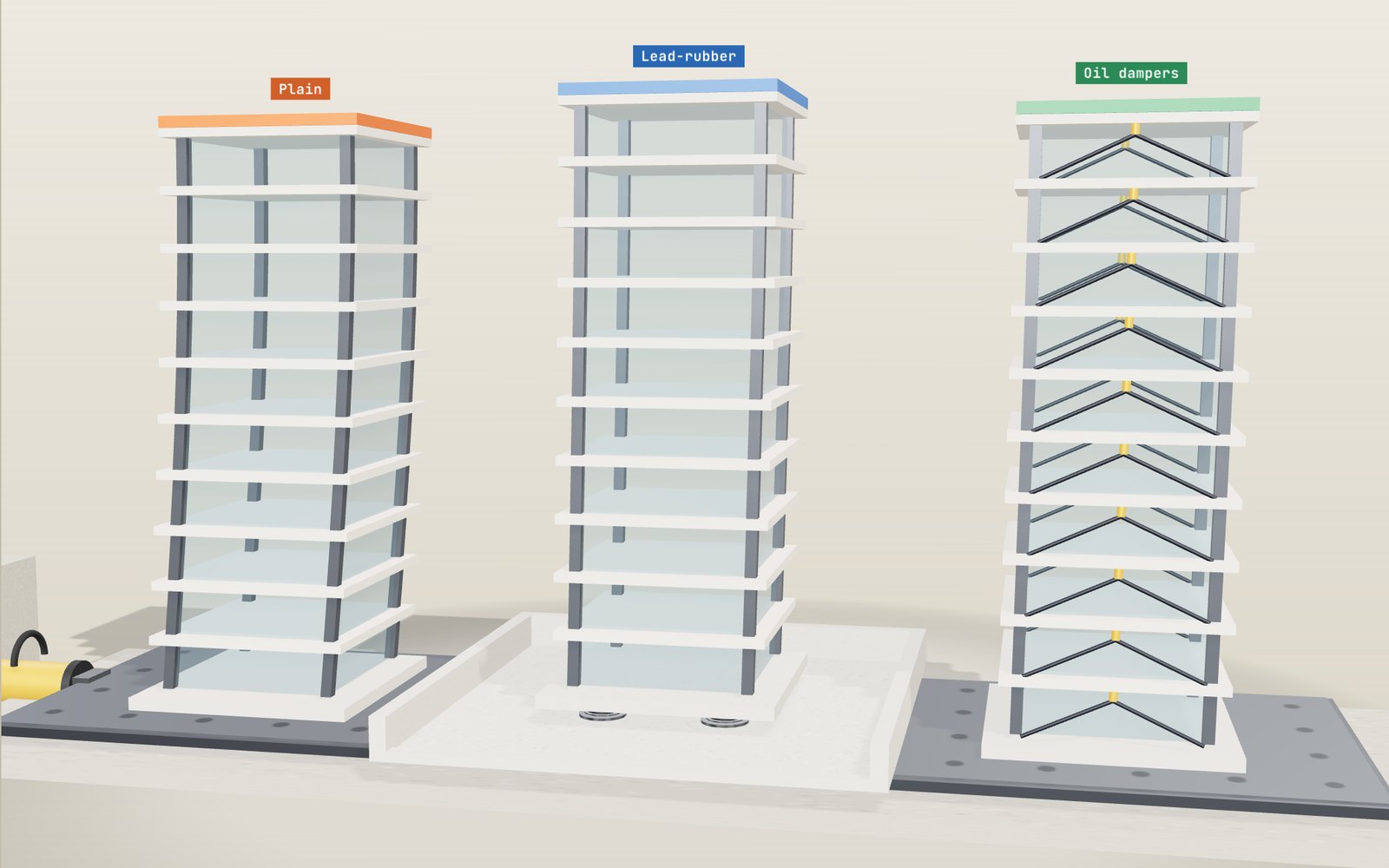
How buildings resist earthquakes
Shake a six-storey model at 0.6 seconds, its own period, and its floors bend about 14 times more than at one second. Rubber bearings, dampers and braces each answer that in a different way.
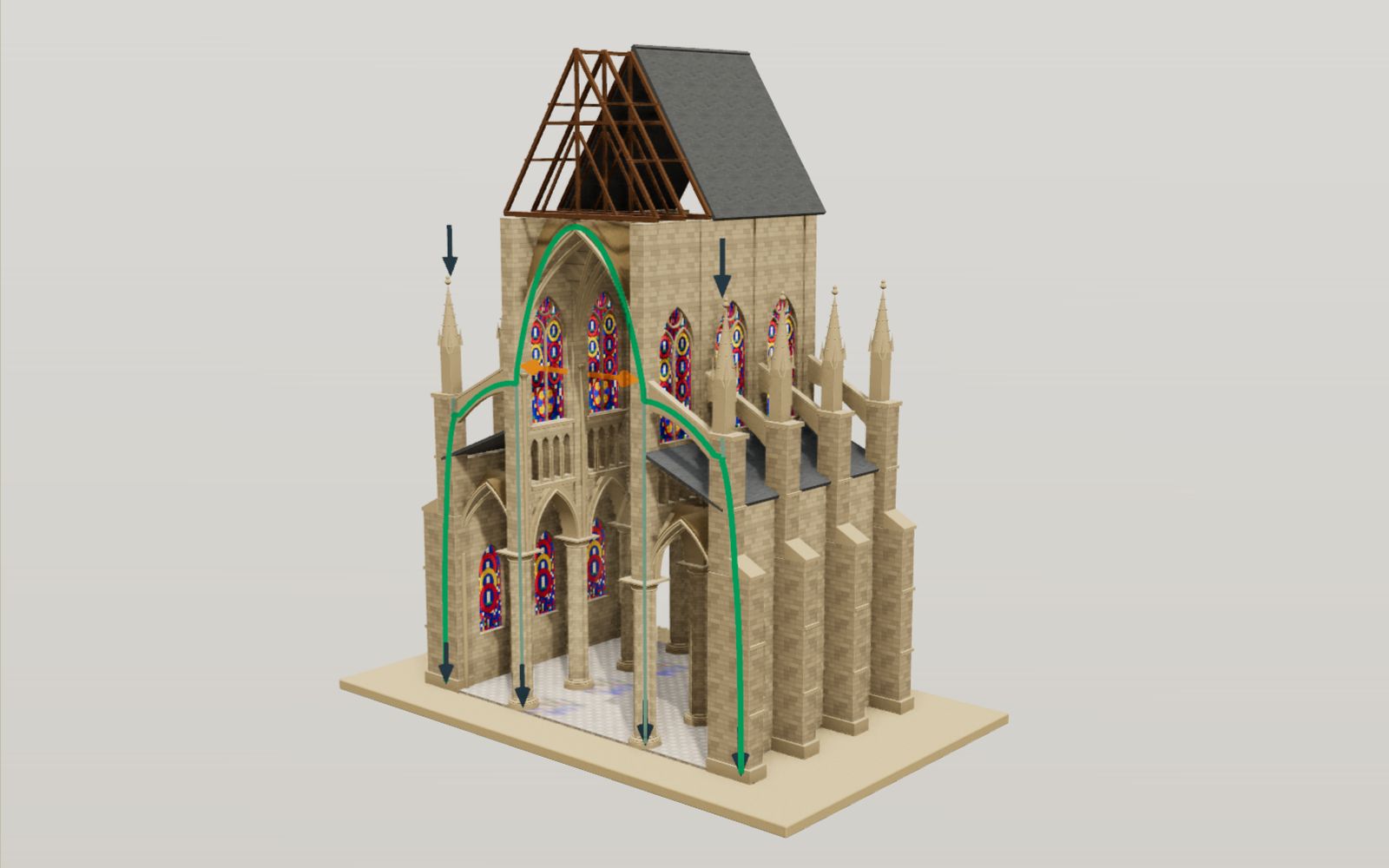
Gothic cathedral: flying buttresses, interactive model
The stone vault of Amiens Cathedral hangs 42.3 metres above the floor, and the walls under it are mostly glass.