FIG. 22Senses
Actual size: see real objects at true scale on your screen
A T. rex tooth was about 30 cm long with its root, longer than most laptop screens are wide. A blue whale would take more than a hundred.
This device cannot show the 3D model. You can read the guide steps below as text.
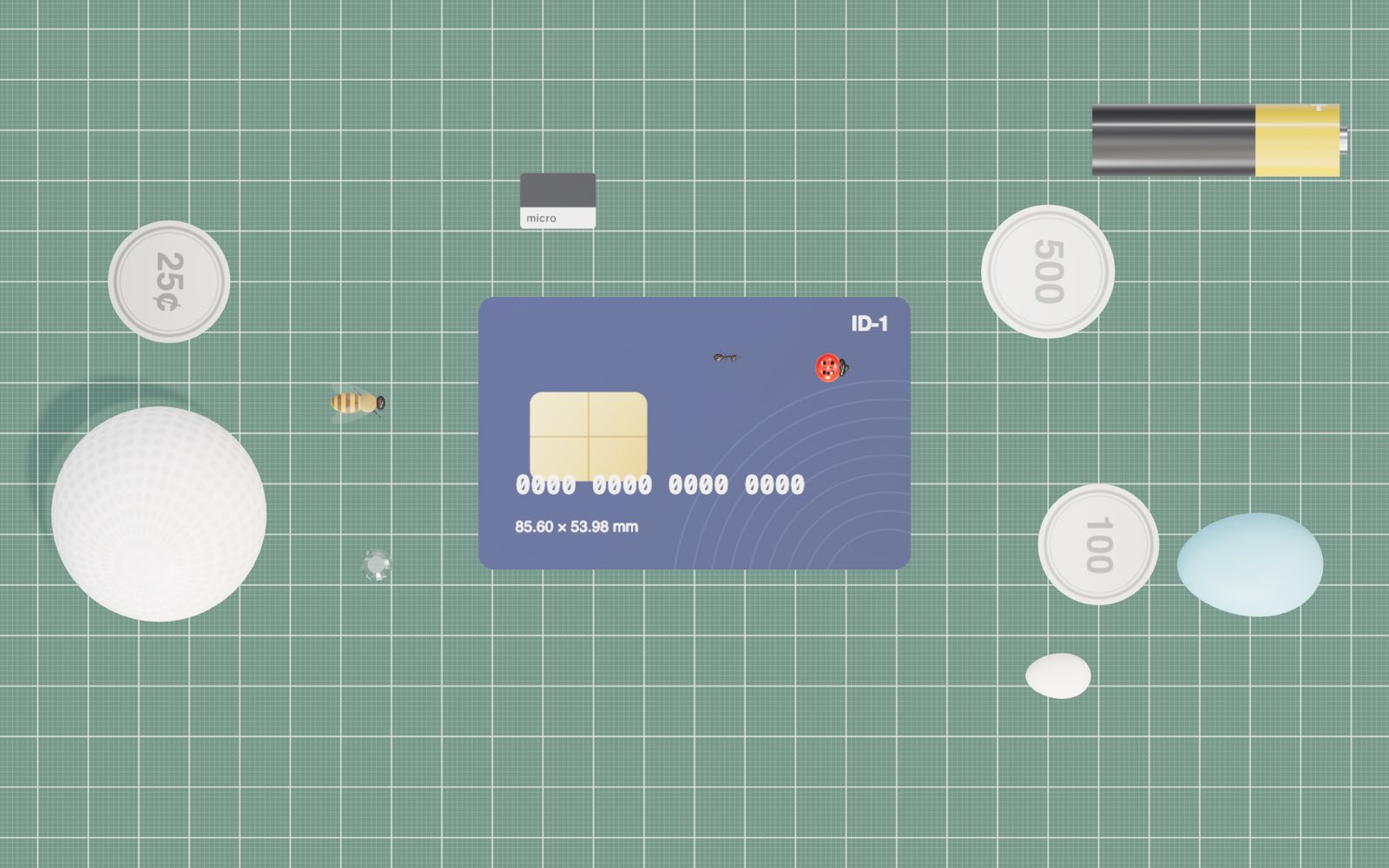
1 / 12 Hold a card to the screenAny bank card or ID card is 85.60 by 53.98 mm. Put it on the dashed outline and drag the scale slider until the edges line up. The value is saved only on this device.
Drag to turn. Scroll or pinch to zoom.
Why a picture on a screen is almost never life size
Search for "how big is a 1 carat diamond" and you will find photos that are 2 cm wide on one phone and 6 cm wide on a monitor. The picture has no idea how big your screen is, and neither does the web page. This exhibit fixes that with an object nearly everyone carries: a bank card. Once the card on the screen matches the card in your hand, every model on the table is drawn at its real size, and the ruler along the bottom measures real millimetres.
The 117 objects were chosen because their sizes are published by someone who measures or defines them for a living. The coins and notes come from the mints and central banks that issue them, the paper and batteries from the standards that fix their sizes, the balls from the rules of each sport, the insects from university collections and public health agencies, the eyeball from a clinical study, and the fossils, gems and paintings from the museums that hold them. An object went on the table only if a source like that could be found. Where a source gives no figure for one dimension, such as the thickness of a Korean coin, the model uses a value of its own and the catalogue does not show it.
A card that is the same size everywhere
Bank cards, most identity cards and many driving licences share one format, called ID-1, defined in the international standard ISO/IEC 7810. An ID-1 card is 85.60 mm long and 53.98 mm wide, with rounded corners of about 3.18 mm radius and a thickness of 0.76 mm. The standard dates from the age of embossed credit cards and was drawn up in inches, which is why the numbers look odd in millimetres: 85.60 mm is 3.370 inches and 53.98 mm is 2.125 inches.
Because the format is fixed so tightly, a card from any country makes a good reference. The model card on the table uses exactly those numbers. When you hold a real card against the screen and drag the scale slider, you are telling the page how many CSS pixels one millimetre takes on your screen. The value is stored in your browser's local storage on this device and nowhere else. A different browser, a different device or a private window starts again from the default.
Why the page cannot know the size of your screen
Web pages are laid out in CSS pixels, not in the physical dots of the display. The CSS specification defines an absolute inch as exactly 96 CSS pixels, so 1 mm is 96 ÷ 25.4 = 3.7795 CSS pixels. That is the value this exhibit uses before you calibrate, and the readout says "Not calibrated" while it does.
The catch is that a CSS pixel is not tied to a physical length on the glass. The specification anchors it to a "reference pixel", an angle of about 0.0213 degrees seen from arm's length, and lets each device pick a scale that looks comfortable at its usual viewing distance. A phone held 30 cm from your face and a monitor 70 cm away both call their text "16 px", but the letters are very different sizes on the glass.
Under the CSS pixels sit the device pixels. The ratio between the two is exposed to scripts as window.devicePixelRatio. A phone with a ratio of 3 draws each CSS pixel with a 3 × 3 block of device pixels. That ratio tells the browser how sharp to draw things, but it still says nothing about physical size, because the manufacturer chooses both the panel density and the ratio. On top of that, the operating system's display scaling and the browser's own zoom change the ratio again. Press Ctrl and + and the CSS pixel grows.
So the honest answer is that a browser has no reliable way to read the physical size of its screen. Some operating systems report a size to native apps, but browsers do not pass it on to web pages. The only dependable way is to compare the screen with something whose size you already know. That is the card's job.
How the models stay at true size
Most 3D scenes use a perspective camera, which makes nearer things look bigger. That is right for a car engine, and wrong here. If the camera moves closer, an ant would grow. This exhibit swaps the stage's perspective projection for an orthographic one: every point is projected straight down onto the screen, so a 26.50 mm coin covers 26.50 × scale CSS pixels whether the camera is close or far. Zoom is switched off for the same reason. Dragging slides the table under the camera instead of moving you closer to it. The one exception is Magnify, described below, which enlarges everything by a power of ten and says so in the read-out.
The scene is modelled in millimetres. With the default scale of 3.7795 px/mm, the 85.60 mm card is 323.5 CSS pixels wide. Move the slider to 5.00 px/mm and it becomes 428.0 pixels, while the 500 won coin goes from 100.2 to 132.5 pixels. All of them change by the same factor because they are all drawn through the same projection.
True size only holds when you look straight down. The last step of the tour tilts the table to show the models are solid. At an angle, lengths along your line of sight shrink by the cosine of the tilt, so a coin seen at 50 degrees looks about 64 percent as deep as it is wide.
The objects and where their numbers come from
The coins are the easiest to check against your own pocket. The Bank of Korea gives the 500 won coin as 26.50 mm across and 7.70 g, and the 100 won coin as 24.00 mm and 5.42 g, both cupronickel. The Royal Mint gives the UK one penny as 20.30 mm across, with a thickness of 1.65 mm for the copper-plated steel version. The Bank of Korea table does not list thickness, so the Korean coins are given a modelled thickness that you cannot see from above anyway.
The insects come with ranges, because animals vary. The University of California's ant identification key gives pavement ant workers as 3/16 inch long, about 4.8 mm, and notes that the workers are all the same size. The Animal Diversity Web at the University of Michigan gives the seven-spot ladybird as 6.5 to 7.8 mm long and honeybee workers as 10 to 15 mm. The models sit near the middle of those ranges, at 7.2 mm and 12.5 mm.
The 1 carat diamond needed a small calculation. A carat is a weight, not a size: GIA defines one metric carat as 0.2 g. Diamond has a density of 3.515 g/cm³ according to the Handbook of Mineralogy, so 200 mg of diamond has a volume of 200 ÷ 3.515 = 56.90 mm³. The model is a round brilliant with a table 53 percent of its width, a crown angle of about 34.5 degrees and a pavilion angle of about 40.75 degrees, a common set of proportions for a well-cut stone. Scaling the faceted stone until its volume is 56.90 mm³ gives the size. The diameter that comes out is about 6.42 mm. Jewellers usually quote 6.4 to 6.5 mm for a well-cut 1 carat round; a deeper cut hides more weight underneath and faces up smaller.
The eyeball follows a 2014 study that measured the CT scans of 250 adults with healthy eyes. It gives the adult eye as about 24.2 mm across, with individuals ranging from roughly 21 to 27 mm. The clear cornea in front is about 11.8 mm wide.
The T. rex tooth is about 30 cm long including its root, according to the Australian Museum. Only the crown showed above the gum. The root, which held the tooth in the jaw, made up much of that length. At true size the tooth is wider than most laptop screens, so part of it runs off the edge. That is deliberate: you have to drag the table to see the tip.
The coco de mer is the double nut of a palm that grows wild only on two islands in the Seychelles. The University of Reading's herbarium, which holds one, describes the fruit as 40 to 50 cm across, containing the largest seed in the plant kingdom. The model is 45 cm. On a phone you will only ever see a small patch of its surface.
Coins from five countries
Coins make the best second check, because nearly everyone has one and their makers publish the sizes to 0.01 mm. The catalogue holds 32 coins from Korea, Japan, the United States, the euro area and the United Kingdom.
Some pairs are close enough to fool you. The Korean 500 won and the Japanese 500 yen are both 26.5 mm across. The euro 5 cent coin is 21.25 mm and the 10 cent coin only 19.75 mm, so the coin worth less is the larger one. The UK 20p and 50p have seven curved sides. Each side is an arc centred on the opposite corner, so the coin is the same width whichever way you measure it and still rolls through a coin slot. The model draws them that way, with a width of 21.4 mm and 27.3 mm.
Thickness is where the sources differ. The United States Mint, the European Central Bank and the Royal Mint all publish it, so 22 coins carry a real thickness, from 1.35 mm for the US dime to 2.8 mm for the twelve-sided £1 coin. The Bank of Korea and the Japan Mint list diameter and weight but not thickness. Those coins get a model thickness, the catalogue shows only their diameter, and they are left out of the thickness test.
Banknotes and paper
Notes are a lesson in design choices. Every US note, from 1 dollar to 100 dollars, is 6.14 by 2.61 inches, 155.96 by 66.29 mm, and about 0.11 mm thick. The euro does the opposite: the 5 euro note is 120 by 62 mm and each step up is longer, up to 160 by 82 mm for the 500 euro note, so people with poor sight can tell them apart by size. Korean notes sit in between. They are all 68 mm high and grow 6 mm in length per step, from 136 mm for 1,000 won to 154 mm for 50,000 won.
Paper follows ISO 216. An A0 sheet has an area of one square metre and sides in the ratio of 1 to the square root of 2, and each smaller size is the one above cut in half. That is why A4 is 210 by 297 mm, A5 is 148 by 210 mm and A6 is 105 by 148 mm. Fold any A sheet in half and the ratio of its sides stays the same. North America uses Letter instead, 8.5 by 11 inches, which is 6 mm wider and 18 mm shorter than A4. Envelopes follow ISO 269: a DL envelope, 110 by 220 mm, takes an A4 sheet folded in three. None of these sheets fits on a phone at true size, which is a fair reminder of how small a phone screen is.
Batteries, memory cards and discs
Battery sizes are fixed by IEC 60086, and the makers' datasheets give the maximum dimensions. An AA cell is 14.5 mm across and 50.5 mm long, an AAA cell 10.5 by 44.5 mm, a D cell 34.2 by 61.5 mm. A coin cell's name is its size: a CR2032 is 20 mm across and 3.2 mm thick. Memory cards follow the SD Association: 32 by 24 mm for SD and 15 by 11 mm for microSD, which is smaller than most fingernails. A CD is 120 mm across with a 15 mm hole and a thickness of 1.2 mm, all set in ECMA-130. The SIM card in a phone started as a whole ID-1 card and was cut down three times, to 25 by 15 mm, then 15 by 12 mm, then the nano SIM at 12.3 by 8.8 mm.
Balls, sized by their rules
Sports federations write ball sizes into their rules, but often as a circumference range, because a ball is easier to measure with a tape than with calipers. The model takes the middle of the range and divides by pi. A football must be 68 to 70 cm round, so its diameter is between 21.6 and 22.3 cm and the model is 22.0 cm. A size 7 basketball is 749 to 780 mm round, about 23.8 to 24.8 cm across. A baseball is 9 to 9.25 inches round, 72.8 to 74.8 mm across. Some rules give a diameter: a table tennis ball is exactly 40 mm, a pool ball 2.25 inches, and a golf ball must be at least 1.680 inches with no upper limit at all.
Smaller than a millimetre
At true size some objects are smaller than a pixel. A red blood cell is about 7.5 µm across, so at the default scale it would cover about 0.03 CSS pixels. For these the exhibit has Magnify, which multiplies the scale by 10, 100, 1,000 or 10,000. The grid on the table and the ruler shrink with it, so the ruler switches to micrometres and keeps measuring the model correctly, and the read-out says that the view is enlarged and no longer true size.
The tiny objects come from the sources that define or measure them. The smallest adult insect on record, a male fairyfly, is 0.139 mm long. A head louse egg is about 0.8 by 0.3 mm, according to the CDC. Sediment sizes come from the Wentworth scale that geologists use: clay is finer than 1/256 mm, silt runs to 1/16 mm, sand from there to 2 mm, then granules, pebbles to 64 mm and cobbles to 256 mm. The catalogue shows the largest grain of each class, so the label says "up to".
Eyes, eggs and animals
Eyes make a good row. An adult human eyeball is about 24.2 mm across. An ostrich eye is about 5 cm, the largest of any land animal and bigger than its brain. The colossal squid's eye, measured at Te Papa in New Zealand, is about 27 cm across, wider than a football and the largest eye measured in any animal. The eggs go from a ruby-throated hummingbird's, 1.3 cm long, to an ostrich egg of about 15 by 13 cm. A newborn baby is there too, at 49.9 cm, the WHO median length at birth for boys.
Museum objects
Museums publish the sizes of their famous objects, and some of them surprise people. The Mona Lisa is 77 by 53 cm, about the size of a small poster. The Hope Diamond weighs 45.52 carats yet is only 25.60 mm long. The international prototype of the kilogram, which defined the unit from 1889 to 2019, is a cylinder 39 mm high and 39 mm across. The Venus of Willendorf is 11 cm tall, small enough to hold in one hand. The Rosetta Stone is 112.3 cm high, 75.7 cm wide and 28.4 cm thick, and lies face up on the table so you look at the inscriptions.
Bigger than the screen
Some objects can only be seen a piece at a time. The National Park Service lists the Statue of Liberty's index finger as 8 feet long and one of her eyes as 2 feet 6 inches across. One mirror segment of the Webb telescope is 1.32 m across from flat to flat. SUE, the T. rex at the Field Museum, has a skull about 5 feet long. The largest is the blue whale, which NOAA Fisheries gives as up to 110 feet, about 33.5 m. On a 30 cm wide laptop screen that is more than a hundred screens.
When an object is wider than the screen, a strip appears at the top of the stage. It shows how long the object is and which part of it is on screen now. Move Slide along, or tap the strip, to walk from one end to the other. The read-out counts how many screens wide the object is at the current scale.
Your hand as a ruler
People judge size by their own body. Turn on Your hand and an outline of a hand appears on the table. Measure your own hand with a ruler, from the crease of the wrist to the tip of the middle finger, and set Hand length to that number. The outline's proportions are a model; its length is yours. A T. rex tooth with its root is longer than most adult hands. A 5 euro note is shorter.
Things to try
Under the controls there are six small tasks. Calibrate the screen. Find three objects smaller than 1 mm. Find three objects longer than your hand. Guess the thickness of three coins to within 0.15 mm: the coin stands on its edge, so its thickness is drawn at true size, and a red bar shows your guess beside it. Walk the whole length of something more than ten screens wide. Pick the longer of two objects five times in a row. Each finished task opens another card of hidden facts. The tasks are checked in your browser and remembered only on this device.
How 117 objects stay fast on a phone
Drawing every object at once would make a phone slow, and most of them would be off screen anyway. Objects are built the first time they are shown. In the size line, where all 117 stand in a row from the red blood cell to the blue whale, the exhibit draws only the objects near the screen and builds at most two new ones per frame as you drag. Coins, balls, notes and sheets share one shape each, scaled to size, and the textures are small canvases drawn when the object first appears. On devices that draw slowly the materials are simpler and shadows are off.
What the model simplifies
The ant, ladybird and bee are built from smooth ellipsoids and thin tubes. Real legs bend at more joints, real ladybird spots vary, and real bees are covered in branched hairs that a model of this size cannot carry. The overall length, the part the exhibit is about, follows the sources.
The diamond is cut with 16 facets around the crown and 16 around the pavilion, far fewer facets than a real round brilliant. Its volume, and so its diameter, is calculated from the model as built.
The coins carry their value as a raised number rather than the full design. The hand outline, the shape of the whale, the Venus figure and SUE's skull are rough forms; only their overall lengths follow the sources. The Mona Lisa is a plain stand-in on a panel of the right size, not a copy of the painting. The thickness of paper, of most banknotes and of the Korean and Japanese coins is a model value, because their sources give none. The T. rex tooth is a curved cone with a slightly flattened section and small serrations along the edges of the crown. The coco de mer is two joined lobes.
Checking your calibration
After you have matched the card, put a real coin on the screen over its model. If the edges line up, the calibration is good. A plastic ruler laid along the on-screen ruler should read the same. If you change the browser zoom or the display scaling, the CSS pixel changes size and you will need to calibrate again. The "96 dpi" button clears the saved value and goes back to the default.
Twice the diameter does not mean twice the mass
The diamond gives a way to separate length from volume without adding another object to the catalogue. Imagine making a second stone with exactly the same shape and density, but twice every linear dimension. This is a calculation about similar solids, not a second measured specimen. Its diameter would be about 12.84 mm instead of 6.42 mm. Each cross-section would have four times the area, and stacking those sections through twice the height would give eight times the volume. At the same density, mass also increases eightfold: a 1 carat stone becomes an 8 carat stone, weighing 1.6 g rather than 0.2 g.
In symbols, a length multiplier k gives an area multiplier k² and a volume multiplier k³. Turning the calculation round is often more useful. A 2 carat diamond of the same proportions would have a diameter of about 6.42 × ∛2 = 8.09 mm, not 12.84 mm. That is only about 26% wider than the 1 carat model. A photograph without a ruler can make that modest difference hard to judge. The calculation assumes the cut stays geometrically similar; two actual stones with different depths need not follow this diameter ratio.
This also explains why the table cannot supply weight from an outline alone. A hollow ball and a solid ball can have the same outside diameter but very different masses. The length catalogue does not model internal cavities or assign a common density to its objects. Magnify changes the displayed scale, not the object's physical mass. The volume calculation uses the diamond density cited in the Handbook of Mineralogy and the model proportions described above.
Questions
Why does the page ask me for a card instead of reading the screen size?
Browsers do not tell web pages the physical size of the screen. They report sizes in CSS pixels, and a CSS pixel has a different physical length on different devices. A card of known size is the simplest way to measure it.
What does 96 dpi have to do with it?
CSS defines one inch as 96 CSS pixels. Before you calibrate, this exhibit assumes that inch is a real inch on your screen. On most phones and many laptops it is not, so objects appear larger or smaller than life until you calibrate.
Is my calibration sent anywhere?
No. The value is stored in your browser's local storage on this device. Nothing is uploaded. Clearing site data or pressing "96 dpi" removes it.
Will devicePixelRatio not give the right answer?
No. devicePixelRatio is the number of device pixels per CSS pixel. It tells the browser how sharply to draw, but it does not include the physical size of the panel, and it changes when you zoom the page.
Why does Magnify say the view is not true size?
Magnify multiplies the scale by 10, 100, 1,000 or 10,000 so that cells and grains of silt become visible. At that point the picture is no longer life size, and the read-out says so. The ruler and the grid shrink with the view, so they still measure the model correctly. Set Magnify back to ×1 for true size.
How big is a 1 carat diamond really?
A carat is 200 mg. For a well-proportioned round brilliant that weight works out at about 6.4 mm across. The same weight cut as an oval or a pear looks longer, and a deep cut looks smaller from above.
Why is only part of the T. rex tooth visible?
At about 30 cm it is longer than most screens are wide. Shrinking it to fit would defeat the point, so it stays at true size and you drag the table to see the rest.
My coin is a little bigger than the model. Why?
Most often the calibration is a fraction off. Match the card again and check the long edge, where a small error is easiest to see. Browser zoom or display scaling may also have changed since you calibrated.
Are the 500 won and 500 yen coins really the same size?
Yes, in diameter. The Bank of Korea gives 26.50 mm and the Japan Mint 26.5 mm. Their weights differ: 7.70 g for the 500 won coin and 7.1 g for the current 500 yen coin.
Why do some coins show no thickness?
The Bank of Korea and the Japan Mint publish diameter and weight but not thickness. The model gives those coins a thickness so they look solid, but the catalogue shows only the published diameter and the thickness test uses only coins whose maker publishes a thickness.
Why is the blue whale just a grey surface?
At true size the whale is several metres wide, so any part of it fills the screen. Use the strip at the top, or Slide along, to see where you are along its 33.5 m. Turn on Size line to see it after the Rosetta Stone and the Webb mirror segment.
Why is a ball given as one number when the rules give a range?
Most ball rules give a circumference range, for example 68 to 70 cm for a football. The model uses the middle of the range divided by pi and the catalogue shows the allowed range next to it.
How do I measure my hand for Your hand?
Lay your hand flat on a ruler and read the distance from the crease where the wrist meets the palm to the tip of the middle finger. Set Hand length to that number in millimetres.
Is the Mona Lisa on the table a copy of the painting?
No. It is a plain panel of the same size, 77 by 53 cm, with a simple stand-in picture. The point here is the size of the panel, which surprises many visitors.
Terms
- ID-1: the card format in ISO/IEC 7810, 85.60 × 53.98 mm, used for bank cards and many identity cards.
- CSS pixel: the unit web pages are laid out in. 96 CSS pixels make one CSS inch.
- Device pixel: one physical dot of the display.
- devicePixelRatio: device pixels per CSS pixel, as reported by the browser.
- Orthographic projection: a projection with no perspective, so distance from the camera does not change size.
- Carat: a unit of weight for gems, 200 mg.
- Round brilliant: the usual cut for diamonds, with a flat table on top and a cone-shaped pavilion below.
- Magnify: this exhibit's control that enlarges the view by a power of ten. Magnified views are not true size.
- Wentworth scale: the grain-size classes geologists use for clay, silt, sand, granules, pebbles, cobbles and boulders.
- Reuleaux polygon: a shape of constant width made from arcs, used for the UK 20p and 50p coins.
Sources
- ISO, ISO/IEC 7810:2019 Identification cards: physical characteristics (ID-1 and ID-000). https://www.iso.org/standard/70483.html (checked 18 October 2026)
- National Institute of Standards and Technology, FIPS 201-3, PIV card physical characteristics and thickness per ISO 7810. https://nvlpubs.nist.gov/nistpubs/FIPS/NIST.FIPS.201-3.pdf (checked 16 October 2026)
- W3C, CSS Values and Units Module Level 4 (absolute lengths, reference pixel). https://www.w3.org/TR/css-values-4/ (checked 16 October 2026)
- MDN Web Docs, Window.devicePixelRatio. https://developer.mozilla.org/en-US/docs/Web/API/Window/devicePixelRatio (checked 16 October 2026)
- Bank of Korea, current coins (diameter and weight of the 500 and 100 won coins). https://www.bok.or.kr/portal/main/contents.do?menuNo=200367 (checked 16 October 2026)
- The Royal Mint, One penny coin specifications. https://www.royalmint.com/discover/uk-coins/coin-design-and-specifications/one-penny-coin/ (checked 16 October 2026)
- University of California IPM, Key to identifying common household ants: pavement ant. https://ipm.ucanr.edu/TOOLS/ANTKEY/pavement.html (checked 16 October 2026)
- Animal Diversity Web, University of Michigan Museum of Zoology, Coccinella septempunctata. https://animaldiversity.org/accounts/Coccinella_septempunctata/ (checked 16 October 2026)
- Animal Diversity Web, University of Michigan Museum of Zoology, Apis mellifera. https://animaldiversity.org/accounts/Apis_mellifera/ (checked 16 October 2026)
- GIA, Diamond quality factors (carat weight). https://www.gia.edu/diamond-quality-factor (checked 16 October 2026)
- Mineralogical Society of America, Handbook of Mineralogy, Diamond (density 3.515). https://www.handbookofmineralogy.org/pdfs/diamond.pdf (checked 16 October 2026)
- Bekerman, Gottlieb and Vaiman, Variations in eyeball diameters of the healthy adults, Journal of Ophthalmology 2014. https://pmc.ncbi.nlm.nih.gov/articles/PMC4238270/ (checked 16 October 2026)
- Australian Museum, Tyrannosaurus rex fact sheet (teeth 30 cm including roots). https://australian.museum/learn/dinosaurs/fact-sheets/tyrannosaurus-rex/ (checked 16 October 2026)
- University of Reading, Herbarium blog, Coco-de-Mer, a gift of the world's largest seed. https://blogs.reading.ac.uk/crg/961/ (checked 16 October 2026)
- ETSI, TS 102 221 UICC-Terminal interface (plug-in SIM sizes 3FF and 4FF). https://www.etsi.org/deliver/etsi_ts/102200_102299/102221/ (checked 18 October 2026)
- SD Association, SD standard overview (SD and microSD card sizes). https://www.sdcard.org/developers/sd-standard-overview/ (checked 18 October 2026)
- Ecma International, ECMA-130 (120 mm CD) and ECMA-125 (90 mm flexible disk cartridge). https://ecma-international.org/publications-and-standards/standards/ecma-130/ (checked 18 October 2026)
- ISO, ISO 216:2007 paper sizes and ISO 269 envelope sizes. https://www.iso.org/standard/36631.html (checked 18 October 2026)
- ASME, Y14.1 drawing sheet sizes (Letter 8.5 × 11 in). https://www.asme.org/codes-standards/find-codes-standards/y14-1-drawing-sheet-size-format (checked 18 October 2026)
- United States Mint, Coin specifications. https://www.usmint.gov/learn/coins-and-medals/circulating-coins/coin-specifications (checked 18 October 2026)
- European Central Bank, Euro coins and euro banknotes (sizes). https://www.ecb.europa.eu/euro/coins/common/html/index.en.html (checked 18 October 2026)
- The Royal Mint, UK coin designs and specifications. https://www.royalmint.com/discover/uk-coins/coin-design-and-specifications/ (checked 18 October 2026)
- Bank of Korea, current banknotes (sizes). https://www.bok.or.kr/portal/main/contents.do?menuNo=200017 (checked 18 October 2026)
- Japan Mint, coins currently minted. https://www.mint.go.jp/operations/production/operations_coin_presently-minted.html (checked 18 October 2026)
- U.S. Currency Education Program, Federal Reserve (note size and thickness). https://www.uscurrency.gov/ (checked 18 October 2026)
- Energizer product datasheets for IEC 60086-2 sizes (AA, AAA, C, D, 9 V, CR2032, LR44). https://data.energizer.com/ (checked 18 October 2026)
- ITTF Handbook; USGA equipment standards; ITF Rules of Tennis; MLB Official Baseball Rules; WPA equipment specifications; NHL rulebook; IFAB Laws of the Game; FIBA rules; FIVB rules; MCC Laws of Cricket (ball sizes). https://www.ittf.com/handbook/ (checked 18 October 2026)
- University of Florida Book of Insect Records, smallest adult insect. https://entnemdept.ufl.edu/walker/ufbir/ (checked 18 October 2026)
- CDC, Head lice (nit and adult sizes). https://www.cdc.gov/lice/about/head-lice.html (checked 18 October 2026)
- US EPA, How to identify bed bugs. https://www.epa.gov/bedbugs/how-identify-bed-bugs (checked 18 October 2026)
- University of Florida Featured Creatures, House fly. https://entnemdept.ufl.edu/creatures/urban/flies/house_fly.htm (checked 18 October 2026)
- Cornell Lab of Ornithology, All About Birds: Ruby-throated Hummingbird and American Robin. https://www.allaboutbirds.org/guide/Ruby-throated_Hummingbird/ (checked 18 October 2026)
- San Diego Zoo Wildlife Alliance, Ostrich (egg and eye). https://animals.sandiegozoo.org/animals/ostrich (checked 18 October 2026)
- Te Papa Tongarewa, The eyes of the colossal squid. https://tepapa.govt.nz/digital-museum/explore-digital-museum/colossal-squid/anatomy-colossal-squid/eyes-colossal-squid (checked 18 October 2026)
- NOAA Fisheries, Blue whale. https://www.fisheries.noaa.gov/species/blue-whale (checked 18 October 2026)
- World Health Organization, Child growth standards: length-for-age. https://www.who.int/tools/child-growth-standards/standards/length-height-for-age (checked 18 October 2026)
- NCBI Bookshelf, StatPearls: Physiology, Erythrocyte. https://www.ncbi.nlm.nih.gov/books/NBK538394/ (checked 18 October 2026)
- U.S. Geological Survey, grain-size nomenclature after Wentworth. https://pubs.usgs.gov/of/2006/1195/htmldocs/nomenclature.htm (checked 18 October 2026)
- NOAA National Weather Service Aberdeen, Vivian record hailstone. https://www.weather.gov/abr/vivianhailstone (checked 18 October 2026)
- Field Museum, SUE the T. rex. https://www.fieldmuseum.org/blog/sue-t-rex (checked 18 October 2026)
- British Museum, the Rosetta Stone, EA24. https://www.britishmuseum.org/collection/object/Y_EA24 (checked 18 October 2026)
- Musée du Louvre, Portrait of Lisa Gherardini, INV. 779. https://collections.louvre.fr/en/ark:/53355/cl010062370 (checked 18 October 2026)
- Smithsonian National Museum of Natural History, Hope Diamond. https://naturalhistory.si.edu/explore/collections/geogallery/10002757 (checked 18 October 2026)
- Naturhistorisches Museum Wien, Venus of Willendorf. https://www.nhm-wien.ac.at/en/venus (checked 18 October 2026)
- BIPM, The kilogram and its international prototype. https://www.bipm.org/en/si-base-units/kilogram (checked 18 October 2026)
- National Park Service, Statue of Liberty statistics. https://www.nps.gov/stli/learn/historyculture/statue-statistics.htm (checked 18 October 2026)
- NASA, Webb telescope mirrors. https://webb.nasa.gov/content/observatory/ote/mirrors/index.html (checked 18 October 2026)
- Royal Botanic Gardens, Kew, Rafflesia. https://www.kew.org/plants/rafflesia (checked 18 October 2026)
More exhibits
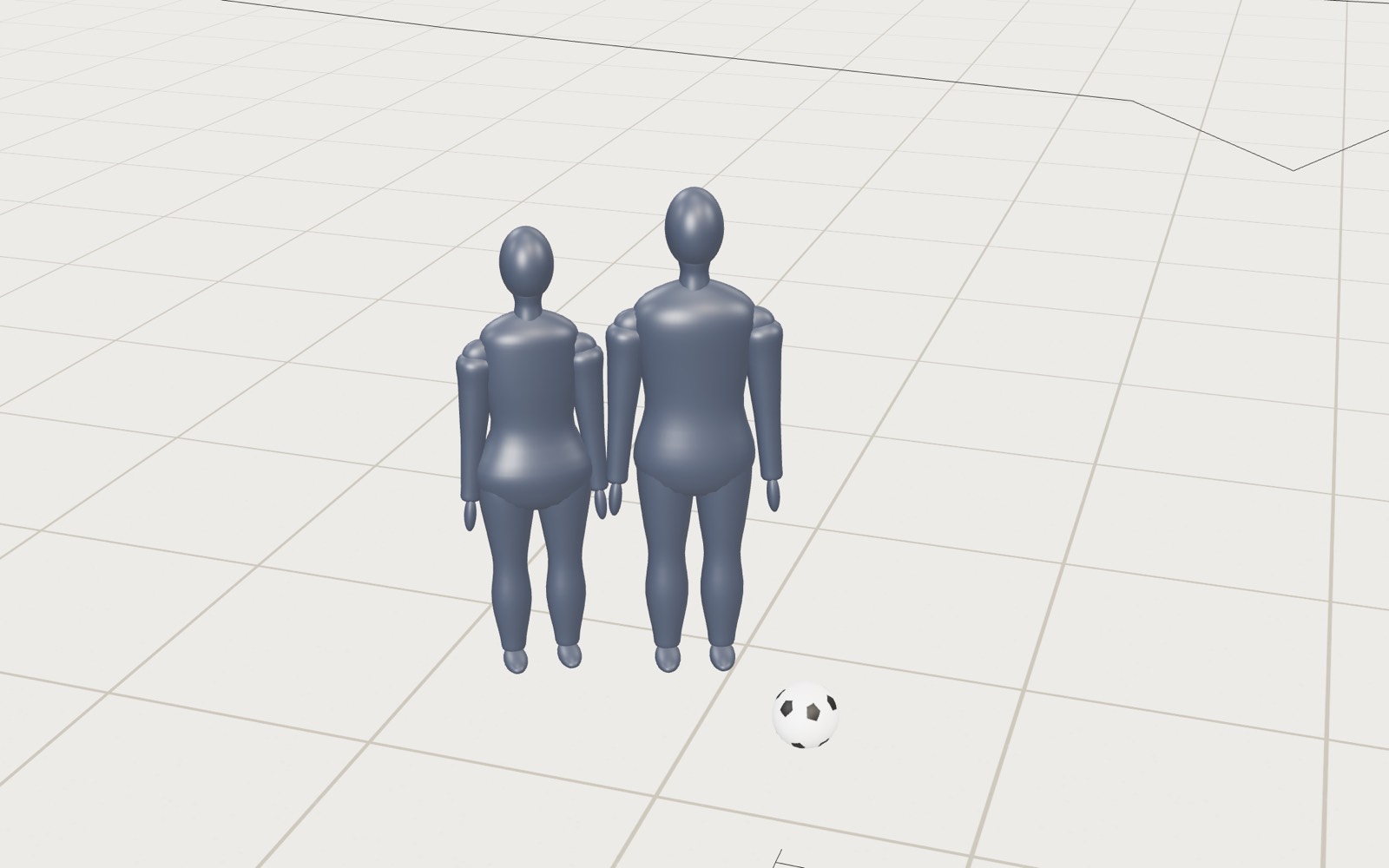
Powers of ten: from a proton to the observable universe
From inside a proton to the edge of the observable universe is 42 steps of ten.
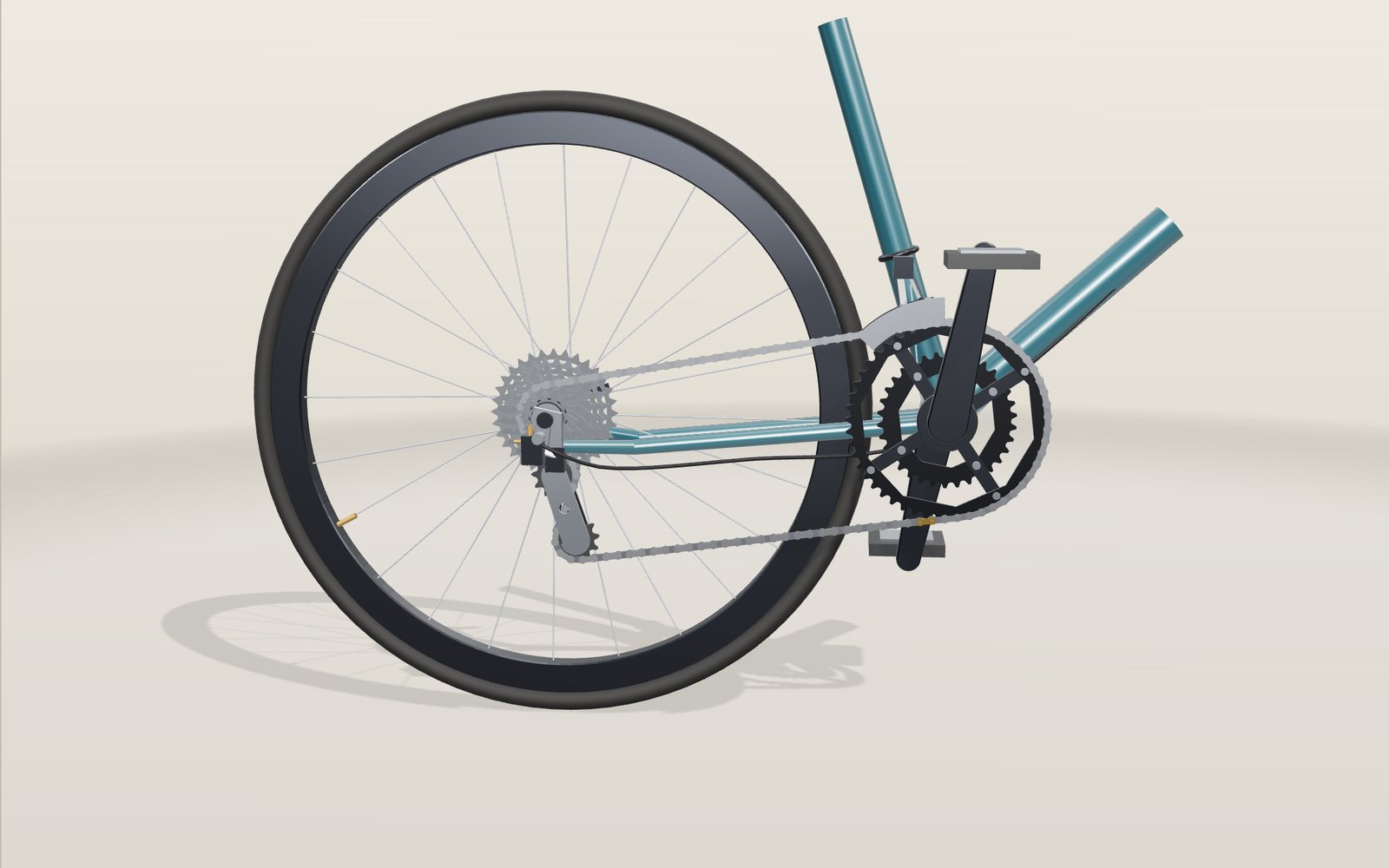
Bicycle gears: which gear makes climbing a hill easier
In a 50 by 11 gear one turn of the pedals moves a road bike 9.57 metres; in 34 by 32 it moves 2.24 metres.
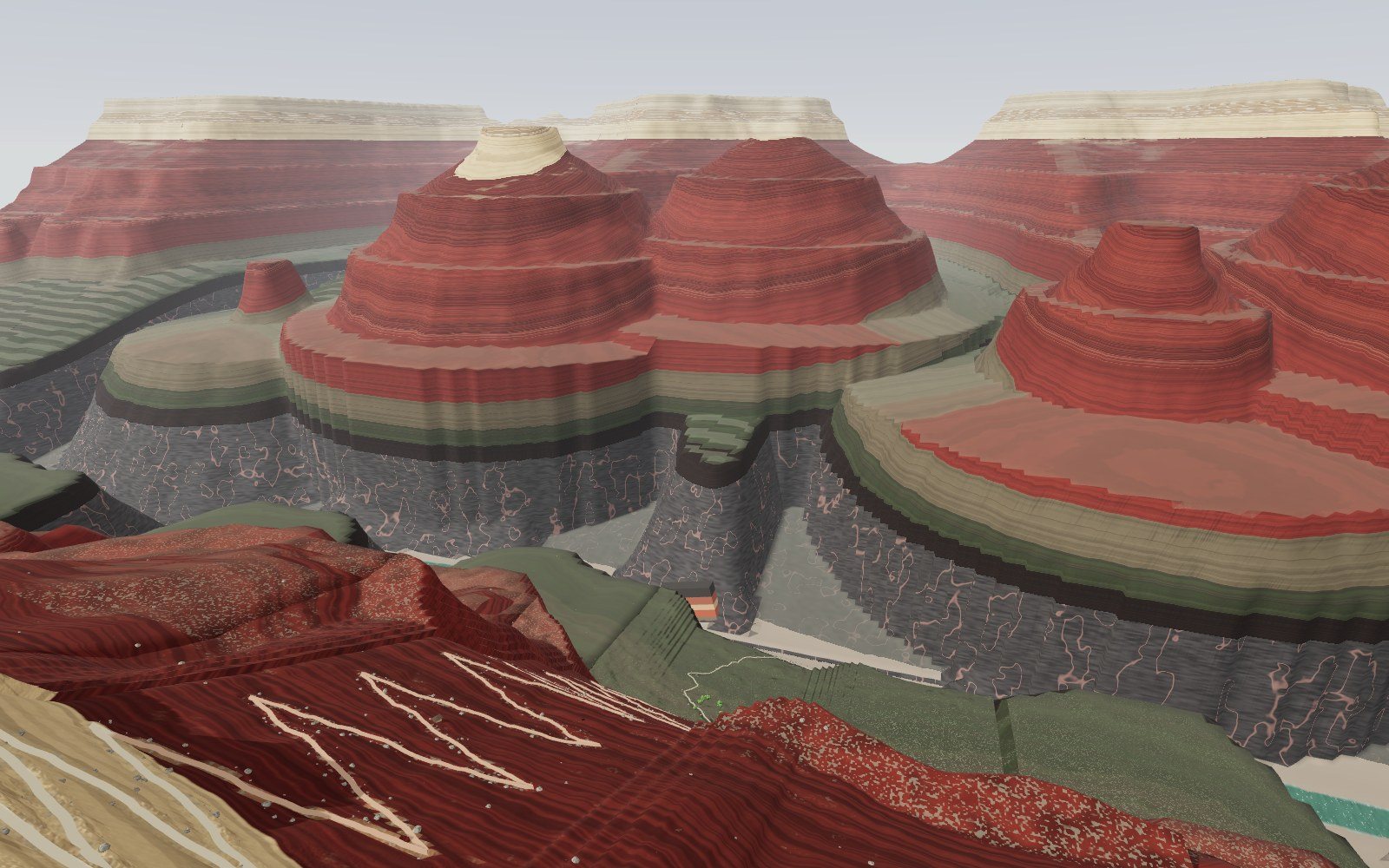
Walk down the Grand Canyon rock layers
Walk 1,360 m down the Bright Angel Trail through 13 rock layers, from a 270-million-year-old sea floor on the rim to 1.75-billion-year-old schist by the river.
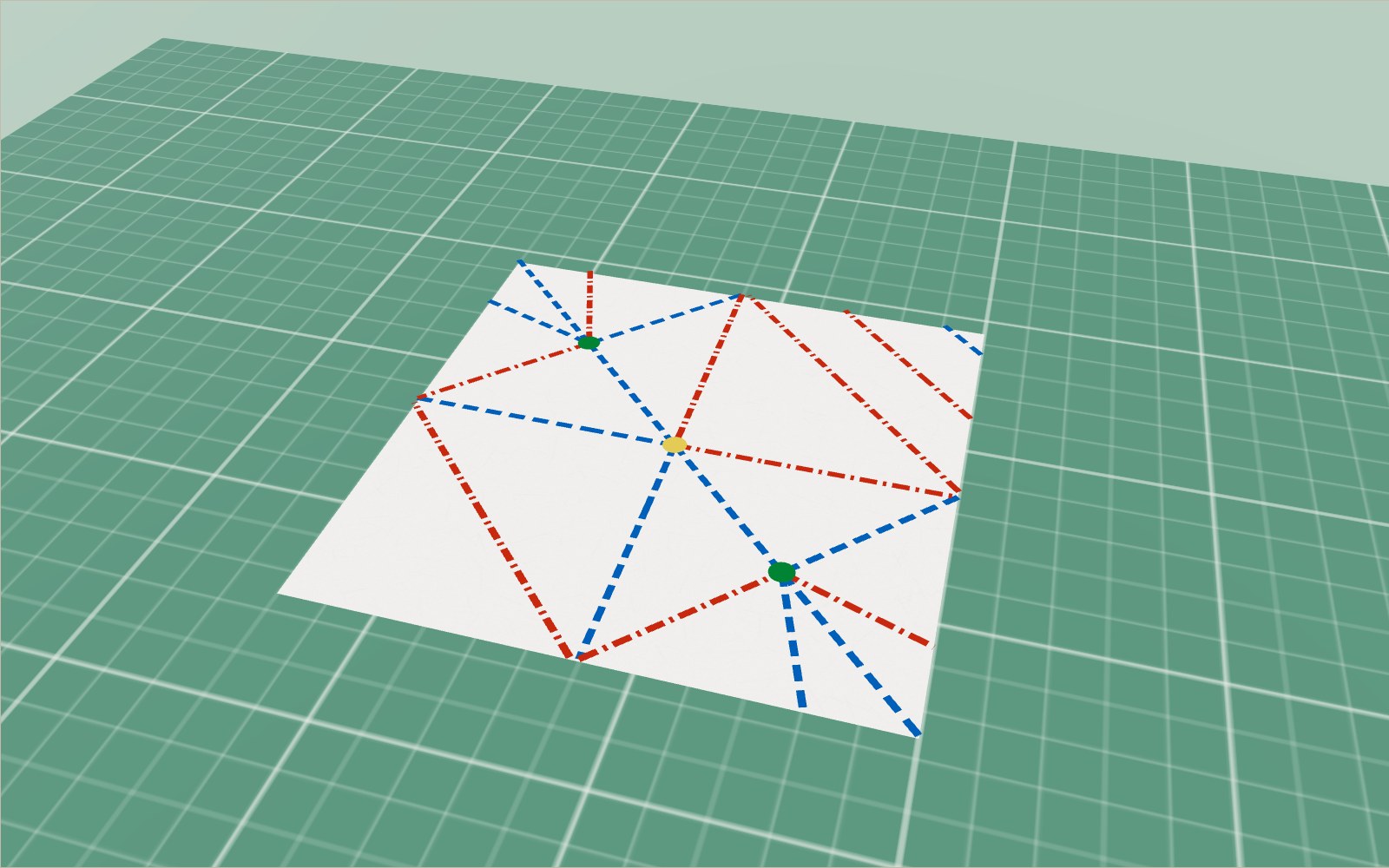
Origami: 20 models to fold step by step and unfold
A crane uses about 30 folds, a cup six; every flat-folded point you make has mountains and valleys that differ by exactly two.
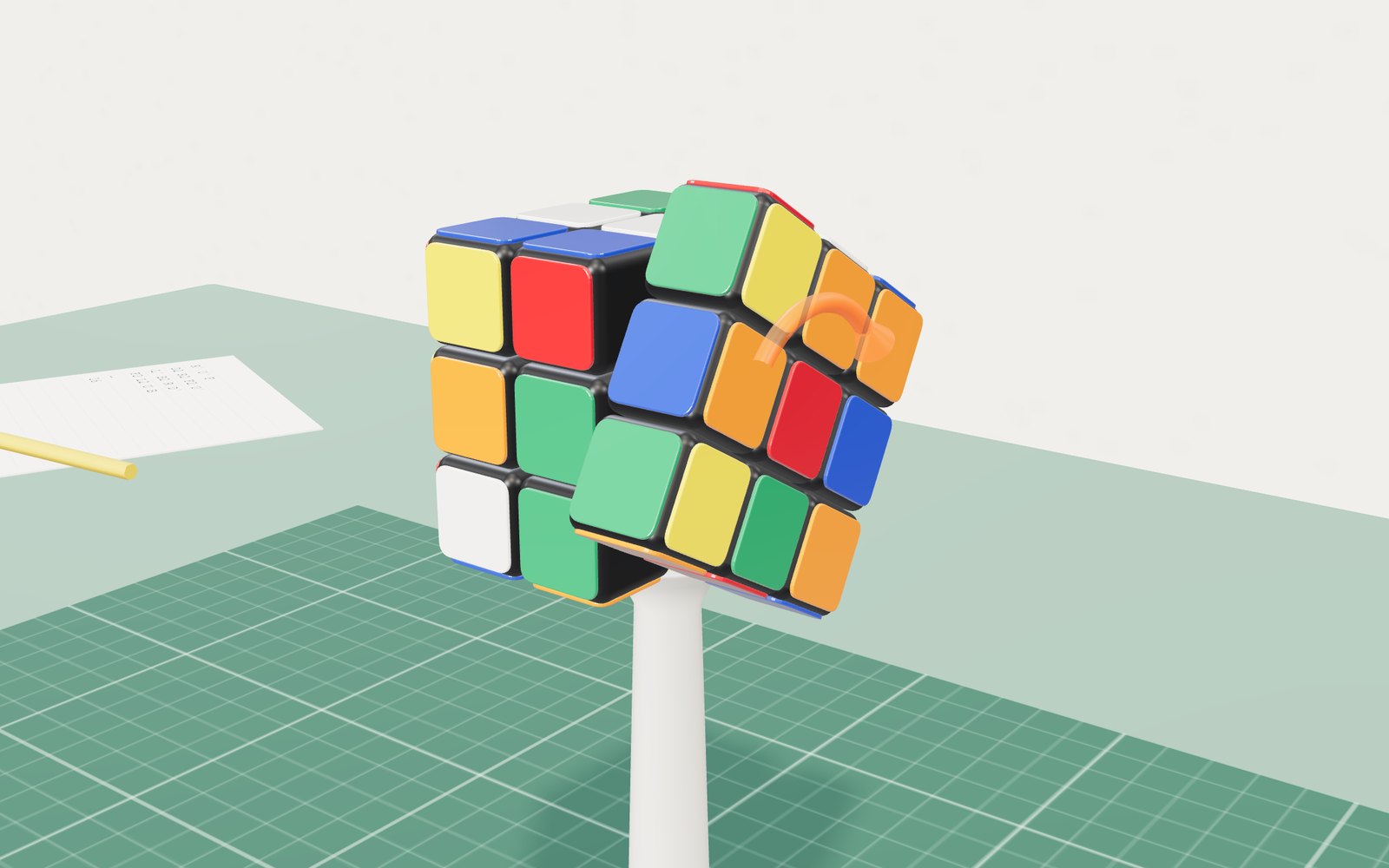
How to solve a 3×3 cube, step by step
A 3×3 cube has 43,252,003,274,489,856,000 positions, and every one of them can be solved in 20 moves or fewer.
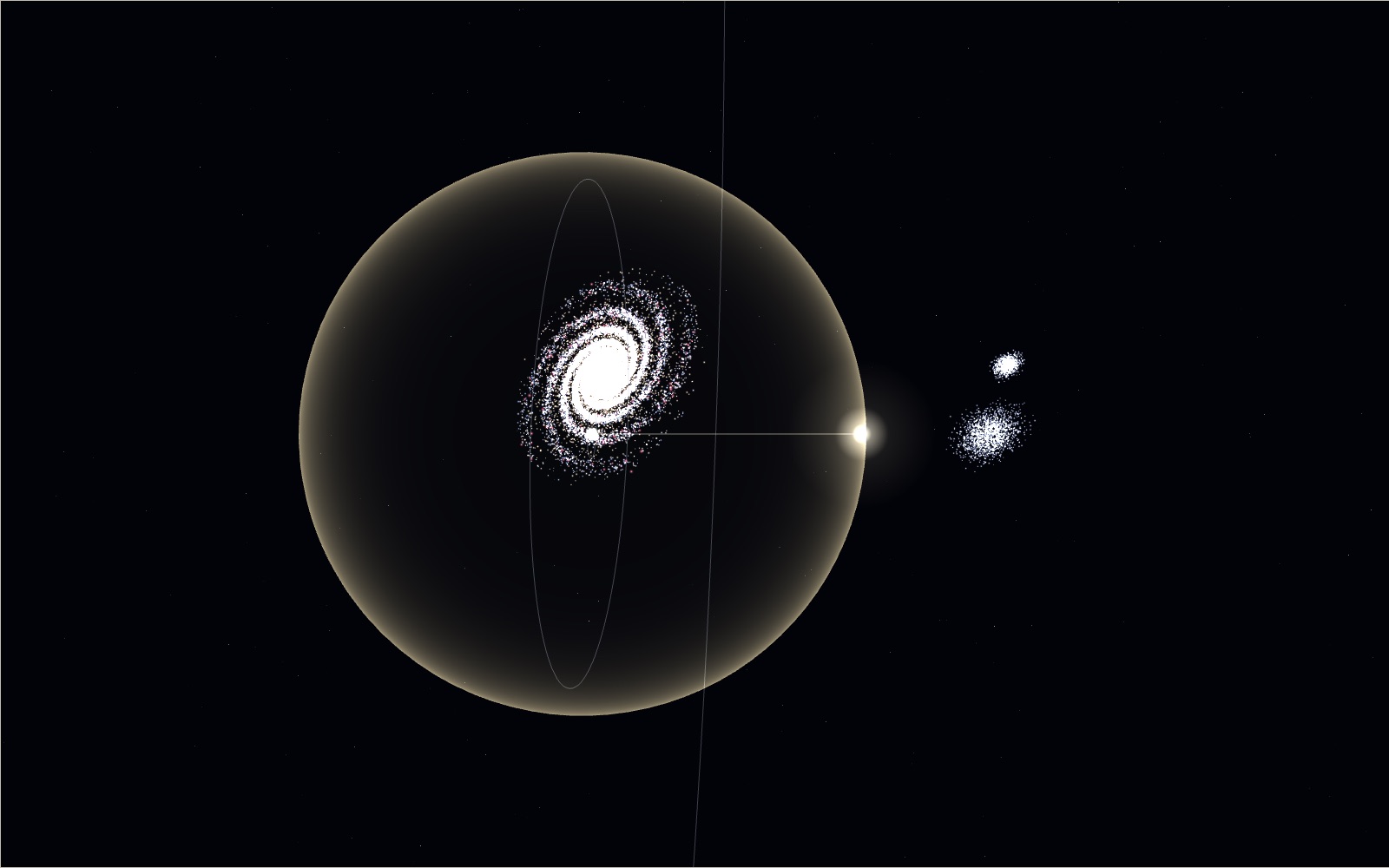
Travelling at the speed of light
Light goes round the equator 7.5 times in a second, yet the same light needs 2.5 million years to reach the Andromeda galaxy.