FIG. 04How It Works
Bicycle gears: which gear makes climbing a hill easier
In a 50 by 11 gear one turn of the pedals moves a road bike 9.57 metres; in 34 by 32 it moves 2.24 metres.
This device cannot show the 3D model. You can read the guide steps below as text.
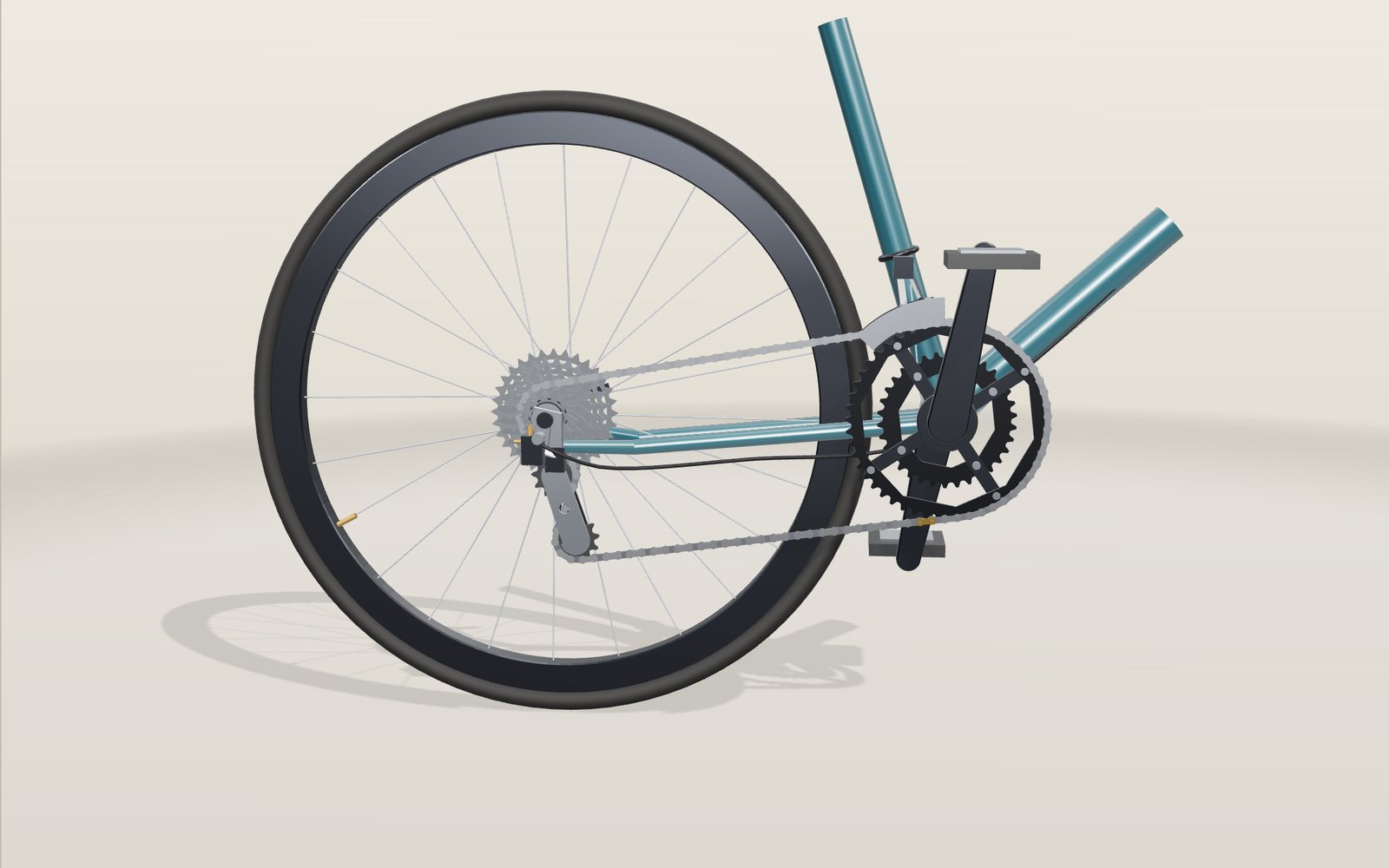
1 / 11 A road bike drivetrainThe cranks turn the chainrings, the chain carries the turn back to a cog on the rear wheel. Use the Front and Rear buttons to change gear and watch the numbers in the corner. Under Controls there is a gear table for 26 real drivetrains.
Drag to turn. Scroll or pinch to zoom.
What the model shows
A lower bicycle gear makes climbing easier by moving the bike a shorter distance for each turn of the pedals. Use a smaller front chainring or a larger rear cog to lower the ratio. The trade-off is more pedal turns for the same distance along the road.
Why can you ride up a steep hill on the same bike that does 50 km/h on the flat? Your legs only work well within a narrow band of pedalling speeds, so the bike has to change how far it travels for each turn of the pedals. This model shows how a road bike does that with two chainrings, eleven rear cogs and a chain that is pushed sideways from one to another.
The drivetrain is a common modern layout: a compact double crankset with 50 and 34 teeth, an 11-speed cassette running from 11 to 32 teeth, a 108-link chain, a rear derailleur and a front derailleur. The rear wheel carries a 700x25c tyre. The frame is cut short so that only the bottom bracket, the chainstays and the stubs of the seat tube and down tube remain.
Use the Front and Rear buttons on the stage, or the sliders under Controls, to change gear. The chain moves across, the rear derailleur swings to take up the slack, and the readout in the corner shows the ratio, the distance the bike travels per turn of the pedals and the speed at the cadence you choose (90 pedal turns a minute to start with).
The lower half of the readout answers a different question: on this road, which gear should you be in? Set the rider's power, the grade and the wind under Controls, and the model works out the speed the rider can hold and the cadence that speed needs in the gear you are in. Under the controls there is also a gear table for 26 real drivetrains, from road and mountain bikes to hub gears and a BMX, and buttons that fly the camera to the derailleur, the pulleys and the teeth.
Why one turn of the pedals is not one turn of the wheel
The chain is a flexible rack of evenly spaced rollers. Modern bicycle chain has a pitch of 1/2 inch, or 12.7 mm, from one pin centre to the next. Each roller drops into a gap between two teeth, so a sprocket with 50 teeth moves exactly 50 links of chain per revolution, and a cog with 16 teeth turns once for every 16 links that pass over it.
Put the two together. One turn of the cranks pulls 50 links over the chainring, and those 50 links turn a 16-tooth cog 50 ÷ 16 = 3.125 times. The cog is fixed to the rear wheel through the freehub, so the wheel also turns 3.125 times. That number, front teeth divided by rear teeth, is the gear ratio. It does not depend on the length of the chain or on how far apart the sprockets are.
Smaller rear cogs and larger chainrings give a higher ratio, which means more distance per pedal stroke and more force needed at the pedal for the same acceleration. Larger cogs and smaller rings give a lower ratio, which is what you want on a climb.
From ratio to distance and speed
The wheel's rolling circumference turns a ratio into distance. CatEye's tyre size chart, used to set up bike computers, gives 2,105 mm for a 700x25c tyre (ETRTO size 25-622). The 622 is the bead seat diameter of the rim in millimetres and 25 is the tyre width, so a rough check is π × (622 + 2 × 25) = 2,111 mm. The measured figure is a little smaller because the tyre squashes where it meets the road.
Three numbers are commonly used to describe a gear, and the readout shows all of them:
- Ratio = front teeth ÷ rear teeth.
- Development (or roll-out) = circumference × front ÷ rear. This is the distance the bike moves for one turn of the pedals.
- Gear inches = wheel diameter in inches × front ÷ rear. The diameter here is 2,105 mm ÷ π = 670.0 mm, or 26.38 in.
Speed follows from development and cadence. At 90 pedal turns a minute, speed in km/h = development in metres × 90 × 60 ÷ 1,000. Professional riders were measured at about 89 rpm on long flat stages of the major tours, which is why 90 is the cadence used here.
The numbers, worked out
| Gear | Ratio | Development | Gear inches | Speed at 90 rpm |
|---|---|---|---|---|
| 50 × 11 | 4.55 | 9.57 m | 119.9 | 51.7 km/h |
| 50 × 16 | 3.13 | 6.58 m | 82.4 | 35.5 km/h |
| 50 × 25 | 2.00 | 4.21 m | 52.8 | 22.7 km/h |
| 50 × 32 | 1.56 | 3.29 m | 41.2 | 17.8 km/h |
| 34 × 11 | 3.09 | 6.51 m | 81.5 | 35.1 km/h |
| 34 × 22 | 1.55 | 3.25 m | 40.8 | 17.6 km/h |
| 34 × 32 | 1.06 | 2.24 m | 28.0 | 12.1 km/h |
Take 50 × 11 as an example: 50 ÷ 11 = 4.545, and 2.105 m × 4.545 = 9.568 m per pedal turn. Ninety of those a minute is 861 m a minute, or 51.7 km/h. In the lowest gear, 34 × 32, the same cadence gives 12.1 km/h, so the whole range covers a factor of 4.28 between top and bottom.
Sheldon Brown's glossary gives the usual top gear of a road racing bike as about 108 to 110 gear inches, and the lowest gear of most mountain bikes as about 22 to 26. With an 11-tooth cog this compact double reaches 119.9 at the top, and its bottom gear of 28.0 is close to mountain bike territory.
Two combinations land on almost the same gear. 50 × 16 (3.13) is within one percent of 34 × 11 (3.09), and 50 × 32 (1.56) is almost the same as 34 × 22 (1.55). So 22 combinations do not give 22 different gears. In practice a rider picks a ring for the terrain and does most shifting at the back.
Picking a gear for a hill or a headwind
A gear table tells you how far each gear goes per pedal turn, but not which one to use. That depends on how fast the bike is going, and the speed depends on the road. Martin and his colleagues showed in 1998 that a fairly simple sum predicts the power a road cyclist needs: lifting the weight of rider and bike up the slope, rolling resistance in the tyres, and pushing air out of the way. In their tests the predicted power was within a standard error of 2.7 W of a power meter on the bike.
The model on this page uses the same three terms. The rider and bike weigh 80 kg, the drag area is 0.269 m² (the figure Martin's team measured in a wind tunnel for their rider), the rolling resistance coefficient is 0.004 and 2.5 % of the power is lost in the drivetrain. Those last three are round model values, not measurements of any particular bike. Given a power, the model finds the speed at which the three losses add up to it.
- Flat road, no wind, 200 W: 35.9 km/h. Air takes 164 W and the tyres 31 W. At that speed 50 × 16 needs 91 pedal turns a minute, so it is the gear closest to 90 rpm.
- 6 % climb, 200 W: 13.4 km/h. Now gravity takes 175 W, the tyres 12 W and the air only 8 W. The gear closest to 90 rpm is 34 × 28, at 87 rpm. In 50 × 11 the same speed would need 23 rpm, which no rider can push at 200 W.
- 10 % climb, 200 W: 8.5 km/h. Even the lowest gear, 34 × 32, only allows 64 rpm. This is where riders reach for a bigger cassette or a smaller chainring.
- 20 km/h headwind on the flat, 200 W: 24.6 km/h, and the best gear drops to 34 × 16 at 92 rpm.
- 20 km/h tailwind, 200 W: 49.5 km/h, which needs the top gear, 50 × 11, at 86 rpm.
Turn on Pick the gear for me under Controls and the model shifts to the gear whose cadence is closest to your target every time you change the road. It skips the cross-chained gears. The bar chart under the gear table shows the cadence every gear would need, with a band from 80 to 100 rpm, so you can see how few gears are usable on a steep hill and how many are usable on the flat.
Put the five examples side by side and the job of the gears is plain. The speeds run from 8.5 to 49.5 km/h, a factor of almost six, while the cadence should stay near the same 90 rpm. The gears have to take up that factor. This compact double covers 4.28 of it, which is why the rider runs out of low gears on the 10 % climb.
How the chain is moved
The rear derailleur hangs below the axle. Its body is a parallelogram: two links joined at four pivots, so the lower end can move without twisting. A cable pulls it inwards towards bigger cogs, and a spring pulls it back out to the smallest cog when the cable is slack. Because the parallelogram is slanted, the upper pulley also moves down as it moves inwards, keeping a similar gap under each cog. Watch the upper pulley as you click through the cassette.
The cage below it carries two small pulleys, 11 teeth each in the model. A spring turns the cage backwards, and the chain pulls it forwards. In the model the cage angle is solved for every gear so that the loop is exactly 108 links long: in 50 × 32 the lower pulley swings 77° forward of vertical, and in 34 × 11 it swings 55° back. Without this, the chain would have to be long enough for the biggest gear and would hang slack in every other one.
The front derailleur is simpler. Its cage is two plates, one each side of the chain, just above the big ring. When you shift up, the inner plate pushes the chain sideways until its links catch on the teeth of the 50 ring. When you shift down, the outer plate pushes it off towards the 34 and it drops onto the smaller ring.
The chain has to bend sideways to do all this. Every second link has outer plates that overlap the inner plates of its neighbours, and a roller turns freely on each pin, so the rollers can roll into the tooth gaps instead of sliding. One pair of outer plates in the model is a gold quick link, the kind that can be opened by hand to take the chain off.
Cables connect the levers to the derailleurs. Each click of the lever pulls or lets out a set length of steel wire inside its housing. The rear derailleur's spring pulls the other way, so a slack cable means the smallest cog. Two limit screws on the derailleur body stop it at the outermost and innermost cogs, so it cannot throw the chain into the spokes or off the small cog, and a third screw (the B screw) sets how close the upper pulley sits under the cogs. The derailleur hangs from a small hanger bolted to the frame. It is made to bend before the frame does if the derailleur is hit.
A shift, link by link
Turn on Slow-motion shift and press + once. The derailleur moves straight away, and the upper pulley lines up with the next cog. The chain does not jump across all at once, though. Each link keeps the sideways position it had when it left the upper pulley, so the first links to reach the new cog are the ones that have just passed the pulley, and the rest follow as the cassette turns. In the model the cog radius in the chain's path grows in step with the share of links on the cog that have arrived, and the cage swings to keep the loop at 108 links.
That is why a derailleur only shifts while the chain is moving. If you press the lever with the cranks still, the derailleur moves, but the chain waits until you pedal. The model does the same while the cranks are turning. When you pause the animation and then shift, it slides the links across over about half a second instead, so that the stage never stays half shifted.
Real cassettes have shaped teeth and ramps on the sides of the cogs that help the chain climb at set places. The model does not have them; its chain moves sideways in a straight line along the short span between the upper pulley and the cog.
Cross-chaining
The chainrings sit at fixed positions, 39.7 mm and 47.3 mm out from the centre of the frame in the model, while the cogs spread from 24.3 mm to 62.8 mm. With the big ring and the biggest cog the chain runs at about 3.2° to the plane of the sprockets over the 410 mm chainstay. The same happens the other way with the small ring and the smallest cog.
Sheldon Brown and John Allen's guide to gearing explains that efficiency drops as the chain runs at a steeper angle, and advises against the big ring with the biggest cog and the small ring with the small cogs. The chain also tends to rub the front derailleur cage. There is no need for these gears anyway: as the table shows, 50 × 32 is almost the same as 34 × 22, where the chain runs at 0.5°.
Pick the Cross-chaining step in the guide to see it from above. The red label in the readout appears whenever the chain is on the big ring and one of the two largest cogs, or on the small ring and one of the two smallest.
How long the chain is
Park Tool's method for a cassette of up to 36 teeth: wrap the chain round the largest chainring and the largest cog without going through the derailleur, find where the ends meet, then add two rivets, which is one inch. For this model the wrap comes to 105.8 links, so 106 plus 2 gives 108. Park Tool then checks the opposite case: on the smallest ring and smallest cog there should be no slack, and the derailleur should not be pulled so far back that the chain touches itself.
Twenty-six real drivetrains
The model's parts are one common road set-up, but bikes are geared for very different jobs. The gear table under Controls holds 26 drivetrains. The cassettes and hubs come from the makers' own documents (Shimano dealer manuals and exploded views, SRAM's cassette list, Rohloff's technical data); where a table pairs a cassette with a chainring that the maker does not list with it, the table says so. To compare gearing rather than wheels, every set-up is worked out on the model's 700x25c wheel.
| Drivetrain | Gears | Really different | Range | Lowest gear | Highest gear |
|---|---|---|---|---|---|
| This model, 50/34 × 11-32 (Shimano 105 R7000 cassette) | 22 | 18 | 428 % | 2.24 m | 9.57 m |
| Road, 50/34 × 11-28 | 22 | 18 | 374 % | 2.56 m | 9.57 m |
| Road 12-speed, 50/34 × 11-34 (Dura-Ace R9200 cassette) | 24 | 21 | 455 % | 2.10 m | 9.57 m |
| Gravel 1×11, 40 × 11-42 | 11 | 11 | 382 % | 2.00 m | 7.65 m |
| Gravel 2×12, 43/30 × 11-36 | 24 | 19 | 469 % | 1.75 m | 8.23 m |
| Mountain 1×12, 32 × 10-50 (SRAM Eagle) | 12 | 12 | 500 % | 1.35 m | 6.74 m |
| Mountain 1×12, 32 × 10-52 (SRAM Eagle Transmission) | 12 | 12 | 520 % | 1.30 m | 6.74 m |
| Mountain 1×12, 32 × 10-51 (Shimano XTR M9100) | 12 | 12 | 510 % | 1.32 m | 6.74 m |
| Mountain 3×9, 44/32/22 × 11-34 | 27 | 21 | 618 % | 1.36 m | 8.42 m |
| Touring 3×10, 48/36/26 × 11-36 (Deore T6010 crank) | 30 | 23 | 604 % | 1.52 m | 9.19 m |
| Rohloff Speedhub 14, 40 × 16 | 14 | 14 | 525 % | 1.47 m | 7.71 m |
| Shimano Alfine 11, 42 × 20 | 11 | 11 | 409 % | 2.33 m | 9.52 m |
| Shimano Nexus 8, 42 × 20 | 8 | 8 | 306 % | 2.33 m | 7.14 m |
| 3-speed hub, 46 × 22 | 3 | 3 | 178 % | 3.30 m | 5.87 m |
"Really different" counts the gears that are more than 3 % apart once all of them are put in order. On a double or triple many combinations overlap: the 3×10 touring set has 30 combinations but only 23 distinct gears, and some of those are cross-chained. A single chainring with a wide cassette gives fewer gears but no overlaps and no front derailleur, which is why most new mountain bikes use one ring. The cost is bigger jumps between cogs: on the Eagle 10-50 cassette the steps are 12 to 20 %, against 8 to 14 % on the model's road cassette.
The mountain bikes' lowest gears move about 1.3 m per pedal turn, less than two thirds of the model's 2.24 m, because they climb slopes that a road bike never sees. Their highest gears, about 6.7 m, are much lower than the road bike's 9.57 m, because off-road speeds are lower.
Hub gears, one gear and fixed gear
A hub gear hides the gears inside the rear hub. Sheldon Brown's page on internal-gear hubs explains the basic three-speed: a sun gear fixed to the axle, planet gears round it on a carrier, and a ring gear with teeth on the inside. In low gear the sprocket drives the ring gear and the carrier drives the hub, so the wheel turns three times for every four turns of the sprocket (25 % lower). In the middle gear the drive goes straight through. In high gear the sprocket drives the carrier and the ring gear drives the hub, 33 % higher. Hubs with more gears stack two or three planetary stages.
Rohloff's Speedhub has 14 gears in even steps of 13.6 %, a range of 526 %, close to a mountain bike's 1×12. Its eleventh gear is direct drive. Shimano's Nexus 8 hub covers 307 % in uneven steps from 0.527 to 1.615, and the oil-filled Alfine 11 covers 409 %. Two things set hubs apart from derailleurs: the chain runs straight on one sprocket, so there is no cross-chaining, and you can change gear while standing still at traffic lights. Sheldon Brown notes that hubs are heavier and slightly less efficient in some gears, though the direct-drive gear can do better than a derailleur because there are no pulleys.
A single-speed bike has one chainring and one sprocket on a freewheel, so it can coast. A fixed-gear bike has no freewheel at all: the pedals turn whenever the wheel turns. Track bikes are built this way. In the table under Controls the single, fixed and BMX gears are each one cell, at 5.53 m, 6.88 m and 5.85 m per pedal turn on the model wheel.
What is simplified in the model
The chain moves across link by link while the cranks turn, but its sideways path between the upper pulley and the cog is a straight line, and there are no shift ramps on the cogs. When the cranks are stopped the model slides the links across over half a second so that a shift is never left half done; a real chain would wait. The cage pivots about the upper pulley axle here, which keeps the geometry easy to follow. The cog spacing of 3.85 mm and the chainline of 43.5 mm are round numbers chosen for the model, not a manufacturer's specification. The speeds in the upper readout assume the tyre does not slip. The riding model in the lower readout uses steady speed only: it leaves out accelerating, bearing friction and changes in air density, and its mass, rolling and drivetrain figures are round values. The bike tilts with the grade so you can see the slope, but the chain and derailleur do not change with it.
Where derailleur gears came from
The Tour de France allowed derailleurs only in 1937, and in the late 1930s Simplex's Champion du Monde became the first that did not need the rider to pedal backwards to shift. Campagnolo's Gran Sport, first built around 1949 and 1950, was a refined cable-operated parallelogram design. The slant parallelogram used on the derailleur in this model comes from a SunTour patent with a priority date of 1964, and in the mid-1980s (sources give 1984 or 1985) Shimano's indexed shifting made each click of the lever move the chain by exactly one cog. Since then the number of cogs has kept growing. Shimano's Dura-Ace R9200 road cassette has twelve, from 11 to 30 or 34 teeth, and SRAM's Eagle mountain cassettes reach 50 and 52 teeth behind a single chainring.
Questions
What does a gear ratio of 3.13 mean?
The rear wheel turns 3.13 times for each turn of the pedals. On a 700x25c tyre that moves the bike 2.105 m × 3.13 = 6.58 m.
Why is the chain pitch 12.7 mm?
Bicycle chain follows the half-inch roller chain standard (ANSI number 40 size), and every chainring, cog and pulley has teeth spaced to match. A worn chain stretches beyond 12.7 mm per link and no longer fits the teeth properly.
Which is a harder gear, 50 × 11 or 34 × 32?
50 × 11. Its ratio is 4.55 against 1.06, so each pedal turn moves the bike 9.57 m instead of 2.24 m and needs more force for the same acceleration.
What is cross-chaining?
Using the big ring with the largest cogs, or the small ring with the smallest cogs. The chain runs at an angle across the bike, wears faster and rubs the front derailleur. An almost identical ratio is available on the other ring.
Why does the rear derailleur have two pulleys?
The upper pulley guides the chain onto the chosen cog. The lower one, on a sprung cage, takes up the slack, because in the model 50 × 32 wraps about 17 more links round the sprockets than 34 × 11 does.
How fast is 90 rpm in each gear?
Multiply the development by 90 and by 60 and divide by 1,000 to get km/h. In this model it ranges from 12.1 km/h in 34 × 32 to 51.7 km/h in 50 × 11.
Does the length of the chain change the gear ratio?
No. The ratio only depends on the number of teeth. Chain length matters for whether all gears can be reached without the derailleur running out of travel.
Which gear should I use on a 6 % hill?
It depends on your power, but in the model a rider putting out 200 W holds 13.4 km/h, and 34 × 28 keeps the cadence near 90 rpm (87 rpm). Set the grade, wind and power under Controls and turn on Pick the gear for me to see the model's choice.
Why do most new mountain bikes have only one chainring?
A wide cassette such as SRAM's 10-50 gives a range of 500 % with one ring, enough for most trails, and leaves out the front derailleur, its cable and the overlapping gears. The steps between cogs are bigger, 12 to 20 % on that cassette.
How does a hub gear change gear without moving the chain?
Planetary gears inside the hub change how fast the hub shell turns relative to the sprocket. In a three-speed the low gear turns the wheel three times for every four turns of the sprocket and the high gear four times for every three. The chain stays on the same sprocket.
Why does a shift only happen while I pedal?
The derailleur moves at once, but the chain can only move onto the next cog where it meets the teeth, and that happens one link at a time as the chain runs. Turn on Slow-motion shift to watch it.
Terms
- Chainring: a toothed ring attached to the cranks.
- Cog or sprocket: one of the toothed wheels on the rear cassette.
- Pitch: the distance from one chain pin to the next, 12.7 mm.
- Development: the distance the bike travels for one turn of the pedals.
- Gear inches: wheel diameter in inches multiplied by the gear ratio.
- Cadence: pedal turns per minute.
- Chainline: the sideways distance from the centre of the frame to a chainring or cog.
- Freehub: the ratchet in the rear hub that carries the cassette and lets the wheel coast.
- Range: the highest gear ratio divided by the lowest, often written as a percentage.
- Hub gear: gears inside the rear hub, usually planetary, shifted without moving the chain.
- Quick link: a chain link that can be opened by hand.
- Limit screws: the screws that stop a derailleur at its outermost and innermost positions.
Sources
- VeloNews (Velo), How the Tour de France reluctantly embraced derailleurs, 2017 (derailleurs allowed in the Tour from 1937; Simplex's Champion du Monde of the late 1930s, the first not to need back-pedalling; Campagnolo's Gran Sport). https://velo.outsideonline.com/road/road-racing/how-tour-de-france-embraced-derailleurs/ (checked 2026-10-17)
- Tetsuo Maeda, US Patent 3,364,762, bicycle derailleur, priority 7 October 1964, published 23 January 1968, Google Patents (the SunTour slant parallelogram). https://patents.google.com/patent/US3364762A/en (checked 2026-10-17)
- VeloNews (Velo), The drivetrain wars: A history of shifting (SunTour's patented slant parallelogram; Shimano Indexing System in the 1980s). https://velo.outsideonline.com/the-drivetrain-wars (checked 2026-10-17)
- A. Lucía, J. Hoyos and J. L. Chicharro, Preferred pedalling cadence in professional cycling, Medicine & Science in Sports & Exercise 33 (2001), PubMed abstract (89.3 rpm on flat stages of the Giro, Tour and Vuelta). https://pubmed.ncbi.nlm.nih.gov/11474339/ (checked 2026-10-17)
- CatEye, Tire size chart (700x25C, 25-622, 2,105 mm). https://www.cateye.com/data/resources/Tire_size_chart_ENG_151106.pdf (checked 2026-10-16)
- Sheldon Brown, Bicycle Glossary: G (gear inches; typical high and low gears). https://www.sheldonbrown.com/gloss_g.html (checked 2026-10-16)
- Sheldon Brown and John Allen, Gear Theory for Bicyclists. https://www.sheldonbrown.com/gear-theory.html (checked 2026-10-16)
- Park Tool, Chain Length Sizing (two rivets make one inch, so one link pitch is half an inch). https://www.parktool.com/en-us/blog/repair-help/chain-length-sizing (checked 2026-10-16)
- Shimano, Dealer's Manual DM-RACS001, Cassette Sprocket (CS-R7000 11-32T: 11-12-13-14-16-18-20-22-25-28-32; CS-R7000 11-28T; CS-R9100 11-30T). https://si.shimano.com/en/pdfs/dm/RACS001/DM-RACS001-03-ENG.pdf (checked 2026-10-17)
- Shimano, CS-R9200 12-speed exploded view (11-30T and 11-34T tooth combinations). https://si.shimano.com/en/pdfs/ev/CS-R9200-4808/EV-CS-R9200-4808A.pdf (checked 2026-10-17)
- Shimano, Dealer's Manual DM-RACS010, Cassette (CS-R7100 11-34T, CS-HG710 11-36T). https://si.shimano.com/en/pdfs/dm/RACS010/DM-RACS010-06-ENG.pdf (checked 2026-10-17)
- Shimano, XTR M9100 series manual (CS-M9100 10-45T and 10-51T). https://si.shimano.com/en/pdfs/sm/XTR_M9100_WOP/XTR_M9100_WOP_v03_ENG.pdf (checked 2026-10-17)
- SRAM, Mountain cassettes (cog sizes of the 10-50, 10-52, 11-42, 11-36, 11-34, 11-32 and 11-28 cassettes). https://www.sram.com/en/sram/mountain/products/cassettes (checked 2026-10-17)
- SRAM support, What chainring size options do you offer for eTap AXS cranksets? (50/37, 48/35, 46/33, 43/30; 1x 36 to 46). https://support.sram.com/hc/en-us/articles/6520142397851-What-chainring-size-options-do-you-offer-for-eTap-AXS-cranksets (checked 2026-10-17)
- Shimano, FC-T6010 Deore trekking crankset (48-36-26T, chain line 50 mm). https://bike.shimano.com/en-NZ/products/components/pdp.P-FC-T6010.html (checked 2026-10-17)
- Shimano, GRX crankset 1x11s FC-RX810-1 (40T and 42T). https://bike.shimano.com/en-NA/products/components/pdp.P-FC-RX810-1.html (checked 2026-10-17)
- Rohloff, Speedhub technical data (14 gears, even 13.6 % steps, 526 % range, smallest permissible ratio about 1.9). https://www.rohloff.de/en/service/handbook/speedhub/technical-data (checked 2026-10-17)
- Sheldon Brown and John Allen, Internal-gear hubs (how a three-speed works; shifting at a stop). https://www.sheldonbrown.com/internal-gears.html (checked 2026-10-17)
- Sheldon Brown, Shimano Nexus 8-speed and Shimano Alfine 11-speed (gear ratios 0.527 to 1.615 and 0.527 to 2.153). https://www.sheldonbrown.com/nexus8.shtml and https://www.sheldonbrown.com/alfine-11.html (checked 2026-10-17)
- Sheldon Brown, Rohloff Speedhub (eleventh gear is direct drive; average 13.6 % between gears). https://www.sheldonbrown.com/RohloffHub.html (checked 2026-10-17)
- J. C. Martin, D. L. Milliken, J. E. Cobb, K. L. McFadden and A. R. Coggan, Validation of a mathematical model for road cycling power, Journal of Applied Biomechanics 14 (1998) 276-291, PubMed (standard error 2.7 W) and the full text at the University of Utah (drag area 0.269 m² at 0° yaw, Table 1). https://pubmed.ncbi.nlm.nih.gov/28121252/ and https://collections.lib.utah.edu/dl_files/b4/8e/b48ef26086091662c561e673d7bd990d77868437.pdf (checked 2026-10-17)
- Calculations on this page: ratio = F ÷ R; development = 2.105 m × F ÷ R; gear inches = (2,105 mm ÷ π ÷ 25.4) × F ÷ R; speed = development × 90 × 60 ÷ 1,000; sprocket pitch radius = 12.7 mm ÷ (2 sin(π ÷ N)); riding power = v × 80 kg × 9.81 × (0.004 cos θ + sin θ) + ½ × 1.225 × 0.269 × (v + wind)² × v, divided by 0.975.
More exhibits
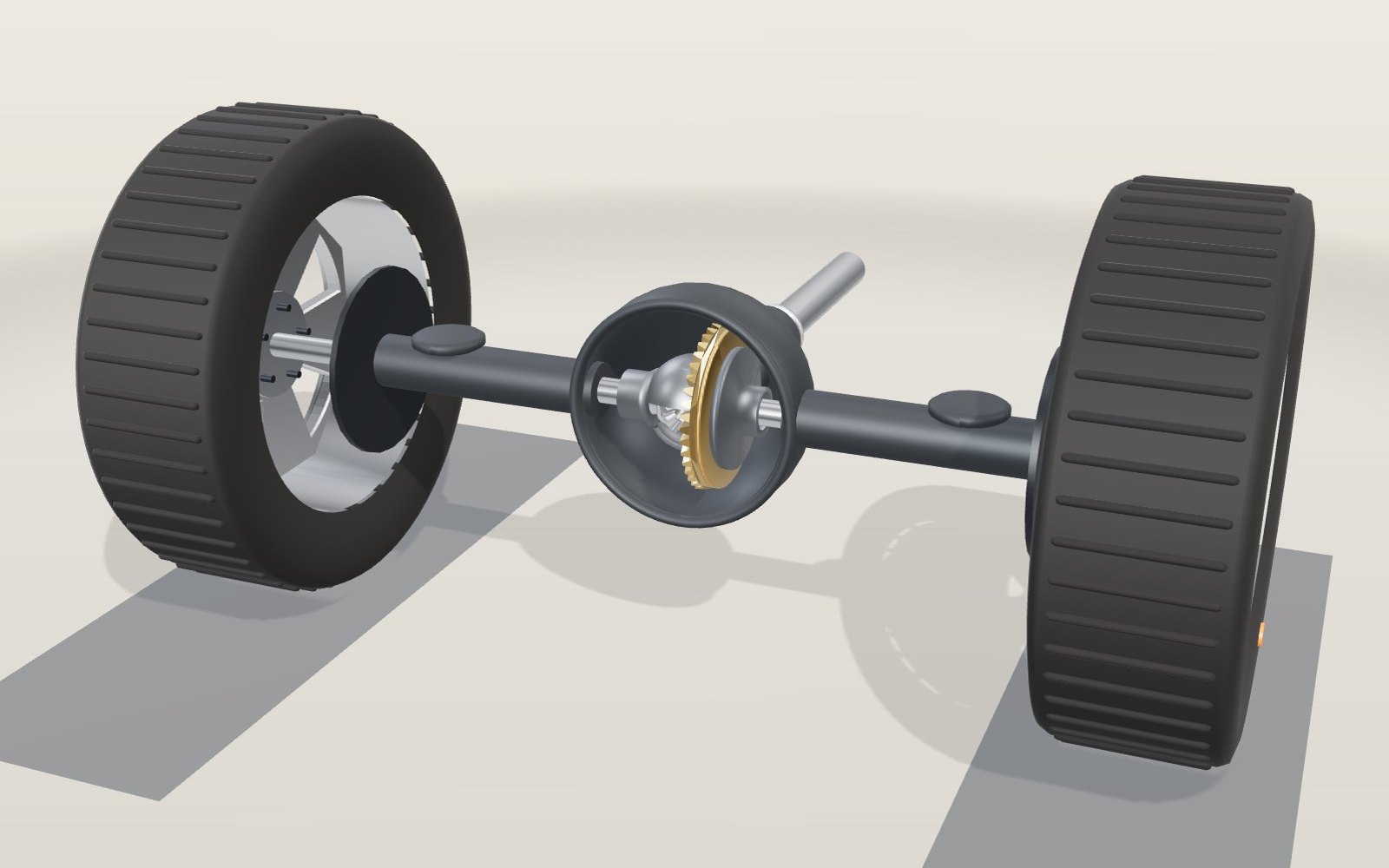
How does a differential work in a car? A 3D gear model
Round a 10 m bend at 50 km/h and the outer rear wheel turns 17% faster than the inner one, yet both are driven from the same shaft.
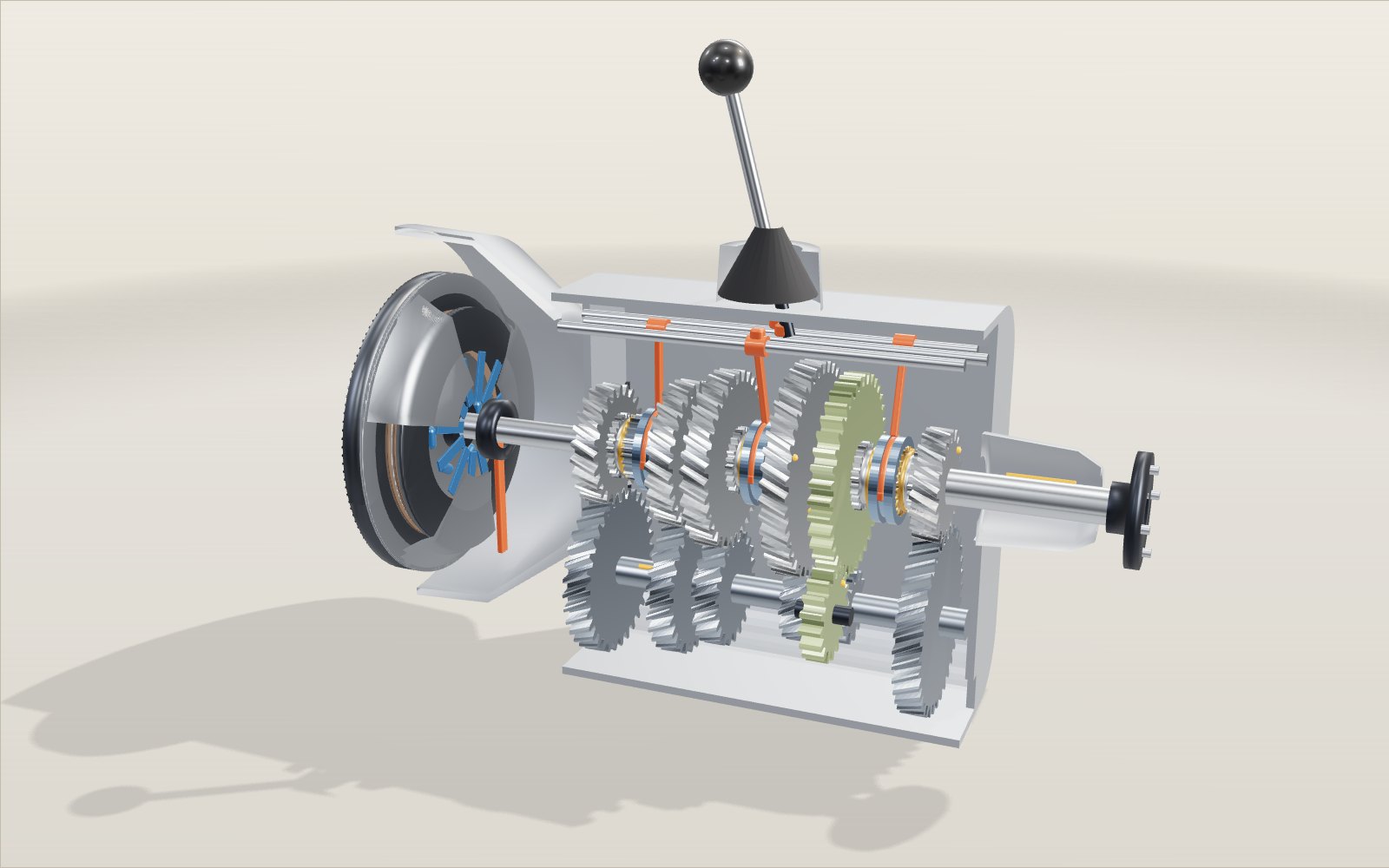
How a manual gearbox works
At 3,000 rpm the same engine moves the car at 23 km/h in first and 115 km/h in fifth, and a brass ring the size of a biscuit decides when the next gear can go in.
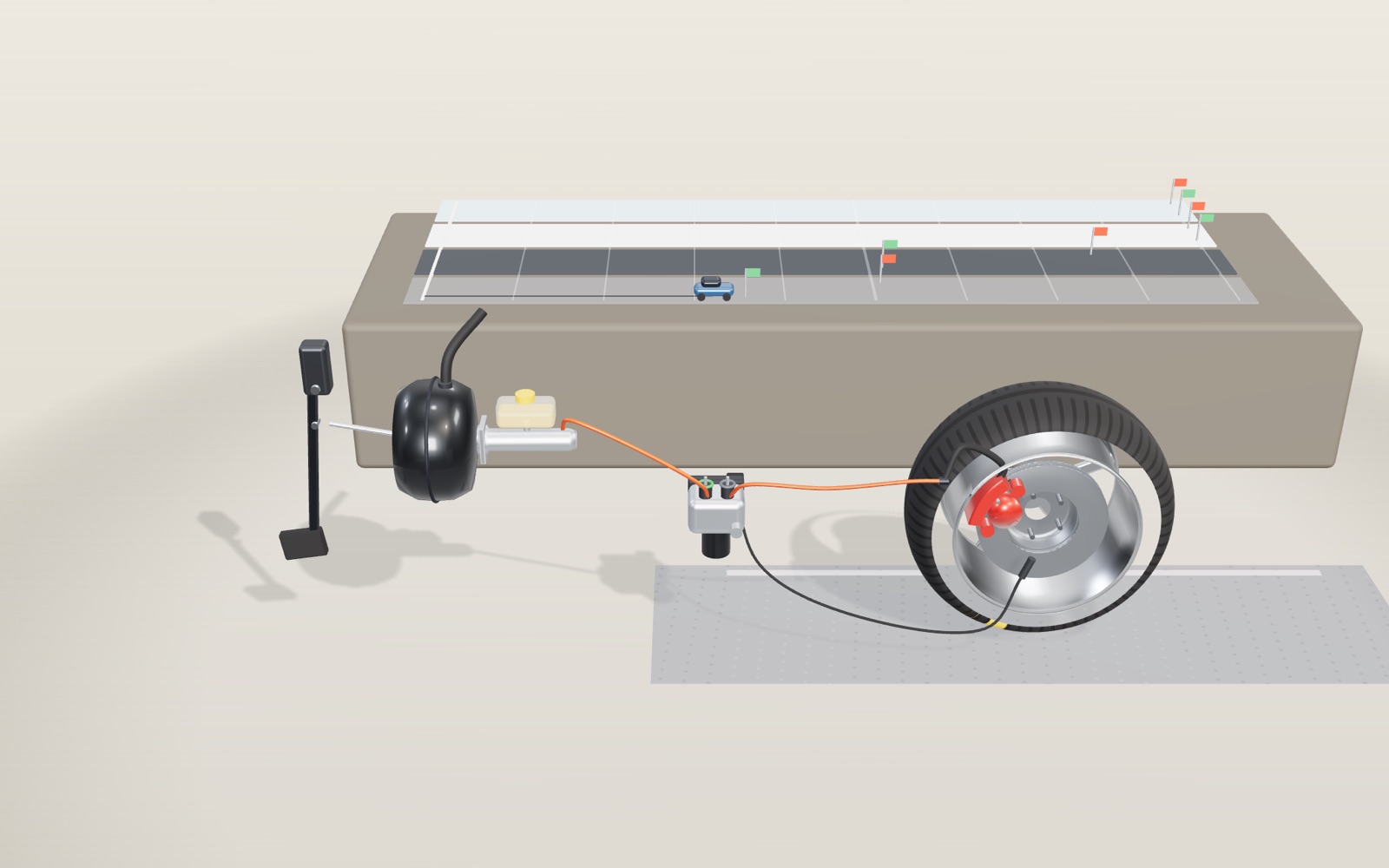
Disc brake and ABS simulator: how they work, step by step
On a dry road at 100 km/h a skidding tyre needs about 51 m to stop, while a tyre that ABS keeps turning stops the same model car in 36 m.
Billiards angles: aiming, spin and the diamond system, step by step
Two equal balls that meet without spin part at a right angle, and a ball struck at its centre slides for 12/49 of v²/μg before it starts to roll.
Roller coaster physics: how roller coasters work
A train that creeps over a 42 m lift hill at 3 m/s is doing 99 km/h at the bottom, and nothing but gravity has pushed it.
Origami: 20 models to fold step by step and unfold
A crane uses about 30 folds, a cup six; every flat-folded point you make has mountains and valleys that differ by exactly two.
How a steam locomotive works
Mallard's driving wheels are 2.03 m across, taller than most people, and at its record 126 mph they turned almost nine times a second.
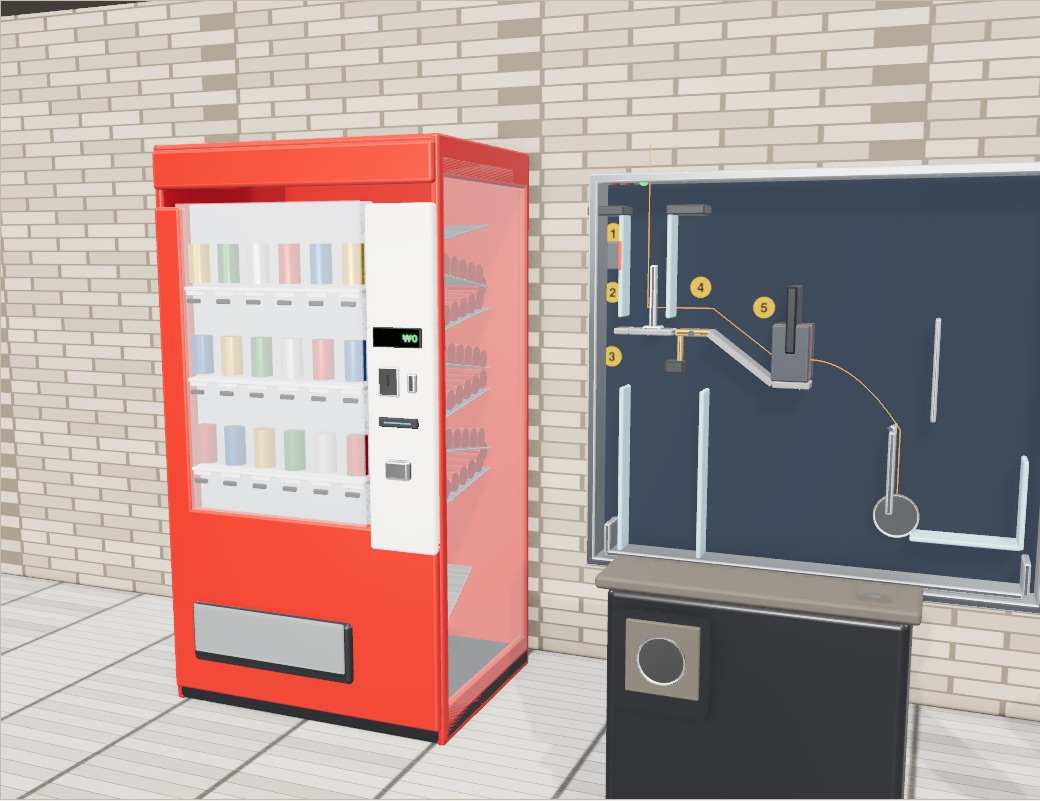
How does a vending machine recognise coins?
A 100 won coin is not attracted to a magnet, yet the magnet inside a vending machine is what tells it from a copper fake.
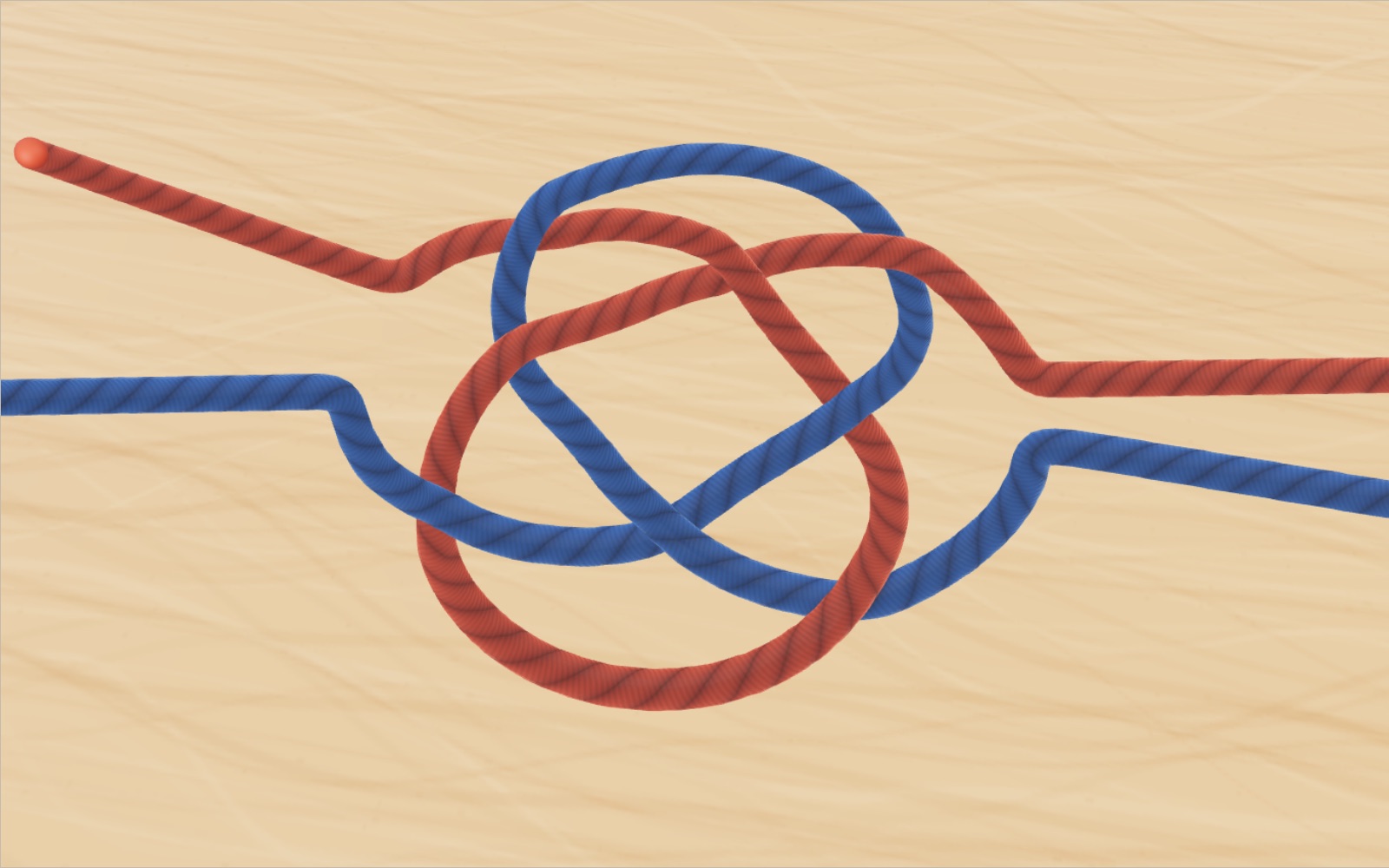
How to tie knots: 40 knots step by step
In one set of break tests a bowline kept about 63% of the rope's strength and a sheet bend about half.
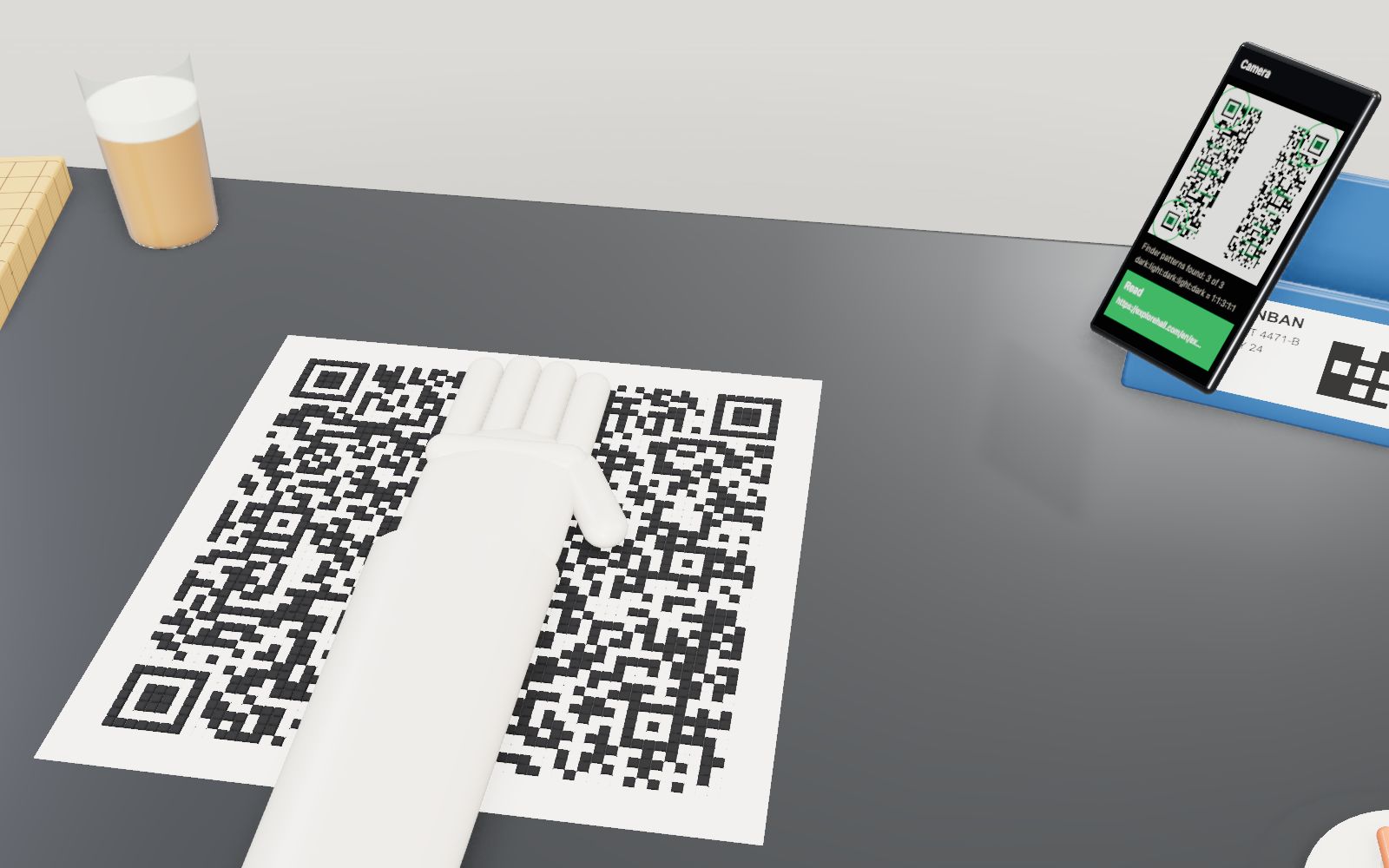
How a QR code is read
Cover 30 % of a QR code with your hand and a phone still reads it. Cover one corner and it does not.
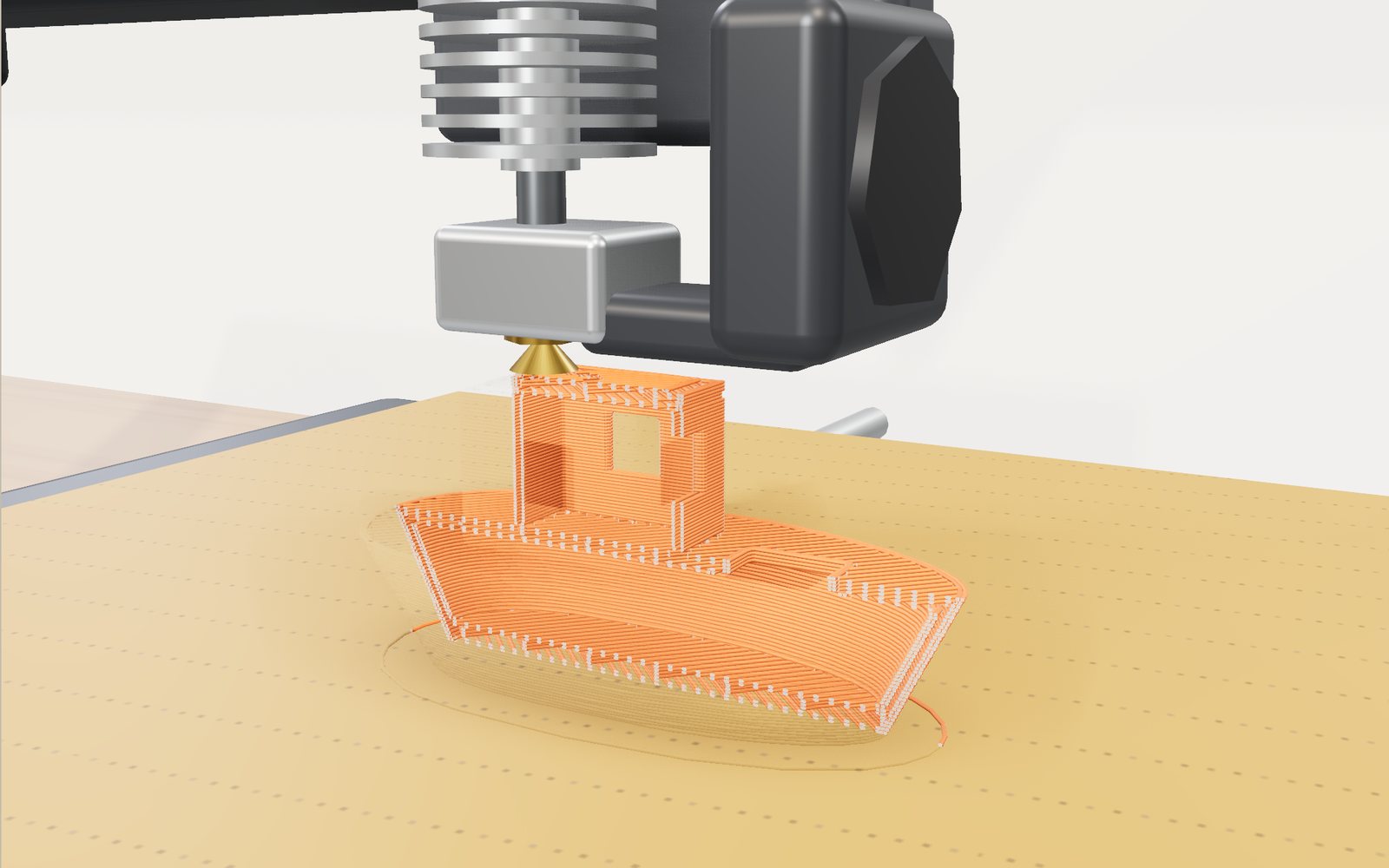
How a 3D printer works, layer by layer
A 20 mm cube printed in 0.2 mm layers is exactly 100 layers, each drawn by a nozzle 0.4 mm wide.
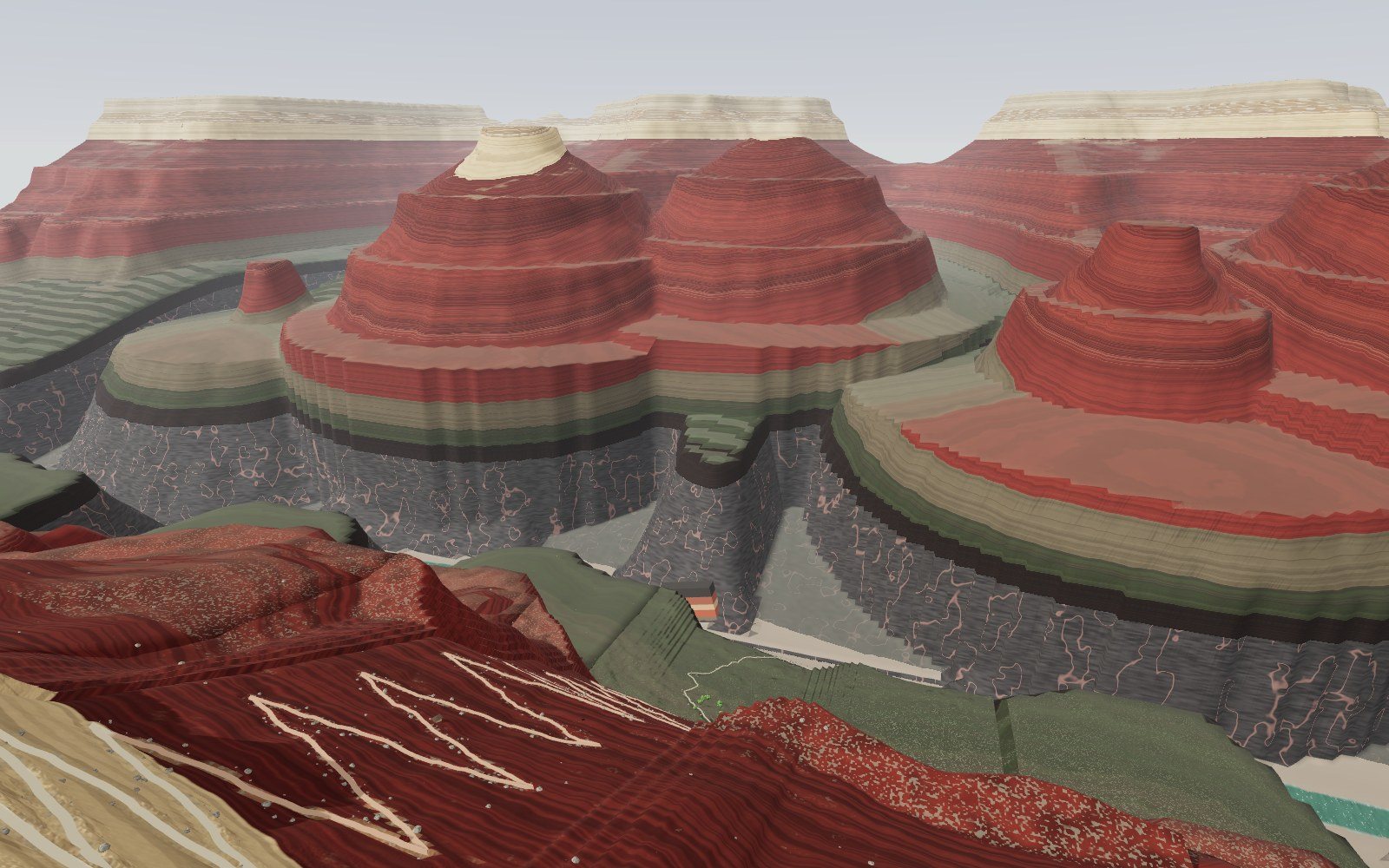
Walk down the Grand Canyon rock layers
Walk 1,360 m down the Bright Angel Trail through 13 rock layers, from a 270-million-year-old sea floor on the rim to 1.75-billion-year-old schist by the river.