FIG. 55Senses
Roller coaster physics: how roller coasters work
A train that creeps over a 42 m lift hill at 3 m/s is doing 99 km/h at the bottom, and nothing but gravity has pushed it.
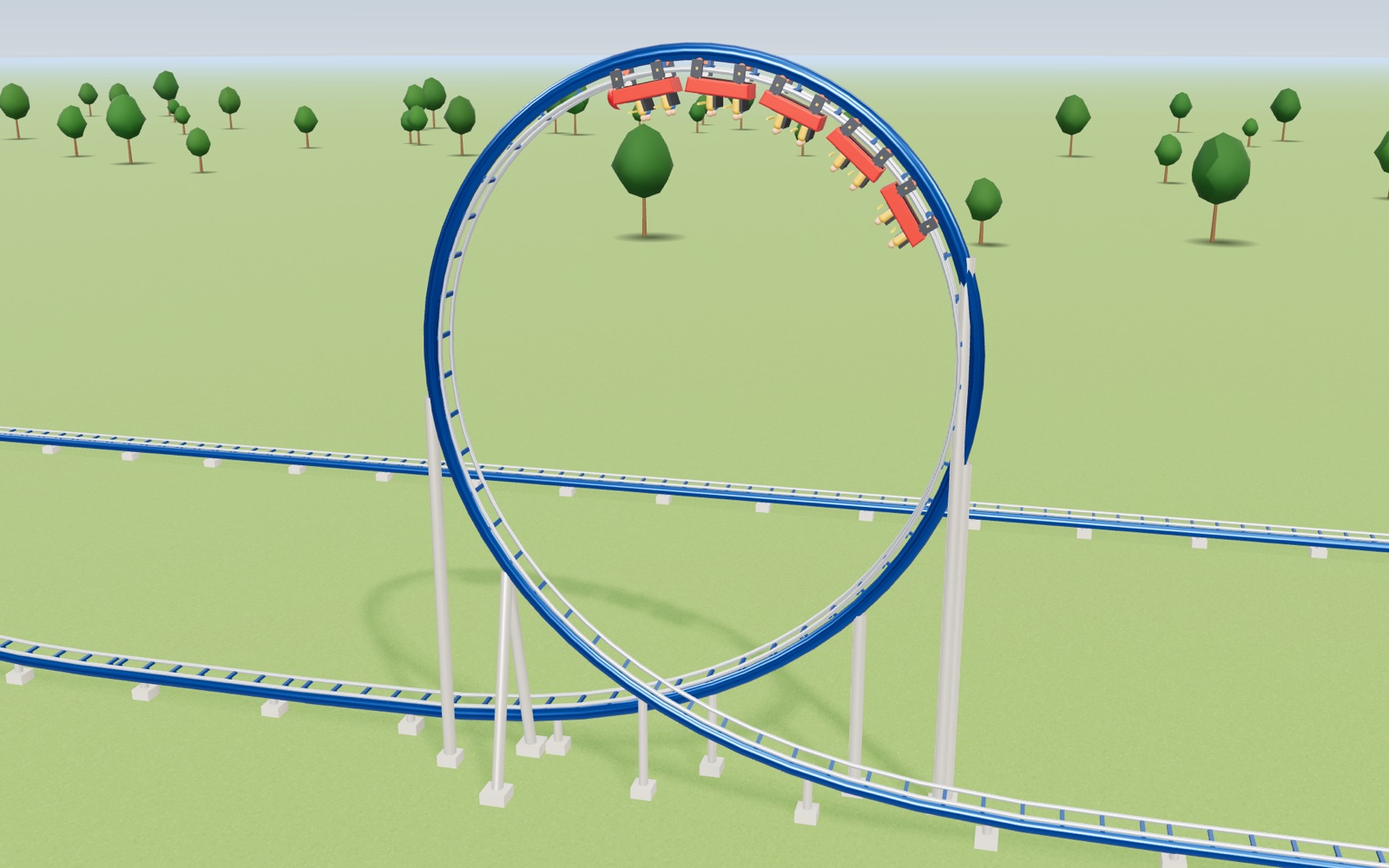
This device cannot show the 3D model. You can read the guide steps below as text.
1 / 16 The chain lift does all the workA chain pulls the train up a 40° slope at 3 m/s until the riders are 42.5 m up, 40 m above the valley. Every kilogram of train gains 9.81 × 40 = 392 joules. After the crest no motor touches the train until the brakes. With Sound on you hear the anti-rollback dogs clack over the rack.
Drag to turn. Scroll or pinch to zoom.
A ride with no engine after the first hill
How do roller coasters work? A chain lift or a launch gives the train all of its energy at the start. After that, gravity turns height into speed on every drop and speed back into height on every climb, while friction and air drag slowly use the energy up, so each hill has to be lower than the one before.
Stand at the bottom of a big coaster and listen. On the way up you hear the clack of the chain lift. After the top there is only the roar of wheels on steel. From the crest of the lift hill to the brakes at the end, nothing on the train is driving it. Everything it does after that point (the drop, the loop, the floating moment on the next hill) is paid for by the height the chain gave it.
This exhibit has twelve model coasters built from the same set of pieces: a steel looper, an early circular loop, a wooden out-and-back, a launched top hat, an inverted coaster, a wing coaster, a 4D coaster with spinning seats, a shuttle loop, a family coaster, a hyper coaster, a giga coaster and a mine train. None of them copies a real ride. Each is a "model course" laid out to show one idea, and the case list under the controls gives real rides of the same kind with their published figures. A catalogue of 48 real rides builds an approximate model of any of them in the same park.
The rides you watch are not animations along a fixed timetable. The model works out the speed step by step along the track from energy, gravity, rolling friction and air drag. When you change the first drop, the loop radius or the launch speed, the speed, the loads on the riders and the result at each loop top all change with it. You can also build a course of your own from up to eight pieces and see whether the train gets round.
What the chain lift stores
On the steel looper, the chain drags the train up a 40° slope at 3 m/s until the riders are 42.5 m above the ground. The bottom of the first drop is 40 m lower. Lifting one kilogram through 40 m takes
m × g × h = 1 kg × 9.81 m/s² × 40 m = 392 J
The model train weighs 6,000 kg with twenty riders, so the chain hands it about 2.35 million joules of potential energy. That store is all the train has to spend for the rest of the ride. Every hill after the lift has to be lower than the crest, and the real question for a coaster designer is how much of the store is still left at each point on the track.
Switch Sound on and watch the display beside the station. A toothed rack runs up the lift next to the chain, and a hinged dog under each car drops into every tooth as the car climbs. That is the clacking. If the chain ever stopped, the next tooth would catch the car before it could roll back. The model lets the dog drop into a tooth every 0.3 m, a spacing chosen for the sound rather than taken from one ride.
Height turns into speed
On the way down, potential energy becomes kinetic energy. For each kilogram, the energy of motion is ½v², so with no losses
½v² = ½v₀² + g × h
where v₀ is the 3 m/s the train already had at the crest. For a 40 m drop that gives v = √(3² + 2 × 9.81 × 40) = 28.2 m/s, or about 101 km/h. With rolling friction and air drag switched on, the model reaches 99 km/h at the bottom. Mass does not appear in the formula, so an empty train and a full one reach almost the same speed.
Try the First drop slider. At 60 m the bottom speed rises to 121 km/h. At 25 m it falls to 79 km/h, and the train no longer has the energy to get round a 26 m loop. It slows, stops partway up and rolls back down.
What a rider feels as g
The number on a coaster's fact sheet, such as "4.5 g", is not the acceleration of the train. It is how hard the seat pushes on you, divided by your normal weight. Sitting still you read 1 g. When the track bends upward, the seat has to push harder than your weight to turn you, and the extra push is v²/R per kilogram, where R is the radius of the curve. When the track bends downward faster than you would fall, the seat pushes less, and you feel light.
The model works out this "seat load" from the train's speed, the curve of the track and the pull of gravity, in three directions: through your body from seat to head, sideways, and forwards along your back. The red line in the graph shows the first one over the whole ride. The figure beside the ride button shows a seated rider with an arrow for the push of the seat. The arrow is green in the everyday range, turns amber above 3 g and red above 5 g, and turns blue when the seat stops pushing and the lap bar has to hold you in.
Why the model follows the riders' hearts
A real coaster is laid out along the riders' heartline, the line through their chests, not along the rails. The difference is small on a hill, where the riders sit about a metre above the rails. It matters a great deal when the train rolls. If the rails twisted around their own centre, the riders' heads would swing through a wide arc and their bodies would be thrown sideways. If the rails twist around the riders, the riders just turn over.
So the path in this model is the heartline, and the rails are drawn offset from it: 1.1 m below the riders on a sit-down train, 1.75 m above them on an inverted one, beside them on the wing and 4D trains. All the loads in the readout are loads at the heart.
The top of the loop: v² ≥ g·r
At the top of the loop the riders are upside down. Gravity pulls them toward the ground, which is now toward the centre of the loop. If the train moves at exactly the speed where gravity alone bends the path into a circle of radius r, the seat does not need to push at all and the riders float. That speed satisfies
v² = g × r
Any faster and the seat (and the track under the wheels) has to push the riders down as well, so they feel pressed into their seats. Any slower and gravity would pull them off the circle. On a real coaster the upstop wheels under the rails hold the train on the track and the lap bar holds the riders, but they would be hanging in their restraints.
On the steel looper the loop is 26 m tall and its radius at the top is 8.2 m. The train arrives at 53 km/h, so v² = 214 m²/s² against g·r = 9.81 × 8.2 = 80 m²/s². The readout shows that comparison, and riders feel about 1.7 g at the top. The load there follows from the same numbers: v²/(g·r) − 1 = 214 / 80 − 1 = 1.7. Push the Loop radius slider to 17 m and the comparison flips: v² drops to 59 against 105, and the readout reports riders hanging in their restraints.
Why real loops are not circles
The textbook loop is a circle, and its numbers are harsh. For a circle with a weightless top, the bottom speed has to satisfy v² = 5 g r, and the load at the bottom comes to 6 g. Even a train that barely crawls over the top still sees 5 g at the bottom of a circular loop. There is a second problem. A circle joined to straight track starts curving all at once, so the load jumps from 1 g to its full value in an instant.
Turn Clothoid loop off to see this. The model swaps in a circle of the same 26 m height. Its top radius is now 13 m, so it needs v² ≥ 128 at the top instead of 80. As the train enters, the graph shows a step from 1 g straight up to 6.9 g. The circular loop course goes further: a 12 m loop entered at 74 km/h, and a peak above 8 g.
The clothoid loop solves both problems. It is built from an Euler spiral, a curve whose curvature grows in proportion to the distance along it, from zero at the entry to a maximum at the top. In the model the curvature rises evenly over the first half of the loop and falls evenly over the second. The radius is very large where the train is fastest and smallest at the top where it is slowest, so the load rises gradually and peaks at about 4.5 g instead of 6.9 g. A pure clothoid loop is about 3.17 times as tall as its top radius, which is why the default loop has a top radius of 2 × 13 / 3.17 = 8.2 m. Real coasters often mix shapes: some use a circular arc at the top joined to clothoid sides.
Floating over the hill
The next hill on the steel looper is 28.6 m high, lower than the crest so the train can always reach it. Its top is shaped close to the arc a ball follows when you throw it. On that arc the track falls away from the riders almost as fast as they fall, so the seat pushes with less than half their weight, about 0.45 g. NASA Glenn's amusement park physics material makes the same comparison with the KC-135 aircraft that flew parabolas to give researchers weightlessness, broken by pull-outs at about 2 g.
The shape of a hill decides what riders feel at its top. Each hill in the model is designed for a target load at the speed the train should have there: 0.3 g on the steel looper, close to 0 g on the wooden course, around 0.6 g on the family coaster. A train that arrives faster than the design speed feels lighter, one that arrives slower feels heavier.
Airtime, counted
Riders call the light moment at the top of a hill airtime. The readout counts it: every moment when the seat pushes with less than 0.2 g while the train is moving adds to the total. The threshold is a model choice. With it, the steel looper gives no airtime at all, while the wooden out-and-back, with five hills shaped for about 0 g at the top, gives about 7.5 s in one ride. The launched top hat gives 7.4 s, mostly over the top of its tower.
Below 0 g the seat stops pushing and the lap bar starts to pull riders down. The figure turns blue. The wooden course dips to about −0.1 g, the launched top hat to −0.5 g.
Twelve courses
The table lists what the model gives for each course at its starting settings, with friction and air drag on. Heights are the riders' highest point above the ground; airtime counts loads below 0.2 g.
| Course | Highest point | Top speed | Peak load | Lowest load | Airtime | Inversions | Track |
|---|---|---|---|---|---|---|---|
| Steel looper | 43 m | 99 km/h | 4.5 g | 0.3 g | 0 s | 1 | 1,007 m |
| Circular loop | 25 m | 74 km/h | 8.1 g | 0.5 g | 0 s | 1 | 481 m |
| Wooden out-and-back | 36 m | 91 km/h | 3.4 g | −0.1 g | 7.5 s | 0 | 1,087 m |
| Launched top hat | 135 m | 194 km/h | 5.0 g | −0.5 g | 7.4 s | 0 | 1,313 m |
| Inverted | 41 m | 97 km/h | 5.2 g | −0.1 g | 2.1 s | 3 | 873 m |
| Wing | 48 m | 105 km/h | 5.1 g | −1.0 g | 4.5 s | 3 | 1,291 m |
| 4D | 54 m | 111 km/h | 3.7 g | −0.1 g | 4.3 s | 1 | 1,177 m |
| Shuttle loop | 45 m | 94 km/h | 5.3 g | 0.1 g | 2.3 s | 1 | 315 m |
| Family | 13 m | 53 km/h | 2.5 g | 0.6 g | 0 s | 0 | 389 m |
| Hyper | 65 m | 123 km/h | 3.9 g | −0.4 g | 9.8 s | 0 | 1,444 m |
| Giga | 95 m | 149 km/h | 4.8 g | −0.4 g | 8.3 s | 0 | 1,836 m |
| Mine train | 19 m | 64 km/h | 2.6 g | 0.7 g | 0 s | 0 | 642 m |
The wing coaster's −1 g is its heartline roll, where riders hang upside down in a straight line. The family coaster never takes riders below 0.6 g or above 2.5 g. The circular loop is the only course over 6 g, and it is there to show why that kind of loop was abandoned.
The park
The twelve courses stand side by side in one park. Under the controls, each one is drawn from the side, so a hyper coaster's row of humps, a top hat's single spike and a looper's circle can be told apart before you load it. Pressing a card takes the stage to that course; the Go to buttons under the cards jump straight to a place on the course on the stage, such as the lift, the first drop, the first loop, the helix or the brakes, and move the train there.
The three newest courses fill gaps between the first nine. The hyper coaster climbs about 62 m and spends its speed on four hills shaped to lift riders slightly out of their seats; it gives the longest airtime of the twelve, 9.8 s. The giga coaster climbs about 92 m on a cable lift at 5 m/s, drops at 80 degrees and turns through a wide climbing helix of 30 m radius. The mine train is a family ride with a smaller helix of 11 m radius that climbs 5 m while it turns.
Helices
A helix is a long banked turn that keeps going round. In the model the turn eases in and out the same way a normal turn does: the curvature grows from zero and falls back to zero, and the bank follows it, so a rider never feels a sudden sideways jerk. The bank angle is chosen for the speed the train will have in the middle of the helix, from tan(bank) = v² / (g·R). On the giga course that gives 78 degrees at 30 m radius, and the riders' side load through the whole course stays at 1.3 g or less. A helix that did not climb would cross its own entry at the same height, so every helix in the model rises a few metres; the way out passes over the way in.
Front seat or back seat
A train is one body, so its speed follows the height of its middle, not of any one row. When the front row reaches the top of the lift, most of the train is still on the slope behind it and the chain holds the train to chain speed. When the back row reaches the same point, most of the train is already on its way down, so the back row is pulled over the top faster and lifts further out of its seat.
The model works this out from energy. The train's speed at any moment is v² = E − 2 g ȳ, where ȳ is the mean height of the riders along the train and E is fixed by the moment the front row goes over. On the steel looper the front row goes over at 10.8 km/h and feels 0.75 g; the back row goes over at 17.5 km/h and feels 0.54 g. On the hyper coaster the back row goes over at 20.0 km/h and feels 0.43 g. On a hill shaped the same on both sides the front and back rows cross at the same speed and the middle row is the slowest, which the table under the controls also shows.
Real coasters, as models
The catalogue under the controls lists 48 real rides from 12 countries: record holders, wooden rides, launched rides, historic rides from before 1990 and six rides in Korea. Each entry gives the ride's height, top speed, track length and number of inversions, whether it is launched, whether it still runs, and a link to its source. The figures come from RCDB, a database compiled from park and manufacturer material, read on 26 October 2026 and converted from feet and miles per hour. Where a park's own page gives a figure, the park's figure is used; Europa-Park lists Silver Star at 130 km/h, against 127 km/h on RCDB.
Picking a ride builds an approximate model in the park. Its height, launch speed, top speed and number of inversions follow the real ride; its layout does not. The model scales its pieces with speed so the loads stay close to what real rides give: a loop radius of about a third of the height, corkscrews stretched with speed so the side load stays under 2 g, and a mid-course brake before a small turn home. Rides lower than 50 m get at most four inversions in the model, because six would use up their height. One ride, Lotte World's French Revolution, has no height or drop on record, so it has no model.
The fastest ride in the list is Falcons Flight at Six Flags Qiddiya City, 250 km/h, which is also the tallest at 163 m and the longest at 4,250 m. Formula Rossa follows at 240 km/h. The Smiler at Alton Towers has the most inversions, 14.
Building with helices and boosts
The course editor has two new pieces. A helix turns once round a vertical axis and climbs 8 m, with its radius set by a slider. A launch boost is a short powered section in the middle of the course that speeds the train up to a set speed; it only adds speed and never brakes a faster train. A course can be copied as a link: the pieces go into the address, and opening the link loads the same course in the editor.
The editor also keeps a score: 100 points per second of airtime, one point per km/h of top speed and 50 points per inversion. The score only counts if the ride completes within three limits: peak load 5 g or less, lowest load −1.5 g or more, and side load 1.8 g or less.
Launching instead of lifting
A launched coaster gets its energy in seconds instead of minutes. On the launched course, linear motors along a 116 m straight push the train with a steady 1.4 g. From walking pace in the station it reaches 194 km/h in about 3.8 s. Linear motors have no moving parts in the track: coils in the track and magnets on the train push against each other, switched in sequence as the train passes. On Helix at Liseberg the magnets on the train do two jobs, working with the two launch motors and with the fins of the brakes, according to a 2024 article in Physics Education by Ann-Marie Pendrill.
Speed at the bottom becomes height on the way up. At 54 m/s the energy formula allows a climb of v² / (2g) = 54² / 19.62 = 149 m. The top hat on this course is 135 m high, so the train goes over its rounded top at about 42 km/h after friction and air drag. Lower the launch speed to 52 m/s and it no longer makes it. The train stops short of the top, rolls back down the tower and runs backwards onto the launch track, where brakes catch it. Real launched coasters are built with the same kind of safeguard, since a train that runs out of speed on a tower has to come back down somewhere.
The top hat cannot be made much lower than the energy allows, because the curve from horizontal to vertical has to be gentle. At 54 m/s, a pull-up at 5 g needs a radius of v² / (4g) = 74 m. That is why, on this course, the top height cannot go below a limit that rises with the launch speed.
The shuttle loop
A shuttle coaster has no circuit. The shuttle course launches the car with a gentle 0.6 g to 94 km/h, through a clothoid loop and up a near-vertical spike. The car runs up the spike until it stops, comes back down backwards, goes through the loop a second time, backwards, passes the station and climbs a rear spike. When it comes forward again, brakes in the station stop it. The model runs exactly that sequence and the check counts it: one pass over the loop top forwards, one backwards, then a stop within half a metre of the loading position.
The American Coaster Enthusiasts describe the same sequence on Montezooma's Revenge at Knott's Berry Farm, opened in 1978: a spinning flywheel launch to 55 mph (89 km/h) in under five seconds, a 76 ft (23 m) loop, a 148 ft (45 m) tower, then back through the loop and up a 112 ft (34 m) rear tower.
Turning riders upside down
The model has four pieces that invert the riders, and each does it differently.
- Vertical loop. The track turns through a full circle in the vertical plane. Riders are pressed into their seats all the way round as long as v² stays above g·r at the top.
- Zero-g roll. The track rises into the arc a thrown ball would follow at the design speed and rolls through 360° while the train flies along that arc. Because the path is a free-fall path, the seat barely pushes at all, and the riders turn upside down at close to 0 g. The model's check finds about 0.1 g at the middle of the roll.
- Heartline roll. The heart travels in a straight line while the rails twist round it. Nothing pushes the riders except gravity, so at the middle of the roll, upside down, they hang at exactly −1 g.
- Corkscrew. The riders' path is a helix round a line beside the track, with the riders on the inside. The roll has to start and stop gently: if the twist started all at once, the riders would be thrown sideways.
The corkscrew came first. According to the American Coaster Enthusiasts, Arrow Development engineer Ron Toomer showed the idea by bending wire round a 12-inch pipe, and the first ride opened at Knott's Berry Farm in 1975 with two corkscrews, the first modern coaster to turn riders upside down. The zero-gravity heartline spin arrived with Batman The Ride in 1992.
Hanging, winged and spinning trains
The same track can carry very different trains, and the model draws four kinds.
- Sit-down. Riders sit in cars above the rails. The steel looper, the wooden course, the launched top hat, the shuttle and the family coaster use them.
- Inverted. The cars hang under the rails and riders' legs swing free. Supports have to stand beside the train and reach over it. Batman The Ride at Six Flags Great America, opened in 1992, was the first inverted looping coaster.
- Wing. Riders sit on wings either side of the track with nothing above or below them. In the model their heartline runs only 0.45 m above the rail.
- 4D. Each pair of seats turns on its own axle. On X2 at Six Flags Magic Mountain the seats sat on wings and turned through 360°, so riders went into drops head first and face down. The park closed X2 permanently in September 2026 after a history of injuries, the Los Angeles Times reported.
On the 4D course the seats turn through a full forward somersault on the first drop, a half turn back on the first hill and more turns later. The track and the loads at the heart are the same for every rider, but the body figure turns with the seat. A load that presses you into the seat on one course can press along your back, or pull you out of the seat, when the seat has turned.
Three wheels round the rail
The display beside the station shows one wheel assembly at two and a half times full size. Each corner of a car has three wheels round the rail.
- Running wheel on top of the rail carries the weight of the car and riders.
- Guide wheel at the side keeps the car centred in turns.
- Upstop wheel under the rail holds the car down when it would lift off: upside down, or over an airtime hill.
The upstop wheel is old. The German Patent and Trade Mark Office points to John A. Miller's 1919 patent "Pleasure railway structure" as the one that describes an "underfriction wheel" under the guide rail, which makes derailment impossible and allowed much higher speeds and more unusual layouts. Practically all roller coasters are still built that way.
The wheels changed in 1959. According to the National Inventors Hall of Fame, angle-iron track could not be bent tightly enough to fit inside the artificial mountain for Disneyland's Matterhorn Bobsleds, so Karl Bacon and Ed Morgan of Arrow Development used steel tubes that could be bent precisely. They tried nylon wheels and chose polyurethane: quieter than steel and with less friction than rubber. They also designed the rails to surround the wheels.
Magnetic brakes
Most modern coasters slow their trains with magnets. A copper or brass fin moves between rows of magnets, or magnets move past a fin. The changing magnetic field drives circular currents in the metal, called eddy currents, and those currents make a magnetic field of their own that pushes against the motion. The faster the fin moves, the stronger the currents and the harder the push. A study of the Kanonen coaster at Liseberg by Ann-Marie Pendrill, Magnus Karlsteen and Henrik Rödjegård describes the result: a smooth rise in braking force as a train enters the brakes, and the remaining kinetic energy turned into heat in the fins. With an infrared camera they watched the first fin warm up as each train passed.
The model treats the brakes as a = k·v, with k a "strength" in 1/s that you can set with the Magnet brake strength slider. That simple law has a neat result. Speed falls by the same amount for every metre of brakes:
v = v₀ − k × s
So a 40 m brake run with k = 0.35/s takes 14 m/s off the train, whatever speed it came in at. The steel looper's trim brakes take the train from 90 to 50 km/h before the turn. In time, though, the speed falls more and more slowly (v = v₀ e^(−kt)), and the train never quite stops. An open textbook from Michigan State University says the same thing in words: because the braking force gets smaller at lower speeds, conventional mechanical brakes are still needed to bring a vehicle to a complete stop. In the model, as on many real rides, the last few metres in the station are done by drive tyres.
The brake bench under the controls lets you try this. A train comes in at 100 km/h. With magnets of k = 0.3/s, it leaves a 60 m brake run at 35 km/h and would only get close to zero after 93 m. With friction brakes at a steady 0.7 g it stops in 56 m. One of the tasks asks you to stop the train within 60 m without going over 1 g, which tells you which kind of brake has to come last.
The model also lets the magnet brakes be too weak. If you lower their strength, the trim brakes on a course no longer slow the train enough for the turn that follows, and the side load in that turn rises. The turns are banked for the speed the brakes are meant to leave.
Friction and air take a share
Real trains lose energy all the time. The model includes two losses. Rolling friction is set at 0.8 % of the force pressing the wheels onto the rails, so it grows in the loop and valleys where the load is high. Air drag uses F = ½ρC_dAv² with a drag area of 1.5 m² for the whole train; at 28 m/s that slows the train by about 0.12 m/s². Both values are model choices that give losses of the right size, not measurements of a particular coaster.
By the bottom of the first drop on the steel looper the losses are under 5 % of the drop energy. By the end of the hill they reach about a fifth. The bar in the readout shows the energy split into height, speed, losses and brakes as the train goes round. The difference matters near the edges. With a 30 m drop and a 13 m loop radius, the train passes the loop top with friction off at v² = 85 against g·r = 80, but with friction on v² is only 40 and riders would hang in their restraints. Designers leave a margin for exactly this, and also for cold mornings when the wheel bearings run stiff.
A full train or an empty one
Switch Full train off and the model takes the twenty riders out: 4,400 kg instead of 6,000 kg. Gravity and rolling friction scale with mass, so they do not care. Air drag does not: the same push from the air acts on less mass. On the steel looper the empty train is about 0.2 km/h slower at the bottom of the drop and arrives at the loop top with v² = 207 instead of 214. The difference is small, but it is why an empty test train on a cold morning is the hardest case for a ride that only just clears its last hill.
Brakes, banking and the way home
After the hill the train on the steel looper is still doing about 90 km/h. The trim brakes slow it to 14 m/s before a 180° turn of 18 m radius. The turn is banked at 48° because tan 48° ≈ v² / (g × R) = 14² / (9.81 × 18) = 1.11: at that angle the push from the seat points straight through the rider's body and there is no sideways shove. Final brakes bring the train to 2 m/s, and drive tyres carry it round the last turn and stop it in the station.
Every course closes the same way. The model lays out the outbound pieces, a 180° turn, the return pieces, then works out the radius of the last turn and the length of the return straight so that the track meets the station exactly. The check confirms that every course and every slider setting closes to within 0.6 m.
Build your own course
The course editor under the controls lets you start with a chain lift (8 to 110 m) or a launch (36 to 216 km/h) and add up to eight pieces: hills, loops, zero-g rolls, corkscrews, heartline rolls, top hats, brakes and straights. Hills and top hats take a height, loops a radius and a shape, brakes the speed the train should leave at. The model adds a turn, brakes and the way back to the station, then simulates the ride.
The results show the top speed, the peak and lowest loads, the largest side load, the airtime, the highest point, the length, the number of inversions and the ride time, with a warning for anything over 5 g, below −1 g, a side load above 1.8 g, a stall or riders hanging at a loop top. A last line checks the simulation against the formula: without friction, the speed at the first loop top should match v² = v₀² + 2g(H − y), and the load there should match v²/(g·r) − 1. Over 60 random courses checked this way, the worst energy error is under 0.05 %.
How much g is too much
A physics education study from the University of Gothenburg puts it this way: rides for small children may be limited to about 2 g, family coasters often reach 3 g, and many large coasters exceed 4 g. Depending on the person, blood supply to the head can fail at 5 to 6 g if the load lasts long enough, and 6 g for any extended time would not be acceptable for the general public.
Time matters as much as size. A review from the University of Pennsylvania lists 4 to 6 g as the peak on powerful rides, and notes that the 5 to 9 g limit quoted for fighter pilots refers to loads held for many seconds (43 s on average), while coasters apply loads for less than about 3 s at a time. Pilot data shows how wide the spread between people is. An FAA advisory circular gives average tolerances for a relaxed pilot, with the load building at 1 g per second, of 4.1 g for greyout (vision fading), 4.7 g for blackout and 5.4 g for losing consciousness. The FAA's pilot brochure adds that the body copes even less well with negative g, which pushes blood toward the head. Very short loads are a different matter: a study archived by the US National Library of Medicine points out that a sneeze can briefly give the head 10 g for about 0.002 s with no harm.
Ride designers work to written standards. In the United States the main one is ASTM F2291, Standard Practice for Design of Amusement Rides and Devices, which has a section on acceleration limits that depend on direction and duration. Its full text is sold by ASTM, so this exhibit does not quote its numbers. In Britain, the Health and Safety Executive publishes guidance on safe practice (HSG175) for designers, manufacturers, operators and inspectors of fairground rides. In the readout, the model only flags peaks above the 4 to 6 g range reported for big coasters.
What the model leaves out
The ride itself is simulated as a single point at the centre of the train. The difference between the front and back rows over a crest is worked out separately from the height of the whole train, shown in its own table, and is not fed back into the ride. Every course is laid out as an out-and-back with flat turns; real coasters twist through three dimensions and their loads include sideways and forward components the model shows only in turns and rolls. Wheel friction, drag area, brake strength and chain speed are typical sizes, not data from one ride. The heights and speeds of the twelve courses are the model's own and are not copies of real rides.
A short history
The roller coaster grew out of a coal railway. The German Patent and Trade Mark Office tells the story of the Mauch Chunk Switchback Railway in Pennsylvania, built in 1827 to carry coal 14 km down a natural slope. After a few years passengers rode it for fun, and it inspired LaMarcus Thompson. Thompson's Switchback Railway opened at Coney Island in 1884. According to the Coney Island History Project it was 600 ft long, ran at 6 mph and cost a nickel (5 cents); it was not a round trip, so riders got off and the car was turned round. His patent, US 310,966 of 20 January 1885, describes two parallel undulating tracks with a switch at each end so each car makes a round trip.
Looping coasters were tried long before steel tubes made them practical, and the early ones used circular loops. Edwin Prescott patented a vertical loop on 16 August 1898 and built his Loop the Loop on Surf Avenue in 1901. John Miller's upstop wheel of 1919 made steep drops and sharp curves safe. Some rides of that period still run: Leap-the-Dips (1902) in Pennsylvania is the oldest operating coaster in the world, Rutschebanen (1914) in Copenhagen still carries a brake operator on every train, and the Cyclone (1927) on Coney Island became a New York City landmark in 1988.
Tubular steel track arrived with the Matterhorn Bobsleds in 1959. The corkscrew followed in 1975, and on 8 May 1976 Revolution at Six Flags Magic Mountain opened as the first modern vertical looping coaster with tubular steel track, with a loop 45 ft across. According to the Gothenburg study, the clothoid shape introduced by the engineer Werner Stengel was first used there, and a NASA page on the curve notes that by the end of the 1970s it had become the accepted shape for looping rides. Records followed: Magnum XL-200 (1989) as the first hypercoaster over 200 ft, Millennium Force (2000) as the first giga coaster at 94.4 m, Top Thrill Dragster (2003) at 128 m, Kingda Ka (2005) at 456 ft, retired in November 2024 after more than 12 million rides, and Formula Rossa (2010) at 240 km/h.
Questions
Why doesn't the train fall off at the top of the loop?
Because it is moving fast enough that it would follow a curve wider than the loop if the track were not there. At the top, gravity pulls the train toward the centre, and if v² is greater than g·r the track has to push it further. Even if it were slower, the upstop wheels clamp the rail from below.
Does a heavier train go faster?
Barely. The energy formula ½v² = g·h has no mass in it, so empty and full trains reach almost the same speed. A full train loses slightly less to air drag per kilogram, so it is a little faster: about 0.2 km/h at the bottom of the first drop in the model.
Why is the second hill always lower than the first?
The train can never have more energy than the lift gave it, and friction and air drag take a share all the way round. On the steel looper about a fifth of the drop energy is gone by the end of the hill.
What does 4 g feel like?
Your body seems to weigh four times as much. Arms are hard to lift and you are pressed down into the seat. On coasters it lasts a second or two.
Why do clothoid loops look like a teardrop?
Their radius is large at the bottom, where the train is fastest, and small at the top, where it is slowest. That keeps the load on riders from spiking at the entry and still gives enough push at the top.
What is airtime?
The light, lifted feeling over the top of a hill, when the track drops away about as fast as you fall and the seat pushes with less than your weight. The readout counts the time below 0.2 g. Below 0 g the lap bar holds you down.
How does a launch work without a chain?
Linear motors in the track push on magnets under the train. Coils are switched on in turn as the train passes, so the push travels along the track with it. The launched course pushes at 1.4 g and reaches 194 km/h in about 3.8 s.
What happens if a launched train doesn't reach the top?
It stops, rolls back down and runs backwards onto the launch track, where brakes catch it. In the model this happens on the launched course below about 52 m/s.
Why can't magnetic brakes stop a train?
Their force is proportional to speed. As the train slows, the push fades, and in theory the train never quite reaches zero. Rides finish the job with friction brakes or drive tyres.
What is a heartline roll?
A roll in which the riders' chests travel in a straight line and the rails twist round them. Riders feel nothing but their weight turning: at the middle, upside down, they hang at −1 g.
Why do 4D seats spin?
On a 4D coaster each seat can turn on its own axle; on X2 the seats turned through 360°. The track stays the same, but the direction of the load through the body changes, so a drop can be ridden face down or on your back.
Is the first-person view realistic?
The camera sits where a front-seat rider's eyes would be and follows the real speeds from the model. Steady view smooths the camera and keeps it closer to level; with it off, the view also shakes a little at speed. If you feel dizzy, leave the ride view.
Are the twelve courses real rides?
No. Each is a model course built from the same pieces to show one kind of ride. The case list gives real rides of each kind with their published figures and sources, and the catalogue builds approximate models of 47 real rides.
Is the back seat really faster?
Over the first crest, yes. The front row goes over at chain speed while most of the train is still climbing; the back row goes over after most of the train has started down, so it is pulled over faster and feels lighter. In the model the back row of the hyper coaster crosses at 20.0 km/h against 10.8 km/h for the front row. On a hill shaped the same on both sides, front and back cross at the same speed and the middle row is slowest.
How close are the models of real rides?
They match the ride's height, launch, top speed within a few percent and number of inversions, but not its layout or its exact loads. They are built from the same pieces as the other courses, scaled with speed so the loads stay in the range real rides use. Treat them as a way to compare rides with each other, not as a copy of any one.
Terms
- Helix: a banked turn of a full circle or more, here climbing a few metres so the way out passes over the way in.
- Mid-course brake: a brake run partway round a course that slows the train before a tight part.
- RCDB: the Roller Coaster DataBase, a secondary source that compiles figures from parks and manufacturers.
- Potential energy: energy stored by height, m × g × h.
- Kinetic energy: energy of motion, ½ × m × v².
- g (load): the push of the seat on a rider divided by the rider's weight. 1 g at rest.
- Centripetal acceleration: the acceleration toward the centre of a curve, v²/R.
- Clothoid (Euler spiral): a curve whose curvature grows in proportion to its length.
- Heartline: the line through the riders' chests along which a coaster is laid out.
- Upstop wheel: a wheel under the rail that stops the car lifting off the track.
- Airtime: a load well below 1 g over a hill, felt as floating; counted here below 0.2 g.
- Banking: tilting the track in a turn so the push from the seat points through the rider's body.
- Rolling resistance: the drag of wheels rolling on rails, proportional to the force pressing them together.
- Eddy current: a loop of current induced in a metal by a changing magnetic field.
- Linear motor: a motor laid out flat along a track, pushing a train directly.
- Anti-rollback: a toothed rack and a hinged dog that stop a train rolling back down a lift.
Sources
All addresses checked on 2026-10-18.
- Ann-Marie Mårtensson-Pendrill, University of Gothenburg, Roller Coaster Loop Shapes (Physics Education 40, 517, 2005). https://physics.gu.se/LISEBERG/eng/loop_pe.html
- Ann-Marie Pendrill, Magnus Karlsteen and Henrik Rödjegård, Stopping a Roller Coaster Train. https://physics.gu.se/LISEBERG/eng/magn_brakes.pdf
- Ann-Marie Pendrill, With an infrared camera in an amusement park: heating and cooling of magnetic brakes (Physics Education 59, 2024). https://iopscience.iop.org/article/10.1088/1361-6552/ad125c
- Michigan State University Libraries, Introductory Physics for the Health and Life Sciences II, Eddy Currents and Magnetic Damping. https://openbooks.lib.msu.edu/collegephysics2/chapter/eddy-currents-and-magnetic-damping-2/
- Douglas H. Smith and David F. Meaney, University of Pennsylvania, Roller Coasters, G Forces, and Brain Trauma: On the Wrong Track? (Journal of Neurotrauma, 2002). https://www.engineering.upenn.edu/~molneuro/pdfs/SmithMeaney2002_RollerCoasters.pdf
- National Library of Medicine (PMC), Head motions while riding roller coasters: Implications for brain injury. https://pmc.ncbi.nlm.nih.gov/articles/PMC2796436/
- Federal Aviation Administration, Acceleration in Aviation: G-Force (pilot safety brochure). https://www.faa.gov/pilots/safety/pilotsafetybrochures/media/acceleration.pdf
- Federal Aviation Administration, Advisory Circular 91-61, A Hazard in Aerobatics: Effects of G-Forces on Pilots. https://www.faa.gov/documentLibrary/media/Advisory_Circular/AC%2091-61.pdf
- ASTM International, F2291 Standard Practice for Design of Amusement Rides and Devices (contents and scope). https://store.astm.org/f2291-25.html
- UK Health and Safety Executive, Fairgrounds and amusement parks: Guidance on safe practice (HSG175). https://www.hse.gov.uk/pubns/books/hsg175.htm
- NASA Glenn Research Center, Physical Sciences Education and Outreach (amusement park physics posters, KC-135 comparison). https://www.nasa.gov/glenn/glenn-expertise-space-exploration/physical-sciences-program/education-and-outreach/
- NASA Goddard, From Stargazers to Starships, The Clothoid. https://pwg.gsfc.nasa.gov/stargaze/Sclothoid.htm
- OpenStax (Rice University), University Physics Volume 1, 8.3 Conservation of Energy. https://openstax.org/books/university-physics-volume-1/pages/8-3-conservation-of-energy
- OpenStax (Rice University), University Physics Volume 1, 6.3 Centripetal Force. https://openstax.org/books/university-physics-volume-1/pages/6-3-centripetal-force
- OpenStax (Rice University), University Physics Volume 1, 6.4 Drag Force and Terminal Speed. https://openstax.org/books/university-physics-volume-1/pages/6-4-drag-force-and-terminal-speed
- German Patent and Trade Mark Office (DPMA), Inventions that made history: Roller coaster patents. https://www.dpma.de/english/our_office/publications/milestones/inventionsthatmadehistory/rollercoaster/index.html
- Google Patents, US310966A, Roller coasting structure (L. A. Thompson, 1885). https://patents.google.com/patent/US310966A/en
- Coney Island History Project, Hall of Fame: La Marcus Edna Thompson. https://www.coneyislandhistory.org/hall-of-fame/la-marcus-edna-thompson
- Coney Island History Project, Today in History: National Roller Coaster Day. https://www.coneyislandhistory.org/blog/today-history-national-roller-coaster-day
- National Inventors Hall of Fame, Karl Bacon, Tubular Steel Track Roller Coaster. https://www.invent.org/inductees/karl-bacon
- American Coaster Enthusiasts, Coaster Landmark: New Revolution. https://www.ridewithace.com/coasters/cstr-lndmrk-revolution
- American Coaster Enthusiasts, Coaster Landmark: Corkscrew. https://www.ridewithace.com/coasters/cstr-lndmrk-corkscrew
- American Coaster Enthusiasts, Coaster Landmark: Montezooma's Revenge. https://www.ridewithace.com/coasters/cstr-lndmrk-montezooma
- American Coaster Enthusiasts, Coaster Landmark: Batman The Ride. https://www.ridewithace.com/coasters/cstr-lndmrk-batman
- American Coaster Enthusiasts, Coaster Landmark: The Beast. https://www.ridewithace.com/coasters/cstr-lndmrk-beast
- American Coaster Enthusiasts, Coaster Landmark: Magnum XL-200. https://www.ridewithace.com/coasters/cstr-lndmrk-magnum
- American Coaster Enthusiasts, Coaster Landmark: Leap-the-Dips. https://www.ridewithace.com/coasters/cstr-lndmrk-leap-the-dips
- American Coaster Enthusiasts, Coaster Landmark: Rutschebanen. https://www.ridewithace.com/coasters/cstr-lndmrk-rutschebanen
- American Coaster Enthusiasts, Coaster Landmark: Cyclone. https://www.ridewithace.com/coasters/cstr-lndmrk-cyclone-luna
- Guinness World Records, The ultimate guide to record-breaking rollercoasters (updated 14 August 2025). https://www.guinnessworldrecords.com/news/2024/7/the-ultimate-guide-to-record-breaking-rollercoasters-fastest-tallest-and-most-expensive
- Guinness World Records, Fastest rollercoaster. https://www.guinnessworldrecords.com/world-records/93599-fastest-roller-coaster
- Guinness World Records, Longest rollercoaster made of steel. https://www.guinnessworldrecords.com/world-records/69223-longest-roller-coaster-made-of-steel
- Six Flags Magic Mountain, X2. https://www.sixflags.com/magicmountain/attractions/x2-coaster
- Los Angeles Times, Magic Mountain closes X2 coaster permanently after history of injuries (29 September 2026). https://www.latimes.com/california/story/2026-09-29/magic-mountain-closes-x2-permanently-after-history-of-injuries
- USA Today, Six Flags retires Kingda Ka in New Jersey (15 November 2024). https://www.usatoday.com/story/travel/news/2024/11/15/six-flags-kingda-ka/76332944007
- RCDB (Roller Coaster DataBase), figures for the 48 rides in the catalogue, read 2026-10-26. https://rcdb.com/
- RCDB, Kingda Ka (456 ft, 128 mph). https://rcdb.com/2832.htm
- RCDB, Falcons Flight. https://rcdb.com/21315.htm
- RCDB, The Smiler. https://rcdb.com/11062.htm
- RCDB, T Express (now Monimo RUSH), Everland. https://rcdb.com/3938.htm
- Holiday World, The Voyage (read 2026-10-26). https://www.holidayworld.com/rides/the-voyage
- Europa-Park, Silver Star (read 2026-10-26). https://www.europapark.de/en/attractions/silver-star
- Busch Gardens Williamsburg, Pantheon (read 2026-10-26). https://www.buschgardens.com/williamsburg/roller-coasters/pantheon/
More exhibits
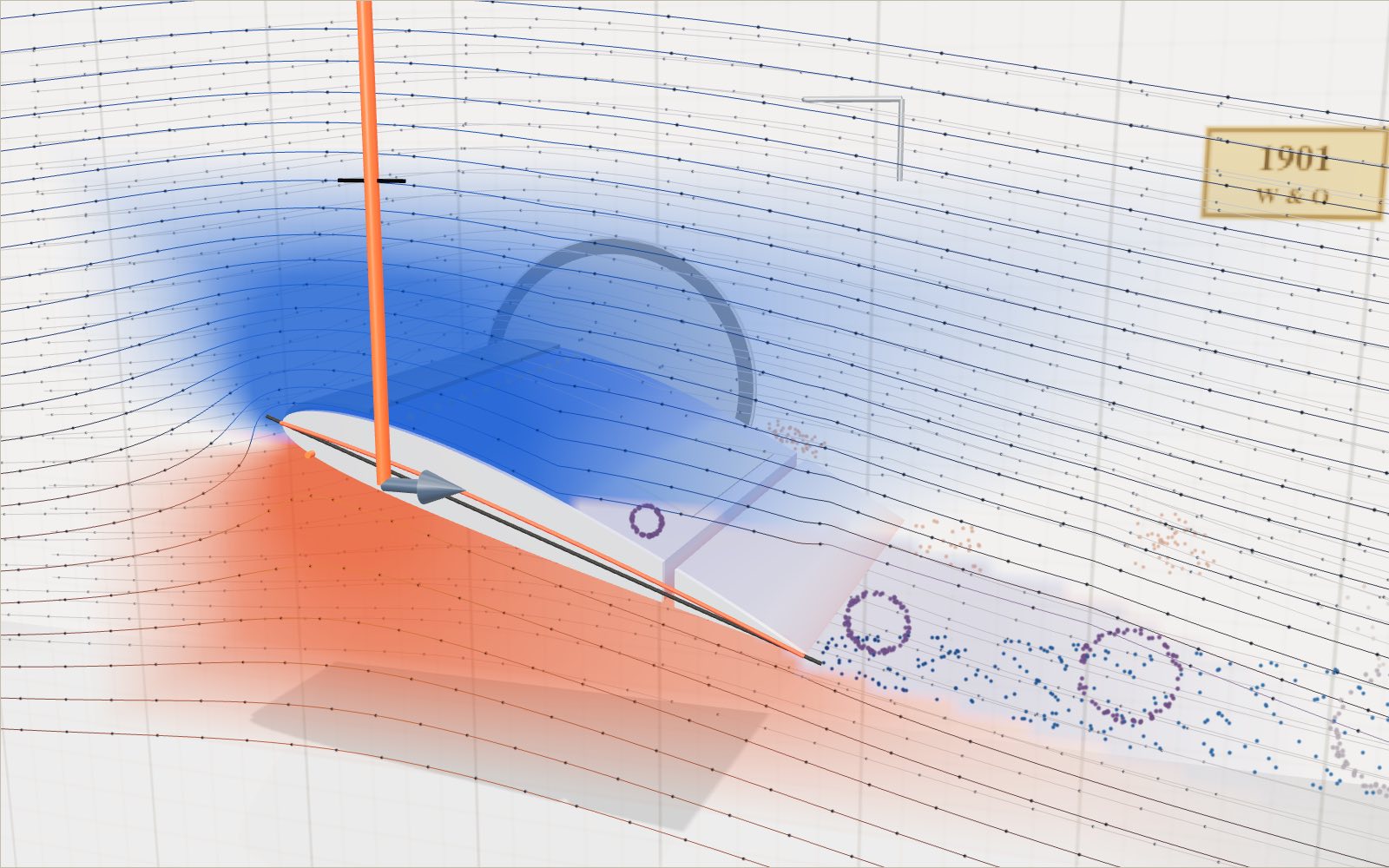
How a wing makes lift, and what changes as the angle grows
Air over the top of a wing reaches the trailing edge first. It does not wait for the air underneath.
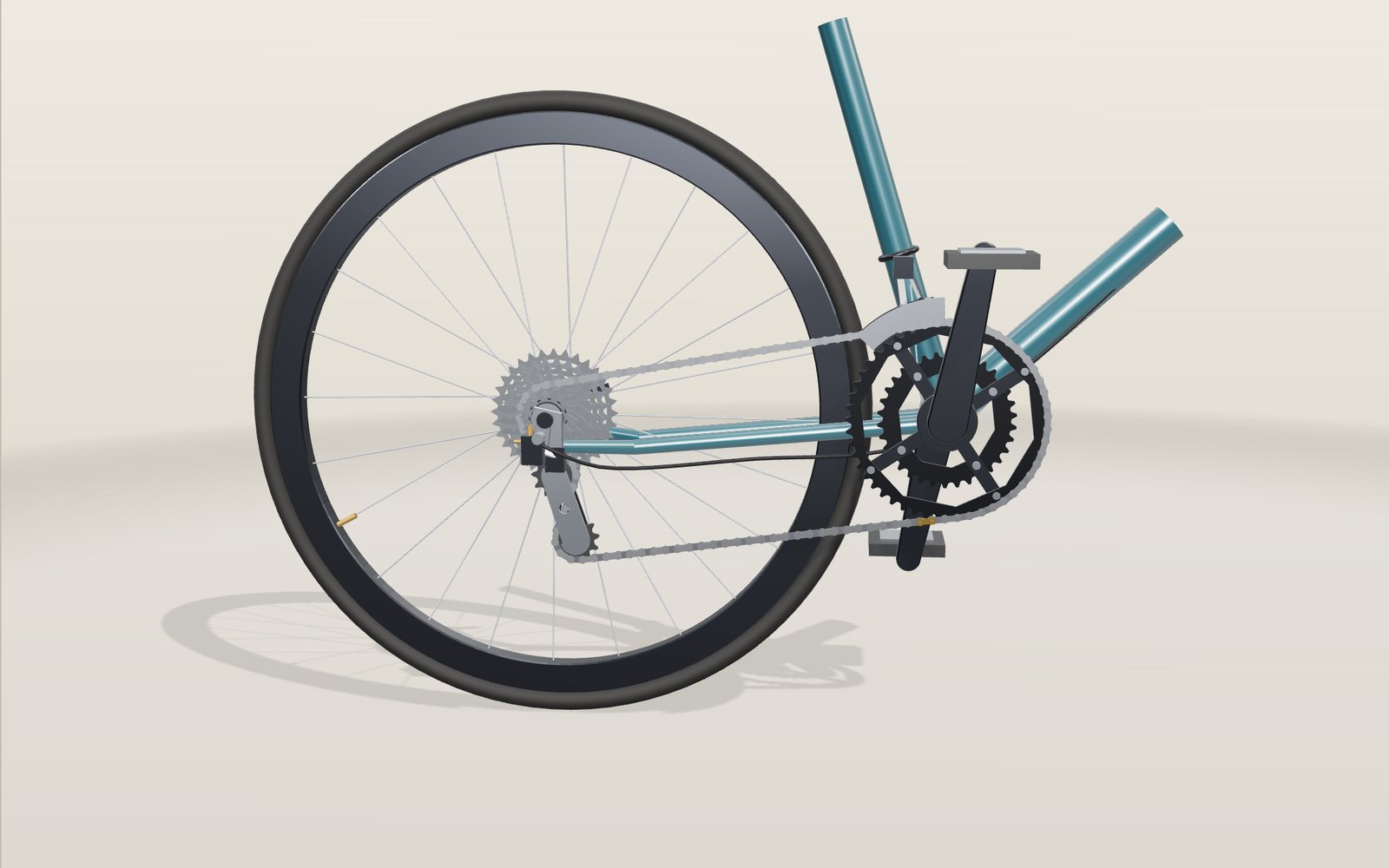
Bicycle gears: which gear makes climbing a hill easier
In a 50 by 11 gear one turn of the pedals moves a road bike 9.57 metres; in 34 by 32 it moves 2.24 metres.
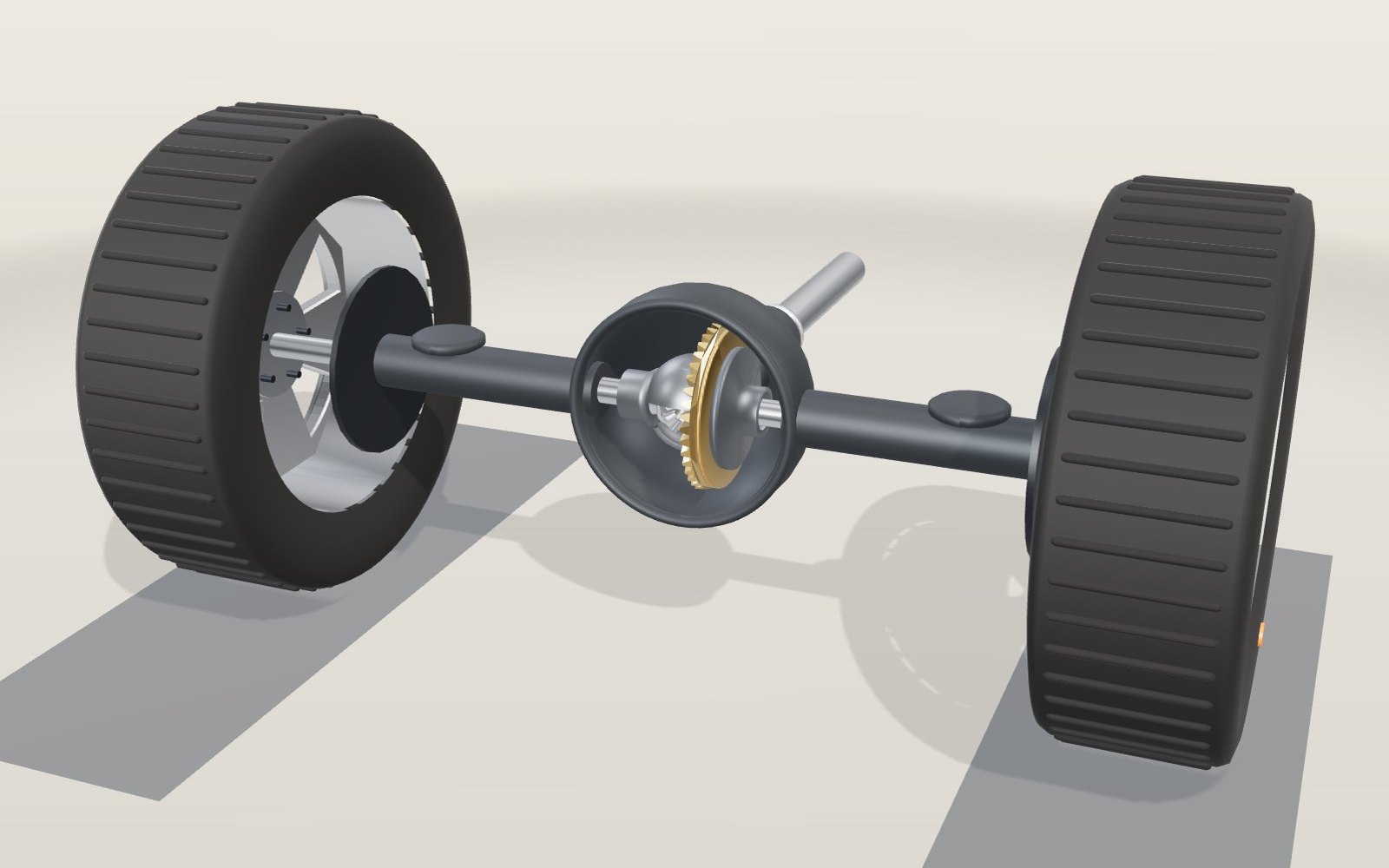
How does a differential work in a car? A 3D gear model
Round a 10 m bend at 50 km/h and the outer rear wheel turns 17% faster than the inner one, yet both are driven from the same shaft.
Billiards angles: aiming, spin and the diamond system, step by step
Two equal balls that meet without spin part at a right angle, and a ball struck at its centre slides for 12/49 of v²/μg before it starts to roll.
How a steam locomotive works
Mallard's driving wheels are 2.03 m across, taller than most people, and at its record 126 mph they turned almost nine times a second.
How windmills and watermills work
The sails of a Dutch mill are as wide as an eight-storey building is tall, and at 7 m/s they still take only about a fifth of the wind.
How does a vending machine recognise coins?
A 100 won coin is not attracted to a magnet, yet the magnet inside a vending machine is what tells it from a copper fake.
How to tie knots: 40 knots step by step
In one set of break tests a bowline kept about 63% of the rope's strength and a sheet bend about half.
How a QR code is read
Cover 30 % of a QR code with your hand and a phone still reads it. Cover one corner and it does not.
How a 3D printer works, layer by layer
A 20 mm cube printed in 0.2 mm layers is exactly 100 layers, each drawn by a nozzle 0.4 mm wide.
Walk down the Grand Canyon rock layers
Walk 1,360 m down the Bright Angel Trail through 13 rock layers, from a 270-million-year-old sea floor on the rim to 1.75-billion-year-old schist by the river.
How lightning and thunder work
A lightning channel heats the air to about five times the temperature of the Sun’s surface, and its thunder needs about 3 seconds to cover each kilometre to you.