FIG. 90Walk-throughs
Walk among ice age animals
A 600 m park of 65 animals from the last ice age at their real size, from woolly mammoths to sabre-toothed cats, on a time slider that runs 50,000 years.
This device cannot show the 3D model. You can read the guide steps below as text.
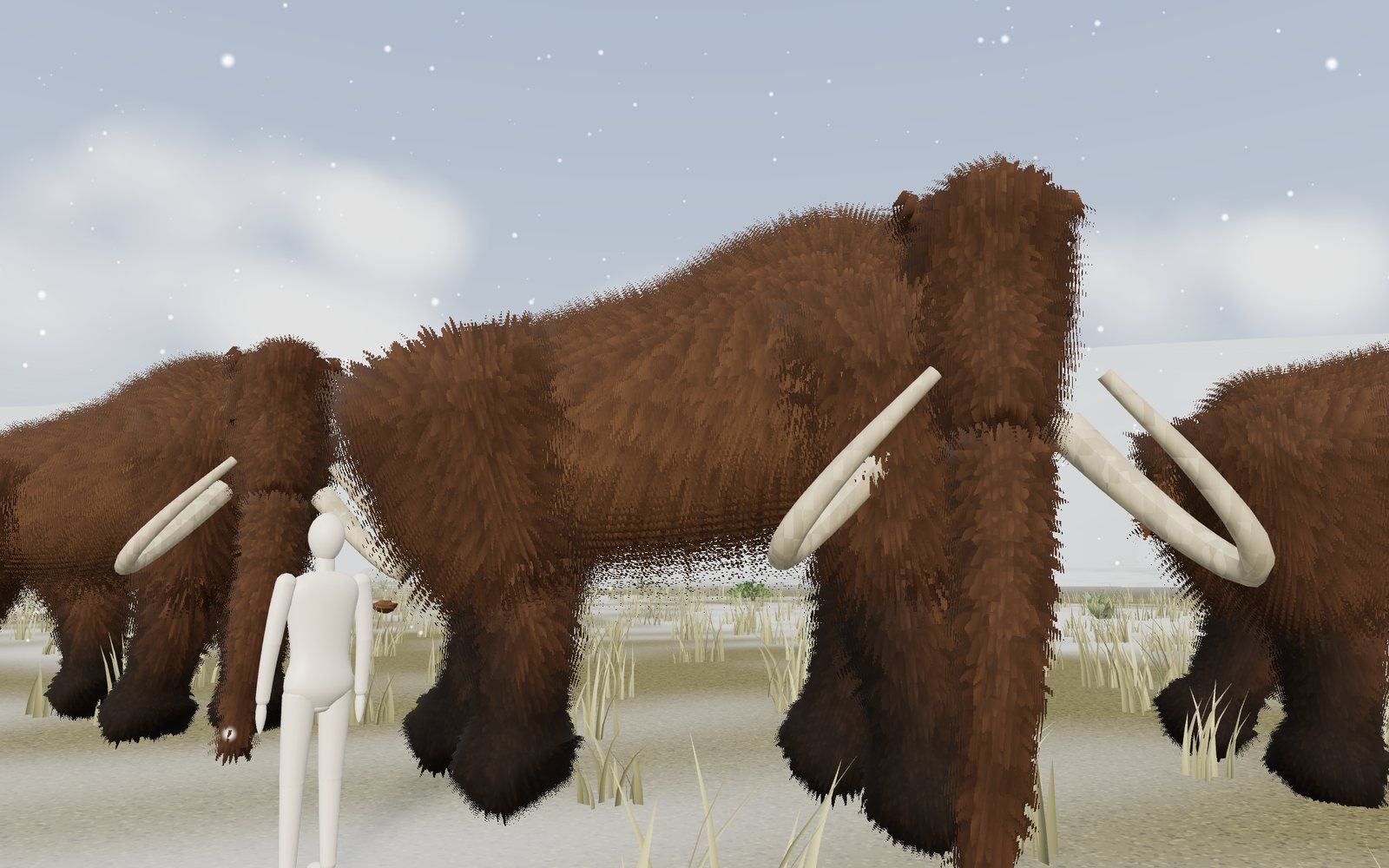
1 / 17 A herd in the snowYou start on the mammoth steppe 32,000 years ago. A herd of woolly mammoths walks past in a snowstorm; turn on the sound to hear the ground thud. The time slider in Controls runs from 50,000 years ago to today.
Drag to turn. Scroll or pinch to zoom.
What you are walking through
Most people know the woolly mammoth from a skeleton in a museum hall or a cartoon in a children's book. Neither tells you what it was like to stand next to one in the wind. This exhibit puts 65 animals of the last ice age on open ground at their real size, in a snowstorm if you like, and lets you walk among them at an ordinary eye height of 1.6 m.
The park is about 600 m across and is laid out like a museum floor rather than a map. The mammoth steppe fills the middle. The edge of an ice sheet runs along the north side, with a meltwater river flowing south through the grass. A cave hill with a painted chamber stands to the west, and below it a camp of huts built from mammoth bones. The La Brea tar pits of California lie to the east, and south of them the pampas of South America. Along the south edge is a beach, and beyond it the sea floor that becomes the Bering land bridge when the sea is low.
The animals live in herds, about 230 in all. Woolly mammoths walk in a line of six, musk oxen stand in a group, saigas run in a loose band and cave lions pad about in pairs. Plain mannequins 1.7 m tall, smooth and without faces, stand beside the main animals so that you always have a person to compare with, and a size line-up can set a person, a big African elephant and a 12 m bus down in front of you at any moment.
The big control is time. A slider runs from 50,000 years ago to today. As you move it, the sea rises and falls, the ice front pulls back, birch and spruce spread over the steppe, and each animal leaves the park at the date of its latest dated remains. You can watch the cave hyena go about 31,000 years ago, the cave lion about 14,000 years ago, the mainland mammoths a little later, and the last herd hang on alone on Wrangel Island until about 4,000 years ago.
The first ten seconds
The page opens 32,000 years ago on a January day. Snow is blowing across the steppe and a herd of woolly mammoths is walking past about 8 m away, heading east along the river. If you turn on the sound you hear the wind and a low thud each time a big foot comes down, and the camera trembles a little when the herd is close. Nothing has to be clicked first: the scene is already moving when the page finishes loading.
Stand still for a moment and the herd stops for you rather than walking through you. Walk alongside it and you can see how the line works: the biggest animals in front, a young one at the back. A name tag above the nearest animal gives its shoulder height, its weight and the date of the last mammoth on the mainland.
How big they really were
A woolly mammoth stood about 3 to 3.5 m at the shoulder and weighed about 4 to 6 tonnes, depending on whether it was a male or a female. That puts it between the Asian and the African elephant, not above them. The giants of the mammoth family were the steppe mammoth and the Columbian mammoth, up to about 4 m at the shoulder and around 10 tonnes. At the other end, mammoths that reached the Channel Islands off California shrank over many generations to about 1.7 m, the height of a tall person.
| Animal | Shoulder height | Weight | Last record |
|---|---|---|---|
| Person (for scale) | 1.7 m tall | 60 kg | still living |
| African bush elephant, big bull | about 3.2 to 4 m | about 6 t | still living |
| Woolly mammoth | 3 to 3.5 m | 4 to 6 t | about 4,000 years ago (island) |
| Columbian mammoth | 3.5 to 4 m | 8 to 11 t (estimate) | about 12,500 years ago |
| American mastodon | 2.5 to 2.9 m | 5 to 8 t | about 11,000 years ago |
| Pygmy mammoth | about 1.7 m | no published figure | about 13,000 years ago |
| Woolly rhinoceros | 1.5 to 2 m (estimate) | 1.5 to 2 t (estimate) | about 14,000 years ago |
| Giant deer (Megaloceros) | 2 to 2.1 m | 450 to 700 kg (estimate) | about 7,700 years ago |
| Giant short-faced bear | 1.5 m (3.4 m standing) | 700 to 900 kg (estimate) | about 12,000 years ago |
| Smilodon fatalis | about 1 m | 160 to 280 kg (estimate) | about 13,000 years ago |
| Glyptodon | 1.4 to 1.5 m | 1.5 to 2 t (estimate) | about 12,000 years ago |
| Steller's sea cow | (length about 8 m) | 8 to 10 t (estimate) | 1768 |
Shoulder height is the number to compare, because it can be measured on a skeleton and on a living elephant in the same way. Body length is harder: it depends on whether the trunk and tail are counted, and few sources give it. The field guide shows shoulder height first and marks every figure the sources give only roughly as an estimate.
The surprise for most visitors is the giant deer. Megaloceros was not much taller than a big moose, but its antlers spanned up to about 3.6 m, wider than a car is long. Walk under them and look up. The other surprise is how small some famous animals were. The sabre-toothed cat Smilodon fatalis stood about 1 m at the shoulder, a little bigger than a lion, and the dire wolf was only a bit heavier than a large grey wolf.
Checking the sizes against yourself
Open Me, type your height and weight, and the scale figures across the park take your height. The field guide then compares each animal with you rather than with an average person. With a height of 1.7 m and a weight of 60 kg, a woolly mammoth is about 1.9 times your height at the shoulder and weighs as much as about 80 of you. A saiga antelope comes up to your waist and weighs less than you do.
The size line-up does the same in the park. Switch it on and a person, a big African bush elephant and a 12 m bus appear in front of you, side by side on the ground. Walk the line-up over to a herd and the numbers in the guide stop being abstract.
A grassland, not a snowfield
The word ice age suggests a white world. Most of the land where mammoths lived was not under ice at all. It was the mammoth steppe, a cold, dry grassland that ran from Spain across Siberia and the land bridge into Alaska and Yukon. The air held little moisture, so snow was thin in winter and summers were bright. Grass, sedge and herbs such as wormwood grew where forest and bog stand today, and they fed great numbers of grazers.
That is why the park shows yellow-green grass under a pale sky rather than deep snow. The month slider changes the snow cover: in January thin snow lies on the flat ground and the grass bends low, in July the steppe is open. The snowfall slider changes the weather on its own, from calm to a blizzard that closes the view to a few tens of metres. The ice sheet itself sits only at the north edge of the park, where meltwater has spread gravel in front of the ice.
Moving the time slider
The time slider is the most useful control in the exhibit, and it changes four things together: the sea, the ice, the plants and the animals.
The sea follows a curve shaped after reconstructions of global sea level. At 50,000 years ago the sea stands about 75 m below today. It falls to about 130 m below at the height of the last glacial, around 21,000 years ago, and rises fast after about 15,000 years ago as the ice sheets melt. A readout at the bottom of the stage gives the date, the sea level and the global temperature for each position.
Temperature follows the same pattern. A 2020 study combined ocean data with climate models and found that the whole Earth was on average about 6.1 °C colder than before industry at the glacial maximum. The park uses that value for 21,000 years ago and draws a smooth curve through the warming that followed, including the short cold snap between about 12,900 and 11,700 years ago. The values in between are model values chosen to follow the published shape, not readings for those dates.
The warmth drives the landscape. The ice front stands about 230 m north of the park centre until the climate starts to warm, then retreats north and leaves the park. Birch, spruce and pine appear across the steppe and the cave hill once the climate is close to today's, and the grass turns from yellow to green. Each tree has its own threshold, so the forest arrives a little at a time rather than all at once.
Animals arrive and leave by date. Each species is in the park from 50,000 years ago until the date of its latest dated remains, and the banner names the animals that leave when you cross their date. Because these are dates of the latest remains found so far, an animal may well have lived a little later; a new find can move a date by centuries. The animals that are still living stay to the end.
The Bering land bridge
With the sea about 120 to 130 m lower than today at the glacial maximum, the floor of the shallow seas between Siberia and Alaska was dry land. This land bridge was not a narrow strip. At its widest it ran about 1,000 km from north to south, and the grassland continued across it so that mammoths, bison, horses and saigas could walk between the continents. Steppe bison crossed from Asia into North America about 160,000 years ago, and saigas reached Alaska about 40,000 years ago.
In the park the sea floor south of the beach is real ground. At glacial sea level most of it is dry, steppe-tundra grass grows on it, and you can walk south to a far shore. As you move the slider toward today the water comes up. The Bering Strait is only about 50 m deep at its shallowest, and a study of sea floor cores dated its flooding to about 11,000 years ago. The model uses that depth: the bridge goes under when the sea rises above about 50 m below today, which in the curve happens about 11,000 years ago. One of the challenges is to cross it before then.
The same rise cut off an island. Wrangel Island in the Arctic Ocean became separated from the mainland, and the mammoths on it were left alone. They lived there until about 4,000 years ago.
Seven zones
Glacier edge. Ice sheets covered most of Canada and northern Europe. In the park the ice front is a wall about 40 m high with blue crevasses, and in front of it lies a plain of meltwater gravel with a large boulder that the ice carried here. Musk oxen, arctic foxes, wolverines, collared lemmings and the scimitar cat Homotherium live here.
Mammoth steppe. The centre of the park. Woolly mammoths, woolly rhinos, steppe bison, wild horses, saigas, giant deer and the aurochs graze here, with grey wolves and golden eagles. Elasmotherium, a giant rhino of the steppes, appears if you move the slider back before 39,000 years ago.
Cave. A hill with a tunnel. Inside, a domed chamber has animals painted in charcoal and red ochre on its wall, a red-dotted panel and a hand stencil. The kinds of animals follow those painted at Chauvet in France: lions, rhinos, mammoths, horses, bison, a giant deer and a bear. The drawings are new, not copies. You carry a torch inside. Cave bears, cave hyenas, cave lions, dholes and lynxes live around the hill, and Neanderthals appear if you go back before 40,000 years ago.
Camp. Three huts built from mammoth bones stand around a hearth: a ring of lower jaws stacked chin down, skulls above, tusks arched over the roof and hides on top. Remains of huts like these have been found on the plains of Ukraine and Russia, at Mezhyrich and Kostenki. People in fur clothing walk around the camp, reindeer graze nearby, and drying racks hold hides.
La Brea tar pits. Pools of natural asphalt in what is now Los Angeles. A Columbian mammoth stands stuck in the tar with its calf on the bank, and bubbles rise in the pools. Sabre-toothed cats, dire wolves, American lions, giant short-faced bears, three kinds of ground sloth, western camels and horses, ancient bison, mastodons and the huge bird Teratornis live here, with coyotes and California condors that are still living.
Pampas. South America's own giants: Megatherium and Eremotherium, ground sloths as big as elephants, the glyptodonts Glyptodon and Doedicurus, Toxodon, Macrauchenia, the biggest sabre-toothed cat Smilodon populator and the horse Hippidion. Guanacos and Andean condors live on.
Coast and land bridge. A beach where polar bears walk and great auks stand at the water's edge. Walruses, bearded seals and Steller's sea cows swim offshore. The Yukon horse and the pygmy mammoth live near the beach, and the island to the south-east is Wrangel Island.
Woolly mammoths up close
A woolly mammoth was built for cold. Its ears were small, its tail was short, and long outer hair hung over a dense underfur. Frozen carcasses from Siberia and Yukon show a layer of fat under thick skin. It ate grass and herbs, more than 200 kg a day by one estimate, and its teeth were tall ridged plates for grinding grass.
Its tusks were long upper incisors that curved down, out and then up and inward in a spiral. A single tusk from an adult male could reach several metres. The model's tusks follow that curve. The trunk ends in two finger-like tips, as frozen remains show; the model simplifies it to a plain tip.
We know what mammoths looked like in unusual detail because the permafrost keeps more than bones. In 2007 reindeer herders found a calf about a month old on the bank of the Yuribei River on the Yamal Peninsula in Siberia. Named Lyuba, she died about 42,000 years ago and is one of the most complete mammoths ever found, with skin and organs preserved. A scene near the river in the park shows a calf coming out of a bank of frozen silt with ice wedges.
The colour of the coat is a guess. Hair survives, but its colour fades and changes over thousands of years in the ground. A 2006 study read one coat colour gene, MC1R, from mammoth bones and found a variant that may have given some animals a lighter coat. The park gives its mammoths a brown coat and says so on every card.
The last mammoths
On the mainland of Asia and North America, woolly mammoths disappeared around 12,000 to 10,700 years ago; the latest remains near the mainland come from the New Siberian Islands. Small groups lived on longer on islands. On St Paul Island in the Bering Sea they lasted until about 5,600 years ago, and lake mud there shows that fresh water ran short as the island shrank with the rising sea.
The very last ones lived on Wrangel Island until about 4,000 years ago. The Great Pyramid of Giza was built under the pharaoh Khufu, whose reign falls around 4,600 years ago, so for several centuries mammoths and pyramids existed at the same time. Set the time slider to 4,500 years ago and walk out to the island: the mainland is empty of mammoths, but a small herd still walks on Wrangel.
When the Wrangel mammoths were first described in 1993, they were called dwarfs. How much smaller than mainland mammoths they really were has been argued over since, so the park shows them a little smaller and marks the size as an estimate.
Why did they disappear?
About 37% of the species of large mammals in northern Eurasia, those heavier than about 44 kg, died out between the last interglacial and the present. In North America and South America the share was higher. Two explanations have been argued over for more than a century, and the evidence for each is set out below side by side rather than as a verdict.
Climate and vegetation. The end of the last glacial changed the vegetation fast. Warmer and wetter air turned much of the mammoth steppe into forest, bog and tundra, and grazers lost the dry grassland they depended on. In northern Eurasia the extinctions were spread over tens of thousands of years, and different species disappeared at different times in different places: the cave bear around 30,000 years ago at the start of the coldest phase, the cave lion around 14,000 years ago when shrubs and trees spread, the giant deer as late as 7,700 years ago. A pattern like that fits animals reacting to the changing land each in its own way. The cave lion's disappearance, for example, fell within a few hundred years of the warming about 14,700 years ago.
People. Modern humans spread into northern Eurasia and then into the Americas during the same period, and they hunted large animals. In North America many extinctions seem to fall within a short window near the end of the glacial, close to the time people became widespread there. Islands fit the same idea: mammoths lasted thousands of years longer on islands people had not reached. At La Brea, a 2023 study dated the disappearance of the large animals to about 13,000 years ago and tied it to a jump in wildfires as the climate dried, with people the likely cause of many of the fires.
Both together. Many researchers now think the two worked together: a climate shift that shrank and broke up the animals' habitat, and hunting pressure on populations that were already small. The weight given to each differs between regions and between species, and new dates keep changing the picture. The Natural History Museum in London, for example, describes climate change and early humans as the two main suspects in the case.
People of the ice age
Two kinds of people lived in Europe during part of the period the slider covers. Neanderthals had lived there for hundreds of thousands of years; they disappeared about 40,000 years ago, after a few thousand years of overlap with our own species. In the park they appear near the cave when you move the slider back before 40,000 years ago.
Modern humans of the last glacial sewed fitted fur clothing with bone needles, made spear throwers and carved ivory. The Lion Man from the Hohlenstein-Stadel cave in Germany, a cave lion's head on a human body carved from mammoth ivory about 40,000 years ago, is one of the oldest figurative sculptures known. Flutes of bird bone and mammoth ivory from caves in south-west Germany are at least 35,000 years old. The paintings of Chauvet are about 36,000 years old.
On the plains of Ukraine and Russia people built with bones. At Kostenki 11 in Russia, a ring about 12 m across was built from the bones of more than 60 mammoths about 25,000 years ago, and burnt bone inside it shows that bone was also used as fuel. Whether the mammoths were hunted or their bones were collected from animals that had died is still debated.
People also reached the Americas. Human footprints at White Sands in New Mexico were dated to 23,000 to 21,000 years ago, during the glacial maximum, which is earlier than many researchers expected. Some questioned the dates, and a second study using other methods found the same age. The scene in the park shows human and giant ground sloth tracks on a pale lake bed, as at White Sands.
La Brea: a trap that worked for 50,000 years
Natural asphalt seeps up through the ground in what is now Hancock Park in Los Angeles. An animal that stepped into a pool could stick, and its struggles drew predators that stuck as well. The result is one of the richest ice age fossil sites in the world. More than 2,000 sabre-toothed cats and more than 5,000 dire wolves have been dug out, along with ground sloths that lived in the area from nearly 100,000 to 11,000 years ago.
The large number of predators is the clue to how the trap worked: for each trapped grazer, many meat-eaters came for it. That is why the La Brea zone in the park has more predators than any other.
Giants of South America
South America was an island continent for most of the last 60 million years, and its animals evolved on their own. Ground sloths, glyptodonts and the hoofed mammals Toxodon and Macrauchenia had no close relatives anywhere else. When a land bridge formed at Panama, animals moved both ways, and ground sloths reached North America; three kinds lived around La Brea.
Ancient molecules have sorted out some old puzzles. DNA from a glyptodont shell places the glyptodonts inside the armadillo family, so these animals the size of a small car were giant armadillos. Proteins from Toxodon and Macrauchenia bones, and later DNA from Macrauchenia, show that both were distant relatives of horses and rhinos. Macrauchenia is often drawn with a short trunk because of the position of its nostrils on the skull; whether it had one is debated, and the park gives it a very short one.
Built for the cold
Many animals of the mammoth steppe share the same answers to cold. Small ears and short tails lose less heat, which is why the woolly mammoth's ears were a fraction of an African elephant's. Thick coats with long guard hair over fine underwool trap a layer of still air; the musk ox still wears one, and its outer hair hangs almost to the ground. Fat under the skin stores energy for the long winter. The saiga's swollen nose warms cold air before it reaches the lungs and filters out dust in summer.
Hooves and feet matter too. Reindeer have broad hooves that spread on snow and soft ground and work as shovels when they dig for lichen. The woolly rhino carried its head low, close to the grass, and its flattened front horn may have helped it sweep snow aside while it fed. Some small animals change colour: arctic foxes, collared lemmings and mountain hares turn white in winter. You can see the coats in the park change only in the model's colours, but the guide notes which animals did it.
Size itself is a cold adaptation in some groups. A big body has less skin for its weight than a small one and loses heat more slowly, which may be one reason several ice age animals were larger than their living relatives. The rule has many exceptions: the pygmy mammoths of the Channel Islands shrank because food on an island was limited, not because the climate was warm.
Reading a date
Most of the dates in this exhibit come from radiocarbon. Living things take in carbon, including a little radioactive carbon-14. When they die the carbon-14 decays at a known rate, so measuring what is left in a bone, a tooth or a piece of charcoal gives its age. The method works back to about 50,000 years ago, which is why the time slider starts there: older than that, too little carbon-14 is left to measure well.
Raw radiocarbon ages are not quite calendar years, because the amount of carbon-14 in the air has changed. Laboratories convert them with a calibration curve built from tree rings, cave deposits and lake and sea sediments. The dates in the park are calibrated years before the present, rounded. A date of 14,000 years ago for the cave lion means that its youngest dated bone is about that old, not that the last cave lion died in that year.
That is also why dates move. Each new find, and each better measurement of an old one, can push the last record later. Elasmotherium is the clearest case in the park: it was long thought to have died out about 200,000 years ago, until dates on its bones showed that it lived until at least 39,000 years ago.
The animals that are still with us
Of the 65 species in the park, 26 are still living, and many of them still live in the same kinds of places. Musk oxen survive on the Arctic tundra of Canada and Greenland, and were brought back to Alaska and Norway after they had disappeared there. Reindeer still migrate across the far north. The saiga lives on the steppes of Central Asia, though its numbers have crashed several times. Przewalski's horse, the last wild horse, came close to extinction in the wild and was returned to Mongolia from zoos.
Some survivors moved. The dhole hunted in Europe during the ice age and now lives only in Asia. The California condor fed on the carcasses of big mammals and nearly died out in the 1980s. Others outlived the ice age by thousands of years and were lost much more recently: the aurochs in 1627, Steller's sea cow in 1768 and the great auk in 1844. Move the slider all the way to today and watch those three disappear in the last few hundred years of a 50,000-year span.
How the animals are built
There are no scanned or downloaded models in the park. Each body is built in code from a few numbers per species: shoulder height, length, the proportions of a body plan (elephant, rhino, deer, cat, bear, ground sloth, glyptodont and so on) and its decorations, such as tusks, horns, antlers, a hump or a shell. The trunk of the body, the neck, the head and the legs are smooth tubes, merged into one mesh and bent by a small skeleton, so a full animal is a single draw for the graphics card.
On fast computers the furry parts are repeated as six to nine thin shells pushed out from the body, and a pattern cut into each shell leaves strands standing, with longer hair low on the flanks and shorter hair on the head. This is how the mammoths and musk oxen get their shaggy outline. Slower devices show the base layer with a streaky hair pattern in the colour.
Animals close to you are full animated models. Animals further away are statues, one instanced mesh per species, and the far ones are flat side views painted from the statues into one texture. Grass and shrubs around you are refilled as you walk, and trees are held in one mesh per kind with only the trees within reach drawn, so the park costs about the same to draw wherever you stand. Plants close to you get the detailed model and plants further off a lighter one. A spruce is a stack of drooping, ragged skirts of branches; birch, pine and oak crowns are layers of leaf masses on curved branches, edged with single leaves; dwarf willows, sagebrush and grass are made of curved leaves and blades that bend in the wind, more strongly when the snowstorm is up. The rocks are spheres bent by noise, with a few flat broken faces. Phones and computers without a graphics card get a lower quality level from the first frame.
How the model differs from reality
The park puts animals that never met side by side. The seven zones are about 100 m apart, while the real places are thousands of kilometres apart: La Brea is in California and the pampas are in Argentina. The zones are exhibits, not a map.
All the animals of a period stand in the park at once, and each leaves at the date of its latest dated remains. In reality ranges shrank over thousands of years, and an animal could disappear from one region long before another. The dates are records, not exact extinction days.
The sea level and temperature curves are smooth model curves through published values, and the height of the water in the park is scaled down: the bridge crest stands in for the Bering sill, so the sea in the park covers it at the right sea level, but the water does not rise by the full 130 m. The forest arrives with warmth alone; in reality soils, rain and seed dispersal mattered too.
Coat colours, the sounds and the details of the scenes are guesses. The mammoth call is built from an elephant-like trumpet. The paintings in the cave are new drawings of the kinds of animals painted at Chauvet and Lascaux.
Moving around the park
On a computer, walk with WASD or the arrow keys, hold Shift to run and drag to look. Click the ground to walk to that spot. On a phone, the left thumb moves a joystick and the right thumb looks. Four ways to travel sit at the bottom right: walking at 3 m/s, running at 8 m/s, a sled at 12 m/s close to the ground and a sky view 60 m up. The keys 1 to 4 switch between them.
The map at the top left shows the zones, the animals as dots and you as an arrow; click anywhere on it to go there. The field guide lists all 65 species plus the Wrangel herd with filters for zone, food, size and whether the animal is still living, and the Go there button takes you to any of them. The panel on the right holds the guided tour of 17 steps, the list of parts and the controls: time, time of day, month, snowfall, aurora, the size line-up, the scale figures and all name tags.
The guided tour
The tour on the right takes you through the park in 17 steps and moves the time slider for you where it matters. It starts with the herd in the snow, sets the size line-up down next to a woolly mammoth, visits the woolly rhino and the giant deer, and jumps to 21,000 years ago at the ice front. It then goes into the cave, past the cave bear, to the mammoth-bone huts, the tar pits, the Columbian mammoth and the glyptodonts of the pampas. On the coast it shows the land bridge dry at the glacial maximum and drowned 10,000 years ago, visits Wrangel Island 4,500 years ago, flies over the park at today's date and ends at night under the aurora on the glacier. You can leave the tour at any step and walk on from there.
Challenges and hidden finds
Nine challenges ask you to look: find the biggest predator, pick the five animals that still live, name three animals on the cave wall, guess how long a woolly rhino horn can be, find when the last mammoths died, decide whether a mammoth or an elephant stands taller, find a mammoth-bone house, cross the Bering land bridge while the sea is low and see the aurora. The answers come from the field guide and the park itself, and solved challenges keep their star on your browser.
Twenty hidden finds wait around the park: a frozen calf, a tuft of mammoth hair, a shed rhino horn, an aurochs skull, an ivory flute, a carved figure, a great auk egg, sea cow ribs on the beach and more. Walk up to one and look at it to open its card. Six of the cards start with "In fact" and turn a common idea around, such as the mammoth being bigger than an elephant. Photo mode hides the panels so you can frame a picture and save it.
Questions
Was a woolly mammoth bigger than an elephant?
No. A woolly mammoth stood about 3 to 3.5 m at the shoulder, between the Asian and the African elephant. A big African bush elephant bull reaches about 3.2 to 4 m. The Columbian and steppe mammoths were bigger, up to about 4 m.
When did the last mammoths die?
On the mainland around 12,000 to 10,700 years ago, on St Paul Island about 5,600 years ago and on Wrangel Island about 4,000 years ago, after the Great Pyramid of Giza was built.
Why did the mammoths die out?
Two explanations are argued over: the loss of the cold dry grassland as the climate warmed, and hunting by people. Many researchers think both worked together, with different weight in different places. The article sets out the evidence for each.
Were mammoths and mastodons the same?
No. The American mastodon was a more distant relative, shorter and stockier, with straighter tusks and teeth suited to leaves and twigs. Mammoths were grazers with ridged grinding teeth.
Is the sabre-toothed cat a tiger?
No. Smilodon belongs to a separate branch of the cat family, the sabre-toothed cats, that split from the ancestors of tigers and lions long ago. The name sabre-toothed tiger is old and misleading.
Was the dire wolf a wolf?
Not a close one. Ancient DNA shows that its line split from that of the grey wolf about 5.7 million years ago. It looked like a large wolf because both hunted big animals in a similar way.
What colour were mammoths?
Probably mostly brown, but some may have been lighter. A study of one coat colour gene found a variant that could give a lighter coat. Hair colour is rarely preserved accurately, so the colours in the park are guesses.
Was it always snowing in the ice age?
No. The mammoth steppe was cold and dry, with thin snow in winter and bright summers. Deep, lasting snow would have buried the grass the grazers needed.
How much lower was the sea?
About 120 to 130 m lower than today at the height of the last glacial, around 21,000 years ago. That exposed the Bering land bridge and joined Britain to Europe.
When did the Bering land bridge flood?
About 11,000 years ago, according to a study of sea floor cores. The Bering Strait is only about 50 m deep at its shallowest.
Did people hunt mammoths?
Yes. Mammoth bones with cut marks and spear points are known from many sites. Whether all the bones in mammoth-bone huts came from hunting is debated; some may have been collected from animals that had died.
Did Neanderthals see mammoths?
Yes. Neanderthals lived in Europe and western Asia alongside woolly mammoths for a long time before they disappeared about 40,000 years ago.
Could the cave bear be dangerous?
It was bigger than most brown bears, but the chemistry of most of its bones points to a diet of plants. Bones from one Romanian cave suggest some cave bears ate meat, so researchers still disagree.
Are any of these animals still alive?
Yes, 26 of the 65 species. Musk oxen, reindeer, saigas, wild horses, walruses, arctic foxes, wolverines, brown bears, polar bears, condors and the rest are marked Still living in the guide. They stay in the park when you move the slider to today.
Can scientists bring the mammoth back?
No mammoth has been brought back. Companies are trying to edit the genes of Asian elephants to give them mammoth traits, but such an animal would be an elephant with some changed genes, not a mammoth. The park does not cover this work.
What is the green light in the night sky?
An aurora. Particles from the Sun strike the upper air near the poles and make oxygen glow green, with red higher up. Set the time of day to night, stop the snow and keep the aurora switched on.
Terms
- Last Glacial Maximum: the coldest part of the last glacial, about 26,500 to 19,000 years ago, when the ice sheets were largest.
- Mammoth steppe: the cold, dry grassland that ran from Spain across Siberia into Alaska and Yukon during the last glacial.
- Beringia: the land between Siberia and Alaska, including the land bridge exposed by low sea level.
- Interglacial: a warm period between glacials, such as the present one.
- Permafrost: ground that stays frozen all year, which can keep skin, hair and organs for tens of thousands of years.
- Radiocarbon dating: measuring the decay of carbon-14 to date bone, wood or charcoal up to about 50,000 years old.
- Megafauna: large animals, usually those heavier than about 44 kg.
- Shell fur: a graphics method that draws hair as thin layers pushed out from the body.
Sources
- Natural History Museum, London, Were all mammoths woolly? (2024). https://www.nhm.ac.uk/discover/were-all-mammoths-woolly.html (checked 19 October 2026)
- Natural History Museum, London, Extinction of large mammals in the late Quaternary. https://www.nhm.ac.uk/our-science/our-work/origins-evolution-and-futures/extinction-large-mammals-late-quaternary.html (checked 19 October 2026)
- Yukon Beringia Interpretive Centre, Ice Age Animals (woolly mammoth, steppe bison, saiga, scimitar cat, giant short-faced bear, giant beaver, walrus and others). https://www.beringia.com/exhibits/ice-age-animals (checked 19 October 2026)
- Yukon Beringia Interpretive Centre, Beringia. https://www.beringia.com/exhibits/beringia (checked 19 October 2026)
- La Brea Tar Pits, DIY Paleoart (counts of sabre-toothed cats, dire wolves, ground sloths). https://tarpits.org/diy-paleoart (checked 19 October 2026)
- La Brea Tar Pits, Mammoths vs. mastodons. https://tarpits.org/stories/mammoths-vs-mastodons (checked 19 October 2026)
- La Brea Tar Pits, About Rancho La Brea. https://tarpits.org/research-collections/about-rancho-la-brea (checked 19 October 2026)
- U.S. National Park Service, Beringia: Lost World of the Ice Age. https://www.nps.gov/articles/aps-v12-i2-c8.htm (checked 19 October 2026)
- U.S. National Park Service, White Sands, Fossilized footprints. https://www.nps.gov/whsa/learn/nature/fossilized-footprints.htm (checked 19 October 2026)
- Larramendi, A., Shoulder height, body mass, and shape of proboscideans, Acta Palaeontologica Polonica (2016). https://www.app.pan.pl/article/item/app001472015.html (checked 19 October 2026)
- Stuart, A. J. and Lister, A. M., Extinction chronology of the woolly rhinoceros Coelodonta antiquitatis in the context of late Quaternary megafaunal extinctions in northern Eurasia, Quaternary Science Reviews (2012). https://doi.org/10.1016/j.quascirev.2012.06.007 (checked 19 October 2026)
- Stuart, A. J. and Lister, A. M., Extinction chronology of the cave lion Panthera spelaea, Quaternary Science Reviews (2011). https://doi.org/10.1016/j.quascirev.2010.04.023 (checked 19 October 2026)
- Stuart, A. J. and Lister, A. M., New radiocarbon evidence on the extirpation of the spotted hyaena in northern Eurasia, Quaternary Science Reviews (2014). https://doi.org/10.1016/j.quascirev.2013.10.010 (checked 19 October 2026)
- Stuart, A. J. et al., Pleistocene to Holocene extinction dynamics in giant deer and woolly mammoth, Nature (2004). https://www.nature.com/articles/nature02890 (checked 19 October 2026)
- Vartanyan, S. L. et al., Holocene dwarf mammoths from Wrangel Island in the Siberian Arctic, Nature (1993). https://www.nature.com/articles/362337a0 (checked 19 October 2026)
- Graham, R. W. et al., Timing and causes of mid-Holocene mammoth extinction on St. Paul Island, Alaska, PNAS (2016). https://www.pnas.org/doi/10.1073/pnas.1604903113 (checked 19 October 2026)
- Bronk Ramsey, C. et al., Radiocarbon-based chronology for dynastic Egypt, Science (2010). https://www.science.org/doi/10.1126/science.1189395 (checked 19 October 2026)
- Römpler, H. et al., Nuclear gene indicates coat-color polymorphism in mammoths, Science (2006). https://www.science.org/doi/10.1126/science.1126121 (checked 19 October 2026)
- Australian Museum, The story of baby Lyuba (2017). https://australian.museum/blog/museullaneous/the-story-of-baby-lyuba (checked 19 October 2026)
- Tierney, J. E. et al., Glacial cooling and climate sensitivity revisited, Nature (2020). https://www.nature.com/articles/s41586-020-2617-x (checked 19 October 2026)
- Clark, P. U. et al., The Last Glacial Maximum, Science (2009). https://www.science.org/doi/10.1126/science.1172873 (checked 19 October 2026)
- Jakobsson, M. et al., Post-glacial flooding of the Bering Land Bridge dated to 11 cal ka BP based on new geophysical and sediment records, Climate of the Past (2017). https://cp.copernicus.org/articles/13/991/2017/ (checked 19 October 2026)
- Lord, E. et al., Pre-extinction demographic stability and genomic signatures of adaptation in the woolly rhinoceros, Current Biology (2020). https://doi.org/10.1016/j.cub.2020.07.046 (checked 19 October 2026)
- Boeskorov, G. G. et al., The longest known rhino horn from the permafrost of Yakutia offers insights into woolly rhinoceros morphology, Journal of Zoology (2025). https://doi.org/10.1111/jzo.70064 (checked 19 October 2026)
- Kosintsev, P. et al., Evolution and extinction of the giant rhinoceros Elasmotherium sibiricum sheds light on late Quaternary megafaunal extinctions, Nature Ecology and Evolution (2019). https://www.nature.com/articles/s41559-018-0722-0 (checked 19 October 2026)
- Lister, A. M. et al., The phylogenetic position of the 'giant deer' Megaloceros giganteus, Nature (2005). https://www.nature.com/articles/nature03975 (checked 19 October 2026)
- Perri, A. R. et al., Dire wolves were the last of an ancient New World canid lineage, Nature (2021). https://www.nature.com/articles/s41586-020-03082-x (checked 19 October 2026)
- O'Keefe, F. R. et al., Pre-Younger Dryas megafaunal extirpation at Rancho La Brea linked to fire-driven state shift, Science (2023). https://www.science.org/doi/10.1126/science.abo3594 (checked 19 October 2026)
- Delsuc, F. et al., The phylogenetic affinities of the extinct glyptodonts, Current Biology (2016). https://doi.org/10.1016/j.cub.2015.12.071 (checked 19 October 2026)
- Welker, F. et al., Ancient proteins resolve the evolutionary history of Darwin's South American ungulates, Nature (2015). https://www.nature.com/articles/nature14249 (checked 19 October 2026)
- Westbury, M. et al., A mitogenomic timetree for Darwin's enigmatic South American mammal Macrauchenia patachonica, Nature Communications (2017). https://www.nature.com/articles/ncomms15951 (checked 19 October 2026)
- Higham, T. et al., The timing and spatiotemporal patterning of Neanderthal disappearance, Nature (2014). https://www.nature.com/articles/nature13621 (checked 19 October 2026)
- Smithsonian Human Origins Program, Homo sapiens and Homo neanderthalensis. https://humanorigins.si.edu/evidence/human-fossils/species/homo-sapiens (checked 19 October 2026)
- Richards, M. P. et al., Isotopic evidence for omnivory among European cave bears, PNAS (2008). https://www.pnas.org/doi/10.1073/pnas.0806614105 (checked 19 October 2026)
- Pryor, A. J. E. et al., The chronology and function of a new circular mammoth-bone structure at Kostenki 11, Antiquity (2020). https://doi.org/10.15184/aqy.2020.7 (checked 19 October 2026)
- Conard, N. J. et al., New flutes document the earliest musical tradition in southwestern Germany, Nature (2009). https://www.nature.com/articles/nature08169 (checked 19 October 2026)
- Museum Ulm, The Lion Man. https://www.museumulm.de/en/ (checked 19 October 2026)
- French Ministry of Culture, The Chauvet-Pont d'Arc cave and Lascaux. https://archeologie.culture.gouv.fr/chauvet/en (checked 19 October 2026)
- Quiles, A. et al., A high-precision chronological model for the decorated Upper Paleolithic cave of Chauvet-Pont d'Arc, PNAS (2016). https://www.pnas.org/doi/10.1073/pnas.1523158113 (checked 19 October 2026)
- Bennett, M. R. et al., Evidence of humans in North America during the Last Glacial Maximum, Science (2021). https://www.science.org/doi/10.1126/science.abg7586 (checked 19 October 2026)
- Pigati, J. S. et al., Independent age estimates resolve the controversy of ancient human footprints at White Sands, Science (2023). https://www.science.org/doi/10.1126/science.adh5007 (checked 19 October 2026)
- Turvey, S. T. and Risley, C. L., Modelling the extinction of Steller's sea cow, Biology Letters (2006). https://royalsocietypublishing.org/doi/10.1098/rsbl.2005.0415 (checked 19 October 2026)
- Thomas, J. E. et al., Demographic reconstruction from ancient DNA supports rapid extinction of the great auk, eLife (2019). https://pmc.ncbi.nlm.nih.gov/articles/PMC6879203/ (checked 19 October 2026)
- Park, S. D. E. et al., Genome sequencing of the extinct Eurasian wild aurochs, Bos primigenius, Genome Biology (2015). https://genomebiology.biomedcentral.com/articles/10.1186/s13059-015-0790-2 (checked 19 October 2026)
- NOAA Space Weather Prediction Center, Aurora. https://www.swpc.noaa.gov/phenomena/aurora (checked 19 October 2026)
- Paleobiology Database, taxon pages for the extinct species (for example Mammuthus primigenius). https://paleobiodb.org/classic/basicTaxonInfo?taxon_name=Mammuthus%20primigenius (checked 19 October 2026)
- Animal Diversity Web, University of Michigan, accounts for the living species (for example Ovibos moschatus). https://animaldiversity.org/accounts/Ovibos_moschatus/ (checked 19 October 2026)
More exhibits
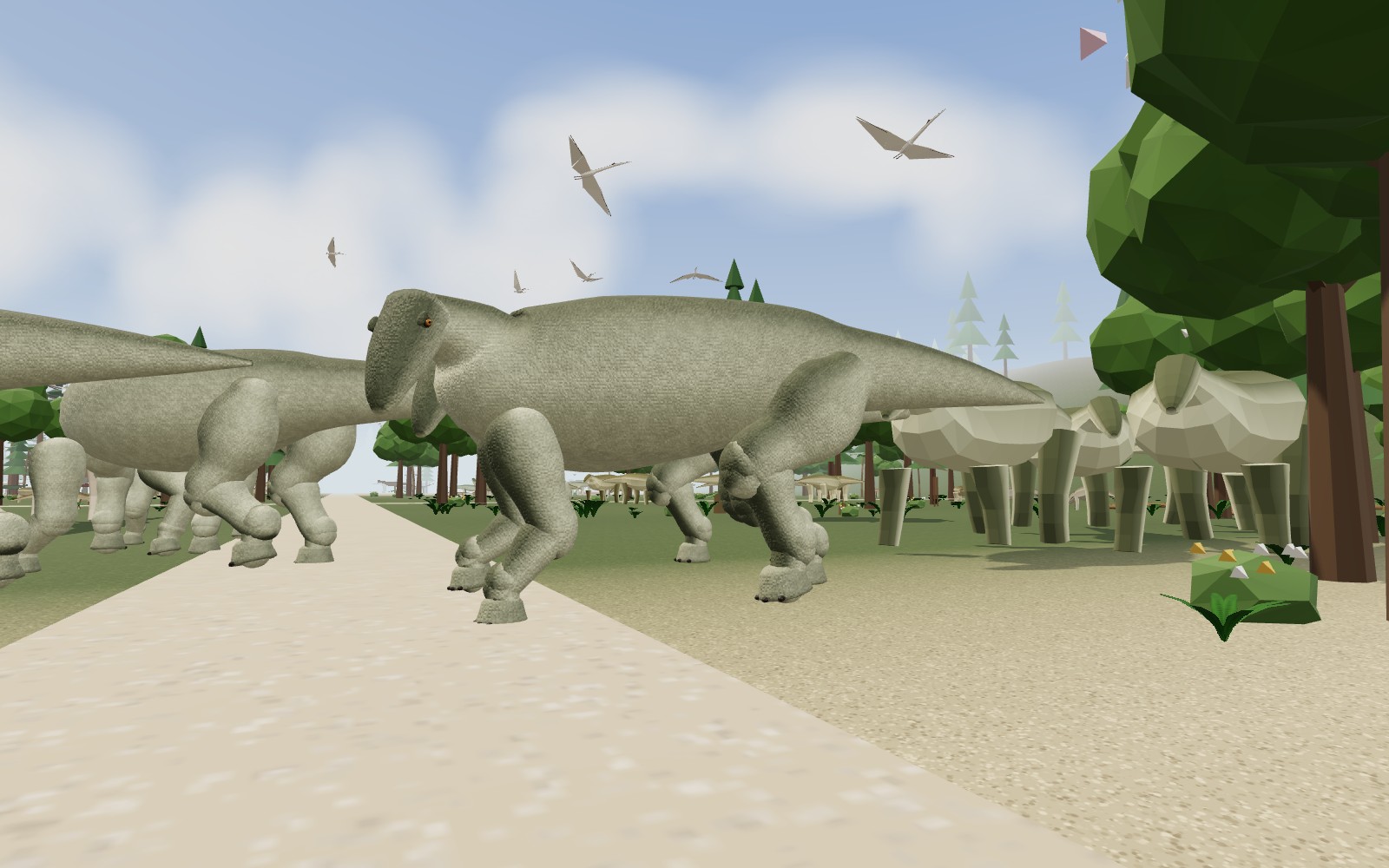
Dinosaur size comparison to humans: 172 life-size animals
A 600 m park of 172 prehistoric animals at their real size, from the first dinosaurs to T. rex, laid out by age.
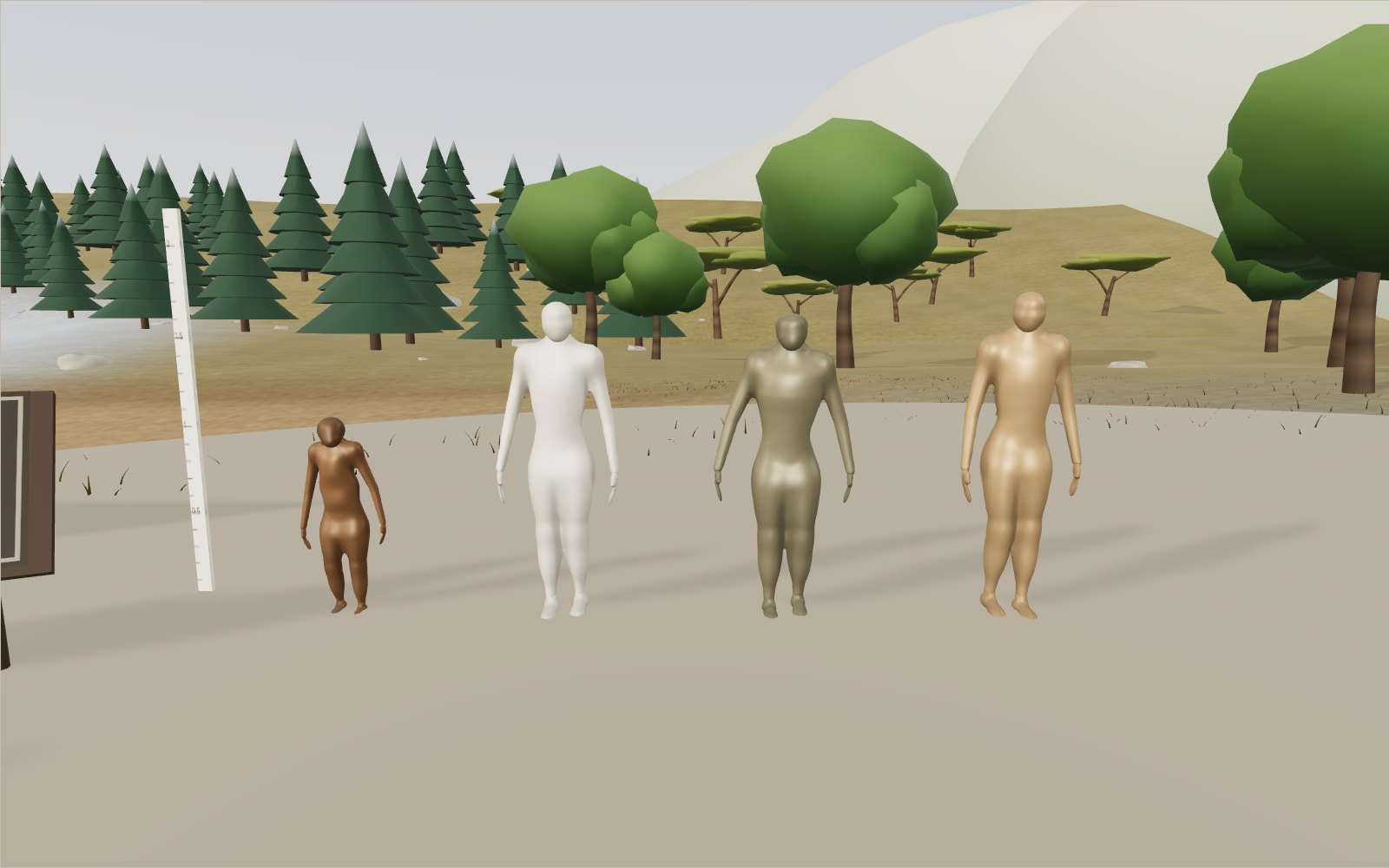
Human evolution walk
Lucy stood about 1.1 m tall. Walk 7 million years of human relatives at their real size, with yourself beside them.
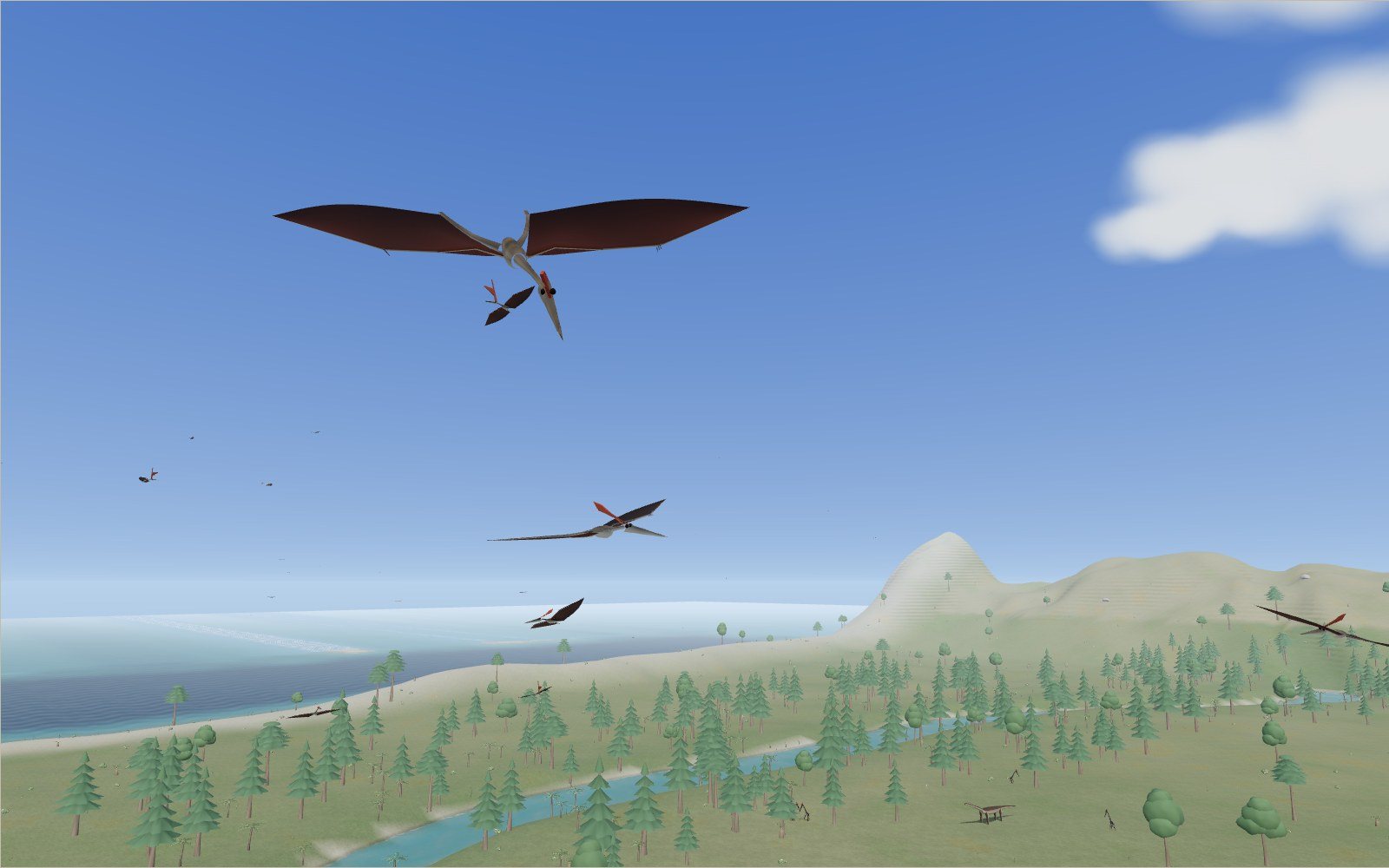
Fly with life-size pterosaurs
Quetzalcoatlus spanned about 10 m, close to the 11 m wing of a Cessna 172, and standing it was as tall as a giraffe. Watch it pass over a Cretaceous cliff, then fly with 35 pterosaurs from three ages.
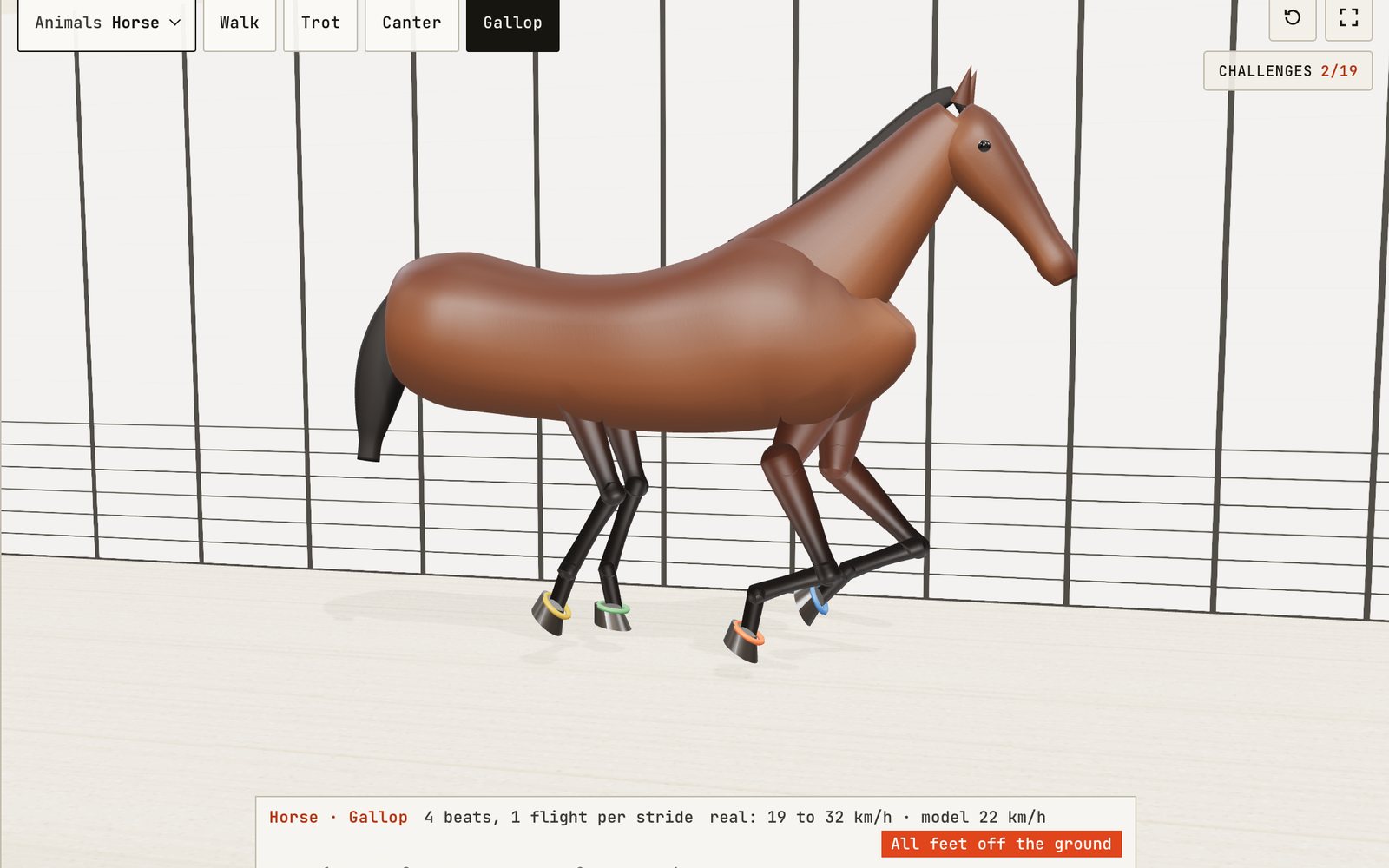
How a horse runs: walk, trot, canter and gallop
In 1878 Muybridge's cameras showed that a galloping horse does lift all four feet at once, but with its legs tucked under it. Some fast animals never leave the ground at all.
How CRISPR-Cas9 gene editing works
A guide RNA reads just 20 letters of DNA, and that is usually enough to pick out one spot among the 3 billion base pairs of a human genome.
How ATP synthase works
In mitochondria the rotor of ATP synthase turns about 100 times a second, and every full turn releases three molecules of ATP.