图 91漫游馆
人类进化了多少年?沿时间之路比较古人类的真实身高
Lucy 身高约 1.1 m。沿 700 万年的人类近亲时间线漫步,按真实大小与它们并肩站立。
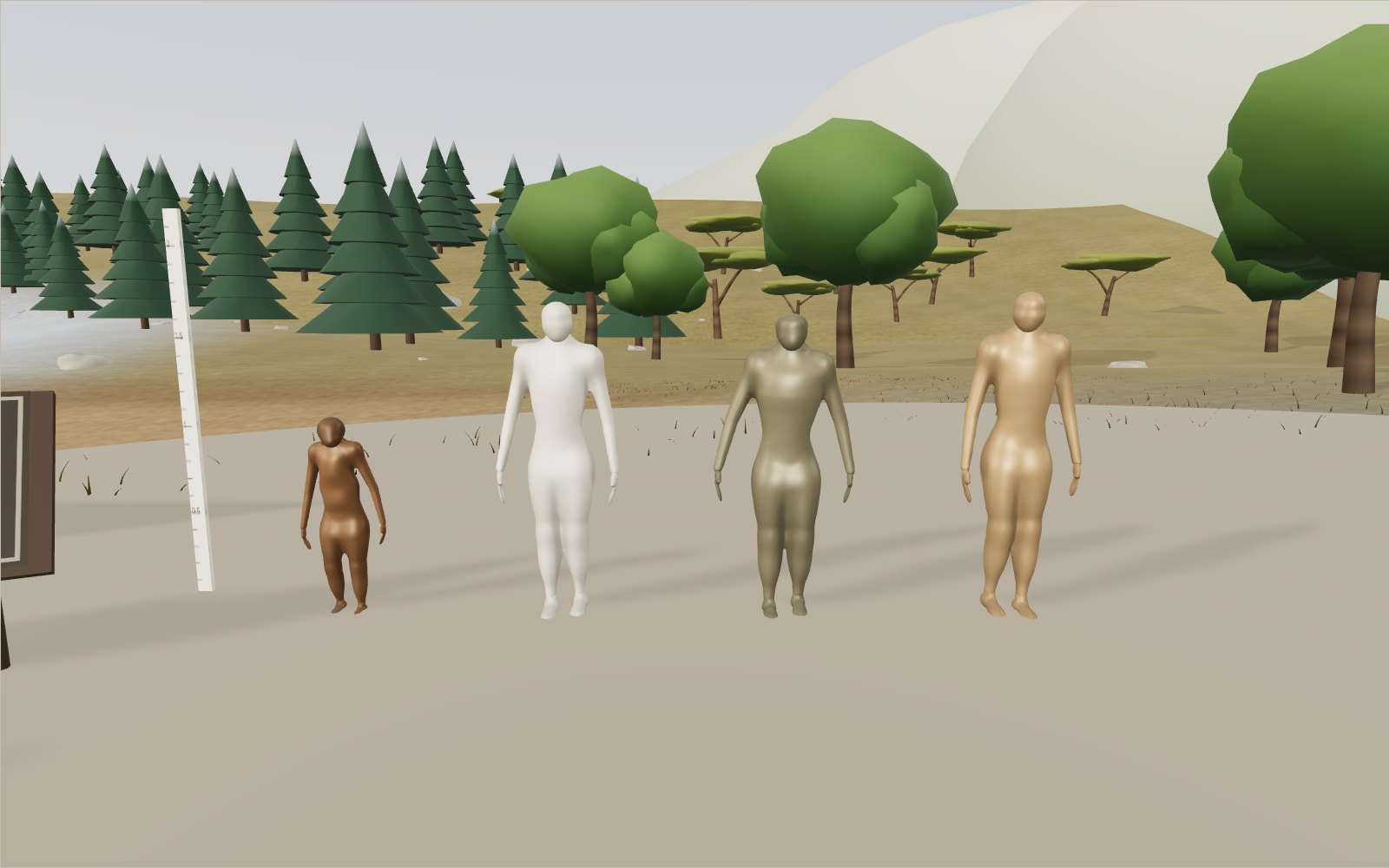
这台设备无法显示 3D 模型。下面的讲解步骤可以直接阅读文字。
1 / 13 Lucy、你与 Neanderthal时间之路今天一端的三个塑像按真实身高站立:Lucy 约 1.1 m,你采用所设身高,Neanderthal 男性为 1.64 m。旁边的尺每隔 10 cm 一格。用 WASD 或摇杆行走,拖动环视。
拖动可旋转,滚轮或双指缩放。
你将走过什么
人类进化了多少年?本展从约 700 万年前延伸到今天,按真实身高展示人类家族的 26 个物种及近亲,你可以按它们生活的年代依次走过。博物馆常把早期人类呈现为玻璃柜中的头骨,但架上的头骨很难让人理解主人有多大,更难想象站在他们身旁的感觉。
首先映入眼帘的是广场上的一排塑像。最著名的 Australopithecus afarensis 骨架 Lucy 身高约 1.1 m。她旁边是按你的身高制作的塑像,可在控制区设置,本浏览器会记住。再旁边是 1.64 m 的 Neanderthal 男性和 1.75 m 的 Homo sapiens。队列末端的尺每隔 10 cm 一格。多数参观者会发现 Lucy 比想象中矮小,而身旁的 Neanderthal 格外粗壮。
一条路从广场向西延伸,通向过去。沿路的十三处场景按化石发现的地点和年代布置,包括最早直立猿类的森林、有 Laetoli 足迹的东非大裂谷、Olduvai Gorge、南非洞穴、亚洲、西班牙 Atapuerca、摩洛哥 Jebel Irhoud、Rising Star 洞穴、西伯利亚 Denisova Cave、Flores 与 Luzon 两岛、冰期欧洲和白令陆桥。
塑像按骨架比例塑造,包括腿长、臂长、胸廓形状、髋宽和脑颅大小。面部、皮肤与毛发不会成为化石,因此塑像采用没有五官的光滑青铜或石膏模特造型,并标注「复原(估计)」。若某物种只留下头骨或几颗牙齿,塑像便采用近亲的体型,介绍卡也会说明。
时间之路如何安排
700 万年难以想象,大多数物种又集中在最近几十万年。如果每 10,000 年对应一米,从最早的 Neanderthal 到今天就只占 700 m 道路末端的 40 m。因此这里采用不均匀比例:某年代到起点的距离,等于 600 m 乘以该年代除以 700 万年的平方根。今天在广场;100,000 年前在 72 m 处;100 万年前在 227 m 处;Lucy 生活的 320 万年前在 406 m 处;700 万年前位于 600 m 的尽头。
路旁的标柱标出整齐的年代数值,左上面板显示你所在的地点和年代。在道路上,它显示脚下对应的年代;进入场景后,它显示该处的年代范围。底部小地图展示整条路,点击或轻触即可跳转。
电脑上用 WASD 或方向键行走,手机上用摇杆。拖动环视,按 Shift 奔跑。道路很长,物种指南和小地图都能让你直接前往某个物种或地点。
用自己的身高与 Lucy 比较
Donald Johanson 与 Maurice Taieb 于 1974 年在埃塞俄比亚 Hadar 发现 Lucy。她生活在约 320 万年前,去世时已成年,身高约 1.1 m。发现当晚,营地正在播放 Beatles 的《Lucy in the Sky with Diamonds》,团队由此为她命名。在埃塞俄比亚,她叫 Dinknesh,在阿姆哈拉语中意为「你真出色」。
她所属的 Australopithecus afarensis 是研究最充分的早期人类之一,已发现超过 300 个个体的遗骸,生活年代约为 385 万至 295 万年前,延续时间约为我们自己物种迄今历史的三倍。Smithsonian 给出的平均身高为女性 1.05 m、男性 1.51 m,平均体重分别为 29 kg 和 42 kg。两性的体型差异大于现代人。
Lucy 的骨架同时体现两种生活方式。短而宽的骨盆和向膝部内倾的股骨,让她直立行走时重心保持在双脚上方。长臂、上臂供胸肌附着的发达骨嵴,以及长而弯曲的趾骨,则显示她善于攀爬。这里的塑像采用南方古猿类上窄下宽的漏斗形胸廓、短颈和长臂。
在控制区设置身高,她身旁代表你的塑像也会改变。在物种指南打开她的卡片,可以查看你比该物种平均身高高或矮多少,以及按你当前年龄为一段人生,要经历多少段才能追溯到她的年代。
物种按年代从早到晚排列
下表列出园区所有物种。身高采用 Smithsonian 或 Australian Museum 给出的平均值,男女有差别时女性在前。脑容量来自相同资料或具体头骨,卡片会注明。资料没有数值时写「未知」,不另行编造。
| 物种 | 生存年代 | 发现地点 | 平均身高(女性–男性) | 脑容量 |
|---|---|---|---|---|
| Sahelanthropus (Sahelanthropus tchadensis) | 700 万至 600 万年前 | 乍得 | 未知 | 350 cm³ |
| Orrorin (Orrorin tugenensis) | 620 万至 580 万年前 | 肯尼亚 | 未知 | 未知 |
| Ardipithecus kadabba (Ardipithecus kadabba) | 580 万至 520 万年前 | 埃塞俄比亚 | 未知 | 未知 |
| Ardipithecus ramidus (Ardipithecus ramidus) | 约 440.00000000000006 万年前 | 埃塞俄比亚 | 1.20 m | 325 cm³ |
| Australopithecus anamensis (Australopithecus anamensis) | 420 万至 380 万年前 | 肯尼亚, 埃塞俄比亚 | 未知 | 370 cm³ |
| Australopithecus afarensis (Australopithecus afarensis) | 385 万至 295 万年前 | 埃塞俄比亚, 肯尼亚, 坦桑尼亚 | 1.05–1.51 m | 430 cm³ |
| 肯尼亚nthropus (肯尼亚nthropus platyops) | 350 万至 320 万年前 | 肯尼亚 | 未知 | 430 cm³ |
| Australopithecus africanus (Australopithecus africanus) | 330 万至 210 万年前 | 南非 | 1.15–1.38 m | 480 cm³ |
| Australopithecus garhi (Australopithecus garhi) | 约 250 万年前 | 埃塞俄比亚 | 未知 | 450 cm³ |
| Australopithecus sediba (Australopithecus sediba) | 约 198 万年前 | 南非 | 1.30 m | 420 cm³ |
| Paranthropus aethiopicus (Paranthropus aethiopicus) | 270 万至 229.99999999999997 万年前 | 肯尼亚, 埃塞俄比亚 | 未知 | 410 cm³ |
| Paranthropus boisei (Paranthropus boisei) | 229.99999999999997 万至 120 万年前 | 埃塞俄比亚, 肯尼亚, 坦桑尼亚, 马拉维 | 1.24–1.37 m | 505 cm³ |
| Paranthropus robustus (Paranthropus robustus) | 180 万至 120 万年前 | 南非 | 1.00–1.20 m | 未知 |
| Homo habilis (Homo habilis) | 240 万至 140 万年前 | 坦桑尼亚, 肯尼亚, 南非 | 1.00–1.35 m | 610 cm³ |
| Homo rudolfensis (Homo rudolfensis) | 190 万至 180 万年前 | 肯尼亚 | 未知 | 775 cm³ |
| Homo ergaster (Homo ergaster) | 190 万至 150 万年前 | 肯尼亚 | 1.60–1.80 m | 860 cm³ |
| Homo erectus (Homo erectus) | 189 万至 110,000 年前 | 爪哇, 中国, 肯尼亚, 格鲁吉亚 | 1.45–1.85 m | 1,050 cm³ |
| Homo antecessor (Homo antecessor) | 120 万至 800,000 年前 | 西班牙 | 1.60–1.80 m | 1,000 cm³ |
| Homo heidelbergensis (Homo heidelbergensis) | 700,000 至 200,000 年前 | 德国, 赞比亚, 欧洲 | 1.57–1.75 m | 1,300 cm³ |
| Neanderthal (Homo neanderthalensis) | 400,000 至 40,000 年前 | 欧洲, 西亚, 西伯利亚, 德国, 法国, 西班牙 | 1.55–1.64 m | 1,500 cm³ |
| Denisovan (Denisovans (暂无物种学名)) | 500,000 至 30,000 年前 | 西伯利亚, 西藏 | 未知 | 未知 |
| Homo naledi (Homo naledi) | 335,000 至 236,000 年前 | 南非 | 1.44 m | 560 cm³ |
| Homo floresiensis (Homo floresiensis) | 100,000 至 50,000 年前 | Flores | 1.06 m | 400 cm³ |
| Homo luzonensis (Homo luzonensis) | 67,000 至 50,000 年前 | Luzon | 未知 | 未知 |
| 早期 Homo sapiens (Homo sapiens (Jebel Irhoud)) | 315,000 至 300,000 年前 | 摩洛哥 | 身高不一 | 未知 |
| Homo sapiens (Homo sapiens) | 300,000 年前至今天 | 世界各地 | 身高不一 | 1,300 cm³ |
有两项需要说明。Homo ergaster 单列,是因为 Australian Museum 将它视为独立物种,而 Smithsonian 把相同化石,包括 Turkana Boy,归入 Homo erectus。Denisovan 至今没有物种学名,因为骨骼太少,尚不足以描述一个物种。
最早直立行走的猿类
道路最古老的一端是森林。来自乍得 Djurab 沙漠的 Sahelanthropus tchadensis 主要凭一块变形的头骨为人所知,年代为 700 万至 600 万年前。它脑小、面部前倾,类似黑猩猩;Australian Museum 估计脑容量为 320 至 380 cm³。它能否直立行走仍有争议。2022 年,一项分析同一地点一块股骨和两块前臂骨的研究认为它可以;其他研究者却将这些骨骼解释为攀爬猿类的特征。这里的塑像站立,是为了呈现正在检验的主张,卡片注明了争议。
肯尼亚 Tugen Hills 的 Orrorin tugenensis 生活在 620 万至 580 万年前。其股骨显示双足行走特征,大小约为 Lucy 的 1.5 倍,因此 Smithsonian 估计体重为 30 至 50 kg,与雌性黑猩猩相当。
Ardipithecus kadabba 的化石来自埃塞俄比亚 Middle Awash,包括牙齿和少量骨骼,距今 580 万至 520 万年。较晚的近亲 Ardipithecus ramidus 因 440 万年前的雌性部分骨架「Ardi」而更为人熟知。她身高约 1.2 m、体重约 50 kg,在地面直立行走,但大脚趾像拇指般伸向侧面,仍可用脚抓握树枝。看她塑像的脚,园区只有她有这样的脚趾。
森林边缘的石膏塑像另有用意。人们常说人类由黑猩猩演化而来,其实不然。Smithsonian 指出,黑猩猩、倭黑猩猩、大猩猩和人类拥有生活在 800 万至 600 万年前的共同祖先。此后各谱系各自演化。黑猩猩是我们现存最近的亲缘种,而不是祖先。
Lucy 的物种与 Laetoli 足迹
东非大裂谷场景包括 Lucy 的物种、可能的祖先 Australopithecus anamensis 和 Kenyanthropus platyops。2016 年,在埃塞俄比亚 Woranso-Mille 发现的 380 万年前 anamensis 头骨,首次显现该物种的面部。Kenyanthropus 来自肯尼亚西 Turkana,是一块 350 万至 320 万年前的扁脸头骨,名字意为「来自肯尼亚的扁脸人」。发现者认为它可能是 Homo rudolfensis 的祖先,其他研究者尚未信服。
在一片深色火山灰上,三个塑像来回行走。360 万年前,坦桑尼亚 Laetoli 的三位早期人类走过潮湿的火山灰,后来的喷发覆盖并保存了足迹。Mary Leakey 的团队于 1976 年发现动物足迹,Paul Abell 于 1978 年发现人类足迹道,近 27 m 长,约有 70 个足印。大脚趾与其他脚趾平齐,和我们一样;脚跟先着地,脚趾最后蹬离地面。步幅短,符合短腿的特征。已知在该时间和地点生存的早期人类只有 Australopithecus afarensis,其化石见于同一地层。
2016 年,在 Laetoli 第二处地点发现的新足迹属于体型大得多的个体,显示该物种内部体型差异很大。
开启「留下足迹」并走过火山灰,你身后会出现根据身高设定长度和间距的足印,可与古老足迹比较步幅。
多种近亲共存:Paranthropus 与早期 Homo
约 270 万至 120 万年前,非洲东部和南部同时生活着多种早期人类,其中三种属于 Paranthropus,即「粗壮型」南方古猿类。它们拥有巨大的臼齿、厚重颌骨、外张颧骨;雄性头骨顶部还有供大型咀嚼肌附着的骨嵴。
最古老的 Paranthropus aethiopicus,以 1985 年在西 Turkana 发现的「黑头骨」最为著名。它生前与其他骨骼一样为白色,地下矿物质将其染黑,脑容量约 410 cm³。Paranthropus boisei 于 1959 年首次在 Olduvai Gorge 发现,臼齿是早期人类中最大的。肯尼亚 Koobi Fora 的头骨脑容量约为 500 和 510 cm³。Paranthropus robustus 生活在约 180 万至 120 万年前的南非洞穴,与早期 Homo 共存。
同时,我们所属的属开始出现。Homo habilis 意为「能手」,于 1960 年首次在 Olduvai Gorge 发现,附近有石器。身高 1.0 至 1.35 m,体重约 32 kg。头骨 KNM-ER 1813 的脑容量仅 510 cm³,而 Australian Museum 给出的物种平均值约为 610 cm³。Turkana 湖畔的 Homo rudolfensis 脑颅更大:Smithsonian 给出 KNM-ER 1470 脑容量约 775 cm³。rudolfensis 与 habilis 究竟是不是两个物种,仍有争议。
南非 Malapa 洞坑的 Australopithecus sediba 比最早的 Homo 更晚,兼有新旧特征:脑容量小,约 420 cm³,手和骨盆却更接近我们。男孩骨架 MH1 的年龄为 12 或 13 岁,身高最多 1.3 m。
从 Lomekwi 到 Levallois 的石器
Olduvai Gorge 的石台陈列四种石器,面前的石核可以打制。用「石器」滑块选择技法,按「敲击」剥下石片。
已知最古老的石器来自肯尼亚西 Turkana 的 Lomekwi 3,距今约 330 万年,比迄今发现的任何 Homo 化石都早。因此制造者并非本属,可能是南方古猿类或 Kenyanthropus。石器大而简单,通过将石块敲向石砧制成。
以 Olduvai 命名的奥杜威石器,约 260 万年前已经出现。埃塞俄比亚 Gona 遗址的石器约有 250 万至 260 万年历史。工具包括石锤、一个或多个边缘留有剥片痕的石核,以及可用于切割的锋利石片。
约 176 万年前,肯尼亚 Kokiselei 出现新形状:两面加工成水滴形的手斧,具有尖端和长切缘。这类阿舍利手斧在非洲、欧洲和亚洲持续制作了超过 100 万年。
约 400,000 年前起,石器制作变化加快。至少到非洲部分地区的 285,000 年前,以及欧洲和西亚的 250,000 至 200,000 年前,制作者会先修整石核,再用一次敲击剥出预定形状的石片,例如尖状器。这是勒瓦娄哇法,又称预制石核技术,Neanderthal 与早期 Homo sapiens 都曾使用。
Homo erectus 走出非洲
Homo erectus 生活在约 189 万至 110,000 年前,比园区任何其他人类物种延续更久。化石分布于非洲北部、东部和南部、格鲁吉亚 Dmanisi、中国及印度尼西亚。1891 年在爪哇发现的头盖骨,是欧洲以外首个被认可的早期人类化石。Smithsonian 估计,早期人类在 200 万至 180 万年前首次从非洲进入亚洲,在 150 万至 100 万年前抵达欧洲。
其身体比例接近我们:长腿、桶形胸廓,髋部比南方古猿类窄。体型差异很大,身高为 1.45 至 1.85 m,体重为 40 至 68 kg。肯尼亚 Nariokotome 的近完整骨架 Turkana Boy,去世时约 1.6 m、48 kg。牙齿显示他约八岁。脑容量为 880 cm³,成年后可能达到约 909 cm³。Olduvai 约 140 万年前的 OH 9,是已知最古老、脑容量超过 1000 cm³ 的早期人类化石;亚洲 Homo erectus 的平均值约为 1050 cm³。
火
园区火堆标示人们维持火塘的地点。最早可靠的控制用火证据来自南非 Wonderwerk Cave:洞内约 100 万年前地层中的烧骨和植物灰烬。燃烧发生在洞穴深处,很难用野火解释。较晚的火塘常见于 Neanderthal 遗址和冰期欧洲洞穴。关闭「火堆」,可查看没有火的场景。
实际大小的脑
开启「实际大小的脑」,塑像会变为透明,在头内按卡片数值显示脑。广场架上也为每个有测量值的物种陈列一个脑,最古老的在左侧。
脑容量根据脑颅内部测量。科学家可以制作内部铸型,即颅内模,再测量体积,也可以扫描头骨,在电脑上计算内部空间。脑本身不会成为化石,但脑颅记录了它的大小,甚至部分形状。
数值随时间增大,却不是平滑上升。最早的物种脑容量为 300 至 400 cm³,约与黑猩猩相当。Lucy 的物种平均约 430 cm³,Homo habilis 约 610 cm³,Homo erectus 约 1050 cm³,我们的物种约 1300 cm³。Smithsonian 指出,脑容量在约 800,000 至 200,000 年前增长最快,当时气候波动强烈。
有两类例外。Neanderthal 平均脑容量约 1500 cm³,比我们大;以色列 Amud 的一块头骨约为 1740 cm³。另有两种晚期人类脑很小:Homo naledi 约 465 至 560 cm³,Homo floresiensis 约 400 cm³。脑容量本身不能说明一个物种如何思考,体型、脑形和组织方式同样重要。
岛屿上的小型人类
2003 年,印度尼西亚 Flores 的 Liang Bua 洞穴发现骨架 LB1。她是成年女性,约 1.06 m 高、30 kg 重,脑容量约 400 cm³。Homo floresiensis 腿短、肩部靠前、没有下巴,脚相对较大。该物种生活在约 100,000 至 50,000 年前的 Flores,当时我们的物种已生活在亚洲其他地区。
菲律宾 Luzon 的 Callao Cave 中的 Homo luzonensis,于 2019 年根据牙齿及手脚骨骼命名,遗存至少有 50,000 至 67,000 年历史。指骨和趾骨弯曲,类似更古老的物种。没有证据能说明其身高,因此塑像采用 Homo floresiensis 的大小,标签也会说明。
此处洞穴有一面壁画。不远处 Sulawesi 的 Leang Karampuang 中,一幅描绘人和猪的画至少有 51,200 年历史,是已知最古老的绘画场景。这里的画借鉴这种题材,并非临摹。
Rising Star 与 Homo naledi
2013 年,探洞者在南非 Rising Star 洞穴系统中,发现了位于狭窄竖井之后洞室里的骨骼。此后出土约 1,550 件骨骼标本,来自至少 15 个个体,2015 年被命名为 Homo naledi。
Homo naledi 身高约 1.44 m,体重约 40 至 56 kg。手腕和拇指接近现代人,手指却弯曲;肩部适合攀爬,双脚适合行走。出乎意料的是测年结果:骨骼仅有 335,000 至 236,000 年历史。这种脑容量为 465 至 560 cm³ 的物种,在非洲与早期 Homo sapiens 同时生活。
遗体如何进入洞穴深处仍有争议。发现团队提出它们被有意放置在那里,其他研究者尚未信服,指出骨骼还可能通过其他方式在洞内聚集。
Neanderthal
冰期欧洲场景有壁画洞穴、火塘,以及蹲在火塘旁的 Neanderthal。他们生活在约 400,000 至 40,000 年前的欧洲及亚洲西南部至中部。身体矮壮、骨骼厚实、髋宽、胸廓深,有利于在寒冷气候中保温。Smithsonian 给出的男性平均值为 1.64 m、65 kg,女性为 1.55 m、54 kg。
其头骨低而长,眼上眉弓大、鼻大、没有下巴,后部有「枕骨隆起」。最早的化石于 1829 年在比利时 Engis、1848 年在 Gibraltar 发现,但当时未被识别。直到 1856 年德国 Neander Valley 的发现,才使该物种获得名称并得到认识。
Neanderthal 与现代人相遇并生育后代。祖先生活在非洲以外的人,其基因组有多达 1 至 4% 来自 Neanderthal,比例随祖源地区而异。约 40,000 年前的现代人遗骸中,发现过高达 6 至 9% 的比例。常见的 2% 说法只是粗略中间值。
西班牙 Maltravieso Cave 的一处手印,被测定为超过 64,000 年,早于 Homo sapiens 抵达欧洲。若年代成立,制作者便是 Neanderthal。部分研究者质疑测年方法,发现卡也注明了这一点。
Denisovan:从 DNA 识别
Denisova Cave 位于西伯利亚 Altai 山脉。2010 年,一块小指骨提取出的 DNA 显示,它属于此前未被描述的人类群体。同年得到了完整基因组,这些人被称为 Denisovan。基因显示他们是 Neanderthal 的近亲;Australian Museum 将两者分化年代定在约 400,000 至 500,000 年前。
已知 Denisovan 骨骼很少,包括 Denisova Cave 的牙齿、指骨与少量碎片,青藏高原海拔 3,280 m 的 Baishiya Karst Cave 颌骨,以及老挝的一颗牙。这也是他们仍没有物种学名、塑像采用 Neanderthal 大小的原因。中国的一些头骨最终可能被归入 Denisovan,但若没有相互对应的化石与 DNA,仍难确定。
Denisova Cave 的一块骨片属于去世时至少 13 岁的女孩,母亲为 Neanderthal,父亲为 Denisovan。Denisovan 的 DNA 也存在于今天的人群中,东南亚和太平洋部分人群可达 4 至 6%。
Homo sapiens:Jebel Irhoud、走出非洲与进入美洲
Smithsonian 将 Homo sapiens 的出现定在约 300,000 年前。摩洛哥 Jebel Irhoud 约 315,000 年前的头骨与石器,显示面部已很像我们,脑颅却更长、更低。非洲两端的化石说明,本物种可能在整个大陆逐渐形成,而不是起源于单一地点。
现代人不止一次离开非洲。以色列 Misliya Cave 的一块颌骨约有 177,000 至 194,000 年历史,是非洲以外最古老的 Homo sapiens 化石之一。如今大多数非洲以外的人,来自较晚的一波迁徙。Smithsonian 估计,人类在最近 60,000 年内抵达澳大利亚,在最近约 30,000 年内抵达美洲。
白令场景中,两片海水夹着一条陆地。末次冰期最寒冷时海平面低得多,宽阔平原连接西伯利亚与阿拉斯加。这里的足迹代表新墨西哥 White Sands 约 23,000 至 21,000 年前的足迹。年代依据水生植物种子,曾受质疑;2023 年,两种其他方法给出了相同年代。
广场的 Homo sapiens 塑像代表 1868 年在法国发现、约 30,000 年前的 Cro-Magnon 1。标签给出模型身高 1.75 m,因为个体和人群之间差异太大,不能为整个物种给出一个平均身高。
如何知道年代
园区年代依据岩层,而不只是骨骼。两类方法配合使用。
相对测年确定先后。沉积层逐层堆积,越下面通常越古老。只在已知时段生存的动物所留下的标准化石,可以让科学家对比相距很远的地层。发现 Lucy 时,她身边有三种已灭绝猪类的遗骸,每种都有已知生存年代。三者唯一重叠的时间为 350 万至 290 万年前,因此 Lucy 必须处于这个年代。
绝对测年给出具体年数。许多东非遗址夹在火山灰层之间。火山灰含钾,其中一种钾会缓慢衰变为氩气;灰冷却后,氩会困在晶体中。测量积累的氩便可计算喷发以来的时间。用这些方法,Lucy 的骨架如今定年为约 318 万年前,位于猪类化石预测的范围内。
较年轻的遗址需要其他时钟。放射性碳的半衰期为 5,730 年,适用于距今约 50,000 年以内的遗存。发光测年测量埋藏砂粒或烧过的燧石自上次受热或见光以来积累的能量,可测超出放射性碳范围的沉积物和火塘。White Sands 足迹先用种子测年,再用花粉及石英颗粒发光测年复核。
因此园区许多年代采用范围。一块化石通常由上下地层限定年代,真实年龄在两者之间。
身体与气候
体型既受祖源影响,也适应气候。Homo erectus 高瘦的身体适合炎热开阔地区,较大的皮肤表面积利于散热。Homo heidelbergensis 等早期人类进入寒冷地区后,身体更紧凑,减小表面积以保存热量。Neanderthal 表现得尤其明显:前臂和小腿短、胸宽、体格厚实。把代表你的塑像放在 Neanderthal 和 erectus 旁边,即使身高相同,差异也一目了然。
同时生活
移动「时间」滑块,一道光会标出道路上的对应年代。该时刻仍生存的物种塑像保持明亮,其他变暗,面板统计同时生存的人类物种数量。
过去 200 万年的大部分时间里,数量都不止一种。180 万年前,数据中的 Paranthropus boisei 与 robustus、Homo habilis、Homo rudolfensis、Homo ergaster 和 Homo erectus 生存期重叠。300,000 年前,Homo erectus、Homo heidelbergensis、Neanderthal、Denisovan、Homo naledi 和早期 Homo sapiens 同时存在。即使在 50,000 年前也有五种:Homo sapiens、Neanderthal、Denisovan、Homo floresiensis 和 Homo luzonensis。只有我们一种人类的时代,只占整个历史的一小段。
这些范围来自迄今发现的化石资料。物种可能出现得更早,或延续得更晚,因此每次新发现都可能改变数量。
常见误解
演化不是阶梯。 从猿到人排成一列的图,容易让人以为一个物种依次变成下一个。真实形态像灌木,有许多分支,多数没有留下后代。Smithsonian 指出,多数早期人类物种没有现存后裔,科学家承认约 15 至 20 个物种,但对亲缘关系仍有分歧。
人类并非由黑猩猩演化而来。 两条谱系都来自生活在 800 万至 600 万年前的共同祖先。
先有行走,后有大脑。 双足行走在 超过 400 万年前已经确立。大脑后来才扩大,艺术、复杂符号和精细文化主要出现在最近 100,000 年。
Neanderthal 不是我们的失败初稿。 他们是独立谱系,在严酷气候中生活了几十万年,会用火、制作预制石核工具,并把部分 DNA 留给了我们。
塑像如何制作
塑像在页面加载时通过代码生成,不下载模型。每个物种都有一组比例:身高、髋关节高度、臂长、肩宽和髋宽、胸廓形状、四肢粗细。头部另有一组参数:脑容量、颅顶长宽高、眉弓大小、面部突出程度、颧宽,以及是否有下巴、骨嵴或枕骨隆起。
程序用这些数值生成光滑三维形状的距离场,再转成表面。身体、头、手和脚按不同细节等级采样,连接成带 16 根骨骼的网格,因此塑像可以行走、看向你或蹲在火旁,而显卡只需一次绘制。脑颅内部空间按物种脑容量设定,透明可见的脑也采用相同数值。
骨骼显示比例,却不显示嘴唇、耳朵、肤色或毛发多少。博物馆艺术家会在头骨上重建肌肉和组织来复原面部,不同艺术家的结果也不同。本展不这样做。塑像像光滑模特,头是没有眼、鼻、口、耳的简单卵形,只随物种改变比例,如高低不同的颅顶、轻微眉部隆起和前突面部。手脚是简单光滑形体。青铜颜色按类群变化,最早的物种较深,接近 Homo sapiens 时较浅;石膏材质则清楚表明它们是塑像,不是肖像。没有身高数据的物种采用近亲大小,标签写「模型」。
科学家在哪些方面存在分歧
卡片注明了未解决的问题。本园区的主要问题包括:
- Sahelanthropus 是否直立行走。
- Kenyanthropus 是否应独立为一个属。
- Homo rudolfensis 是否独立于 Homo habilis。
- Homo ergaster 是独立物种,还是非洲的 Homo erectus。
- Homo antecessor 与 Homo heidelbergensis 在家族树中的位置。
- Denisovan 的外貌,以及哪些化石属于他们。
- Homo naledi 遗体如何进入 Rising Star 深处。
- 欧洲最古老的洞穴艺术有多老,又由谁制作。
分歧是正常科学过程,并不说明证据薄弱。每块新化石都可能确认、移动或打破一个分支。
挑战与隐藏发现
「挑战」按钮打开十道题,答案使用与物种卡相同的数值计算:谁的脑比你大、谁最矮小、50,000 年前谁同时生活、哪种石器最古老、谁留下 Laetoli 足迹、谁可能留下西班牙手印、谁最高、谁最早超过 1000 cm³、100,000 年前有多少种人类,以及谁与你身高最接近。解答后的星标会保存在此浏览器。
园区藏着十九件小物件,包括 Lucy 附近的收音机、Denisova Cave 的骨片、Taung Child 附近的鹰,以及洞壁上的手印等。走近即可打开卡片。「发现」面板还收集八张「其实」卡,首次进入相应地点时打开。
广场东端的门通往恐龙漫步,以及本馆其他漫步展品。
常见问题
人类由黑猩猩演化而来吗?
不是。人类、黑猩猩和倭黑猩猩,以及大猩猩,拥有生活在 800 万至 600 万年前的共同祖先。黑猩猩是我们现存最近的亲缘种,不是祖先。
Lucy 有多高?
约 1.1 m。她已经成年。Smithsonian 给出该物种女性平均 1.05 m,男性平均 1.51 m。
为什么叫 Lucy?
发现当晚,营地播放着 Beatles 的《Lucy in the Sky with Diamonds》,团队由此命名。在埃塞俄比亚她叫 Dinknesh,在阿姆哈拉语中意为「你真出色」。
Neanderthal 与 Homo sapiens 同时生活过吗?
是的。两者在欧洲和西亚共存数万年,并生育后代。祖先来自非洲以外的人,带有多达 1 至 4% 的 Neanderthal DNA。
Neanderthal 的脑比我们大吗?
平均而言是的,约 1500 cm³,而现代人约 1300 cm³。脑容量本身不能说明物种如何思考。
最矮小的人类物种是什么?
有身高估计值的物种中,是 Homo floresiensis,骨架 LB1 身高约 1.06 m。
曾有多少种人类同时生活?
取决于年代。约 50,000 年前至少有五种:Homo sapiens、Neanderthal、Denisovan、Homo floresiensis 与 Homo luzonensis。移动「时间」滑块可查看任意年代的数量。
谁制造了最古老的石器?
尚不清楚。约 330 万年前的 Lomekwi 3 石器比任何 Homo 化石更早,因此可能由其他早期人类,例如南方古猿类或 Kenyanthropus 制作。
人类最早何时用火?
最早可靠证据来自南非 Wonderwerk Cave,约有 100 万年历史。更早的主张也存在,但较难与自然火区分。
Denisovan 是谁?
与 Neanderthal 有亲缘关系的一群人类,2010 年首次根据西伯利亚 Denisova Cave 一块指骨中的 DNA 被识别。已知骨骼很少,尚无物种学名。东南亚和太平洋部分现存人群带有多达 4 至 6% 的 Denisovan DNA。
为什么有些塑像没有身高数值?
一些物种只留下头骨、颌骨或牙齿,资料无法给出身高。塑像采用近亲体型,标签和卡片注明「模型」。
面部真实吗?
不真实。面部、皮肤和毛发均属估计复原。塑像采用无五官的光滑青铜或石膏模特,只展示身体与头部比例,不假装是肖像。
演化是从猿到人的直线吗?
不是。它像分枝灌木,多数分支终止。多种人类曾长期并存。
人类何时抵达美洲?
新墨西哥 White Sands 的足迹约有 23,000 至 21,000 年历史。Smithsonian 的概括估计是在最近约 30,000 年内。
时间之路为什么比例不均匀?
多数物种生活在最近几十万年。均匀比例会将它们挤在几十米内,因此道路按年代平方根布局:近期展开,远古压缩。
术语
- 人族成员:家族树上与通往黑猩猩的谱系分开后,属于人类这一支的成员。
- 双足行走:用两条腿直立行走。
- 南方古猿类:Australopithecus 或近亲,脑小、直立,生活在约 420 万至 120 万年前。
- Paranthropus:臼齿和颌骨特别大的粗壮近亲。
- 颅内模:脑颅内部的铸型,用于测量脑容量。
- 奥杜威石器:约 260 万年前出现的石锤、石核和石片工具组合。
- 阿舍利石器:约 176 万年前起出现的两面加工手斧及其他大型工具组合。
- 勒瓦娄哇法:先修整石核,再用一次敲击剥出预定形状石片的技术。
- 枕骨隆起:头骨后部的隆起,是 Neanderthal 的典型特征。
- 基因渗入:通过杂交,DNA 从一个群体进入另一个群体。
参考资料
- Smithsonian Human Origins, Sahelanthropus tchadensis. https://humanorigins.si.edu/evidence/human-fossils/species/sahelanthropus-tchadensis (checked 19 October 2026)
- Smithsonian Human Origins, Orrorin tugenensis. https://humanorigins.si.edu/evidence/human-fossils/species/orrorin-tugenensis (checked 19 October 2026)
- Smithsonian Human Origins, Ardipithecus kadabba. https://humanorigins.si.edu/evidence/human-fossils/species/ardipithecus-kadabba (checked 19 October 2026)
- Smithsonian Human Origins, Ardipithecus ramidus. https://humanorigins.si.edu/evidence/human-fossils/species/ardipithecus-ramidus (checked 19 October 2026)
- Smithsonian Human Origins, ARA-VP-6/500 "Ardi". https://humanorigins.si.edu/evidence/human-fossils/fossils/ara-vp-6500 (checked 19 October 2026)
- Smithsonian Human Origins, Australopithecus anamensis. https://humanorigins.si.edu/evidence/human-fossils/species/australopithecus-anamensis (checked 19 October 2026)
- Smithsonian Human Origins, Australopithecus afarensis. https://humanorigins.si.edu/evidence/human-fossils/species/australopithecus-afarensis (checked 19 October 2026)
- Smithsonian Human Origins, AL 288-1 "Lucy". https://humanorigins.si.edu/evidence/human-fossils/fossils/al-288-1 (checked 19 October 2026)
- Smithsonian Human Origins, Laetoli Footprint Trails. https://humanorigins.si.edu/evidence/behavior/footprints/laetoli-footprint-trails (checked 19 October 2026)
- Smithsonian Human Origins, Kenyanthropus platyops. https://humanorigins.si.edu/evidence/human-fossils/species/kenyanthropus-platyops (checked 19 October 2026)
- Smithsonian Human Origins, Australopithecus africanus. https://humanorigins.si.edu/evidence/human-fossils/species/australopithecus-africanus (checked 19 October 2026)
- Smithsonian Human Origins, Taung Child. https://humanorigins.si.edu/evidence/human-fossils/fossils/taung-child (checked 19 October 2026)
- Smithsonian Human Origins, Australopithecus garhi. https://humanorigins.si.edu/evidence/human-fossils/species/australopithecus-garhi (checked 19 October 2026)
- Smithsonian Human Origins, BOU-VP-12/1. https://humanorigins.si.edu/evidence/human-fossils/fossils/bou-vp-121 (checked 19 October 2026)
- Smithsonian Human Origins, Australopithecus sediba. https://humanorigins.si.edu/evidence/human-fossils/species/australopithecus-sediba (checked 19 October 2026)
- Smithsonian Human Origins, Paranthropus aethiopicus. https://humanorigins.si.edu/evidence/human-fossils/species/paranthropus-aethiopicus (checked 19 October 2026)
- Smithsonian Human Origins, KNM-WT 17000 "Black Skull". https://humanorigins.si.edu/evidence/human-fossils/fossils/knm-wt-17000 (checked 19 October 2026)
- Smithsonian Human Origins, Paranthropus boisei. https://humanorigins.si.edu/evidence/human-fossils/species/paranthropus-boisei (checked 19 October 2026)
- Smithsonian Human Origins, KNM-ER 406. https://humanorigins.si.edu/evidence/human-fossils/fossils/knm-er-406 (checked 19 October 2026)
- Smithsonian Human Origins, Paranthropus robustus. https://humanorigins.si.edu/evidence/human-fossils/species/paranthropus-robustus (checked 19 October 2026)
- Smithsonian Human Origins, Homo habilis. https://humanorigins.si.edu/evidence/human-fossils/species/homo-habilis (checked 19 October 2026)
- Smithsonian Human Origins, KNM-ER 1813. https://humanorigins.si.edu/evidence/human-fossils/fossils/knm-er-1813 (checked 19 October 2026)
- Smithsonian Human Origins, Homo rudolfensis. https://humanorigins.si.edu/evidence/human-fossils/species/homo-rudolfensis (checked 19 October 2026)
- Smithsonian Human Origins, Homo erectus. https://humanorigins.si.edu/evidence/human-fossils/species/homo-erectus (checked 19 October 2026)
- Smithsonian Human Origins, KNM-WT 15000 "Turkana Boy". https://humanorigins.si.edu/evidence/human-fossils/fossils/knm-wt-15000 (checked 19 October 2026)
- Smithsonian Human Origins, Homo heidelbergensis. https://humanorigins.si.edu/evidence/human-fossils/species/homo-heidelbergensis (checked 19 October 2026)
- Smithsonian Human Origins, Kabwe 1. https://humanorigins.si.edu/evidence/human-fossils/fossils/kabwe-1 (checked 19 October 2026)
- Smithsonian Human Origins, Homo neanderthalensis. https://humanorigins.si.edu/evidence/human-fossils/species/homo-neanderthalensis (checked 19 October 2026)
- Smithsonian Human Origins, Homo naledi. https://humanorigins.si.edu/evidence/human-fossils/species/homo-naledi (checked 19 October 2026)
- Smithsonian Human Origins, Homo floresiensis. https://humanorigins.si.edu/evidence/human-fossils/species/homo-floresiensis (checked 19 October 2026)
- Smithsonian Human Origins, LB1. https://humanorigins.si.edu/evidence/human-fossils/fossils/lb-1 (checked 19 October 2026)
- Smithsonian Human Origins, Homo sapiens. https://humanorigins.si.edu/evidence/human-fossils/species/homo-sapiens (checked 19 October 2026)
- Smithsonian Human Origins, Cro-Magnon 1. https://humanorigins.si.edu/evidence/human-fossils/fossils/cro-magnon-1 (checked 19 October 2026)
- Smithsonian Human Origins, Ancient DNA and Neanderthals. https://humanorigins.si.edu/evidence/genetics/ancient-dna-and-neanderthals (checked 19 October 2026)
- Smithsonian Human Origins, Introduction to Human Evolution. https://humanorigins.si.edu/education/introduction-human-evolution (checked 19 October 2026)
- Smithsonian Human Origins, Early Stone Age Tools. https://humanorigins.si.edu/evidence/behavior/stone-tools/early-stone-age-tools (checked 19 October 2026)
- Smithsonian Human Origins, Middle Stone Age Tools. https://humanorigins.si.edu/evidence/behavior/stone-tools/middle-stone-age-tools (checked 19 October 2026)
- Smithsonian Human Origins, Humans Change the World. https://humanorigins.si.edu/human-characteristics/humans-change-world (checked 19 October 2026)
- Smithsonian Human Origins, Dating. https://humanorigins.si.edu/evidence/dating (checked 19 October 2026)
- Smithsonian Human Origins, Brains. https://humanorigins.si.edu/human-characteristics/brains (checked 19 October 2026)
- Australian Museum, Sahelanthropus tchadensis. https://australian.museum/learn/science/human-evolution/sahelanthropus-tchadensis/ (checked 19 October 2026)
- Australian Museum, Ardipithecus ramidus. https://australian.museum/learn/science/human-evolution/ardipithecus-ramidus/ (checked 19 October 2026)
- Australian Museum, Australopithecus anamensis. https://australian.museum/learn/science/human-evolution/australopithecus-anamensis/ (checked 19 October 2026)
- Australian Museum, Australopithecus afarensis. https://australian.museum/learn/science/human-evolution/australopithecus-afarensis/ (checked 19 October 2026)
- Australian Museum, Kenyanthropus platyops. https://australian.museum/learn/science/human-evolution/kenyanthropus-platyops/ (checked 19 October 2026)
- Australian Museum, Australopithecus africanus. https://australian.museum/learn/science/human-evolution/australopithecus-africanus/ (checked 19 October 2026)
- Australian Museum, Australopithecus garhi. https://australian.museum/learn/science/human-evolution/australopithecus-garhi/ (checked 19 October 2026)
- Australian Museum, Australopithecus sediba. https://australian.museum/learn/science/human-evolution/australopithecus-sediba/ (checked 19 October 2026)
- Australian Museum, Homo habilis. https://australian.museum/learn/science/human-evolution/homo-habilis/ (checked 19 October 2026)
- Australian Museum, Homo rudolfensis. https://australian.museum/learn/science/human-evolution/homo-rudolfensis/ (checked 19 October 2026)
- Australian Museum, Homo ergaster. https://australian.museum/learn/science/human-evolution/homo-ergaster/ (checked 19 October 2026)
- Australian Museum, Homo erectus. https://australian.museum/learn/science/human-evolution/homo-erectus/ (checked 19 October 2026)
- Australian Museum, Homo antecessor. https://australian.museum/learn/science/human-evolution/homo-antecessor/ (checked 19 October 2026)
- Australian Museum, Homo heidelbergensis. https://australian.museum/learn/science/human-evolution/homo-heidelbergensis/ (checked 19 October 2026)
- Australian Museum, Homo neanderthalensis. https://australian.museum/learn/science/human-evolution/homo-neanderthalensis/ (checked 19 October 2026)
- Australian Museum, Homo floresiensis. https://australian.museum/learn/science/human-evolution/homo-floresiensis/ (checked 19 October 2026)
- Australian Museum, Homo naledi. https://australian.museum/learn/science/human-evolution/homo-naledi/ (checked 19 October 2026)
- Australian Museum, The Denisovans. https://australian.museum/learn/science/human-evolution/the-denisovans/ (checked 19 October 2026)
- Détroit, F. et al., A new species of Homo from the Late Pleistocene of the Philippines, Nature (2019). https://doi.org/10.1038/s41586-019-1067-9 (checked 19 October 2026)
- Hublin, J.-J. et al., New fossils from Jebel Irhoud, Morocco and the pan-African origin of Homo sapiens, Nature (2017). https://doi.org/10.1038/nature22336 (checked 19 October 2026)
- Richter, D. et al., The age of the hominin fossils from Jebel Irhoud, Morocco, Nature (2017). https://doi.org/10.1038/nature22335 (checked 19 October 2026)
- Reich, D. et al., Genetic history of an archaic hominin group from Denisova Cave in Siberia, Nature (2010). https://doi.org/10.1038/nature09710 (checked 19 October 2026)
- Krause, J. et al., The complete mitochondrial DNA genome of an unknown hominin from southern Siberia, Nature (2010). https://doi.org/10.1038/nature08976 (checked 19 October 2026)
- Slon, V. et al., The genome of the offspring of a Neanderthal mother and a Denisovan father, Nature (2018). https://doi.org/10.1038/s41586-018-0455-x (checked 19 October 2026)
- Chen, F. et al., A late Middle Pleistocene Denisovan mandible from the Tibetan Plateau, Nature (2019). https://doi.org/10.1038/s41586-019-1139-x (checked 19 October 2026)
- Bennett, M. R. et al., Evidence of humans in North America during the Last Glacial Maximum, Science (2021). https://doi.org/10.1126/science.abg7586 (checked 19 October 2026)
- Pigati, J. S. et al., Independent age estimates resolve the controversy of ancient human footprints at White Sands, Science (2023). https://doi.org/10.1126/science.adh5007 (checked 19 October 2026)
- Harmand, S. et al., 3.3-million-year-old stone tools from Lomekwi 3, West Turkana, Kenya, Nature (2015). https://doi.org/10.1038/nature14464 (checked 19 October 2026)
- Semaw, S. et al., 2.5-million-year-old stone tools from Gona, Ethiopia, Nature (1997). https://doi.org/10.1038/385333a0 (checked 19 October 2026)
- Lepre, C. J. et al., An earlier origin for the Acheulian, Nature (2011). https://doi.org/10.1038/nature10372 (checked 19 October 2026)
- Berna, F. et al., Microstratigraphic evidence of in situ fire in the Acheulean strata of Wonderwerk Cave, PNAS (2012). https://doi.org/10.1073/pnas.1117620109 (checked 19 October 2026)
- Oktaviana, A. A. et al., Narrative cave art in Indonesia by 51,200 years ago, Nature (2024). https://doi.org/10.1038/s41586-024-07541-7 (checked 19 October 2026)
- Aubert, M. et al., Pleistocene cave art from Sulawesi, Indonesia, Nature (2014). https://doi.org/10.1038/nature13422 (checked 19 October 2026)
- Hoffmann, D. L. et al., U-Th dating of carbonate crusts reveals Neandertal origin of Iberian cave art, Science (2018). https://doi.org/10.1126/science.aap7778 (checked 19 October 2026)
- White, T. D. et al., Ardipithecus ramidus and the paleobiology of early hominids, Science (2009). https://doi.org/10.1126/science.1175802 (checked 19 October 2026)
- Daver, G. et al., Postcranial evidence of late Miocene hominin bipedalism in Chad, Nature (2022). https://doi.org/10.1038/s41586-022-04901-z (checked 19 October 2026)
- Haile-Selassie, Y. et al., A 3.8-million-year-old hominin cranium from Woranso-Mille, Ethiopia, Nature (2019). https://doi.org/10.1038/s41586-019-1513-8 (checked 19 October 2026)
- Berger, L. R. et al., Homo naledi, a new species of the genus Homo from the Dinaledi Chamber, South Africa, eLife (2015). https://elifesciences.org/articles/09560 (checked 19 October 2026)
- Dirks, P. H. G. M. et al., The age of Homo naledi and associated sediments in the Rising Star Cave, South Africa, eLife (2017). https://elifesciences.org/articles/24231 (checked 19 October 2026)
- Hershkovitz, I. et al., The earliest modern humans outside Africa, Science (2018). https://doi.org/10.1126/science.aap8369 (checked 19 October 2026)
- Masao, F. T. et al., New footprints from Laetoli (Tanzania) provide evidence for marked body size variation in early hominins, eLife (2016). https://elifesciences.org/articles/19568 (checked 19 October 2026)
- Dean, M. C. and Smith, B. H., Growth and development of the Nariokotome youth, KNM-WT 15000, in The First Humans (2009). https://doi.org/10.1007/978-1-4020-9980-9_10 (checked 19 October 2026)
- Berger, L. R. and Clarke, R. J., Eagle involvement in accumulation of the Taung child fauna, Journal of Human Evolution (1995). https://doi.org/10.1006/jhev.1995.1068 (checked 19 October 2026)
- Chimpanzee Sequencing and Analysis Consortium, Initial sequence of the chimpanzee genome and comparison with the human genome, Nature (2005). https://doi.org/10.1038/nature04072 (checked 19 October 2026)
- Green, R. E. et al., A draft sequence of the Neandertal genome, Science (2010). https://doi.org/10.1126/science.1188021 (checked 19 October 2026)
- Natural Earth 1:110m land (public domain), base of the migration map. https://www.naturalearthdata.com/ (checked 19 October 2026)
更多展品
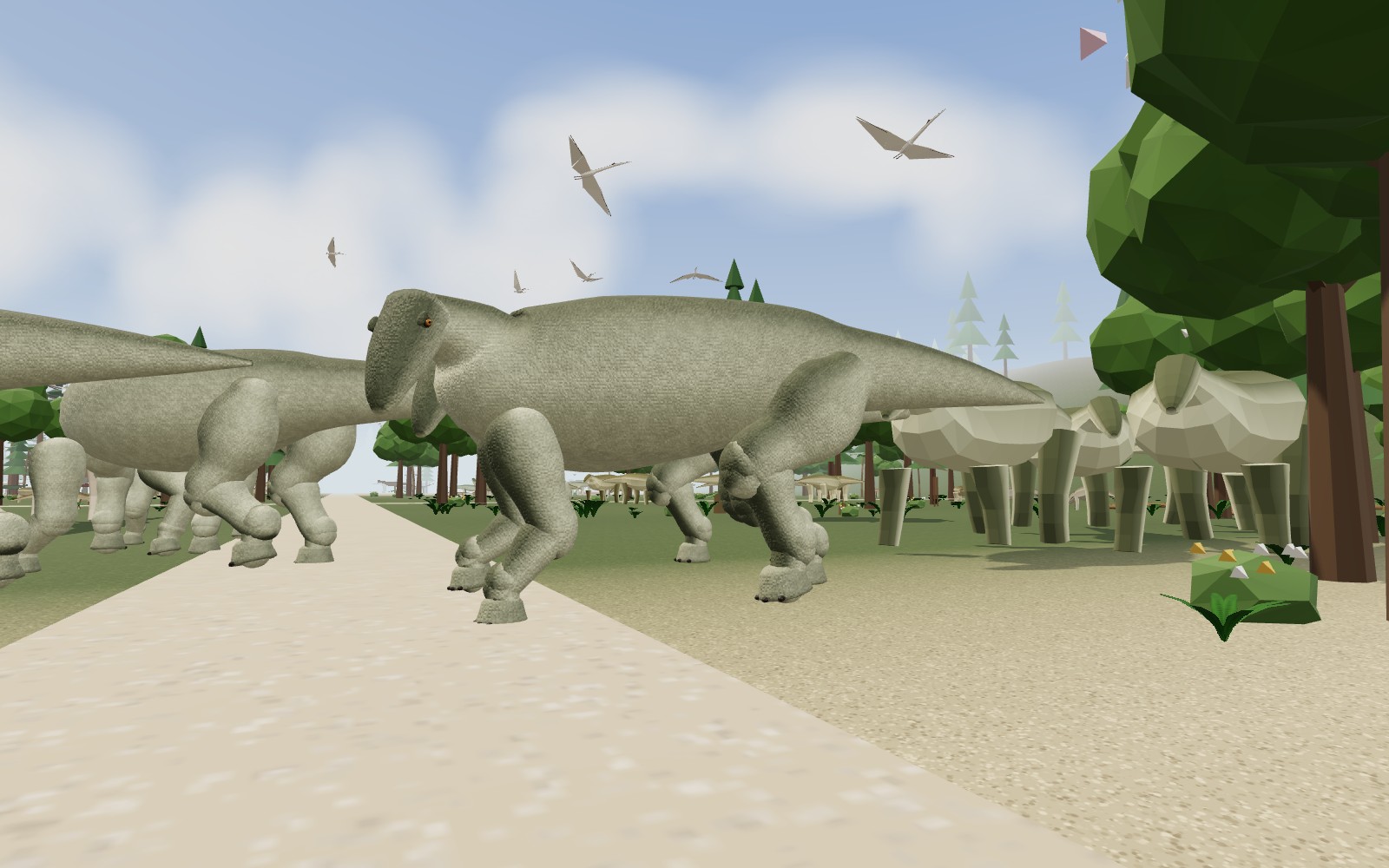
在真实大小的恐龙之间漫步
一座 600 m 宽的园区,按时代排列 172 种按真实大小呈现的史前动物,从第一批恐龙到霸王龙。
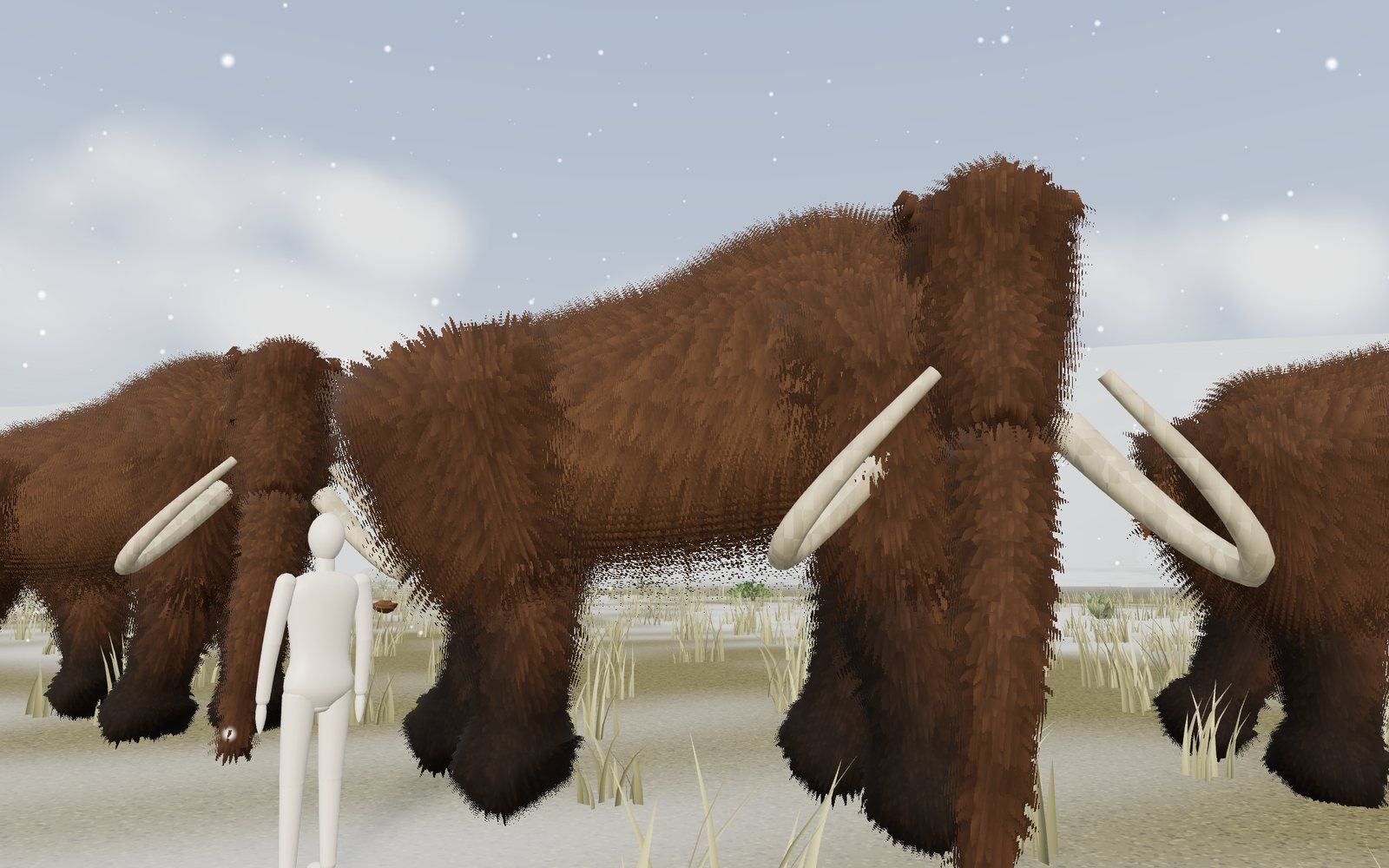
冰河世纪动物有哪些?近看猛犸象与剑齿猫的真实体型
在宽 600 m 的公园里,近看真猛犸象、剑齿猫等 65 种末次冰期动物的真实体型,用时间滑块跨越 50,000 年。
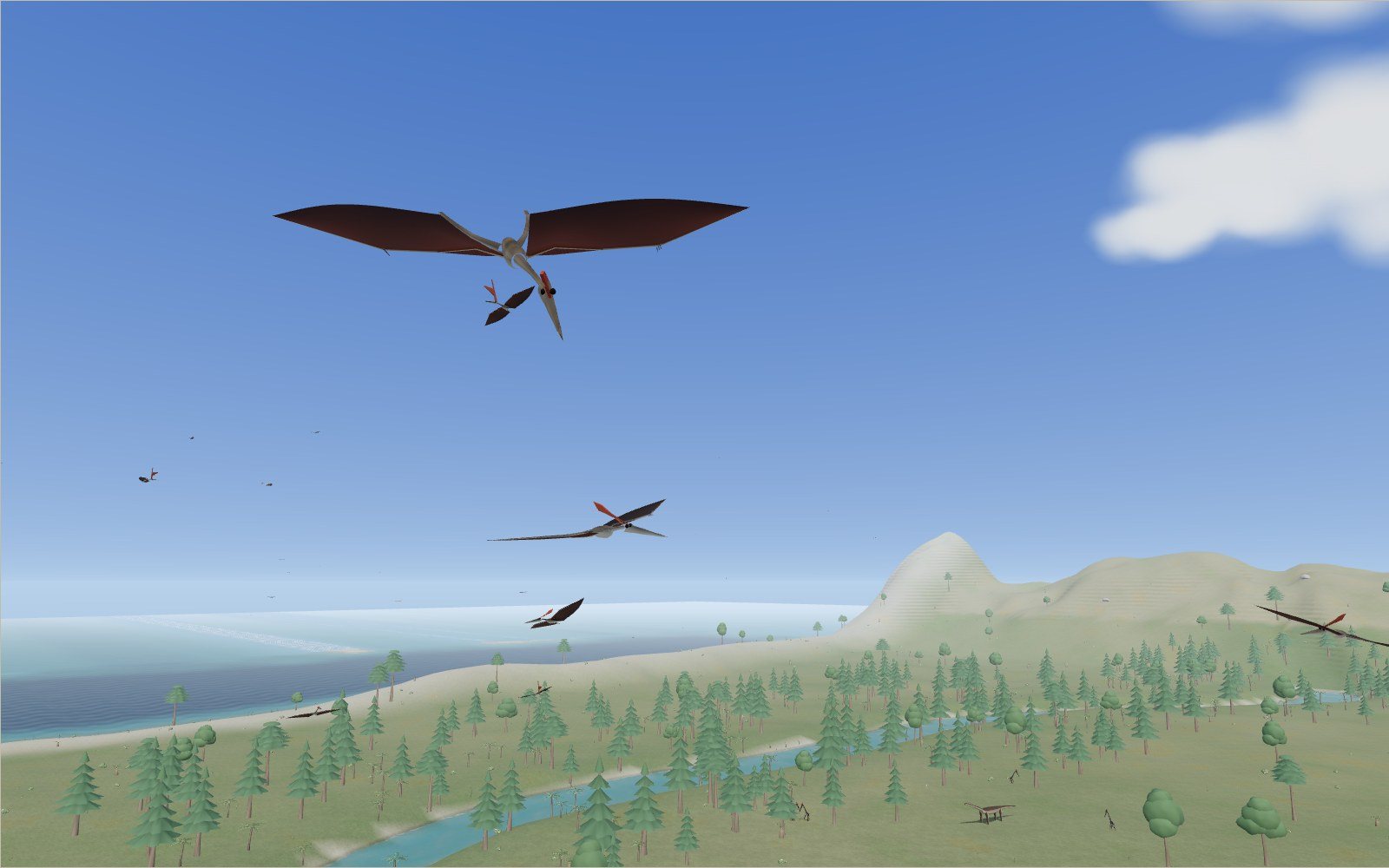
风神翼龙多大?与长颈鹿、飞机比较并体验等身翼龙飞行
Quetzalcoatlus 翼展约 10 m,接近 Cessna 172 的 11 m,站立时与长颈鹿等高。看它飞越白垩纪悬崖,再与三个年代的 35 种翼龙伴飞。
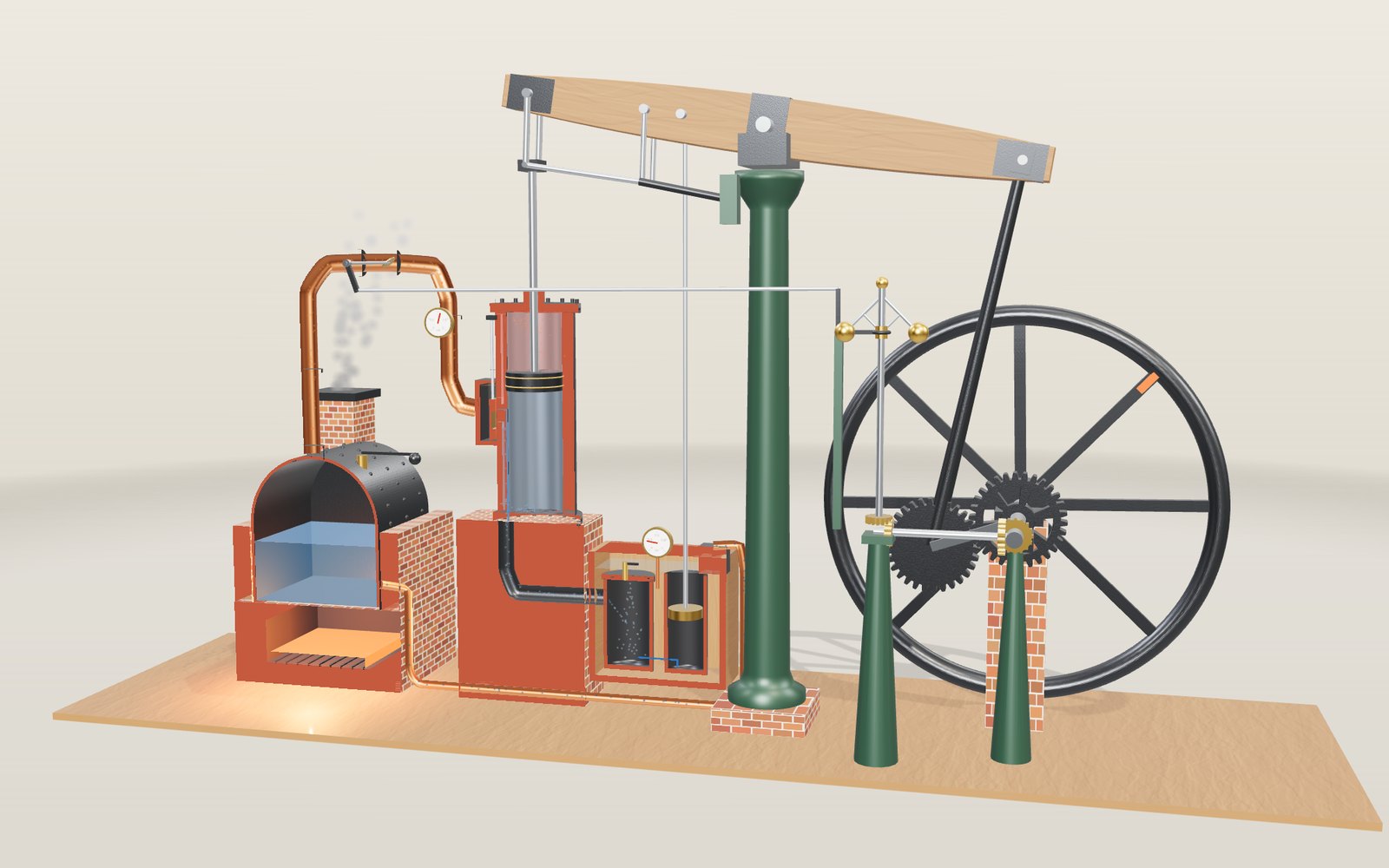
瓦特蒸汽机:可操作的 3D 模型
瓦特蒸汽机把蒸汽送到单独的容器里冷凝,做同样的功,用煤只有纽科门蒸汽机的三分之一左右。
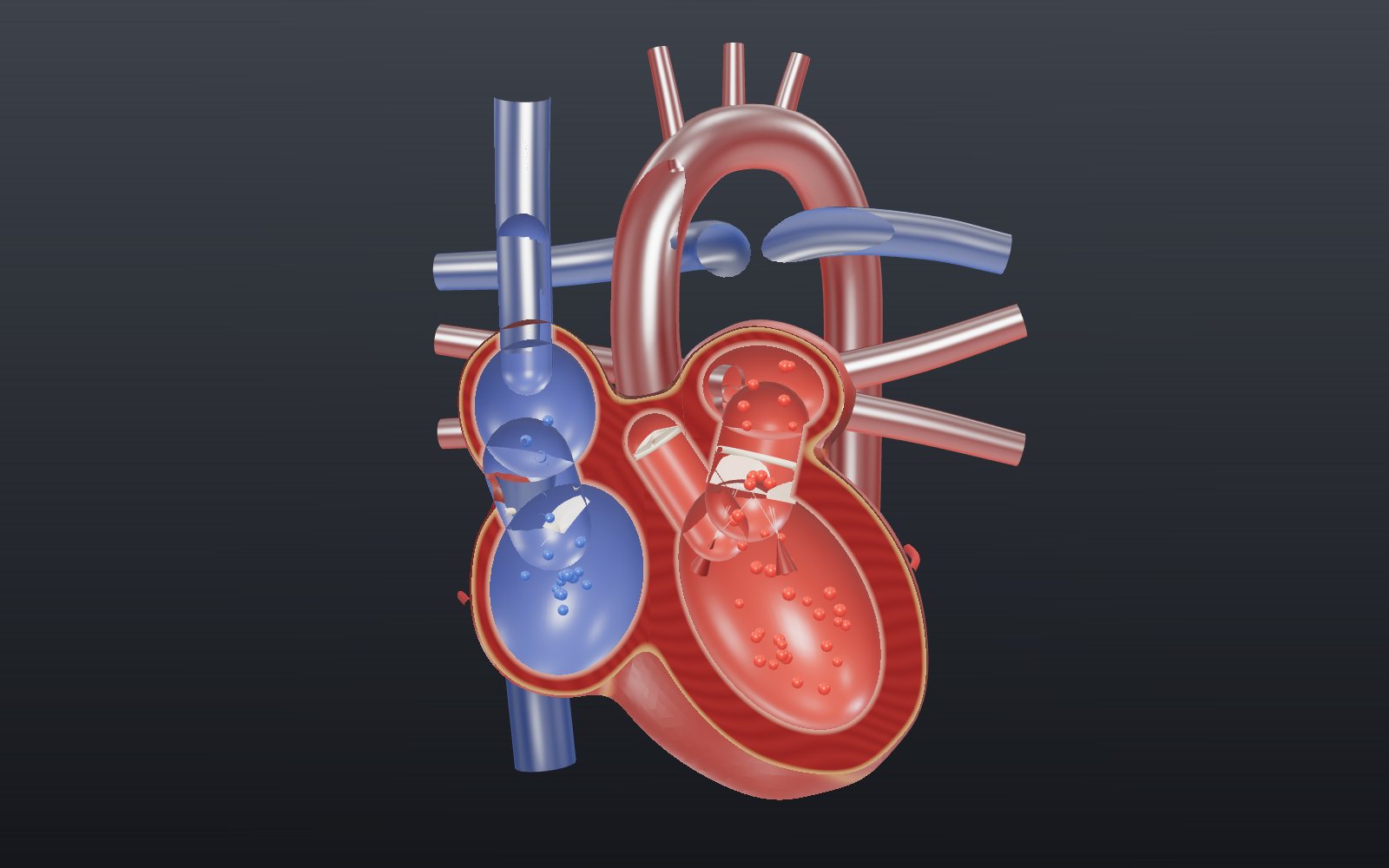
心脏跳动:可交互模型,逐步演示
心脏每跳一次约泵出 70 mL 血液,按静息时的节奏,一天要跳约 108,000 次。

黑胶唱片怎样记录声音
在 LP 唱片的最外圈,音槽以每秒半米的速度从唱针下滑过;到最后一首歌时,已经慢到每秒 21 厘米。