FIG. 62Senses
How a microwave oven works: the magnetron that makes the waves
The waves inside a microwave oven are 12.2 cm long, so without a turntable the hot spots in your food sit about 6 cm apart.
This device cannot show the 3D model. You can read the guide steps below as text.
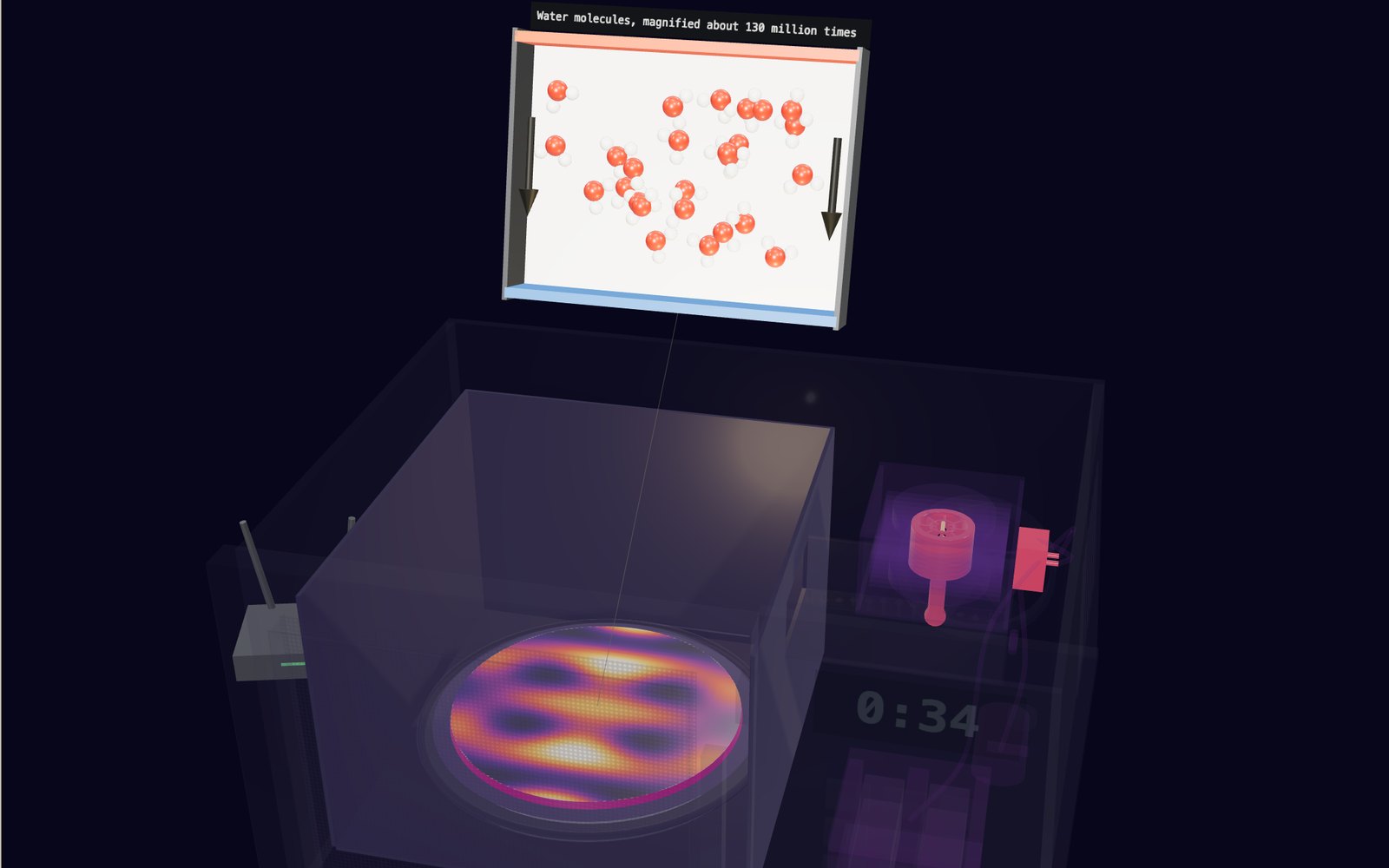
1 / 11 A microwave oven at workThe door closes, the top turns to glass and the oven starts. Dots leave the waveguide and bounce off the metal walls, the water molecules in the magnifier start to turn, and the thermal camera shows where the cheese heats.
Drag to turn. Scroll or pinch to zoom.
Why leftovers come out hot in some places and cold in others
The component that produces the waves in a microwave oven is the magnetron. It turns electrical energy into microwaves at 2.45 GHz, with a wavelength of 12.2 cm, which travel through a waveguide into the cooking chamber. Reflections from the metal walls create strong and weak spots, so food heats unevenly.
Heat a slice of pizza in a microwave oven and bite into it. One corner burns your tongue, and a spot in the middle is still fridge-cold. The oven has no flame and no heating element, so where does that uneven heat come from? The answer is a wave about 12 centimetres long that fills the metal box and stands still in it, with strong and weak places that stay put.
The model above is a countertop microwave oven at real size. When it starts, the door closes, the top turns to glass and the oven switches on: glowing dots leave the waveguide and bounce off the metal walls, the magnifier above the oven shows water molecules starting to turn, and a thermal camera view shows where the cheese is heating. The cooking chamber is on the left. On the right are the parts that make the wave: a high-voltage supply, a magnetron and a short metal pipe called a waveguide. You can swap the food for chocolate, a cup of water or an ice cube, drag it to another place, change the dish, open the door, or make the holes in the door screen larger. The wave itself is slowed down about 2.45 billion times so you can watch the field swing.
The magnetron turns electricity into a wave
A microwave oven needs a source that produces several hundred watts at one fixed frequency, and it has to be cheap. That source is the magnetron, a vacuum tube of copper and ceramic about the size of a fist.
In the middle of the tube is a cathode, a filament heated until it gives off electrons. Around it sits the anode, a copper block with vanes pointing inwards. A high voltage pulls the electrons from the cathode towards the anode. If nothing else happened, they would simply fly straight across and the tube would act like an ordinary diode.
The two ring magnets change that. They put a steady magnetic field along the axis of the tube, at right angles to the electric field. A moving electron in a magnetic field feels a sideways force, so instead of flying straight out it curves and swirls around the cathode. HyperPhysics calls the magnetron a "crossed-field" device for this reason.
The gaps between the copper vanes are the resonant cavities. Each one behaves like a tiny circuit with its own natural frequency, much like the air in a bottle when you blow across the top. As the swirling electrons pass the vane tips, they push charge back and forth across the gaps at that natural frequency and feed energy into the oscillation. The electrons bunch into rotating spokes; with eight cavities there are four spokes, which is what the glowing dots in the model show when See inside is on. A short antenna on top of the anode carries the oscillation out of the tube.
The supply that feeds all this is a transformer, a capacitor and a diode. A University of Michigan technology brief puts the magnetron voltage at around 4,000 volts and the output of a household oven at around 700 watts. The fan behind the magnetron is there because the tube turns a good share of its electrical power into heat that has to be blown away.
The waveguide carries the wave to the food
The antenna does not point straight at the food. It pokes into a rectangular metal pipe, the waveguide, which leads the wave to an opening in the side wall of the chamber. The opening is usually covered with a thin mica plate that lets the wave through and keeps grease out.
A metal pipe can only carry a wave if the pipe is wide enough. For the simplest pattern in a rectangular pipe, the longest wavelength that gets through is twice the inside width. The pipe in the model has the size of a standard WR-340 waveguide, 8.64 by 4.32 cm inside, so its cutoff is 2 × 8.64 = 17.28 cm. The oven's 12.24 cm wave is shorter than that, so it travels. The next pattern up would need a wavelength below 8.64 cm, so only one pattern fits, which keeps the feed tidy.
Inside the pipe the wave pattern repeats every
λg = λ / √(1 − (λ / 2a)²) = 12.24 / √(1 − (12.24 / 17.28)²) = 17.3 cm,
a little longer than in open space. The arrows in the waveguide show that pattern sliding towards the chamber.
A standing wave fills the box
Why 2.45 GHz? Radio bands are shared, and a few are set aside for industrial, scientific and medical equipment that uses radio energy for something other than communication. In the United States, 47 CFR 18.301 lists 2450 MHz with a tolerance of ±50 MHz as one of these bands, and household ovens use it.
The wavelength follows from the frequency:
λ = c / f = 299,792,458 m/s ÷ 2,450,000,000 Hz = 0.1224 m, or 12.2 cm.
The chamber walls are metal, and metal reflects microwaves. A wave that hits the back wall comes back, meets the next wave on its way in, and the two add up. In some places they always cancel. Those are the nodes, where the field hardly moves. Halfway between them the waves always add, and the field swings hardest. Those are the antinodes. The pattern does not travel; it stands, which is why it is called a standing wave. Along any single line, nodes sit half a wavelength apart, 6.12 cm.
A closed box can only hold certain standing waves, called modes. The chamber in the model is 29.49 cm wide and 31.28 cm deep, and those numbers were chosen so that two modes fit the 2.45 GHz wave exactly. For a mode with m half-waves across the width a and p half-waves along the depth d, the condition is
(m / a)² + (p / d)² = (2 / λ)².
With m = 1 and p = 5: (1 / 0.2949)² + (5 / 0.3128)² = 11.50 + 255.51 = 267.0 per square metre, and (2 / 0.12236)² = 267.2. With m = 3 and p = 4: 103.5 + 163.5 = 267.0. Both modes resonate at 2.449 GHz, within 0.1 percent of the magnetron. The orange and blue map on the floor of the chamber is the mix of the two, and the arrows above it show the field going up and down.
Measuring the speed of light with melted cheese
A well-known kitchen experiment uses this pattern. Take the turntable out, put in a plate covered with cheese or chocolate, run the oven for a short time and measure the distance between melted spots. If those spots are half a wavelength apart, then
c = 2 × spacing × f.
In the model, the stripes along the depth come from the mode with five half-waves across 31.28 cm, so they are 31.28 ÷ 5 = 6.26 cm apart. Twice that times 2.45 GHz gives 3.07 × 10⁸ m/s, 2.3 % above the true speed of light. The small error is real and worth understanding. The wave in this mode does not run exactly front to back; it crosses the box at an angle of about 12°, so the stripes along one wall are a little farther apart than the 6.12 cm of a wave running straight. The ruler on the left of the chamber floor shows both: orange ticks every 6.12 cm, black ticks at the nodes of the stripes. By the far wall they have drifted almost 7 mm apart.
That is why a careful version of the experiment measures several spots and averages, and why a result within a few percent of 3 × 10⁸ m/s counts as a success.
The exhibit lets you do the measurement. Choose Chocolate, turn the turntable off and heat for about 20 seconds. Where the field is strong the chocolate turns lighter and glossy as it melts. Press two melted spots that sit next to each other in one straight row along the long side of the slab: the readout gives their distance and twice that distance times 2.45 GHz. Along the rows about 5 cm either side of the middle, where only the five-half-wave mode heats, neighbouring spots are 6.25 cm apart and the result is 3.06 × 10⁸ m/s, about 2 % high. Along the middle of the slab the second mode adds its own spots, and two melted patches can be a whole wavelength apart, which gives an answer almost twice too large. Real chocolate shows the same trap.
What the turntable changes
Set the heating time to 40 seconds with the turntable off. The cheese develops orange stripes and spots over the antinodes, some of which reach 100 °C, while the strips over the nodes stay close to 20 °C. The uncapped energy calculation gives a mean of 58 °C; the displayed mean can be lower because of the temperature cap.
Now turn the turntable on. Nothing about the wave has changed; the hot and cold places are still fixed to the oven. What changes is that each bit of cheese travels around a circle and passes through several of them. Its heat is the average along its circle, so the stripes smear into rings. After the same 40 seconds the coolest part of the cheese is about 49 °C and the hottest about 93 °C, a range of 44 degrees instead of 80. The uncapped mean energy input is the same in both cases. The displayed mean temperature can differ because cells are capped at 100 °C.
The centre of the plate does not move, so the turntable cannot help it. Whatever the field is at the middle of the oven, the middle of the plate gets exactly that. Some ovens use a metal stirrer, a slowly turning fan blade near the feed, instead of a turntable. It reshapes the pattern itself rather than moving the food through it.
How a field becomes heat
The FDA explains that microwaves cause water molecules in food to vibrate, and that this produces heat. The magnified panel in the model shows what that means. A water molecule is bent, with the oxygen atom at the corner and two hydrogen atoms at the ends. Electrons spend more time near the oxygen, so the oxygen end is slightly negative and the hydrogen end slightly positive. A molecule like that is an electric dipole, and an electric field twists it so that its positive end points along the field.
In the oven the field completes 2.45 billion cycles a second, so the molecules are pulled one way and then the other. They cannot follow freely, because each is jostling and bonding with its neighbours. The turning is resisted and disordered, and that disordered motion is heat. In the panel the molecules swing with the field and shake harder as the cheese warms.
This is also why food does not heat from the inside out. FDA notes that in thick food the outer layers are heated mainly by the microwaves and the centre mainly by heat conducted inwards from the hot outside.
Why the door screen keeps the waves in
The door is the one place where you need to see in. The solution is a metal sheet full of small holes behind the glass. Light has a wavelength of about half a micrometre and passes the holes easily. The microwaves have a wavelength of 12.2 cm, and a 2 mm hole is about 60 times smaller.
A hole behaves like a very short pipe, and as with the waveguide, a pipe only carries waves shorter than its cutoff. For a round hole the cutoff wavelength is about 1.7 times its diameter, here 3.4 mm. The oven's wave is 36 times too long to travel through. Inside the hole the field can only fade: by a factor of e every half millimetre or so. The University of Michigan brief gives the rule plainly: microwaves cannot pass through the metal screen if the mesh width is much smaller than the wavelength.
Federal rules set how much may leak. Under 21 CFR 1030.10 the power density 5 cm from the outside of an oven may not exceed 1 milliwatt per square centimetre when sold, and 5 milliwatts per square centimetre afterwards. The same standard requires at least two safety interlocks that switch the magnetron off when the door opens. The FDA adds that the reading falls to about a hundredth when you move from 2 inches (about 5 cm) to 20 inches (about 50 cm) away, and advises against using an oven whose door is bent or does not close firmly.
The Door hole size slider turns the magnifier into a cut through the door screen at actual size, with the 12.2 cm wave arriving from the inside. For each hole size the readout gives the cutoff wavelength, 1.706 times the diameter, and an estimate of how strongly one hole blocks the wave: 20 log10(λ / 2d) decibels for a slot much smaller than the wavelength, a common engineering rule of thumb, plus 32 t / d decibels for a hole of depth t, which follows from the cutoff. With 2 mm holes in a 1 mm sheet that is about 46 dB, a factor of about 40,000 in power. Near 50 mm the estimate falls below 3 dB, and at half a wavelength, 61 mm, the screen stops working: the magnifier shows the wave passing and dots leak out through the door. These numbers are model values for a single hole; a real screen has thousands of holes, and the door also uses a choke around its edge.
Why a fork sparks
The door screen is metal too, so why is a fork dangerous? The difference is shape. A flat, smooth sheet with tiny holes reflects the wave quietly. A fork has four thin tines that end in points.
In the oven's field, electrons in the metal rush back and forth billions of times a second. They pile up at points and edges, and the field next to a sharp point becomes much stronger than the field in the rest of the oven. Physicist Aaron Slepkov told Live Science that this can become strong enough to rip electrons off molecules in the air. Ionised air absorbs microwaves even more strongly than water, so a spark draws in more energy and grows. Turn on Fork in the oven in the model to see the sparks jump between the tine tips.
The University of Illinois Physics Van warns that sparks from twist-ties and other pointed metal can start a fire, and that metal close to the oven walls can arc to them. If you see sparks, stop the oven and remove the metal once it is off. Live Science notes that smooth, flat foil may not spark at all while crumpled foil sparks quickly, which is why manuals often allow small smooth pieces for shielding. Always follow the manual for your oven; the FDA also notes that some ovens should not be run empty.
How much heat, worked out
The model assumes the cheese absorbs 600 W, a round number below the 700 W the Michigan brief gives for a typical oven. The cheese disc is 22 cm across and 6 mm thick, so its volume is π × 0.11² × 0.006 = 2.28 × 10⁻⁴ m³. With a density of 1,100 kg/m³ that is 0.25 kg. At a specific heat of 2.5 kJ per kilogram per kelvin, warming it by one degree takes 627 J. So the average heating rate is
600 W ÷ 627 J/K = 0.96 K per second.
Without the temperature cap, 40 seconds would raise the average by 38 K, from 20 °C to 58 °C. The displayed mean is calculated after capping each cell, so it can be lower. The hottest antinode receives 3.2 times the average, so it reaches 100 °C in about 26 seconds. The model caps each point at 100 °C and uses a brown colour to mark excess energy dose. Real evaporation involves latent heat, and real browning depends on moisture and surface temperature; neither process is calculated here.
What the model leaves out
The heating map uses only two modes, added as patterns of heating rather than as interfering waves. A real oven, especially one with food inside, has many modes, and the food itself bends and absorbs the wave. The field in the model points straight up everywhere; in a real chamber it has components in all directions. Cheese conducts heat, so real hot spots are softer at the edges. The 600 W, the density and the specific heat are round assumptions for a soft cheese, not measured values. The turntable speed of one turn in 12 seconds is chosen for the model. The magnetron is drawn with eight vanes and simplified straps; real tubes vary in vane count and layout.
Other model values: the cheese absorbs 75 % of the power setting (600 W at 800 W), chocolate a quarter of that because it holds little water, and the cup of water 70 %, which the calculator lets you change. A small item's position factor is 0.35 + 0.65 times the local field, so that it averages 1 over the middle of the floor. Ice absorbs 5 % of what water would until it melts. A ceramic dish takes 5 % and a steel bowl lets through 12 %. The door screen decibels are the single-hole rule of thumb above. The glowing dots that bounce off the walls show reflections; the heating pattern comes from the standing wave, not from where the dots happen to go. The thermal colours of the oven parts are illustrative.
A melted candy bar in the 1940s
The magnetron was a wartime radar component. According to the National Inventors Hall of Fame, Percy Spencer at the Raytheon Company found a simpler way to make magnetrons, which raised production from 17 a day to 2,600 a day. APS News describes how he stamped thin copper sections and stacked them, instead of machining each tube from solid metal.
APS News and the Lemelson-MIT Program both tell the story of the candy bar. Standing near an active magnetron, Spencer noticed that a chocolate bar in his pocket had melted. He tried popcorn kernels, which popped, and, according to APS News, an egg, which exploded. Raytheon filed a patent for cooking with microwaves on 8 October 1945. It was granted on 24 January 1950 as US patent 2,495,429, "Method of treating foodstuffs", with Spencer as the inventor.
The first commercial ovens were called Radarange. Lemelson-MIT dates them to 1947, while APS News says 1946, so the year differs between sources. Both describe machines close to six feet (about 1.8 m) tall and weighing about 750 pounds (about 340 kg). APS News adds that the invention first reached the public in January 1947 in a hot-dog vending machine at Grand Central Terminal in New York.
How long would a cup of water take?
A separate calculation makes the difference between rated power and absorbed power easier to see. Suppose a cup contains 250 g of water, initially at 20 °C, and the target is 80 °C. Use a constant specific heat of 4.18 J/g·K as a rounded approximation over this range. The required temperature rise is 60 K, so the water needs
Q = mcΔT = 250 × 4.18 × 60 = 62,700 J.
Suppose the oven is rated at 800 W of microwave output, not 800 W of electrical input. If every joule of that output heated the water, the time would be 62,700 ÷ 800 = 78.4 seconds. For an illustrative load-coupling factor of 70%, the water receives 560 W and the time becomes 62,700 ÷ 560 = 112 seconds. This factor is an assumption for the example, not a measured efficiency for every oven. It excludes the electricity-to-microwave conversion loss already implicit in the distinction between input and output ratings.
At an assumed 50% coupling the same calculation gives 400 W and 157 seconds. These examples explain why the wattage alone cannot predict an exact heating time. The cup absorbs energy too, and heat escapes to the room. Water quantity and container geometry change how the load couples to the cavity. The calculation neglects these losses and assumes a well-mixed temperature. It is not a cooking instruction or a guarantee that a particular cup will be uniformly hot.
The Your microwave box below the controls does this arithmetic for your own oven: enter the output power from its label, the time, the amount of water, the starting temperature and the share that reaches the water. Heat it on the stage puts a cup with the same values on the turntable at a place where its circle averages the mean field, so the stage reaches the same temperature. On the stage the cup can also be dragged to a hot or a cold place with the turntable off, which changes how fast it warms; the readout shows the field at the cup as a multiple of the average (a model value).
The FDA warns that water heated alone in a clean cup can become superheated, past its boiling point without bubbling, and erupt when the cup is moved or something is added. Adding instant coffee or sugar before heating greatly reduces the risk. When the stage cup reaches 100 °C the readout repeats that advice. Heat water in short steps, stir, and let it stand rather than testing this arithmetic with long runs.
How far the energy penetrates
A wavelength of 12.2 cm in air does not mean that microwaves penetrate 12.2 cm into every food. Inside a lossy material the field is attenuated, and the wavelength also changes. Power penetration depth usually means the distance over which travelling microwave power falls to 1/e of its initial value, about 37%. It is not a sharp boundary beyond which heating suddenly stops. At twice that depth about 14% remains in the simple exponential model.
Gezehegn and colleagues measured water properties for microwave food-processing systems. At 2450 MHz their purified-water power penetration depth was 19 mm at 23 °C. Their reported depth rose to 118 mm at 120 °C under the study's processing conditions. The higher temperature is not a condition to reproduce in an open kitchen cup. The comparison shows how strongly penetration depends on material temperature; a room-temperature value cannot be carried unchanged into a hot industrial process.
Food adds more complications. Dissolved ions contribute to dielectric loss, and a meal contains regions with different moisture contents. Vollmer's review describes ionic heating in salty foods alongside the response of water dipoles. The resulting penetration depth is not a universal specification printed on the oven. A thick portion can receive microwave energy within its volume while still depending on conduction to bring a poorly heated centre up to temperature. Covering, stirring where appropriate and following the specified standing time address different parts of that problem.
Frozen food is a useful contrast. In ice, water molecules are constrained by a crystal lattice, so their dipoles respond much less freely to the microwave field. Liquid water absorbs more strongly at the cooking frequency. Once a small region thaws, it can therefore heat faster than a neighbouring frozen region. A hot edge beside an icy middle is not evidence that the wave sought out the coldest place. Intermittent defrost operation leaves time for heat to flow between regions. The exhibit does not calculate melting, latent heat or changes in dielectric properties, so its cheese colours should not be used to predict a frozen meal's thawing time.
What a chocolate measurement can establish
The University of Waterloo's chocolate activity describes using stationary chocolate to reveal heated spots. The inference requires an extra assumption: the spots being compared must represent neighbouring antinodes of a suitable standing-wave pattern. Melted patches are a temperature record, not a direct photograph of the instantaneous electric field. Heat spreads while the sample warms, and several modes can place neighbouring maxima closer together or farther apart than the simple half-wavelength picture suggests.
For a hypothetical spacing of 6.0 cm, the elementary calculation gives 2 × 0.060 × 2.45 × 10⁹ = 2.94 × 10⁸ m/s. If locating the centre of a broad patch leaves a spacing uncertainty of 0.5 cm, the relative spacing uncertainty is already 0.5 ÷ 6.0, about 8%. Reporting many decimal places would conceal that uncertainty. Measuring across several regularly spaced patches may reduce ruler error, but it does not remove an incorrect identification of the mode.
In this exhibit the displayed 6.26 cm stripe spacing belongs to a specified cavity mode, whereas 6.12 cm is the half-wavelength in air. Their difference is intentional. An apparently good match to the accepted speed of light is not proof that every neighbouring melted patch represents the same geometry. Use the on-screen ruler for the comparison without taking apart an appliance. Never bypass a door interlock or open the high-voltage compartment; the magnetron drawing is a model, not a servicing guide.
Ice next to water
Choose Ice cube. A 30 g cube starts at −18 °C and, in the model, absorbs only 5 % of what the same mass of liquid water would. Vollmer's review gives the reason: at 2.45 GHz the loss factor of ice is roughly a thousandth of that of liquid water, because molecules locked in a crystal can hardly turn. The 5 % is a model value that stands in for the thin films of meltwater on a real cube. Once the cube reaches 0 °C it starts to melt, and every gram of meltwater absorbs strongly, so melting speeds up by itself. With the thermal camera on you can see the cube stay dark while the puddle around it brightens. That is the same runaway that leaves a frozen meal icy in one place and boiling in another, and the reason defrost settings switch the magnetron on and off.
Metal on the stage
The Dish slider changes what holds the food. Glass and ceramic let microwaves through, as the FDA explains, and only warm from the food. A steel bowl reflects them: in the model the food in it absorbs 12 % of the usual power (a model value), and the readout warns that metal near the walls can spark. The FDA advises against metal pans and aluminium foil for the same reason, uneven cooking and possible damage to the oven. Fork in the oven shows the other problem, sharp points. When sparks appear, stop the oven; one of the challenges asks you to do it within three seconds.
Comparisons to make on the screen
Pause playback before comparing settings, so the heating time does not advance between observations. Turn off Turntable, set Heating time to 20 seconds and note the cheese's temperature range. Then select 40 seconds. Before the temperature cap is reached, the calculated dose at a fixed point grows in proportion to time. After a point reaches 100 °C, its displayed temperature stops rising and its colour darkens instead. That colour is an excess-dose cue, not a calculation of crust chemistry.
Compare the same heating time with Turntable enabled. Moving food samples the fixed field along circular paths. It does not rotate the cavity's standing-wave pattern. The minimum and maximum temperatures are more useful evidence of evenness than a single average; the displayed average also reflects the model's temperature cap. A point fixed at the exact rotation axis cannot sample a different location.
Thermal camera colours every surface by temperature, from dark at 15 °C to white at 100 °C, the way a thermal camera ranged on the food would. The magnetron and the transformer warm up while the oven runs. Power sets the oven's output; the readout shows how much of it the food absorbs in the model. Show the field hides the arrows and the reflection dots so the food is easier to read. Door hole size switches the magnifier to the door screen at actual size, described above. Pressing the door opens it, and the interlock stops the oven at once.
None of these controls changes the operating frequency. Comparing settings tests this particular model; it does not certify a real oven's leakage level or establish that food has reached a safe serving temperature.
Questions
Why is the frequency 2.45 GHz?
It is one of the radio bands set aside for industrial, scientific and medical equipment. In the United States, 47 CFR 18.301 lists 2450 MHz ± 50 MHz. The wavelength at that frequency is 299,792,458 ÷ 2.45 × 10⁹ = 12.2 cm.
Why does food heat unevenly?
The chamber holds a standing wave with fixed nodes and antinodes. Food over an antinode heats quickly and food over a node barely heats. In the model, with the turntable off, 40 seconds leaves parts of the cheese at 100 °C and parts close to 20 °C.
Does the turntable remove hot spots completely?
No. It moves each part of the food through hot and cold places, so the spots spread into rings, but the centre of the plate never moves and gets whatever field sits at the centre of the oven. Stirring food and letting it stand also help, because heat spreads by conduction.
Can I measure the speed of light this way?
Approximately. Remove the turntable, heat a flat layer of cheese or chocolate briefly, measure the spacing between melted spots and multiply by twice the oven's frequency. In the model the stripes are 6.26 cm apart, which gives 3.07 × 10⁸ m/s, 2.3 % high, because the wave crosses the box at a slight angle.
Why can I see through the door if the waves cannot get out?
The screen's holes are much smaller than the 12.2 cm microwave wavelength but much larger than the wavelength of light. A 2 mm hole has a cutoff wavelength of about 3.4 mm, so microwaves fade inside it, while light passes straight through.
Why does a fork spark but the metal walls do not?
The walls are large and smooth. A fork has sharp tines where charge piles up, and the field near the tips can be strong enough to break down the air. Stop the oven if you see sparks.
Do microwave ovens make food radioactive?
No. The FDA states that microwave energy changes to heat as food absorbs it and does not make food radioactive or contaminated. Each microwave photon carries about 10⁻⁵ electronvolts, far too little to knock an electron out of an atom.
How much microwave energy may leak from an oven?
Under 21 CFR 1030.10, no more than 1 milliwatt per square centimetre at 5 cm from the surface when sold and 5 milliwatts per square centimetre during the oven's life. Ovens must also have at least two interlocks that stop the microwaves when the door opens.
Why can a frozen centre stay cold?
Ice absorbs less strongly than liquid water at the cooking frequency. Thawed regions can warm faster, while conduction takes time to transfer heat into frozen regions. Follow the appliance and food instructions for defrosting and standing time.
Can I heat food in a metal bowl?
Not unless the manual for your oven says so. The FDA notes that metal pans and aluminium foil reflect microwaves, which cooks food unevenly and can damage the oven, and metal close to the walls can spark. In the model, food in a steel bowl absorbs only 12 % of the usual power. Use glass, ceramic or plastic marked as microwave safe.
Why do grapes make plasma in a microwave oven?
A 2019 study in PNAS showed that two grape halves, or two whole grapes touching, act like small water spheres that trap the microwaves in a tiny hot spot where they meet. The field there gets strong enough to ionise sodium and potassium into a glowing plasma. The researchers damaged ovens doing it, so it is not a kitchen experiment.
Is 800 W the power drawn from the socket?
Not if it is labelled microwave output. Electrical input is higher because conversion is not lossless. The water calculation uses output power and a separately assumed load-coupling fraction.
Terms
- Magnetron: a vacuum tube in which electrons, steered by crossed electric and magnetic fields, drive copper cavities to oscillate at microwave frequency.
- Resonant cavity: a space whose shape makes it oscillate at one natural frequency, like air in a bottle.
- Waveguide: a metal pipe that carries microwaves. It only carries waves shorter than its cutoff wavelength.
- Standing wave: the pattern formed when a wave and its reflection overlap. It has fixed nodes and antinodes.
- Node and antinode: places where the field stays near zero and where it swings most. Along one line they are a quarter wavelength apart.
- Mode: one of the standing-wave patterns that fits a closed box at a given frequency.
- Dipole: a molecule with a positive and a negative end, such as water.
- Arcing: a spark through air when the electric field near metal becomes strong enough to ionise it.
- Interlock: a switch that turns the magnetron off when the door opens.
Sources
U.S. Food and Drug Administration, Microwave Ovens (how ovens work, safety standard, leakage, tips). https://www.fda.gov/radiation-emitting-products/resources-you-radiation-emitting-products/microwave-ovens (checked 16 October 2026)
Electronic Code of Federal Regulations, 21 CFR 1030.10, Microwave ovens (1 and 5 mW/cm² at 5 cm, two interlocks). https://www.ecfr.gov/current/title-21/chapter-I/subchapter-J/part-1030/section-1030.10 (checked 16 October 2026)
Electronic Code of Federal Regulations, 47 CFR 18.301, Operating frequencies (ISM band 2450 MHz ± 50 MHz). https://www.ecfr.gov/current/title-47/chapter-I/subchapter-A/part-18/subpart-C/section-18.301 (checked 16 October 2026)
NIST, CODATA value: speed of light in vacuum. https://physics.nist.gov/cgi-bin/cuu/Value?c (checked 16 October 2026)
Georgia State University, HyperPhysics, Magnetron Operation. http://hyperphysics.phy-astr.gsu.edu/hbase/Waves/magnetron.html (checked 16 October 2026)
Georgia State University, HyperPhysics, Standing Waves. http://hyperphysics.phy-astr.gsu.edu/hbase/Waves/standw.html (checked 16 October 2026)
F. T. Ulaby, University of Michigan, Technology Brief 3: Microwave Ovens (700 W, 4,000 V, metal screen, standing wave, stirrer). https://em.eecs.umich.edu/pdf/tb3.pdf (checked 16 October 2026)
University of Illinois Department of Physics, Physics Van, How do Microwaves Work? (metal, sparks, twist-ties). https://van.physics.illinois.edu/ask/listing/821 (checked 16 October 2026)
Live Science, Why Does Metal Spark in the Microwave? (interview with Aaron Slepkov, Trent University). https://www.livescience.com/why-metal-sparks-in-microwave.html (checked 16 October 2026)
APS News, 1945: First Patent for the Microwave (2015). https://www.aps.org/apsnews/2015/10/first-patent-for-microwave (checked 16 October 2026)
Lemelson-MIT Program, Percy Spencer. https://lemelson.mit.edu/resources/percy-spencer (checked 16 October 2026)
National Inventors Hall of Fame, Percy L. Spencer. https://www.invent.org/inductees/percy-l-spencer (checked 16 October 2026)
Google Patents, US2495429A, Method of treating foodstuffs (filed 8 October 1945, granted 24 January 1950). https://patents.google.com/patent/US2495429A/en (checked 16 October 2026)
Michael Vollmer, Physics Education 39 (2004), Physics of the microwave oven (dielectric loss, ice, penetration and cavity loading). https://www.sfu.ca/phys/346/121/resources/physics_of_microwave_ovens.pdf (checked 22 October 2026)
Gezehegn et al. (2021), Dielectric properties of water relevant to microwave assisted thermal pasteurization and sterilization of packaged foods, Washington State University repository (2450 MHz penetration depth). https://s3.wp.wsu.edu/uploads/sites/1254/2021/10/360-Gezehegn-2021-IFSET.pdf (checked 22 October 2026)
University of Waterloo, Microwaving a chocolate bar (2018, educational activity; neighbouring-hotspot assumption requires caution). https://uwaterloo.ca/centre-advanced-science-education/news/microwaving-chocolate-bar (checked 22 October 2026)
IEEE Milestones, Development of the Cavity Magnetron, 1939-1941 (Randall and Boot, 21 February 1940, about 400 W near 10 cm). https://ethw.org/Milestones:Development_of_the_Cavity_Magnetron,_1939-1941 (checked 27 October 2026)
IEEE Spectrum, A Brief History of the Microwave Oven (2016; Amana countertop oven, 1967, $495). https://spectrum.ieee.org/a-brief-history-of-the-microwave-oven (checked 27 October 2026)
Smithsonian Magazine, Hot Food, Fast: The Home Microwave Oven Turns 50 (2017). https://www.smithsonianmag.com/innovation/hot-food-fast-home-microwave-oven-turns-50-180962545 (checked 27 October 2026)
A. Kamerman and N. Erkocevic, Microwave oven interference on wireless LANs operating in the 2.4 GHz ISM band, IEEE PIMRC 1997 (one burst per mains cycle; two magnetrons in commercial ovens). https://doi.org/10.1109/PIMRC.1997.627080 (checked 27 October 2026)
R. Candell and J. Geng, NIST, Microwave oven interference measurements at 2.4 GHz (2024 data set). https://doi.org/10.18434/mds2-3226 (checked 27 October 2026)
H. K. Khattak, P. Bianucci and A. D. Slepkov, Linking plasma formation in grapes to microwave resonances of aqueous dimers, PNAS 116 (2019) 4000-4005. https://doi.org/10.1073/pnas.1818350116 (checked 27 October 2026)
U.S. Environmental Protection Agency, RadTown, Non-Ionizing Radiation Used in Microwave Ovens (interlocks switch the oven off when the door opens). https://www.epa.gov/radtown/non-ionizing-radiation-used-microwave-ovens (checked 27 October 2026)
SAIREM, TMW225 microwave tempering tunnel data sheet (915 MHz, 75 kW magnetrons, blocks from −18 °C to about −4 °C). https://interfoodtechnology.com/wp-content/uploads/2021/10/SAIREM-Fiche-technico-TMW225-MK125EN-B-2020.12.pdf (checked 27 October 2026)
H. W. Ott, Electromagnetic Compatibility Engineering, Wiley 2009, chapter 6 (shielding of apertures and waveguides below cutoff).
More exhibits
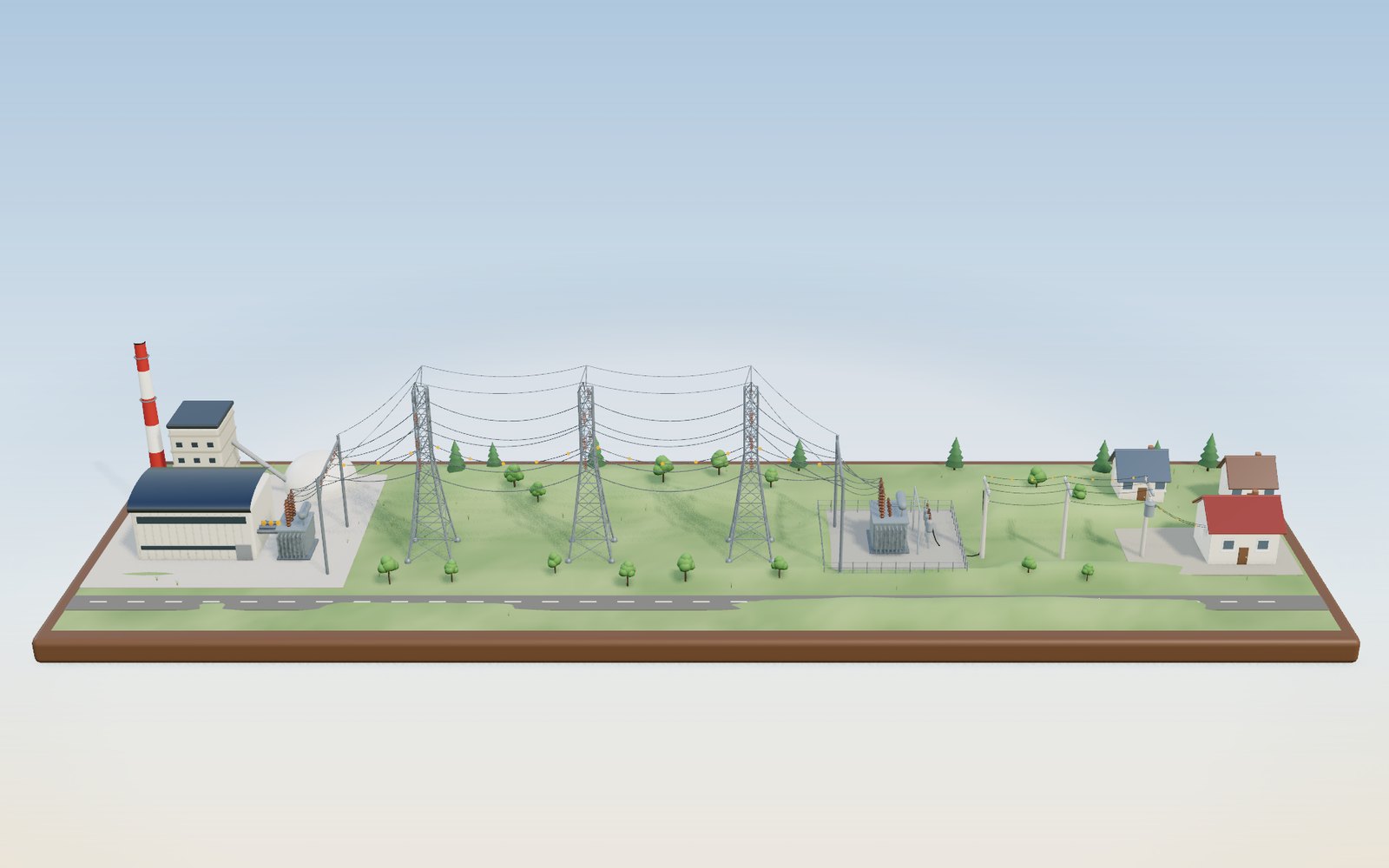
How electricity gets to your home
Electricity leaves the power station at 345,000 volts and reaches the outlet at 220, because high voltage keeps the current, and the heat lost in the wires, small.
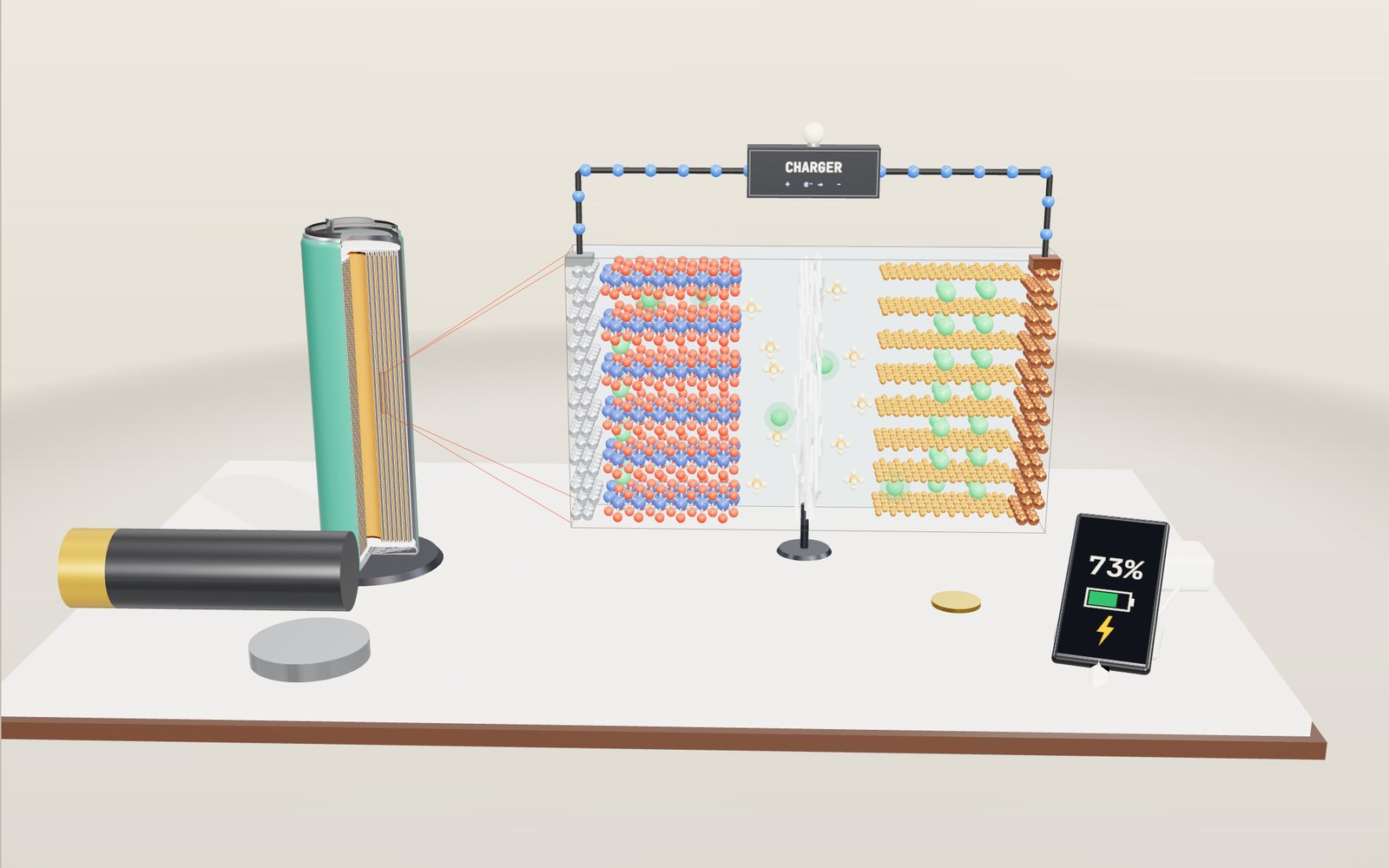
How a lithium-ion battery works: where the ions go on charge
Each time an 18650 cell charges, about 7 × 10²² lithium ions leave a metal oxide and squeeze in between sheets of graphite.
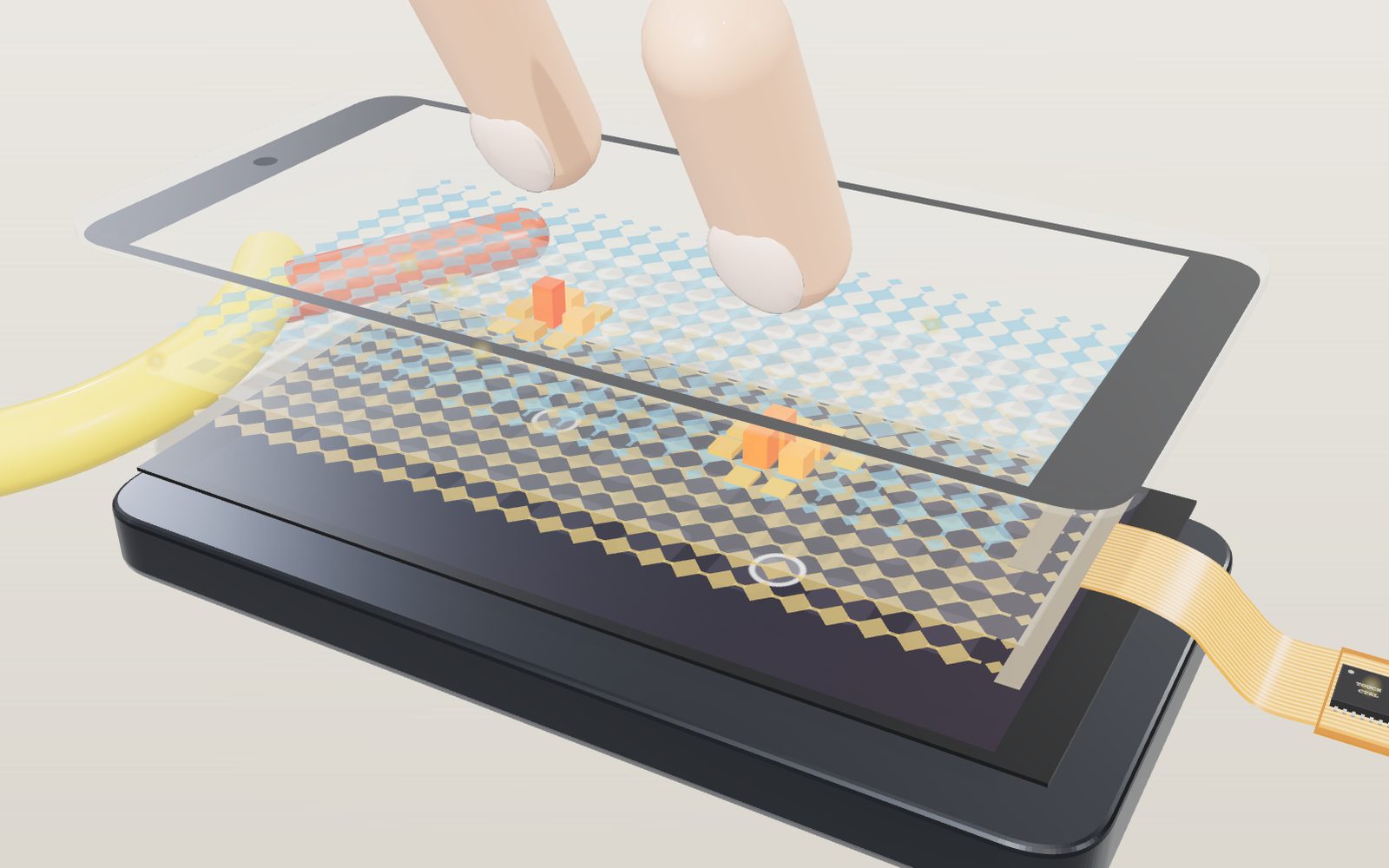
How a touchscreen works: how the glass finds your finger
Under the glass of a phone lies a grid of transparent electrodes, and your finger shows up as a small dip in the charge passing between them.
Electric motor simulator: how it works, step by step
Eight motors, from Faraday's wire in mercury in 1821 to the magnets inside an electric car, all turning on the same push between current and field.
How lightning and thunder work
A lightning channel heats the air to about five times the temperature of the Sun’s surface, and its thunder needs about 3 seconds to cover each kilometre to you.
How to do CPR, use an AED, help someone choking and use a fire extinguisher
Push 100 to 120 times a minute, about 5 cm deep: with a bystander doing that, survival in Korea in 2024 was 2.36 times higher.
How a phonograph works: from tinfoil to cassette and CD
Edison's first phonograph cut a voice into tinfoil in 1877, and the same needle played it back from a groove 2.54 mm apart.
What is under the street
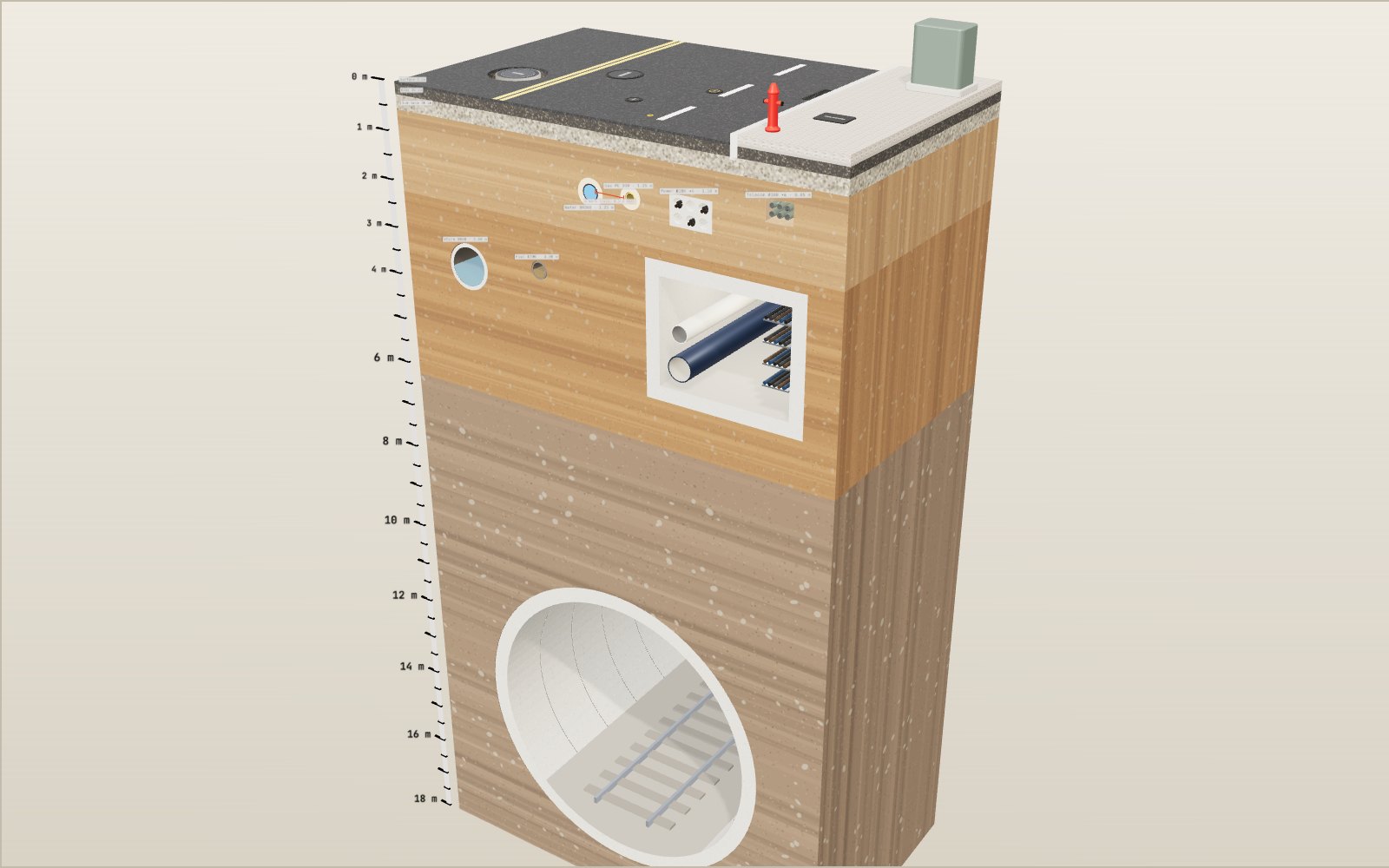
Korean road rules put a water main at least 1.2 metres under the road and a main sewer at least 3 metres down, so four kinds of pipe and cable all lie within the top 2 metres.
How a solar panel works
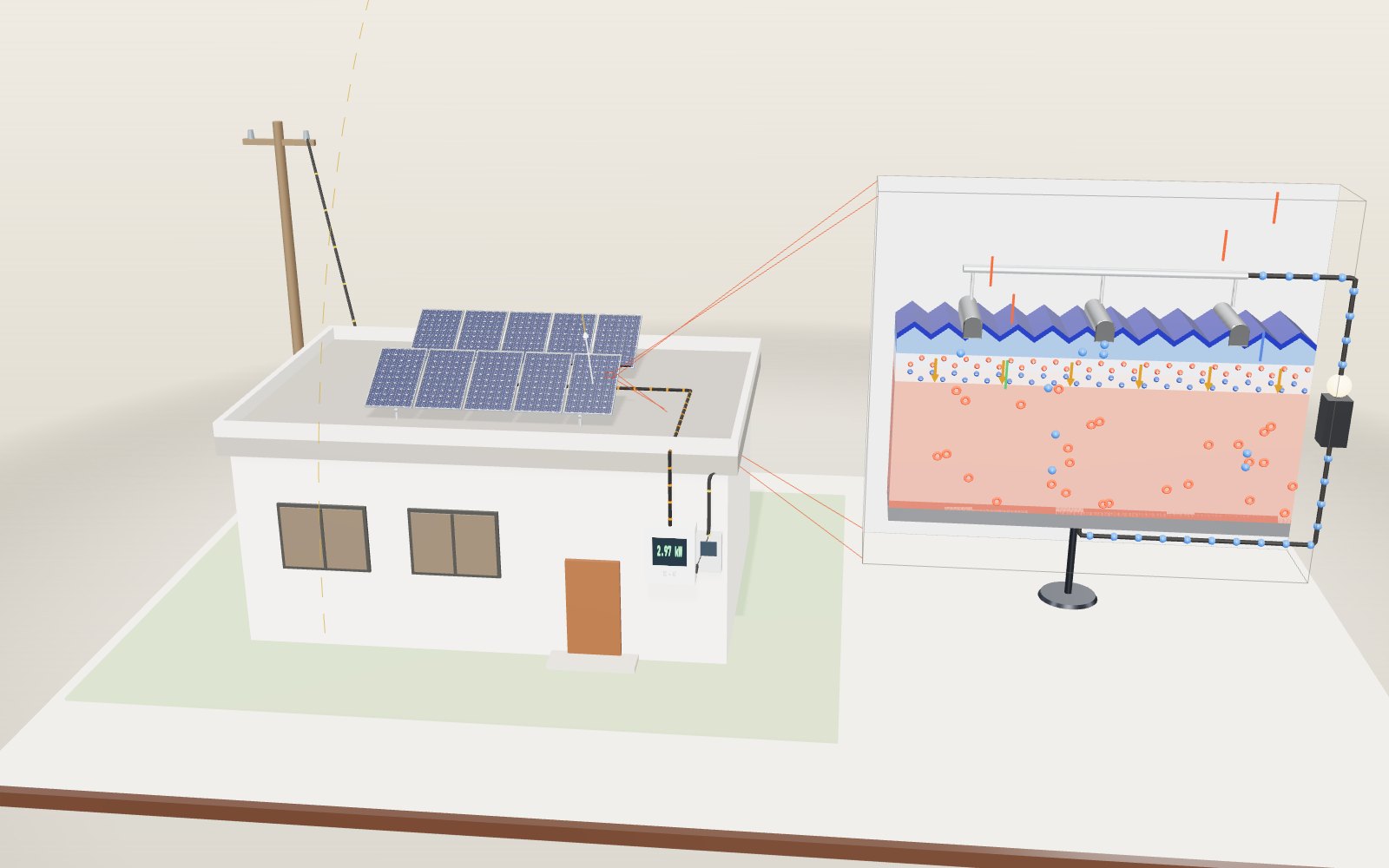
In full sun a 60-cell rooftop panel makes about 300 watts, and all of it comes from an electric field sitting inside each slice of silicon.
How a QR code is read
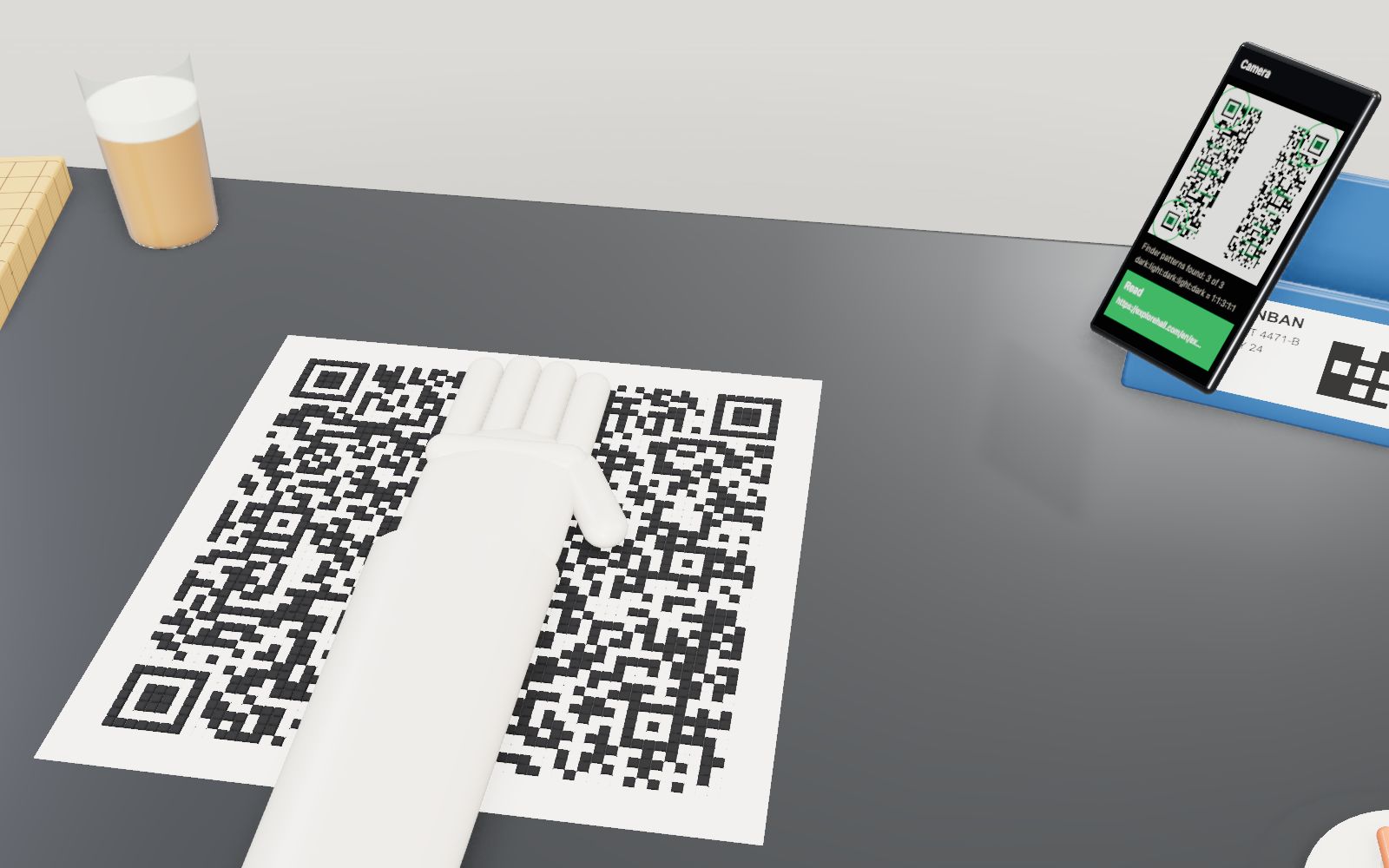
Cover 30 % of a QR code with your hand and a phone still reads it. Cover one corner and it does not.
How a 3D printer works, layer by layer
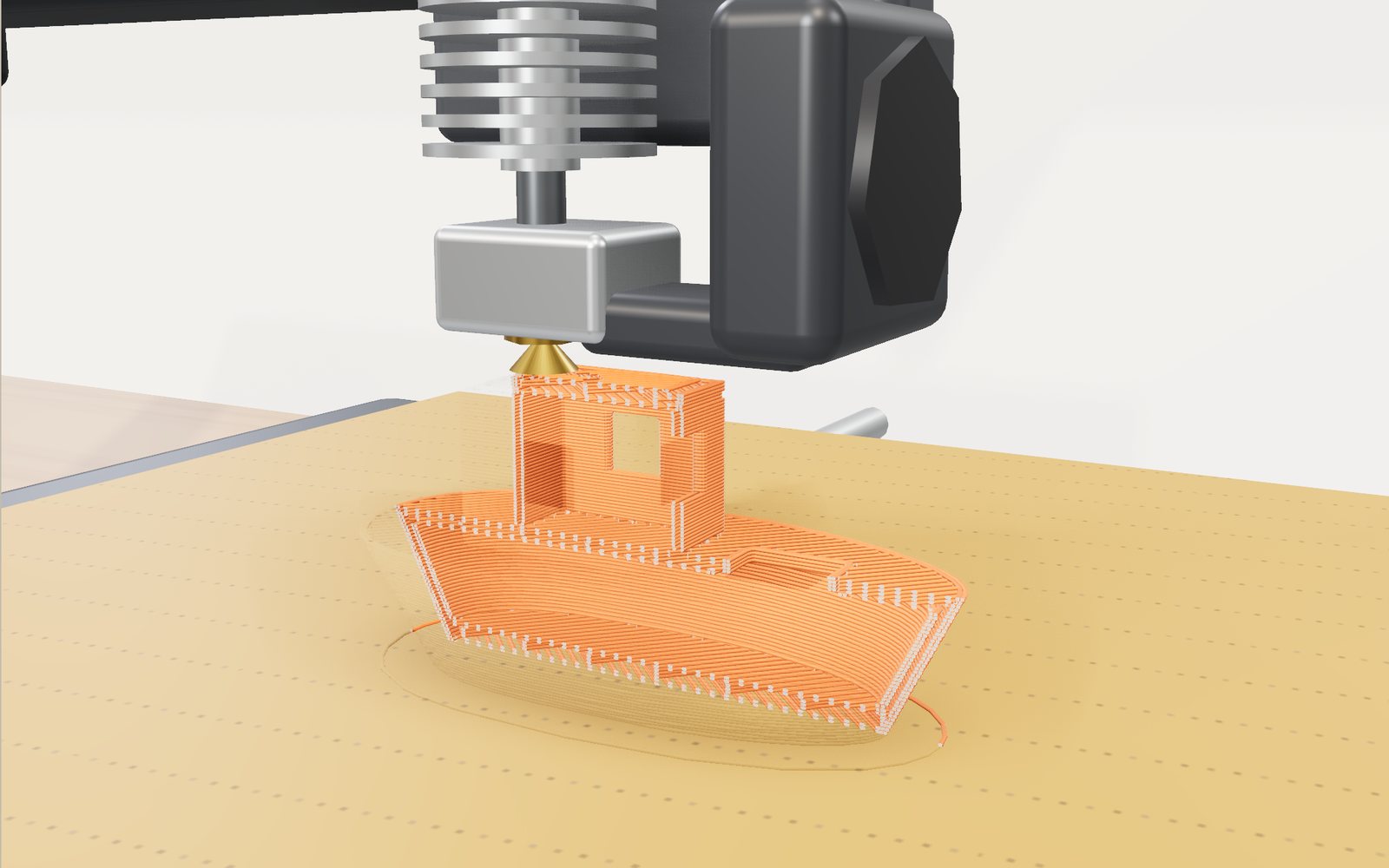
A 20 mm cube printed in 0.2 mm layers is exactly 100 layers, each drawn by a nozzle 0.4 mm wide.
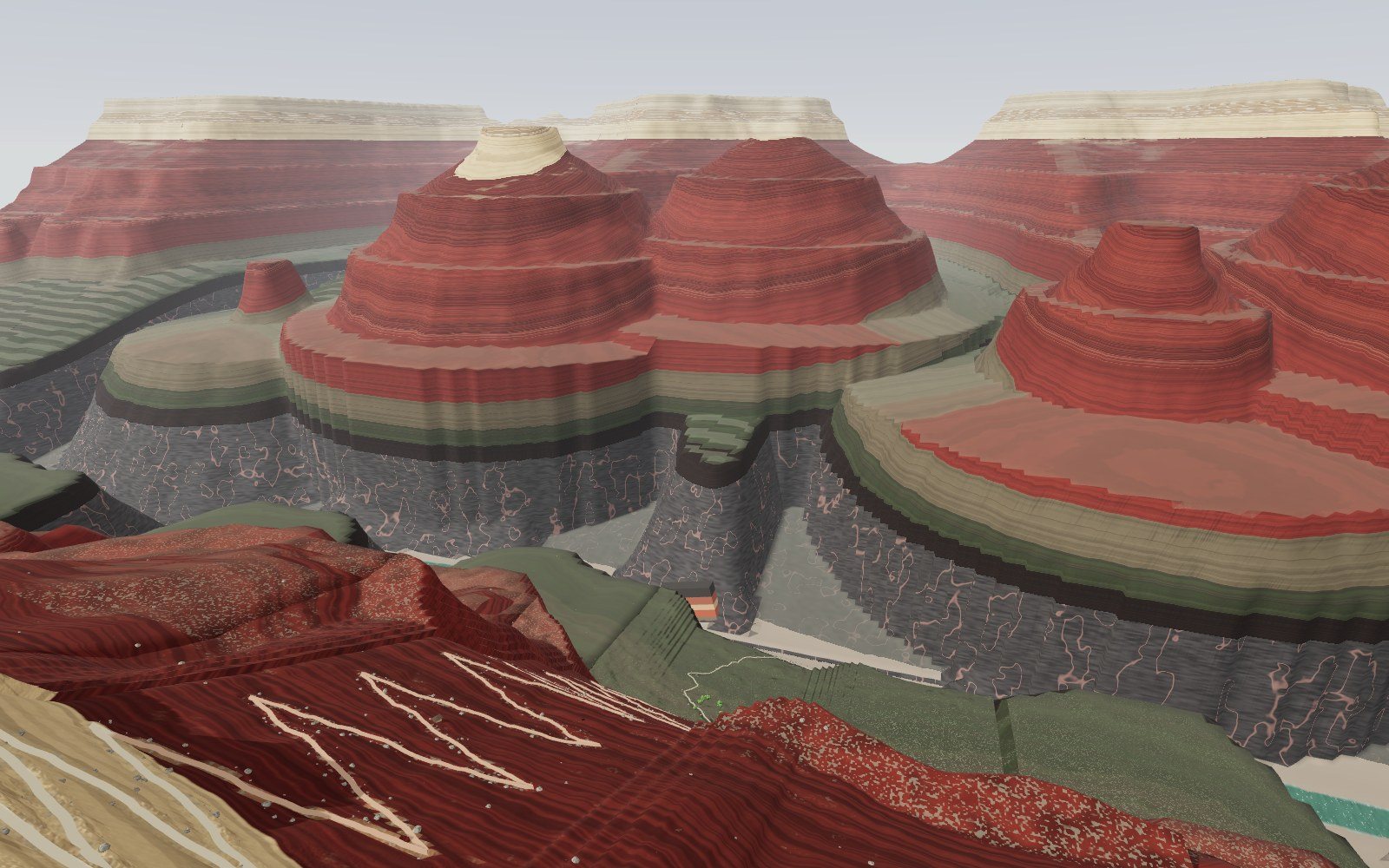
Walk down the Grand Canyon rock layers
Walk 1,360 m down the Bright Angel Trail through 13 rock layers, from a 270-million-year-old sea floor on the rim to 1.75-billion-year-old schist by the river.