FIG. 02How It Works
How a four-stroke engine works: two crank turns per cycle
At 3,000 rpm each cylinder fires 25 times a second. Here the engine turns slowly enough to follow every stroke, laid out as anything from a single to a V8 with its own firing order.
This device cannot show the 3D model. You can read the guide steps below as text.
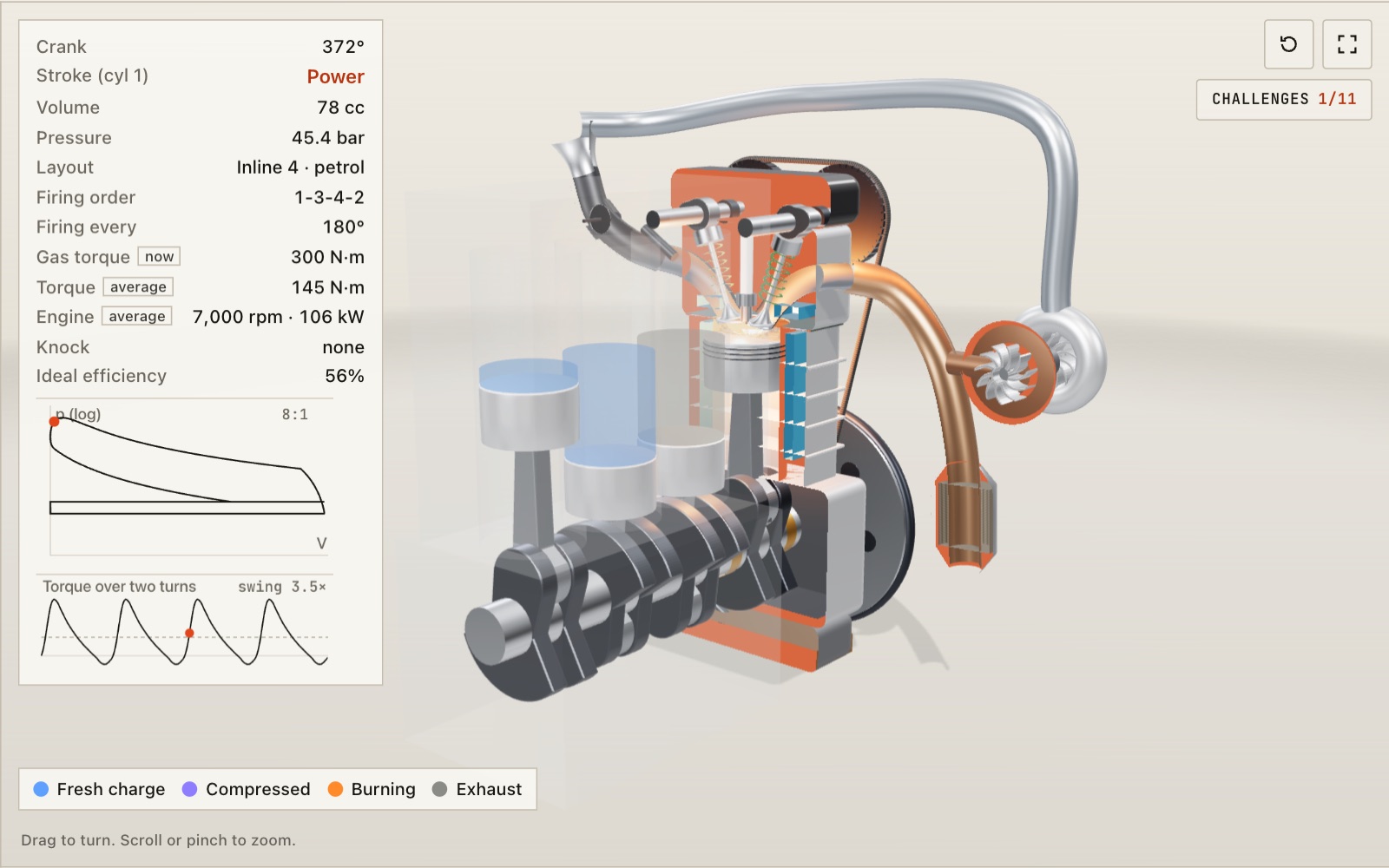
1 / 12 One cylinder, cut in halfThe front half of the block and head has been cut away. The red surfaces are where it was cut. Turn on "Show cut half" to see the whole engine.
Drag to turn. Scroll or pinch to zoom.
What the model shows
A four-stroke engine needs two crankshaft turns because each piston stroke takes half a turn and a cycle has four strokes. Intake brings gas in, compression squeezes it, the power stroke takes work from combustion and exhaust sends the spent gas out. The camshaft turns once during that full cycle.
A car engine at 3,000 rpm fires each cylinder 25 times a second, far too fast to watch. This model slows the engine down until you can follow every stroke, then lets you change it: more cylinders, diesel instead of petrol, a different valve timing, less throttle.
Cylinder 1 is drawn in full detail and cut in half down the middle so the inside is visible. The red surfaces are the cut faces of the block, the head and the sump. Everything that moves is shown whole: the piston and its rings, the connecting rod, the crankshaft with its counterweights, the two valves with their springs, the two camshafts, the timing belt and the flywheel. Around them sit the parts that keep an engine alive: the water jacket, the head gasket, the main bearings, the oil pump, the throttle, the fuel injector and the catalytic converter. That is 24 named parts in the Parts list.
The dimensions are those of one cylinder of a common two-litre four-cylinder engine: an 86 mm bore, an 86 mm stroke and a compression ratio of 10 to 1. One cylinder sweeps 499.6 cubic centimetres, and four of them make 1,998 cc. The readout in the corner shows the crank angle, the stroke cylinder 1 is on, the gas volume above the piston and a modelled cylinder pressure, with the pressure-volume loop and a torque graph underneath.
Why one cycle takes two turns of the crankshaft
A four-stroke engine needs four movements of the piston, and therefore two full turns of the crankshaft, to complete one cycle. By convention the cycle is measured in crank degrees from 0° to 720°, starting with the piston at the top of its travel, called top dead centre.
- Intake (0° to 180°). The inlet valve is open and the piston moves down. The space above it grows, the pressure drops slightly below the air outside, and the air and fuel mixture flows in through the inlet port. In the model this is the stream of blue dots.
- Compression (180° to 360°). Both valves are closed. The piston rises and squeezes the mixture into a tenth of the volume it filled at the bottom. Squeezing it heats it and raises its pressure, which makes the coming combustion far more effective. The dots turn violet as they are packed together.
- Power (360° to 540°). Just before the top, the spark plug fires. The flame front spreads out from the plug in a few thousandths of a second, the pressure rises several-fold and pushes the piston down. This is the only stroke in which the gas does work on the piston. Watch the orange half-sphere grow from the plug.
- Exhaust (540° to 720°). The exhaust valve opens near the bottom, the remaining pressure rushes out, and the rising piston pushes the rest of the burnt gas into the exhaust port. The grey dots leave on the right.
Then the inlet valve opens again and the cycle repeats. A cylinder delivers one power stroke for every two revolutions: at 3,000 rpm that is 25 power strokes a second, each one lasting just 10 thousandths of a second.
What each part does
Piston and rings. The piston is a light aluminium cup that slides in the bore with a clearance of a few hundredths of a millimetre. Three rings in grooves near the top do the sealing: the top two hold the gas pressure, and the bottom one scrapes oil off the cylinder wall. A 21 mm steel gudgeon pin joins it to the rod.
Connecting rod and crankshaft. The rod joins the piston pin to a crank pin that sits 43 mm from the crankshaft's axis. As the crankshaft turns, the pin traces a circle and the piston moves 86 mm, twice the crank radius. The heavy webs opposite the pin are counterweights that balance the rotating mass. The crankshaft runs in main bearings: thin shells lined with soft metal. While the engine runs, the journal floats on a film of oil and never touches them.
Flywheel. Three strokes of every four take energy instead of giving it. The flywheel is a heavy disc that stores energy during the power stroke and gives it back during the others, keeping the crankshaft turning.
Valves, springs and camshafts. Each valve is a mushroom-shaped steel poppet held closed by a spring. A lobe on a camshaft pushes it open through a cup-shaped follower called a bucket. The shape of the lobe decides when the valve opens, how far and for how long. In this model each valve lifts 9.2 mm, and the lobes were drawn from the same lift curve that moves the valves.
Timing belt. The crankshaft drives the camshafts through a toothed belt. The crank sprocket has 21 teeth and each cam pulley 42, so the camshafts turn exactly once for every two crank revolutions. Each valve opens once per cycle, and a cycle takes two crank turns, so it could not be any other ratio.
Cooling and lubrication. Turn on "Coolant and oil". Coolant (blue) climbs the water jacket beside the bore, passes over the combustion chamber and carries the heat away to the radiator. The head gasket, a thin layered steel sheet, keeps gas, coolant and oil apart where the head meets the block. Oil (amber) is drawn from the pan through a strainer by the oil pump and sent to the main bearings, then drains back down.
Throttle and injector. In a petrol engine the throttle is a butterfly valve in the intake. Closing it lowers the pressure of the air going in, and that is how the driver asks for less power. The port injector sprays fuel at the back of the closed inlet valve, and you can see the short spray just before the inlet opens.
One cylinder or eight
Move the "Cylinders" slider. The extra cylinders are drawn as ghosts on the same crankshaft, and they really do follow their own crank throws and firing order.
A single cylinder gives one push every two turns, so the torque on the crankshaft swings hard: strongly positive in the power stroke, slightly negative while the piston compresses the next charge. The torque graph in the readout plots the total gas torque over two turns, with a dashed line at the average. The number at the top right is the swing, the gap between the highest and lowest torque divided by the average.
| Layout | Firing interval | Firing order here | Torque swing (model) |
|---|---|---|---|
| Single | 720° | 1 | 16.0× |
| Inline 2, 360° crank | 360° | 1-2 | 8.0× |
| Inline 2, 270° crank | 270° and 450° | 1-2 | 8.0× |
| Inline 3 | 240° | 1-2-3 | 5.3× |
| Inline 4 | 180° | 1-3-4-2 | 3.9× |
| Inline 6 | 120° | 1-5-3-6-2-4 | 2.2× |
| V6, 60° | 120° | 1-2-3-4-5-6 | 2.2× |
| V8, 90° cross-plane | 90° | 1-8-4-3-6-5-7-2 | 1.4× |
The swing is computed from the model's pressure curve with gas forces only. It leaves out the inertia of the pistons, which matters a great deal at high speed and is why engineers care about balance as well as firing intervals. An inline four, for example, fires evenly but still shakes up and down twice per turn, because its pistons do not move as a perfect sine wave. That is why many larger four-cylinder engines carry balance shafts.
The Controls pane has a bar chart of the swing for every layout. Tap a bar to jump to that layout.
Petrol or diesel
Switch on "Diesel". Three things change in the model.
First, the piston crown rises 4.5 mm, which shrinks the space above the piston at the top from 55.5 cc to 29.4 cc. The compression ratio goes from 10:1 to 18:1. Second, there is no spark plug. Air alone is squeezed so hard that it reaches several hundred degrees, hot enough to light diesel fuel the moment it is sprayed in. Third, the injector moves to the centre of the head and sprays straight into the cylinder about 10° before the top. The fuel burns as it enters, so the burn starts more gently than a petrol spark and lasts longer.
A diesel has no throttle plate in the usual sense. It always draws a full cylinder of air and controls power by injecting more or less fuel. In the model, the throttle slider changes the amount of fuel in diesel mode and the intake pressure in petrol mode. That difference is one reason diesels waste less energy at part load: a petrol engine running gently has to suck its charge through a nearly closed throttle, and pumping air through that restriction costs work.
How efficient can it be?
The ideal cycle for a petrol engine is the Otto cycle: compression and expansion with no heat loss, and all the heat added at once at the top. Its efficiency depends only on the compression ratio r and the gas's heat capacity ratio γ:
η = 1 − 1 / r^(γ−1)
With air (γ = 1.4) and r = 10 that gives 60.2 %. At 14:1, the ratio of Mazda's SKYACTIV-G petrol engines outside the United States, it rises to 65.2 %. The ideal diesel cycle adds the heat over a stretch of the stroke instead of all at once; with r = 18 and a cut-off ratio of 2 it gives 63.2 %. Higher compression is the diesel's main advantage. A petrol engine cannot go much past 10 to 14:1, because the hot mixture would explode by itself before the spark, which is called knock.
The readout's "Ideal efficiency" line uses these formulas. The lab in the Controls pane also shows a model efficiency: the work done in the modelled pressure loop divided by the heat released in it. With the default settings it is about 48 % for petrol and about 51 % for diesel, falling to 36 % for petrol at a quarter throttle while the diesel stays near 50 %. Real engines lose more: heat flows into the walls, combustion is not instant, and friction and the oil and water pumps take their share. Across ordinary driving, the U.S. Department of Energy estimates that only about 12 to 30 % of the energy in a conventional car's fuel ends up moving it down the road, depending on the type of driving.
Valve timing you can drag
If the valves opened and closed exactly at top and bottom dead centre, the engine would breathe badly at speed, because gas has mass and takes time to start and stop moving. Real engines open the valves early and close them late. This model starts with typical figures:
| Event | Crank angle |
|---|---|
| Inlet opens | 10° before top dead centre |
| Inlet closes | 40° after bottom dead centre |
| Exhaust opens | 40° before bottom dead centre |
| Exhaust closes | 10° after top dead centre |
| Spark | 15° before top dead centre |
Closing the inlet late lets the moving column of air keep ramming into the cylinder after the piston has started back up. Opening the exhaust early lets the high pressure blow down before the piston has to push against it. Around top dead centre at the end of the exhaust stroke both valves are slightly open at once for 20°; this valve overlap lets the outgoing exhaust help draw in the fresh charge.
The circle in the Controls pane is a valve timing diagram. Top dead centre is at the top and one lap is one crank turn. The blue arc is the time the inlet is open and the grey arc the exhaust. Drag either arc around the circle, or use the buttons under it. This is what a cam phaser does in a real engine: it turns the camshaft a few degrees relative to its pulley, so the valve opens and closes earlier or later while the open time stays the same. The camshafts in the 3D model turn with your setting.
Three numbers change as you drag. The overlap is the shaded wedge at the top. The effective compression ratio is the volume when the inlet closes divided by the smallest volume, so closing the inlet later lowers it. Engines built for the Atkinson or Miller cycle do this on purpose, to run a high expansion ratio without knock. The model efficiency follows the pressure loop: opening the exhaust earlier throws away pressure that could still push the piston, so efficiency drops.
Throttle, speed, torque and power
The second chart in the lab plots torque and power against engine speed. The black line is torque at the throttle you set and the orange line the matching power. The grey dashes show full throttle. The dotted line is a road-like load that rises with speed, and the red dot sits where engine torque and load meet. That is the speed the engine would settle at. Close the throttle and the dot slides down to a lower speed, which is how a driver controls a car.
Torque comes from the model's cycle work: one cylinder doing 625 joules of gas work per cycle gives 625 / 4π ≈ 50 newton-metres averaged over two turns. Breathing changes with speed (better near a middle speed that moves with the valve timing) and friction grows with speed, so torque peaks in the middle and power keeps rising until near the top. Power is torque times angular speed: P = T × 2πN / 60. All of these curves are model values meant to show shapes, not a dynamometer sheet.
Two strokes instead of four
Switch on "Compare two-stroke". A drawing of a two-stroke cylinder on the same crank appears on the stage. It has no valves. The piston itself uncovers an exhaust port and a transfer port in the cylinder wall near the bottom of its travel. Fresh charge, already compressed a little in the crankcase under the piston, rushes in through the transfer port and pushes the burnt gas out of the exhaust. So every downward stroke is a power stroke, and the engine fires once per turn.
The orange line in the torque graph is the two-stroke's torque. It fires twice as often, but each cycle does less work in the model (about half) because the ports stay open for a large part of the stroke and some fresh charge escapes straight out of the exhaust. That lost fuel is why small two-stroke engines are light and simple but dirty, and why most road vehicles moved to four strokes. Large slow two-stroke diesels in ships solve the problem with blowers and exhaust valves and are among the most efficient engines built.
Real engines
The engine catalogue sets the model's layout, fuel and cylinder size to match a real engine. The cylinders are drawn at the right size for each one, except the largest, which are drawn smaller and marked. Compression ratio and pressures stay model values.
| Engine | Layout | Fuel | Displacement | Rated output | Used in |
|---|---|---|---|---|---|
| Honda GX160 | single | petrol | 163 cc | generators, pumps | |
| Royal Enfield J-series 350 | single | petrol | 349 cc | 14.87 kW | Classic 350 |
| Yamaha CP2 | inline 2, 270° | petrol | 689 cc | MT-07 | |
| Toyota 1GD-FTV | inline 4 | diesel | 2,754 cc | 130 kW | Hilux |
| Toyota 2JZ-GTE | inline 6 | petrol | 2,997 cc | 206 kW | Aristo |
Outputs are given only where a single rating for the named version was confirmed. Several of these engines were sold at more than one rating.
The numbers, worked out
| Quantity | Value | How it follows |
|---|---|---|
| Swept volume | 499.6 cc | π/4 × 86² mm × 86 mm |
| Clearance volume, petrol | 55.5 cc | swept ÷ (10 − 1) |
| Clearance volume, diesel | 29.4 cc | swept ÷ (18 − 1) |
| Piston raised for diesel | 4.5 mm | (55.5 − 29.4) cc ÷ bore area |
| Ideal efficiency at 10:1 | 60.2 % | 1 − 1/10^0.4 |
| Piston travel at 90° after top | 49.5 mm, not 43 | the rod's angle adds to the drop |
| Mean piston speed at 6,000 rpm | 17.2 m/s | 2 × stroke × revolutions per second |
| Power strokes per second, four cylinders at 3,000 rpm | 100 | 4 × 3,000 ÷ 60 ÷ 2 |
Reading the pressure-volume loop
The small graph in the readout plots cylinder pressure against volume as the crank turns. Its vertical axis is logarithmic so that both the low intake pressure and the high combustion peak fit on one chart. The area enclosed by the loop is proportional to the work the gas does on the piston in one cycle. Close the throttle and watch the loop shrink and the bottom line drop below atmospheric pressure: the small reversed loop at the bottom is the pumping work.
The pressure here is a simplified model, not a measurement. Compression and expansion follow the polytropic relation pVⁿ = constant with n = 1.32, and the heat release follows a smooth S-shaped burn curve that starts at the spark and lasts 55 crank degrees, which puts a peak of about 51 bar at 20° after top dead centre at full throttle.
Cleaning up the exhaust
Burning petrol in air leaves three main pollutants: carbon monoxide, unburnt hydrocarbons and nitrogen oxides. The catalytic converter in the exhaust pipe is a ceramic honeycomb coated with platinum, palladium and rhodium. In a petrol car it is a three-way catalyst: it oxidises carbon monoxide and hydrocarbons to carbon dioxide and water and reduces nitrogen oxides to nitrogen. It only manages all three at once if the engine runs very close to the chemically correct mixture, which is why petrol engines have an oxygen sensor in the exhaust. Diesels run with extra air, so they use an oxidation catalyst, a particulate filter for soot and a separate system for nitrogen oxides.
Where the four-stroke engine came from
Internal combustion engines that drew in a mixture and fired it without compressing it first had already been built by the 1860s, but they were inefficient. In 1876 Nicolaus Otto in Germany built the first practical engine that compressed its charge before igniting it, using the four-stroke cycle shown here. That is why the ideal four-stroke petrol cycle is still called the Otto cycle. In the 1890s Rudolf Diesel developed the engine that lights its fuel by compression alone.
From gas work to kilowatts: a worked example
The model gives each cylinder about 625 joules of gas work per cycle at full throttle. Everything below follows from that one number, and the same steps work for any engine whose spec sheet you can read.
- Work per cycle for four cylinders. 4 × 625 J = 2,500 J.
- Average torque. One cycle is two turns, which is 4π radians, so T = 2,500 ÷ 4π ≈ 199 N·m. This is the average over the cycle. The torque graph in the readout swings above and below it.
- Power at 3,000 rpm. P = 2πNT / 60 = 2π × 3,000 × 199 / 60 ≈ 62.5 kW. The shortcut gives the same answer: 2,500 J per cycle × 25 cycles per second = 62,500 W.
- Mean effective pressure. Divide the work per cycle by the swept volume: 2,500 J ÷ 1.998 litres = 1.25 megapascals, or about 12.5 bar. This is the constant pressure that, acting on the piston for the whole power stroke, would do the same work. It lets you compare engines of different sizes, because it does not depend on the displacement.
- Power per litre. 62.5 kW ÷ 1.998 L ≈ 31 kW per litre.
The model keeps torque constant here for simplicity. In a real engine torque changes with speed, so the power at 6,000 rpm is not simply double. The point of the example is the chain of units: joules per cycle become newton-metres, newton-metres times radians per second become watts.
The engine catalogue shows how far the power per litre can differ. From the rated outputs in the table above, the Toyota 1GD-FTV diesel gives 130 kW from 2,755 cc, about 47 kW per litre. The Volkswagen EA888 2.0 TSI gives 162 kW from 1,984 cc, about 82 kW per litre, and the Honda K20C1 gives 228 kW from 1,996 cc, about 114 kW per litre. These are ratings at one speed for one version, and the turbocharged ones reach those figures by forcing more air into the same cylinders, not by a bigger bore or a longer stroke.
Compression ratio, knock and fuel
The efficiency formula η = 1 − 1/r^(γ−1) rewards a higher compression ratio, but with diminishing returns. With γ = 1.4:
| Compression ratio | Ideal efficiency |
|---|---|
| 8:1 | 56.5 % |
| 10:1 | 60.2 % |
| 12:1 | 63.0 % |
| 14:1 | 65.2 % |
Going from 8 to 10 gains 3.7 percentage points. Going from 12 to 14 gains only 2.2. The curve flattens, so each extra unit of compression buys less.
Real engines also sit well below these figures. Air in an engine is not a gas with γ = 1.4: the burnt mixture has a lower heat capacity ratio, and with γ = 1.3 the same formula gives 49.9 % at 10:1. The model's own value at default settings is about 48 %, which is in the same range. Heat loss to the walls and friction then lower the real number further, to roughly 30 to 40 % at best for production engines.
What stops petrol engines from simply raising the ratio is knock. Octane rating is the measure of a fuel's ability to resist knocking, in which part of the compressed mixture ignites before the flame reaches it. A higher ratio makes the end gas hotter and denser, so it needs a fuel that resists self-ignition. That is why the manual tells you which octane to buy: the engine was designed around it. Newer engines can retard the spark when they detect knock, which protects them but costs power and economy. The model's diesel avoids the problem by compressing only air and adding the fuel afterwards.
Common misunderstandings
"The engine fires on every stroke." Only one stroke in four does work on the piston. In a single cylinder the other three take energy from the flywheel. Run the Cylinders slider up and watch the firing order: with eight cylinders the power strokes follow each other every 90°, which only makes it look continuous.
"Torque and power are the same thing." Torque is the twisting force on the crankshaft. Power is torque multiplied by how fast it turns. An engine can give its highest torque at a middle speed and its highest power much higher, which is exactly what the two curves in the speed chart show.
"More cylinders always mean more power." Power depends on the air an engine can burn per second: displacement, speed and how much air gets packed into each cylinder. A small turbocharged three-cylinder in the list can outrun a larger engine without one. More cylinders mainly make the torque smoother and let each cylinder be smaller, as the swing column shows.
"Closing the throttle makes the engine run on less fuel for the same work." It lowers the air the cylinder takes in, and the fuel is metered to match. The cost is the pumping work: the piston has to draw air past a nearly closed valve. The small reversed loop in the pressure-volume graph is that loss.
"Higher octane means more power." Octane rating describes resistance to knock, not how much energy the fuel holds. An engine that does not knock on the lower grade gets nothing extra from the higher one, and the manufacturer's recommendation is the one to follow.
Try it on the screen
- Check the worked example. Choose four cylinders and petrol at full throttle. The dashed line in the torque graph is the average torque; the Lab's speed chart plots the matching power. Compare their shapes with the steps above.
- Compare the loops. Switch "Diesel" on and off and compare the pressure-volume loop, the compression ratio and the "Ideal efficiency" line. The ratio goes from 10:1 to 18:1.
- Watch the effective compression. On the valve timing circle, drag the inlet arc later and read "Effective compression" and the model efficiency as they change.
- See the pumping loss. Lower the throttle in petrol mode and look at the small reversed loop at the bottom of the pressure-volume graph, and at the model efficiency, which falls to about 36 % at a quarter throttle.
- Compare engines of different sizes. Pick two entries from the engine catalogue, such as the Honda GX160 and the GM LS3, and compare the cylinder drawings and the cc per cylinder in the note under the list.
Thirty engines, from 1876 to a container ship
The catalogue in the Controls tab now holds thirty engines. You can search it by name, or narrow it to engines from before 1950, cars, motorcycles, small engines, trucks, racing and ships, and to spark ignition or diesel. Picking one sets the model's layout, fuel and cylinder size, so the drawing grows from a lawnmower cylinder to a ship's.
| Engine | Year | Layout | Displacement | Rating | What the source states |
|---|---|---|---|---|---|
| Otto four-stroke engine (Deutz) | 1876 | single, coal gas | not given | 3 hp (2.2 kW) at 180 rpm | first four-stroke with compressed charge |
| Benz Patent Motor Car engine | 1886 | single | 954 cc (90 × 150 mm) | 0.55 kW at 400 rpm | compression ratio 2.7 |
| Diesel's test engine (MAN) | 1897 | single, diesel | 19.6 L (250 × 400 mm) | 14.7 kW at 172 rpm | efficiency 26.2 % |
| Ford Model T (1914 car) | 1914 | inline 4 | 2,896 cc (3.75 × 4 in) | 20 hp (14.9 kW) at 1,600 rpm | L-head valves |
| Toyota 2ZR-FXE | 2015 | inline 4 | 1,797 cc | 72 kW at 5,200 rpm | thermal efficiency 40 % |
| Toyota M20A-FKS | 2018 | inline 4 | 1,986 cc | 126 kW at 6,600 rpm | 13:1, efficiency 40 % |
| Toyota A25A-FKS | 2016 | inline 4 | 2,487 cc | 151 kW at 6,600 rpm | 13:1, efficiency 40 % |
| Mercedes-AMG F1 power unit | 2014 | V6 turbo | 1.6 L | not published | thermal efficiency over 50 % |
| Kubota D902-K | inline 3, diesel | 898 cc | 18.5 kW at 3,600 rpm | small machinery | |
| Wärtsilä 6RT-flex96C | 2004 | inline 6, two-stroke diesel | 10,857 L (960 × 2,500 mm) | 6,030 kW per cylinder at 102 rpm | 171 g/kWh |
Two of these need a note. The model draws a 60° V6, while the Formula 1 engine is a 90° V6, so its layout on the stage is close but not exact. The ship's engine has cylinders 960 mm across, more than eleven times the model's bore, so the stage draws it at twice the model size and says so; the numbers in the readout keep the real size. Its efficiency is not printed as a percentage in the Wärtsilä document. It follows from the fuel figure: 171 grams of fuel per kilowatt-hour, with fuel that holds 42.7 MJ per kilogram, is 3,600 ÷ (0.171 × 42,700) = 49.3 %. The ship engine is a two-stroke, so picking it also opens the two-stroke comparison.
A bigger cylinder cannot spin as fast. What limits an engine is how fast its pistons slide, so the model keeps the mean piston speed fixed when a cylinder is scaled up. At the model's size, 7,000 rpm with an 86 mm stroke is a mean piston speed of 20.1 m/s. Scale the cylinder up 15 times, as for the ship, and the same piston speed allows only about 300 rpm. The real ship engine turns at 102 rpm because its stroke is 2.6 times its bore, which gives a mean piston speed of 8.5 m/s, the figure in the Wärtsilä table.
Real speed, then slow motion
The "Run at 3,000 rpm" button shows what the model hides most of the time. At 3,000 rpm the crankshaft turns 50 times a second, each cylinder fires 25 times a second, and one stroke lasts 10 thousandths of a second. On a 60 Hz screen that is 300 degrees of crank between two frames, so the moving parts seem to stutter or even run backwards; that is the stroboscope effect, the same one that makes wheels in films turn the wrong way. After three seconds the model slows down over 3.5 seconds to 6 rpm, where every stroke is easy to follow again, and the banner names the stroke cylinder 1 is in. With Sound on, the thumps run together into a buzz at full speed and come apart again as it slows.
Compression ratio, knock and the late inlet valve
The compression slider changes the petrol engine's ratio from 6:1 to 15:1. A higher ratio raises the model efficiency (47.6 % at 10:1), because the gas expands further after it burns. It also squeezes the unburnt mixture harder. If the end of the charge gets hot and dense enough, it lights by itself before the flame from the plug reaches it, and the two pressure waves hit each other. That is knock: a metallic ping, high peak pressure and, in a real engine, damaged pistons.
Knock depends on fuel, temperature, chamber shape and spark timing. The model keeps one simple rule and says so on screen: knock happens when the pressure at the end of compression passes 20.5 bar. With the original valve timing that line falls at about 11:1 (20.2 bar, no knock); 12:1 reaches 22.7 bar and knocks.
There is a way round it. If the inlet valve closes later, some of the charge is pushed back into the inlet before the valve shuts, so the piston really compresses less than the geometric ratio suggests. With the inlet 40° later, a ratio of 13.5:1 ends compression at 17.9 bar, below the knock line, and the model efficiency rises to 50.9 %. The expansion still uses the full 13.5:1. This is the idea behind the Atkinson and Miller cycles: a short compression and a long expansion. Toyota's 2ZR-FXE in the Prius runs on it, and Mazda and Toyota quote compression ratios of 13 and 14 to 1 for their newer petrol engines.
Turbocharging, and why boost brings knock back
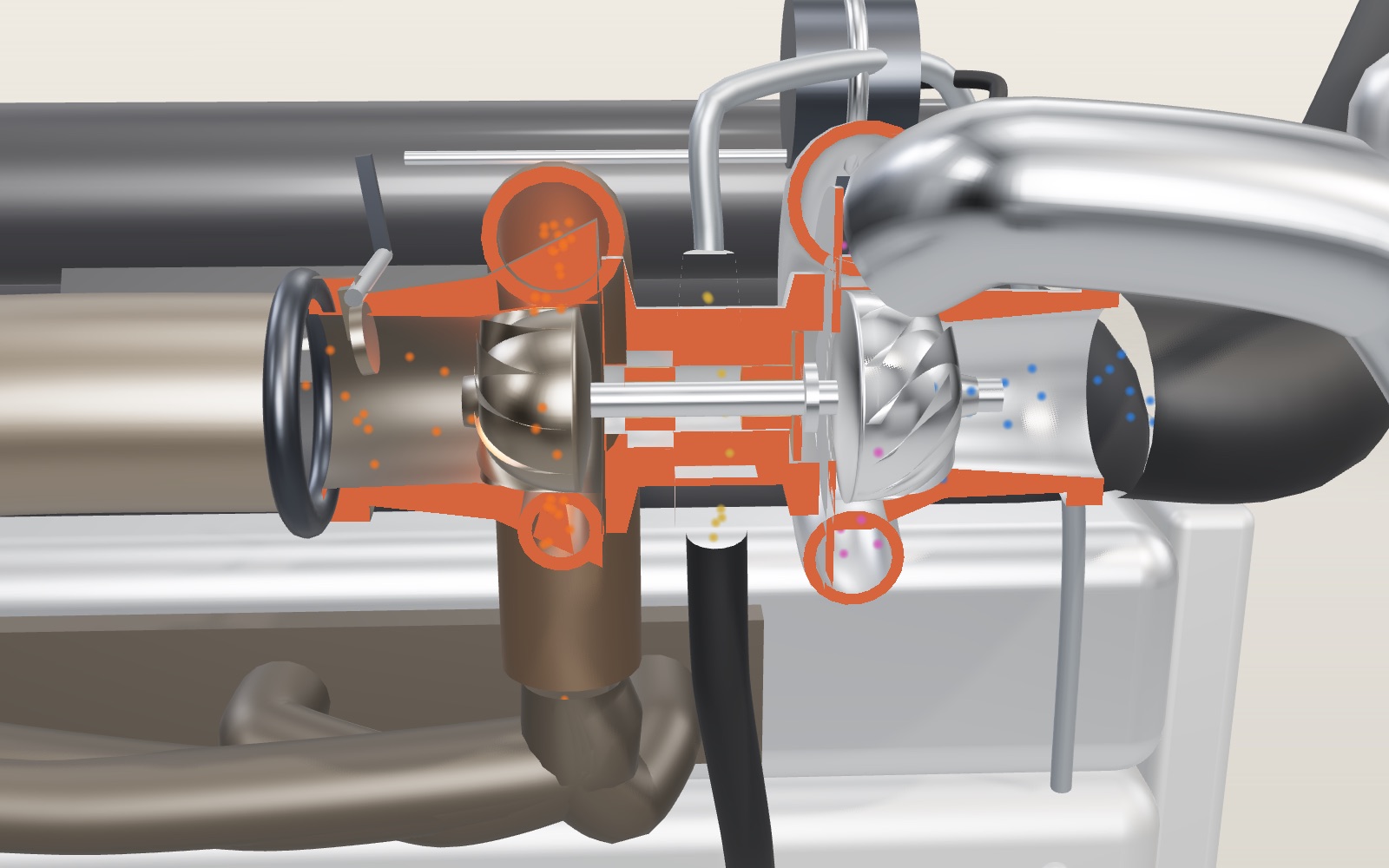
The turbocharger appears beside the exhaust pipe when you fit it. Exhaust gas spins the turbine wheel; the compressor wheel on the same shaft pushes air into the inlet. More air in the cylinder lets more fuel burn, so the same displacement gives more power. The U.S. Department of Energy describes turbochargers as compressors that force additional air into the cylinders, allowing more fuel to be injected, and lists turbocharging with a smaller engine as worth up to 8 % in fuel economy.
The boost slider adds pressure above the outside air. In the model, 0.9 bar of boost on the single raises the peak power from 19.1 kW to 29.4 kW. The cost is knock: the end-of-compression pressure rises with the boost, so 0.6 bar at 10:1 already reaches 29.1 bar. Real turbocharged petrol engines answer with a lower compression ratio, a later inlet closing, cooled charge air and direct injection. In the model, 0.9 bar works without knock at 8:1 with the inlet closing 40° later (18.1 bar). The diesel has no such limit, because its fuel is only sprayed in when it should burn.
Challenges on the stage
The Challenges list in the Controls tab (also opened from the badge on the stage) checks your work on the model as you go. There are eleven: gain at least 5 % peak power from the cam timing (the best setting found by the check script, inlet 15° earlier and exhaust 30° later, gives 10.7 %), reach 13:1 without knock, name the V8 firing order, see the diesel win at part load (50.7 % against 43.6 % at half throttle), find the smoothest layout, run the engine at real speed, compare two strokes with four, find the most efficient and the oldest engine in the catalogue, boost to 0.8 bar without knock, and open every close-up. Solved ones stay marked when you come back.
"Now" and "average" in the readout
The readout mixes two kinds of numbers, and on this page each one carries a tag. Gas torque marked "now" is the twist the gas gives the crankshaft at this crank angle. It swings from below zero during compression to several hundred newton metres just after the spark, which is why multiplying it by the engine speed would give nonsense. The torque and the engine speed and power marked "average" belong together: they are the mean over a full cycle after friction and breathing, at the speed where the engine settles against the load. Multiply that torque by the speed in radians per second and you get the power on the same line.
Close-ups
The close-up buttons fly to one part at a time and stop the crank where that part matters: the crank pin at 90°, the inlet cam at full lift, both valves open together around top dead centre, the piston on its compression stroke, the spark just before the top, the diesel injector at the start of injection, and the turbocharger. "Take apart" separates the castings from the moving parts so the piston, rod and crankshaft can be seen running on their own.
Questions
Why does a four-stroke engine need two crankshaft turns per cycle?
Because it uses one complete down-and-up movement of the piston for breathing (exhaust and intake) and another for compression and power. Each of the four strokes is half a turn, so the full cycle takes two turns.
Why does the camshaft turn at half the crankshaft speed?
Each valve has to open once per cycle, and a cycle takes two crank revolutions. A camshaft turning once per cycle, so once every two crank turns, opens each valve exactly once.
What does the compression ratio mean?
It is the volume above the piston at the bottom of its stroke divided by the volume at the top. In this model that is 555.1 cc divided by 55.5 cc, which is 10. Higher ratios give higher efficiency, up to the point where the fuel ignites by itself before the spark, called knock.
Why is the spark timed before top dead centre?
The flame takes time to spread through the mixture. Firing a little early means the peak pressure arrives just after the top, when the piston can turn it into work. Fired at the top itself, much of the burn would happen while the piston was already moving away.
Why do more cylinders make an engine smoother?
The power strokes overlap. A single cylinder pushes for a quarter of its cycle and coasts for the rest; eight cylinders fire every 90°, so there is always one pushing. In the model the torque swing falls from 16 times the average to 1.4 times.
Why does a diesel not need a spark plug?
It compresses air to about 18:1 or more, which heats it to several hundred degrees. Diesel fuel sprayed into that hot air lights by itself.
What does variable valve timing do?
It turns the camshaft a little relative to the crankshaft while the engine runs. Early inlet closing helps at low speed, late closing and more overlap help at high speed, so one engine can breathe well across a wider range. Drag the arcs on the timing circle to try it.
Why did cars stop using two-stroke engines?
A simple two-stroke lets some fresh mixture escape out of the exhaust port, and it burns oil mixed into its fuel. Both make the exhaust dirtier and waste fuel, which became hard to accept under emissions rules.
How do I get power from displacement and mean effective pressure?
Multiply the mean effective pressure by the displacement to get the work per cycle, then multiply by the number of cycles per second (rpm ÷ 120 for a four-stroke). In the model, 1.25 MPa × 1.998 L = 2,500 J, and 25 cycles a second gives 62.5 kW at 3,000 rpm.
Why is the real efficiency so far below the Otto figure?
The Otto formula assumes no heat loss, instant combustion and a gas with constant properties. A real engine loses heat to the cooling system, burns over tens of crank degrees, pumps air through the intake and exhaust, and overcomes friction. Together these bring a good production engine to roughly 30 to 40 %.
Does premium fuel make any engine faster?
No. Octane rating measures a fuel's resistance to knocking, so it matters only for engines designed to need it, or that would otherwise knock. Use the grade in the owner's manual.
Why does a ship's diesel turn so slowly?
Because its cylinders are huge. The pistons of a Wärtsilä RT-flex96C are 960 mm across with a 2.5 m stroke, and at 102 rpm they already slide at 8.5 m/s on average. A car engine's pistons reach about the same average speed at around 3,000 rpm, because their stroke is about thirty times shorter.
What does a turbocharger do?
It uses the energy left in the exhaust to push more air into the engine. A turbine in the exhaust drives a compressor in the inlet on the same shaft. More air allows more fuel, so a smaller engine can make the power of a bigger one, and in a petrol engine the extra pressure brings the knock limit closer.
What are the Atkinson and Miller cycles?
Both make the expansion longer than the compression. A modern Atkinson engine closes the inlet valve late, so part of the charge is pushed back out before compression starts; the Miller cycle does the same, or closes the inlet early, and usually adds a supercharger or turbocharger to make up the lost air. The engine gives up some power per litre and gains efficiency.
Terms
- Top dead centre (TDC): the piston's highest point; bottom dead centre (BDC) is its lowest.
- Bore and stroke: the cylinder's diameter and the distance the piston travels.
- Swept volume: the volume the piston sweeps in one stroke; summed over all cylinders it is the engine's displacement.
- Compression ratio: the largest volume above the piston divided by the smallest.
- Firing order: the sequence in which the cylinders fire.
- Valve overlap: the crank angle during which inlet and exhaust valves are open together.
- Cam phaser: a device that turns a camshaft relative to its pulley to shift the valve timing.
- Polytropic: a compression or expansion following pVⁿ = constant.
- Section: a model cut through to show the inside; the cut faces are coloured.
Sources
- NASA Glenn Research Center, Otto Cycle (ideal four-stroke cycle and p-V diagram). https://www.grc.nasa.gov/www/k-12/airplane/otto.html
- NASA Glenn Research Center, Four-stroke internal combustion engine. https://www.grc.nasa.gov/www/k-12/airplane/engopt.html
- U.S. Department of Energy and U.S. EPA, fueleconomy.gov, Where the Energy Goes: Gasoline Vehicles. https://www.fueleconomy.gov/feg/atv.shtml
- U.S. Department of Energy, Alternative Fuels Data Center, How Do Gasoline Cars Work? https://afdc.energy.gov/vehicles/how-do-gasoline-cars-work
- U.S. Department of Energy, Alternative Fuels Data Center, How Do Diesel Vehicles Work? https://afdc.energy.gov/vehicles/how-do-diesel-cars-work
- U.S. EPA, Light-Duty Vehicle Emissions. https://www.epa.gov/greenvehicles/light-duty-vehicle-emissions
- DieselNet, Diesel Oxidation Catalyst. https://www.dieselnet.com/tech/cat_doc.php
- Wärtsilä, Two-stroke engine. https://www.wartsila.com/encyclopedia/term/two-stroke-engine (2026-10-23)
- Toyota, Variable valve timing. https://global.toyota/en/detail/7893162 (2026-10-23)
- Johnson Matthey, Three-way catalysts. https://matthey.com/products-and-markets/emissions-control/mobile/gasoline-applications/three-way-catalysts (2026-10-23)
- Mazda, SKYACTIV compression ratio. https://newsroom.mazda.com/en/publicity/release/2012/201202/120222a.html (2026-10-23)
- Honda GX160, Technical specifications. https://www.honda-engines-eu.com/en/products/power-units/gx160 (2026-10-23)
- Royal Enfield Classic 350, Technical specifications. https://www.royalenfield.com/content/dam/open-pdf/royal-enfield-classic-350-technical-specifications-english.pdf (2026-10-23)
- Yamaha MT-07, Technical specifications. https://yamahamotorsports.com/models/mt-07/specs (2026-10-23)
- Toyota 1GD-FTV, Technical specifications. https://global.toyota/en/detail/8348091 (2026-10-23)
- SAE International / Toyota 2JZ, Technical specifications. https://saemobilus.sae.org/papers/development-toyota-jz-type-engine-series-930881 (2026-10-23)
- U.S. Department of Energy and U.S. EPA, fueleconomy.gov, Octane Ratings (knock and octane). https://www.fueleconomy.gov/feg/octane.shtml (2026-10-23)
- Deutz AG, Milestones (Otto's four-stroke engine, 1876, 3 hp at 180 rpm). https://www.deutz.com/en/company/our-history/milestones/ (2026-10-27)
- Mercedes-Benz Classic archive, Benz patent motor car (Model 1), specifications. https://mercedes-benz-publicarchive.com/marsClassic/en/instance/ko/Benz-patent-motor-car-Model-1.xhtml?oid=4376 (2026-10-27)
- DieselNet, Early History of the Diesel Engine (1897 test engine data). https://dieselnet.com/tech/diesel_history.php (2026-10-27)
- IEEE Spectrum, Vaclav Smil, The Diesel Engine at 120. https://spectrum.ieee.org/the-diesel-engine-at-120 (2026-10-27)
- The Henry Ford, 1914 Ford Model T Touring Car (bore, stroke, 20 hp at 1,600 rpm). https://www.thehenryford.org/collections/explore/artifact/230567 (2026-10-27)
- Toyota, Under the Hood of the All-new Toyota Prius (2ZR-FXE, 40 % thermal efficiency). https://global.toyota/en/detail/9827044 (2026-10-27)
- Toyota, 2.0-liter Dynamic Force Engine (M20A). https://global.toyota/en/mobility/tnga/powertrain2018/engine/index.html (2026-10-27)
- Toyota, New 2.5-liter Direct-injection, Inline 4-cylinder Gasoline Engine (A25A). https://global.toyota/en/powertrain/engine/ (2026-10-27)
- Mercedes-AMG PETRONAS F1 Team, The Trickle-Down Effect of F1 Technology (thermal efficiency over 50 %). https://www.mercedesamgf1.com/news/the-trickle-down-effect-of-f1-technology (2026-10-27)
- Kubota, Electronically-Controlled Small Diesel Engine D902-K. https://engine.kubota.com/en/technology/tvcr (2026-10-27)
- Wärtsilä, The world's most powerful engine enters service (RT-flex96C). https://www.wartsila.com/media/news/12-09-2006-the-world's-most-powerful-engine-enters-service (2026-10-27)
- Wärtsilä, RT-flex96C and RTA96C Technology Review (bore, stroke, 6,030 kW per cylinder, 171 g/kWh at 42.7 MJ/kg). https://swiss-ships.ch/berichte/waertsilae/Wartsila-RTA96C-engine-technology-review.pdf (2026-10-27)
- U.S. Department of Energy and U.S. EPA, fueleconomy.gov, Advanced Engine Technologies (turbocharging, valve timing). https://www.fueleconomy.gov/feg/tech_engine_more.shtml (2026-10-27)
- Model values (bore 86 mm, stroke 86 mm, rod 145 mm, compression 10:1 and 18:1, the valve and spark timings above, burn length 55° petrol and 48° diesel, the two-stroke port timings, friction and load curves): chosen for the model, not taken from one engine.
- Calculations on this page: volumes from the bore, stroke and compression ratio; piston position from x = r cos θ + √(l² − r² sin² θ); ideal efficiencies from η = 1 − 1/r^(γ−1) (Otto) and the diesel cut-off formula. Torque, swing, model efficiency and the speed curves come from the simplified pressure model in the exhibit.
More exhibits
How a steam locomotive works
Mallard's driving wheels are 2.03 m across, taller than most people, and at its record 126 mph they turned almost nine times a second.
How a jet engine works: where an airliner’s thrust comes from
In an airliner's turbofan only one kilogram of air in eleven passes through the flame. Six other kinds of jet engine split the work differently, and you can open each one here.
Liquid rocket engine: interactive model, how it works
Nuri's 75-tonne engine burns 255 kg of kerosene and liquid oxygen every second, and the same engine pushes about 13 percent harder in space than at sea level.
Turbocharger: interactive model, take it apart
On this model 2.0-litre engine, a shaft spinning at 142,000 rpm squeezes almost twice as much air into each cylinder.
Roller coaster physics: how roller coasters work
A train that creeps over a 42 m lift hill at 3 m/s is doing 99 km/h at the bottom, and nothing but gravity has pushed it.
How does a differential work in a car? A 3D gear model
Round a 10 m bend at 50 km/h and the outer rear wheel turns 17% faster than the inner one, yet both are driven from the same shaft.

How a QR code is read
Cover 30 % of a QR code with your hand and a phone still reads it. Cover one corner and it does not.
How a 3D printer works, layer by layer
A 20 mm cube printed in 0.2 mm layers is exactly 100 layers, each drawn by a nozzle 0.4 mm wide.
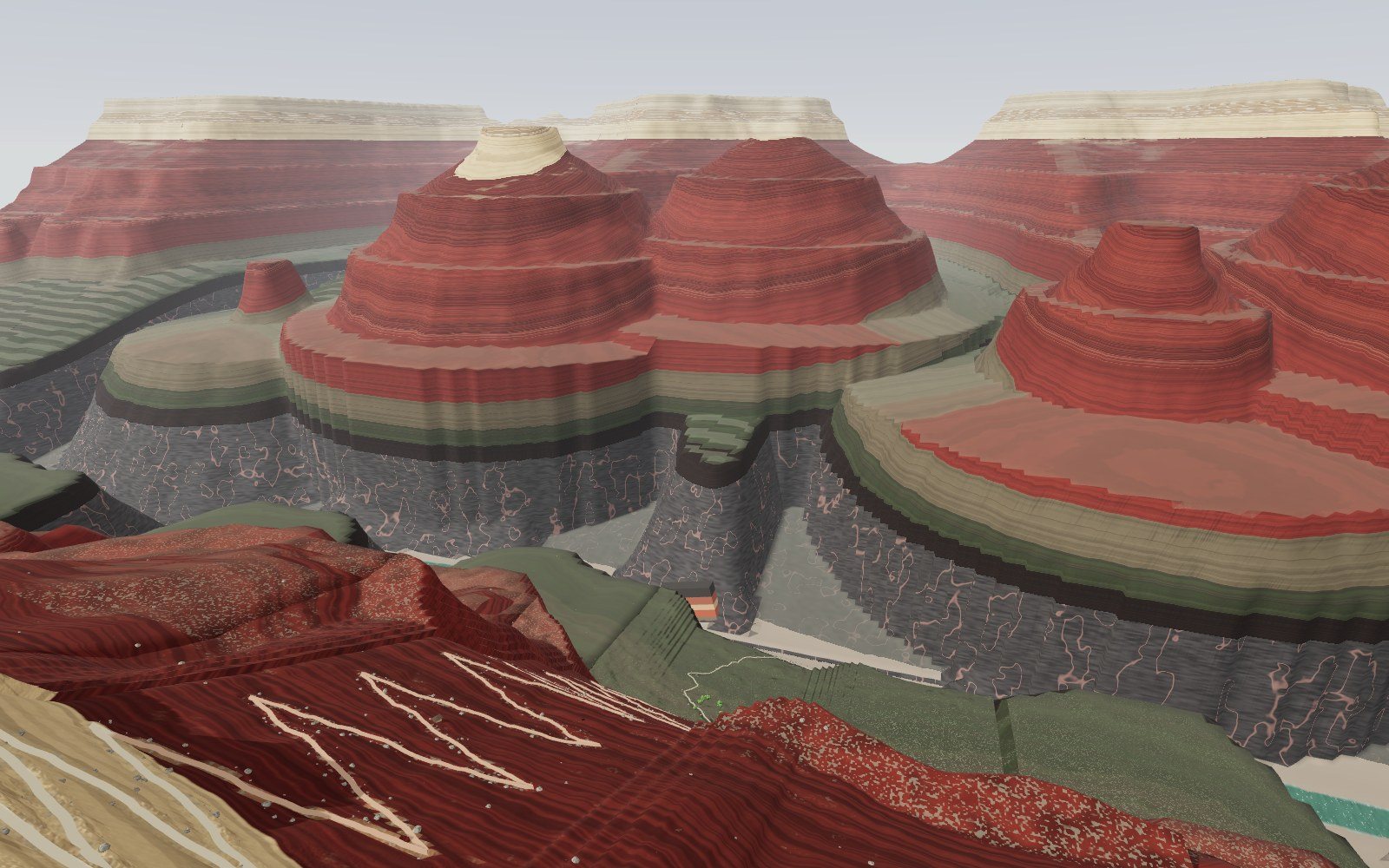
Walk down the Grand Canyon rock layers
Walk 1,360 m down the Bright Angel Trail through 13 rock layers, from a 270-million-year-old sea floor on the rim to 1.75-billion-year-old schist by the river.
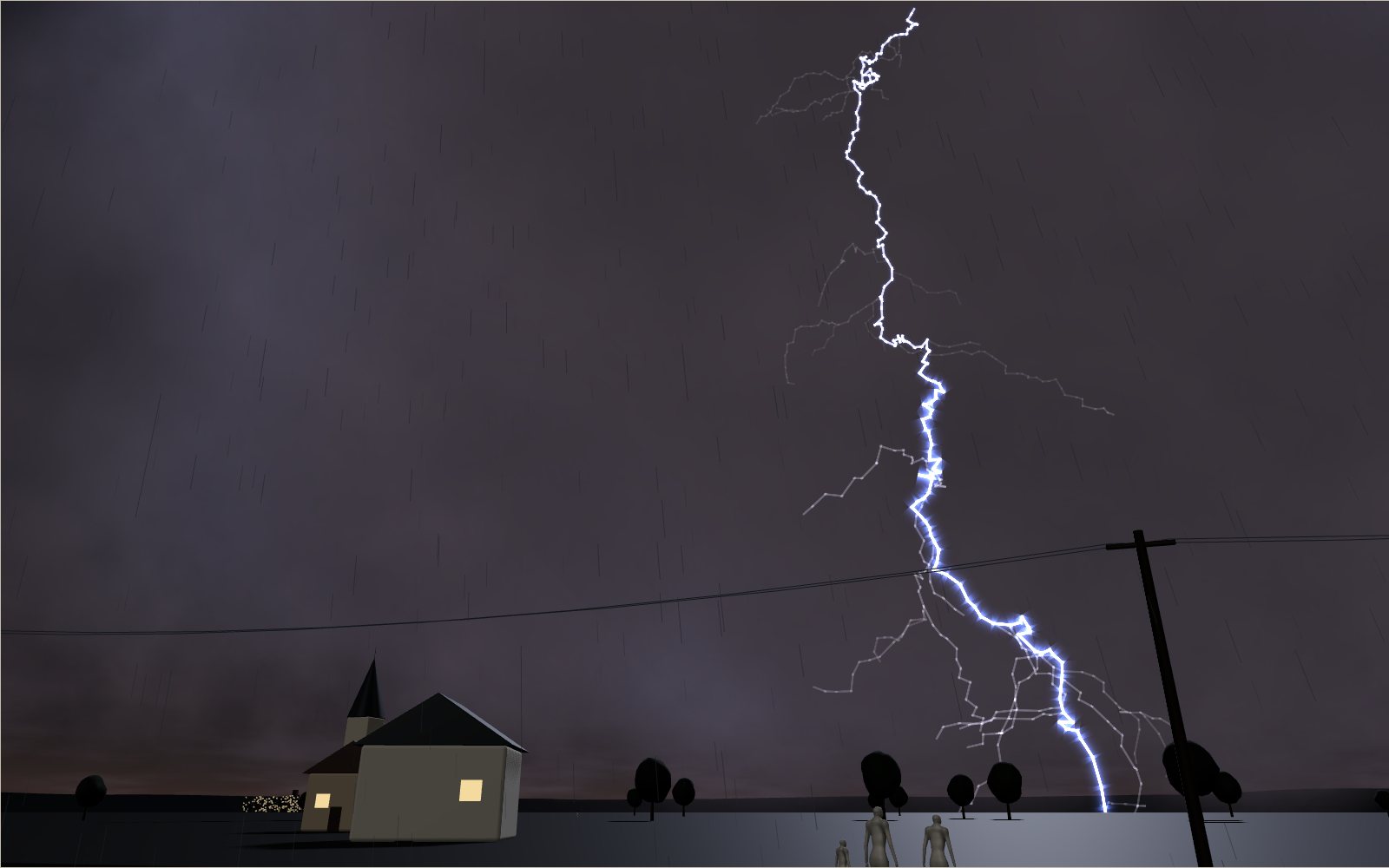
How lightning and thunder work
A lightning channel heats the air to about five times the temperature of the Sun’s surface, and its thunder needs about 3 seconds to cover each kilometre to you.
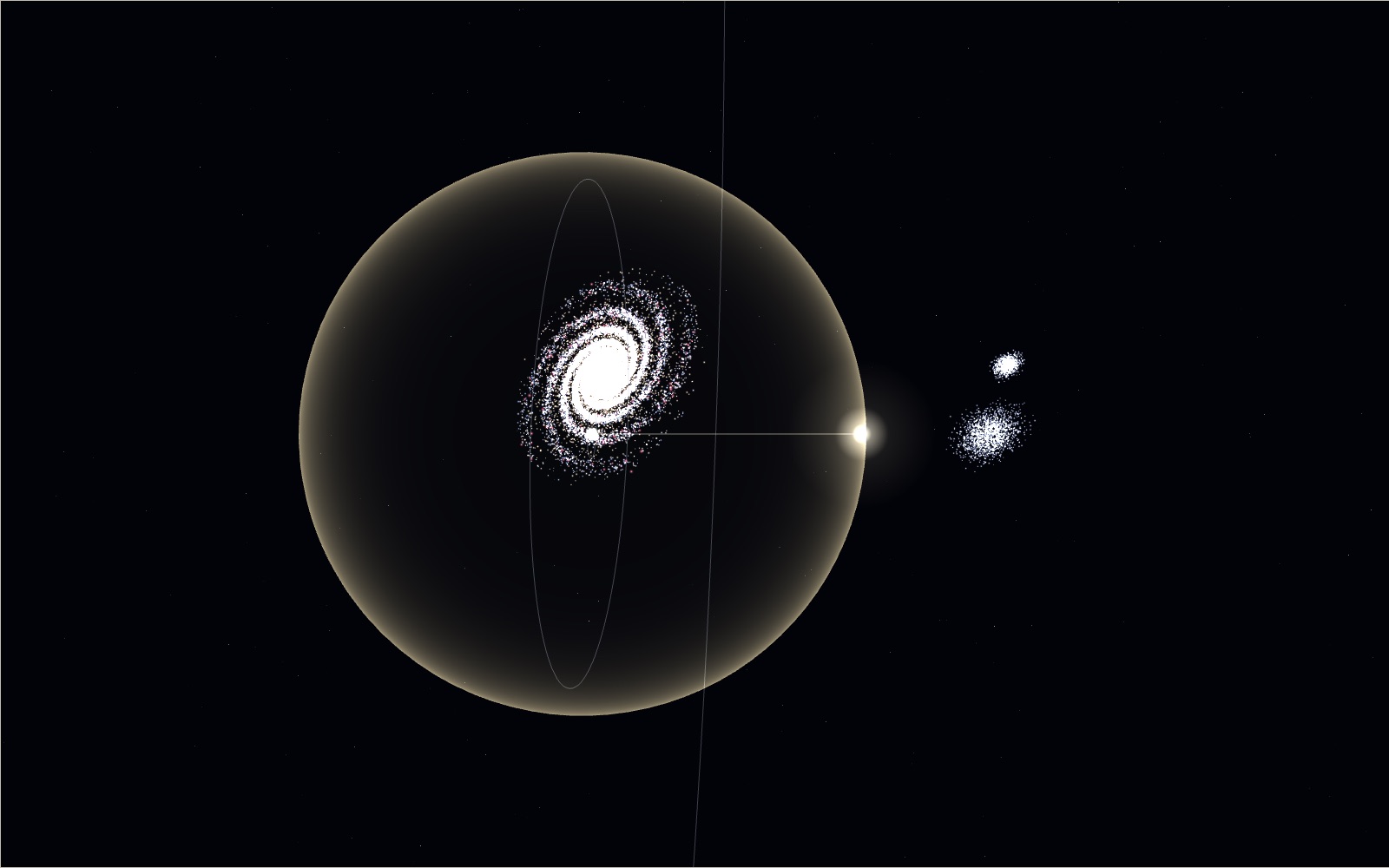
Travelling at the speed of light
Light goes round the equator 7.5 times in a second, yet the same light needs 2.5 million years to reach the Andromeda galaxy.

Walk through Machu Picchu
Most of the work that holds Machu Picchu on its ridge, 60 per cent by one estimate, lies under the ground in foundations and drains nobody sees.