FIG. 40How It Works
How does the Watt steam engine work? A working 3D model
A Watt engine did the same work as a Newcomen engine on about a third of the coal, because it condensed its steam in a separate vessel.
This device cannot show the 3D model. You can read the guide steps below as text.
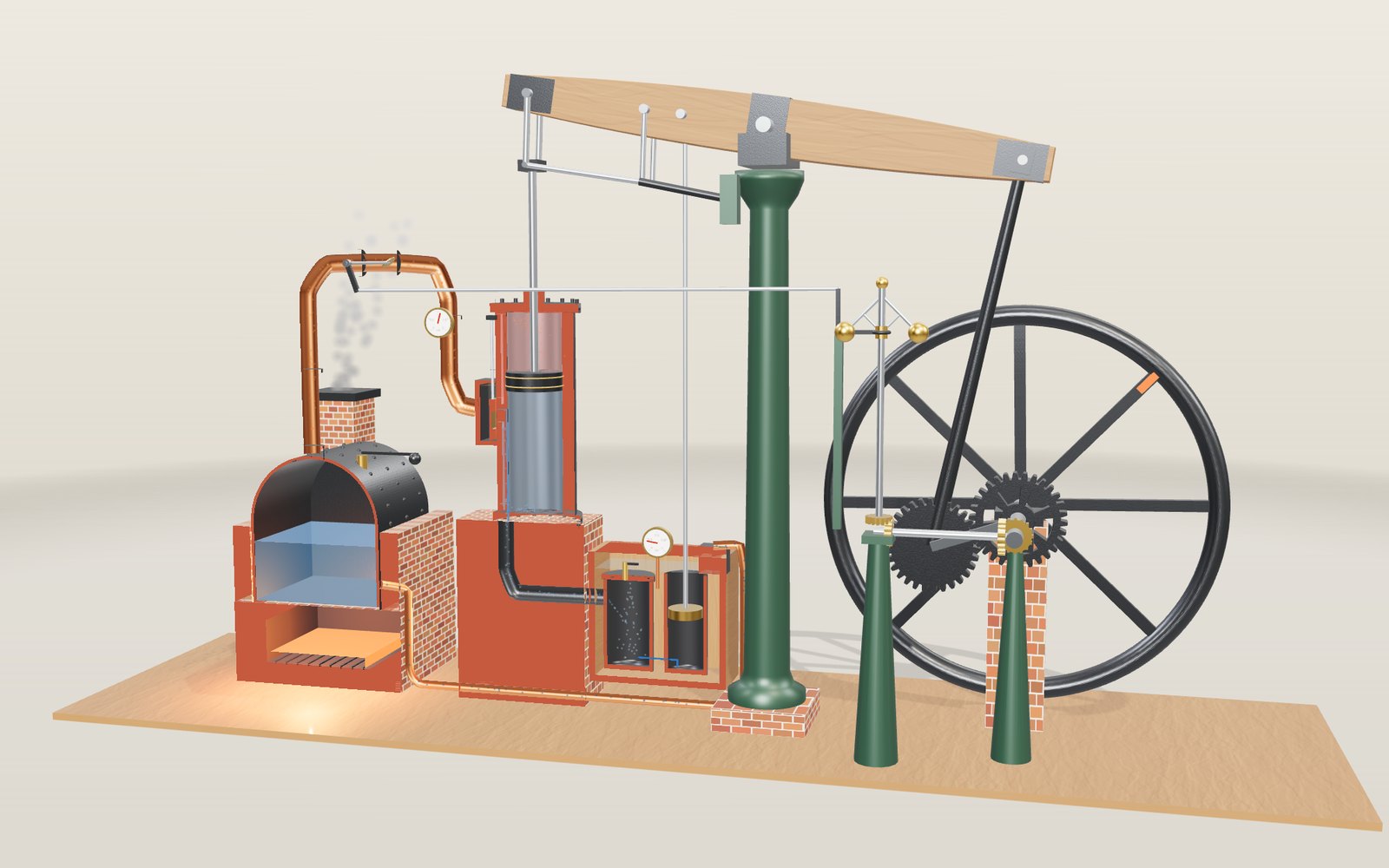
1 / 10 A rotative beam engineThis is a 1:10 model of a Boulton and Watt engine of the 1780s, cut down the middle. Red faces are cut surfaces. Live steam is orange, exhaust steam pale blue and water dark blue.
Drag to turn. Scroll or pinch to zoom.
What the model shows
How does the Watt steam engine work? Steam drives a piston while a separate condenser cools the exhaust, using about a third of the coal of a Newcomen engine. Before James Watt, a steam engine spent most of its coal heating and cooling the same iron cylinder, twelve or more times a minute. This model shows the machine that fixed that, and then went on to turn mill shafts instead of only working pumps.
It is a rotative beam engine of the kind Boulton and Watt built in the 1780s, shown at one tenth of full size and cut down the middle. Red faces are cut surfaces. Live steam from the boiler is orange, spent steam on its way to the condenser is pale blue, and water is dark blue. The proportions follow the 1785 Boulton and Watt engine at the Powerhouse Museum in Sydney: a 635 mm (25 inch) bore, a 1.83 m (6 foot) stroke and a 4.27 m (14 foot) flywheel.
The readout in the corner shows the flywheel speed, how far the throttle is open, the power the steam is putting into the piston, the coal the engine is burning and the pressure above the piston. A small trace under the graph keeps the last 30 seconds of speed (red) and throttle (blue), so you can watch the governor answer when you change the load. The graph underneath is the pressure-volume loop for the top of the cylinder, drawn live as the engine runs. The grey outline behind it is the loop at the design load, so you can see how it changes when you move the load slider.
Why Newcomen's engine burned so much coal
Thomas Newcomen's atmospheric engine of 1712 filled its cylinder with steam, then sprayed cold water inside. The steam condensed, the pressure in the cylinder fell, and the air outside pushed the piston down. It worked, but every stroke cooled the cylinder walls, and the next charge of steam had to heat them up again before it could fill the space. Much of the steam, and the coal that made it, was spent on warming iron.
Watt met the problem in 1763, when the College of Glasgow asked him to repair a model Newcomen engine that kept stopping for want of steam. His answer, which he had working as a model by 1765, was to condense the steam somewhere else. His patent was granted on 5 January 1769, and its first claim was that the cylinder "must during the whole time the engine is at work be kept as hot as the steam that enters it."
The separate condenser
In the model, the condenser is the iron vessel standing in the wooden cistern of cold water, under the floor of the engine house. When one end of the cylinder opens to the exhaust, the steam rushes down the pipe into the condenser, where a jet of cold water from the injection cock turns it back into water. Water takes up far less room than steam, so the pressure in the condenser stays low, about 0.2 bar in the model. The cylinder never touches cold water, so it stays hot.
Condensing makes water, and some air comes in with the steam and leaks through the joints. The air pump beside the condenser removes both. Its bucket is worked by a rod from the beam, and the warm water it lifts goes into the hot well, from where a feed pipe takes it back to the boiler. The Science Museum puts the result simply: engines with Watt's condenser burned two thirds less coal.
You can see why in the model's numbers. With the throttle at its reference opening of 45%, the steam reaching the cylinder is at 1.14 bar absolute, only a little above the air outside. With the far side of the piston open to the condenser at 0.2 bar, each double stroke does about 80 kJ of work. If the same engine exhausted into the open air at 1.01 bar, the back pressure would cancel the forward push and the engine would stall.
Steam on both sides of the piston
Watt's first engines were single-acting like Newcomen's: steam pushed the piston down and the weight of the pump rods pulled it back. To drive machinery smoothly, Watt patented double action in March 1782. Steam acts on the top of the piston on the way down and on the bottom on the way up, and whichever side is not being pushed is open to the condenser.
The model uses a slide valve to do the switching. It is a brass block with a hollow underside, moving up and down across three ports in the valve face. The top port leads to the top of the cylinder, the bottom port to the bottom, and the middle one to the exhaust. When the valve uncovers one outer port to the steam chest, its hollow joins the other outer port to the exhaust.
The valve's outer edges are wider than the ports by a margin called the steam lap. Because of the lap, the valve shuts off fresh steam well before the end of the stroke: at 46% of the down stroke and 55% of the up stroke in the model. The two figures differ because the beam end swings on an arc and the rods are not infinitely long. After cut-off the trapped steam keeps pushing as it expands, which saves steam. Watt described this expansive working in the same 1782 patent.
Turning a rocking beam into rotation
The top of the piston rod has to move in a straight line, or it would tear its packed gland. The end of the beam, however, moves on an arc. Watt's answer in 1784 was the parallel motion, a set of bars and a radius rod arranged so that one joint traces a nearly straight line through the whole stroke. Watt said it was the invention he was proudest of. Watt's real linkage only approximates a straight line; the model holds the crosshead exactly on the cylinder axis and works out the bar positions from there.
At the other end of the beam a connecting rod comes down to the shaft. Instead of a crank, it carries a gear that is fixed to the rod and cannot turn on it. This planet gear meshes with a sun gear of the same size on the flywheel shaft, and a strap holds the two together. As the planet is carried round, the sun gear turns twice for every up-and-down movement of the piston. Watt used it because, as the ASME history puts it, the obvious crank was an idea already patented by someone else.
The 4.27 m flywheel carries the shaft through the two dead points in every turn, where the piston is at the end of its stroke and cannot push the shaft round.
How the governor holds the speed
A mill engine has to run at nearly the same speed whether the machines it drives are busy or idle. The centrifugal governor does this without anyone watching. Two brass balls hang on arms from a spindle driven from the flywheel shaft. When the spindle turns faster, the balls swing outwards and upwards. That lifts a sleeve, which works a bell crank and a long rod to the butterfly throttle in the steam pipe and closes it a little. Less steam reaches the cylinder, and the engine slows. If the engine slows too much, the balls drop and the throttle opens.
Try it in Controls. At the design load of 30 hp the engine settles at 40.3 rpm. Drop the load to 10 hp and the flywheel briefly speeds up to 42.8 rpm before the throttle closes to about 8% and the speed settles at 42.6 rpm. Switch the governor off and do the same thing: the throttle stays where it was, and the engine runs up past 110 rpm within a minute. Push the load up to 40 hp and the throttle opens fully, but the engine still slows to about 29 rpm. Above about 37 hp at 40 rpm the cylinder simply cannot supply enough work.
A governor like this one never quite returns to the original speed. It needs a small speed error to hold the throttle in a new position, so the engine runs a little faster at light load than at heavy load. Engineers call this droop.
The numbers, worked out
| Quantity | Model value | How it follows |
|---|---|---|
| Piston area | 0.317 m² | π/4 × 0.635² |
| Swept volume, one side | 580 litres | area × 1.832 m stroke |
| Mean effective pressure at design load | 0.69 bar (10.0 psi) | net work ÷ volume swept by both sides |
| Mean force on the piston | 21.9 kN | 0.69 bar × 0.317 m² |
| Work per double stroke | 80.2 kJ | area of the two p-V loops |
| Indicated power at 20 double strokes a minute | 26.7 kW (35.9 hp) | 80.2 kJ × 20 ÷ 60 s |
| Mean piston speed | 1.22 m/s | 2 × 1.832 m × 20 ÷ 60 s |
| Flywheel rim speed at 40 rpm | 8.9 m/s | π × 4.27 m × 40 ÷ 60 s |
| Governor spindle speed | 50 rpm | 1.25 × flywheel speed |
| Height of the balls below the pivot | 0.358 m | h = g ÷ ω² |
| Ball arm angle at 40 rpm | 44° from vertical | cos φ = 0.358 ÷ 0.5 |
The governor height formula comes from a conical pendulum: a ball swinging round a vertical axis settles where the inward pull of its arm balances gravity, at a height h = g/ω² below the pivot, whatever its mass. Spin it faster and h shrinks, so the balls rise. The American Society of Mechanical Engineers estimates the Whitbread engine at about 35 indicated horsepower after it was made double-acting, assuming a mean effective pressure of 10 psi at 20 to 21 strokes a minute. The model lands on the same figures.
Newcomen against Watt, on the same engine
The Controls tab has a switch called Separate condenser. Turn it off and the model works the way Newcomen's engine did: the cold jet is sprayed straight into the cylinder at the end of each stroke, and the condenser vessel sits idle. Two things change. The vacuum is poorer, because the jet is fighting a warm cylinder wall, so the model's back pressure rises from 0.2 bar to 0.55 bar. And the walls are cooled every stroke, so the next charge of steam has to warm them again before it can push.
The second effect is the one Watt went after, and it is the one that costs coal. The model counts it by adding the steam that condenses on the walls to the steam that does work. With the separate condenser it adds 0.6 kg for every kilogram that works, which covers a jacketed cylinder that still loses some heat. With the jet in the cylinder it adds 2 kg, so two thirds of all the steam is spent reheating iron. Both figures are model values, chosen so that the result lands near the Science Museum's "two thirds less coal".
The bars in the lab show the outcome for the same engine at 40 rpm with the throttle wide open:
| Setting | Coal per hp·h | Efficiency |
|---|---|---|
| Jet in the cylinder (Newcomen) | 10.1 kg (22.3 lb) | 0.9% |
| Separate condenser (Watt) | 3.3 kg (7.2 lb) | 2.8% |
That is 3.1 times as much coal for the same work. In the running model the difference shows up in a second way too. At the design load of 30 hp the Newcomen setting cannot keep going: the throttle opens all the way, the speed falls, and the engine stops. Lower the load to 15 hp and it holds 40.6 rpm, but it burns 239 kg of coal an hour against 87 kg for the Watt setting at the same load.
Coal per horsepower-hour, worked out
Engineers in Watt's time compared engines by how much work they did for a given amount of coal. The model does the same sum, step by step, at the design load with the governor working:
| Step | Model value | How it follows |
|---|---|---|
| Pressure in the valve chest | 1.11 bar | after the pipe and the 41% open throttle |
| Steam temperature at that pressure | 102.6 °C | saturation temperature |
| Density of that steam | 0.64 kg/m³ | ideal gas at saturation, p ÷ (R T) |
| Volume let in per double stroke | 0.58 m³ | both ends, from the start of the stroke to cut-off |
| Steam per double stroke, with wall losses | 0.60 kg | 0.58 m³ × 0.64 kg/m³ × 1.6 |
| Steam per hour at 40.3 rpm | 719 kg | 20.2 double strokes a minute |
| Coal per hour | 120 kg | 6 kg of steam per kg of coal |
| Indicated power | 35.0 hp (26.1 kW) | from the p-V loops |
| Coal per horsepower-hour | 3.4 kg | 120 ÷ 35.0 |
| Efficiency | 2.7% | 26.1 kW ÷ (120 kg/h × 29 MJ/kg) |
Two of these numbers are assumptions rather than results: the model's boiler makes 6 kg of steam from each kilogram of coal, and the coal holds 29 MJ per kilogram. Both are model values. Change either and every figure below it in the table moves in step.
The last line is worth reading slowly. Out of every hundred units of heat in the coal, under three reach the piston as work. The rest go up the chimney, into the cold water of the cistern, and into the warm water that the air pump throws into the hot well. In the model, one kilogram of coal gives 0.78 MJ of work at the piston. That is enough to lift a tonne of water 80 metres, which is the kind of job these engines were bought for. On the Newcomen setting the same kilogram gives 0.27 MJ.
What a horsepower is
The power readout gives horsepower first because that is the unit Watt used to rate his engines. One horsepower is 33,000 foot-pounds of work a minute: a force of 33,000 pounds moved one foot, or 330 pounds moved 100 feet, every minute. The US National Institute of Standards and Technology gives the conversion as 550 foot-pounds per second, which is 745.7 watts. The model divides by that number to turn watts into horsepower, so 26.1 kW reads as 35.0 hp.
The kilowatt figure next to it is there because almost everything else is rated in watts now. By Watt's own unit, the Sydney engine's 10 to 15 horsepower after its refit was the work of 10 to 15 horses, kept up without rest.
Cutting the steam off earlier
Watt saw that steam already in the cylinder could keep working after the valve shut, and the cut-off slider lets you try it. It sets how far into the stroke fresh steam keeps coming in. The slide valve in the model is a real one, so changing the cut-off changes its lap and its angle of advance, and the exhaust opens at a different point too. With no lead, a valve whose lap is a fraction L of its travel cuts off at a piston position of about cos²δ, where sin δ = L. The model's 45° gives cut-off near half stroke.
Expansion pays because the trapped steam goes on pushing for free. If steam at a steady temperature expands to twice its volume, it does 1 + ln 2 = 1.69 times the work it did while it was coming in. Expanded four times, it does 2.39 times as much. So a short cut-off gets more work out of each kilogram of steam.
The catch is that a short cut-off also means less steam per stroke, and so less power. Set the cut-off to 25% at Watt's 1.45 bar and the engine cannot carry 30 hp: it slows and stops. Raise the boiler pressure to 2.5 bar and it holds 41.4 rpm again with the throttle only 24% open, using 2.4 kg of coal per hp·h instead of 3.4. That is the path later engineers took. Cornish pumping engines of the 1800s used high-pressure steam and cut it off early; set the model to 20% cut-off at 3.5 bar, single-acting, and the bars show 1.8 kg per hp·h.
Single-acting and double-acting
The Double-acting switch lets steam into the bottom of the cylinder or not. Switched off, the underside of the piston is always open to the condenser, as on Watt's first pumping engines. The work per double stroke halves, and at full throttle the model gives 20 hp instead of 42. At the design load of 30 hp the single-acting engine runs down and stops. At 15 hp it holds about 38 rpm with the throttle 84% open.
You can also see the difference on the stage. On the single-acting setting the bottom of the cylinder stays pale blue the whole time, and the p-V dot on the graph spends half of every cycle on the condenser line.
Engines in history
The Engines in history list holds 76 engines, from Savery's pump of 1698 to a coal power station of today. You can search it by name, year or place, and narrow it by country and by use: mine and water pumps, factories and mills, locomotives and road vehicles, ships, electricity, and models or patents. Choosing an engine does two things. It puts the matching kind of engine on the stage (one of the six described below), and it sets the Watt model's four settings to stand in for it: where the exhaust goes (a jet in the cylinder, a separate condenser, or out to the air), single or double action, the cut-off and the boiler pressure. These settings describe the type of engine, not measurements of that particular machine.
The notes under the menu give what the museums and institutions say about each one. A few give a power figure, and those are shown as the real engine's numbers: 1,000 hp for the engine of the SS Great Britain in 1843, 1,400 hp for the Corliss engine that drove the Machinery Hall at the 1876 Centennial Exhibition, and 700 hp for the Burnley mill engine of 1903. The last entry is not a piston engine at all. US coal power stations used an average of 10,777 Btu of fuel for each kilowatt-hour they made in 2024, and since a kilowatt-hour is 3,412 Btu, that is an efficiency of 31.7%. They still boil water, expand the steam and condense it, but in turbines and at far higher pressure and temperature.
The locomotive entries show why railways could do without a condenser. A Rocket-type setting blows the exhaust out to the air at 1.01 bar, which at Watt's pressure would leave almost nothing. At 4.4 bar there is enough pressure to push against the atmosphere and still do work, at the price of more coal per horsepower.
Six engines on one stage
The buttons along the bottom of the stage swap the Watt engine for five others. Each one moves, and its readout changes to that engine's pressure, efficiency, coal and speed. A small mark after each figure says where it comes from: "source" links to the museum or landmark page, "model" means the figure was worked out by this page's model for that type of engine.
Newcomen, 1712. The cylinder is open at the top and stands on a haystack boiler. Steam at about air pressure fills it under the piston; a jet of cold water from the cistern on the wall condenses it, and the air above pushes the piston down. Chains on the arch heads of the beam keep the piston rod and the pump rod moving straight up and down. John Lienhard of the University of Houston puts the first Newcomen engines at around a third of one percent efficient, so 1 kg of coal at 29 MJ did about 0.1 MJ of work. The Science Museum's Old Sarah, an atmospheric engine near Wakefield, was still pumping from 330 ft in 1917 at about 5 strokes a minute.
Watt, 1785. The engine the rest of this page is about. Its model figures are 2.8% efficiency and 3.3 kg of coal per horsepower-hour with the separate condenser at 1.45 bar.
Trevithick, 1805. The Science Museum's engine by Hazledine and Co. worked at about 50 psi above the atmosphere (4.46 bar absolute) and gave 3 hp. The cylinder is sunk into the boiler so the steam reaches it hot, and the exhaust goes up the chimney, so there is no condenser and no beam. The model puts it at 2.3%: high pressure makes up for most of what is lost by blowing the steam out at atmospheric pressure, in an engine a fraction of the size.
Rocket, 1829. Stephenson's locomotive brought together the multi-tube boiler and the blast pipe, the Science Museum Group says. The exhaust from the two inclined cylinders blasts up the chimney and draws the fire through the tubes, so the harder the engine works the hotter the fire burns. With the same high pressure and no condenser, the model gives 2.2%.
Triple expansion, 1894. The steam passes through three cylinders of growing size, so each one works on steam the one before has already expanded. The Leavitt pumping engine at Chestnut Hill in Boston, an ASME landmark, ran on test at 175.7 psi (13.1 bar absolute) and 50.6 rpm and burned 1.146 lb of coal per horsepower-hour. That is 0.52 kg, and at 29 MJ per kg it is 17.8% efficiency, six times Watt's model engine. The ASME brochure gives the engine alone, measured on the steam, as 20.8%. Liberty ships of the Second World War such as the SS Jeremiah O'Brien still used a 2,500 hp triple-expansion engine.
Parsons turbine, 1884. There is no piston. In the model the steam enters in the middle of the casing and expands through rows of moving blades on the rotor and fixed blades on the casing, turning the shaft directly. The Science Museum Group gives the speed of Parsons' first turbine as 18,000 rpm, suited to a dynamo, but no efficiency figure, so the readout says so. By 1892 three 100 kW Parsons turbines with condensers at Cambridge were found on test to be as efficient as the best piston engines of the same size. The readout shows a coal power station of today for comparison: 31.7%.
One kilogram of coal, engine by engine
The efficiency race under the controls lets each engine burn 1 kg of coal and lift water 10 m. Lifting a kilogram 10 m takes 9.81 × 10 = 98.1 J, and 1 kg of coal holds 29 MJ, so the water lifted is 29,000,000 × efficiency ÷ 98.1 kg.
| Engine | Year | Efficiency | Water lifted 10 m by 1 kg of coal | From |
|---|---|---|---|---|
| Newcomen | 1712 | 0.33% | 976 kg | University of Houston |
| Smeaton, Long Benton | 1774 | 1.4% | 4,139 kg | ASEE paper |
| Watt (model) | 1785 | 2.84% | 8,406 kg | this model |
| Trevithick (model) | 1805 | 2.32% | 6,855 kg | this model |
| Rocket (model) | 1829 | 2.22% | 6,559 kg | this model |
| Cornish engine | 1835 | 11% | 32,518 kg | ASME, Kew Bridge |
| Mill beam engine | 1846 | 3.4% | 10,055 kg | Science Museum Group |
| Triple expansion (3 cylinders) | 1894 | 17.8% | 52,644 kg | ASME, Leavitt engine |
| Coal plant today | 2024 | 31.7% | 93,596 kg | US EIA |
Two of the rows are worked out from coal figures. The Peel, Williams and Peel beam engine of 1846 burned about 6 lb of coal per horsepower-hour, which is 2.72 kg and 3.4%. The Leavitt engine's 1.146 lb is 0.52 kg and 17.8%. The 11% for the Cornish engine is the overall figure the ASME gives for an 80-inch engine in Cornwall in 1835; the same brochure says Cornish engines of the 1830s moved four to five times as much water per ton of coal as the best Watt engines. Smeaton's Long Benton engine, the ASEE paper works out from its duty of 9.45 million foot-pounds per bushel, was about 1.4% efficient. From the first Newcomen engine to a power station of today, the same coal lifts 96 times as much water.
The bars are drawn on a log scale, where each step on the axis is ten times the last, because a straight scale would leave Newcomen's bar too short to see. The chart under the race puts the same nine engines on a time line.
Tasks and the safety valve
Seven tasks under the controls each ask for one thing the engines can show. Three need the Watt model: three times Newcomen's work for the same coal, 40 rpm held under a 60 hp load (at 1.45 bar the model drops below 38 rpm at about 37 hp and stops by 50 hp, so the boiler has to go up to 2.5 bar or more first), and more than 4% efficiency from an earlier cut-off and a higher boiler pressure. The fourth uses the safety valve, a weighted lever on top of the boiler. The model's wagon boiler is held to 3.5 bar, our own figure for a low-pressure boiler of this shape. Push the boiler setting past it with the valve on and the lever lifts and blows steam off, so the engine keeps working at 3.5 bar. Switch the valve off and the readout warns that the boiler would be in danger.
Gauges and smoke
Two dials on the model show the pressures that the engine driver watched. The steam gauge on the pipe beside the cylinder reads the valve chest after the throttle, so its needle drops when the governor closes the throttle. The vacuum gauge on the condenser reads 0.2 bar with Watt's condenser and 0.55 bar on the Newcomen setting. The smoke from the chimney follows the coal the model is burning: it thickens when you raise the load or pick a wasteful setting.
Reading the pressure-volume loop
Follow the red dot clockwise. The flat top is admission, when the top of the cylinder is open to the steam chest. The curve that falls away from it is expansion after cut-off, where the pressure drops as the volume grows. At 84% of the stroke the valve opens the top to the exhaust and the pressure falls to the condenser line. On the return stroke the valve closes the exhaust before the piston reaches the top, so the last of the steam is squeezed into the clearance space and cushions the piston. The area inside the loop is the work done on that side of the piston in one cycle.
Lower the load and watch the loop shrink. The governor closes the throttle, the pressure in the steam chest drops, and the flat top of the loop moves down. This is called throttle governing: the engine always cuts off at the same point but works on thinner steam.
Where the model differs from the real engines
The 1785 engine admits steam through drop valves, not a slide valve. We used a slide valve because one moving part shows all the valve events. The real connecting rod is 5.5 m long, longer than the model's 4 m, and the Whitbread engine's beam was replaced with cast iron years after it was built, while ours is oak. The boiler pressure is our own choice: 1.45 bar absolute, so that after the pipe and throttle the steam chest sits a little above atmospheric pressure, close to the 3 psi above atmosphere the ASME suggests. The flywheel is also lighter than a real one, so that a change in load settles in seconds rather than minutes.
From a model condenser to the Lap engine
Watt built his condenser model in 1765 and received the patent in 1769. After he went into partnership with Matthew Boulton, the patent was put into practice in 1776, in a mine pumping engine and a blowing engine for an ironworks. The ASME says they burned a third of the fuel normal at the time. Rotary motion came next: Watt's patent for "circular motion round an axis," which included the sun and planet gear, is dated 25 October 1781. Double action and expansive working followed in March 1782 and the parallel motion in August 1784.
The Whitbread brewery engine in Sydney was installed in 1785, perhaps the sixth rotative engine the firm made, and worked for 102 years until 1887. The Powerhouse Museum says it was refitted to raise its power from 10 to 15 horsepower and that its governor was added in the 1790s. The Lap engine of 1788, now in the Science Museum in London, drove the polishing laps at Boulton's Soho Manufactory for 70 years. The ASME records it as the first engine fitted with a centrifugal governor. Watt rated it at 10 horsepower, and a test in 1858 measured 13.75. In all, Boulton and Watt built about 500 engines, around 60% of them rotative.
Questions
What did Watt's separate condenser change?
It let the cylinder stay hot all the time while the steam was condensed in a cold vessel of its own. Newcomen engines cooled and reheated the cylinder on every stroke. The Science Museum says engines with Watt's condenser burned two thirds less coal.
Did Watt invent the steam engine?
No. Thomas Newcomen's atmospheric engine was pumping water from mines from 1712. Watt made it far more efficient and later made it double-acting and able to turn a shaft, which took steam power from mines into mills and factories.
Why did Watt use a sun and planet gear instead of a crank?
The crank had already been patented by someone else, so Watt patented other ways of getting "circular motion round an axis" in 1781 and chose this one. It also doubles the speed: the flywheel turns twice for each double stroke of the piston, so the shaft turns once for every single stroke.
What does double-acting mean?
Steam pushes on both faces of the piston in turn: on the top for the down stroke and on the bottom for the up stroke. The side not being pushed is open to the condenser. A single-acting engine is only pushed one way.
How does a centrifugal governor work?
Two weights spin with the engine. Faster rotation throws them outward and upward, which closes the throttle through a linkage; slower rotation lets them drop and opens it. In the model, a fall in load from 30 hp to 10 hp raises the speed by only about 2 rpm with the governor, compared with more than 70 rpm without it.
Was steam pressure high in Watt's engines?
No. They worked close to atmospheric pressure and relied on the vacuum in the condenser for much of their push. The ASME suggests about 3 psi above atmosphere for the Whitbread engine. Engines working on much higher pressure came later.
What is a p-V diagram used for?
It plots the pressure in the cylinder against the volume. The area inside the loop is the work done in one cycle. Engineers drew these with a steam engine indicator to measure an engine's real power and to set its valves.
How much coal did Watt's condenser save?
The Science Museum puts it at two thirds less coal. The model gives 3.3 kg per horsepower-hour with the separate condenser and 10.1 kg with the jet in the cylinder, a ratio of 3.1, using wall losses chosen to match that figure.
What is one horsepower in watts?
745.7 W. Watt's horsepower is 33,000 foot-pounds a minute, or 550 foot-pounds a second, and NIST lists the conversion as 745.6999 W.
Why did later engines use much higher pressure?
High-pressure steam can be cut off early and expanded a long way, which gets more work out of each kilogram. It also lets an engine push against the atmosphere without a condenser, which is what locomotives needed. In the model, a 25% cut-off only carries the 30 hp load once the boiler is raised to about 2.5 bar.
Do power stations still use condensers?
Yes. A steam turbine power station turns its exhaust steam back into water in a condenser, for the same reason Watt did: the low pressure on the outlet side lets the steam do more work. US coal plants ran at about 32% efficiency in 2024, against about 3% for the model engine.
What is the difference between Newcomen's and Trevithick's engines?
Newcomen's engine worked at about atmospheric pressure. The steam only filled the cylinder; the work was done by the air pushing the piston into the vacuum left when the steam condensed. Trevithick's engines of the early 1800s ran at about 50 psi above the atmosphere, so the steam itself pushed the piston and could be blown out afterwards. That made them small enough to put on wheels.
What is a triple-expansion engine?
An engine in which the steam is used in three cylinders one after another, each larger than the last because the steam takes up more room as its pressure falls. Splitting the expansion keeps each cylinder at a narrower range of temperature, so less steam condenses on the walls. The Leavitt engine of 1894 burned 1.146 lb of coal per horsepower-hour this way.
Why did steam turbines replace piston engines in power stations?
A turbine turns smoothly at high speed, which suits a generator, and the steam keeps working as it passes through many stages. The Science Museum Group says the Parsons turbines at Cambridge in 1892 matched the best piston engines of the same size on test, and that the station marked the start of the turbine's rise. The museum adds that turbines still supply the bulk of our energy today.
How much more work does a power station get from coal than Newcomen's engine?
About 96 times as much. Newcomen's engines were around 0.33% efficient and US coal plants averaged 31.7% in 2024, so 1 kg of coal that lifted 976 kg of water 10 m in 1712 lifts about 93,600 kg now.
Terms
Beam engine: an engine in which the piston works one end of a rocking beam on a central pivot.
Rotative engine: an engine that turns a shaft, as opposed to a pumping engine that only rocks.
Separate condenser: a cold vessel, apart from the cylinder, where exhaust steam is turned back into water.
Double-acting: steam acts on both sides of the piston in turn.
Slide valve: a sliding block that opens the cylinder ports to steam and to the exhaust in turn.
Cut-off: the point in the stroke where fresh steam stops entering. After it the steam works by expansion.
Steam lap: the amount by which the valve's edge overlaps the port when the valve is central.
Parallel motion: Watt's linkage that guides the piston rod in a straight line from the arc of the beam.
Sun and planet gear: a pair of gears that turns the up-and-down motion of the connecting rod into rotation of the shaft.
Centrifugal governor: spinning weights that close the throttle as speed rises.
Mean effective pressure: the steady pressure that would do the same work over one stroke as the real, changing pressure.
Indicated power: the power the steam delivers to the piston, before friction.
Back pressure: the pressure on the exhausting side of the piston, which works against it.
Coal per horsepower-hour: how much coal an engine burns to do one horsepower of work for one hour. Lower is better.
Expansive working: shutting off the steam early and letting what is already in the cylinder expand.
Horsepower: 33,000 foot-pounds of work a minute, 745.7 W.
Atmospheric engine: an engine in which the air pushes the piston into a vacuum made by condensing steam, as in Newcomen's.
High-pressure engine: an engine in which steam well above the atmosphere pushes the piston itself, usually blown out afterwards.
Triple expansion: using the steam in three cylinders in turn, high, intermediate and low pressure.
Steam turbine: a machine in which steam turns a rotor by flowing through rows of blades, with no piston.
Safety valve: a valve held shut by a weight or spring that opens when the boiler pressure reaches its limit.
Duty: the old measure of a pumping engine, the foot-pounds of work it did per bushel of coal.
Sources
- Powerhouse Collection, Boulton and Watt rotative steam engine, 1785 (object 7177). https://collection.powerhouse.com.au/object/7177 (checked 16 October 2026)
- Science Museum Blog, Ben Russell, James Watt and the separate condenser (5 January 2019). https://blog.sciencemuseum.org.uk/james-watt-and-the-separate-condenser/ (checked 16 October 2026)
- American Society of Mechanical Engineers, Boulton & Watt Rotative Steam Engine, National Historic Mechanical Engineering Landmark brochure (1986). https://www.asme.org/wwwasmeorg/media/resourcefiles/aboutasme/who%20we%20are/engineering%20history/landmarks/111-boulton-watt-rotative-steam-engine.pdf (checked 16 October 2026)
- Deutsches Patent- und Markenamt, copy of Watt's patent No. 913 of 1769, Method of Lessening the Consumption of Steam and Fuel in Fire Engines. https://www.dpma.de/docs/dpma/veroeffentlichungen/gb000176900913a_watt1769.pdf (checked 16 October 2026)
- Science Museum Group Collection, Drawing of Savery's Pumping Engine 1698 (1897-117). https://collection.sciencemuseumgroup.org.uk/objects/co50874/drawing-of-saverys-pumping-engine-1698 (checked 17 October 2026)
- Science Museum Group Collection, Drawing of Thomas Newcomen's Pumping Engine, 1712 (1897-120). https://collection.sciencemuseumgroup.org.uk/objects/co50887/drawing-of-thomas-newcomens-pumping-engine-1712 (checked 17 October 2026)
- Science Museum Group Collection, Demainbray's Newcomen engine model. https://collection.sciencemuseumgroup.org.uk/objects/co2000/demainbrays-newcomen-engine-model (checked 17 October 2026)
- Science Museum Blog, In Pursuit Of Power (31 July 2012). https://blog.sciencemuseum.org.uk/a-new-age (checked 17 October 2026)
- The Henry Ford, Marc Greuther, Newcomen Engine (8 April 2015). https://www.thehenryford.org/collections/explore/articles/newcomen-engine (checked 17 October 2026)
- Science Museum Group Collection, Remains of a Cornish pumping engine, 'Old Bess', built by James Watt, 1777 (1861-45). https://collection.sciencemuseumgroup.org.uk/objects/co50947/remains-of-a-cornish-pumping-engine-old-bess-built-by-james-watt-1777 (checked 17 October 2026)
- Birmingham Museums, Thinktank, Smethwick Engine and Power Up. https://www.birminghammuseums.org.uk/thinktank/highlights/smethwick-engine (checked 17 October 2026)
- Science Museum Group Collection, Rotative Steam Engine by Boulton and Watt, 1788 (1861-46). https://collection.sciencemuseumgroup.org.uk/objects/co50948/rotative-steam-engine-by-boulton-and-watt-1788 (checked 17 October 2026)
- Science Museum Group Collection, 'Bell-crank' engine, c. 1799. https://collection.sciencemuseumgroup.org.uk/objects/co51084/bell-crank-engine-c-1799 (checked 17 October 2026)
- Amgueddfa Cymru, National Museum Wales, Richard Trevithick's steam locomotive (15 December 2008). https://museum.wales/blog/1012/Richard-Trevithickrsquos-steam-locomotive (checked 17 October 2026)
- Science Museum Blog, Peter Turvey, Steaming Through The Centuries (27 February 2012). https://blog.sciencemuseum.org.uk/steaming-through-the-centuries/ (checked 17 October 2026)
- Science Museum Group Archive, Engine of P.S. Comet 1812. https://collection.sciencemuseumgroup.org.uk/documents/aa110135869/engine-of-p-s-comet-1812 (checked 17 October 2026)
- Science Museum Group Collection, Rocket locomotive (1862-5). https://collection.sciencemuseumgroup.org.uk/objects/co26704/rocket-locomotive (checked 17 October 2026)
- The History Press, The launch of SS Great Britain (16 July 2018). https://thehistorypress.co.uk/article/the-launch-of-ss-great-britain/ (checked 17 October 2026)
- American Society of Mechanical Engineers, Kew Bridge Beam Engines, landmark brochure H194. https://www.asme.org/wwwasmeorg/media/resourcefiles/aboutasme/who%20we%20are/engineering%20history/landmarks/194-kew-bridge-cornish-beam-engines.pdf (checked 17 October 2026)
- Yale University, Energy History, William Dean Howells describes the Corliss steam engine, American Centennial Exhibition, 1876. https://energyhistory.yale.edu/william-dean-howells-describes-the-corliss-steam-engine-american-centennial-exhibition-1876/ (checked 17 October 2026)
- Science Museum Group Collection, Parsons' steam turbine generator, 1884 (1890-59). https://collection.sciencemuseumgroup.org.uk/objects/co51109/parsons-steam-turbine-generator-1884 (checked 17 October 2026)
- North East Museums, Discovery Museum, Turbinia. https://www.northeastmuseums.org.uk/discoverymuseum/about/turbinia (checked 17 October 2026)
- Science Museum Group Collection, Mill Engine by Burnley Ironworks Company (1971-78). https://collection.sciencemuseumgroup.org.uk/objects/co51089/mill-engine-by-burnley-ironworks-company (checked 17 October 2026)
- U.S. Energy Information Administration, Electric Power Annual, Table 8.1, Average Operating Heat Rate for Selected Energy Sources. https://www.eia.gov/electricity/annual/html/epa_08_01.html (checked 17 October 2026)
- National Institute of Standards and Technology, NIST Guide to the SI, Appendix B.9, Factors for units listed by kind of quantity. https://www.nist.gov/pml/special-publication-811/nist-guide-si-appendix-b-conversion-factors/nist-guide-si-appendix-b9 (checked 17 October 2026)
- University of Houston, John H. Lienhard, The Engines of Our Ingenuity: Yet Another Energy Crisis. https://engines.egr.uh.edu/cdlist/energy/8 (checked 26 October 2026)
- American Society for Engineering Education, Thermodynamic Modeling of 18th Century Steam Engines. https://peer.asee.org/thermodynamic-modeling-of-18th-century-steam-engines.pdf (checked 26 October 2026)
- Science Museum Group Collection, Piston and Rod, from Newcomen Pumping Engine 'Old Sarah'. https://collection.sciencemuseumgroup.org.uk/objects/co51190/piston-and-rod-from-newcomen-pumping-engine-old-sarah (checked 26 October 2026)
- Science Museum Group Collection, Atmospheric Engine by John Smeaton, 1772. https://collection.sciencemuseumgroup.org.uk/objects/co50899/atmospheric-engine-by-john-smeaton-1772 (checked 26 October 2026)
- Science Museum Group Collection, Trevithick's High Pressure Steam Engine and Boiler, c. 1806. https://collection.sciencemuseumgroup.org.uk/objects/co51033/trevithicks-high-pressure-steam-engine-and-boiler-c-1806 (checked 26 October 2026)
- Science Museum Group Collection, Peel, Williams & Peel steam engine. https://collection.sciencemuseumgroup.org.uk/objects/co8414737/peel-williams-peel-steam-engine (checked 26 October 2026)
- American Society of Mechanical Engineers, The Leavitt Pumping Engine at Chestnut Hill Station, landmark brochure 2. https://www.asme.org/getmedia/0ae20250-f58e-44bb-9162-1deeae56533f/2.pdf (checked 26 October 2026)
- American Society of Mechanical Engineers, SS Jeremiah O'Brien, landmark 98. https://www.asme.org/about-asme/engineering-history/landmarks/98-SS-Jeremiah-O-Brien (checked 26 October 2026)
- Science Museum Group Collection, 100 K.W. Parsons' Radial Flow Steam Turbine alternator with Generator, partly sectioned. https://collection.sciencemuseumgroup.org.uk/objects/co8625819/100-k-w-parsons-radial-flow-steam-turbine-alternator-with-generator-partly-sectioned (checked 26 October 2026)
- Science Museum Group Collection, Willans Triple-expansion Engine, 1884-1887. https://collection.sciencemuseumgroup.org.uk/objects/co51066/willans-triple-expansion-engine-1884-1887 (checked 26 October 2026)
- American Society of Mechanical Engineers, Port Washington Power Plant, landmark 51. https://www.asme.org/about-asme/engineering-history/landmarks/51-Port-Washington-Power-Plant (checked 26 October 2026)
- Musée des Arts et Métiers, Fardier à vapeur. https://www.arts-et-metiers.net/musee/fardier-vapeur (checked 26 October 2026)
- The other catalogue entries link to their own Science Museum Group, ASME or museum page from the list on the stage (all checked 26 October 2026).
- Calculations on this page come from the model's own code: piston position from the beam and rod geometry, valve events from a slide valve with 45° angle of advance, pressure from isothermal expansion (pV = constant) after cut-off, and the governor from h = g/ω². Steam and coal figures come from the same code: steam density from the ideal-gas law at saturation, 6 kg of steam per kg of coal, 29 MJ per kg of coal, and wall losses of 0.6 (separate condenser) and 2.0 (jet in the cylinder) times the working steam.
More exhibits
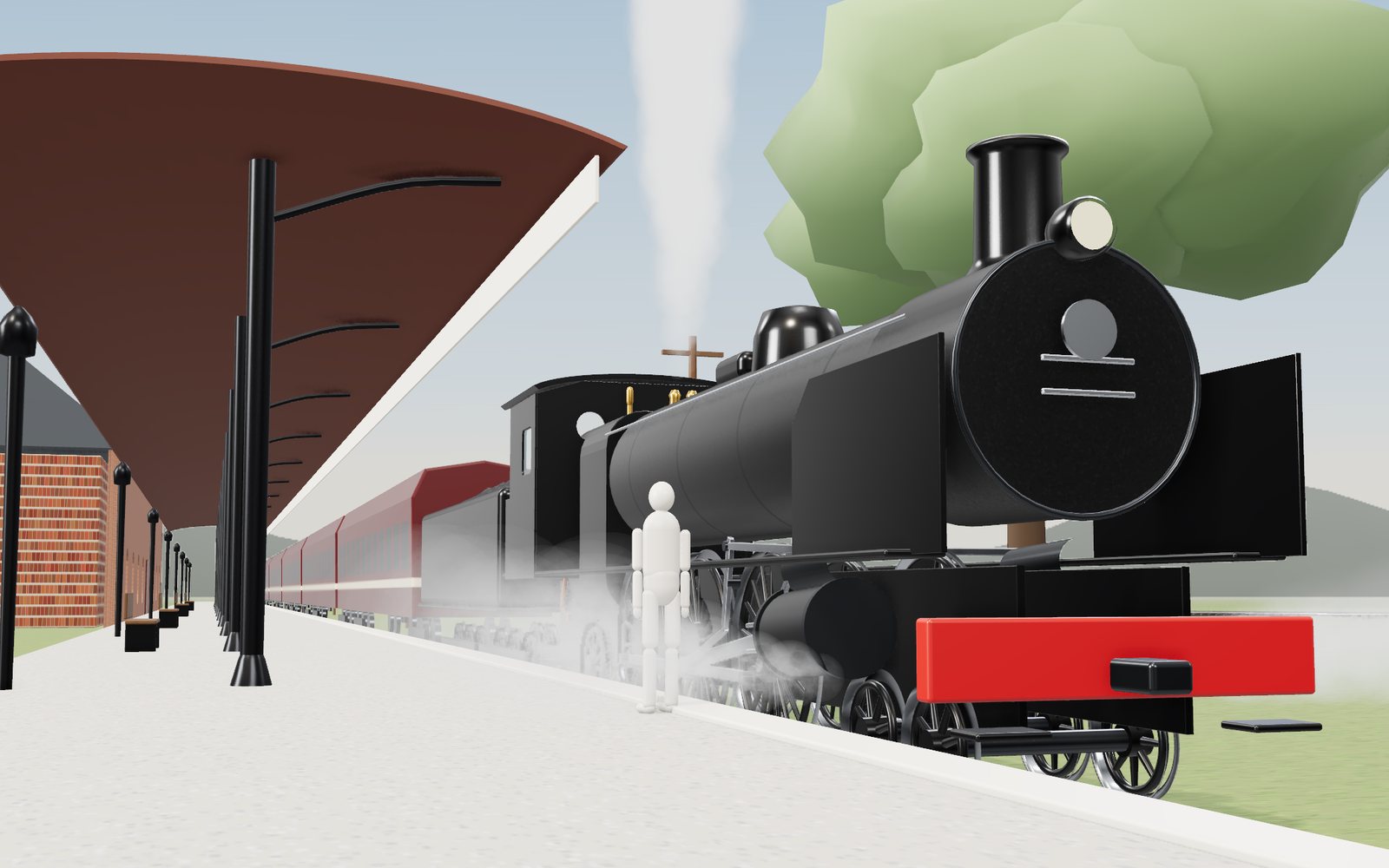
How a steam locomotive works
Mallard's driving wheels are 2.03 m across, taller than most people, and at its record 126 mph they turned almost nine times a second.
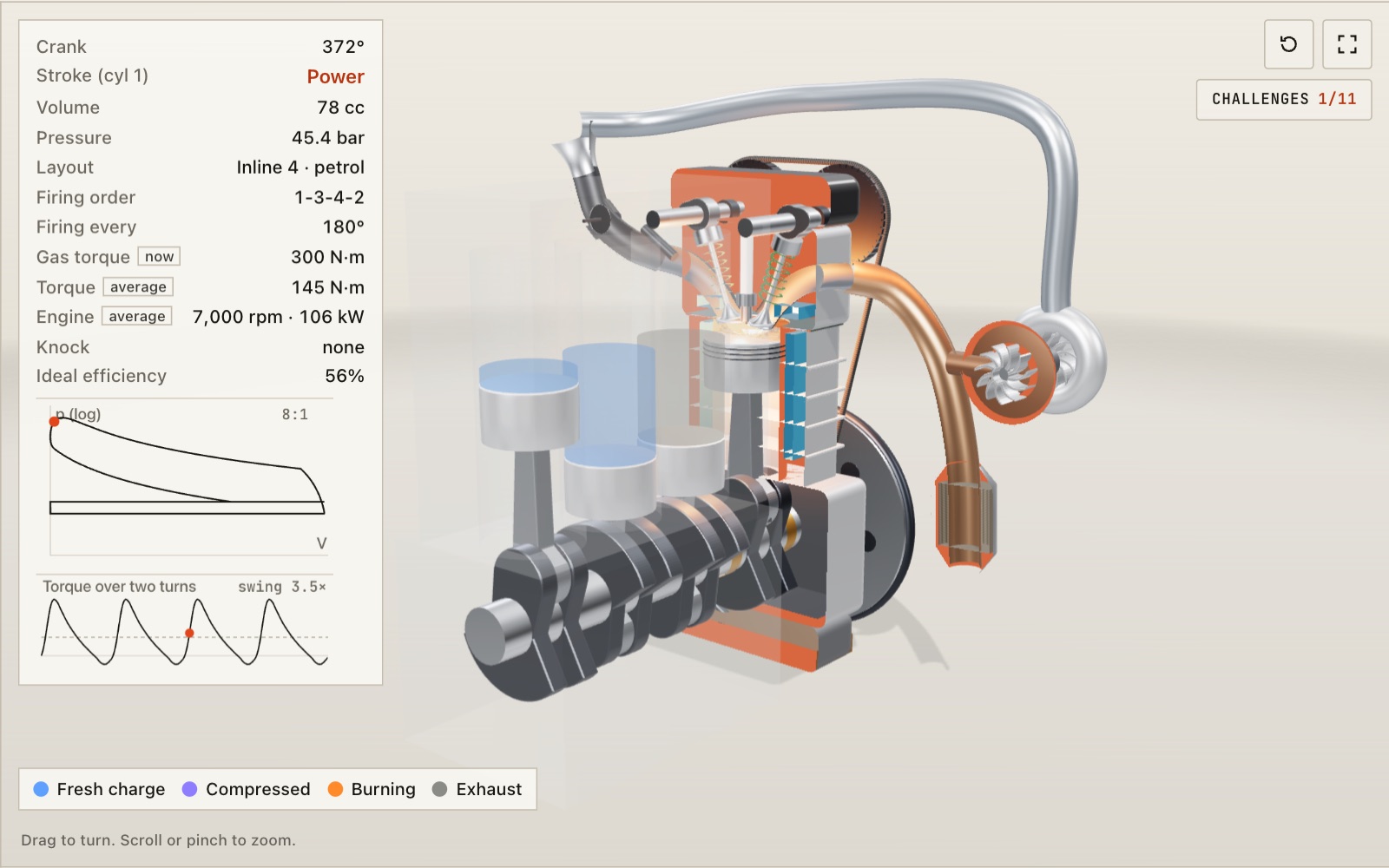
How a four-stroke engine works: two crank turns per cycle
At 3,000 rpm each cylinder fires 25 times a second. Here the engine turns slowly enough to follow every stroke, laid out as anything from a single to a V8 with its own firing order.
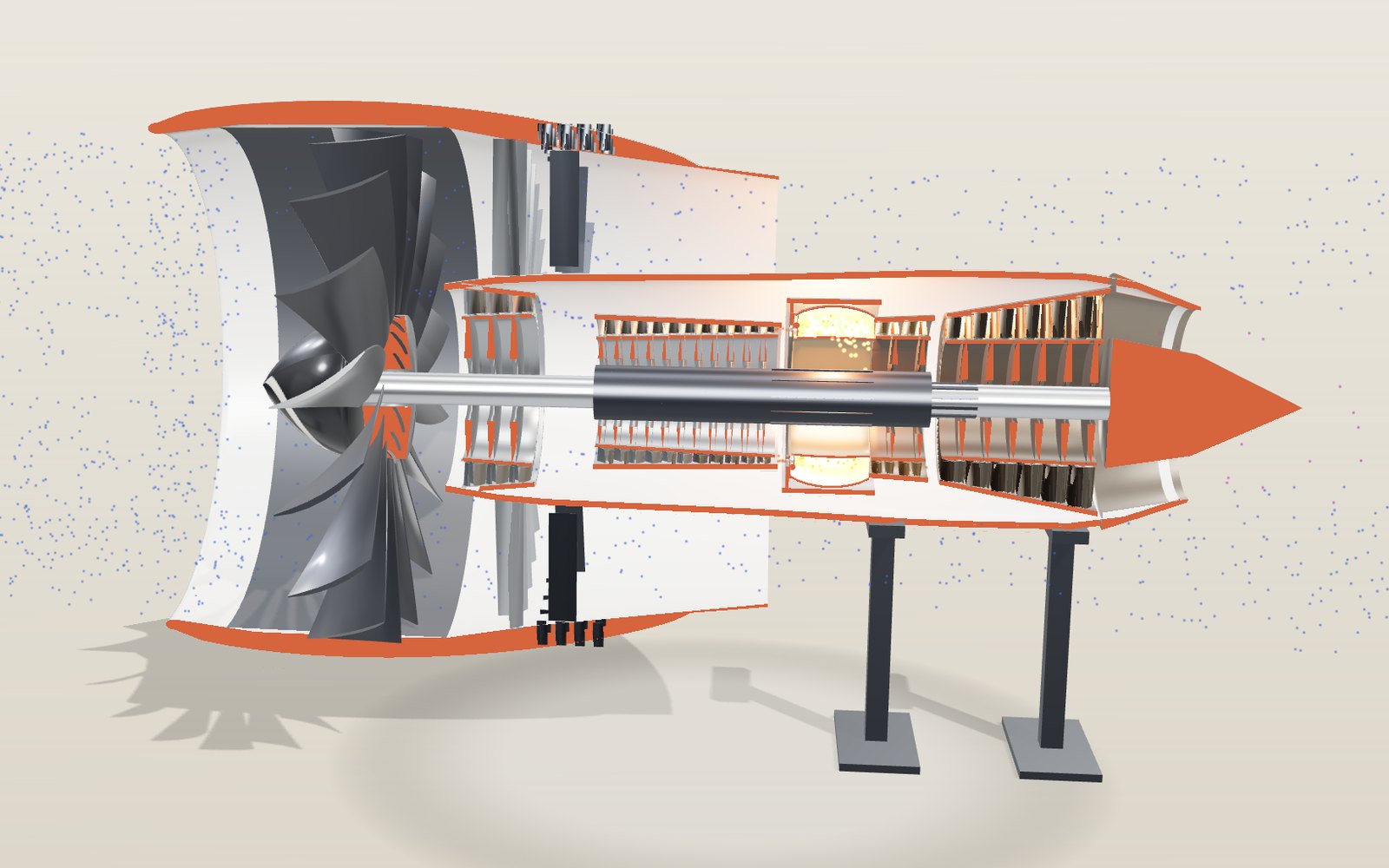
How a jet engine works: where an airliner’s thrust comes from
In an airliner's turbofan only one kilogram of air in eleven passes through the flame. Six other kinds of jet engine split the work differently, and you can open each one here.
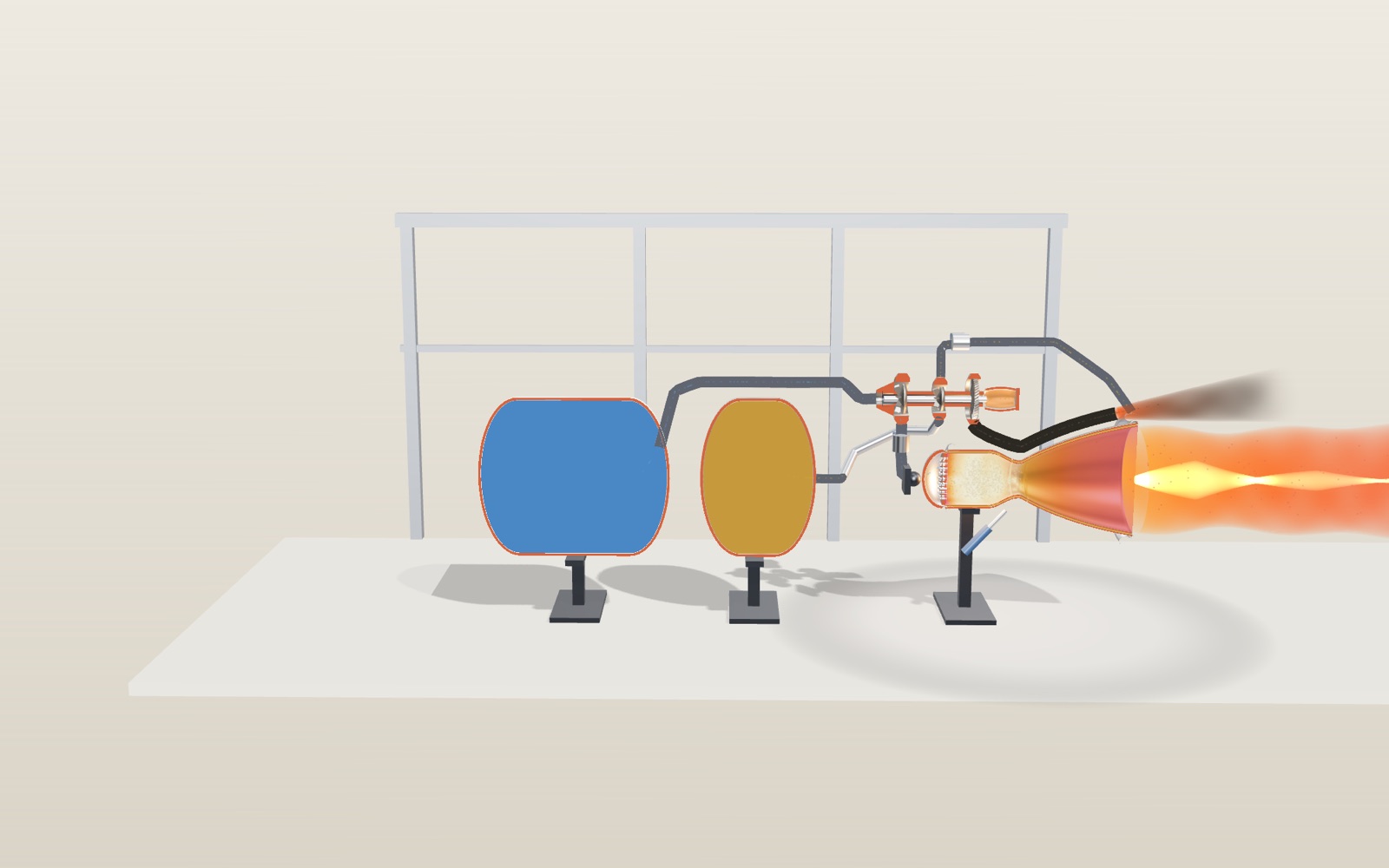
Liquid rocket engine: interactive model, how it works
Nuri's 75-tonne engine burns 255 kg of kerosene and liquid oxygen every second, and the same engine pushes about 13 percent harder in space than at sea level.
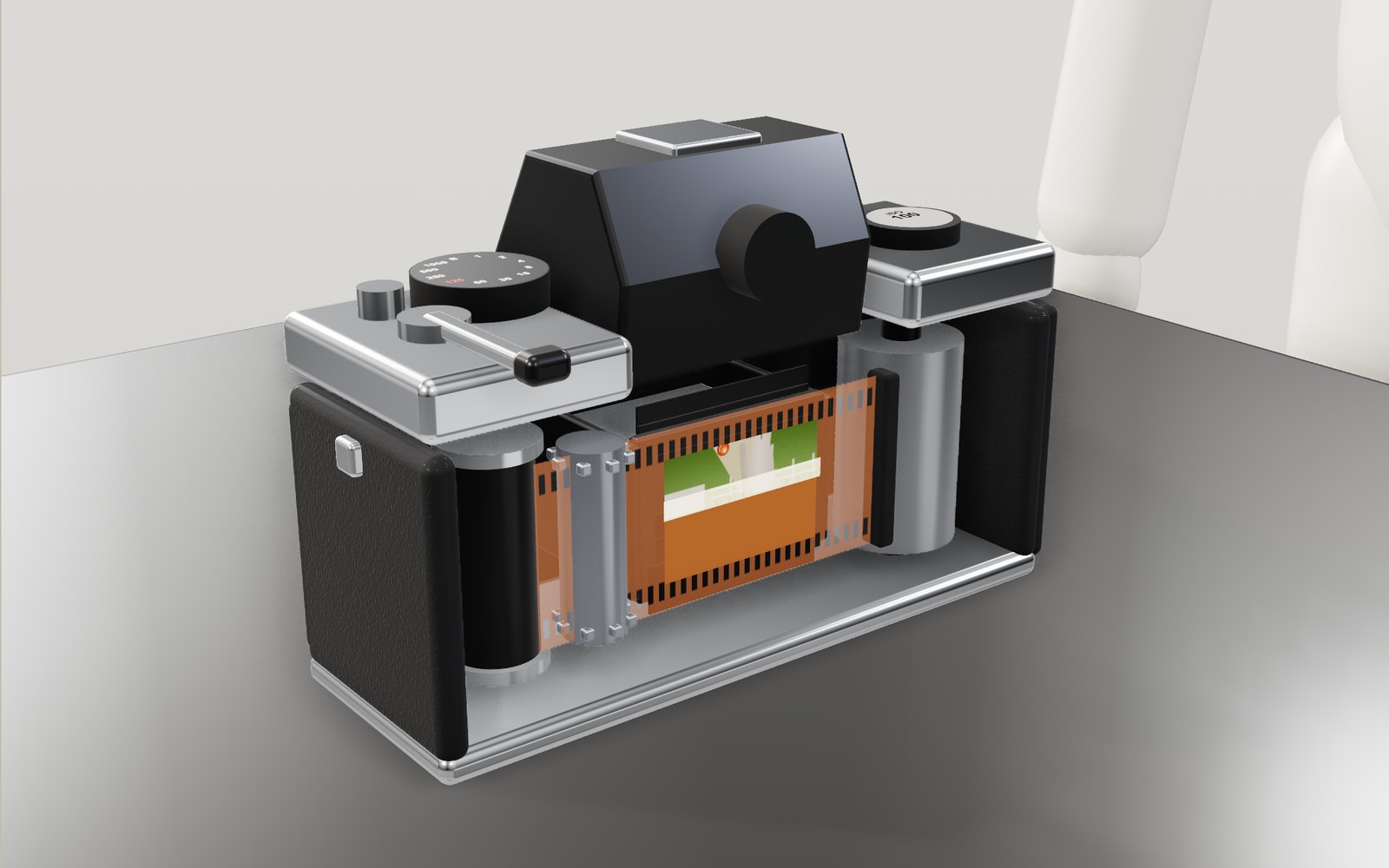
How film cameras and instant cameras work
At 1/1000 of a second a camera shutter never uncovers the whole frame at once: a narrow slit sweeps across the film instead.
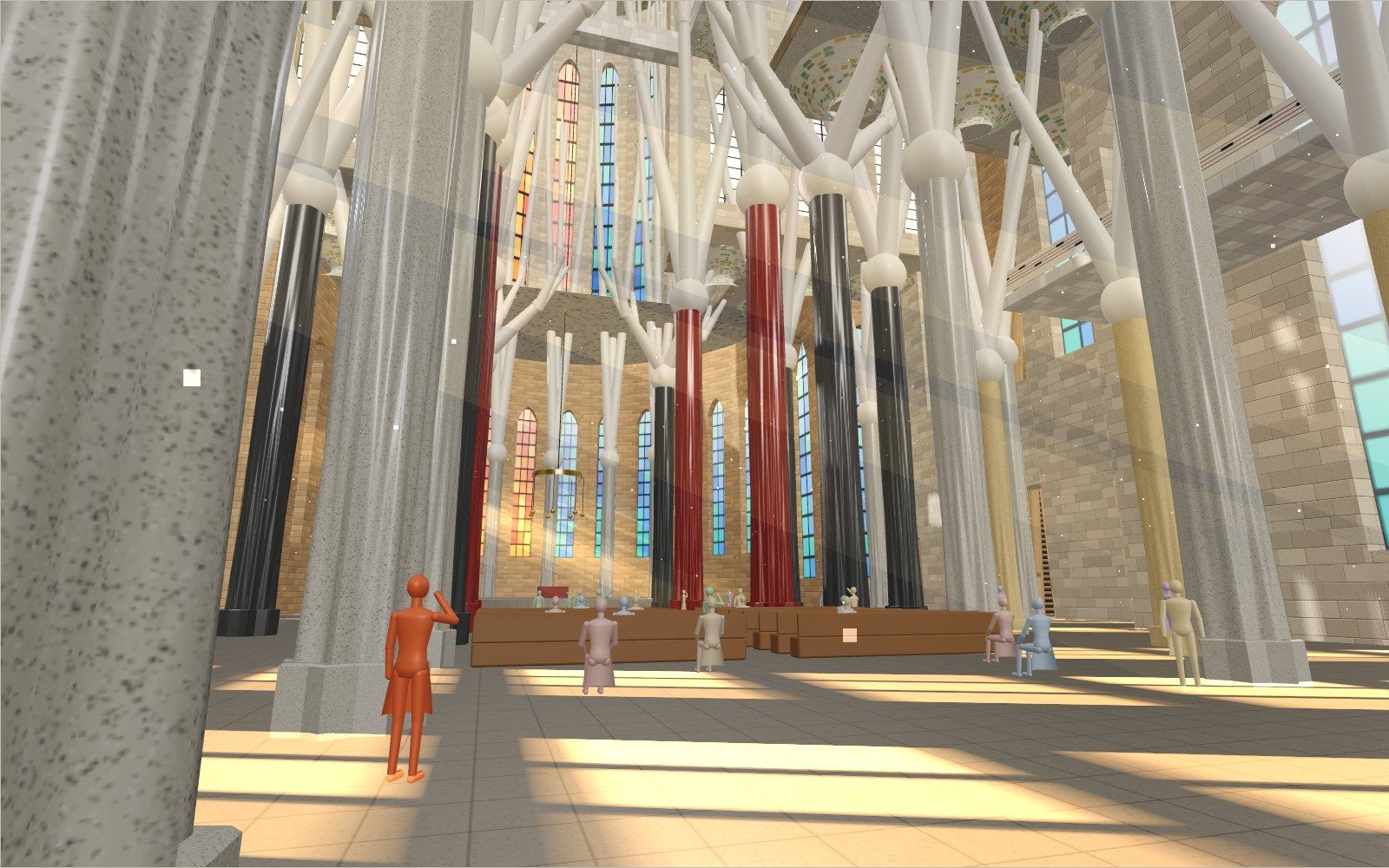
Walk through the Sagrada Família
Inside the Sagrada Família the columns branch like trees 45 m up, and the sun moves blue and orange light across the floor.
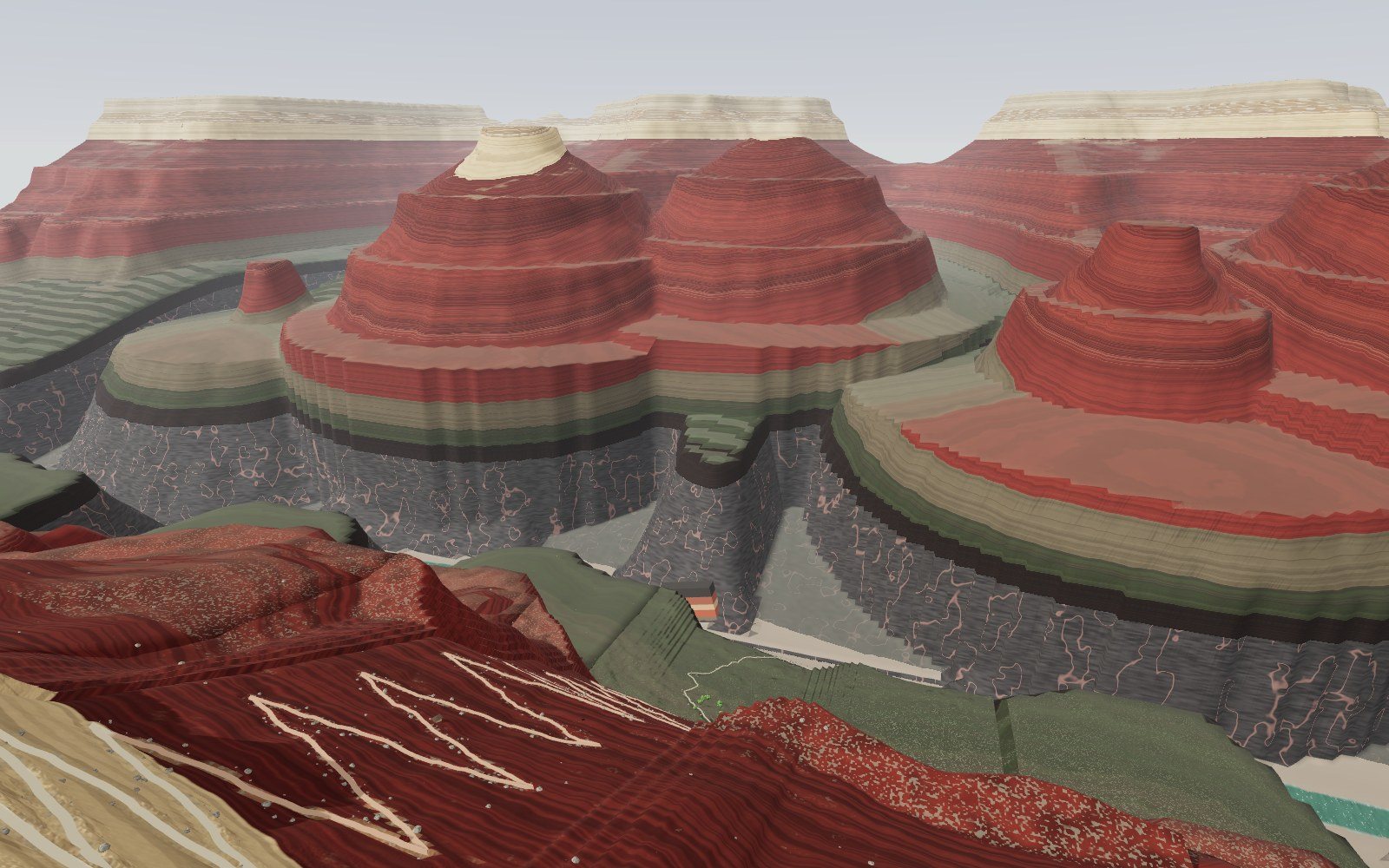
Walk down the Grand Canyon rock layers
Walk 1,360 m down the Bright Angel Trail through 13 rock layers, from a 270-million-year-old sea floor on the rim to 1.75-billion-year-old schist by the river.
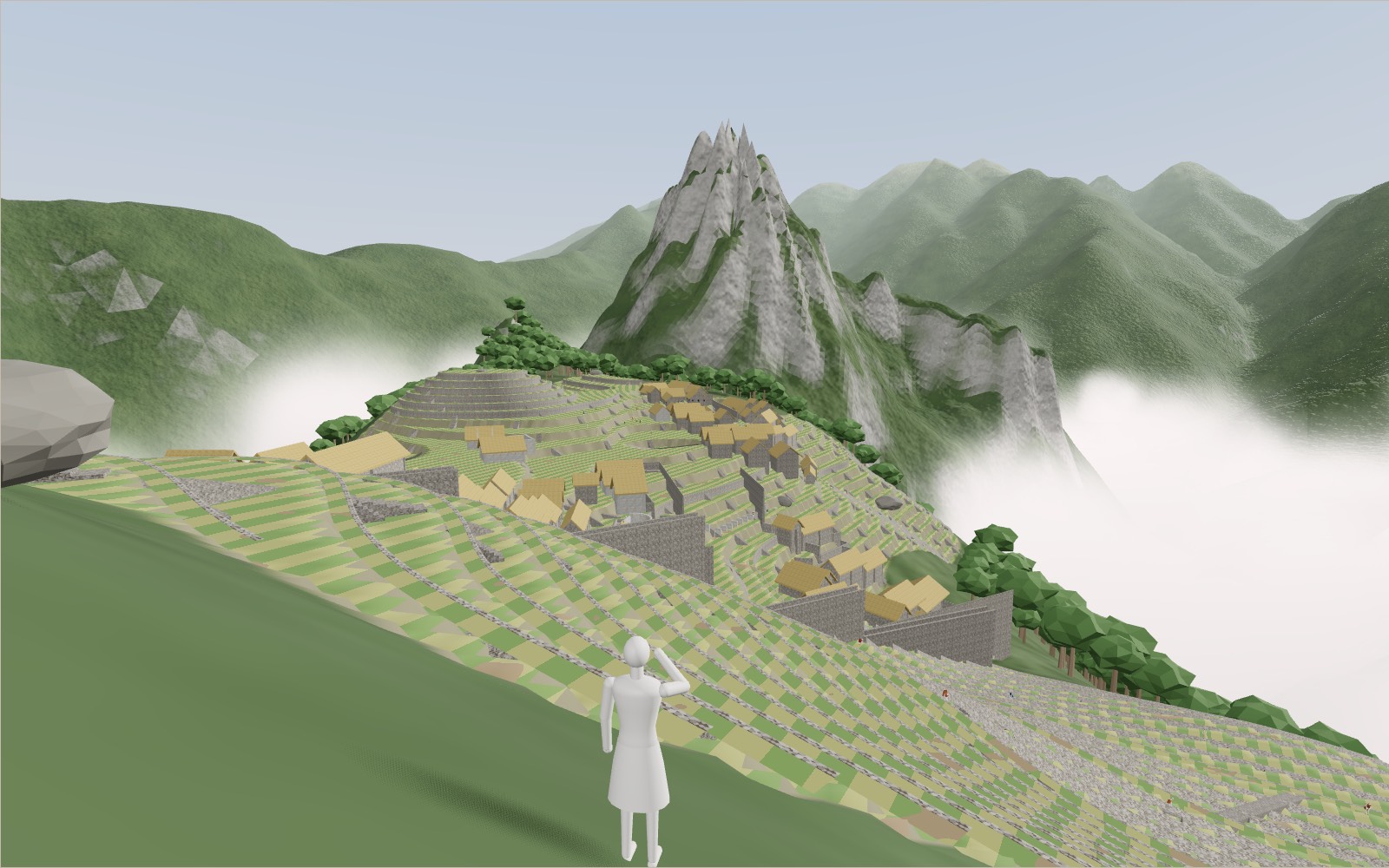
Walk through Machu Picchu
Most of the work that holds Machu Picchu on its ridge, 60 per cent by one estimate, lies under the ground in foundations and drains nobody sees.
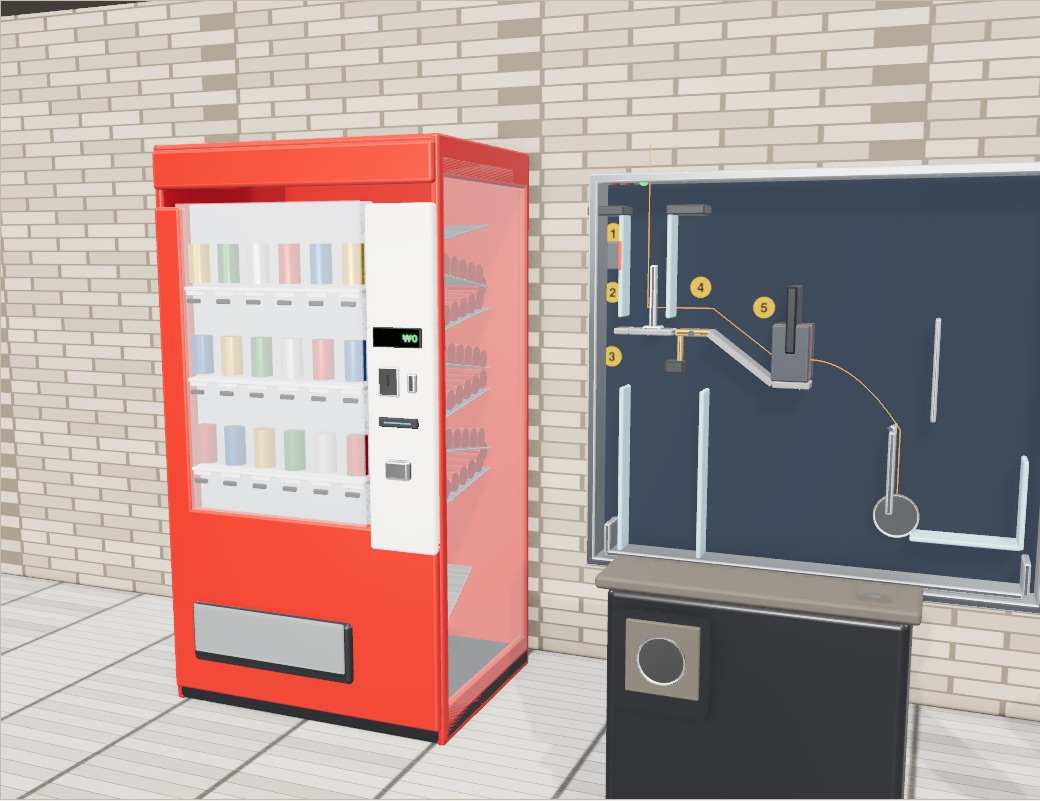
How does a vending machine recognise coins?
A 100 won coin is not attracted to a magnet, yet the magnet inside a vending machine is what tells it from a copper fake.
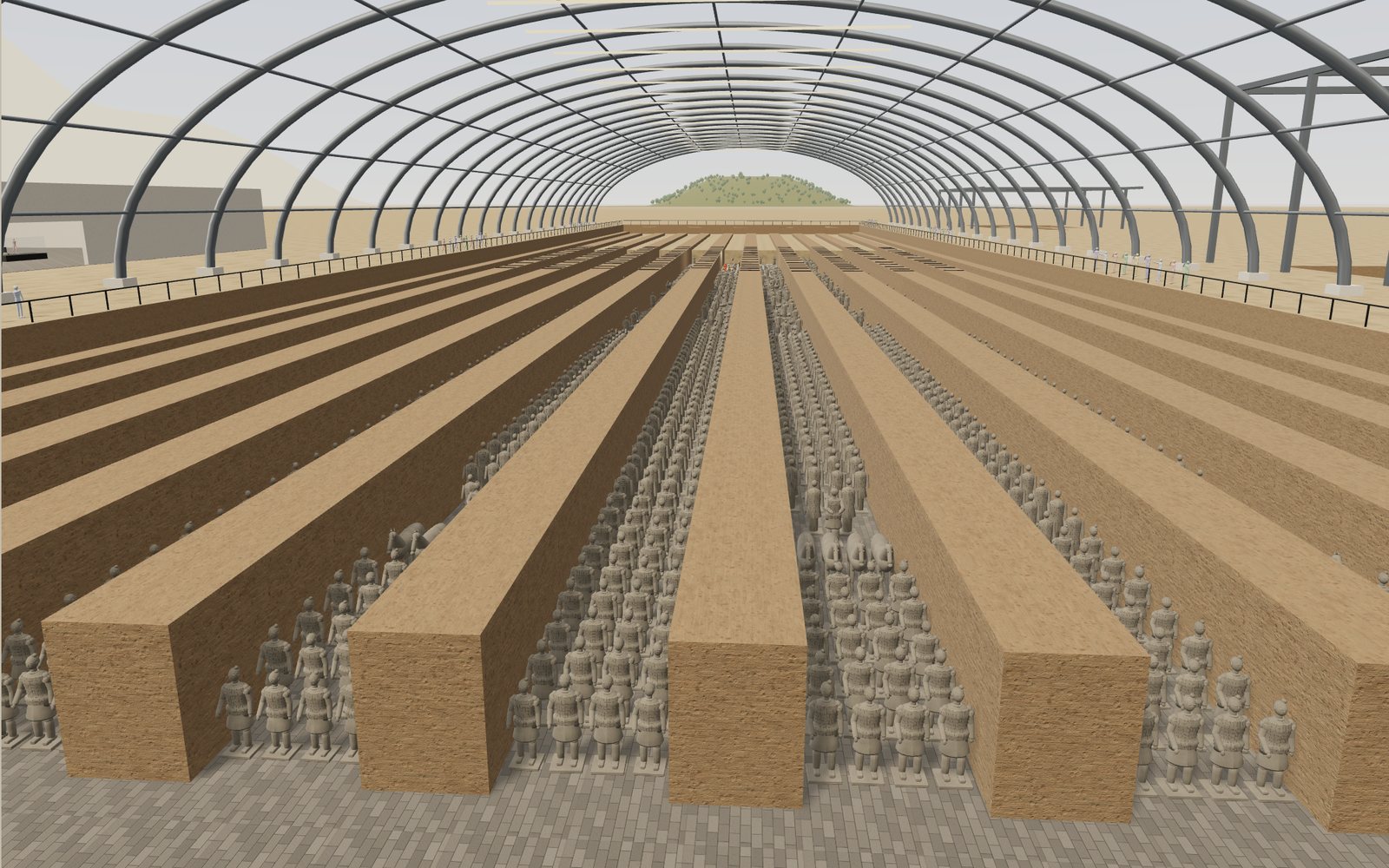
Walk through the Terracotta Army
Pit 1 of the Terracotta Army is 230 m long and holds an estimated 6,000 figures and horses, and every one of them was painted once.
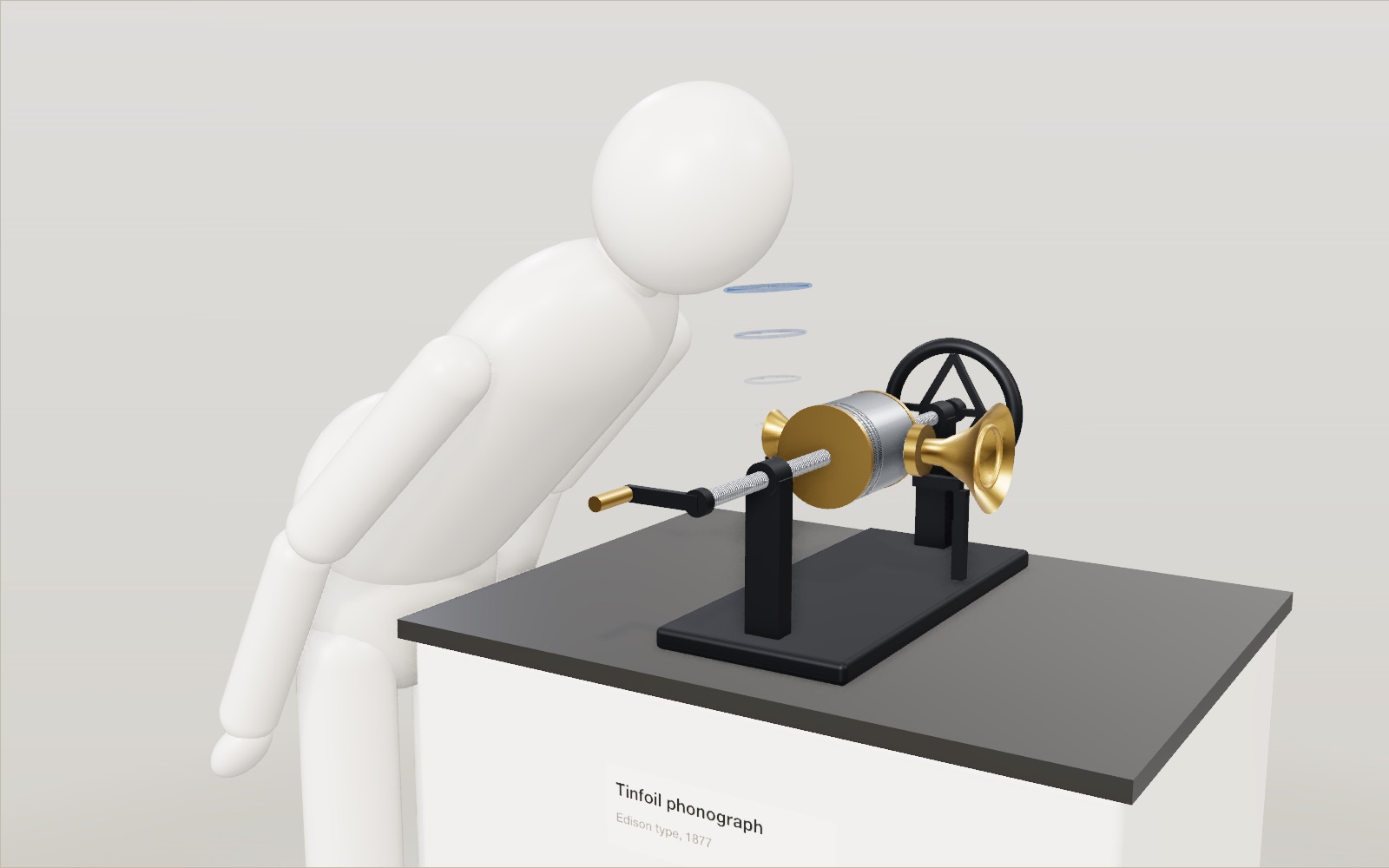
How a phonograph works: from tinfoil to cassette and CD
Edison's first phonograph cut a voice into tinfoil in 1877, and the same needle played it back from a groove 2.54 mm apart.
Fly with life-size pterosaurs
Quetzalcoatlus spanned about 10 m, close to the 11 m wing of a Cessna 172, and standing it was as tall as a giraffe. Watch it pass over a Cretaceous cliff, then fly with 35 pterosaurs from three ages.