6 exhibitsCourses
Everyday devices opened up
A vending machine, a microwave, a phone screen, a zipper, a lock and a printer, each taken apart so you can see the idea that makes it work.
The order goes from machines that sort and heat, to a screen that senses your finger, to two small mechanisms, the zipper and the lock, and ends with a printer that builds things.
You use these six devices without thinking about them, and each one hides a clever trick. A vending machine tells coins apart by size, weight and magnetism. A microwave oven heats food with waves only 12.2 cm long, so it can leave cold spots. A touchscreen notices the tiny change in charge under your fingertip. Each exhibit opens the case and lets you change the setting that matters most.
The last three are about shape. A zipper locks and unlocks with one fixed channel and no moving parts inside the slider. A pin tumbler lock accepts a key only when each cut lifts a pin to exactly the right height, and a 3D printer builds a part layer by layer from a line of melted plastic. Notice how often the trick is a simple fixed shape, a size, a gap or a step, rather than anything complicated.
- 01
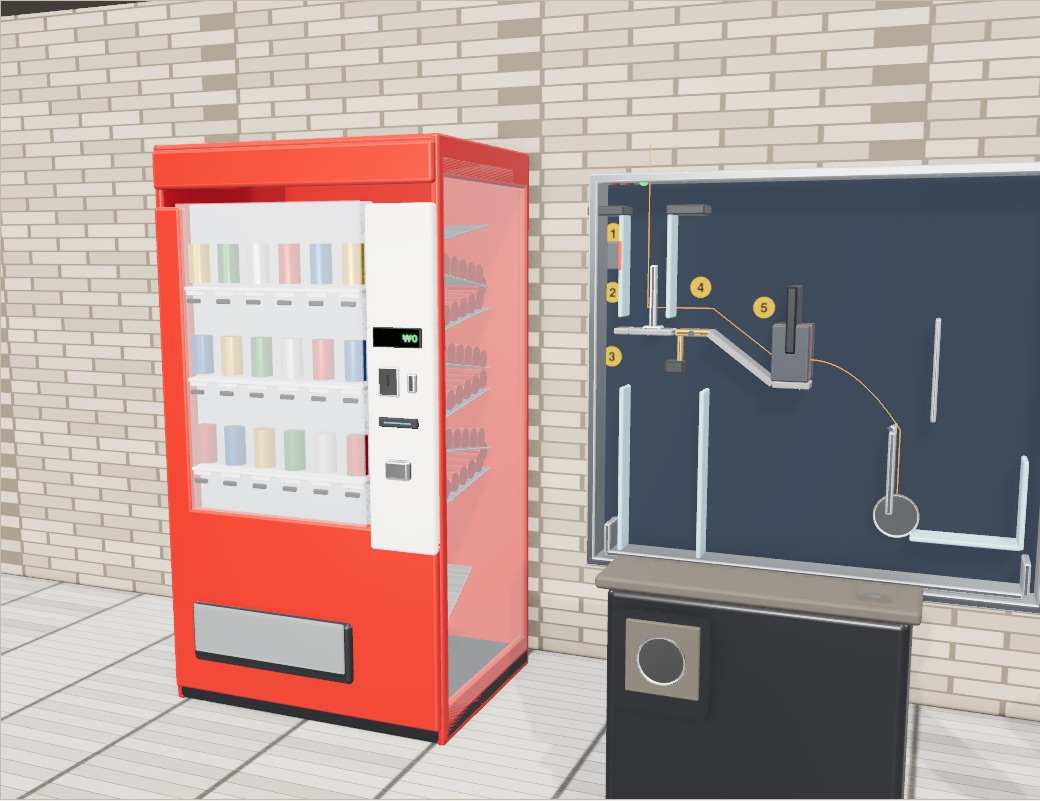 FIG. 119 · Old Machines
How vending machines detect fake coins: follow one coin inside
A 100 won coin is not attracted to a magnet, yet the magnet inside a vending machine is what tells it from a copper fake.
Change the Magnet and Coin settings and follow the Coin path to see where the machine sorts each coin.
- 02
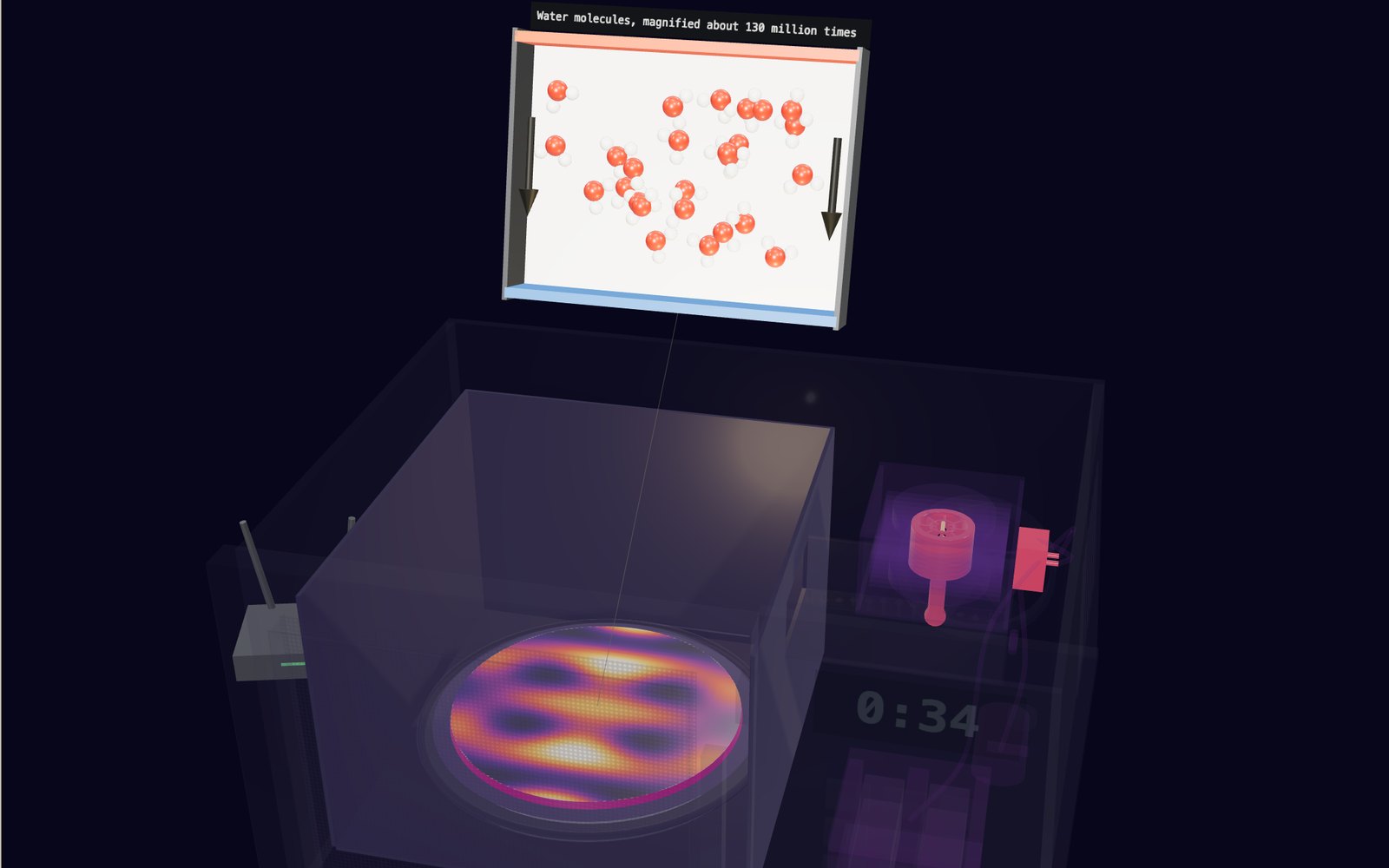 FIG. 62 · Senses
How a microwave oven works: the magnetron that makes the waves
The waves inside a microwave oven are 12.2 cm long, so without a turntable the hot spots in your food sit about 6 cm apart.
Turn off the Turntable and switch on Show the field and Thermal camera to see hot spots form about 6 cm apart.
- 03
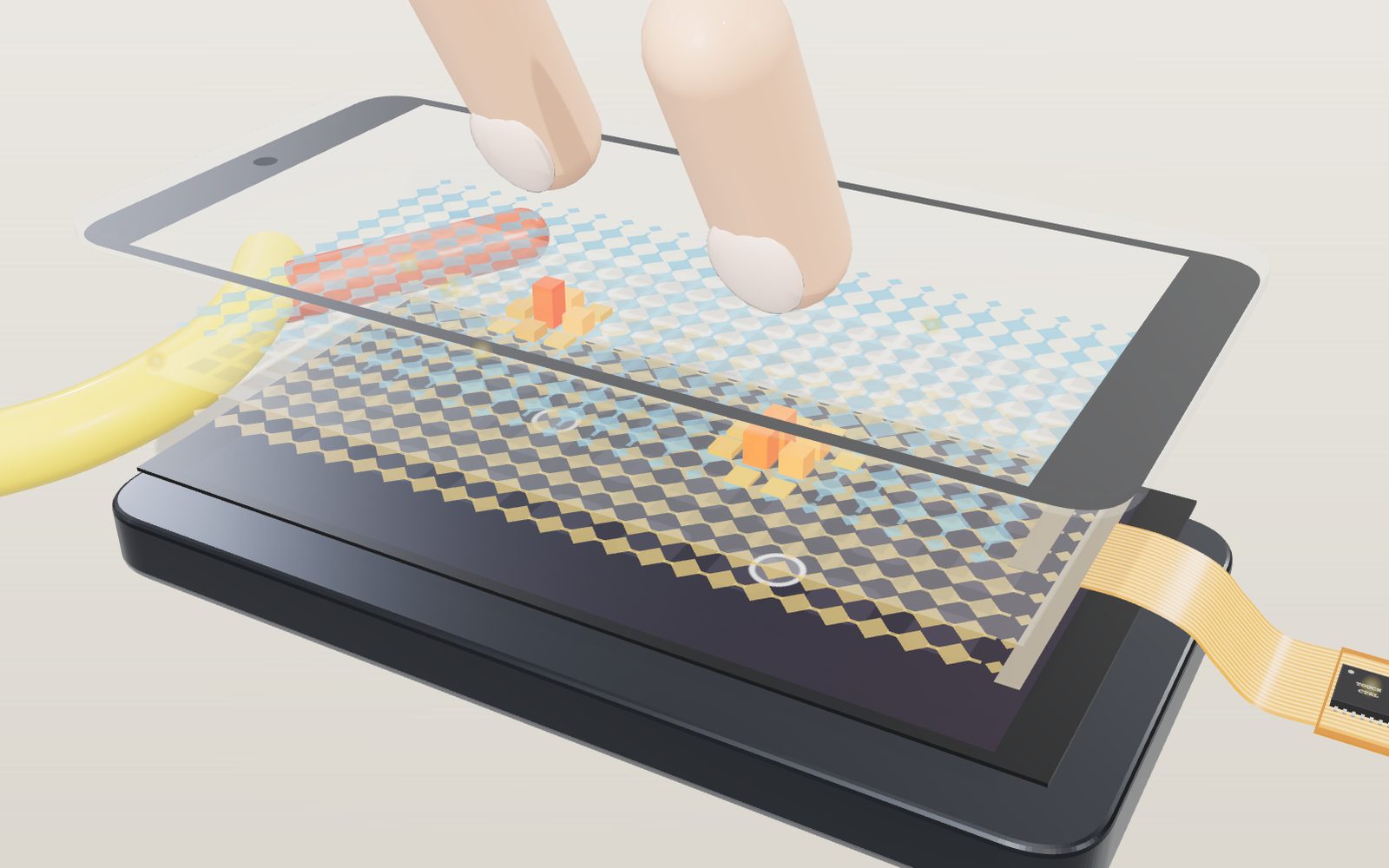 FIG. 71 · Senses
How a touchscreen works: how the glass finds your finger
Under the glass of a phone lies a grid of transparent electrodes, and your finger shows up as a small dip in the charge passing between them.
Set Touching with to a finger and read the Node values: a small dip in charge marks where the fingertip sits.
- 04
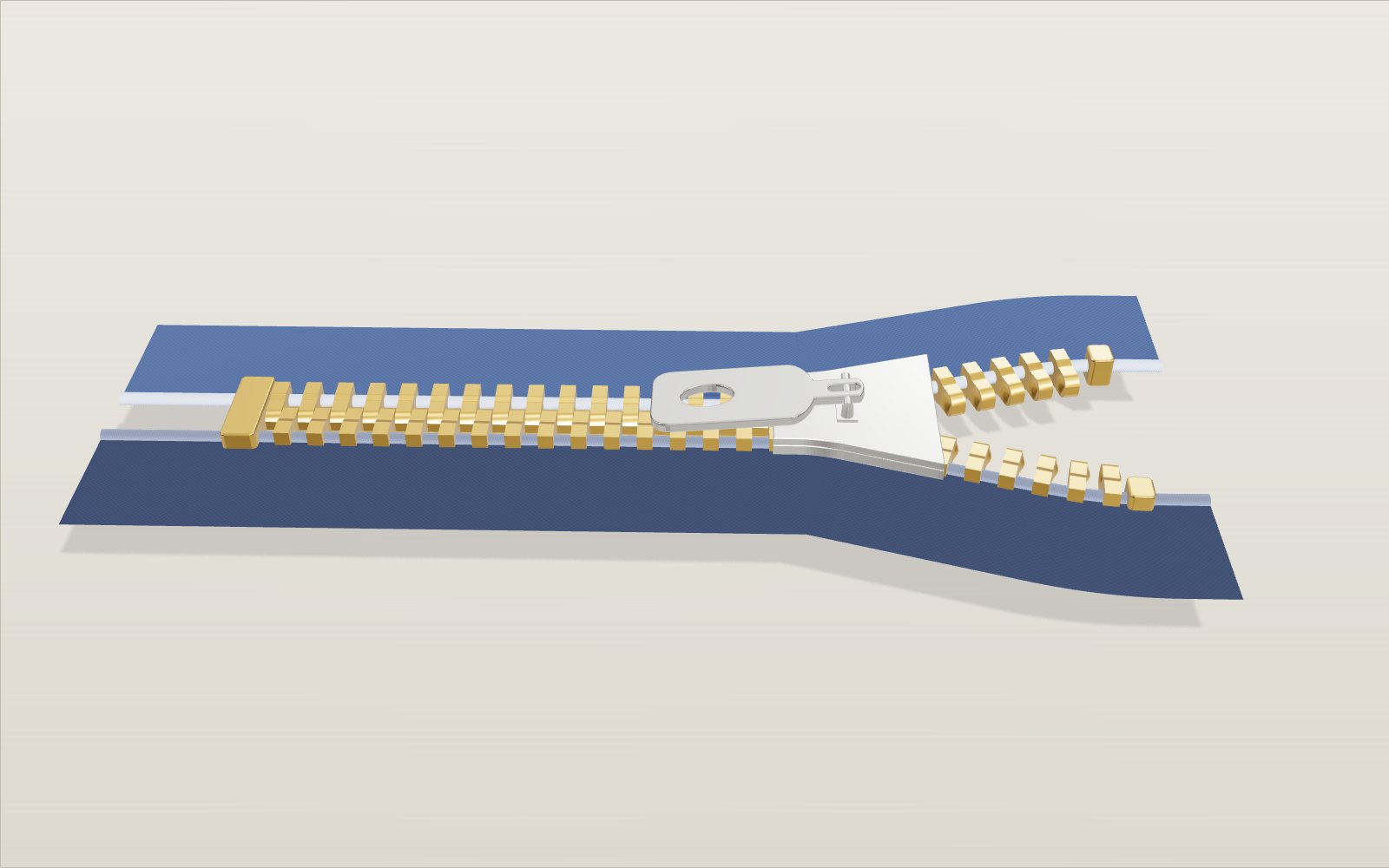 FIG. 27 · How It Works
Zipper mechanism: work the slider and see the teeth lock
Nothing inside a zipper slider moves, yet the same Y-shaped channel locks the teeth on the way up and unlocks them on the way down.
Drag the Slider up and down and see the Y-shaped channel lock the teeth one way and unlock them the other.
- 05
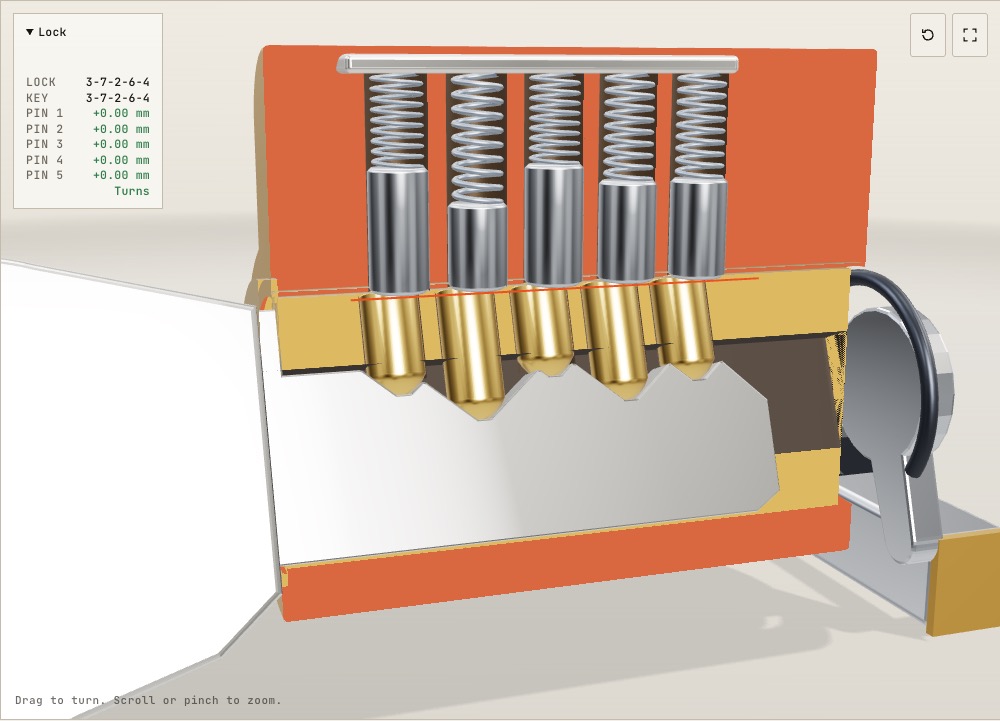 FIG. 03 · How It Works
How does a pin tumbler lock work inside? A 3D cutaway
On a common Schlage key one cut depth differs from the next by 0.381 mm, and that small step is enough to keep a wrong key from turning.
Change one Cut slider by a single step, push the key in and try Turn key: a wrong depth keeps the plug from turning.
- 06
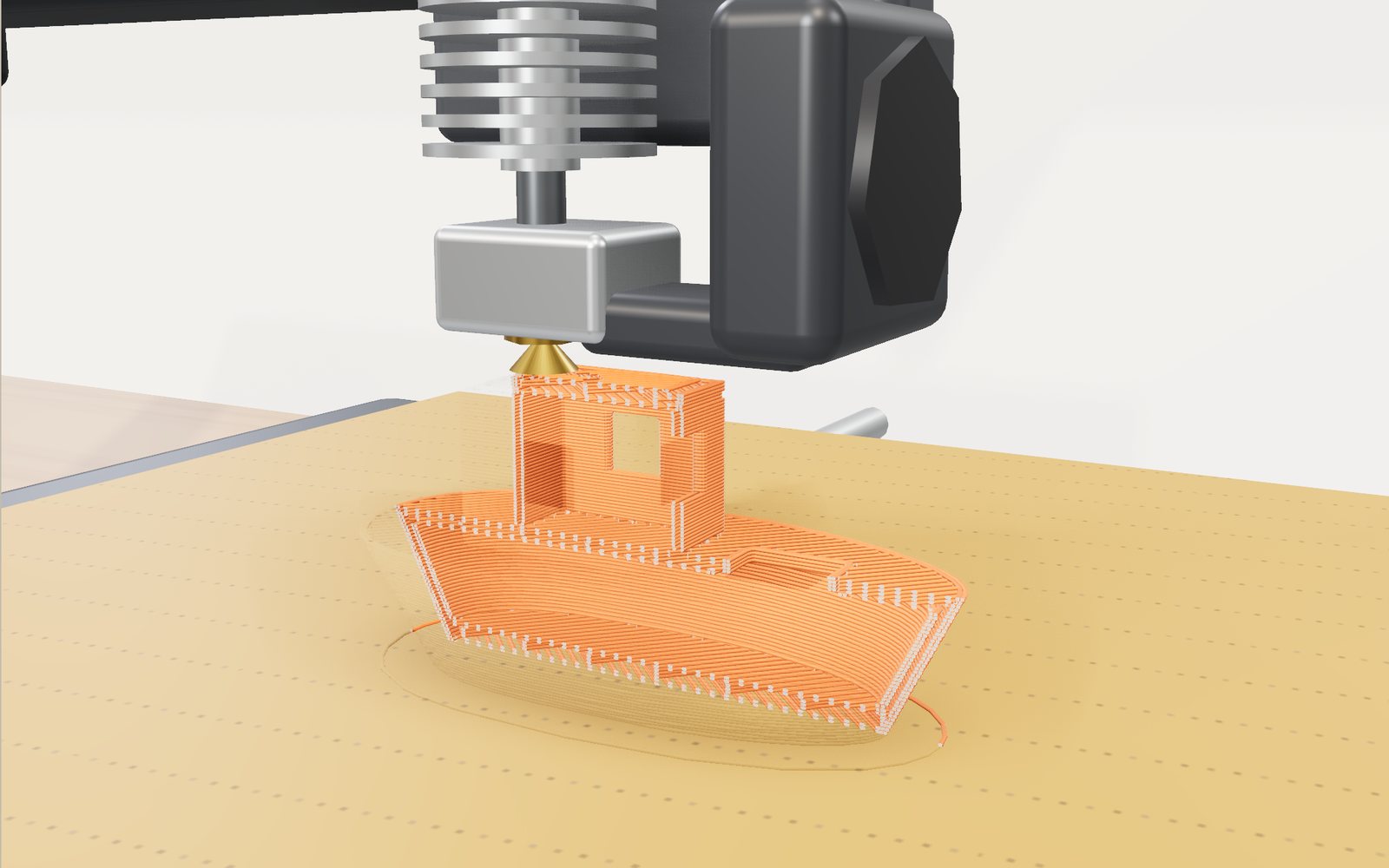 FIG. 105 · Follow Along
How a 3D printer works, layer by layer
A 20 mm cube printed in 0.2 mm layers is exactly 100 layers, each drawn by a nozzle 0.4 mm wide.
Drag Print progress to watch the part grow layer by layer; with 0.2 mm layers a 20 mm cube takes 100 layers.