5 exhibitsCourses
Life up close: bodies and survival
How a horse runs, how a leaf feeds itself, how an ant colony works, how to save a life and what happens to a body in space.
It goes from the movement of an animal to the way a plant feeds, then to a colony, and ends with two stops about the human body in danger.
These five exhibits look at living things at work. A horse changes between four gaits, and a photograph from 1878 settled a long argument about when its feet leave the ground. A leaf takes carbon dioxide from air that holds only a few hundred parts per million of it and builds sugar. At ant size, a blade of grass is twenty times your height and the colony below you is a busy city.
The last two stops are about the human body under stress. In CPR the pace and depth of your compressions decide how much blood reaches the brain. In space with no suit you would have about ten seconds of useful consciousness, and you would not explode. Both stops are worth reading with care, because the right answer is easy to confuse with a film version of the truth.
- 01
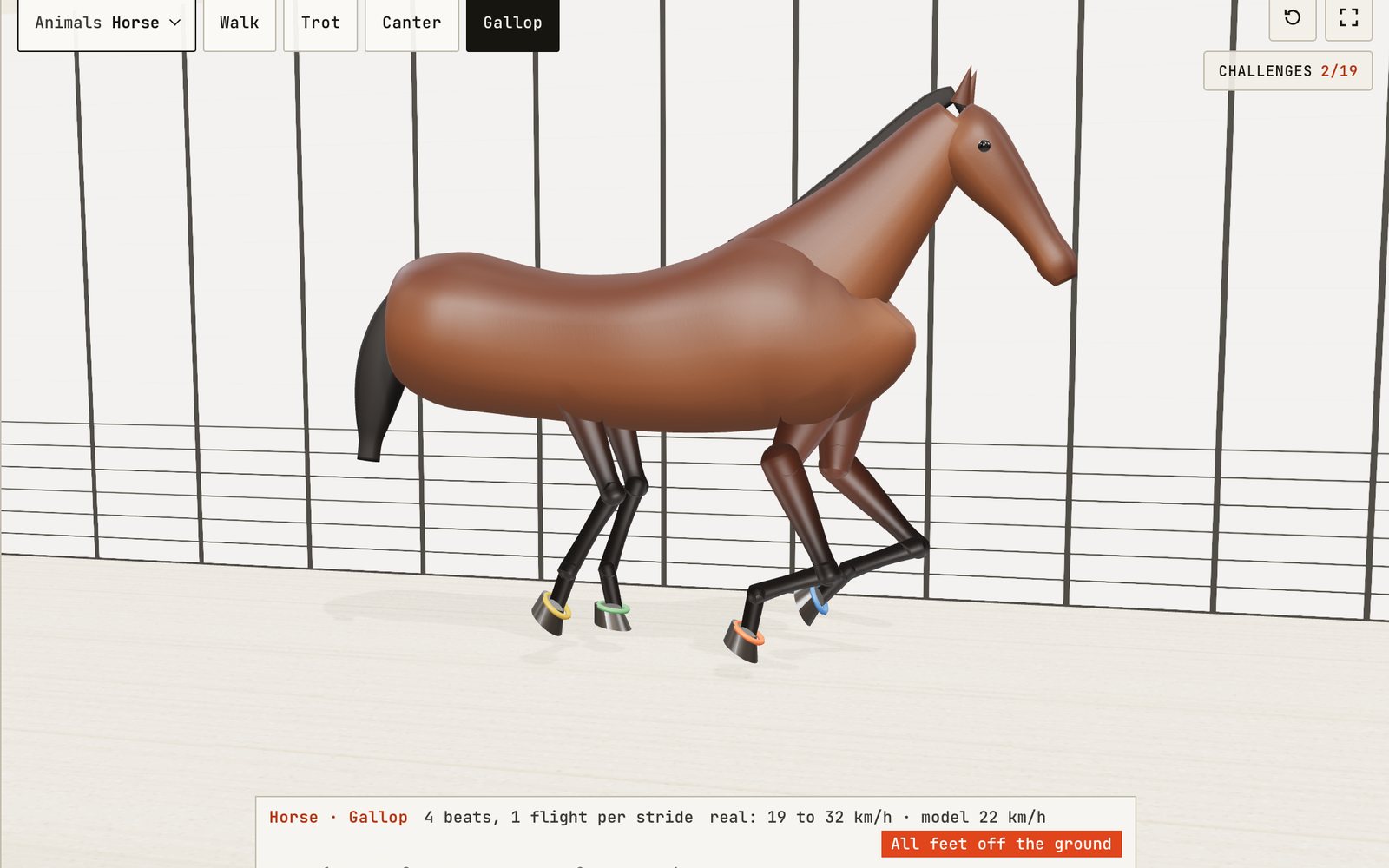 FIG. 32 · How It Works
How a horse runs: walk, trot, canter and gallop
In 1878 Muybridge's cameras showed that a galloping horse does lift all four feet at once, but with its legs tucked under it. Some fast animals never leave the ground at all.
Pick a gallop in Gait and drag Stride position to find the moment when all four feet are off the ground.
- 02
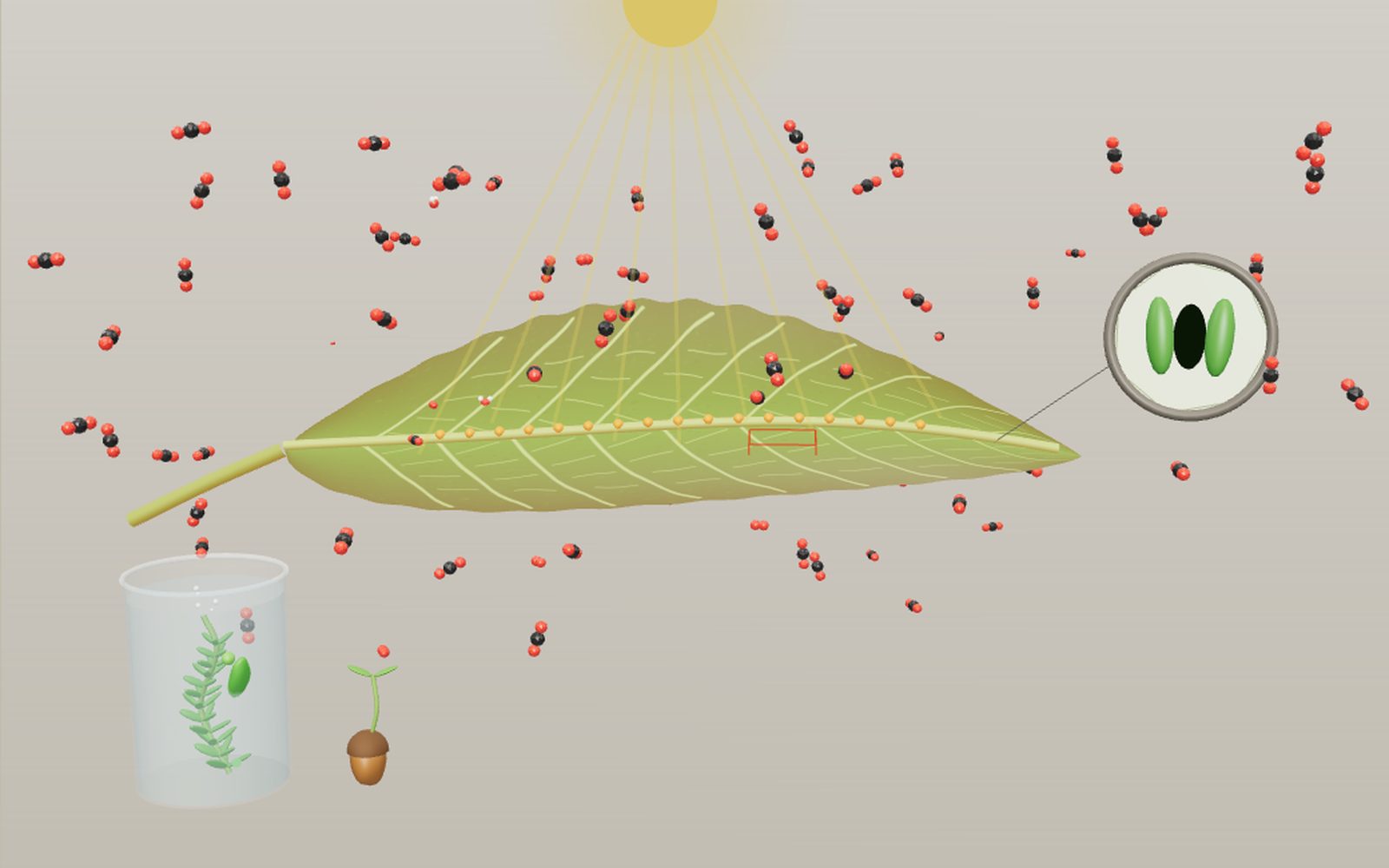 FIG. 69 · How It Works
How photosynthesis works
A leaf in full sun pulls carbon dioxide out of air that holds only about 426 parts per million of it, and builds sugar from it.
Raise Light and CO₂ in the air one at a time and watch how the leaf's rate of sugar-making responds.
- 03
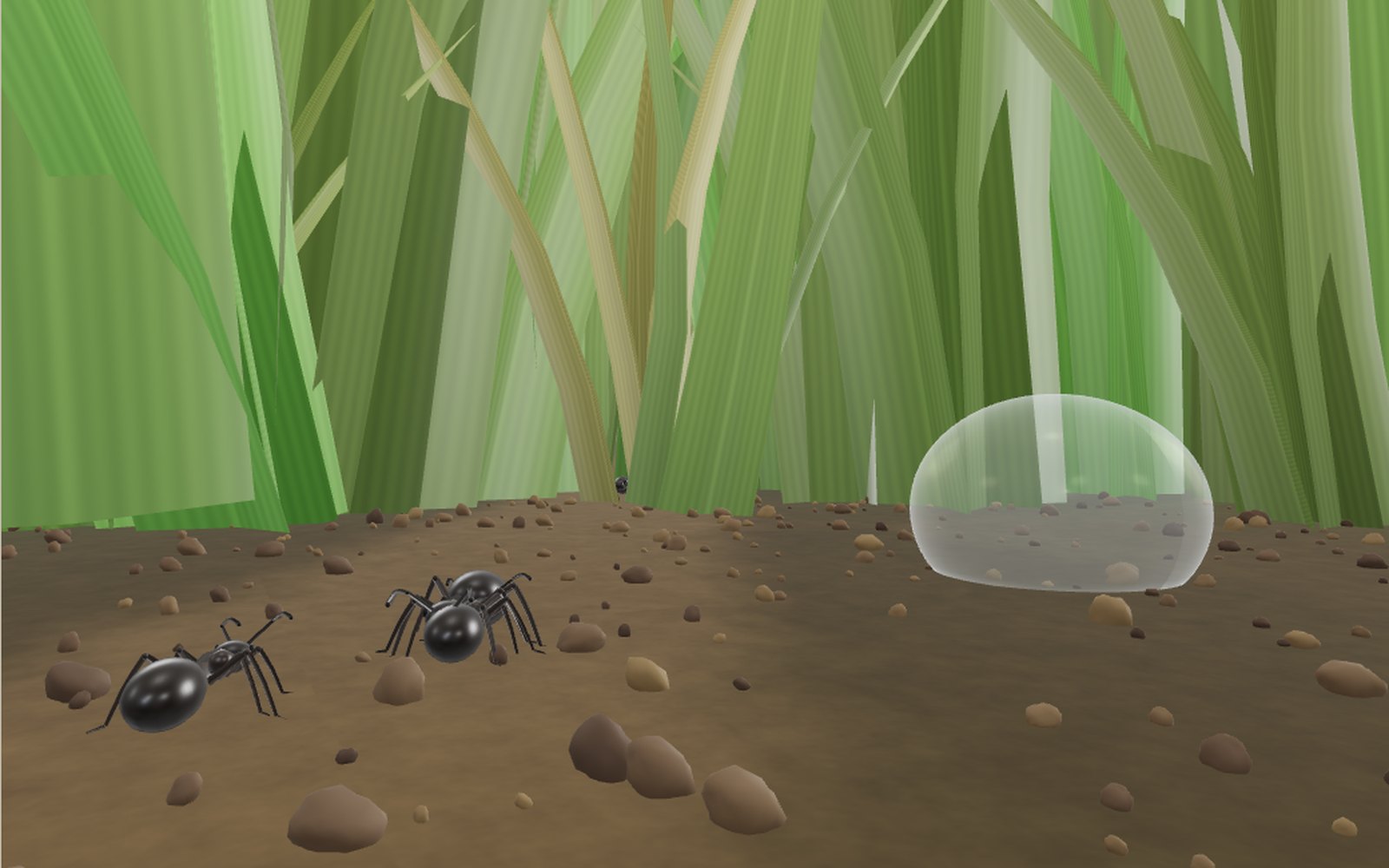 FIG. 96 · Walk-throughs
Shrink to the size of an ant and walk into its nest
At 5 mm tall, a blade of lawn grass is 20 times your height and a black garden ant walks past at chest height.
Turn on See the nest and Scent trails to follow how foraging ants find food and return to the nest.
- 04
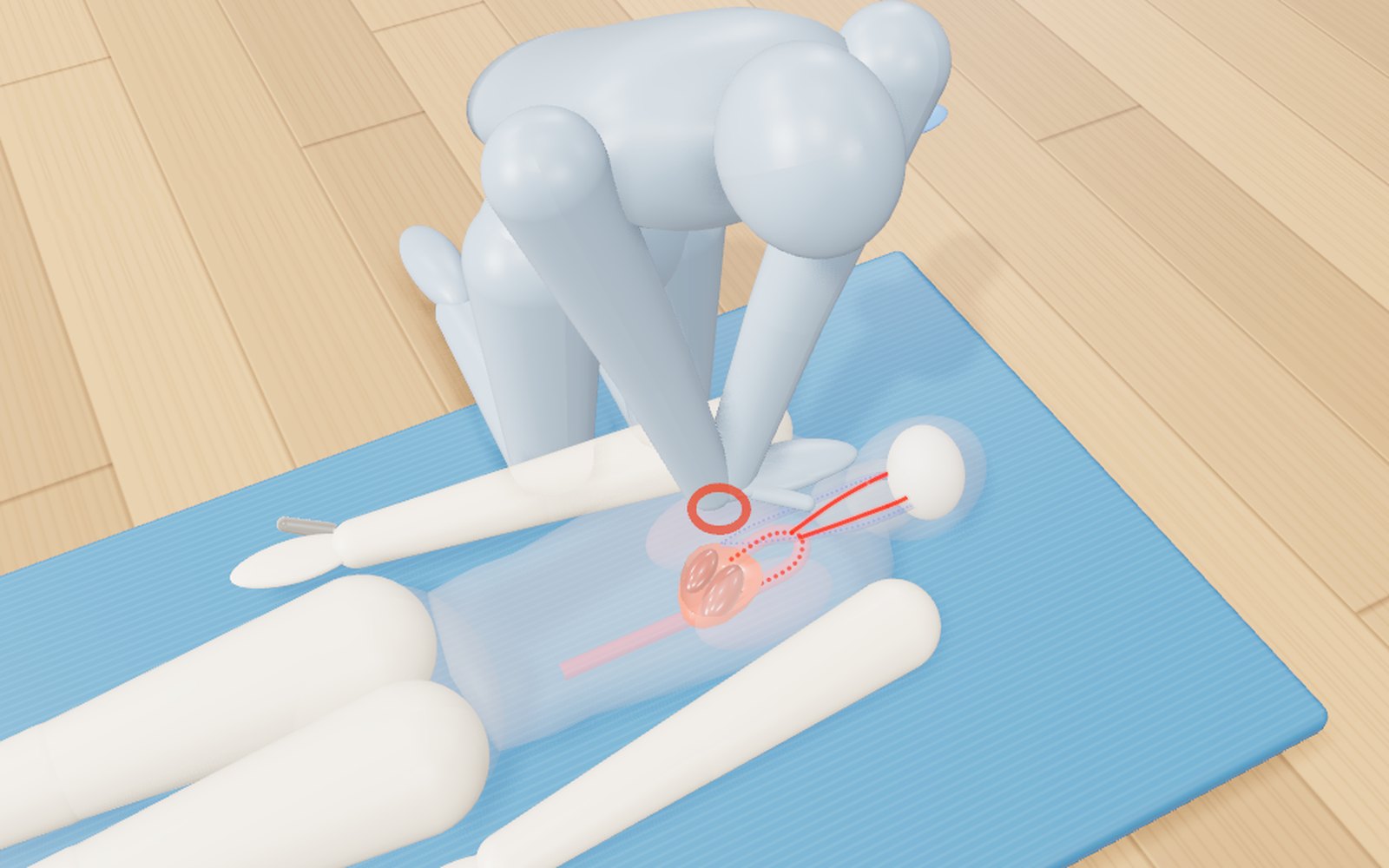 FIG. 101 · Follow Along
How to do CPR, use an AED, help someone choking and use a fire extinguisher
Push 100 to 120 times a minute, about 5 cm deep: with a bystander doing that, survival in Korea in 2024 was 2.36 times higher.
Set Compression rate between 100 and 120 a minute and Compression depth near 5 cm, then watch Blood flow.
- 05
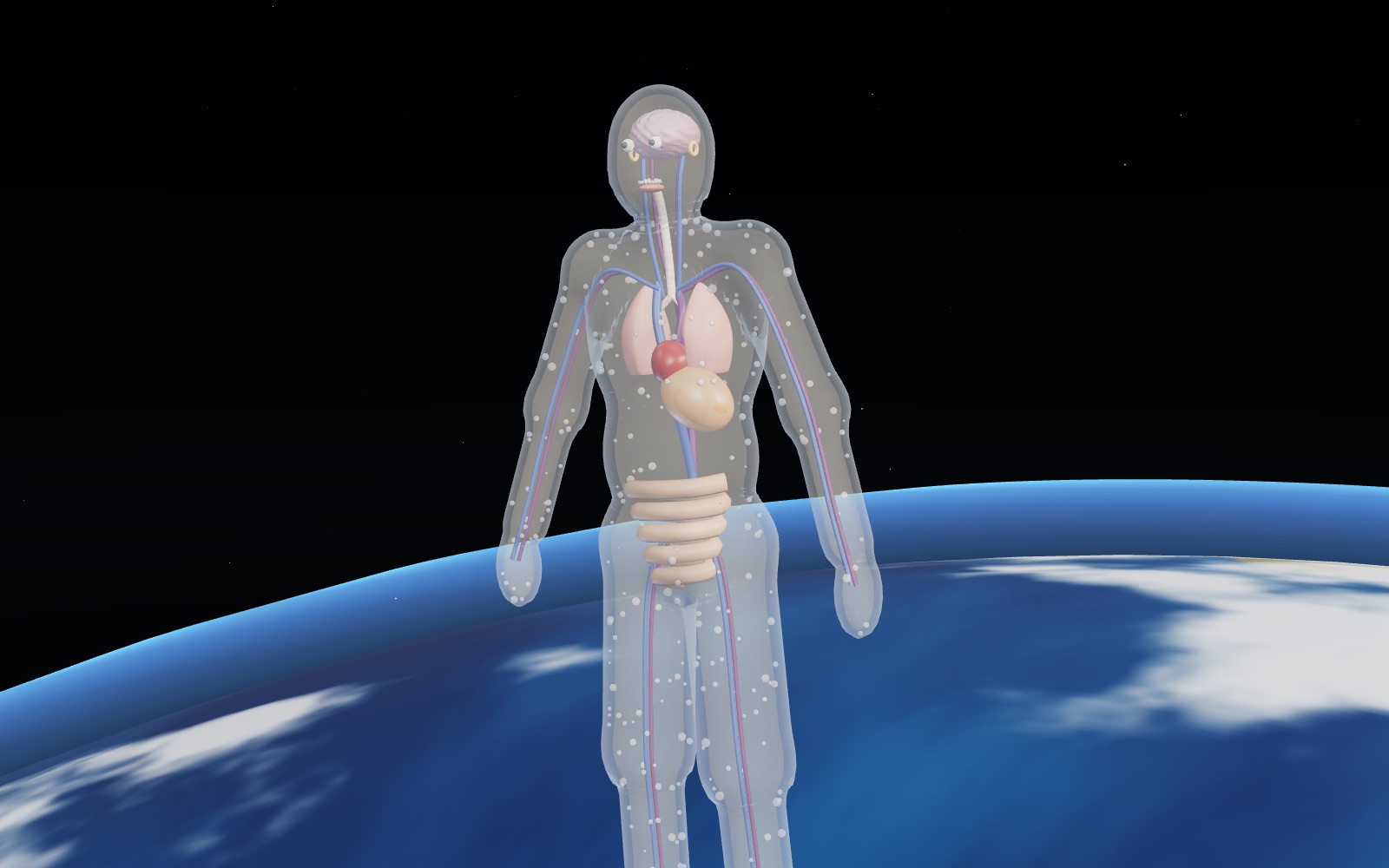 FIG. 87 · How It Works
What happens to your body in space without a suit
Without a suit you would have about 10 seconds of useful consciousness, and if air came back within a minute or so you might well recover. You would not explode.
Drag Seconds after exposure from 0 to 120 and watch the lungs, the brain and Gas bubbles in turn.